ORGO CONTENT Exam 1
 Call Kai
 Learn
Learn Practice Test
 Spaced Repetition
 Match
Match Flashcards
 Knowt Play
1/83

There's no tags or description
Looks like no tags are added yet.
Name | Mastery | Learn | Test | Matching | Spaced | Call with Kai |
|---|
No analytics yet
Send a link to your students to track their progress
84 Terms
organic compounds
from LIVING organisms
compounds that contain CARBON
with a vital force
inorganic compounds
from minerals
without a vital force
what makes carbon so special?
carbon is in the middle
likes to share electrons
how does carbon “act”
carbon acts differently based on the conditions to reach the octet rule
atoms to the right of carbon
like to GAIN electrons to reach the octet
accept electrons
atoms to the left of carbon
like to GIVE UP electrons to reach octet
give away electrons
the struture of an atom
nucleus → protons + neutrons
electron cloud
‘atomic number’ formula
= the # of protons
neutral carbon
has 6 protons
has 6 electrons
what do all carbons have
the same atomic number = # of protons
what can carbons atoms have differently
they can have different mass numbers
mass number formula
= (# of protons) + (# of neutrons)
isotopes
have different mass numbers
have the same atomic number
4 shells of atomic orbitals
s
s, p
s, p, d
s, p, d, f
number of atomic orbitals in each shell
1
1, 3
1, 3, 5
1, 3, 5, 7
max number of electrons in each shell
2 electrons
8 electrons
18 electrons
32 electrons
what is the first shell closest to
the nucleus
the closer the atomic orbital is to the nucleus….
the lower its energy
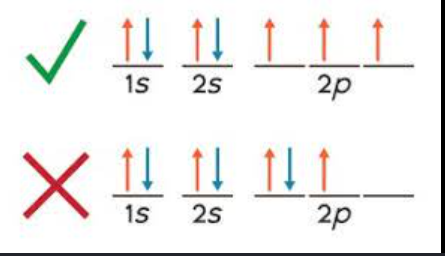
aubfau principal
an electron goes into the atomic orbital with the LOWEST energy
1s < 2s < 2p < 3s < 3p < 3d
pauli exclusion principal
no more than 2 electrons can be in an atomic orbital
hunds rule
an electron goes into an empty degenerate orbial rather than pairing up
when is an atom most stable
if its outer shell is either filled or contains 8 electrons
electrons of atoms in the first column of the periodic table
lose an electron
lithium & sodium achieve a filled outer shell by losing an electron
electrons in hydrogen
a hydrogen atm achieves an empty shell by…
losing an electron
or a filled outer shell by gaining an electron
a bond formed by sharing electrons
a covalent bond
nonpolar covalent bond
bonded atoms are the same or have similar electronegativities
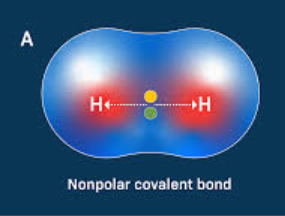
nonpolar covalent bond electronegativity difference
electronegativity difference < 0.5
polar covalent bonds
boded atomas have different electronegativities
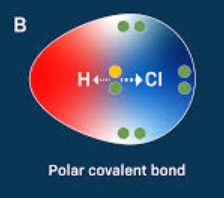
polar covalent bond electronegativity difference
electronegativity difference 0.5-1.9
electronegativity difference > 1.9
electrons are not shared
atoms are held together by the attraction of opposite charges
dipole moment
(size of the charge) x (the distance between the charges)
electronegativity and periodic table
electronegativity increases across (to right)
electronegativity decreases down
electronegativitiy and dipole moment
the greater the difference in electronegativity…
greater the dipole moment
the more polar the bond
electrostatic potential maps
red = most negative electrostatic potential
blue = most positive electrostatic potential
formal charge equation
FC = (# VE) - (# LP + # bonds)
how many bonds does carbon form
4 bonds
what happens if carbon DOES NOT form 4 bonds
it has a charge (or its a radical)
how many bonds & LP does nitrogen form
3 bonds & 1 LP
what happens if nitrogen DOES NOT form 3 bonds
it is charged
how many bonds (+ LPs) do halogens form
1 bond & 3 LPs
what should the # of bonds + # of LPs equal
4
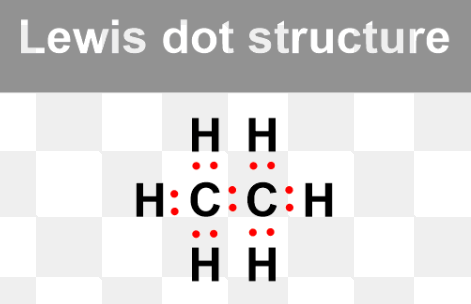
lewis structures
show all valence electrons (both bonding and lone pairs) using dots
provides a complete picture of electron distribution
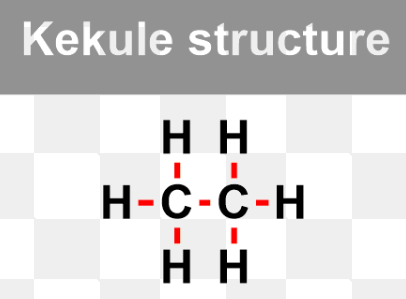
kekule structures
a simplified version of lewis structures where shared electron pairs (covalent bonds) are represented by solid lines
lone pairs and formal charges are typically omitted
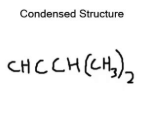
condensed structures
eliminates most or all of bond lines, relying instead on grouping atoms together to communicate the molecule's connectivity and save space
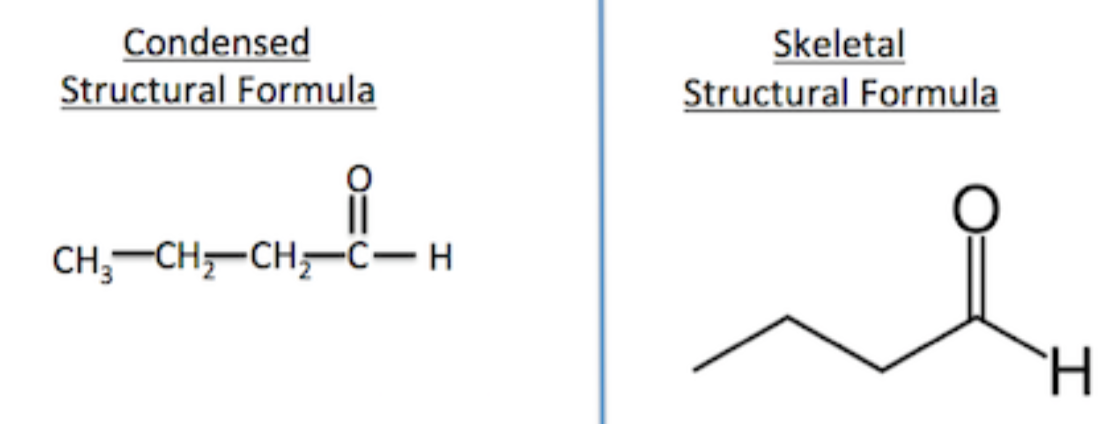
skeletal structures
show the carbon-carbon bonds as lines, but do not show the carbons or the hydrogens that are bonded to the carbons
atomic orbital
the region of space around the nucleuswhere an electron is most apt to be found
how does an electron behave
like a standing wave
upward displacement and downward displacement are in opposite phases (+/-)
‘s’ atomic orbitals
a spherical region surrounding an atomic nucleus where electron is most likely to be found
represents the lowest energy state for any principal energy level
each s subshell can hold a maximum of two electrons

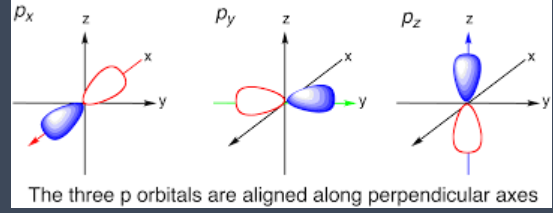
three ‘p’ atomic orbitals
a region in an atom where there is a high probability of finding an electron
the lobes of a ‘p’ atomic orbital have opposite phases
forming a sigma bond
the overlapping of ‘s’ orbitals
formed by the head-to-head (or end-to-end) overlap
allows electron density to be shared dbetween nuclei of two bonding atoms
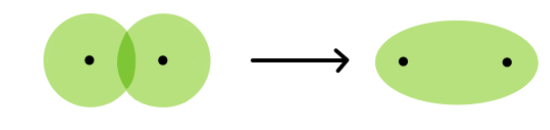
constructive combintion (waves)
waves reinforce each other, resulting in bonding
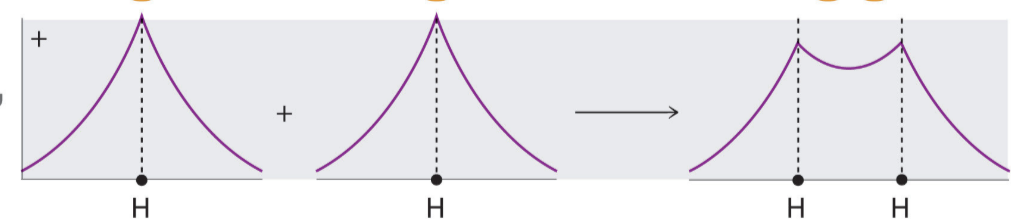
destructive combination (waves)
waves cancel each other, and no bond forms
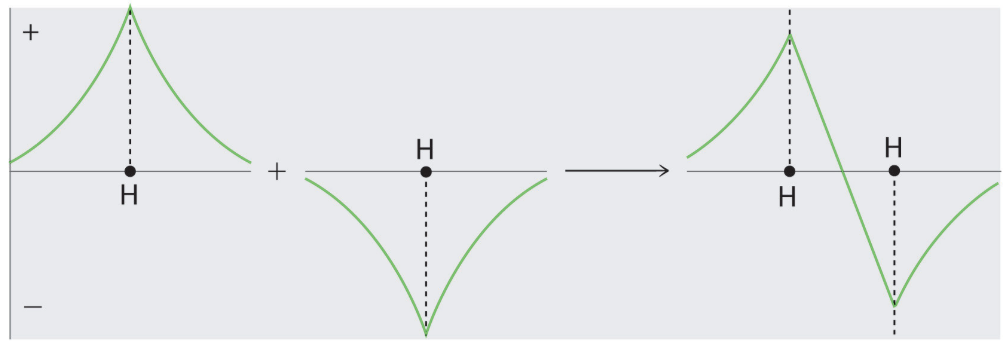
“orbitals are conserved” meaning
# of molecular orbitals = # of atomic orbitals combined
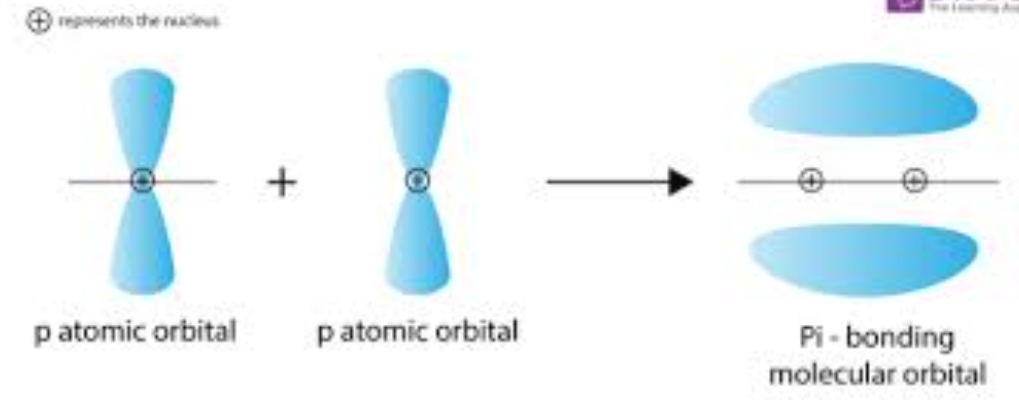
pi bond
side-to-side overlap of in-phase p orbitals
CH4 name
methane
CH4 bonds & angles
4 C-H bonds (same length)
all bond angles are the same (109.5 degrees)
what must carbon do in order to form 4 bonds (CH4)
carbon must promote an electron
an electron in the ‘s’ orbital is promoted to the empty ‘p’ orbital
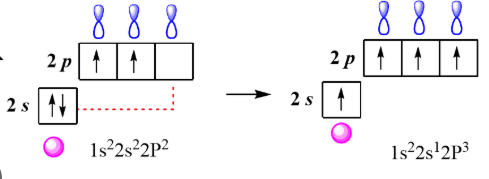
orbital mixing to form hybrid orbitals (CH4)
4 orbitals are hybridized
4 hybrid orbitals are formed
sp³ orbital has a large lobe and a small lobe
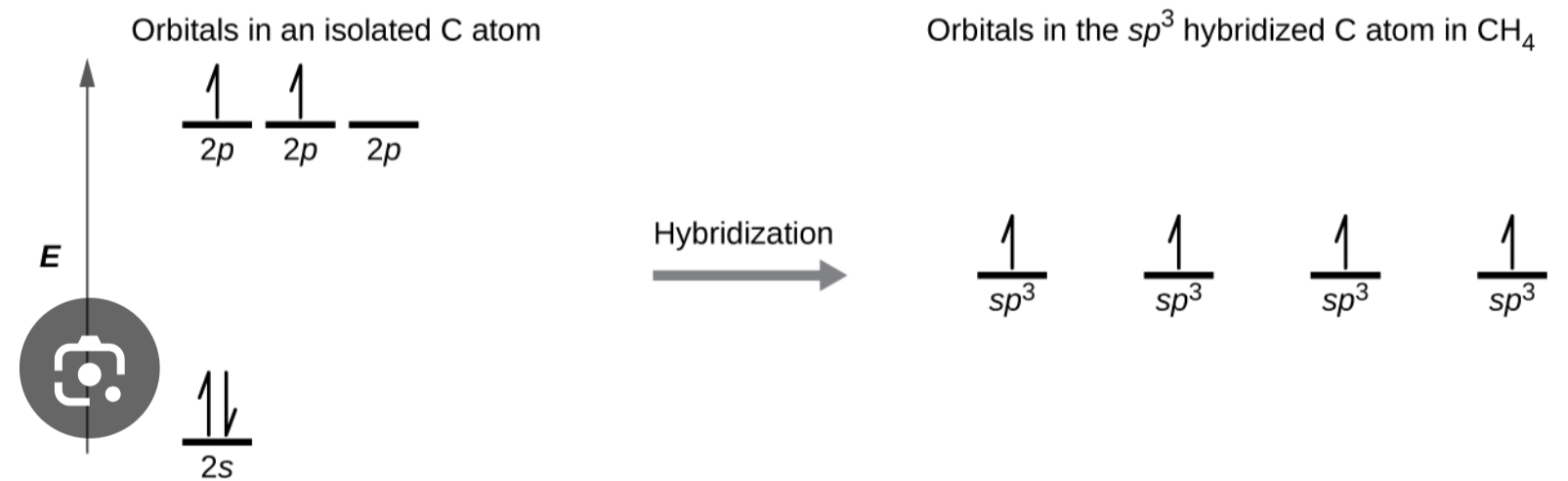
the hybridization of carbon in CH4
sp³
carbon is a tetrahedral
tetrahedral bond angle is 109.5
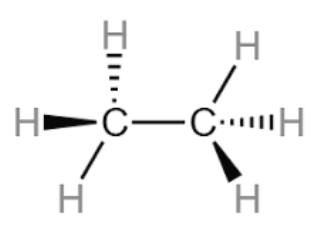
C2H6
ethane
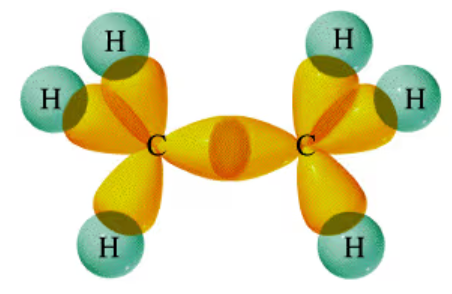
sp³ hybridization
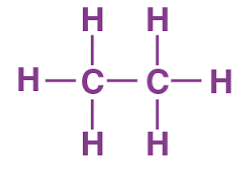
bonding in ethane (C2H6)
25% s and 75% p
C=C bond formed by sp²-sp² overlap
C-H bond formed by sp³-s overlap
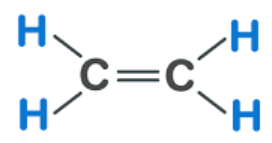
C2H4
ethylene (ethene)
sp² hybridization
bonding in ethylene (C2H4)
35% s and 67% p
C=C double bond formed by sp²-sp² overlap
C-H bonds formed by sp²-s overlap
double bond has 1 pi bond and 1 sigma bond
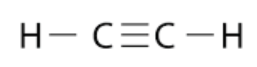
C2H2
ethyne (acetylene)
sp hybridization
bonding in acetylene (C2H2)
50% s and 50% p
C≡C triple bond formed by sp-sp overlap
C-H bond formed by sp-s overlap
triple bond is 2 pi bonds and 1 sigma bond
hybridization of methyl anion (CH3)
sp³ hybridization
lone-pairs on C are in sp³ orbital
C-H bond formed by sp³-s overlap
NH3
ammonia
sp³ hybridization
bonding in ammonia (NH3)
nitrogen has 3 unpaired valence electrons and forms 3 bonds
lone-pair electrons on N use sp³
N-H bonds formed by overlap of an sp³-s orbital
NH4+
ammonium ion
sp³ hybridization
water
H2O
sp³ hybridization
bonding of water (H2O)
oxygen has 2 unpaired valence elections and forms 2 bonds
oxygen lone-pair electrons ar ein sp³ orbitals
O-H bonds in sp³-s bonding
halides
group 9
florine through iodine
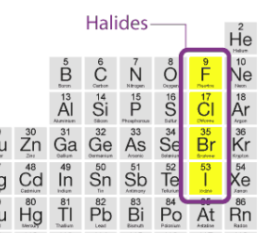
length and strength of hydrogen-halide bonds
H-F = length of 0.917
H-I = length of 1.609
as you go down the halides, length increases but bond strength decreases
sp³ hybridization
4 electron domains
One ‘s’ and three ‘p’ orbitals hybridize
sp² hybridization
3 electron domains
One ‘s’ and two ‘p’ orbitals hybridize
One unhybridized ‘p’ orbital remains to form a pi bond
sp hybridization
2 electron domains
One ‘s’ and one ‘p’ orbital hybridize
Two unhybridized ‘p’ orbitals remain to form two pi bonds
single-bond vs double-bond vs triple-bond orbitals
single-bond = one sigma bond
double-bond = one sigma bond & one pi bond
triple-bond = one sigma bond & two pi bonds
bond strength & bond length
the more bonds holding 2 atoms together, the stronger and shorter it is
more electron density = stronger & shorter
‘s’ orbital character and length/strength
the more ‘s’ character, the stronger and short the bond
more ‘s’ charcter = greater bond angle
the shorter the bond….
the stronger the bond
the longer the bond….
the weaker the bond
the greater the electron density in region of orbital overlap…..
the stronger the bond
pi vs sigma bond strength
the pi bond is WEAKER than a sigma bond
canceling dipole moments
when all identical polar bonds are symmetrically arranged around a central atom, with no lone electron pairs