Executive Function
 Call Kai
 Learn
Learn Practice Test
 Spaced Repetition
 Match
Match Flashcards
 Knowt Play
1/16

There's no tags or description
Looks like no tags are added yet.
Name | Mastery | Learn | Test | Matching | Spaced | Call with Kai |
|---|
No analytics yet
Send a link to your students to track their progress
17 Terms
Executive function
The cognitive control of behavior, thoughts, and emotions
goal-directed
conscious and effortful
state fluctuations
3 categories of EF
Working memory
Inhibitory control
Cognitive flexibility
Prefrontal Cortex (PFC)
Highly connected
Coordinates activity in different brain areas
Higher-order/complex cognition
Working memory
holding AND manipulating information in mind
Inhibitory control
suppress attention (or a response) to something
suppress a behavior
Cognitive flexibility
switch from one response to another
Measuring working memory: adults
Backward digit span
participants repeat numbers in reverse order
Measuring working memory: children
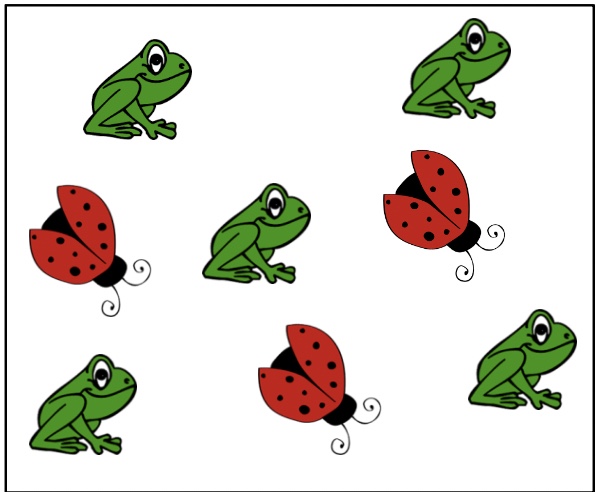
Visual counting span
(Present children with a series of cards, one
at a time
Ask them to count all frogs on each card + after a set number of cards, ask children
how many frogs were on each card
2-, 3-, and 4-card trials)
Measuring inhibitory control: adults
Stroop tasks
congruent trials
name the color of the ink!
RT for congruent vs. incongruent

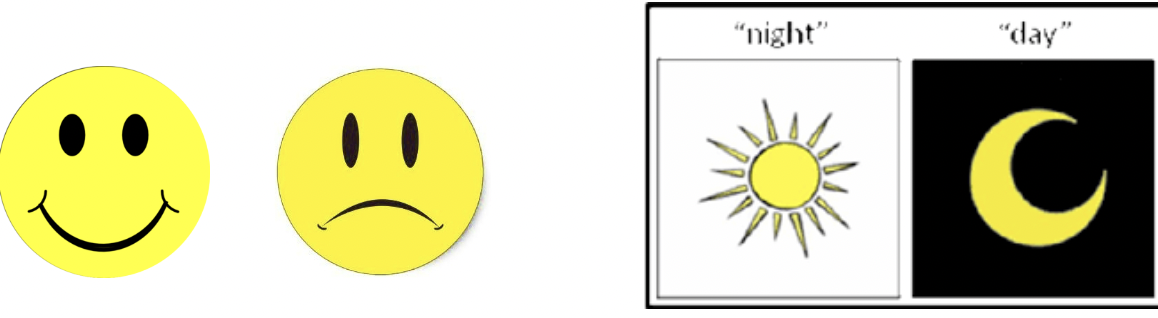
Measuring inhibitory control: children (images)
Stroop tasks but adjusted with smilely faces and night and day images
Measuring inhibitory control: children (marshmallow)
Delay of gratification - marshmallow tast
Measuring cognitive flexibility: adults
add subtract 3 to #s
Plus-minus task
3 lists of 30 2-digit numbers (add, subtract, alternate)
Average time to complete lists 1 and 2 < time to complete list 3
Shift cost = difference between time to complete first 2 lists compared to third
list
Measuring cognitive flexibility: children
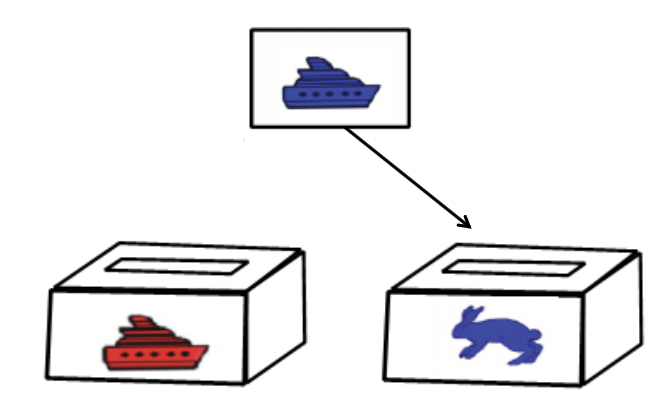
Dimensional Change Card Sort (DCCS)
Pre-switch: sort by color for 6 trials
Post-switch: sort by shape for 6
trials
Who passes post-switch?
3-year-olds = 30-40%
4-year-olds = 50-60%
5-year-olds = 90%
PFC development
One of the last brain structures
to develop
Adolescence
Risky behavior
Imbalance between “mature”
emotion areas and
“immature” PFC
EF allows us to…
Maintain attention
Ignore/resist distractions
Keep goals and goal-relevant information in mind
Tolerate frustration, regulate emotions
Reflect on experiences
Make plans
Individual differences in EF are related to:
Social abilities (peer cooperation, social understanding)
Aggression (social problem solving)
Adjustment to kindergarten
Reading and math
Planning and complex problem solving (fluid intelligence)
Academic “soft skills” (organization, engagement, prioritizing, staying “on task”)
Risky behaviors in adolescence
Physical health, income level, and substance-use problems in adulthood