Micro bio Chapter 5- Eukaryotes
 Call Kai
 Learn
Learn Practice Test
 Spaced Repetition
 Match
Match Flashcards
 Knowt Play
1/49

There's no tags or description
Looks like no tags are added yet.
Name | Mastery | Learn | Test | Matching | Spaced | Call with Kai |
|---|
No analytics yet
Send a link to your students to track their progress
50 Terms
Giardia
water borne protist
causes severe diarrhea
Characteristics of protist
animal like- protozoans- heterotrophs, unicellular
plant like- algae- photosynthetic, either unicellular or multicellular
fungi like- water molds
plankton
microorganisms that drift or float in water
zooplankton: motile and non photosynthetic
phytoplankton: photosynthetic
trophozoites
feeding stage of protozoans
cyst
cell with a protective wall
trophozoit becomes cyst (encystment)
Reproductive mechanisms- protozoans
asexually: binary fission, budding schizogony
spores: sporosoites
Schizogony: nucleus of cell divides multiple times before cell divides into many cells→ products= merozoites
sexually: haploid gametes fuse through syngamy
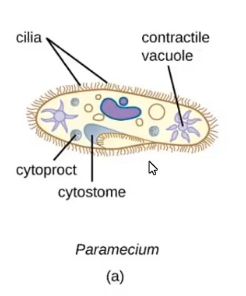
Paramecium
cilia for locomotion
two nuclei- macro (polypoid) and micro (diploid)
oral groove to ingest food
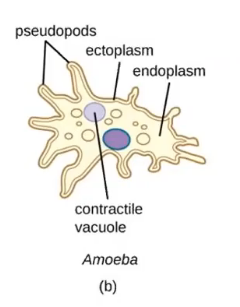
Amoeba
pseudopodia anchor cell to surface and pull foward
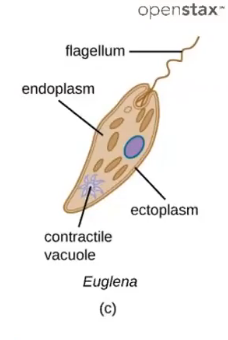
Euglena
whip like flagellum to propel
not pathogenic
two flagella, pellicle (shape), stigma (light sense), chloroplasts (photosynthetic)
Plasmalemma
plasma membrane
ectoplasm
outer gel layer, microfilaments of actin
endoplasm
fluid region of cytoplasm
cytostome
specialized feeding structure
cytoproct
takes food in through endocytosis→ exocytosis of waste through cytoproct
Holozoic
ingest whole food particles through phagocytosis
Saprozoic
ingest small soluble food molecules
contractile vacuoles
used to move water out of cell for osmotic regulation
modified mitochondria
kinetoplastids or hydrogenosomes
Entamoeba
E.histolytica- amoebic dysentery
Naegleria fowleri
brain eating amoeba, primary amoebic meningoencephalitis (PAM)
enters through the nose→brain
fatal
warm fresh water places
Acanthamoeba
keratitis (corneal inflammation and blindness)
Apicomplexans
intra/extra cellular parasites
apical complex- concentration of organelles, vacuoles and microtubules that allow parasites to enter host
complex life cycles that include infective sporozoite undergoes schizogony to make merozoits
Plasmodium- malaria→blood→liver→infects blood cells
Balantidum coli
ciliate capable of parasitizing humans
Giardia lamblia
diarrheal illness spread through cysts via feces
flagilates
Trichomonas vaginalis
flagellate
sexually transmitted→ trichomoniasis
no symptoms in men
vaginal discomfort and discharge, pregnancy complication
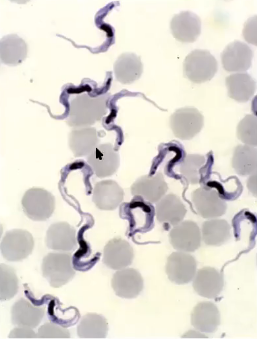
Trypanosoma brucei
half cycle in fly, half in humans
african sleeping sickness
T. cruzi: chagas disease
Fungi
unicellular or multicellular
cell wall chitin
cell membranes have dif. sterols call ergosterols
Mycoses
illnesses caused by fungi
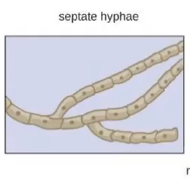
Septate hyphae
walls in between
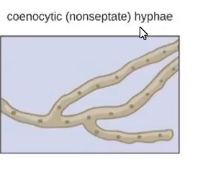
coenocytic (nonseptate) hyphae
no walls
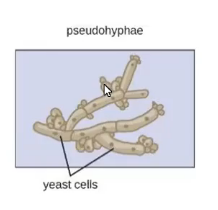
pseudohyphae
reproduce via budding
Mycelium
network of hyphae
Thallus
the body
Yeast
unicellular fungi
budding off→pseudohyphae
Candida albicans
yeast forms pseudohyphae
vaginal yest infections, oral thrush, candidiasis of skin
dimorphic fungi- candida albicans
two forms, molds or yeast
as mold: 25 C (77 F)
yest cells: 37 C (98.6 F)
Fungi: sexual
haploid hyphae with gametes at the tips fuse forming two distinct nuclei (dikaryotic)
nuclei fuses: karyogamy→ forms diploid zygote
sygote undergoes meiosis to form spores → germinate to start the haploid stage
Fungi sexual spores
zygospores
ascospores
basidiospores
Fungi asexual
mitosis
mitosis with budding
fragmentation of hyphae
asexual spores
sporangiospores
conidiospores
arthroconidia
Aspergillus flavus
contaminant of nuts and stored grains
produces aflatoxin: toxin and the more potent carcinogen
penicillium
antibiotic
Coccidioides immitis
valley fever
Candida albicans
vaginal and yest infection
normal microbiota of skin, intestine, genital tract and eat
Saccharomyces
bakers yeast
S. cerevisiae
Algae
plant like protist
unicellular or multicellular
responsible for 70% of O and organic matter in aquatic environments
Red algae: source of agar, agarose and carrageenan
dinoflagellates
diatoms
golden, brown, red, green algae
Dinoflagellates
when they become dense, red tide can occur-algal blooms
Chlamydomonas
unicellular green algae
Lichen
combination of two organisms symbiotic relationship
epiphytes: grow on other plants
can be seen as mutualism
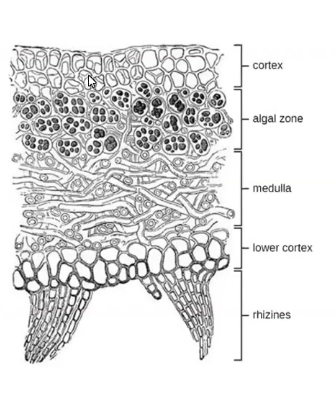
Upper cortex: provides protection
Algal zone: photosynthesis occurs
Medulla: fungal hyphae
lower cortex: protection
Rhizines: anchor the thallus to the substrate
types of lichen
crustose lichen: crusty appearance, tightly attatched to the substrate
foliose lichen: only be attatched at one point in the growth form and have second cortex below medulla
Fruticose lichen: rounded structures and an overall branched appearance
Helminth parasites
round worms: nematodes, intestinal parasites, often through undercooked foods
flat worms: platyhelminths, transmitted through undercooked meat