Unit 5.1: Bacterial Growth
 Call Kai
 Learn
Learn Practice Test
 Spaced Repetition
 Match
Match Flashcards
 Knowt Play
1/21

There's no tags or description
Looks like no tags are added yet.
Name | Mastery | Learn | Test | Matching | Spaced | Call with Kai |
|---|
No analytics yet
Send a link to your students to track their progress
22 Terms
What does microbial growth refer to?
Microbial growth refers to the increase in the number of cells, not the size
What are the physical requirements for bacteria to grow?
Physical requirements:
Temperature
pH
Osmotic pressure
What are the chemical requirements for bacteria to grow?
Chemical requirements:
Carbon
Oxygen
What are Psychrophiles?
Psychrophiles are bacteria that can grow between 0°C and 30°C
Psychrophiles are responsible for low-temperature food spoilage
What are Mesophiles?
Mesophiles are bacteria that can grow between 15°C and 45°C
Mesophiles are responsible for pathogens
What are Thermophiles?
Thermophiles are bacteria that can grow between 45°C and 80°C
Thermophiles are responsible for endospores
What are Acidophiles? Provide an example
Acidophiles are bacteria that can survive pH 0.1 to 5.4
e.g., Lactobacillus
What are Neutrophiles? Provide an example
Neutrophiles are bacteria that can survive pH 5.4 to 8.0
e.g., Vibrio cholerae
What are Alkaliphiles? Provide an example
Alkaliphiles are bacteria that can survive pH 5.4 to 8.0
e.g., Escherichia coli
What is osmotic pressure?
Osmotic pressure is the right water balance between a cell and its environment for normal functioning
What happens when a cell is in a Hypotonic solution?
If a cell is in a hypotonic solution, there is no change and the cell wall remains intact
What happens when a cell is in a Hypertonic solution?
When the cell is in a hypertonic solution, water leaves the cell which leads to plasmolysis
What are examples of reactive oxygen species (ROS)
ROS:
Superoxide anion
Hydrogen peroxide
Which enzyme detoxify Superoxide anion?
Superoxide dismutase detoxifies superoxide anion
Which enzymes detoxify Hydrogen Peroxide?
Catalase and peroxidase detoxifies hydrogen peroxide
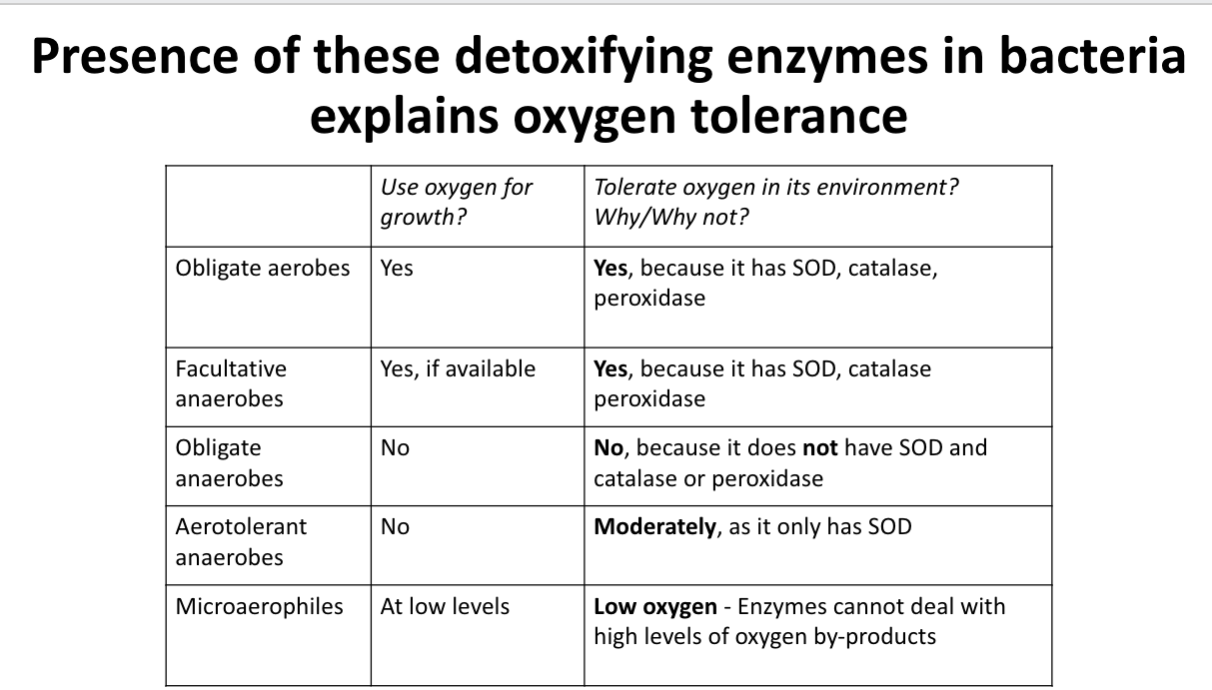
What does catalase positive look like and its conclusion?
Catalase positive looks like bubbling, concluding that the bacteria can use oxygen
What does catalase negative look like and its conclusion?
Catalase negative looks like no change, concluding that the bacteria cannot use oxygen
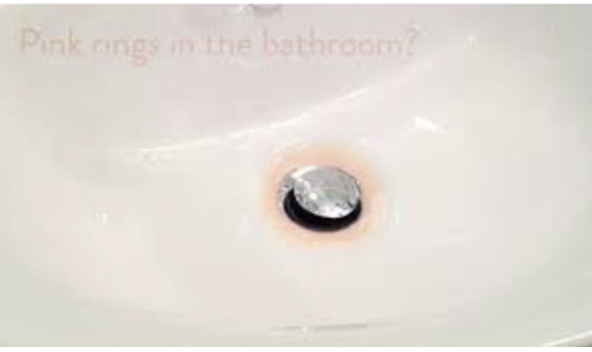
What are biofilms?
Biofilms are bacterial communities that live on surfaces
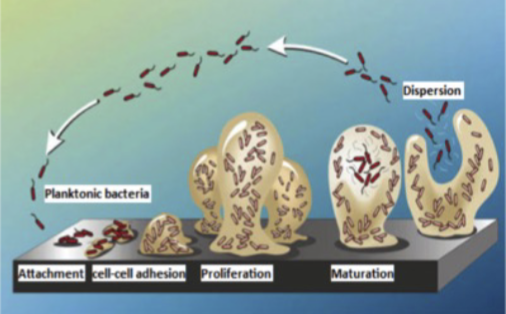
Describe the steps of how a Biofilm forms
Microbe attaches to a surface
Microbe starts secreting extracellular polymeric substance (EPS)
Microbes reproduce
EPS attracts more microbes, resulting in a bacterial community
Bacteria slough off and migrate to colonize new surfaces
What are the advantages of biofilms?
DNA exchange
Protection
Works as a community to carry out complex tasks
Why are biofilms not good for us?
They are difficult to remove and much more resistant to antimicrobial agents
Biofilms can form on medical devices, migrating into the body causing infection