Rome as a Living Museum - Midterm 1
 Call Kai
 Learn
Learn Practice Test
 Spaced Repetition
 Match
Match Flashcards
 Knowt Play
1/18

There's no tags or description
Looks like no tags are added yet.
Name | Mastery | Learn | Test | Matching | Spaced | Call with Kai |
|---|
No analytics yet
Send a link to your students to track their progress
19 Terms
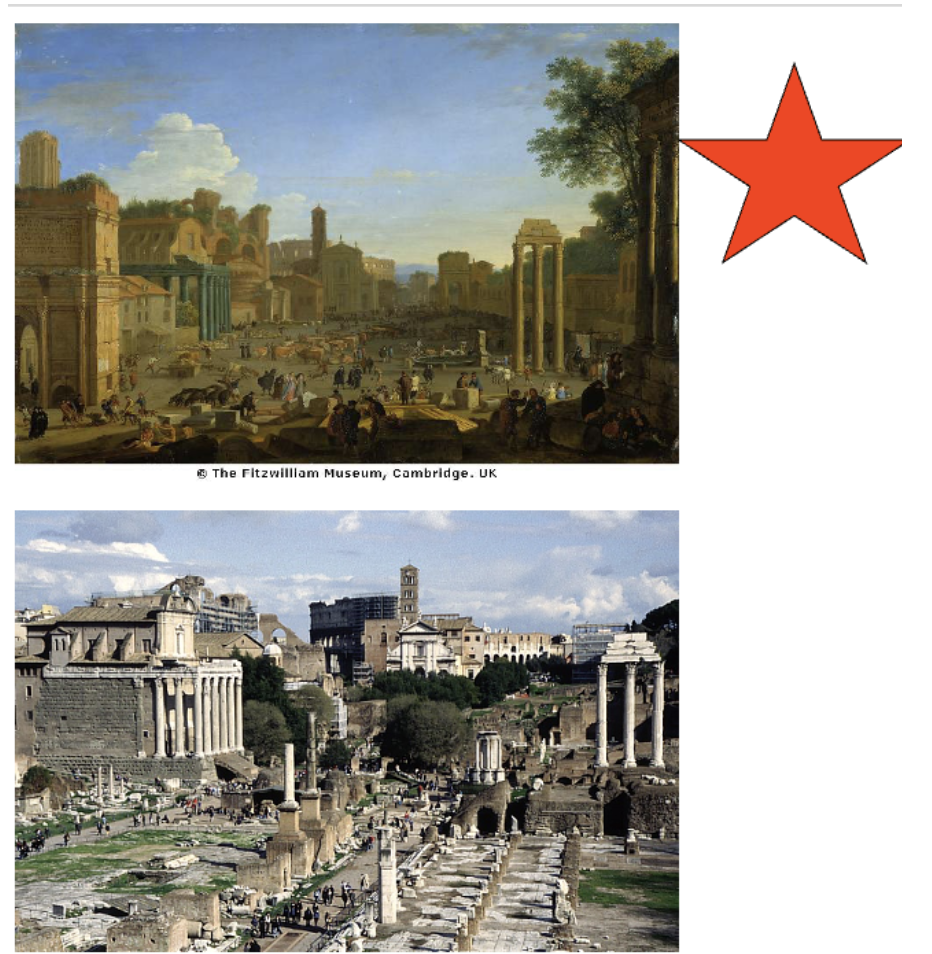
Campo Vaccino (cow field)
Dates back to 1630
Until 19th Century - Monuments Half Buried
Thick layer of Earth (graveyard, swampy. drained with one air channel, underground sewer system)
Picture Shows: Part of the Arch of Septimus Severus, The Temple of Antoninus and Faustina, The Arch of Titus, The Columns of the Temple of Castor and Pollux.
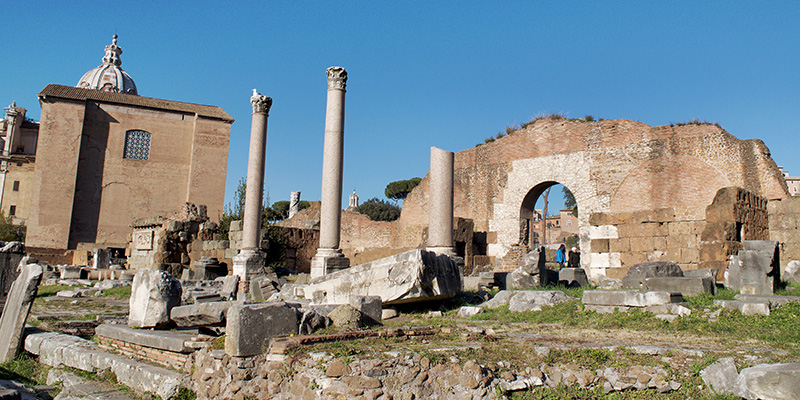
Basilica Aemilia
-Built in 179 BC
-Portico with tavernae; chambers used by money lenders
-Justice, economic, financial transactions, buying & selling during bad weather
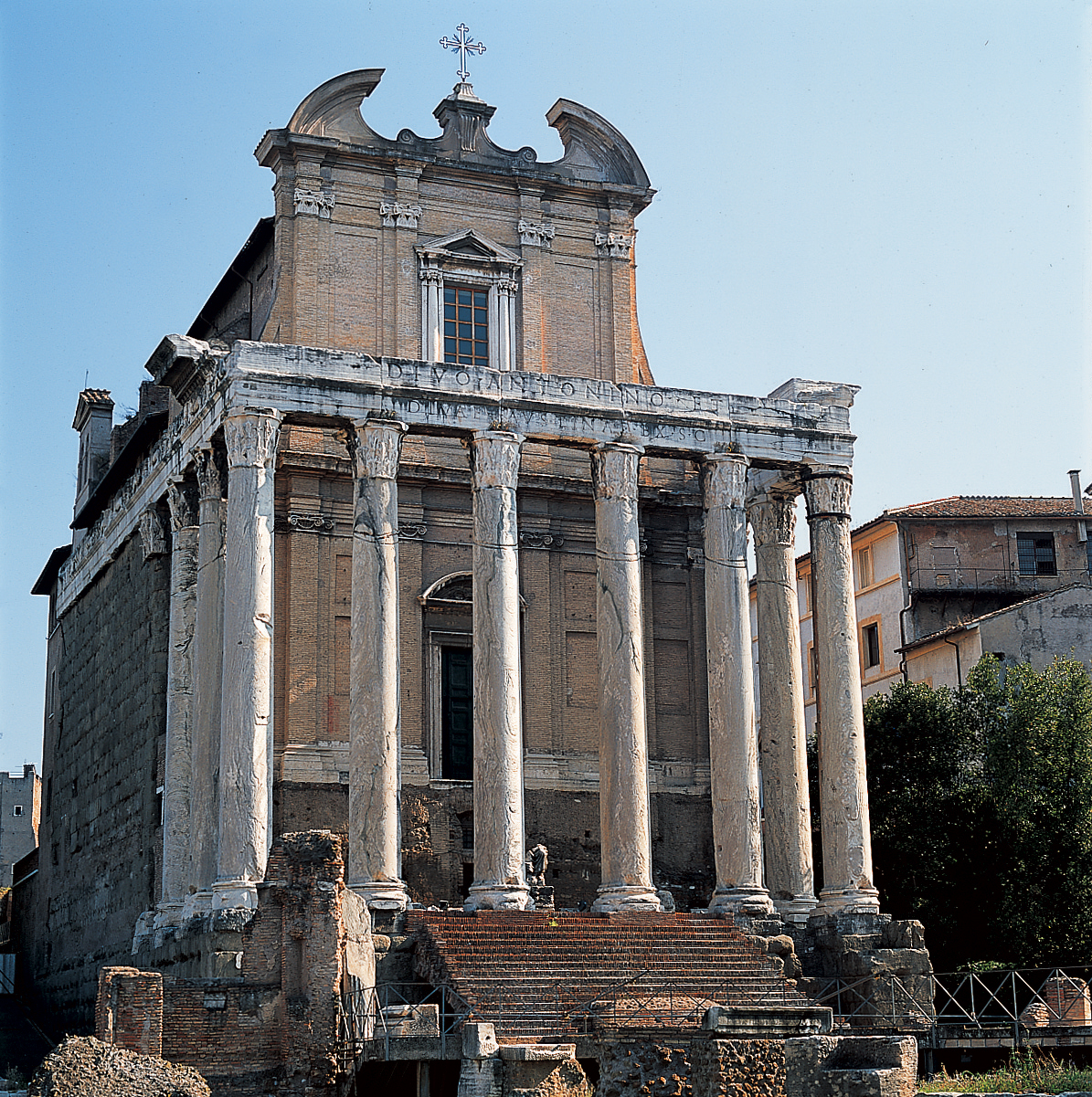
Temple of Emperor Antonius & wife Faustina
-141 AD
-Middle Ages: Transformed to Church of San Lorenzo
-Holes of Tuff (volcanic stone) → Marble stripped off & carted away (iron clamps)
-Built for Antonius for deified wife → dedicated to him after death → restored with brick
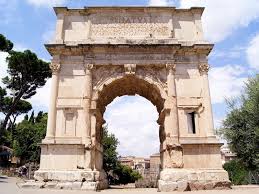
Arch of Titus
-Made by Brother ~81 AD
-Relief: Apotheosis of Titus rises to heaven on eagle; 2 side panels (climax of triumph)
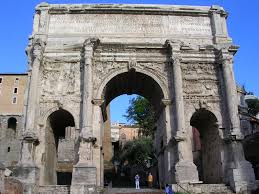
Arch of Septimus Severus (half buried)
-203 AD
-Celebrates victory of Parthians; made of marble
-Attic: Dedication to Severus and son, Caracalla
-Panels of victory w/ trophies, personification of seasons
-4 panels → 2 military campaigns in Asia
-Top: Bronze Chariot, melted down in middle ages
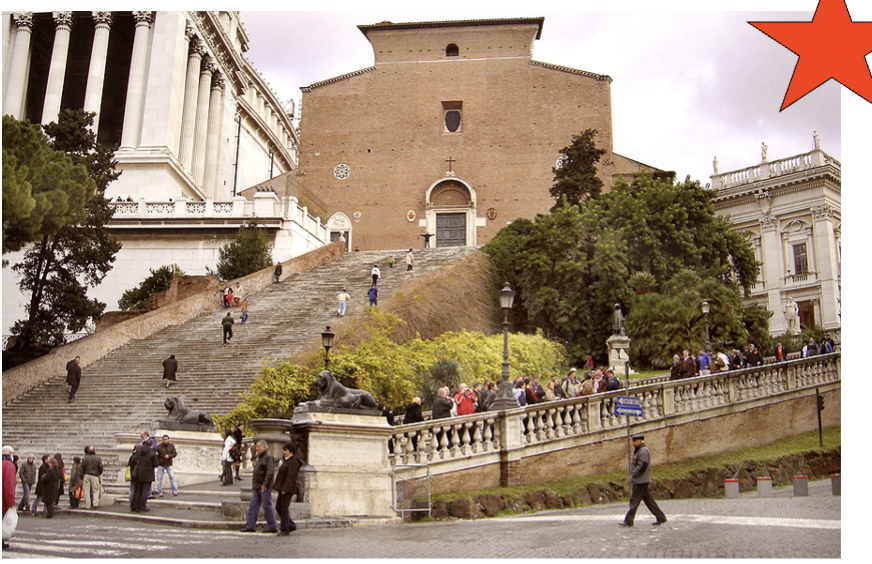
Santa Maria in Araceli
-Franciscan church: cross with 2 arms (Pope Francis & Jesus)
-Medieval Legends: Augustus had an altar (ARA) dedicated to the Virgin Mary after her apparition in the clouds with her child above the hill
-Seat of the Auguraculum (augur = a priest that interpreted the gods’ will by observing signs, especially during the flight of birds in ancient Rome)
-Church was built around the VI century AD and renovated around 1250
-Birds: prophesize
-Church: bridge between Earth & heaven
-Augustus: emperor at the line of Jesus (regarded as Christian but he’s pagan) “golden age”
-Reuse columns; places used as quarries (heights & bases vary)
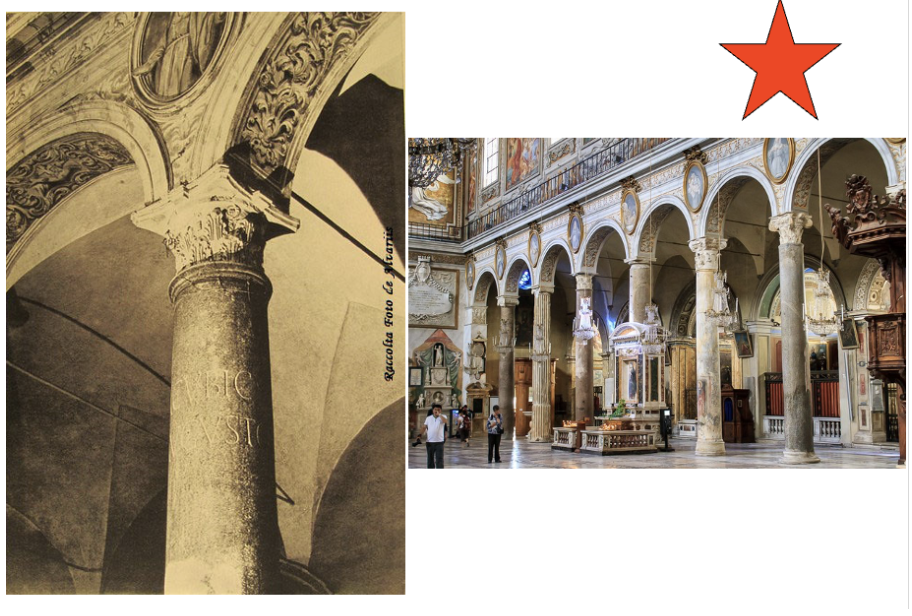
3rd Column (basilica of Santa Maria in Aracoeli)
Inscription: “from a small room from palace of Emperor Augustus” (inscription)
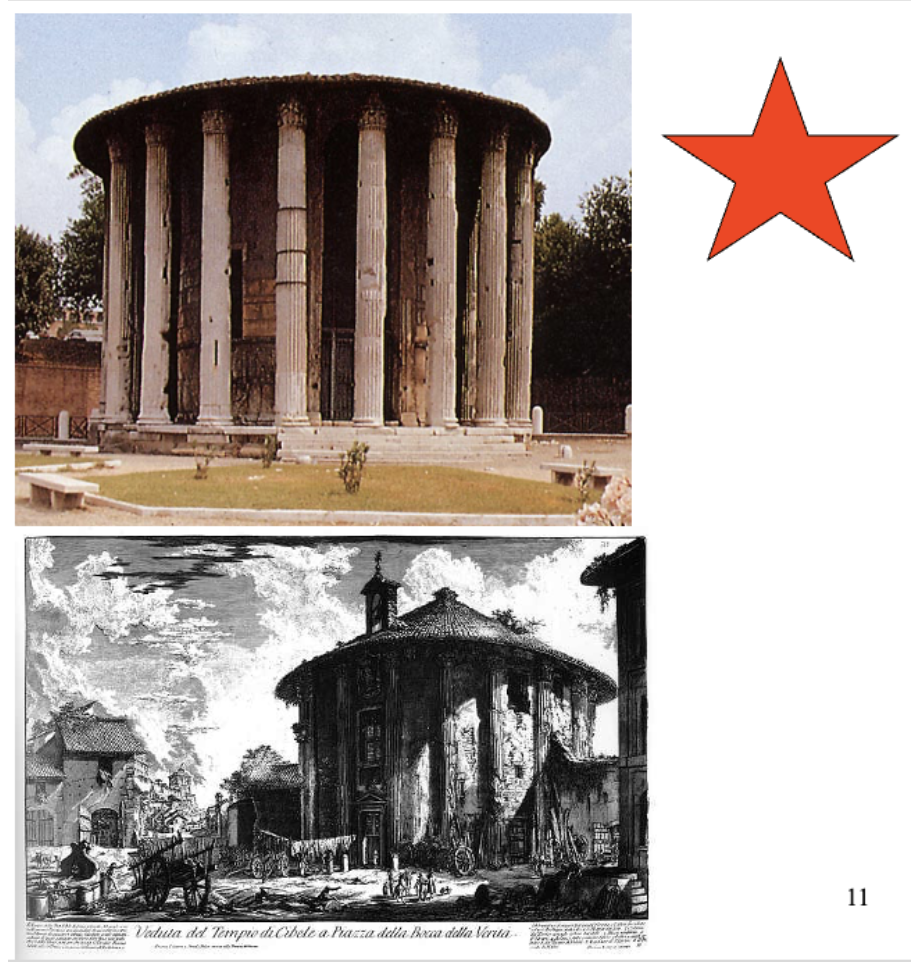
Temple of Hercules Olivarius in the Forum Boarium (cattle market)
-2 century BCE
-Oldest surviving marble building in Rome, one of the first examples of marble architecture in Rome
-Converted to church, dedicated to St. Stephen in Middle Ages (1132)
-Spaces between columns: walled in ~10th Century
-Napoleon: mediaeval walls between the columns were removed and the small bell tower was demolished
-Free standing columns incorporated → Napoleon: demolished but kept inside outside wall
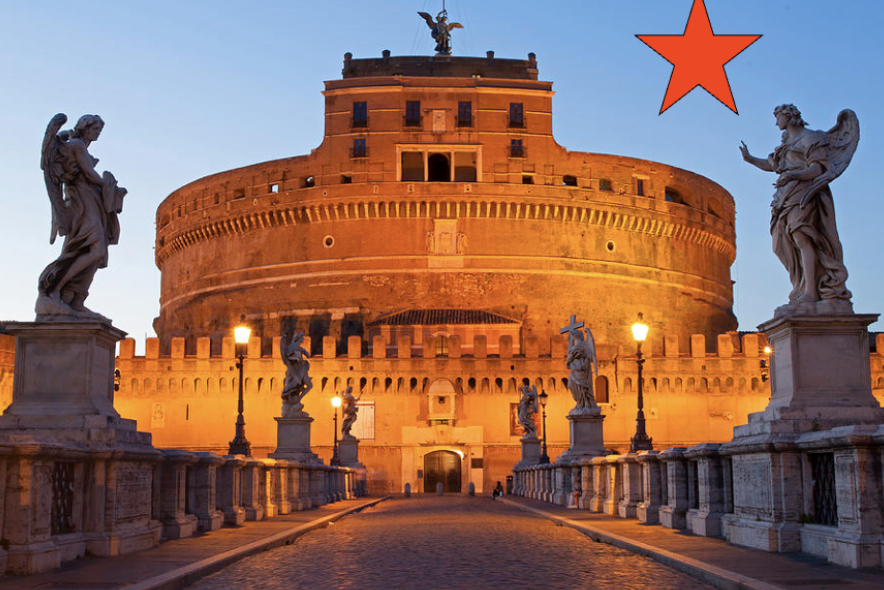
Castel Sant’Angelo
-Mausoleum of Hadrian
-Converted into Papal Fortress; Connected to Vatican via Passetto (“elevated walkway”)
-Moat, wall, and inner moat (impossible to enter). Also, draw bridges/walkways now that were completely sealed off pior.
-Commissioned by Pope Julius II, fortified over centuries. Pope Paul III Farnese commissioned decoration of audience hall
-Built between 135-139, burial place for Hadrian/family/future emperors
-Cylinder: 21 m high, 64 m diameter rising over square substructure
-Cypresses planted on cylinder; quadriga on top (ancient 2-wheeled chariot, drawn by 4 horses)
-Angels on bridge: Passion of Christ (his trial, the nails, crown of thorns, a sponge of vinegar, a sword stabbed into his side, a fabric, etc.)
-Beginning of Bridge: St. Peter on Left Side (keys of heaven), St. Paul on right side (book & sword)
-Scene from Life of Pope Gregory the Great: Archangel Michael above mausoleum sheathing sword - end of black plague
-Loggia of Pope Julius II: stood there blessing pilgrims crossing the river to St. Peter’s Basilica
-Popes were flexible-moved around, some lived in Castel Sant’Angelo, spent time in library & Sasla Polina etc.)
-Sala Polina: Commissioned by Pope Paul III between 1545-1547, decorated with episodes from life of St. Paul & Alexander the Great. Painting of Paul’s conversion (blinded for 3 days, fell of horse)
-Woman breastfeeding = charity (giving)
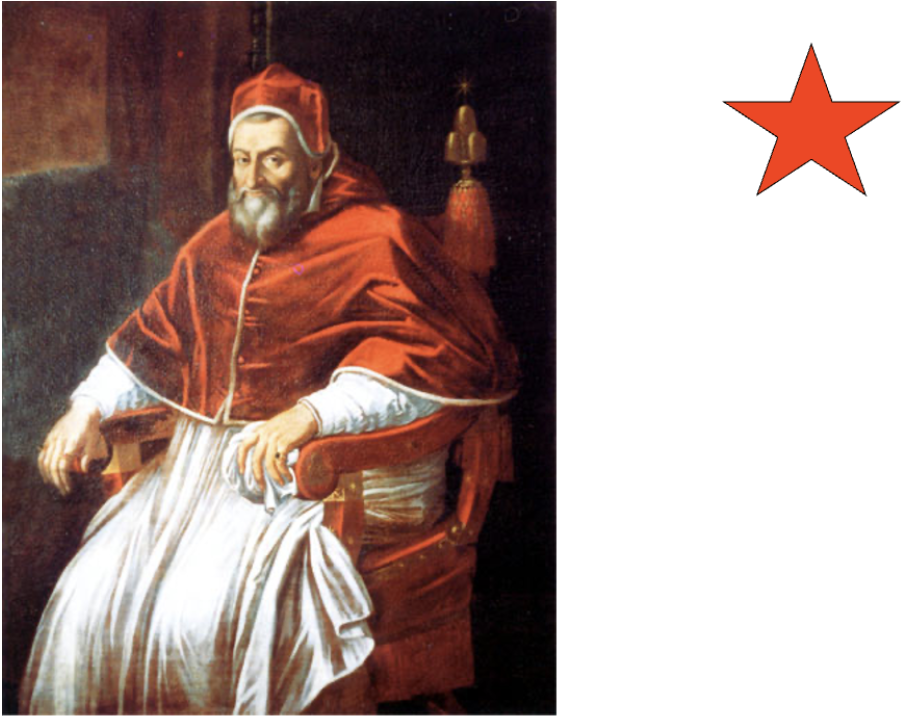
Pope Sixtus V (1585-1590)
-Goal: create new, Christian Rome (Christian museum)
-”Hysterical” reaction of church - change previous beliefs of indulgences, pagan lifestyle, etc.)
-Finished dome on top of St. Peter’s Basilica in ~500 days.
-Urban transformation (broad, paved streets linking city’s churches)
-Built roads (shaped in star) connecting important basilicas, making sites accessible to pilgrims/the faithful. Connection @ St. Maria Maggiore Basilica.
-Re-erected 4 ancient Egyptian Obelisks (brought to Rome as symbols of imperial power: Vatican obelisk, north transept of Lateran, before apse of St. Maria Maggiore, Santa Maria del Popolo)
-2 symbols of Imperial Rome: Columns of Trajan (1587, statue of St. Peter - powerful emperor, Vicar of Christ) and Column of Marcus Aurelius (1588, statue of St. Paul - supreme philosopher)
-Capella Sistina
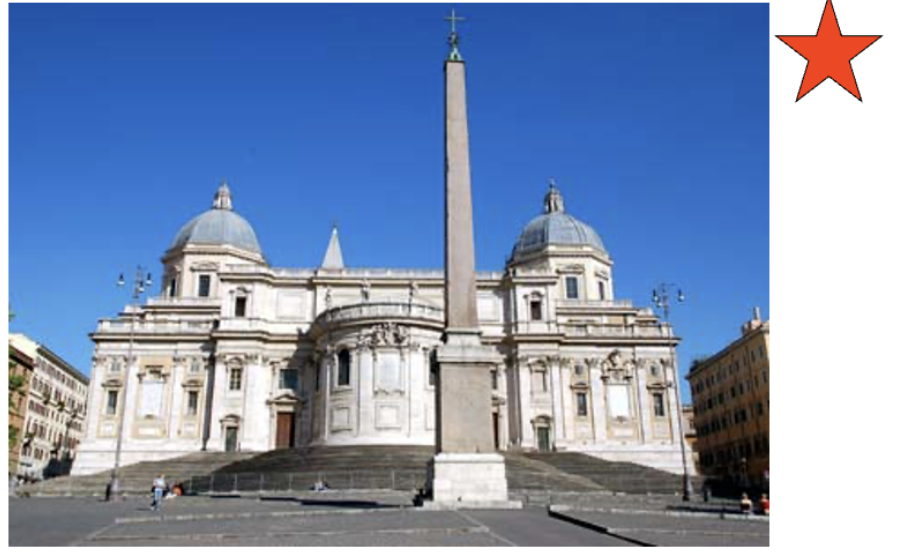
Esquiline Obelisk behind Santa Maria Maggiore
-1587: Transported from Mausoleum of Augustus
-Inscription: “Christ, who brings peace to the world with his victorious Cross, wanted to be born at the time of the Augustan Peace.”
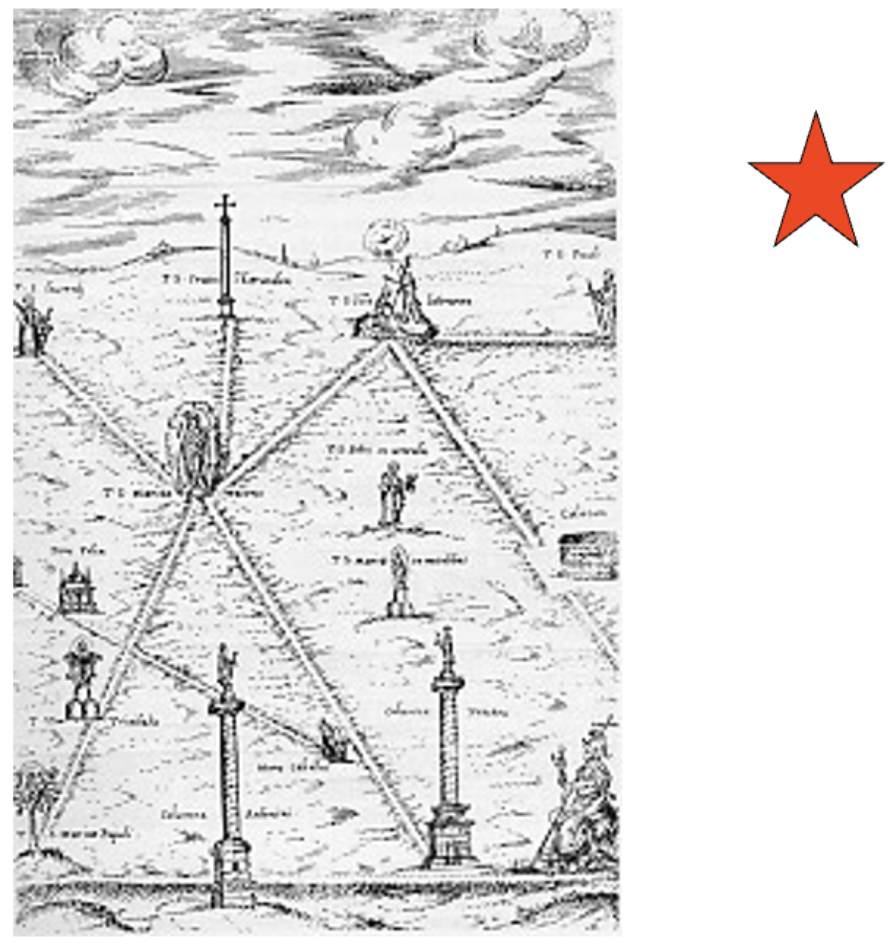
Sistine Planning from De rebus praeclare gets a Sisto V Pontifice Maximo (1588)
-Santa Maria Maggiore is in the center (where paths intersect; star shape)
-Upper right: St. John Lateran
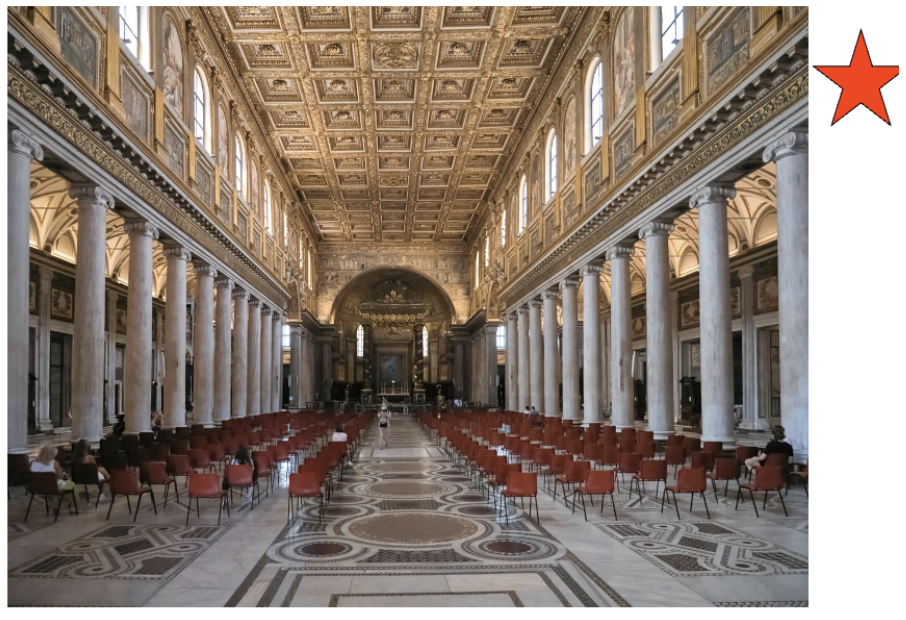
Basilica of Santa Maria Maggiore (built under Sixtus III 432-440)
-Biblical episodes of Abraham, Moses
-Infancy of Christ on triumphal arch framing apse; Jesus shown crowning Virgin Mary
-On Esquiline Hill (tall place)
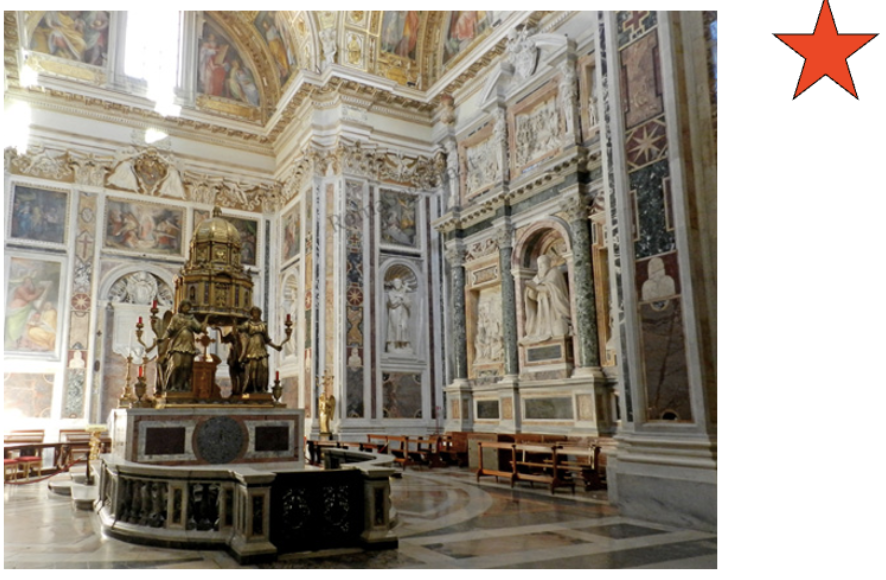
Capella Sistina
-Greek Cross Plan, Model: Capella Gregoriana
-Architect: Domenico Fontana
-Marble from ancient Roman monuments
-Sixtus V shown without crown (humility)
-4 Chapels in 1 (Reliquary - 2 relics from Santa Maria Maggiore: remains of St. Jerome & Presepio, Papal Funerary Complex - remains of Sixtus V and Pius V mentor, Papal Chapel - pope/someone designated by him clebrates mass, Chapel of the Sacrament)
-Holy Crib: in Confessio—pieces of sycamore dating back to Jesus’ birth; under papal seat
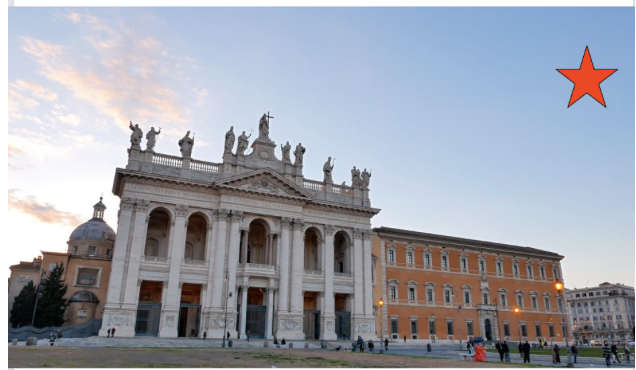
Lateran Palace
-Cathedral of Diocese of Rome; official seat of Pope as Bishop of Rome. Connection: Via Merulana
-Mother of all churches
-Dedicated to Jesus, John the Apostle, John the Baptist
-Statues of apostles inside; ordered closer to altar with importance
-Back of church - 2 statues at top: Jesus’ resurrection & Jonah + Whale (both took 3 days, thought to foreshadow/prophesize)
***NOT ST. PETER’S BASILICA, because this is INSIDE CITY WALLS!
-Next to St. John Lateran
-Old palace (orange) rebuilt at time of Sixtus V by architect Domenico Fontana
-Site for papal ceremonial
-First public church (Constantine legalized Christianity in 313 AD, converted by mother Helena)
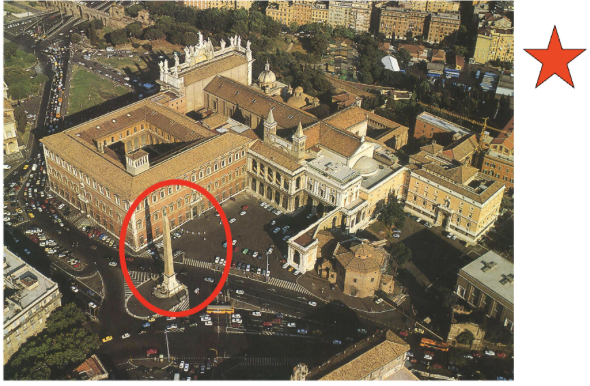
Lateran Obelisk
-Sixtus V moved Egyptian obelisk from Circus Maxums to here in 1587
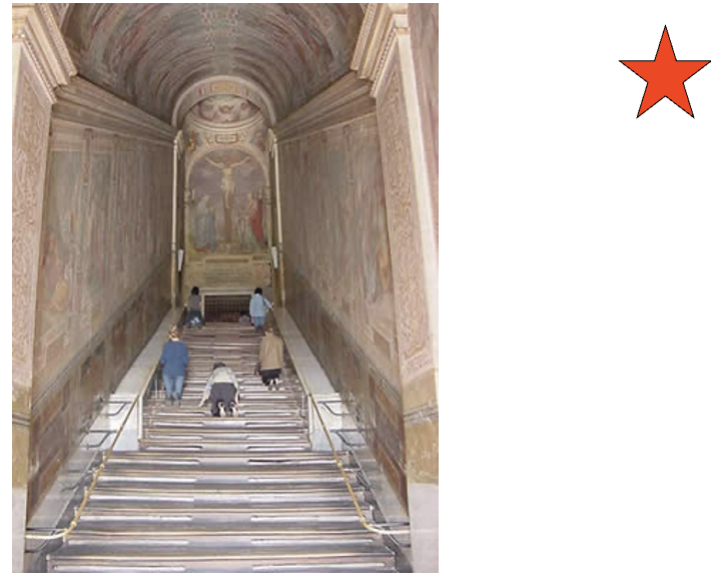
Scala Santa (Holy Stairs)
-Believed that Jesus climbed, descended 2x during day of Passion on the way to trial before Pontius Pilate (governor of Judea)
-St. Helena (Constantine’s mother) said to bring steps from Jerusalem to Rome as gift to Pope Sylvester (311-314)
-Time of Sixtus V (1588): Stairs joined to Chapel of Sancta Sanctorium (Holy of Holies), private chapel of popes with many relics
RELICS ARE IMPORTANT (FINGERS, BONES, HEAD, ETC.) BC THEY ARE SAID TO BE “TOUCHED BY GOD” ESP FROM MARTYRS
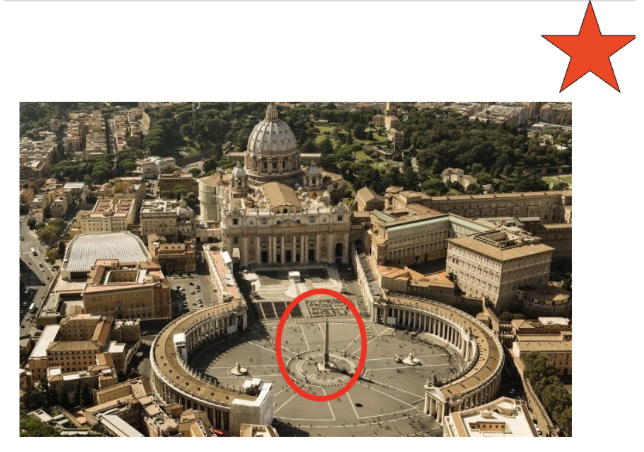
Vatican Obelisk
-Egyptian obelisk from Hellioplis (1900-1700 BC) in St. Peter’s Square
-Near Vatican: pagan cemetery (Circus of Nero → Christians torn by dogs/wild animals, nailed to crosses, doomed to flames & burnt)
-Connected to cult of the sun
-Transported by Emperor Caligula; placed in Circus of Caligula (Nero) where St. Peter was crucified upside down (left side of diagram?)… “silent witness” to his martyrdom
-Bronze Cross & Exorcism on base “Behold the Cross of the Lord! Flee ye adversaries!”
-Constantine: First version of St. Peter’s Basilica on top of Peter’s Tomb (“spiritual energy from his bones”)
-Via Cornelia runs past Circus of Nero, where St. Peter’s Basilica is
-Sixtus V: moved to square in front of new St. Peter’s Basilica
*CASTELLO (scaffolding, carne, pulley blocks & ropes)
ONLY OBELISK THAT HAS NEVER FALLEN
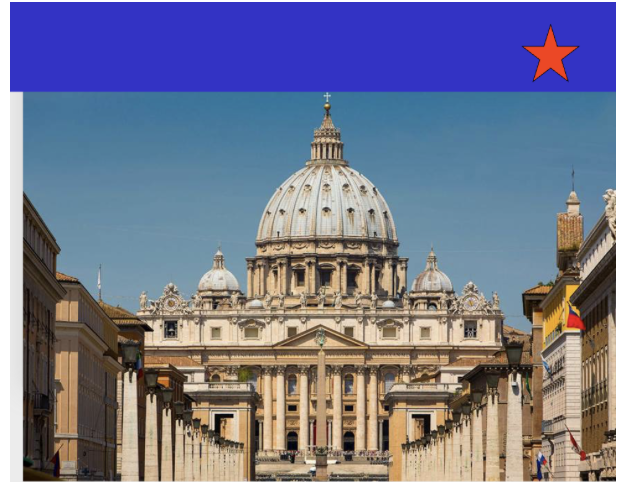
Dome of St. Peter
-Designed by Michelangelo (between 1545-1564)
-Built under Sixtus V (1586-90)
-Designed to be like dome in Pantheon - height raised by Giacomo della porto by 26.5 ft
-448 ft high
-Double shelled structure like Brunelleschi’s Dome in Florence
-Different than dome by Bramante (architect of Julius II)
-Lantern at top with Cross & sphere
-Julius II: sponsored building with indulgences (calculated amounts of $$ to reduce time in purgatory) → Martin Luther: Reformation (address corruption in Roman church, sacraments, indulgences, immorality, “pagan lifestyle of popes)
-Dome: “worthy of marvel, surpassed glories of ancient Romans.”
-Necropolis, pagan cemetery (!100 tombs of popes under floor of basilica)
-Old Basilica: Built under Constantine, 324-329 AD
-Council of Trento (1545-1563) reaffirmed Catholic doctrines challenged by Protestants (authority of pope, 7 sacraments, salvation through faith + works, indulgences) & promoted internal reforms like stricter clergy discipline