Mitochondria and Pyruvate oxidation
0.0(0)
Studied by 1 person Call Kai
 Learn
 Practice Test
 Spaced Repetition
 Match
 Flashcards
 Knowt Play
Card Sorting
1/5

6 Terms
1
New cards
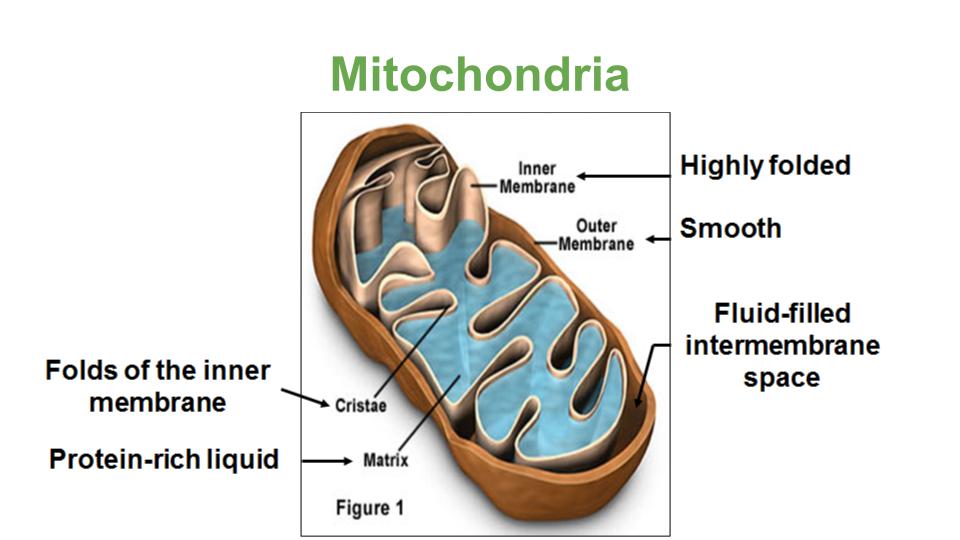
Outer membrane
Smooth, has fluid-filled intermembrane space
2
New cards
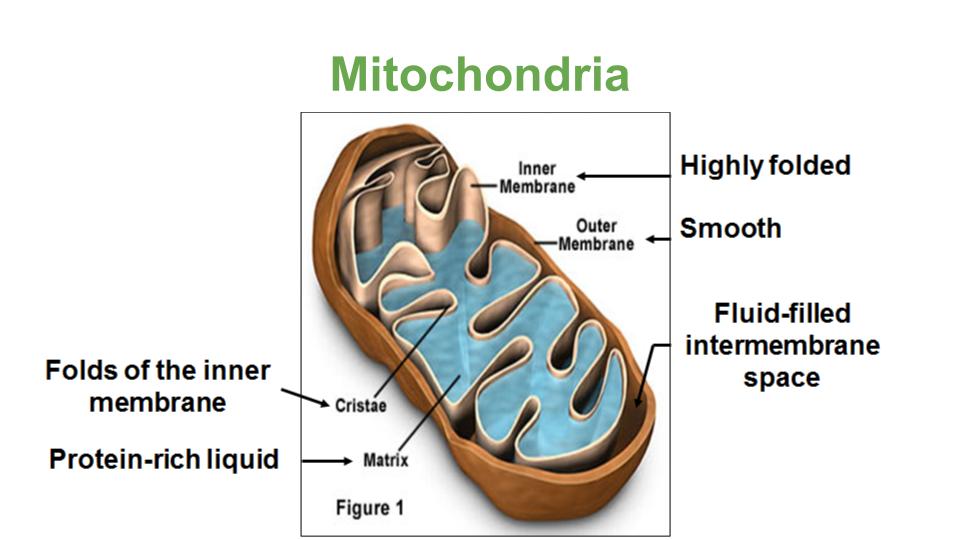
Inner membrane
Highly folded, filled with the matrix, folds are called cristae
3
New cards
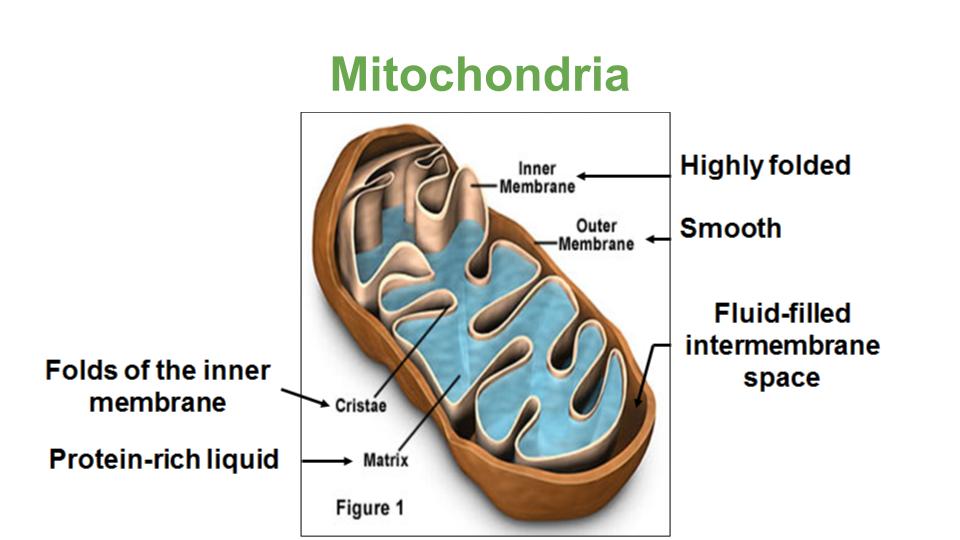
Matrix
protein-rich liquid that fills the inner membrane
4
New cards
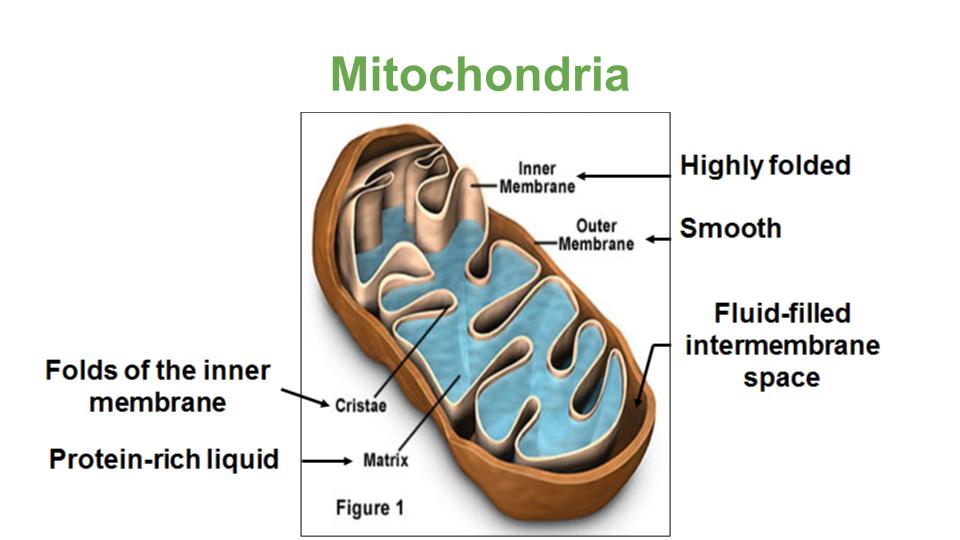
Cristae
the folds of the inner membrane
5
New cards
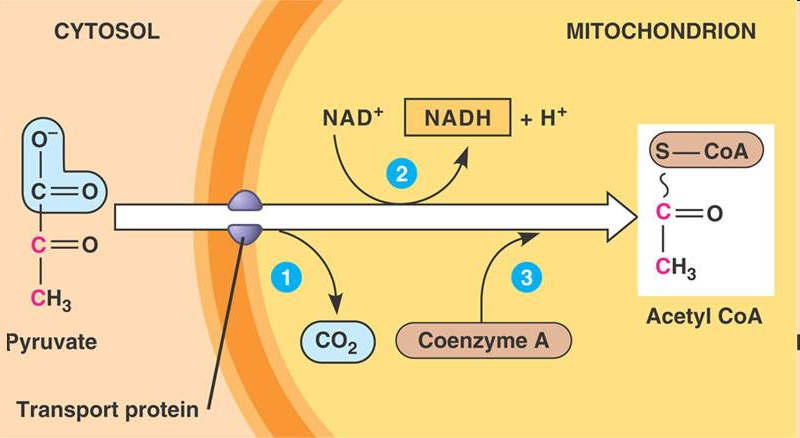
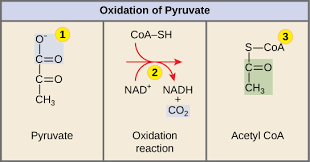
Pyruvate oxidation steps
1. CO2 is removed
2. NAD+ is reduced to NADH and the 2-carbon compound becomes acetic acid
3. Coenzyme A (CoA) attaches to acetic acid to form acetyl-CoA.
6
New cards
Acetyl-CoA
Lipids and Proteins are turned into Acetyl-CoA, which Goes to the Krebs Cycle to make ATP if the body needs energy, if the body **does not** need energy, Acetyl-CoA is turned into fat.