Unit 7 AP World History Global Conflict After 1900
 Call Kai
 Learn
Learn Practice Test
 Spaced Repetition
 Match
Match Flashcards
 Knowt Play
1/68

There's no tags or description
Looks like no tags are added yet.
Name | Mastery | Learn | Test | Matching | Spaced | Call with Kai |
|---|
No analytics yet
Send a link to your students to track their progress
69 Terms
Russian Revolution
Prompted by labor unrest, and calls for political reform, this revolution against the Tsarists government led to the abdication of Nicholas II and the creation of a provisional government in March 1917. Czar Nicholas II was murdered and Vladimir Lenin sought control to implement his ideas of socialism.
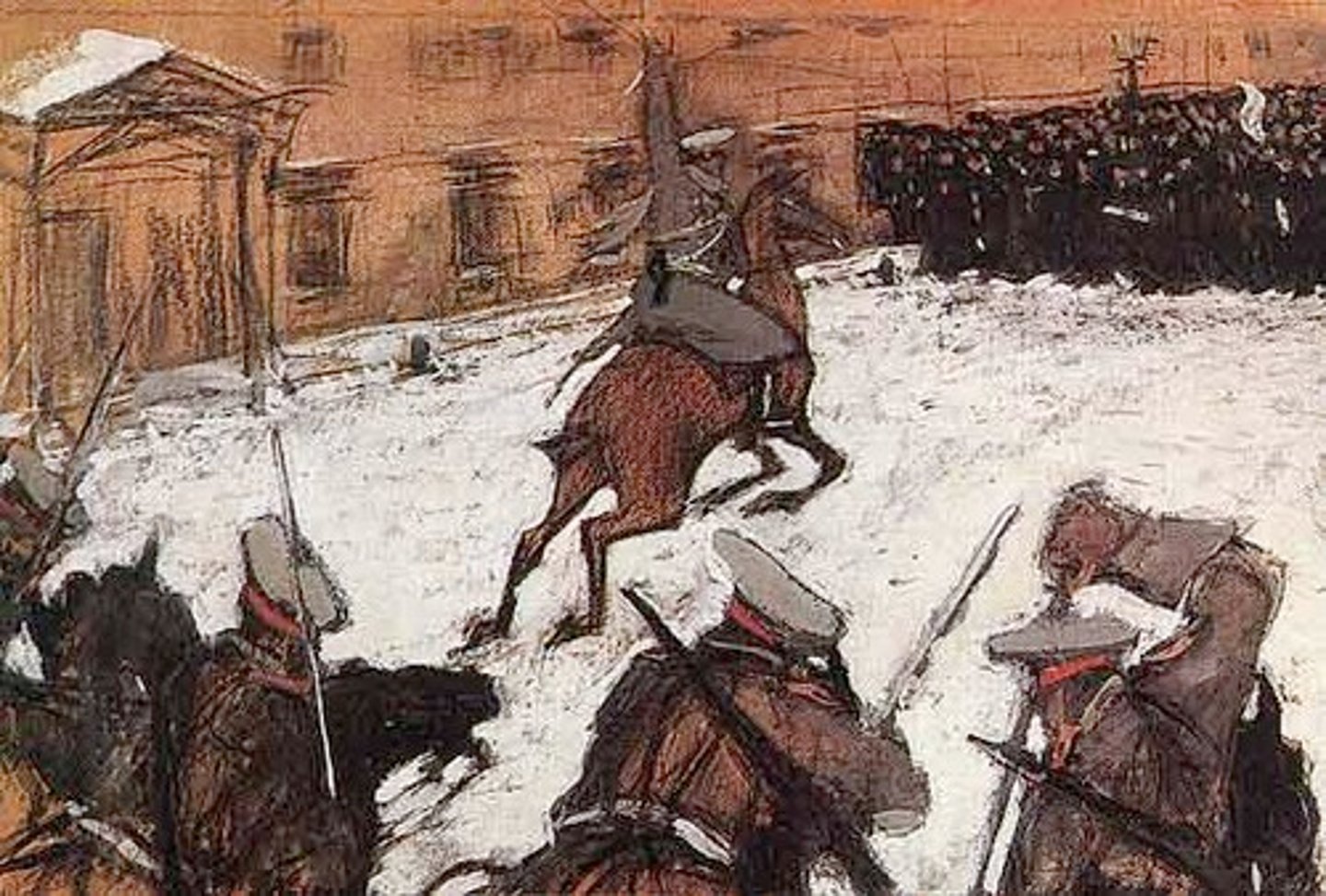
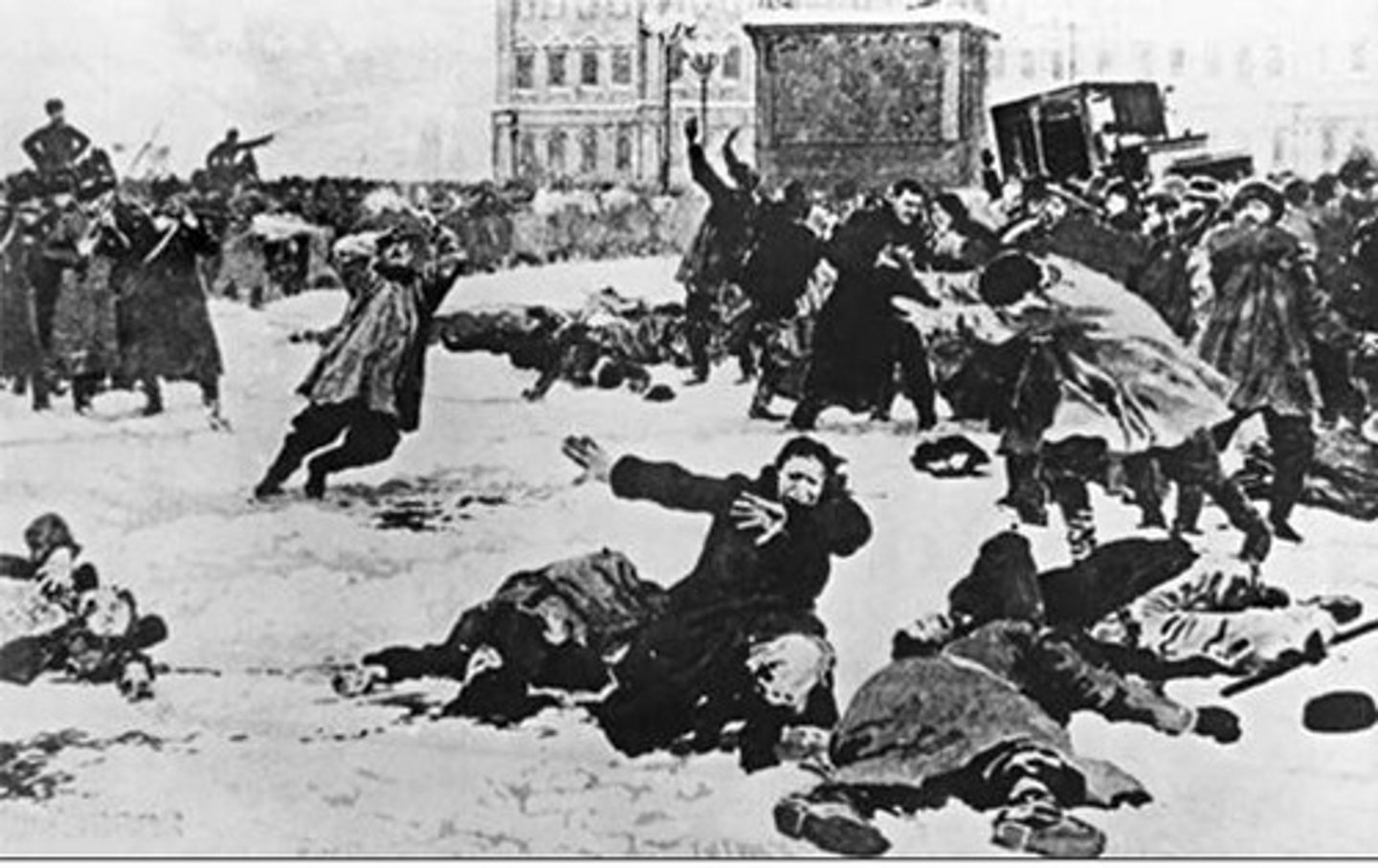
Bloody Sunday 1905
A massacre of peaceful protesters at the Winter Palace in St. Petersburg in 1905,
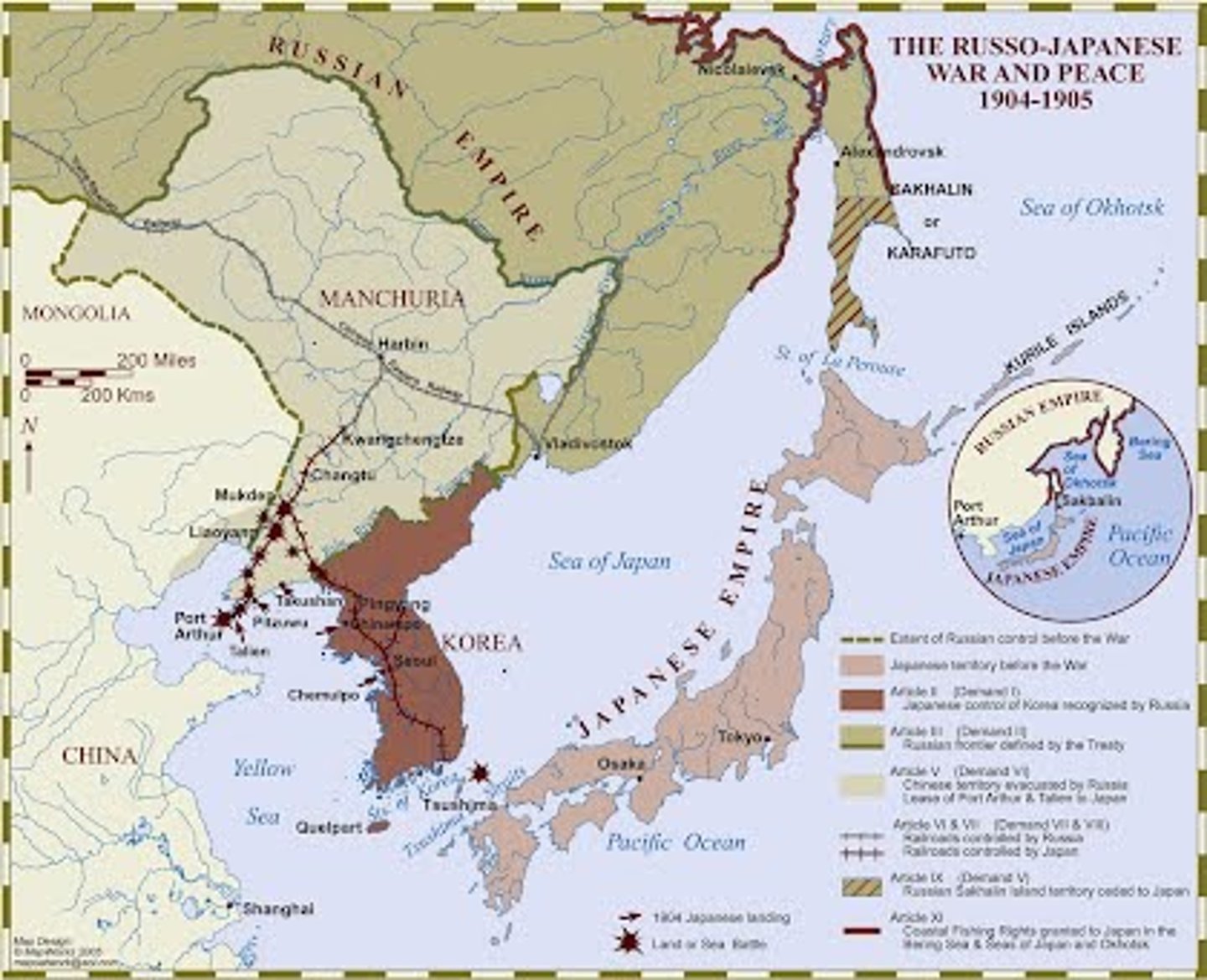
Russo-Japanese War
(1904-1905) War between Russia and Japan, sparked by the two countries' efforts to dominate Manchuria and Korea Japan emerges victorious. First time that an East Asian state defeated a European power.
Bolsheviks
A group of revolutionary Russian Marxists who took control of Russia's government in November 1917
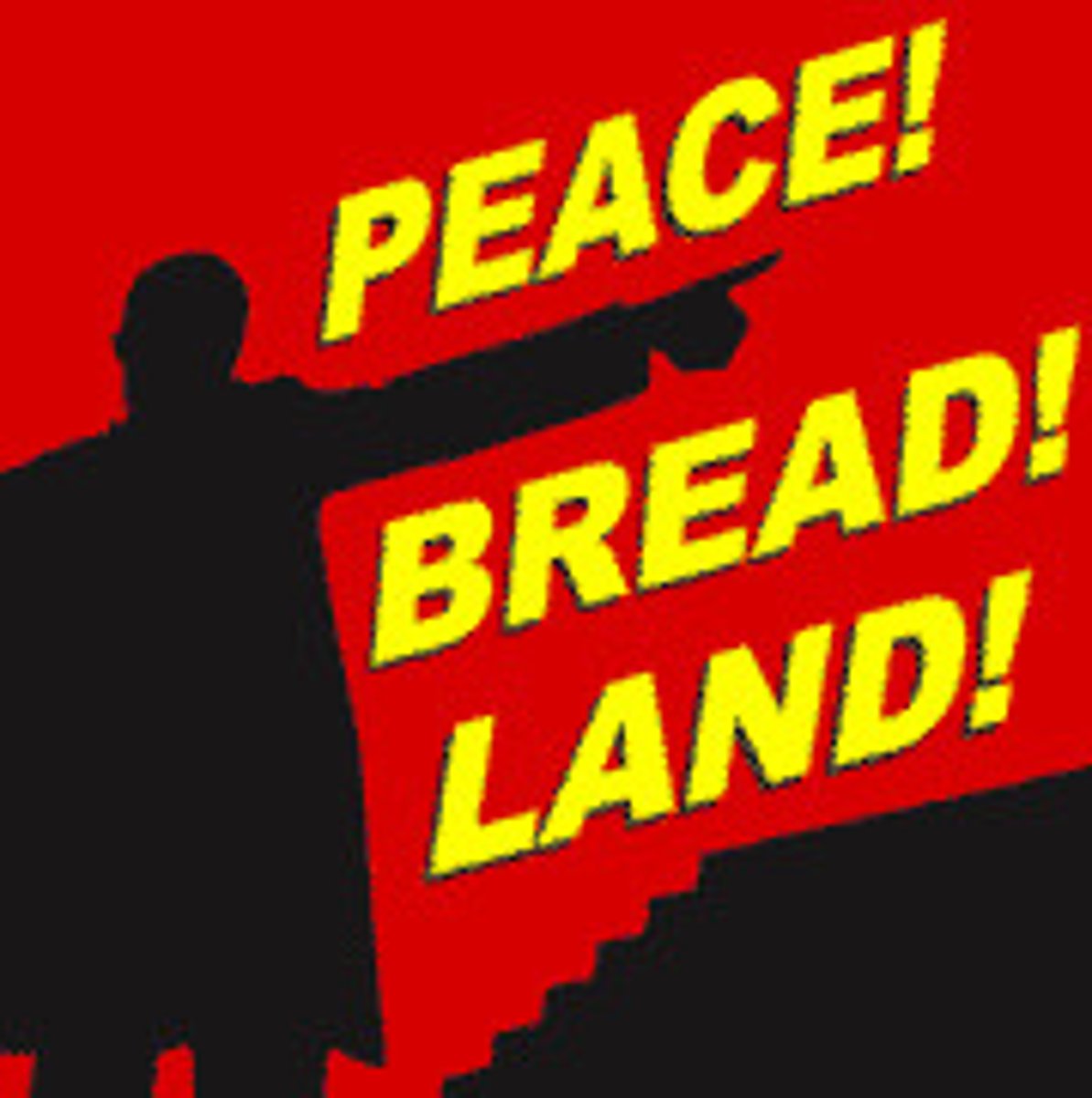
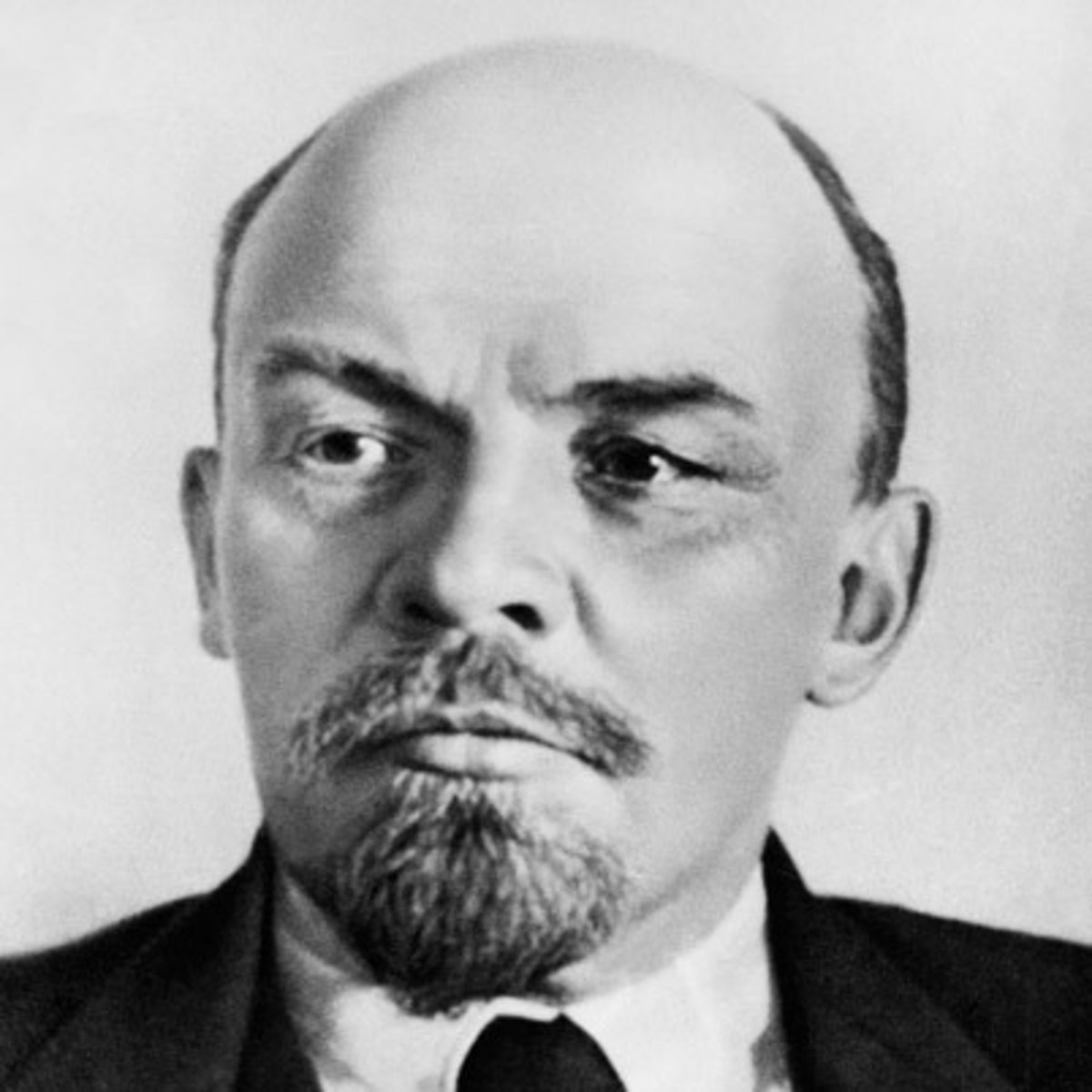
Vladimir Lenin
Russian founder of the Bolsheviks and leader of the Russian Revolution and first head of the USSR (1870-1924).
Communists
People who believe workers should own the means of production and collective ownership would lead to collective prosperity. Russian Bolsheviks were the first communists to run a country
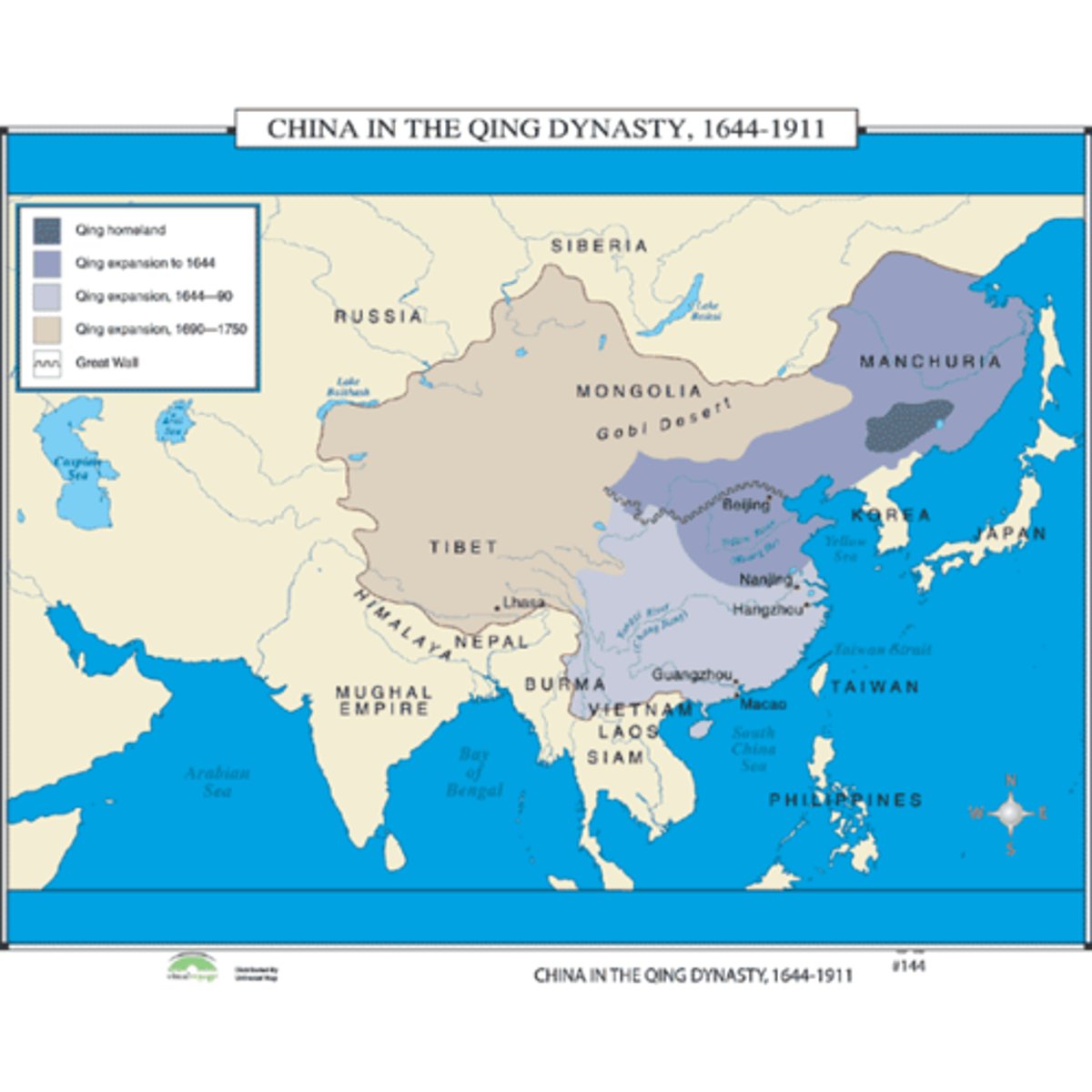
Fall of the Qing Dynasty
Local warlords divided China. The Guomindang (Nationalist) Party, led by Sun Yat-Sen allied with betrayed communists. Chiang Kai-Shek rose to lead party after Yat-Sen's death.
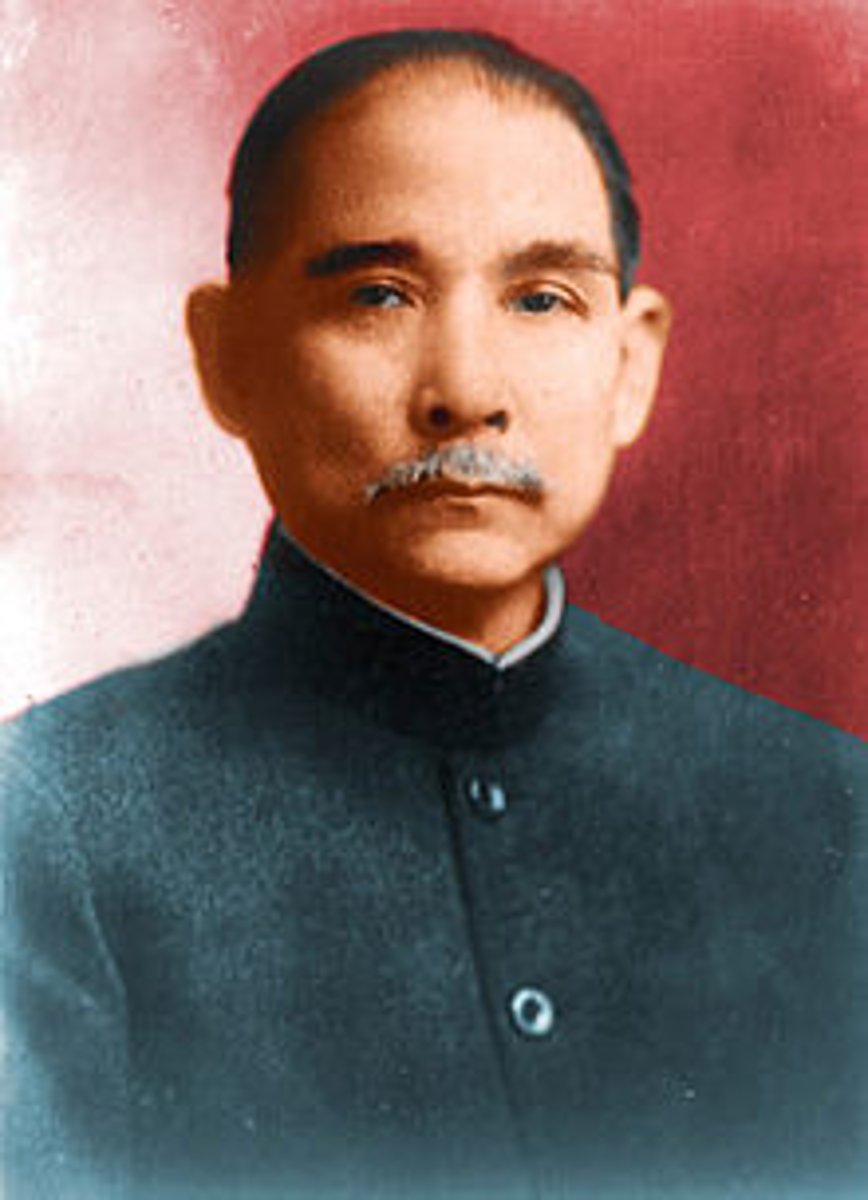
Sun Yat-sen
Chinese physician and political leader who aimed to transform China with patriotic, democratic, and economically progressive reforms. He created a short-lived republic
The Three People's Principles
A political philosophy developed by Sun Yat-sen as part of a philosophy to make China a free, prosperous, and powerful nation. The Principles were: nationalism, democracy, people's livelihood
Young Turks
A coalition starting in the late 1870s of various groups favoring modernist liberal reform of the Ottoman Empire. It was against monarchy of Ottoman Sultan and instead favored a constitution. In 1908 they succeed in establishing a new constitutional era.
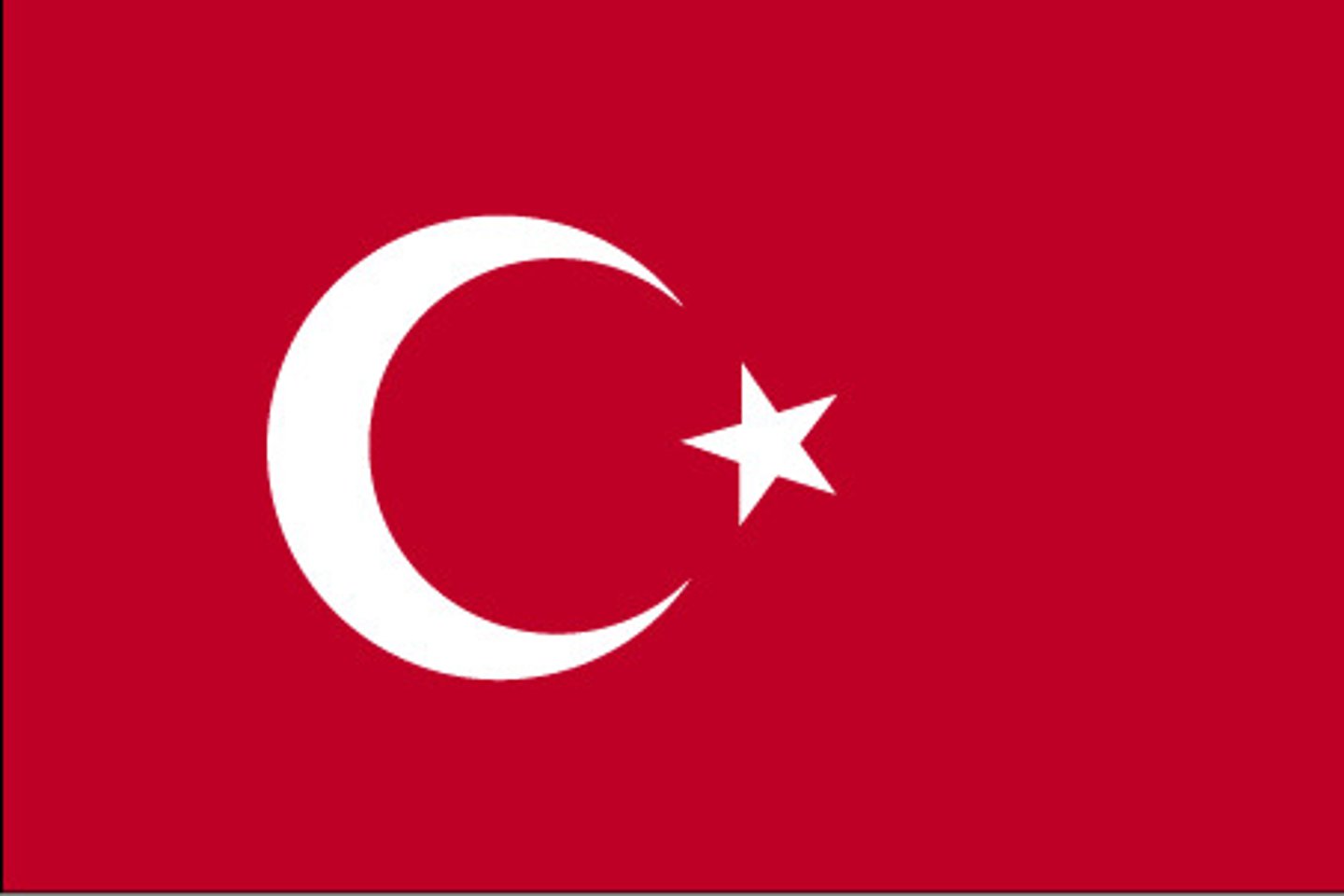
Turkification
the effort by the Young Turks to make all citizens of the Ottoman Empire identify with Turkish culture
Armenian Genocide
The massacre of Armenians conducted by Turkey during WWI
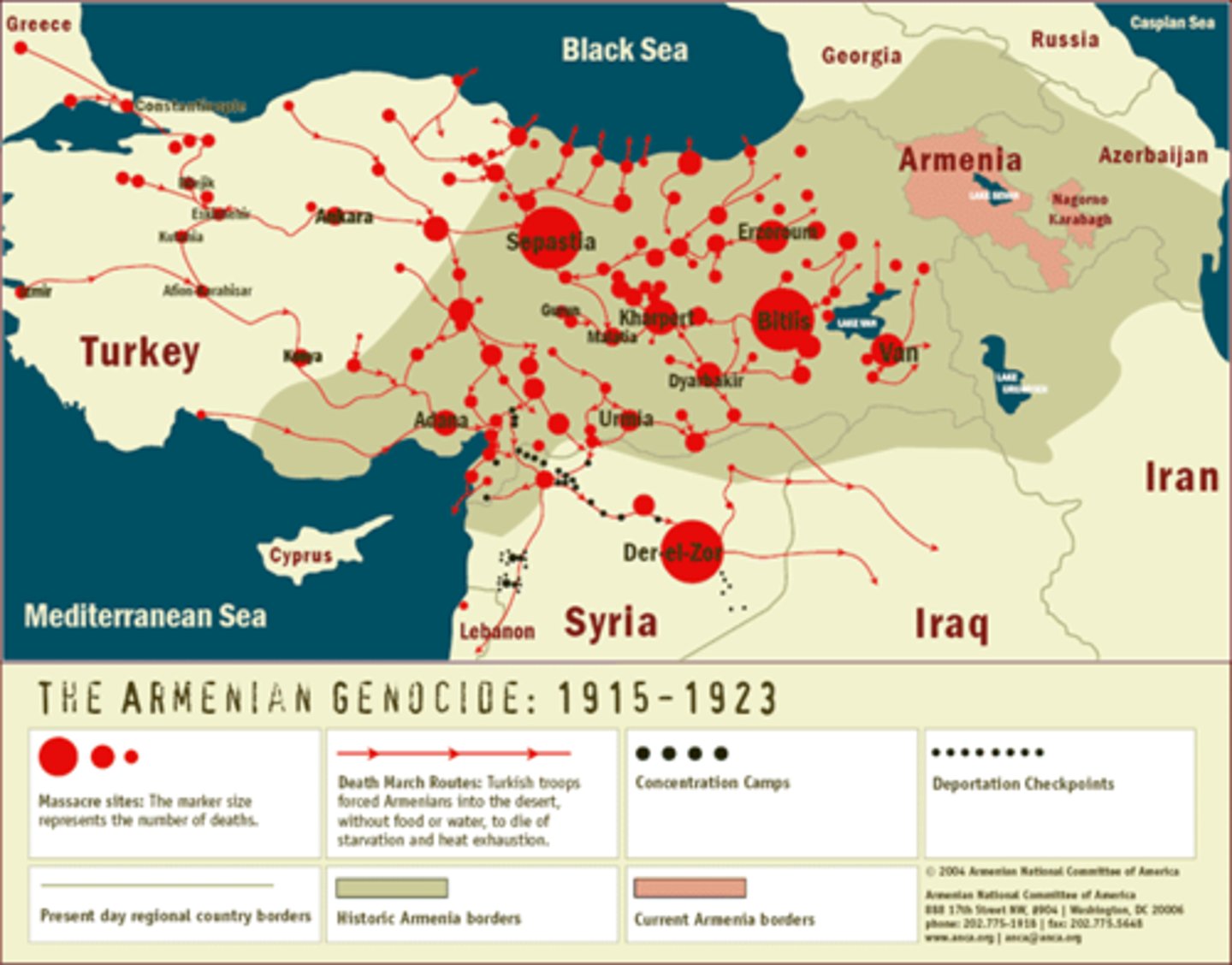
Ataturk, Mustafa Kemal
"Father of the Turks" who helped to create Republic of Turkey in 1923. He modernized [westernized] and secularized Turkey. Reforms included universal suffrage, public education, abolishing polygamy
![<p>"Father of the Turks" who helped to create Republic of Turkey in 1923. He modernized [westernized] and secularized Turkey. Reforms included universal suffrage, public education, abolishing polygamy</p>](https://knowt-user-attachments.s3.amazonaws.com/e1410589-d96b-48f3-809e-271b97899577.jpg)
Porfirio Diaz
Dictator in Mexico from 1876 to 1911. Overthrown by the Mexican Revolution of 1910.
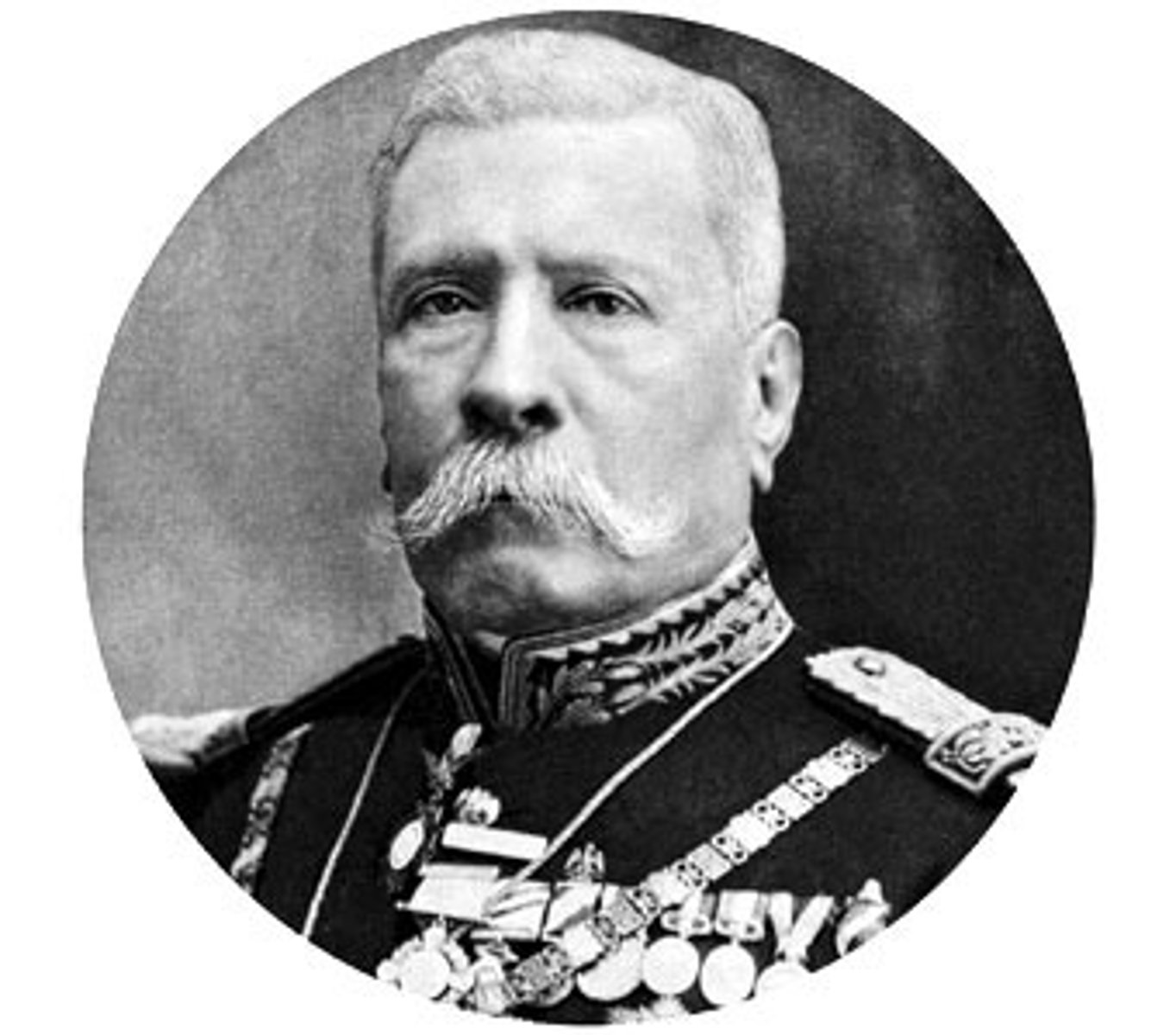
Mexican Revolution
(1910-1920 CE) Fought over a period of almost 10 years form 1910; resulted in ouster of Porfirio Diaz from power; opposition forces led by Pancho Villa and Emiliano Zapata.
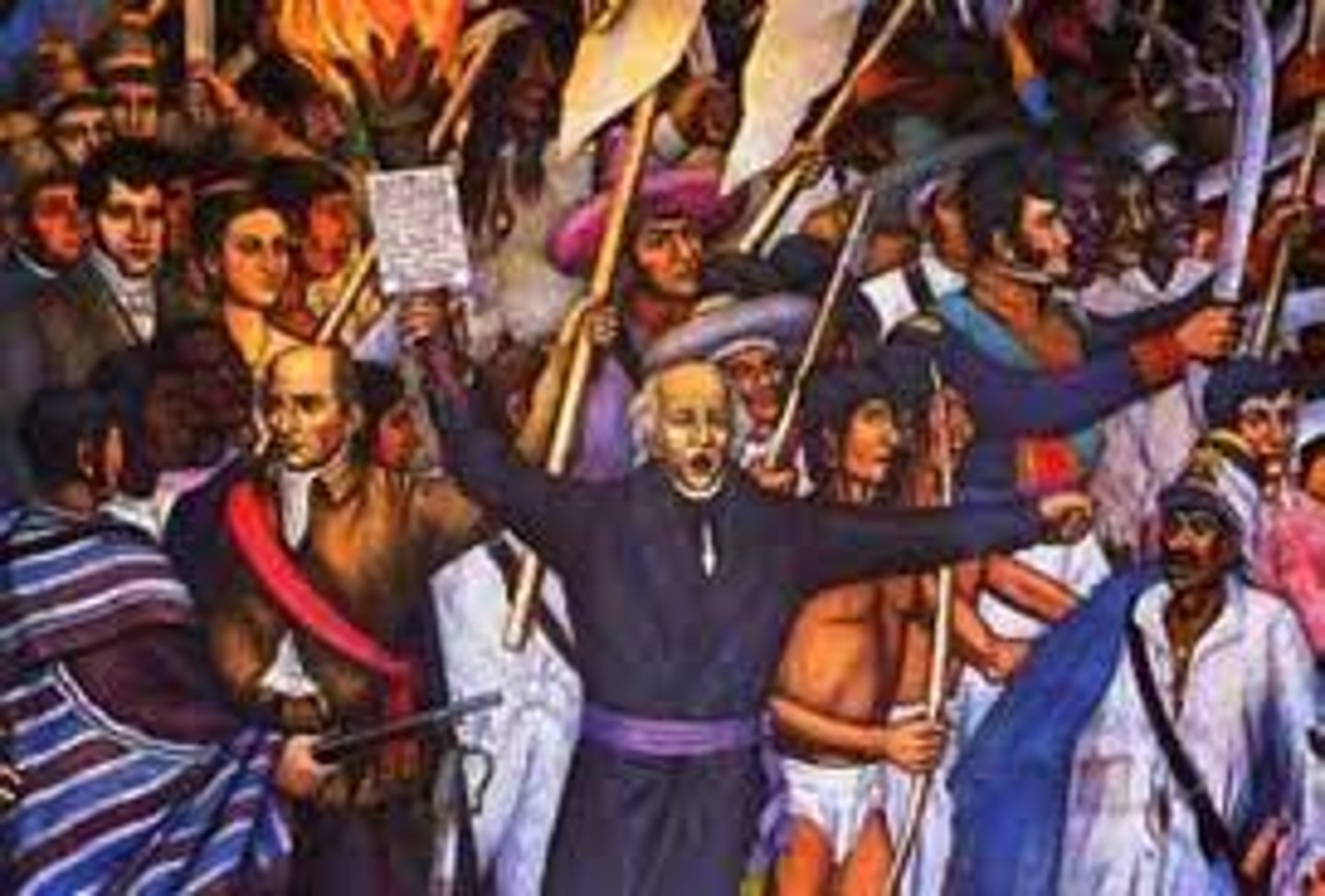
Francisco Madero
Early leader in the Mexican Revolution; in 1911 became president of Mexico; wanted land ownership and free, honest elections, two years later he was murdered, led to power struggles
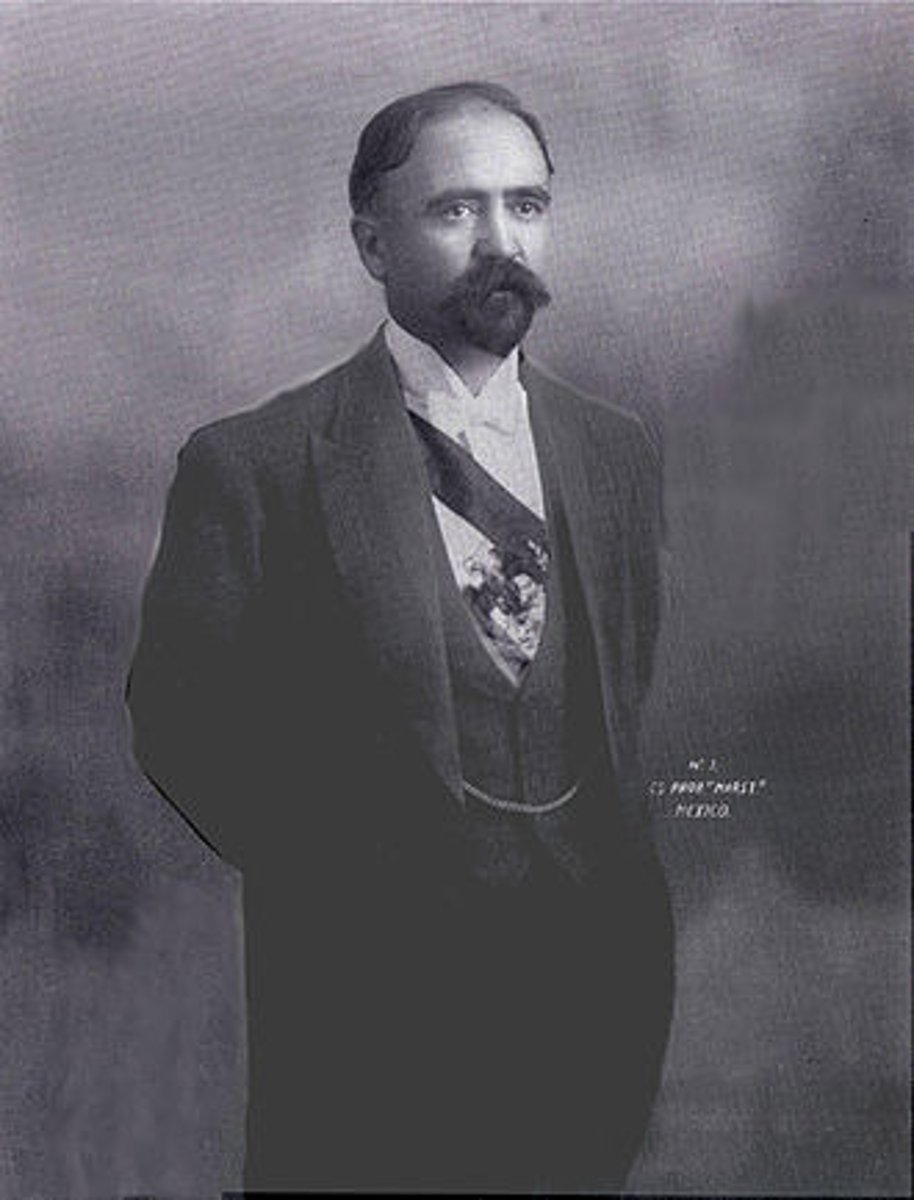
Francisco "Pancho" Villa
A popular leader during the Mexican Revolution. An outlaw in his youth, when the revolution started, he formed a cavalry army in the north of Mexico and fought for the rights of landless peasants in collaboration with Emiliano Zapata. (819)
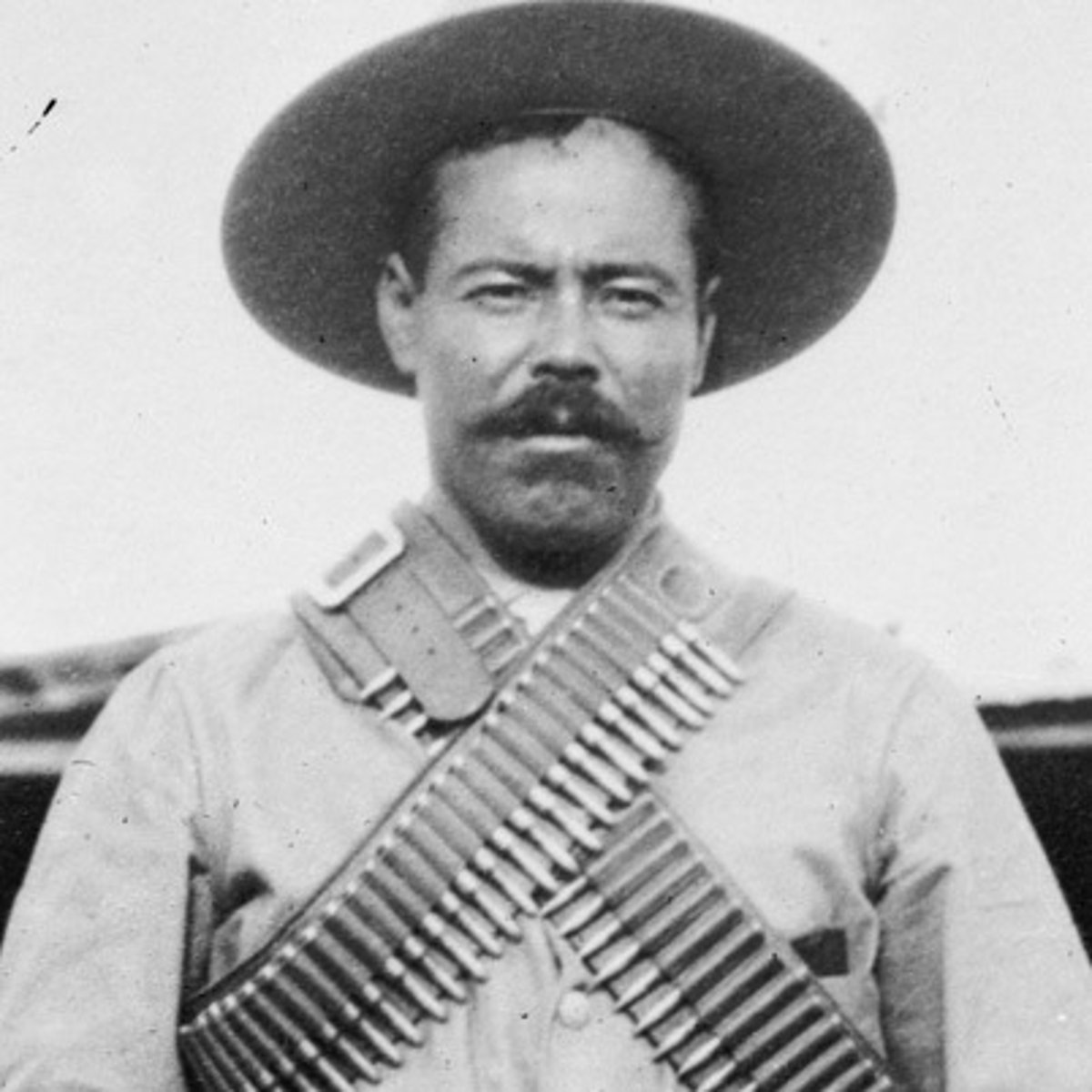
Emiliano Zapata
Revolutionary and leader of peasants in the Mexican Revolution. He mobilized landless peasants in south-central Mexico in an attempt to seize and divide the lands of the wealthy landowners. Though successful for a time, he was ultimately defeated and assassinated.
Institutional Revolutionary Party (PRI)
Mexican Political party formed in 1929, dominated Mexican politics, widely criticized as corrupt

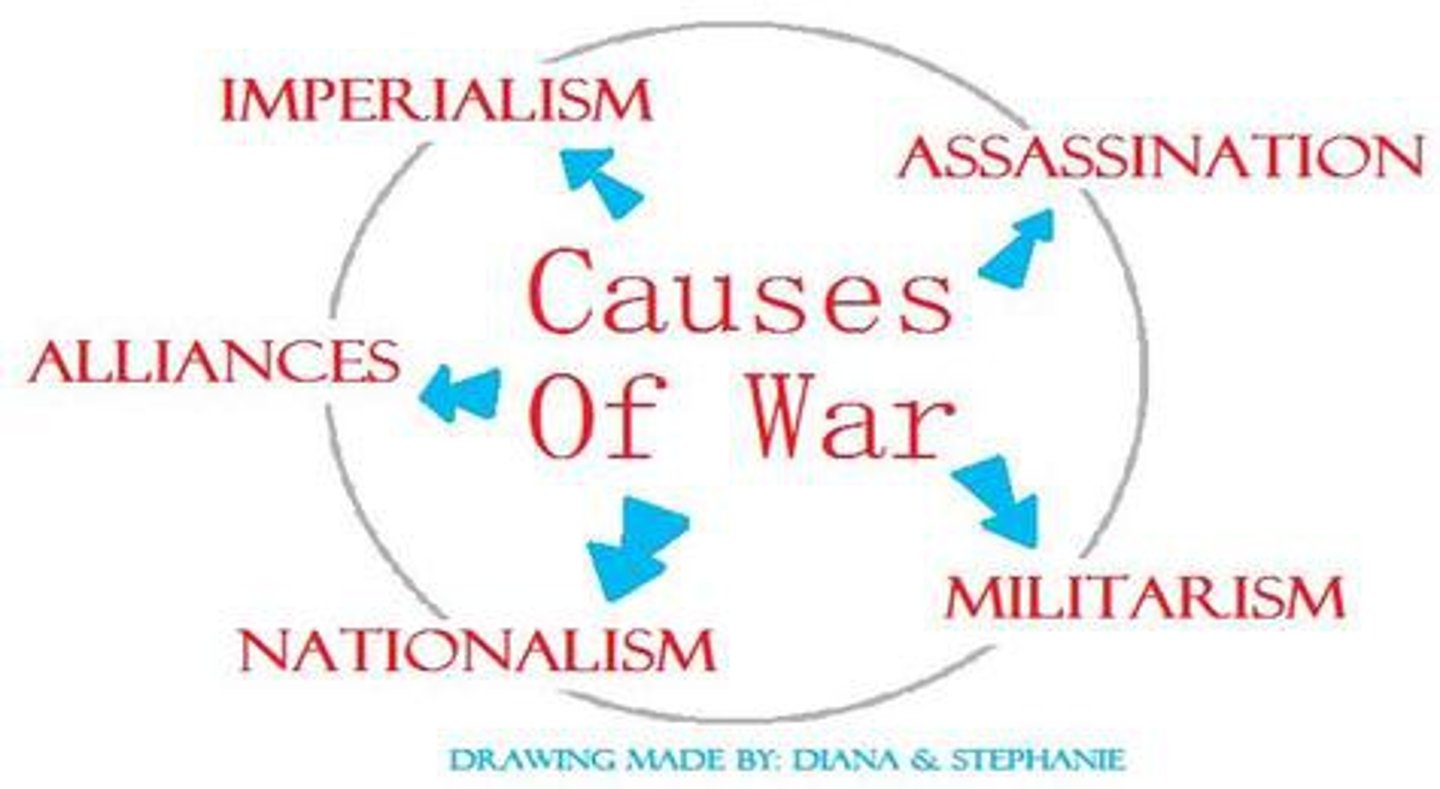
Causes of WWI
Militarism, Alliances, Imperialism, Nationalism (MAIN)
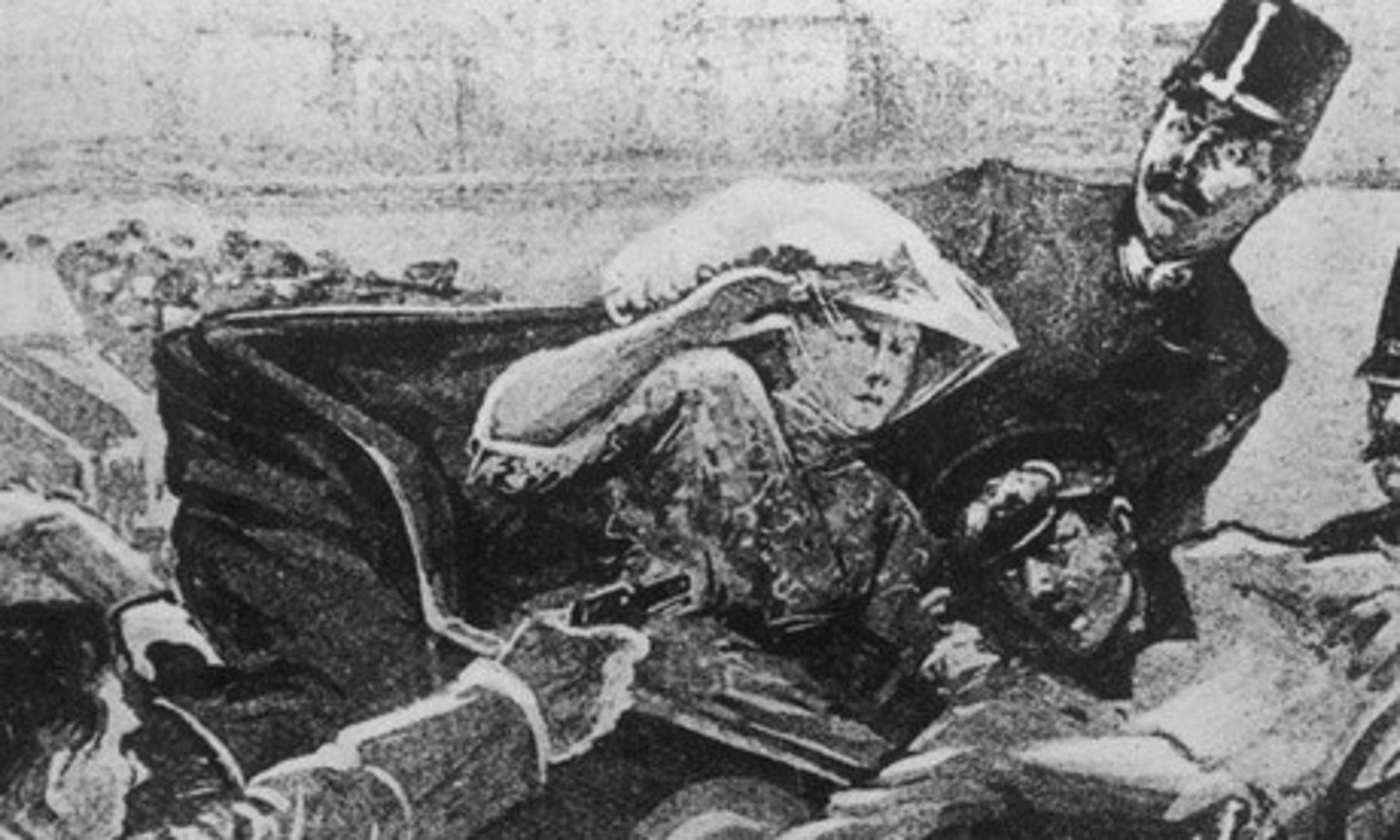
Archduke Franz Ferdinand
heir to the Austria-Hungarian throne, was assassinated in Sarajevo, started World War I.
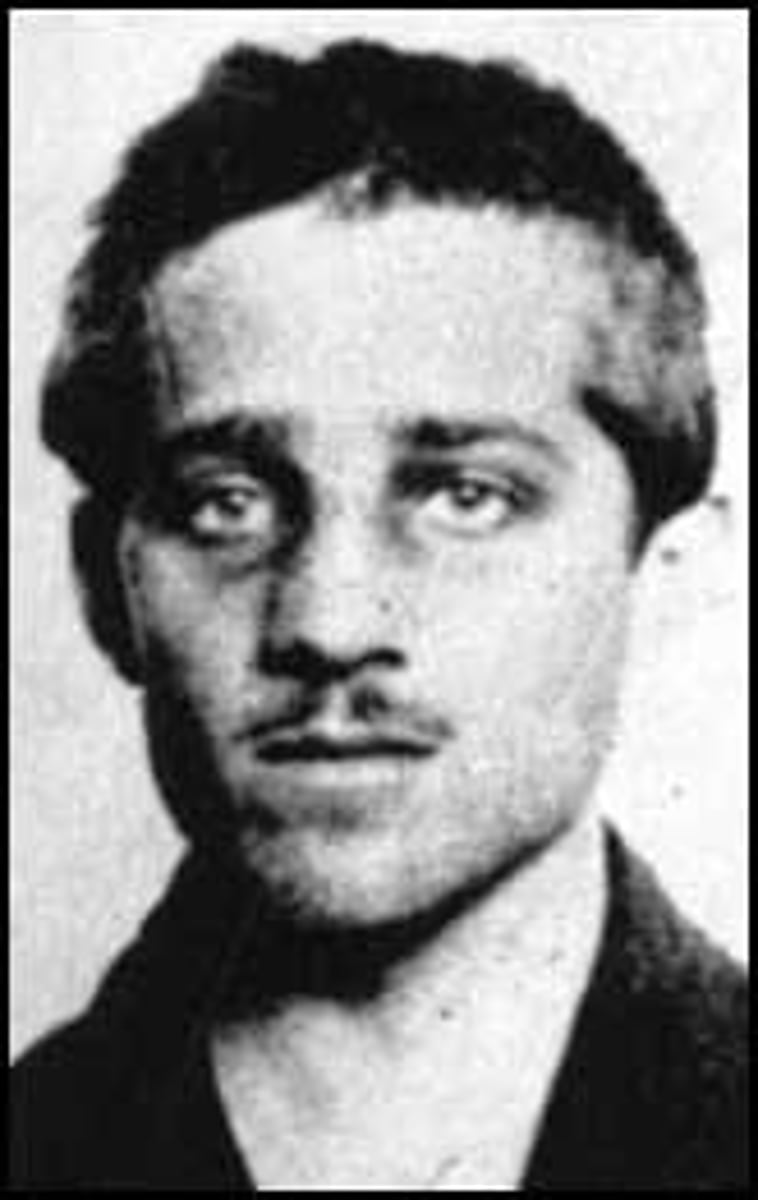
Gavrilo Princip
The assassin of Archduke Francis Ferdinand of Austria, a member of the Black Hand
Black Hand
Serbian nationalist/terrorist group responsible for the assassination of Austrian Archduke Franz Ferdinand which resulted in the start of World War I.
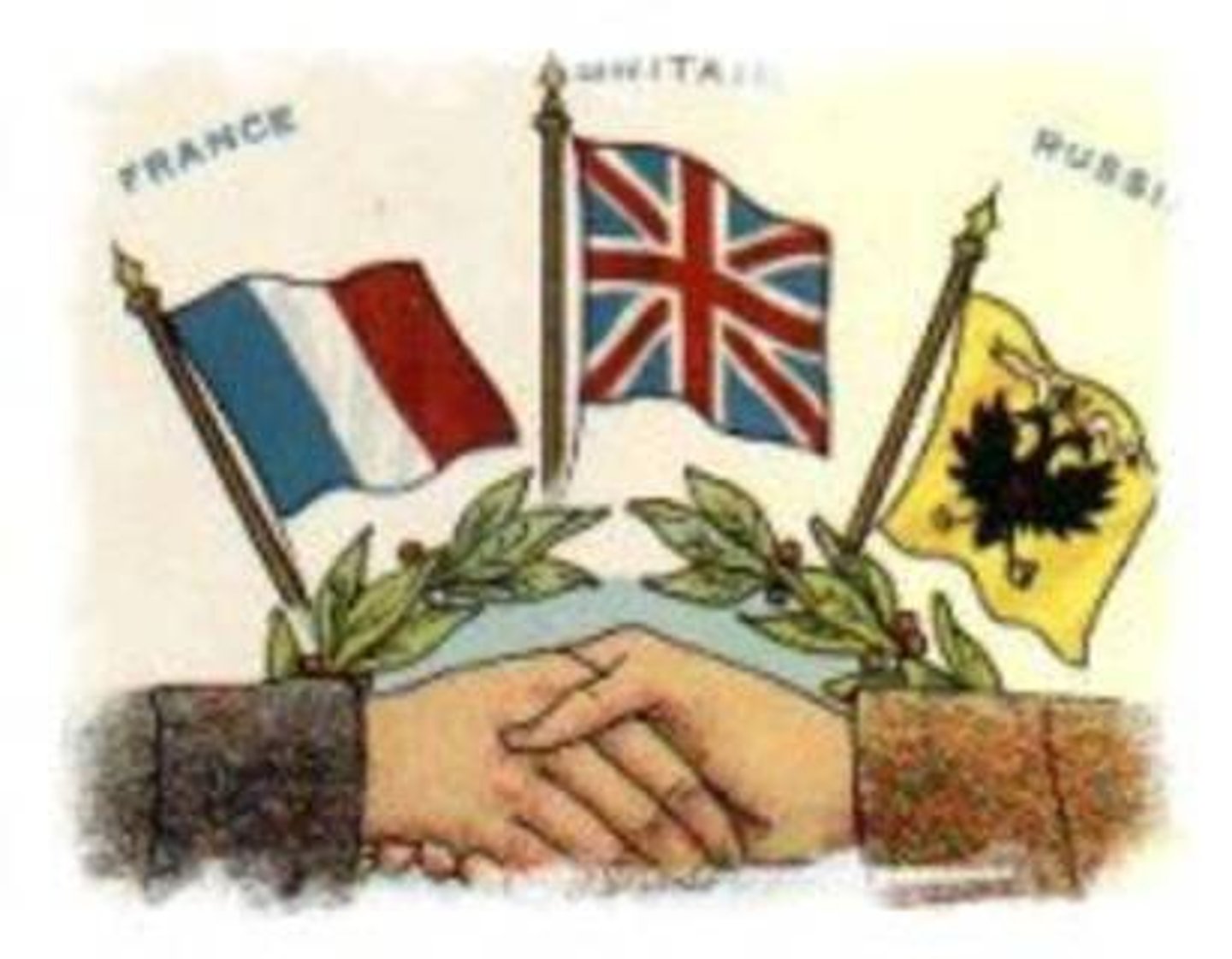
Triple Entente
A military alliance between Great Britain, France, and Russia in the years preceding World War I.
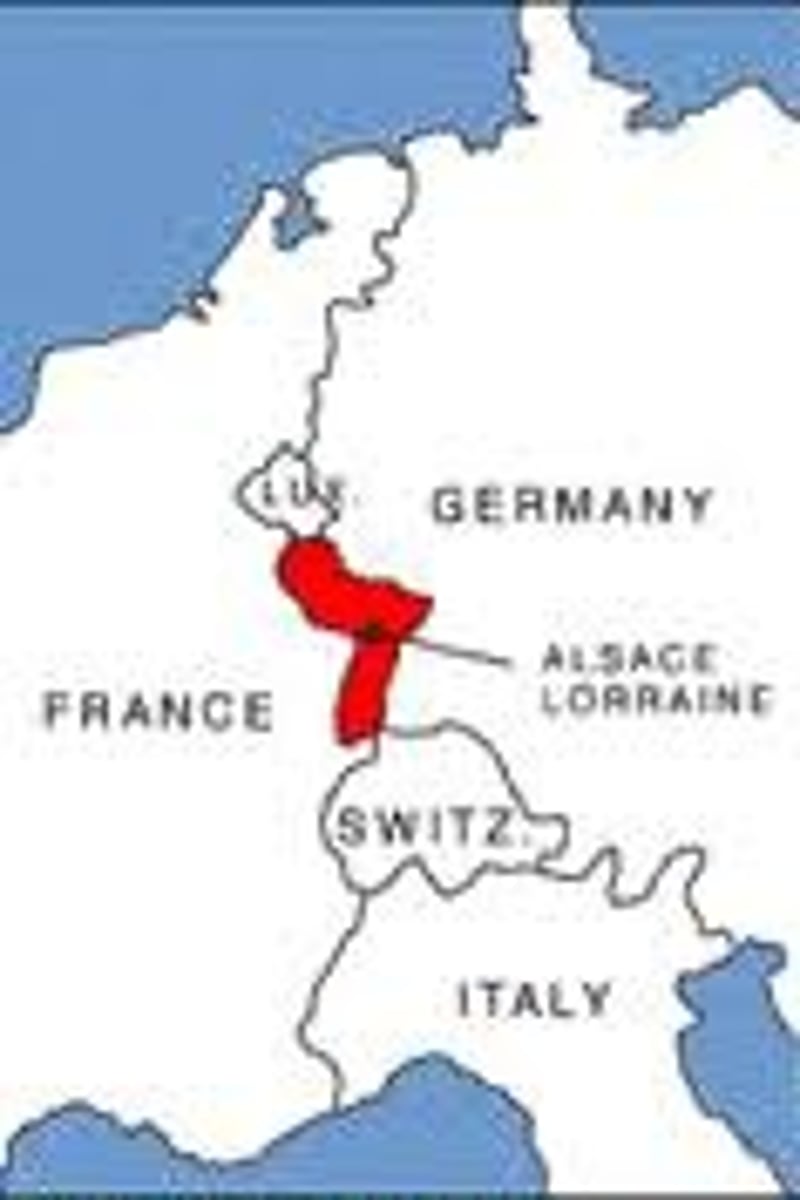
Alsace-Lorraine
A major French industrial region with rich deposits of iron ore. The region was taken by Germany (from France) as a result of the Franco Prussian war. (1870-1871) Was later returned to France as a result of German defeat in WWI
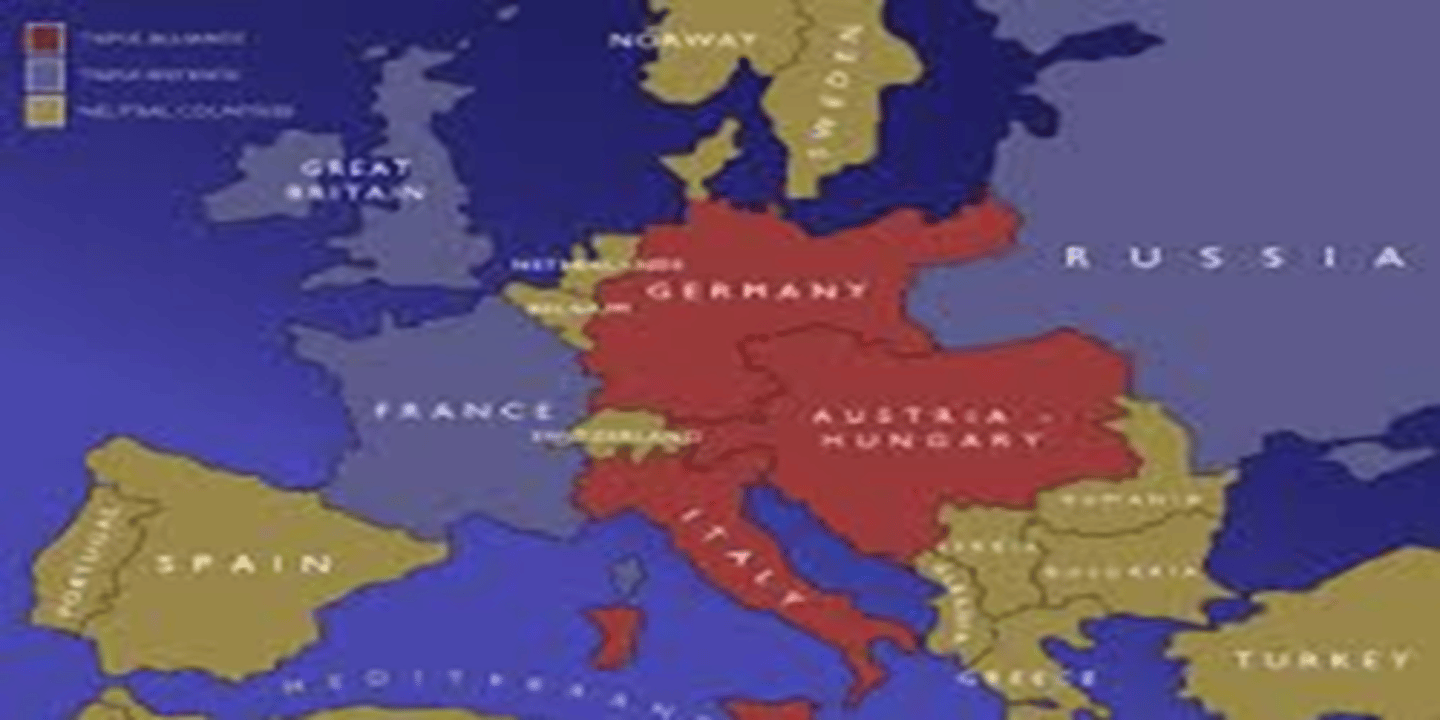
Tripple Alliance
Alliance between Germany, Austria-Hungary, Italy prior to WWI
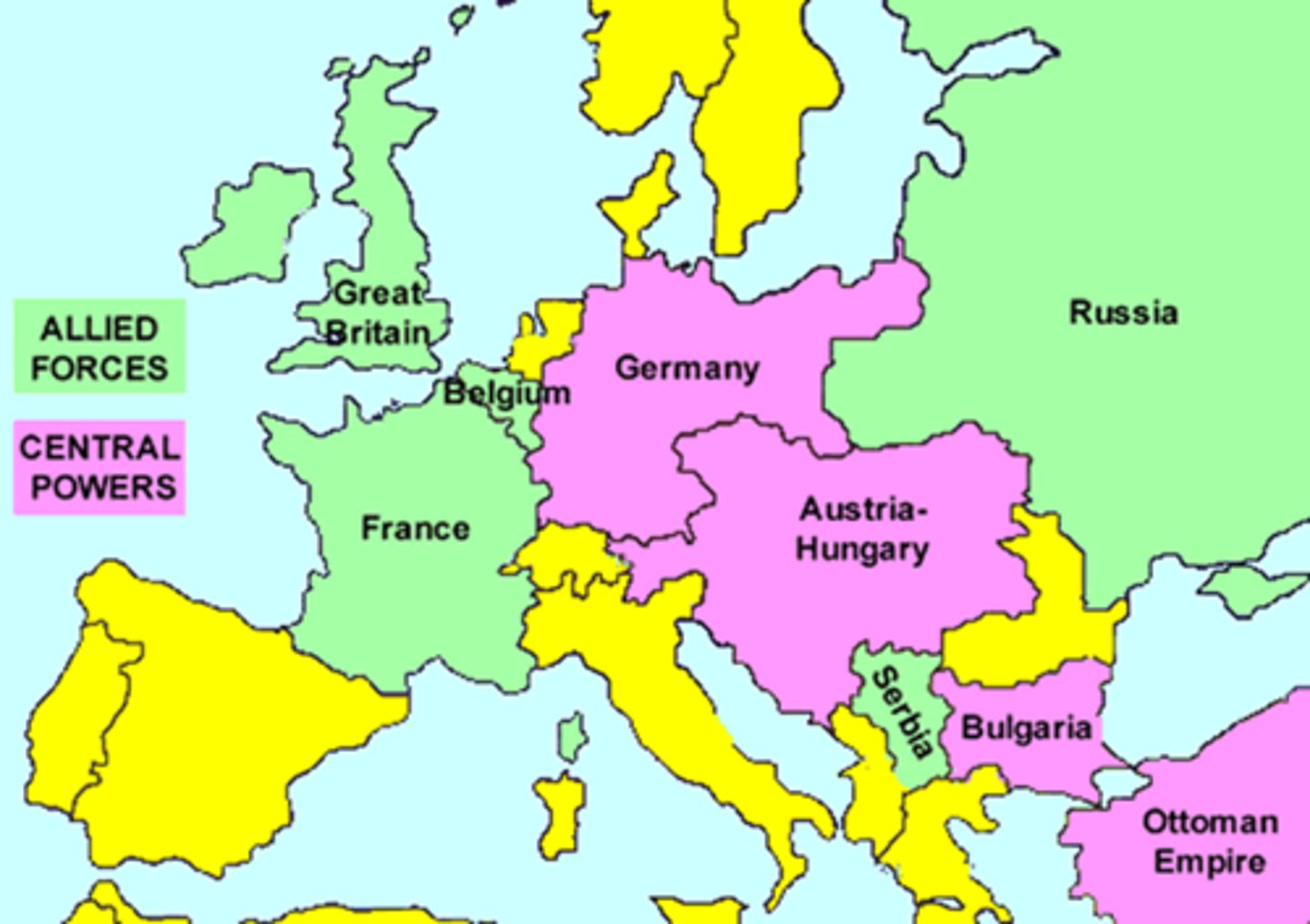
Allies (WWI)
What the Triple Entente became known as after the start of WWI Britain, France, and Russia- Later joined by Italy, Japan, China and the USA
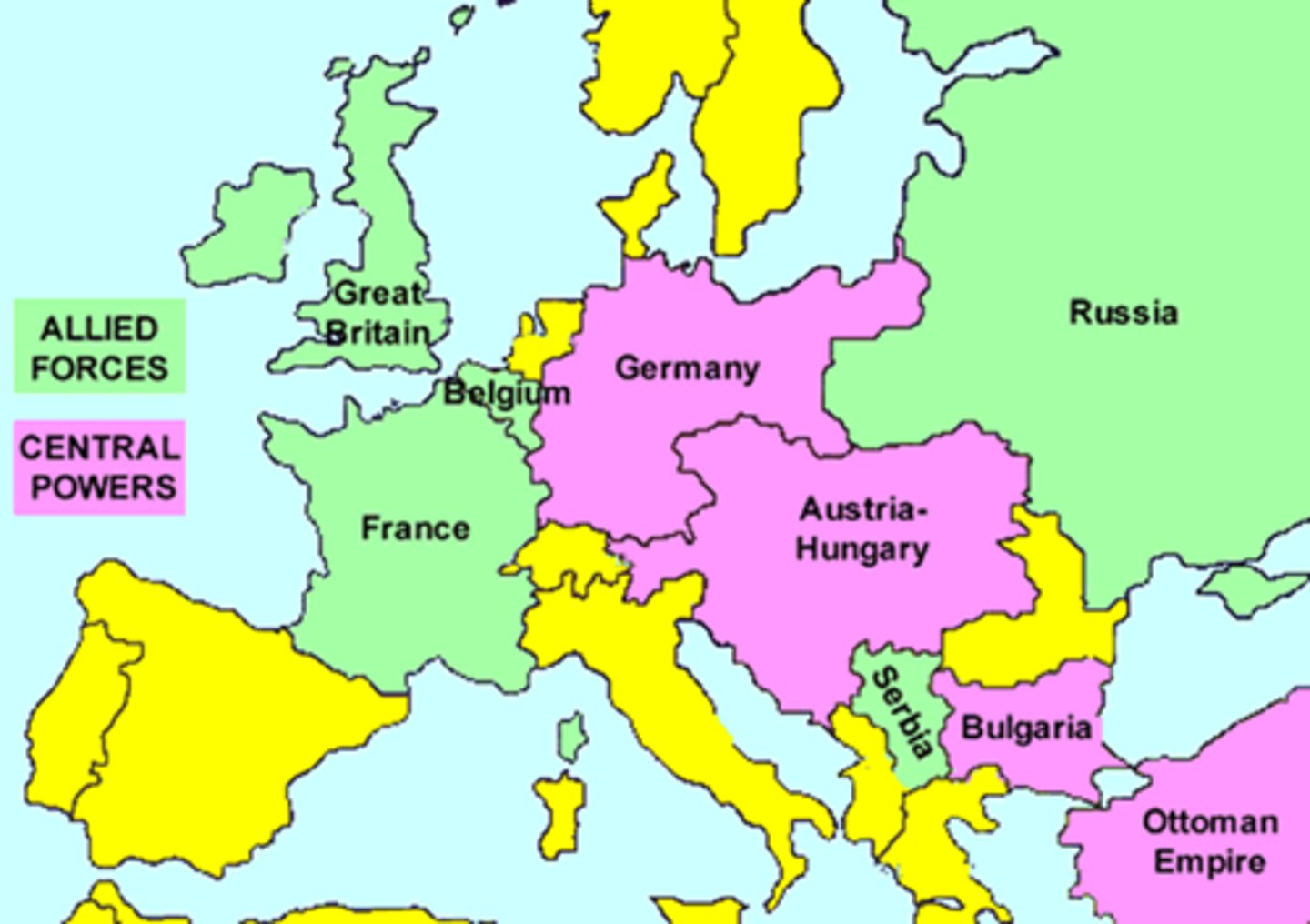
Central Powers of WWI
The name given to the former Triple Alliance, Germany, Austria-Hungary, Ottoman Empire, Bulgaria- after the break-out of WWI
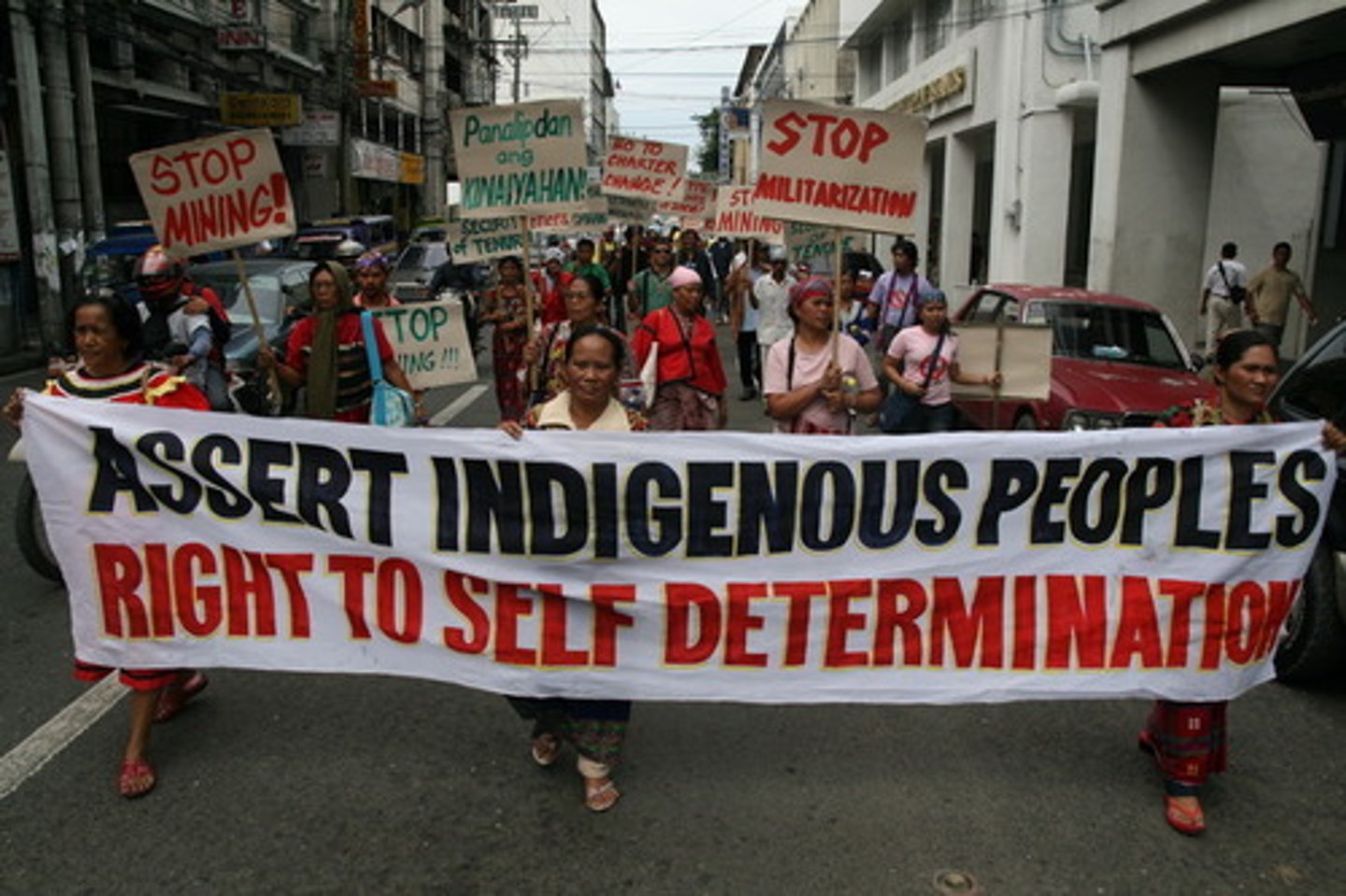
Self-determination
Concept that people who share a common language and culture have the right to govern themselves
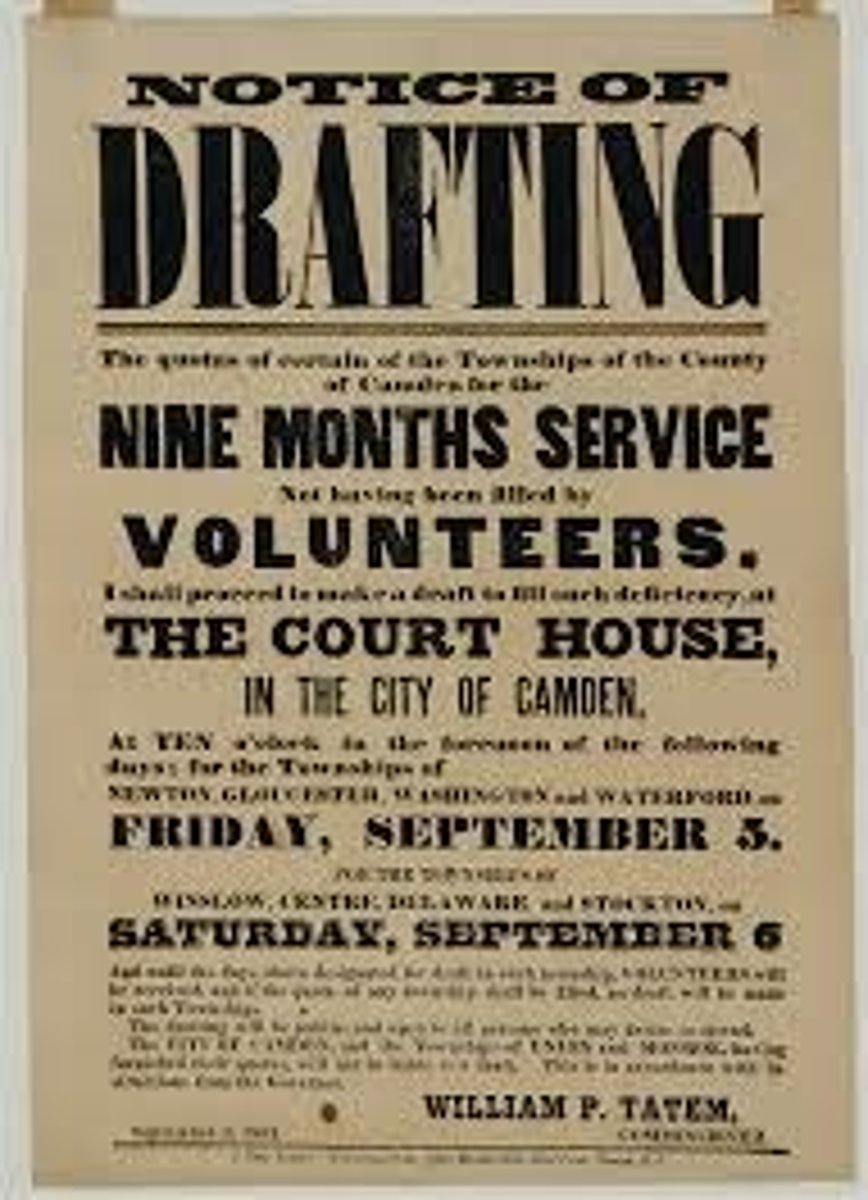
Conscription
compulsory enlistment for state service, typically into the armed forces.
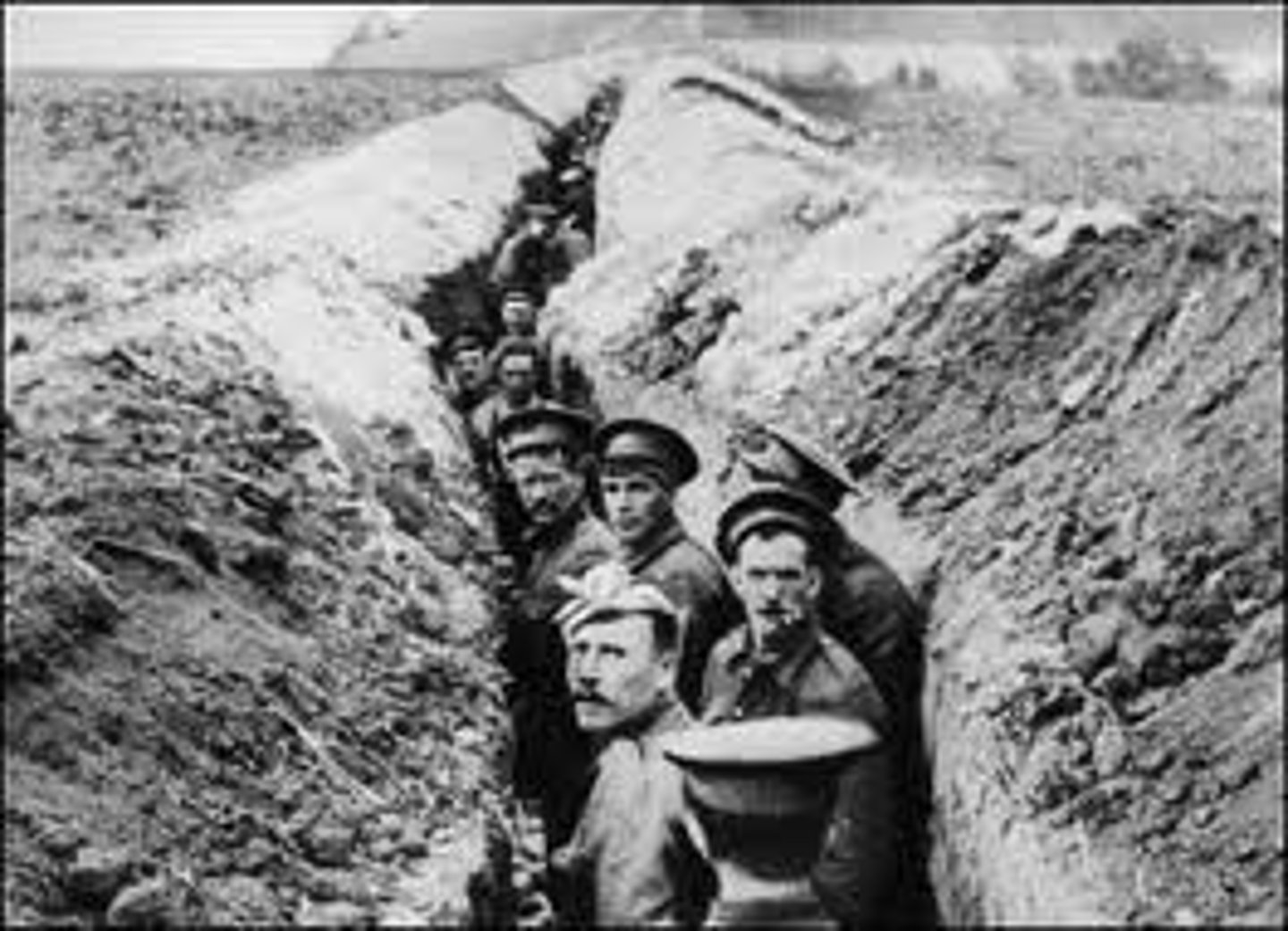
Trench Warfare
A form of warfare in which opposing armies fight each other from trenches dug in the battlefield.
Poison Gas
Introduced by the Germans and was used by both sides during the WW I; caused vomiting, blindness, and suffocation
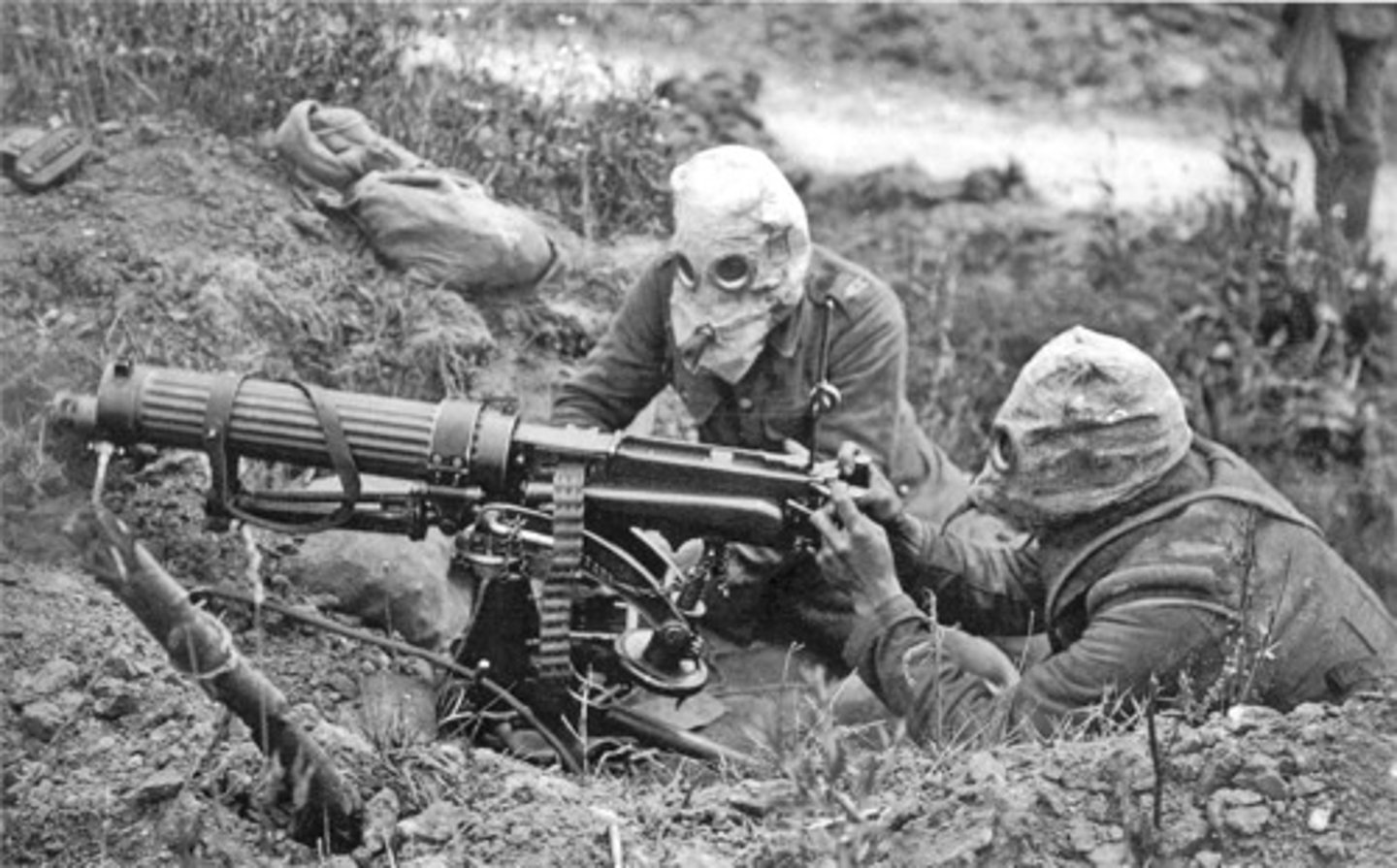
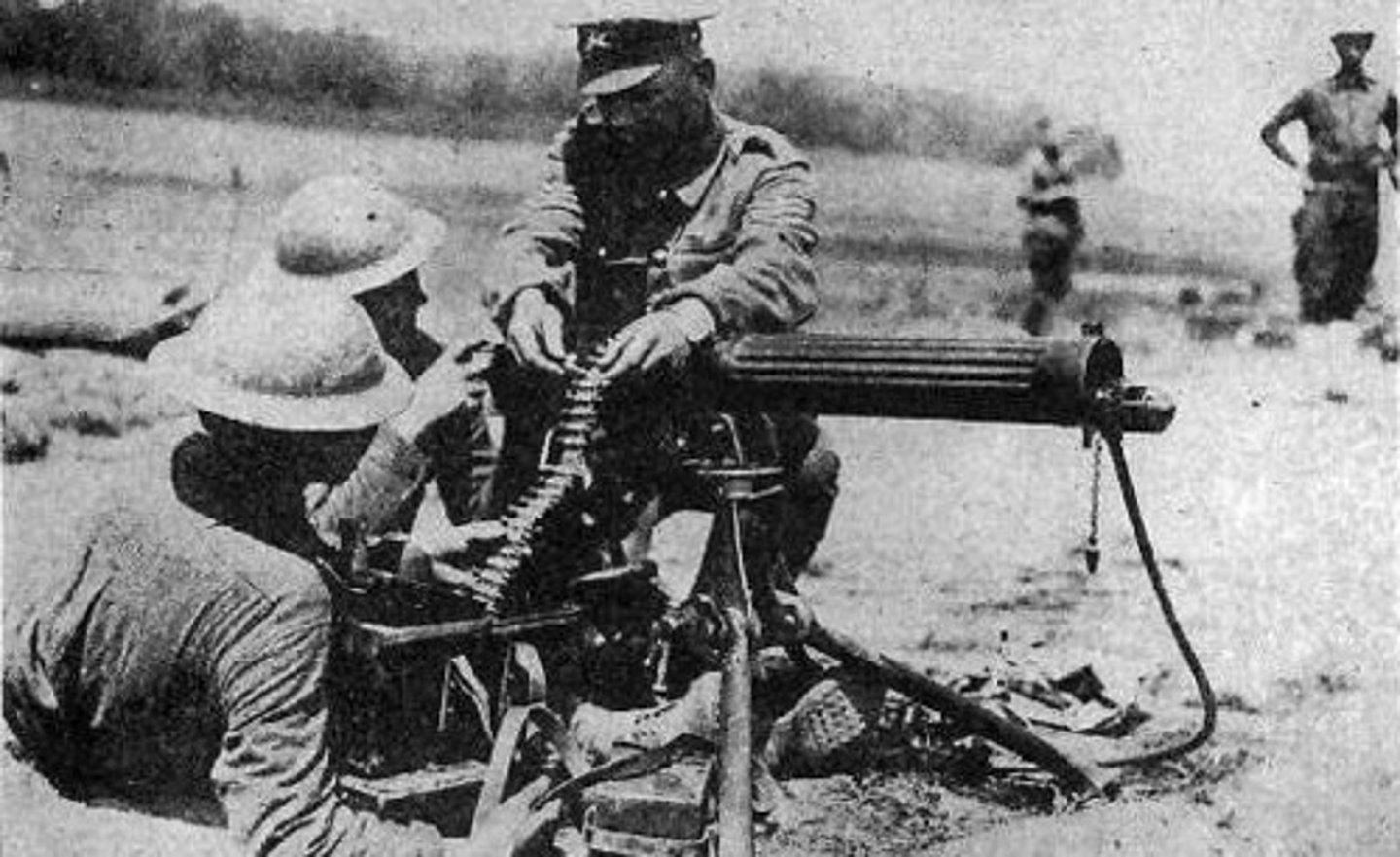
machine gun
An automatic gun that fires bullets (500 rounds per minute) with deadly effectiveness, making it difficult for troops to gain new territory
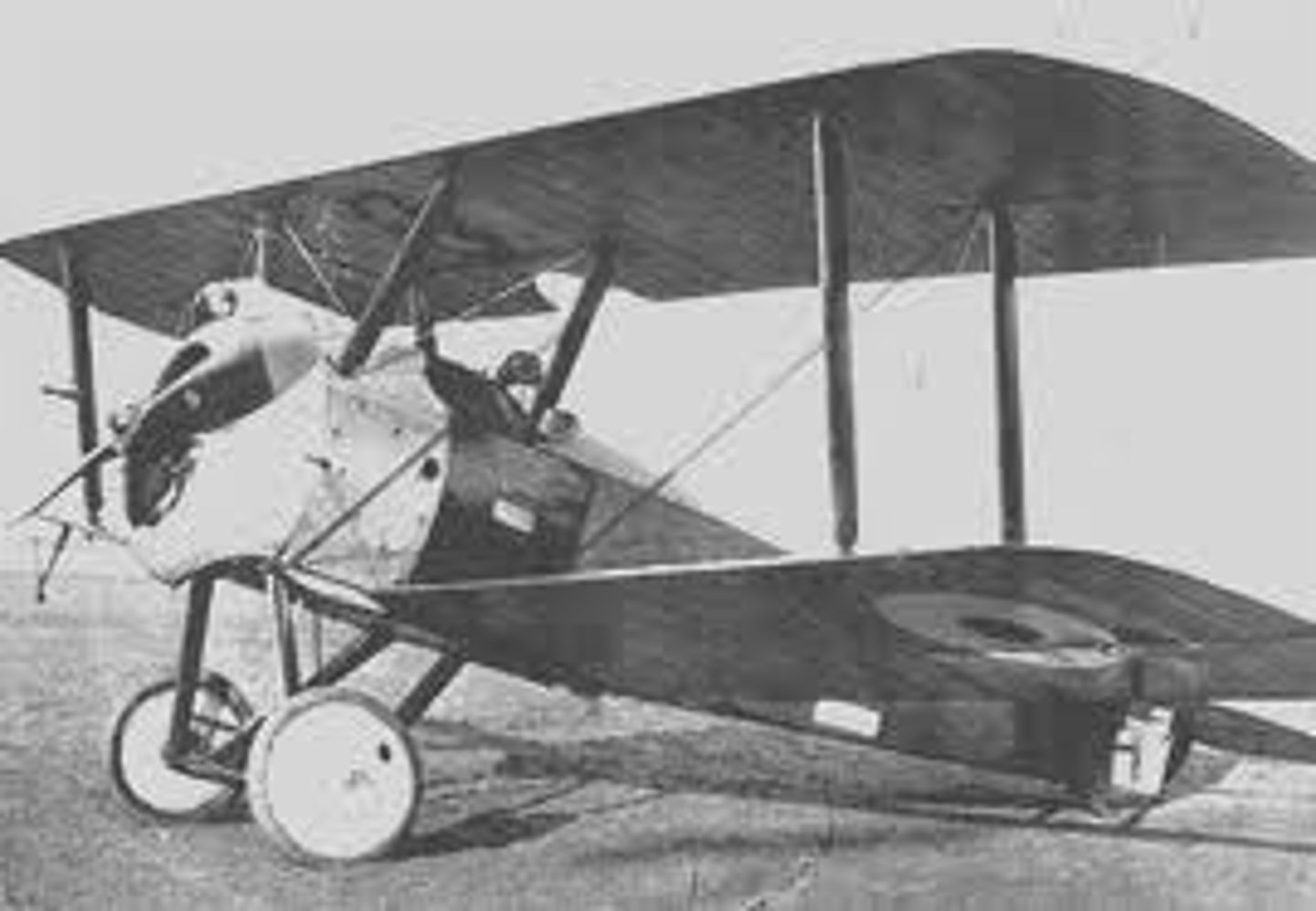
Airplanes
Used for combat for the first time in war during WW I. Fitted with machine guns and lead to aerial "dog fights"
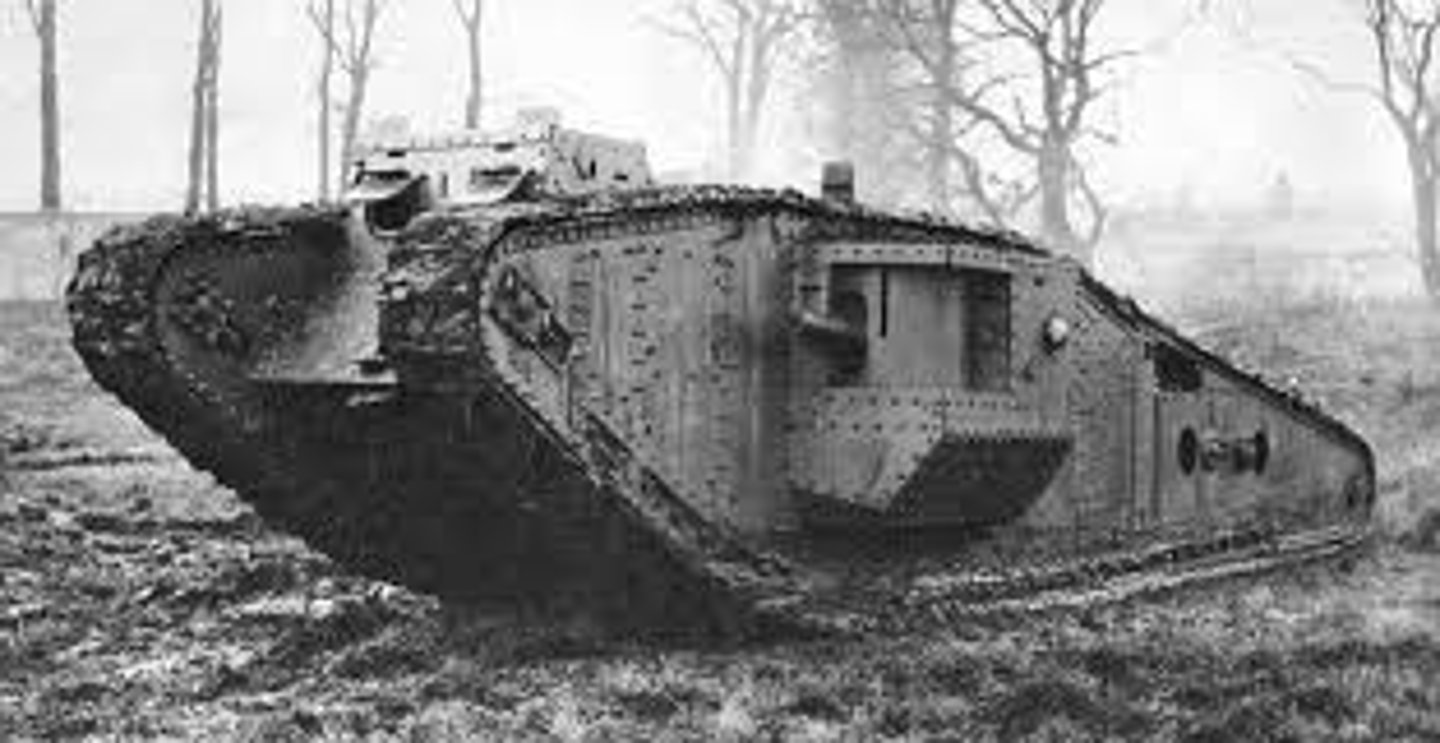
Tanks
These large armored combat vehicles were first introduced in World War I.
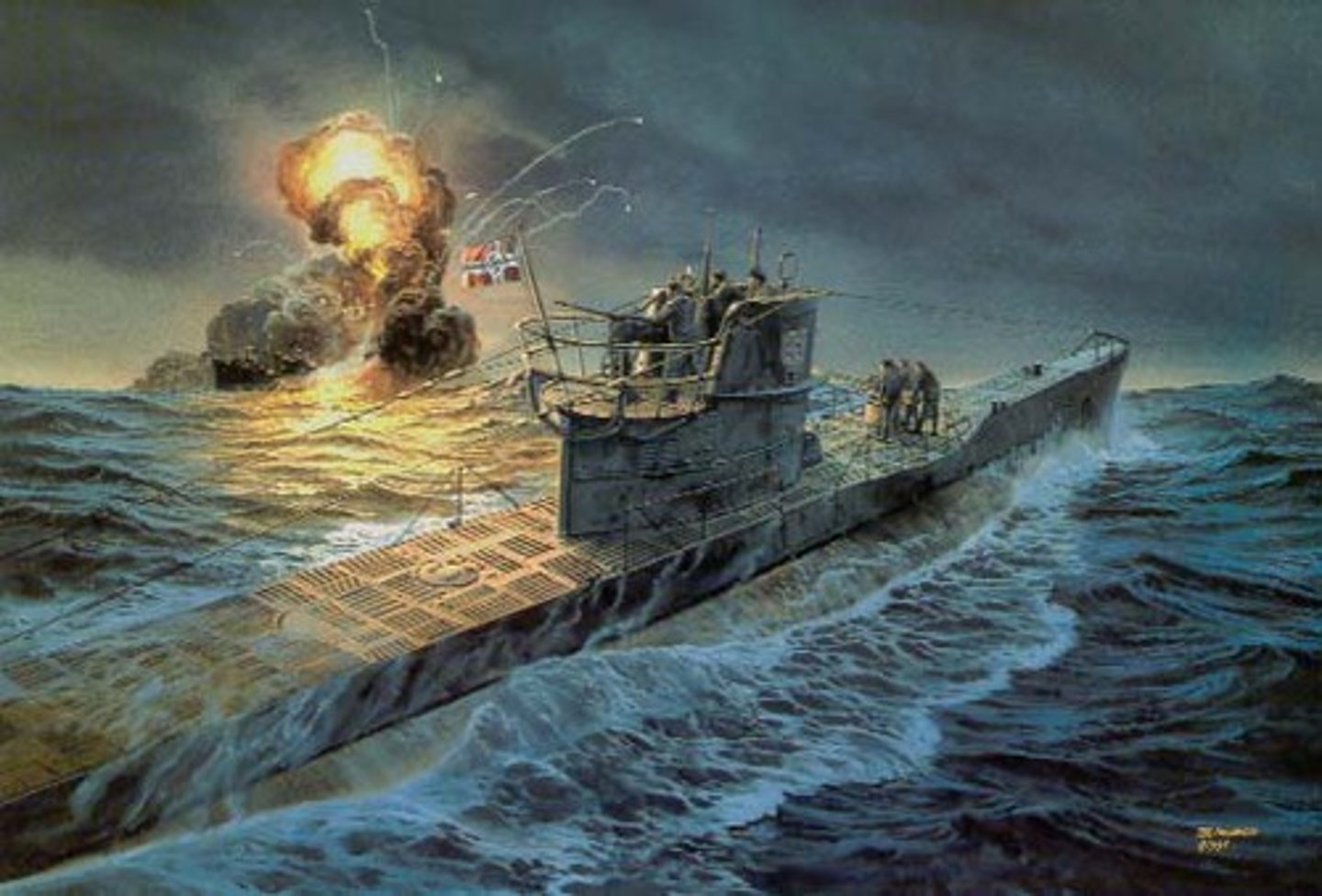
U-boats
German submarines used in World War I; they sank many Allied ships around the British Isles. They were responsible for the sinking of the HMS Lusitania and the Sussex.
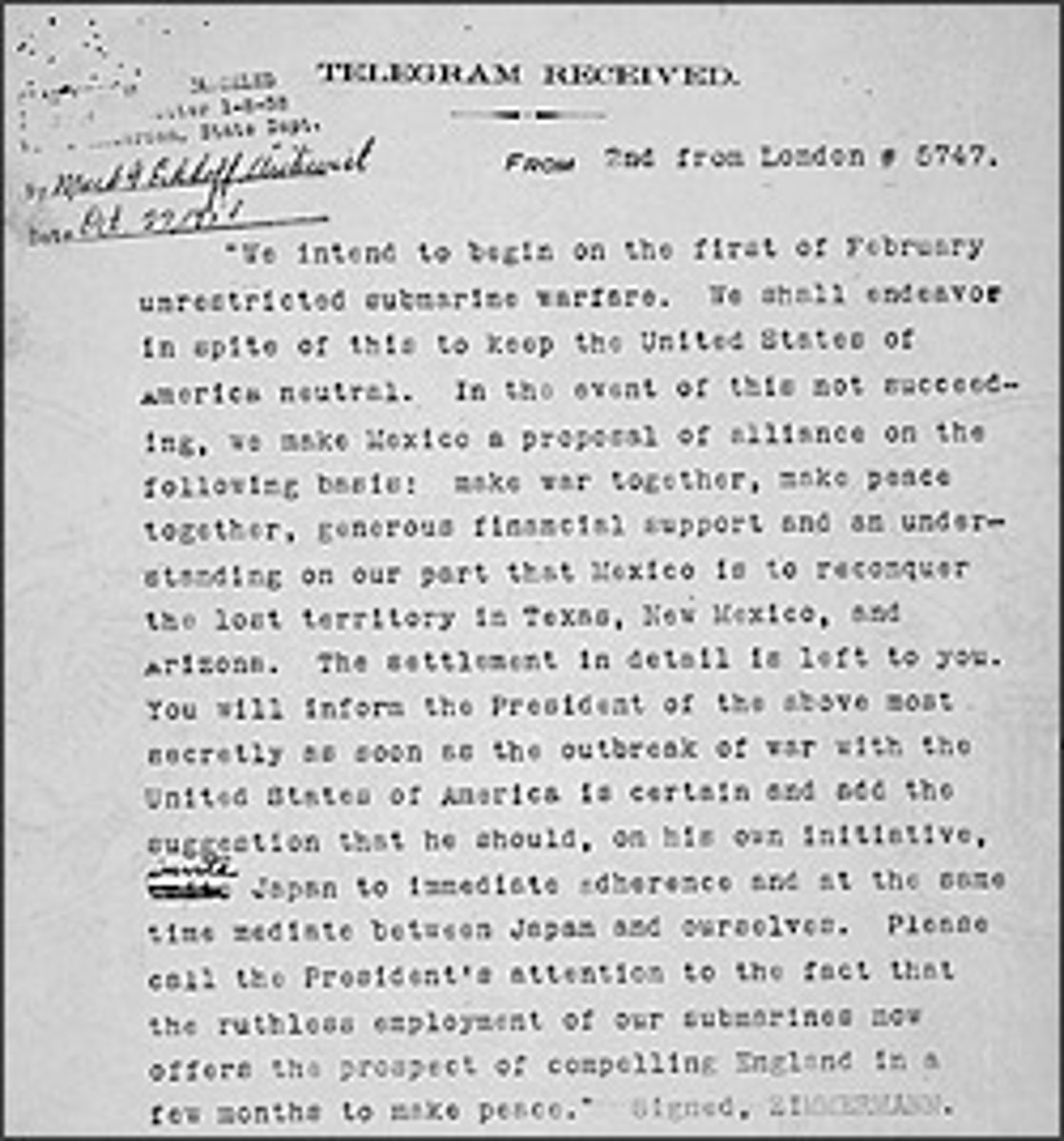
Zimmermann Telegram (1917)
British intelligence passed along a decoded message from German foreign secretary Arthur Zimmerman saying that if Mexico joined in war with Germany against the U.S., Germany would give Mexico the "lost provinces" of Texas and the American Southwest. Mexico declined and the U.S. declared war against Germany just over a month later.
Total War
A conflict in which the participating countries devote all their resources to the war effort
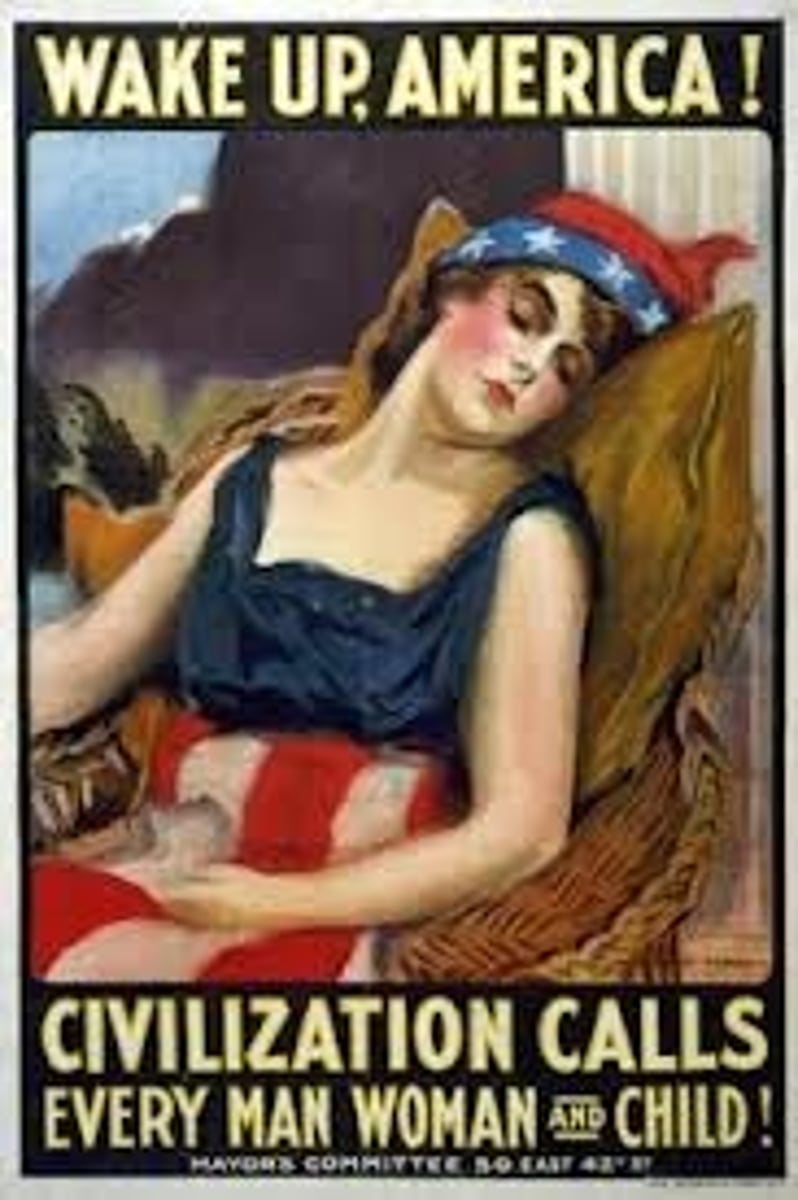
Propaganda
Ideas spread to influence public opinion for or against a cause.
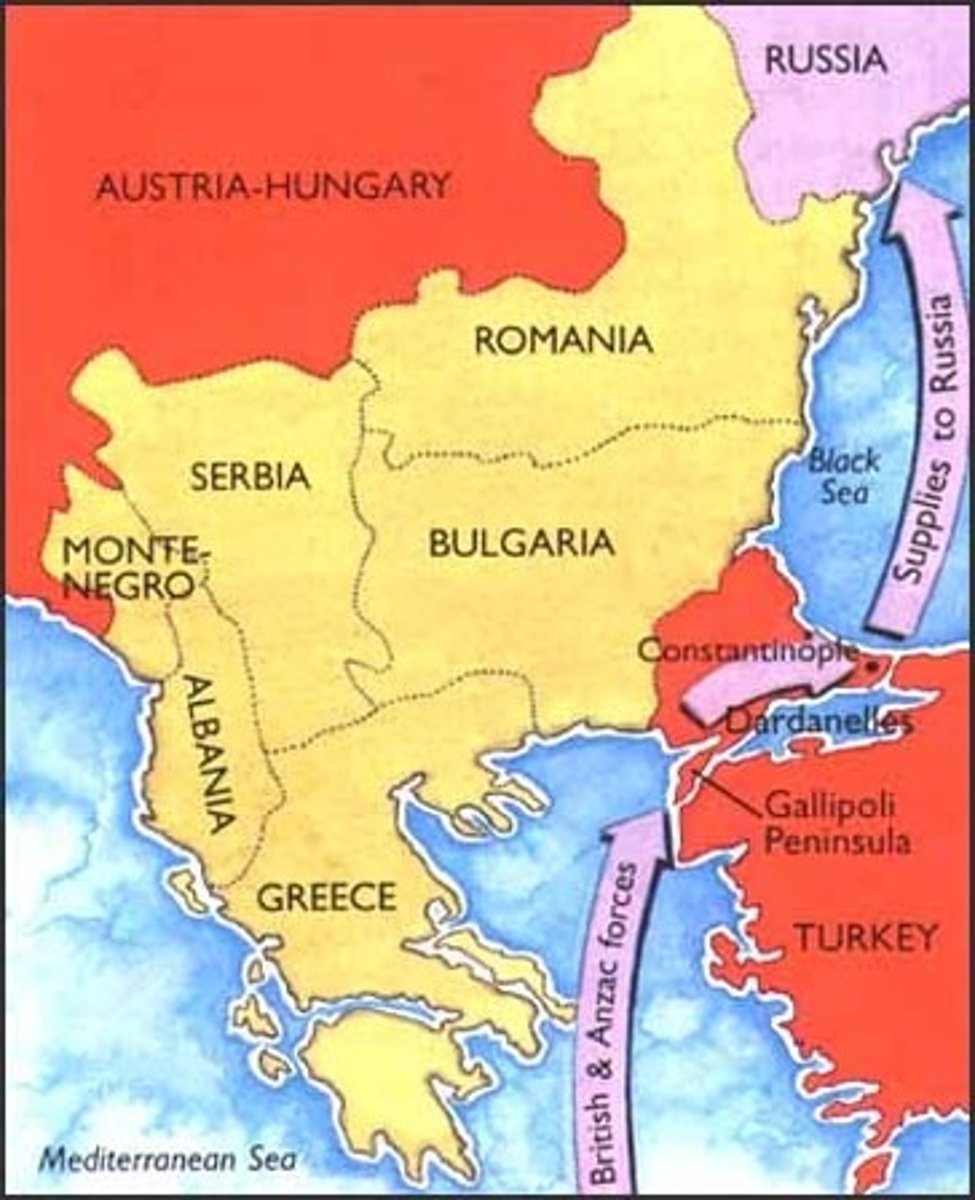
Gallipoli
A poorly planned and badly executed Allied campaign to capture the Turkish peninsula of Gallipoli during 1915 in World War I. Intended to open up a sea lane to the Russians through the Black Sea, the attempt failed with more than 50 percent casualties on both sides.
Great Depression
A time of utter economic disaster; started in the United States in 1929 and spread across the rest of the world during the 1930's
John Maynard Keynes
English economist who advocated the use of government monetary and fiscal policy to improve the economy
New Deal
A series of reforms enacted by the Franklin Roosevelt administration between 1933 and 1942 with the goal of ending the Great Depression.
Russian Civil War (1918-1921)
War in Russia between Red Russians, who supported the communist revolution of the new Bolshevik government, and the White Russians, who were loyal army officers fighting the revolution. The White Russians also received help from the Allies. But under Trotsky's leadership, the Red Army eventually wins.
Joseph Stalin
Russian leader who succeeded Lenin as head of the Communist Party and created a totalitarian state by purging all opposition (1879-1953)
Politburo
A seven-member committee that became the leading policy-making body of the Communist Party in Russia
Kolkhoz
in the Soviet Union, a small farm worked by farmers who shared in the farm's production and profits
New Economic Policy (NEP)
Lenin's 1921 policy to re-establish limited economic freedom in an attempt to rebuild agriculture and industry in the face of economic disintegration
Five Year Plan
Stalin's economic policy to rebuild the Soviet economy after WWI. tried to improve heavy industry and improve farm output, but resulted in famine
Fascism
A political system headed by a dictator that calls for extreme nationalism and racism and no tolerance of opposition
The Spanish Civil War
In 1936 a rebellion erupted in Spain after a coalition of Republicans, Socialists, and Communists was elected. General Francisco Franco led the rebellion. The revolt quickly became a civil war. The Soviet Union provided arms and advisers to the government forces while Germany and Italy sent tanks, airplanes, and soldiers to help Franco.
Fascism in Italy
Mussolini 1st Fascist -Fascism consisted of extreme nationalism, national order, violence to keep this order, and blind loyalty to the state.
USSR
Union of Soviet Socialist Republics. Created by Lenin in 1922.
Gulags
Forced labor camps set up by Stalin in eastern Russia. Dissidents were sent to the camps, where conditions were generally brutal. Millions died.
PRI (Mexico)
Mexican political party that dominated the country's political institutions from its founding in 1929 until the end of the 20th century, most of the important figures in national and local politics belonged to this party.
Lazaro Cardenas
President of Mexico (1934-1940). He brought major changes to Mexican life by distributing millions of acres of land to the peasants, bringing representatives of workers and farmers into the inner circles of politics, and nationalizing the oil industry (PEMEX)
The Spanish Republic
formed in 1931 after King Alfonso VIII abdicated; supported by the Loyalists in the Spanish Civil War
Popular Front (Spain)
antifascist coalition of Left-wing socialist revolutionary. Key elements of the movement was land reform
Nationalists
Conservative forces in Spain (Catholic Church and the military) who opposed the Popular Front
Francisco Franco
Spanish General; organized the revolt in Morocco, which led to the Spanish Civil War. Leader of the Nationalists - right wing, supported by Hitler and Mussolini, won the Civil War after three years of fighting.
Guernica
a Spanish town that was brutally bombed and was full of innocent civilians it was supposed to encourage fear, Picasso painted a famous painting capturing Guernica
Hypernationalism
Extreme nationalism, the belief in the superiority of one's nation and of the paramount importance of advancing it.
Communism
A theory or system of social organization based on the holding of all property in common, actual ownership being ascribed to the community as a whole or to the state.
Capitalism vs. Communism
In Communism, the community or society solely owns the means of production and production is for the good of everyone. On the other hand, in capitalism, the resources or the means of production are privately and production is for profit.
Decolonization
The collapse of colonial empires. Between 1947 and 1962, practically all former colonies in Asia and Africa gained independence.
Mandate System
Allocation of former German colonies and Ottoman possessions to the victorious powers after World War I; to be administered under League of Nations supervision.
Pan-Arabism
A movement that calls for unification among the peoples and countries of the Arab World, from the Atlantic Ocean to the Arabian Sea. It is closely connected to Arab nationalism, which asserts that the Arabs constitute a single nation.
Balfour Declaration
British document that promised land in Palestine as homeland for Jews in exchange for Jews help in WWI
Zionists
Supporters of Jewish nationalism, especially a creation of a Jewish state in Palestine.