unit 6
 Call Kai
 Learn
Learn Practice Test
 Spaced Repetition
 Match
Match Flashcards
 Knowt Play
1/12

Earn XP
Description and Tags
Rome and Egypt
Name | Mastery | Learn | Test | Matching | Spaced | Call with Kai |
|---|
No analytics yet
Send a link to your students to track their progress
13 Terms
Why did Egyptian and Roman culture coalesce in 30 BCE? What was before it?
Ptolemaic Kingdom of Egypt: a Hellenistic kingdom that blended Greek and Egyptian cultures. Founded by Alexander’s successor Ptolemy I, it lasted until 30 BCE, when conquered by the Romans.
Afterwards, Greek language was introduced in schools and used by the elites. Most people spoke Greek in addition to Egyptian.
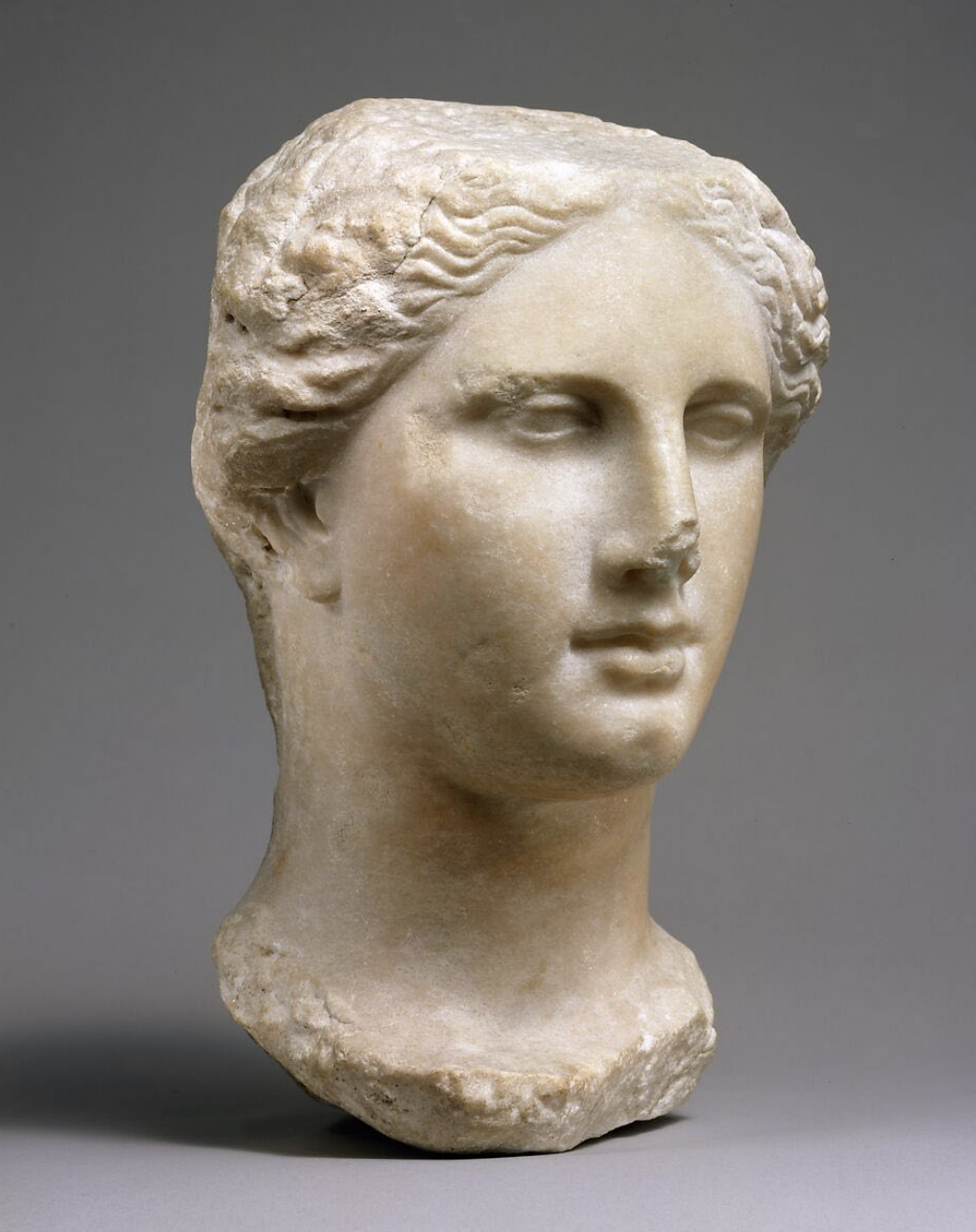
Who was Arsinoe II? What was she known for?
Arsinoe II of Egypt (c 316-270 BCE) was one of the most powerful and influential queens of the early Hellenistic period, serving as Queen of Thrace, Macedonia, and Co-regent of Egypt. She is noted for transforming the role of Ptolemaic queens from behind-the-scenes figures to active, co-ruling monarchs.
She was a major patron of monumental architecture. Commissioned buildings (public AND sacred structures (marble and stone, made for ritualistic gatherings), even outside the borders of the kingdom.)
Arsinoe portrays herself as the most idealized version of herself, “she almost certainly did not look like this”
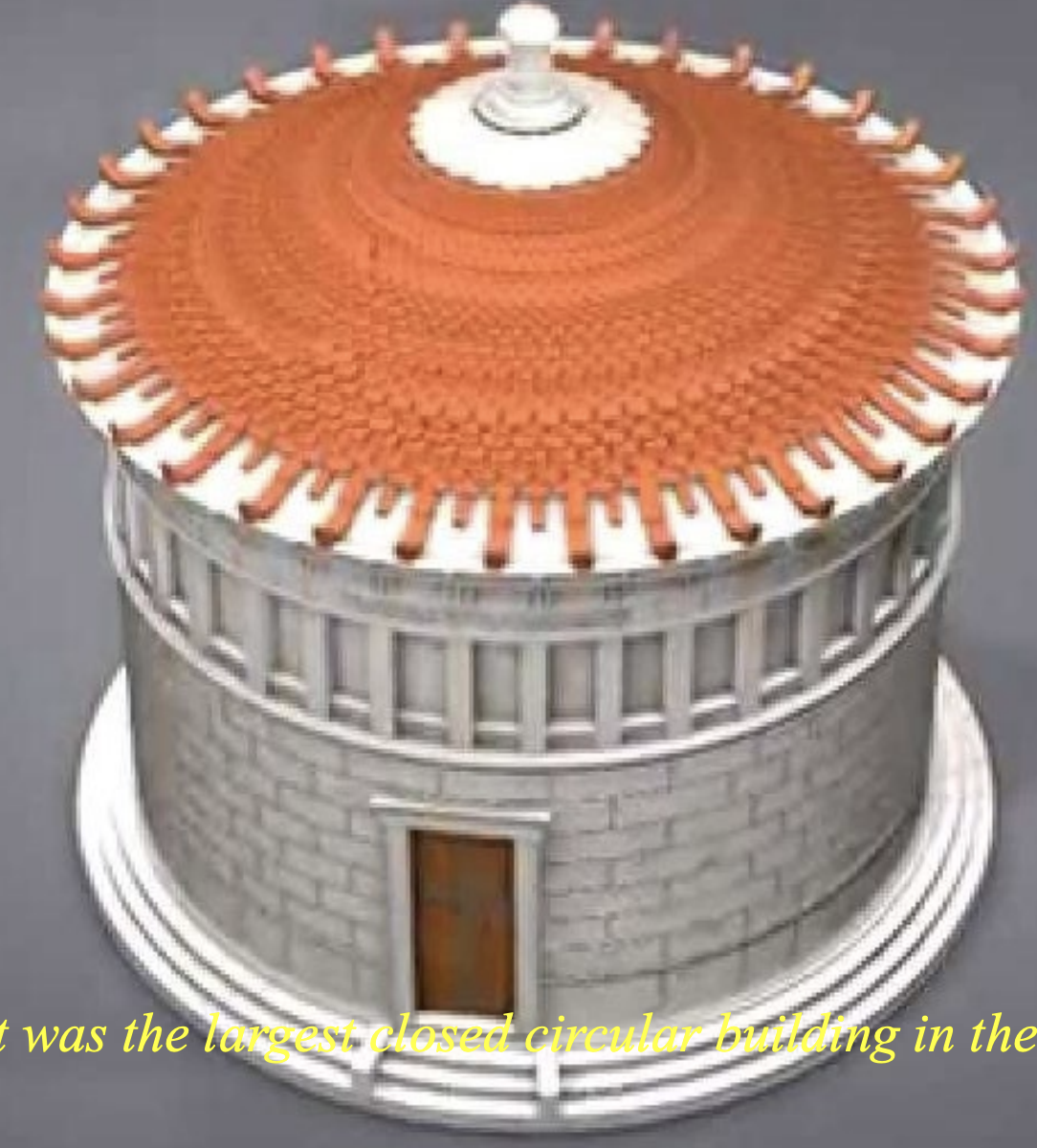
What was Samothrace? What important monument was built on it?
Samothrace: an island which monuments, important religious centres, sanctuary of great gods were built.
Arsinoeion: At the time of its construction, it was the largest closed circular building in the Greek world—commissioned by Arsinoe II
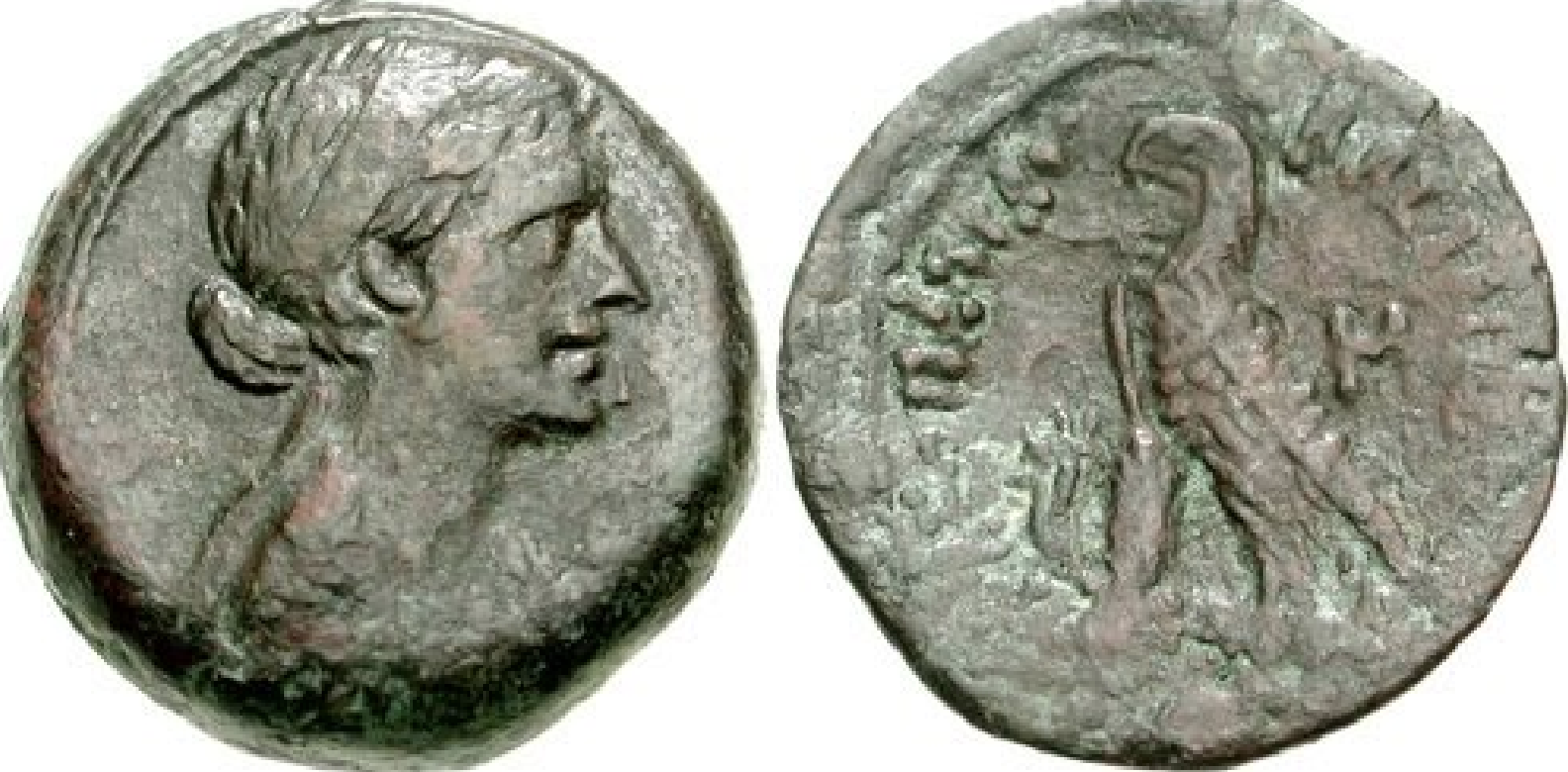
Bust of Cleopatra VII; Eagle standing left on thunderbolt: reverse (51–30 BC)
The coin signals continuity as she wanted to look like her father, Ptolemy I (founder of the kingdom). The coin is about authority.
Highlights the deification and rise of importance of women in the hellenistic society
Individualistic portrait of Cleopatra, not idealized
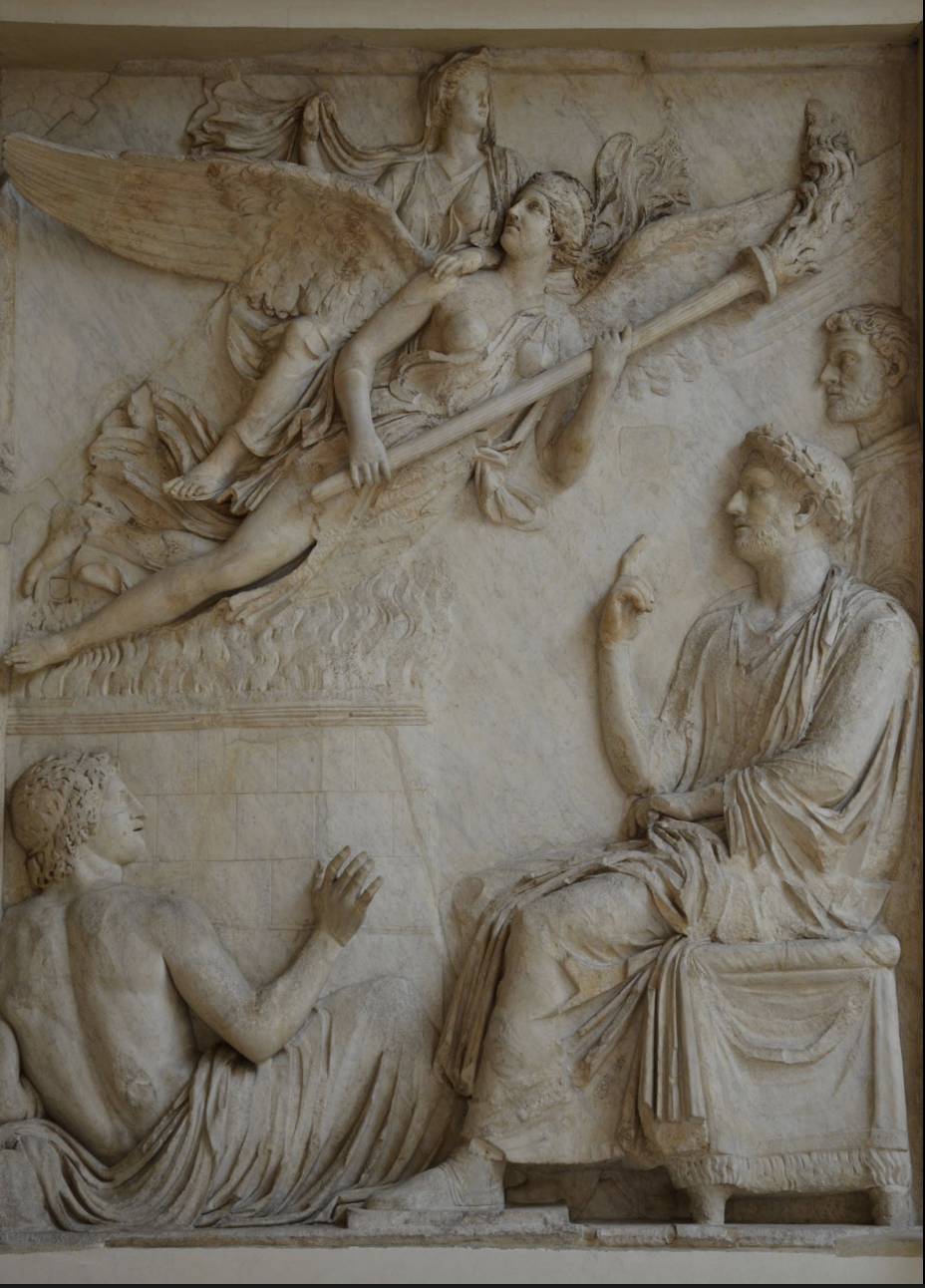
Apotheosis of Sabina
Male (Emperor Hadrian—> wife is Sabina, who is being carried by the winged personification of eternity) on the bottom right side, seated and relaxed, clothed, carved in higher relief
In the hellenistic period, female rulers sch as cleopatra vii and arsinoe ii were adorned as divine rulers. later, roman empress (sabina) is deified after her death.
woman is deified: Apotheosis (theos=god)
Highlights the deification and rise of importance of women in the hellenistic society
Portraiture conveyed ____ within the globalized world of the ____ empire.
status, roman
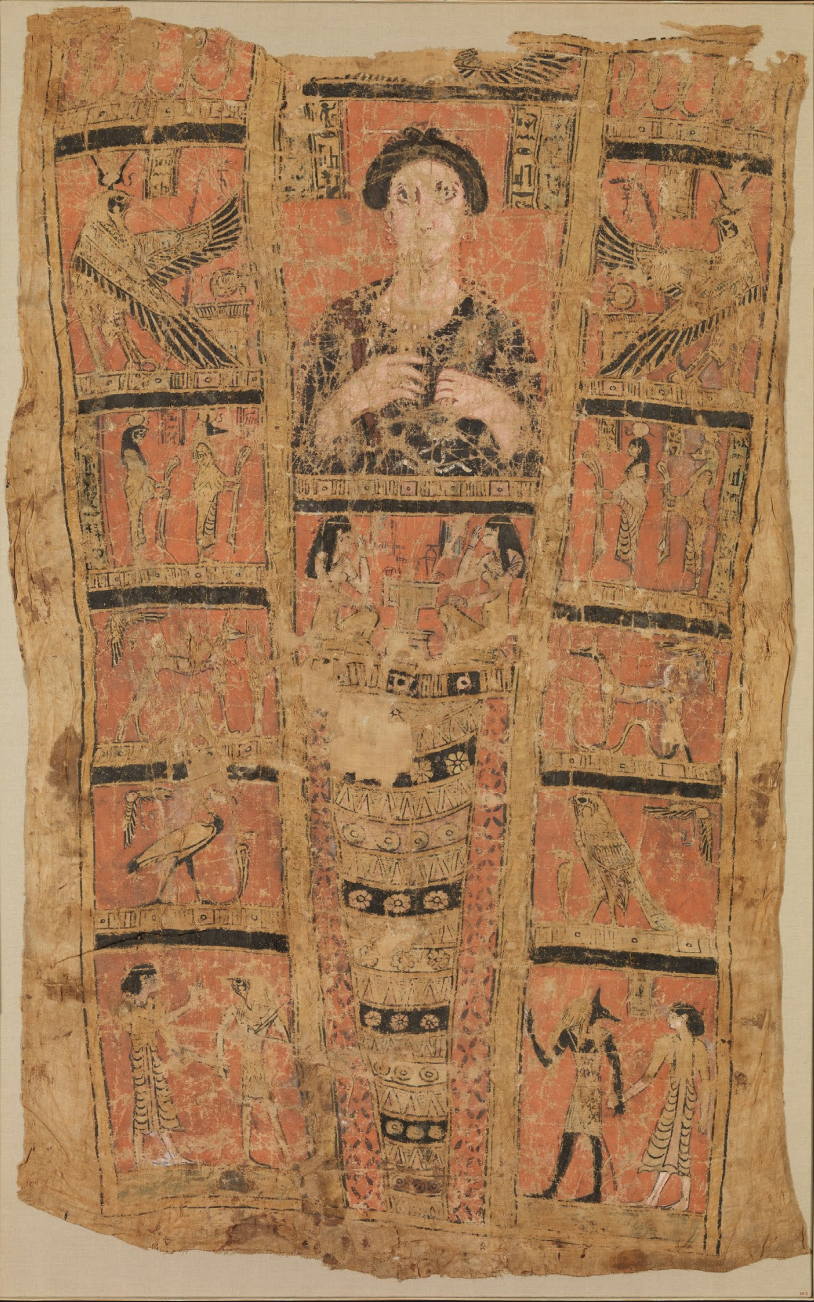
Why is this linen shroud significant?
Significant as this shows how Roman culture influences Egyptian practices after they are conquered.
The sides of the tomb depict local Egyptian gods and deities
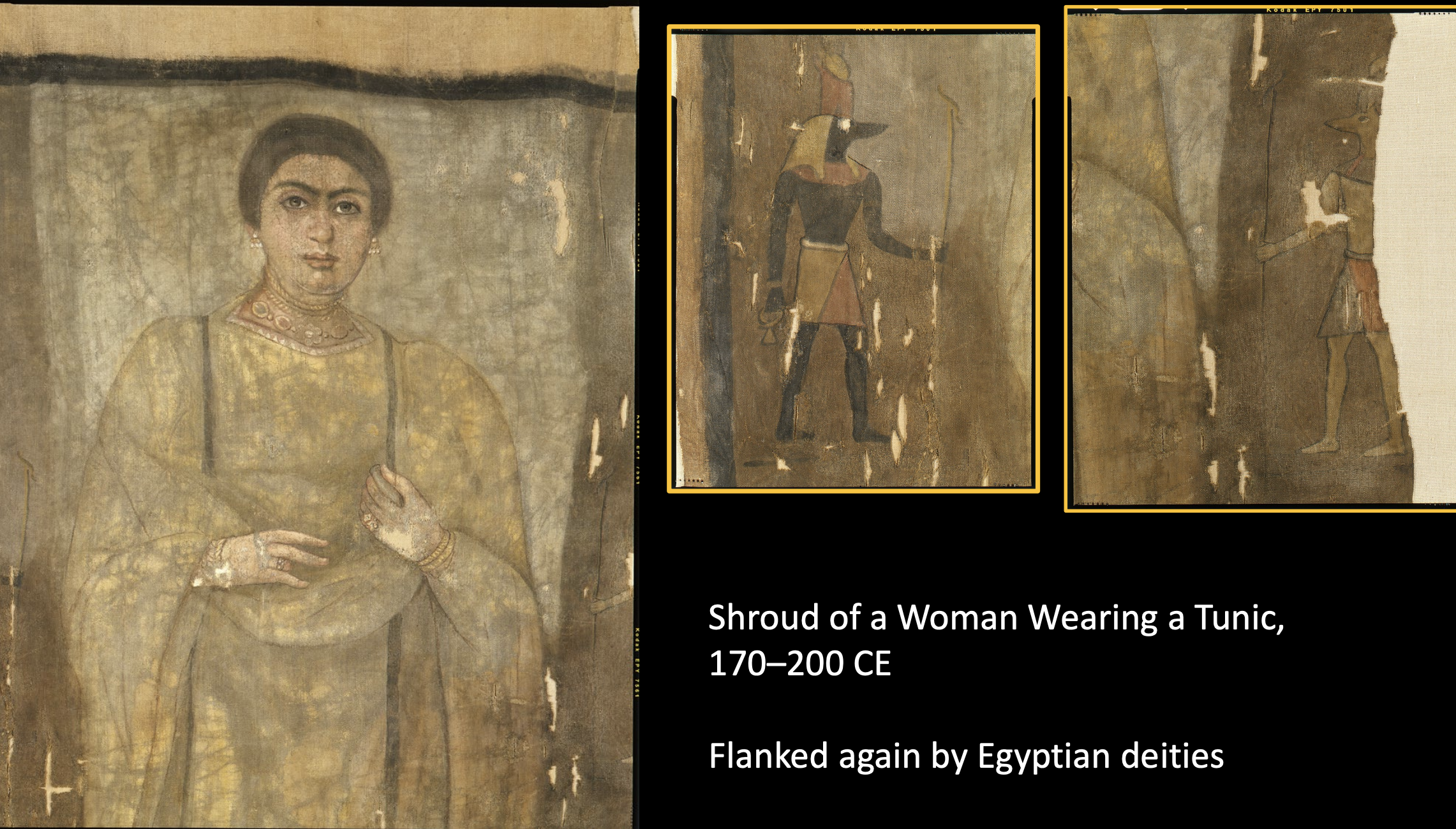
But the textiles speak to the agency (capability/independence) of women in Rome
Women thus used the Roman portrait to claim power and authority in society and the Egyptian gods to claim power in the afterlife.
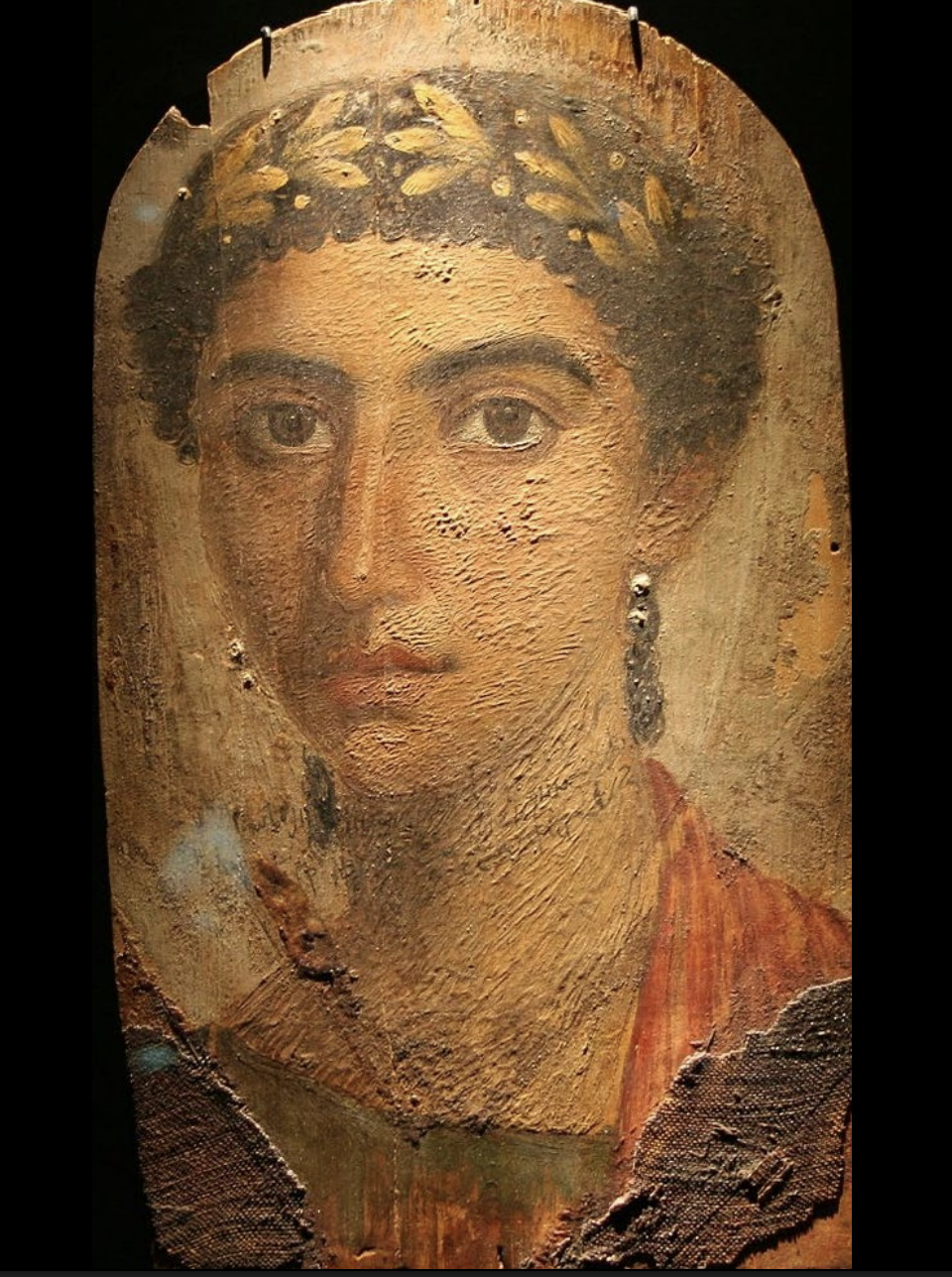
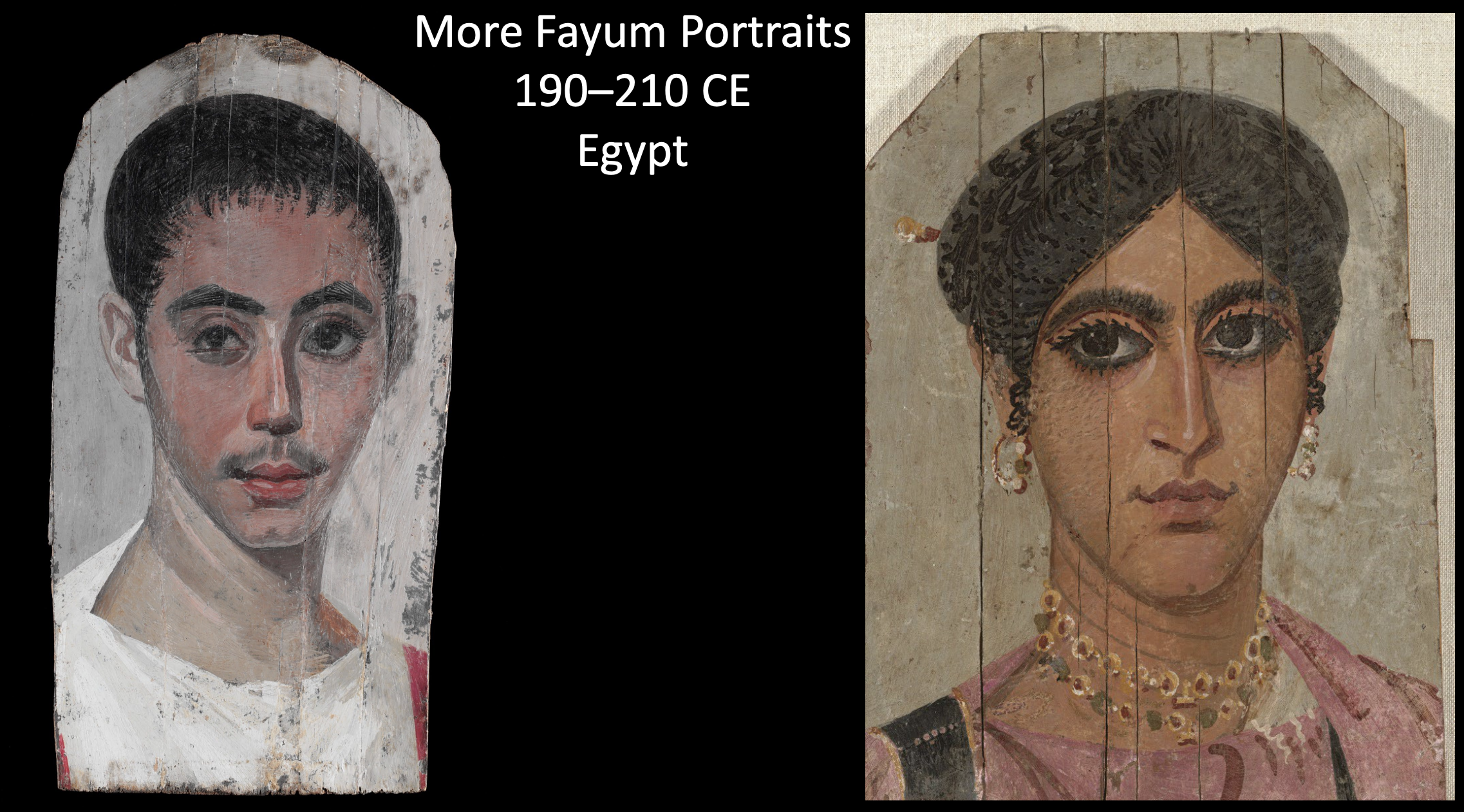
What are fayum mummy portraits? How do they show Greek and Egyptian styles in one?
Fayum portraits are masks placed on top of the sarcophogus in burials, painted as realistic as possible.
Assumes that most people had access to this type of artistic production (more able to afford these paintings)
There are distinguishable features, status, and a push for individualism (as shown in the scarred eye because it’s not the “best” version depicted of themselves)
This shows how Greek/Hellenistic realistim combined with egyptian-style funerals (mummifying + sarcophagus)
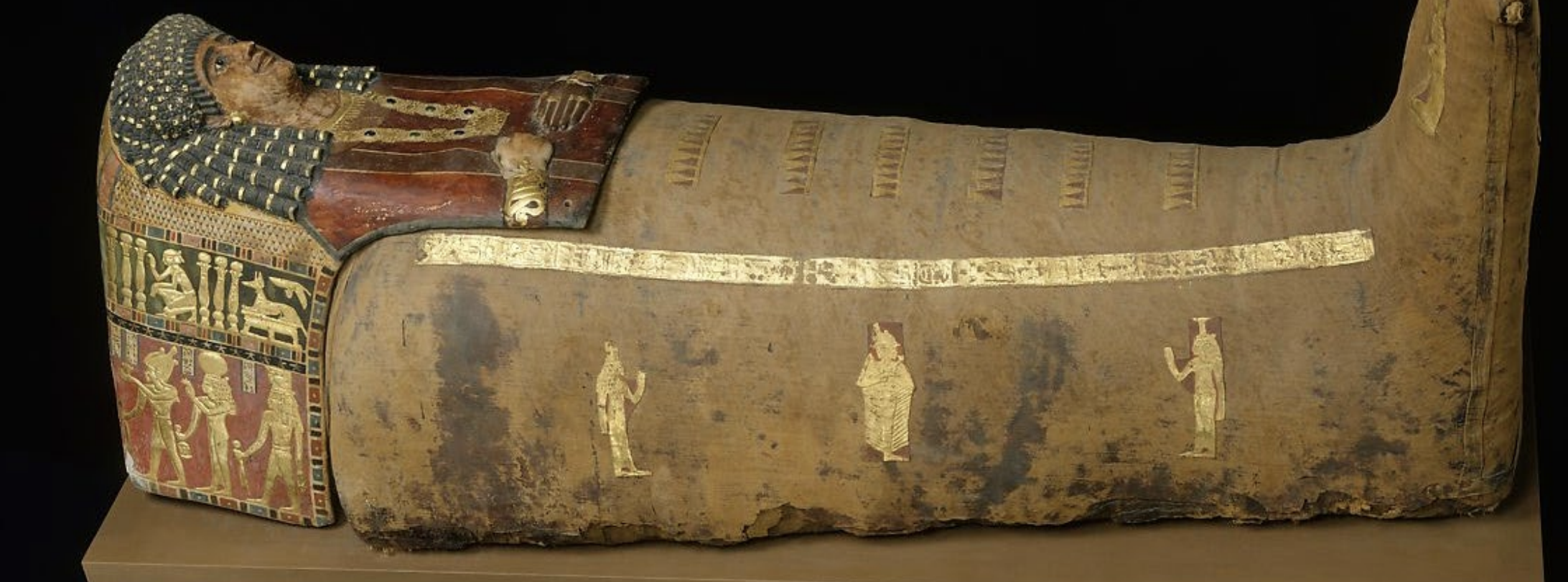
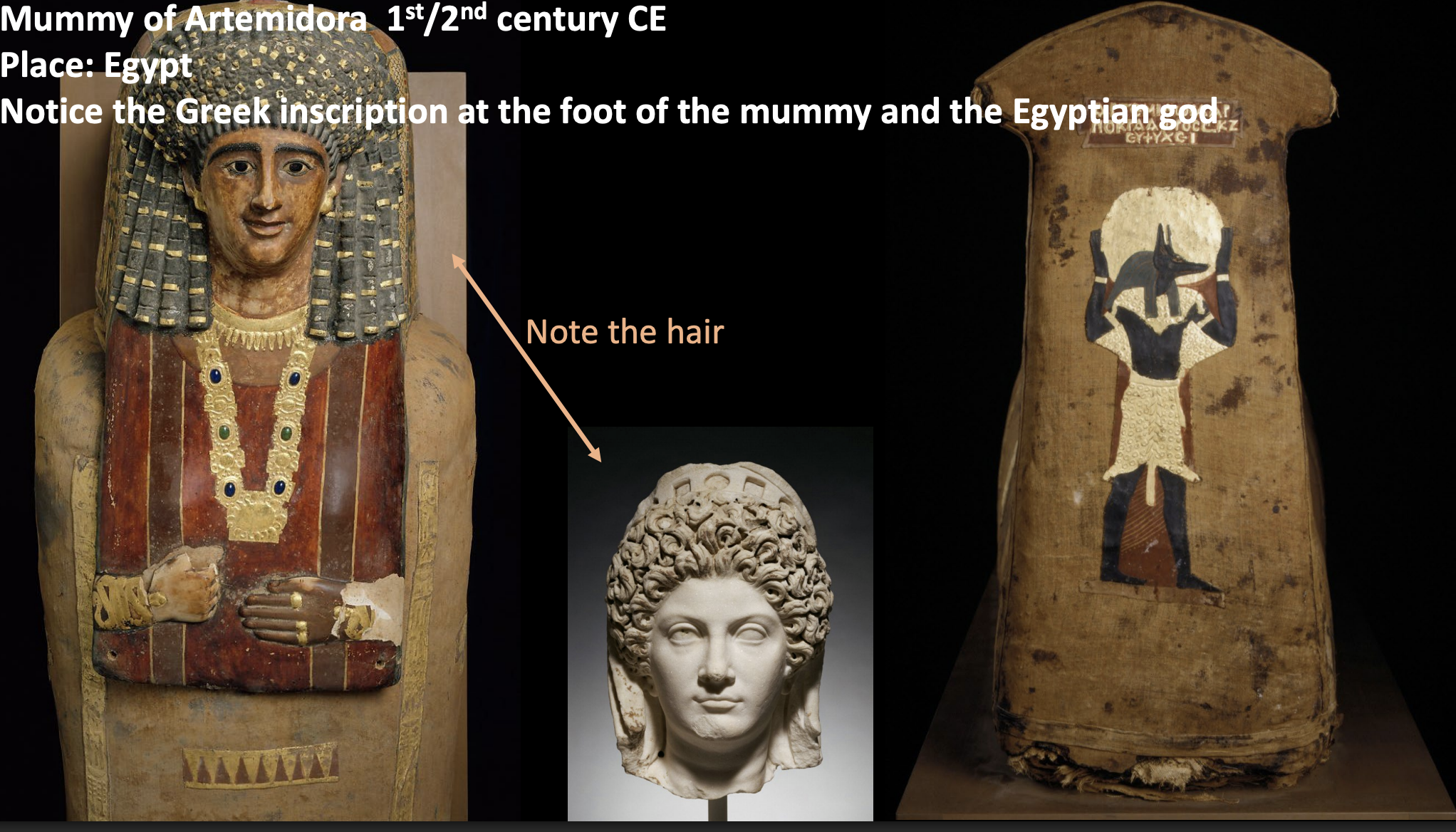
Mummy of Artemidora 1st/2nd century CE
Similar to the women shown on linen shrouds, the Mummy of Artemidora depicts a Greek woman (name), following Egyptian funerary practices and Roman imperial fashion (especially shown on clothing, jewelry, and haristyle, which imitate that of Roman empresses
**note the hair (upper portion is in a roman imperial style, ringlets coming down are egyptian in nature)
Similarities: rising power and influence of women in roman and egyptian cultures
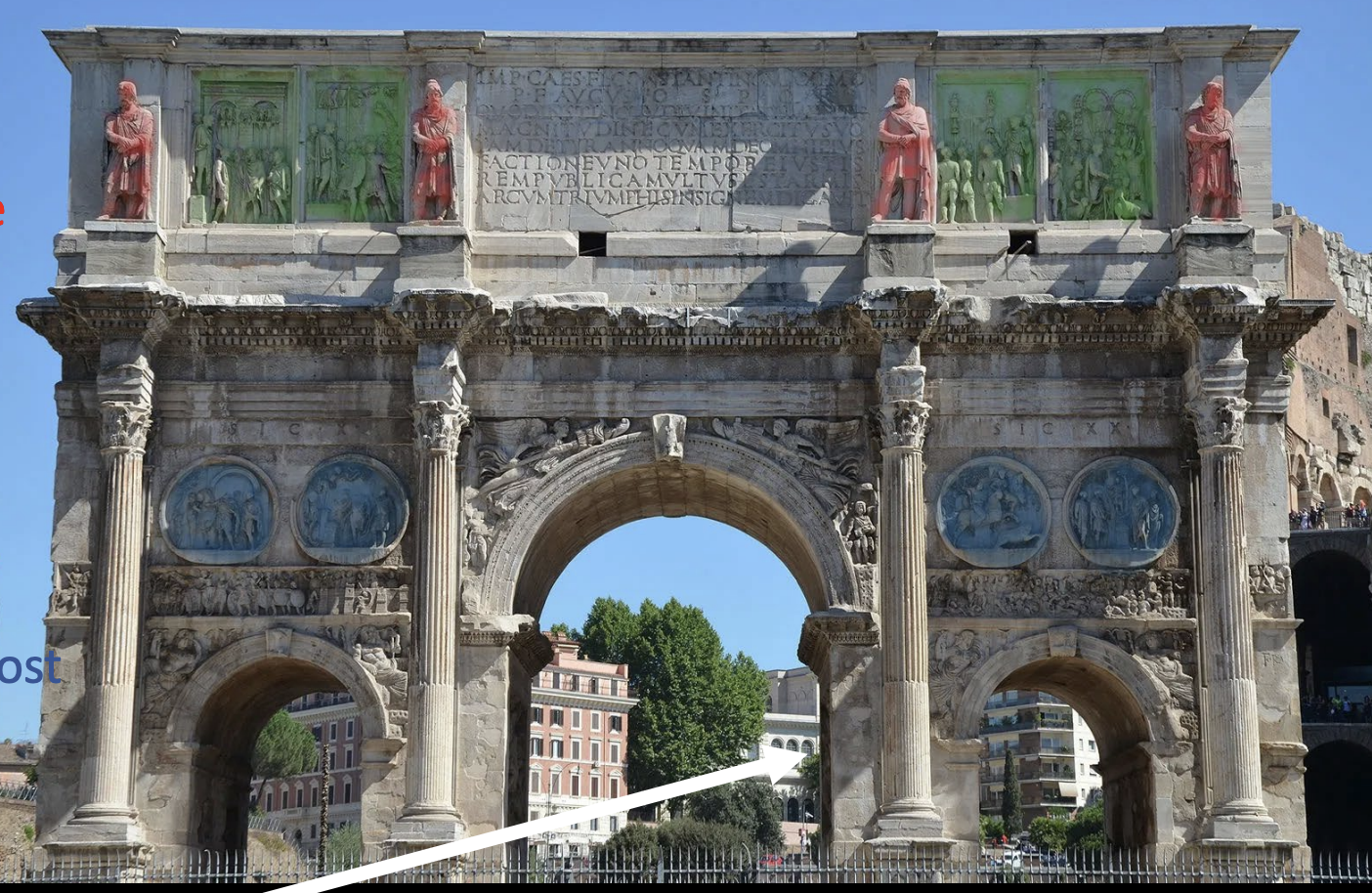
Arch of Constantine
The Arch of Constantine was built to celebrate a major battle victory by Constantine I, erected near the forum (roman ver. of agora), and is significant as many of the reliefs in this arch are of different time periods. This is because spolia, the repurposing of building materials from older structures into new ones, are incorporated into the arch.
Red: dacian soldiers (foreigners, defeated) → Showed how Trajan was a successful emperor and his victories over other cultures
Green: relief panels commemorating Emperor Marcus Aurelius
Blue: medallions commemorating Emperor Hadrian
**relief panels inside the arch are dedicated to Emperor Trajan
Why did the Arch of Constantine depict Emperor Marcus Aurelius, Hadrian, and Trajan?
These three emperors reigned in the 2nd century CE, and were called the “good emperors” : they brought a stable administration, economic prrosperity, trade between regions, and successful military campaigns.
Emperors included were 2 centuries prior to Constantine ruled, and he wanted to focus on the known good emperors because the past years were not good
Constantine trying to remind people of these good emperors that came before the bad, pushing the association between himself and these good emperors (PROPAGANDA)
Monuments are often defaced in an attempt to erase previous rulers, but he was trying to push the association, “i will be a good ruler” ***know that this is propoganda, pushing a narrative. This is obvious in how the emperors heads were re-cut to look like Constantine.
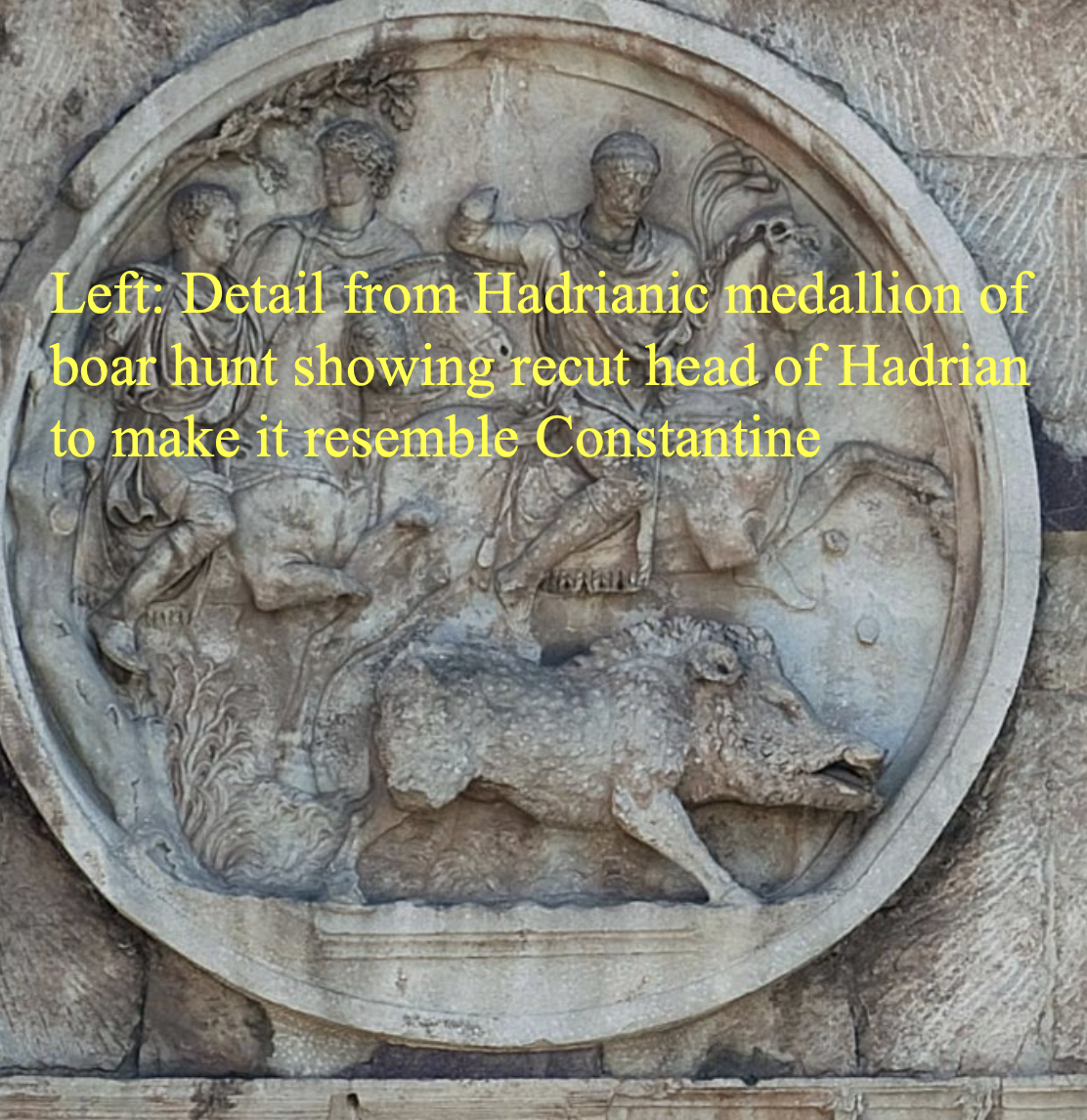
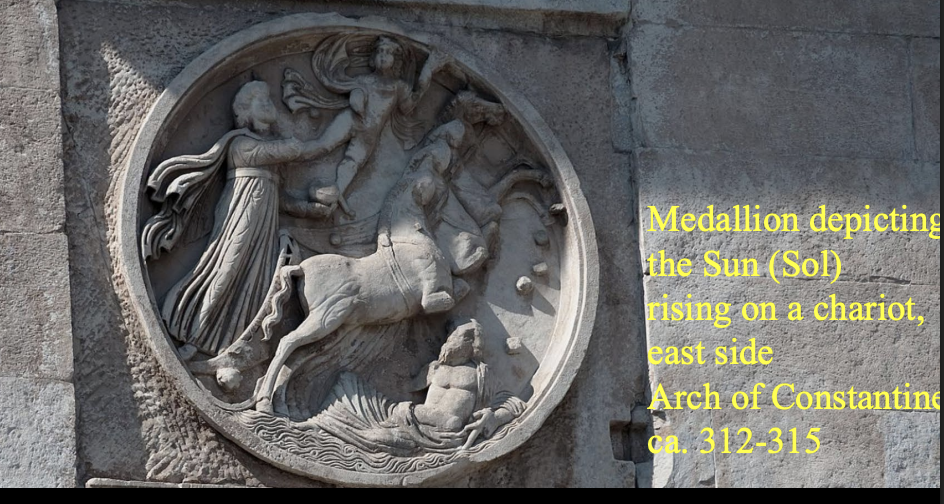
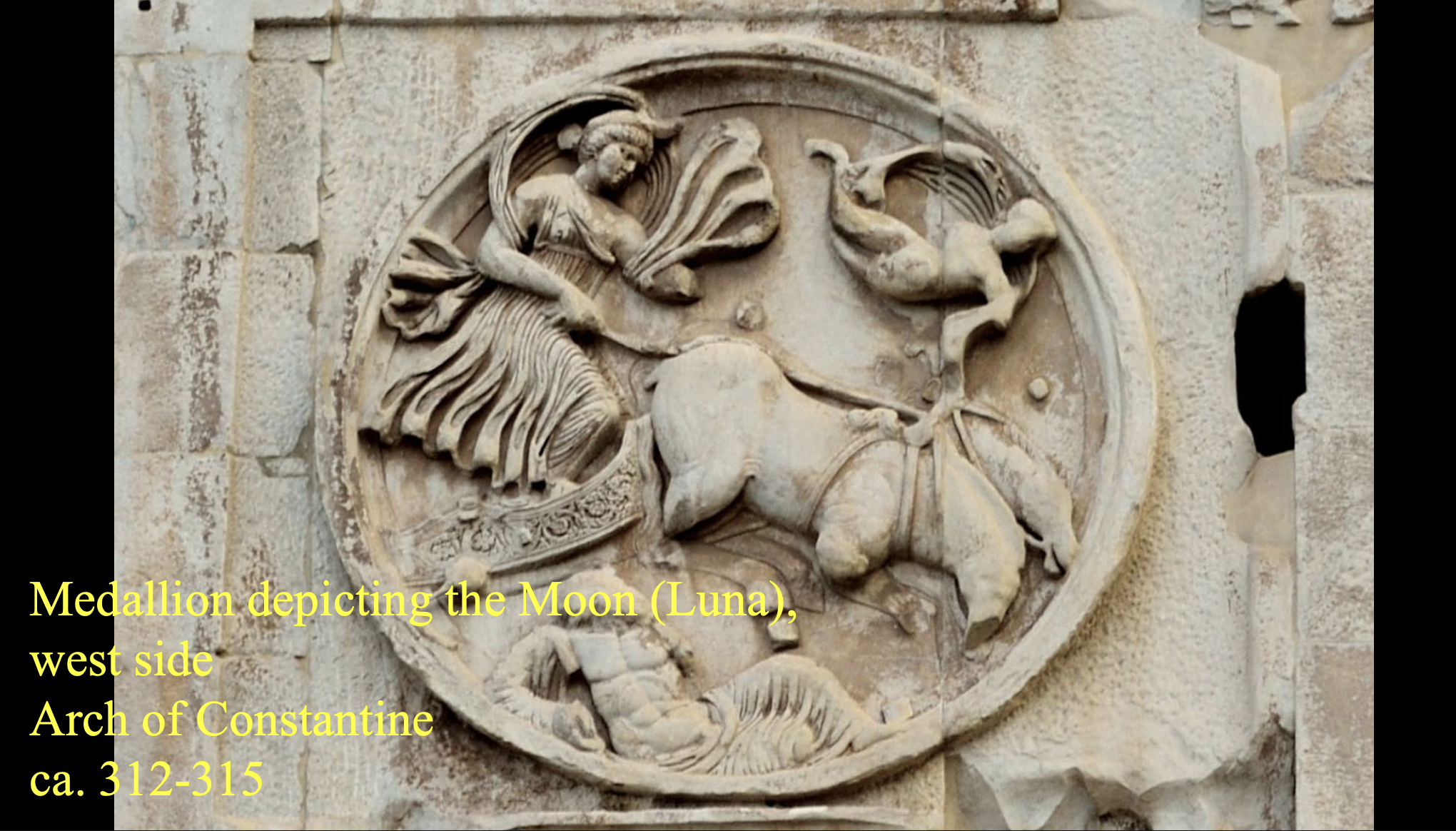
What are these a personification of?
These are personifications of the sun and moon, showing that their empire has power at all times: from the dawn until the end of the empire
Constantine associating himself with the celestial sphere
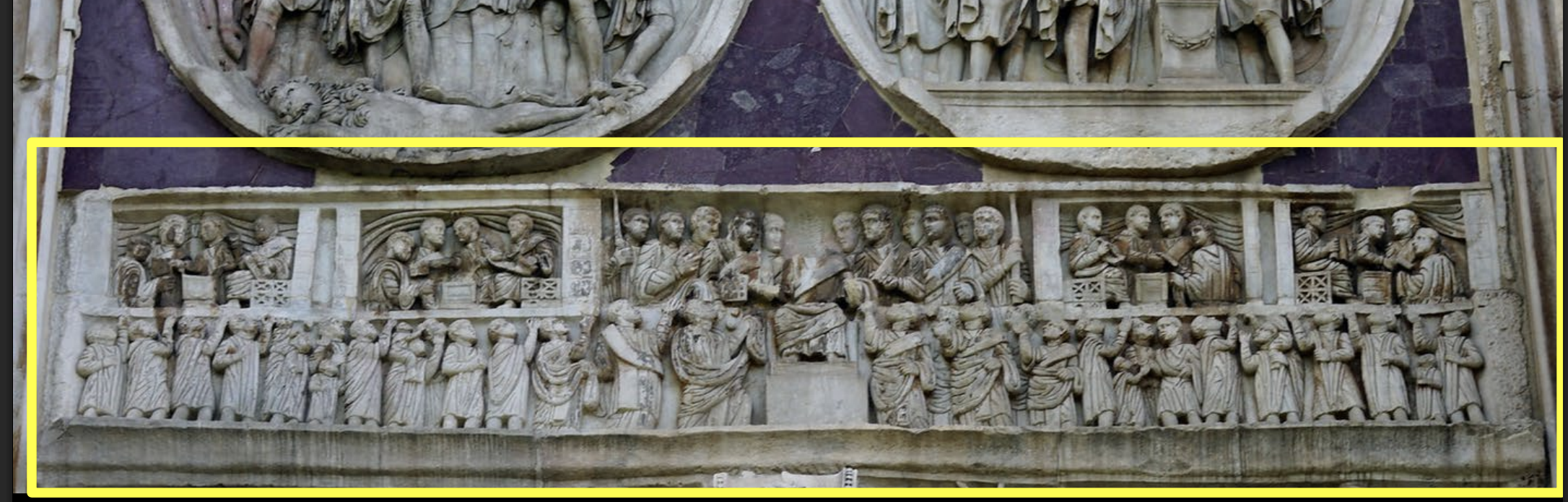
What does this panel/frieze depict?
This is a section of the Constantinian frieze showing Constantine I, surrounded by advisors and the commonfolk, distributing money/provisions to the poor in the Roman forum after a ritual.