PCP 1
 Call Kai
 Learn
Learn Practice Test
 Spaced Repetition
 Match
Match Flashcards
 Knowt Play
1/41

Earn XP
Description and Tags
This set of flashcards covers key concepts from the lecture on cellular physiology, focusing on the plasma membrane, transport mechanisms, and the role of ions and proteins in cellular homeostasis.
Name | Mastery | Learn | Test | Matching | Spaced | Call with Kai |
|---|
No analytics yet
Send a link to your students to track their progress
42 Terms
What is the structure of the plasma membrane Phospholipid?
phospholipid bilayer,
has hydrophilic heads facing outward
hydrophobic tails facing inward
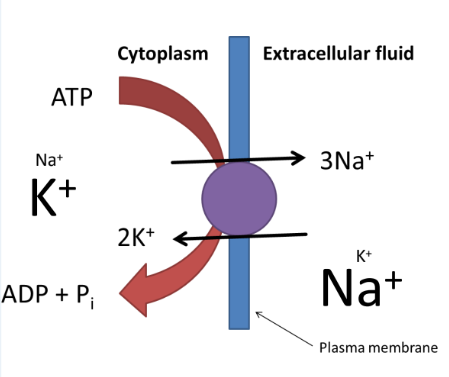
How does the Na-K pump function?
The Na-K pump is an enzyme that transports Na+ out of the cell and K+ into the cell, using ATP as energy to maintain their concentration gradients.
What are aquaporins?
Aquaporins are specialized proteins that provide transmembrane pores for the passive transport of water across the plasma membrane.
What is passive diffusion?
Passive diffusion is the movement of molecules from a region of higher concentration to a region of lower concentration without the use of energy.
Active transport
movement of molecules into or out of a cell through cell membrane, from a region of lower concentration to a region of higher concentration using energy (ATP)
What role do ion channels play in cellular physiology?
Ion channels allow specific ions to diffuse across the plasma membrane, contributing to cellular responses by evoking changes in ion concentrations.
What determines the permeability of the plasma membrane to Na+ and K+?
determined by the number of ion channels that are open;
Na+ permeability is generally low
K+ permeability is high.
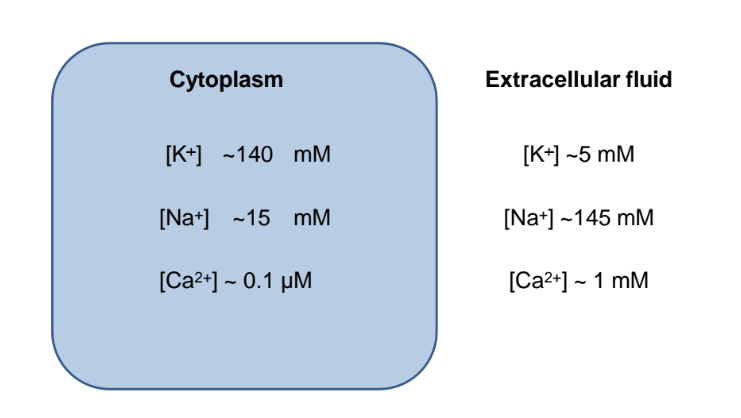
What is the electrochemical driving force on Na+?
Na+ is inwardly directed due to both the concentration gradient and the resting membrane potential, which attracts Na+ into the cell.
Why is the Ca2+ gradient significant for cellular function?
The inwardly directed Ca2+ gradient is significant because it creates a strong driving force for Ca2+ to enter the cell, impacting various physiological processes.
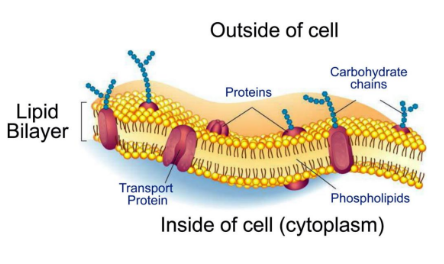
What is the function of the plasma membrane?
The plasma membrane acts as a physical barrier, protecting cellular contents and supporting cell structure. It regulates what enters and exits the cell, maintains electrochemical gradients, and facilitates communication through receptors.
What does selective permeability mean in the context of the plasma membrane?
plasma membrane's ability to regulate the entry and exit of ions, nutrients, and waste molecules.
What are electrochemical gradients?
Electrochemical gradients are differences in electrical charge across the plasma membrane that are established and maintained by the movement of ions.
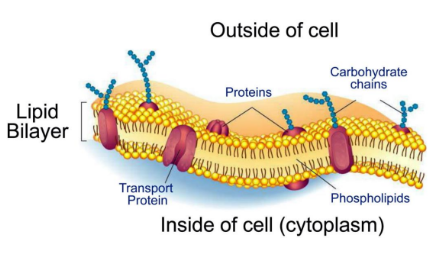
How does the plasma membrane facilitate communication?
The plasma membrane contains receptors that recognize and respond to molecular signals.
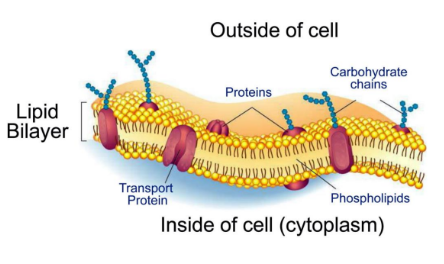
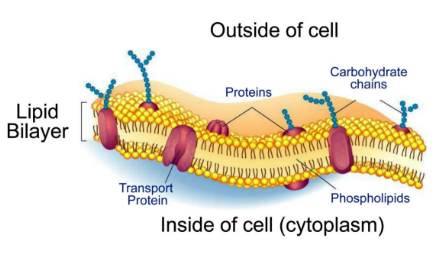
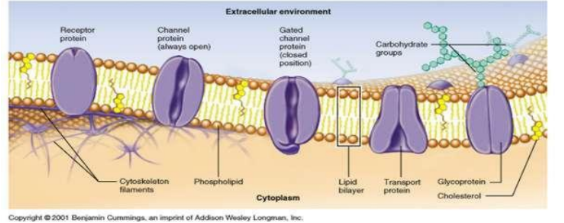
What is the composition of the plasma membrane?
The plasma membrane is composed mainly of phospholipids, but it also includes other lipid types such as cholesterol.
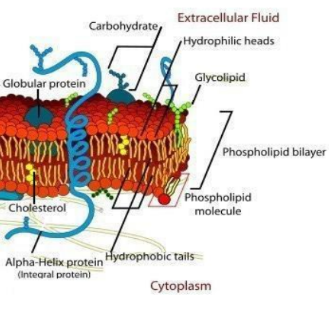
What is the arrangement of phospholipids in the plasma membrane?
In the plasma membrane, the hydrophilic parts of phospholipids face outward while the hydrophobic parts face inward, forming a lipid bilayer.
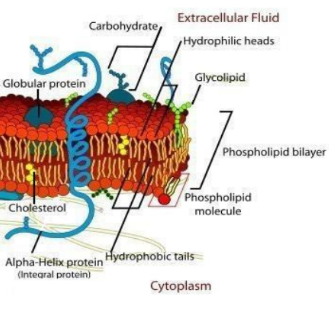
What is the fluid mosaic model?
The fluid mosaic model describes the plasma membrane as a fluid and dynamic structure where proteins float through the lipid bilayer, allowing for movement and flexibility.
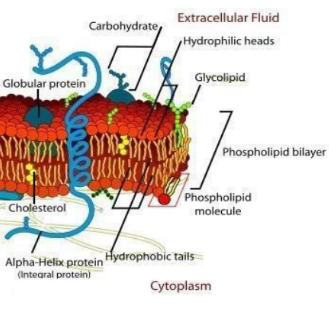
What are structural proteins in the membrane?
Structural proteins provide support and shape to the cell.
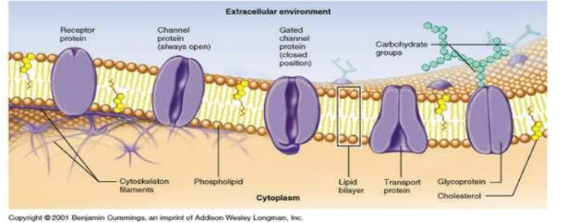
What is the role of receptor proteins?
Receptor proteins help cells communicate with their external environment through hormones and neurotransmitters.
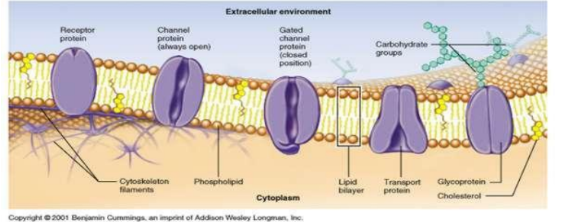
What do channel proteins do?
Channel proteins allow water, ions, and proteins to flow passively through the bilayer.
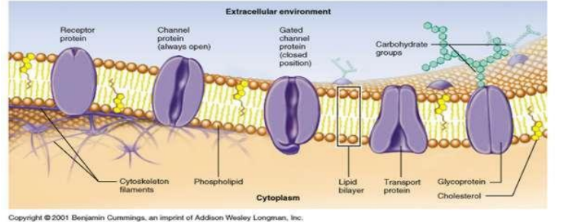
What is the function of transport proteins?
Transport proteins carry molecules across cell membranes.
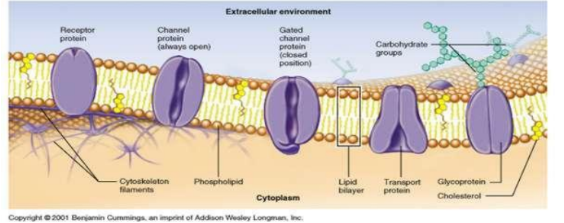
What are glycoproteins?
Glycoproteins have a carbohydrate chain attached and assist in cell-to-cell communication and adhesion.
How do hydrophobic substances cross the lipid layer?
passive diffusion
How are hydrophylic substances transported across lipid bilayer
by protein carriers
What is osmosis
diffusion of water from a less concentrated to a more concentrated soluttion through a selective permeable membrane
How does the Na-K pump function?
The Na-K pump is an enzyme (Na+-K+-dependent ATPase) that hydrolyzes ATP, consuming energy to transport Na+ out of the cell in exchange for K+.
Why is the Na-K pump active transport
works against concentration gradient
Where is Na-K pump important?
in nerve/ muscle
organs which transport ions (kidneys)
powers ionic movement
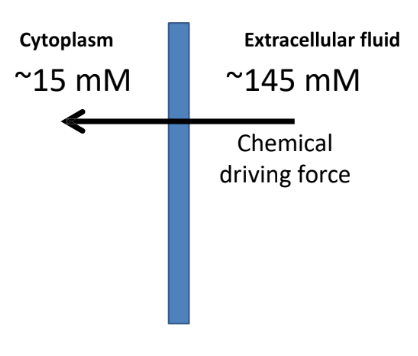
What is the Na+ chemical driving force?
pump establishes and maintains an inwardly-directed concentration gradient for Na+
therefore, there is an inwardly-directed chemical driving force on Na+
What is the resting membrane potential (Vm) in animal cells?
Virtually all animal cells have a resting membrane potential (Vm) where the inside of the cell is slightly more negative than the outside.
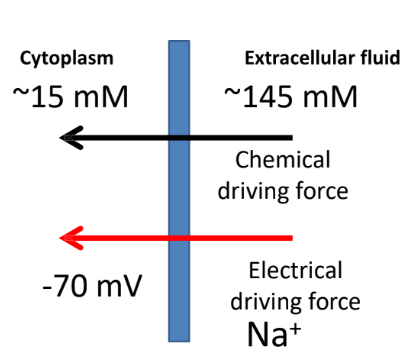
Why is Na+ attracted to the inside of the cell?
Na+ has a positive charge, making it attracted to the inside of the cell due to the negative resting membrane potential.
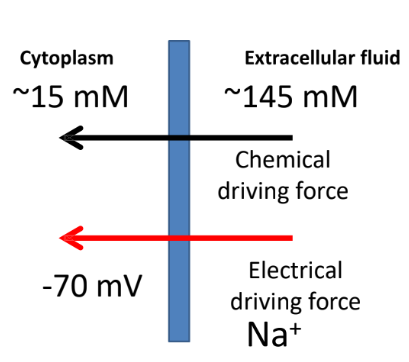
What does the inwardly-directed electrical driving force on Na+ signify?
The inwardly-directed electrical driving force on Na+ indicates that Na+ is driven toward the inside of the cell due to the electrical gradient created by the resting membrane potential.
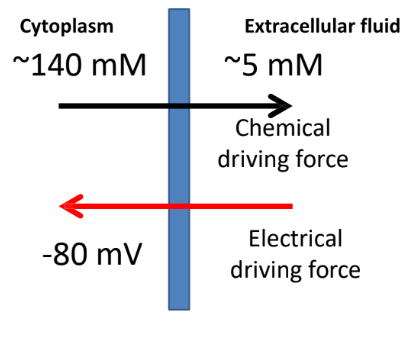
What is the chemical driving force on K+?
Because the Na+ pump maintains a high internal K+, the chemical driving force on K+ is outwardly directed.
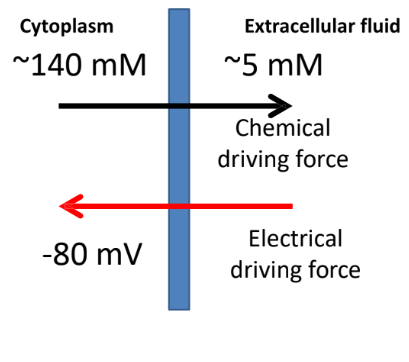
What is the electrical driving force on K+?
The electrical driving force on K+ is still inwardly directed since K+ is positive.
How do the forces acting on K+ compare?
The chemical and electrical driving forces acting on K+ have opposite polarities, unlike the situation for Na+.
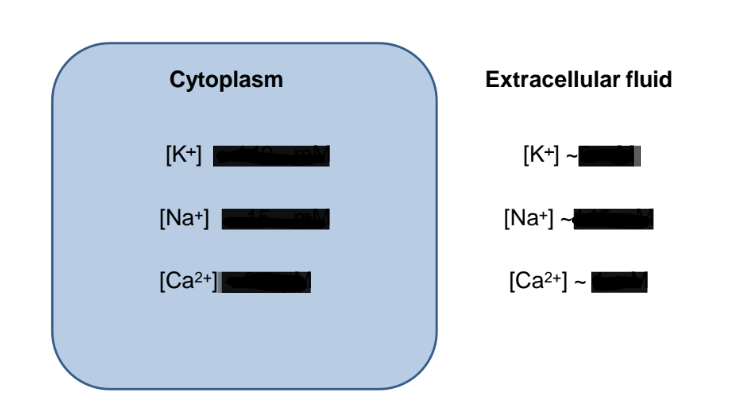
What is the concentration of Ca2+ in the extracellular fluid (ECF)?
Ca2+ in ECF is about 1 mM.
How is Ca2+ extruded from the cytoplasm?
Ca2+ is extruded from the cytoplasm by a Ca2+ pump, which is an example of active transport.
What fuels the Ca2+ pump?
The Ca2+ pump is directly fueled by ATP, enabling it to maintain the low concentration of Ca2+ in the cytoplasm compared to the extracellular fluid.
What does Ca2+ want to do in relation to moving into the cell?
Ca2+ therefore 'wants' to enter the cell.
Why is Ca2+ movement into the cell limited?
The plasma membrane is normally very impermeable to Ca2+.
What is Ionotropic receptor
coupled to ion channel
Important
Important