MATH FUNCTIONS GRADE !!
0.0(0)
Studied by 5 people Call Kai
 Learn
Learn Practice Test
 Spaced Repetition
 Match
Match Flashcards
 Knowt Play
Card Sorting
1/44

Last updated 12:49 AM on 1/4/23
Name | Mastery | Learn | Test | Matching | Spaced | Call with Kai |
|---|
No analytics yet
Send a link to your students to track their progress
45 Terms
1
New cards
domain
the range on the x-axis
2
New cards
range
the range on the y-axis
3
New cards
when given coordinates, how do you write domain and range.
for example, (3,2),(5,3),(4,9)
for example, (3,2),(5,3),(4,9)
you put XE AND YE OUTSIDE BRACKETS-
for ex: XE(3,4,5) YE(2,3,9)
\
for ex: XE(3,4,5) YE(2,3,9)
\
4
New cards
when writing domain and range, what order do you go by
smallest to greatest
5
New cards
when a number repeats itself what do you do.
For example: (3,9),(3,8),(4,2)
For example: (3,9),(3,8),(4,2)
You do not write the number again
For example: XE(3,4) YE(2,8,9)
For example: XE(3,4) YE(2,8,9)
6
New cards
state domain and range of Y=4
(XER)
(YER| y = 4)
(YER| y = 4)
7
New cards
state domain and range of x=2
(XER|x=2)
(YER)
(YER)
8
New cards
when do you use XE/YE outside brackets vs. (XER)/(YER)
you use XE/YE when given points and you use (XER)/(YER) when given an equation or a graph that doesn’t tell you to state coordinates one by one
9
New cards
.
what does that dot mean
what does that dot mean
function/graph stops at this point and can equal to this point.
10
New cards
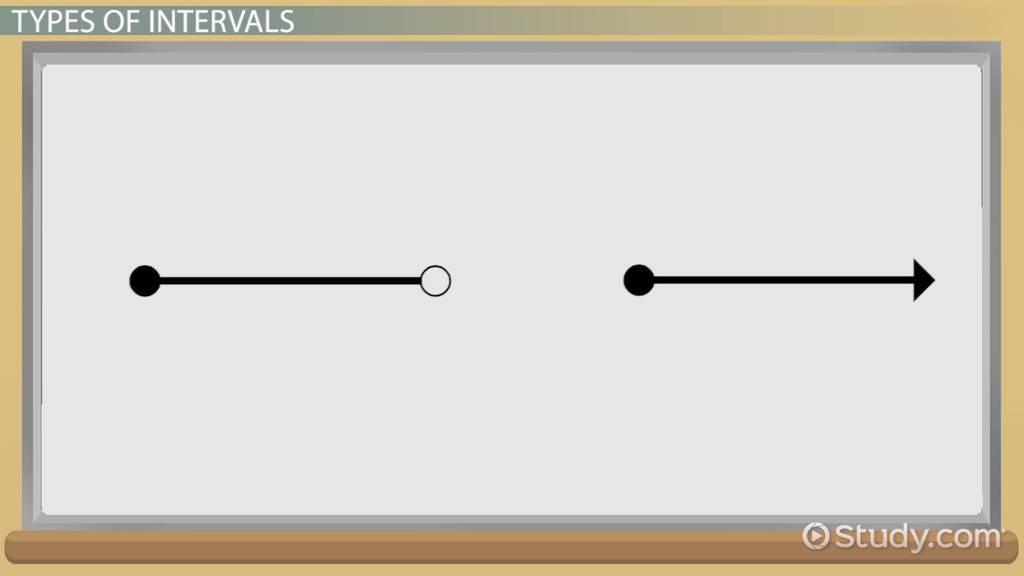
what does that open dot mean?
function/graphs stops near this point but can never equal that point.
for example if that dot stops at 3, that means the graph can equal anything leading up to 2.9 but not 3
for example if that dot stops at 3, that means the graph can equal anything leading up to 2.9 but not 3
11
New cards
name parent function:
f(x) = x squared
f(x) = x squared
quadratic function
12
New cards
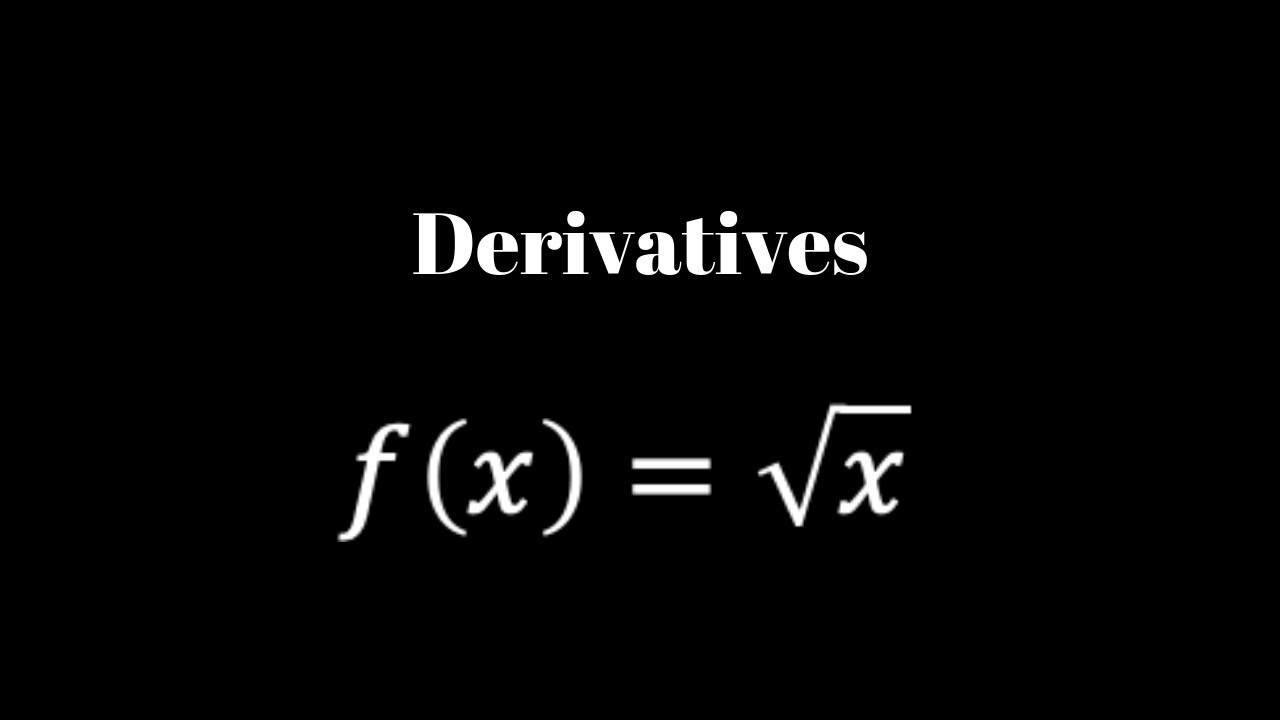
name parent function:
square root
13
New cards
name parent function:
f(x) = |x|
f(x) = |x|
absolute function
14
New cards
name parent function:
f(x) = 1/x
f(x) = 1/x
reciprocal function
15
New cards
name parent function:
f(x)= x
f(x)= x
linear function
16
New cards
which functions has asymptotes
recipricol
17
New cards
how do you write domain and range for a recipricol function
state asymtotes for example: (xer| X≠ 1)
(yer| x≠ 1)
(yer| x≠ 1)
18
New cards
how do you determine domain and range of a parabola equation.
you look at “c” value and “a” value
for example if -2(x-4)squared + 5
* (xer)
* (yer| y ≤ 5)
for example if -2(x-4)squared + 5
* (xer)
* (yer| y ≤ 5)
19
New cards
what makes a relation a function
everything in graphing is called a relation, what makes it a function is a set of x and y values, for every x value it has one unique y value.
20
New cards
which graph function cant have zero’s
the reciprocal function cant have zeros in its denominator
21
New cards
which graph fucntion cant have negative numbers
the square root function cant have negative numbers
22
New cards
Function notation:
\
if f(x) = 2x-1
figure out: f(3x+5).
What are you substituting?
\
if f(x) = 2x-1
figure out: f(3x+5).
What are you substituting?
on the second line, we are substituting whatever is inside the bracket beside “f” which is 3x+ 5 into the expression on the left hand side into “x” on the first equation line.
it becomes: f(3x+5) = 2(3x+5) -1
it becomes: f(3x+5) = 2(3x+5) -1
23
New cards
when substituing for example:
f(2) = 2x-1
what do you have to remember
f(2) = 2x-1
what do you have to remember
line up the equal sign!! (remember this in inverse fucntions to when substituting.
24
New cards
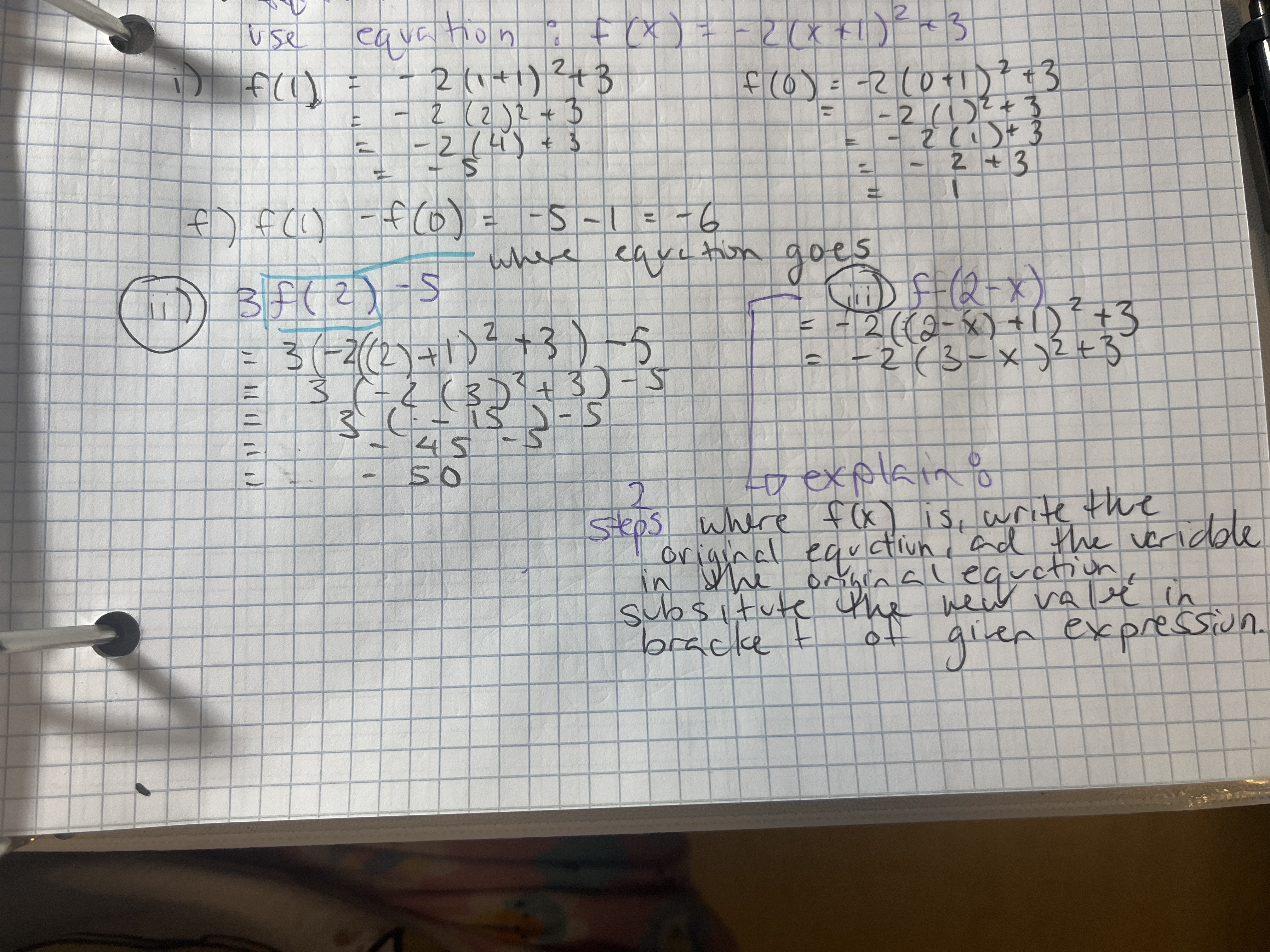
look over and do again
25
New cards
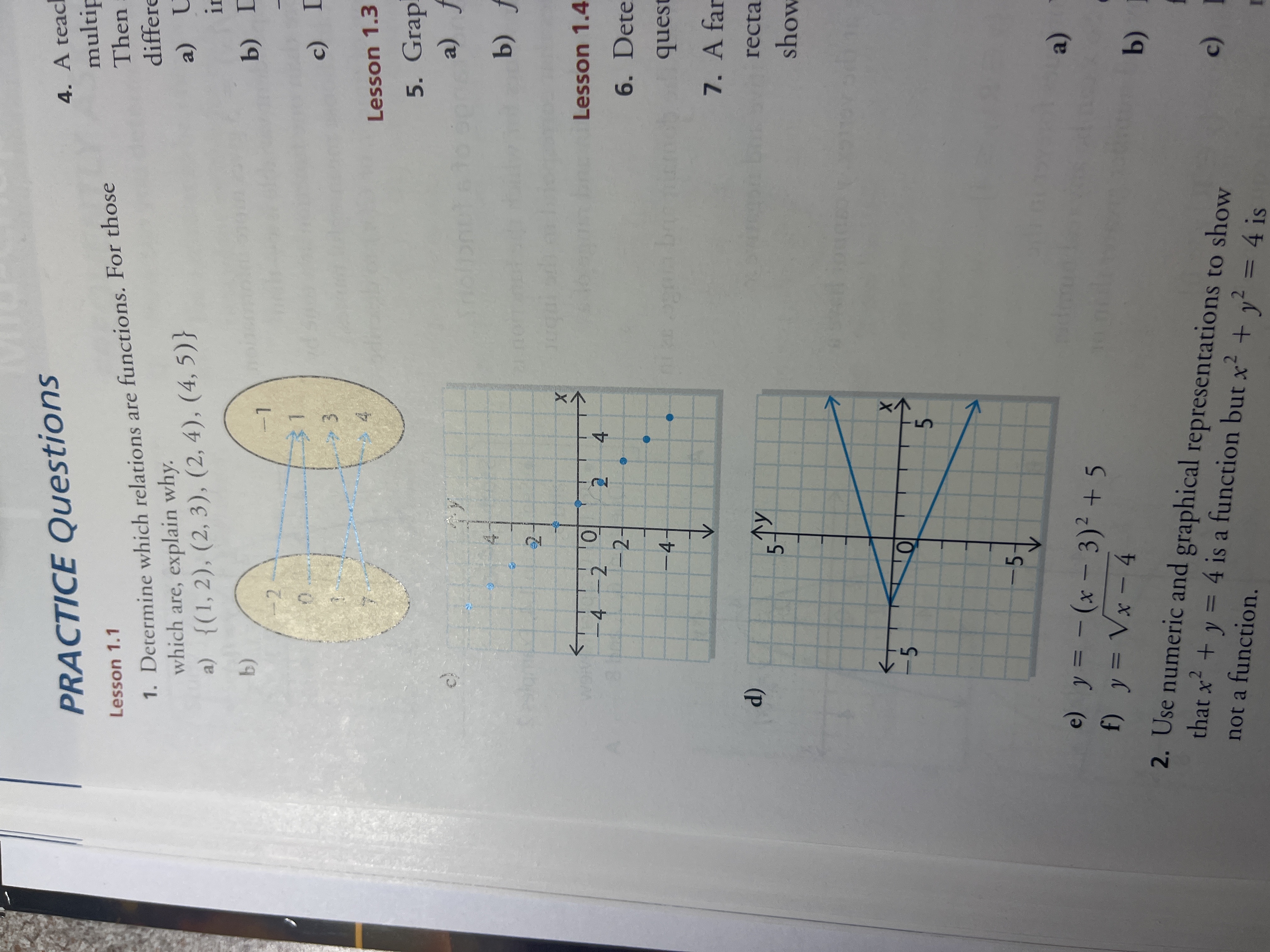
Do question c and f (revision)
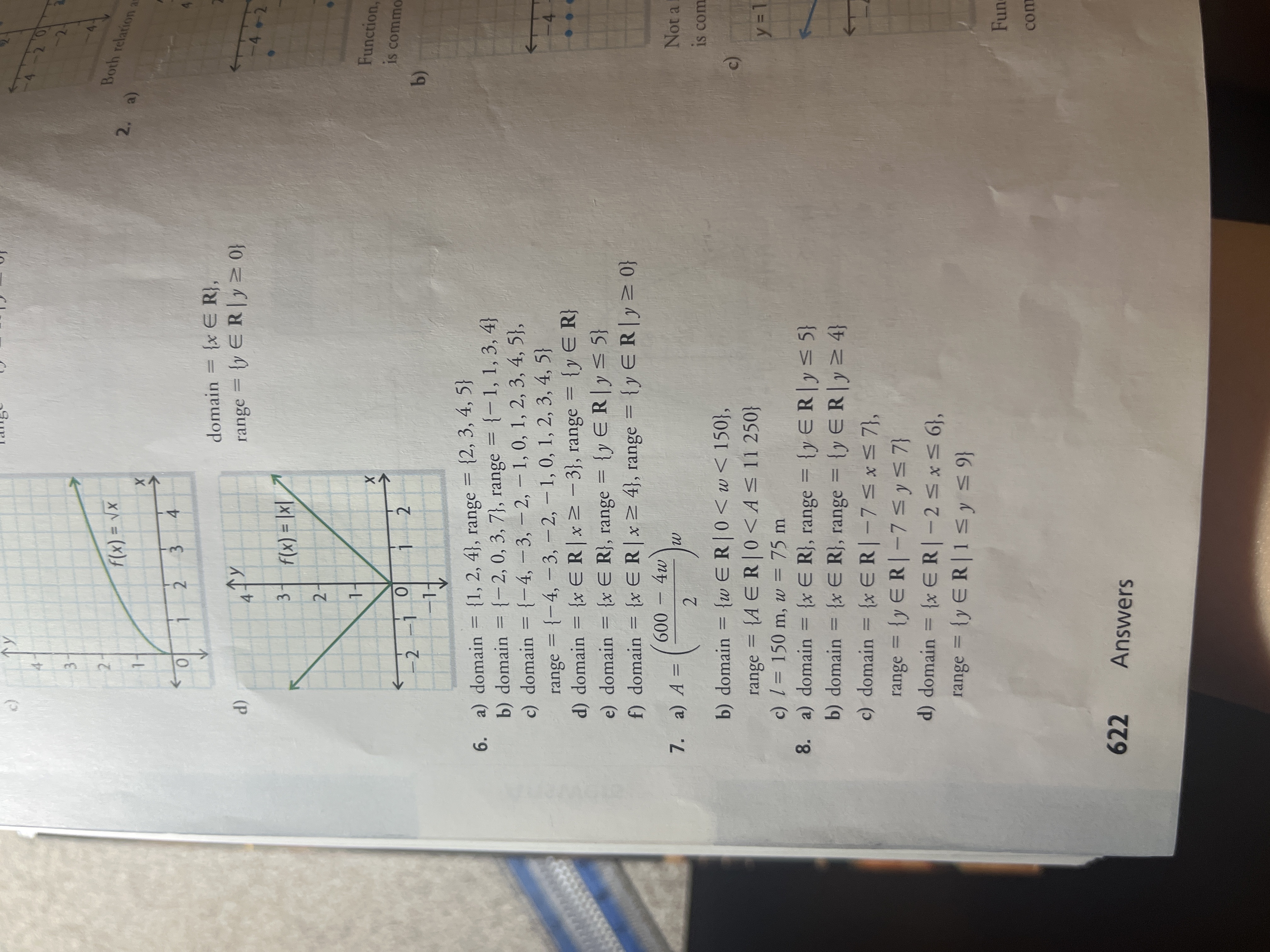
26
New cards
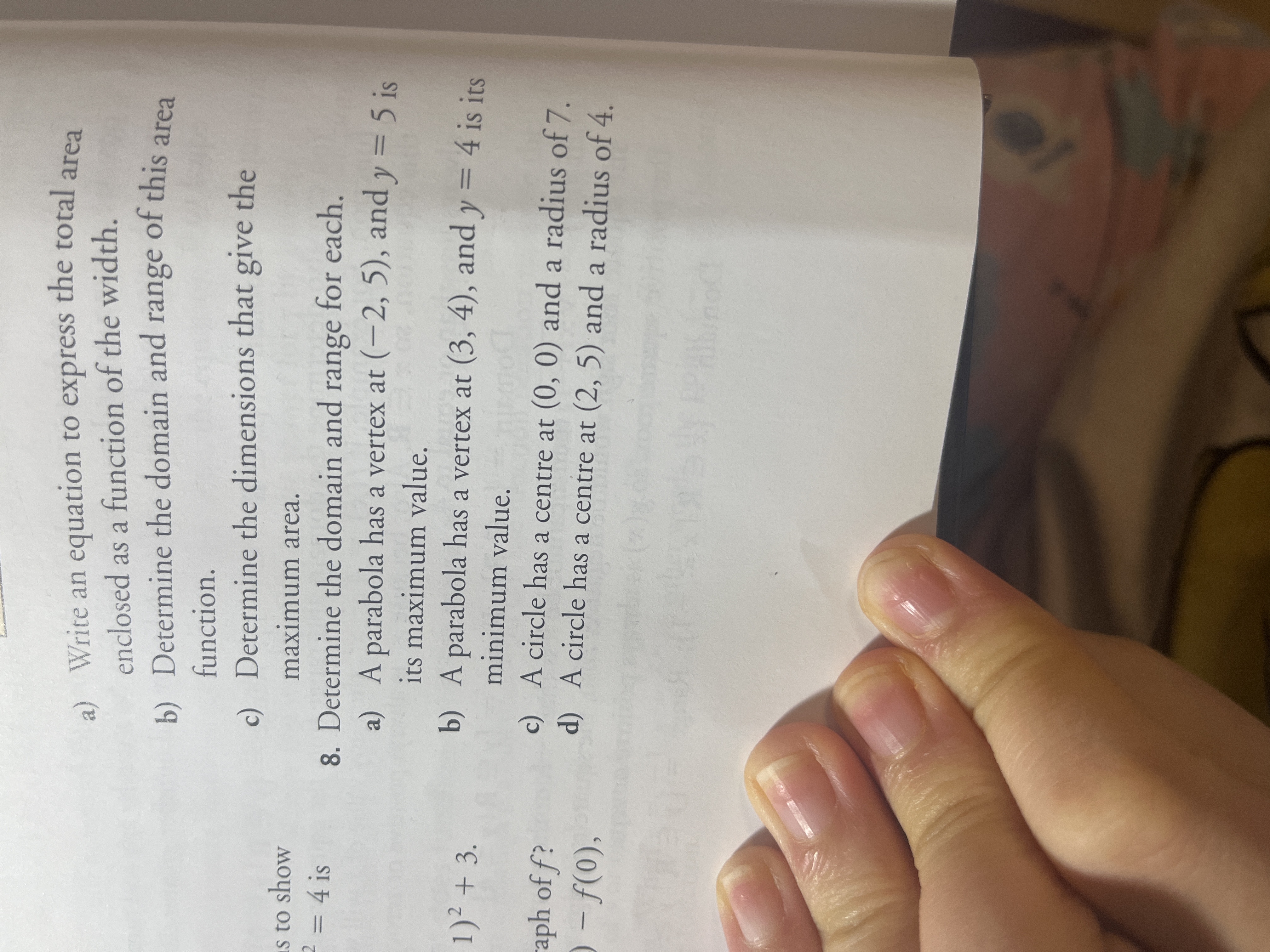
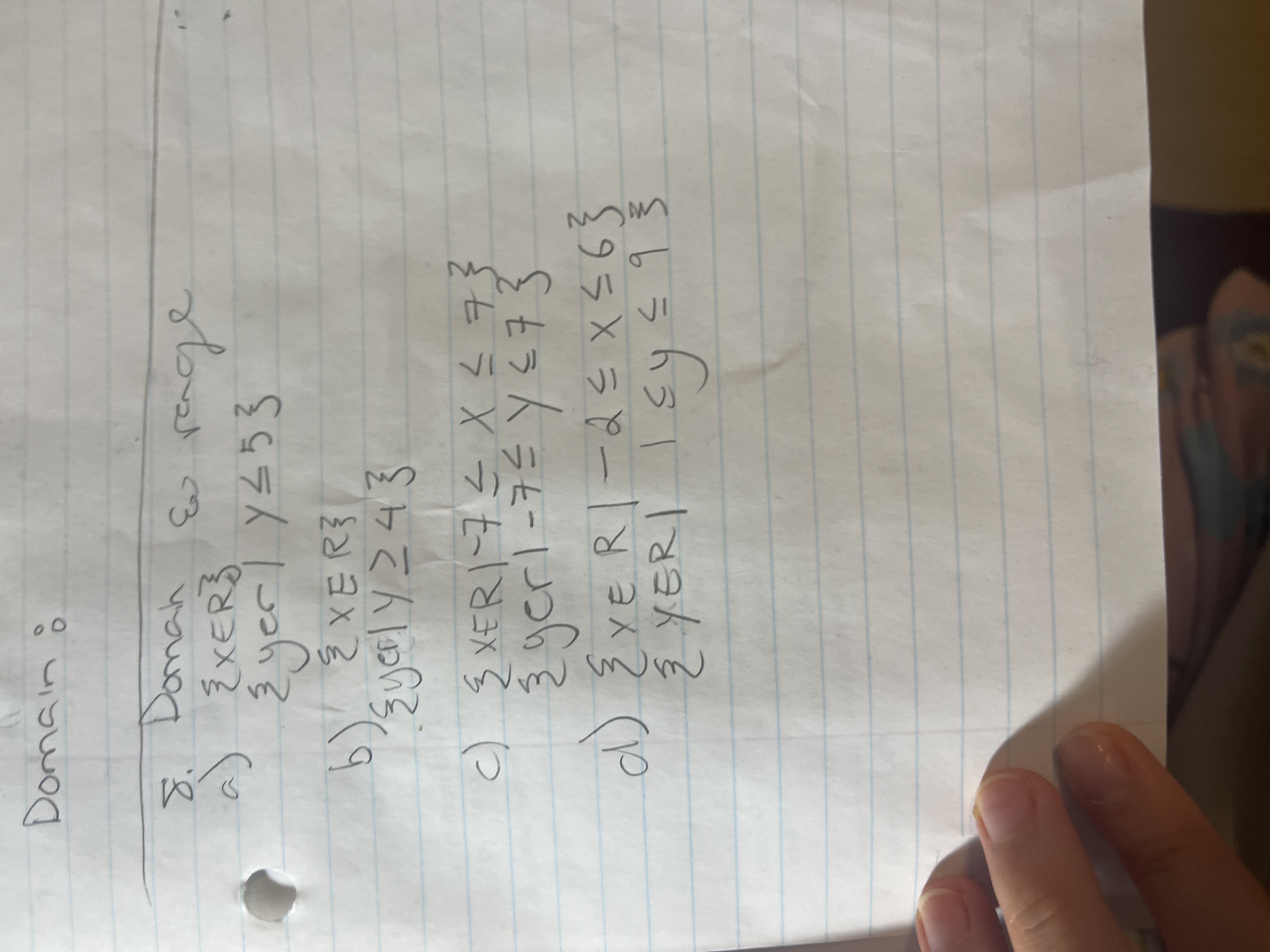
27
New cards
how do you get rid of a fraction? for example: how would you isolate y
1y/2
1y/2
you can divide 1/2 to 1y/2 or multiply by 2 to 1y/2
28
New cards
what is the inverse of a function
the reverse of the original functions
29
New cards
what should you remember when balancing equations and isolating for a variable.
you must do the same for both sides to even out the equation. say there is a negative 10 on one side and you want to get rid of it. you have to add 10 to that side and do the same to the other side.
30
New cards
find the inverse of this equation:
f(x) = 2x - 3
f(x) = 2x - 3
first step: change it to y= mx+ b format
y= 2x - 3 --This is the original equation
second step: switch the variable position
x= 2y - 3
third step: solve for y
x+ 3 = 2y
(x+3)/2 = y
this is the inverse equation
y= 2x - 3 --This is the original equation
second step: switch the variable position
x= 2y - 3
third step: solve for y
x+ 3 = 2y
(x+3)/2 = y
this is the inverse equation
31
New cards
find inverse:
2y -10 = 5x
2y -10 = 5x
answer is:
2(x-5)/5
2(x-5)/5
32
New cards
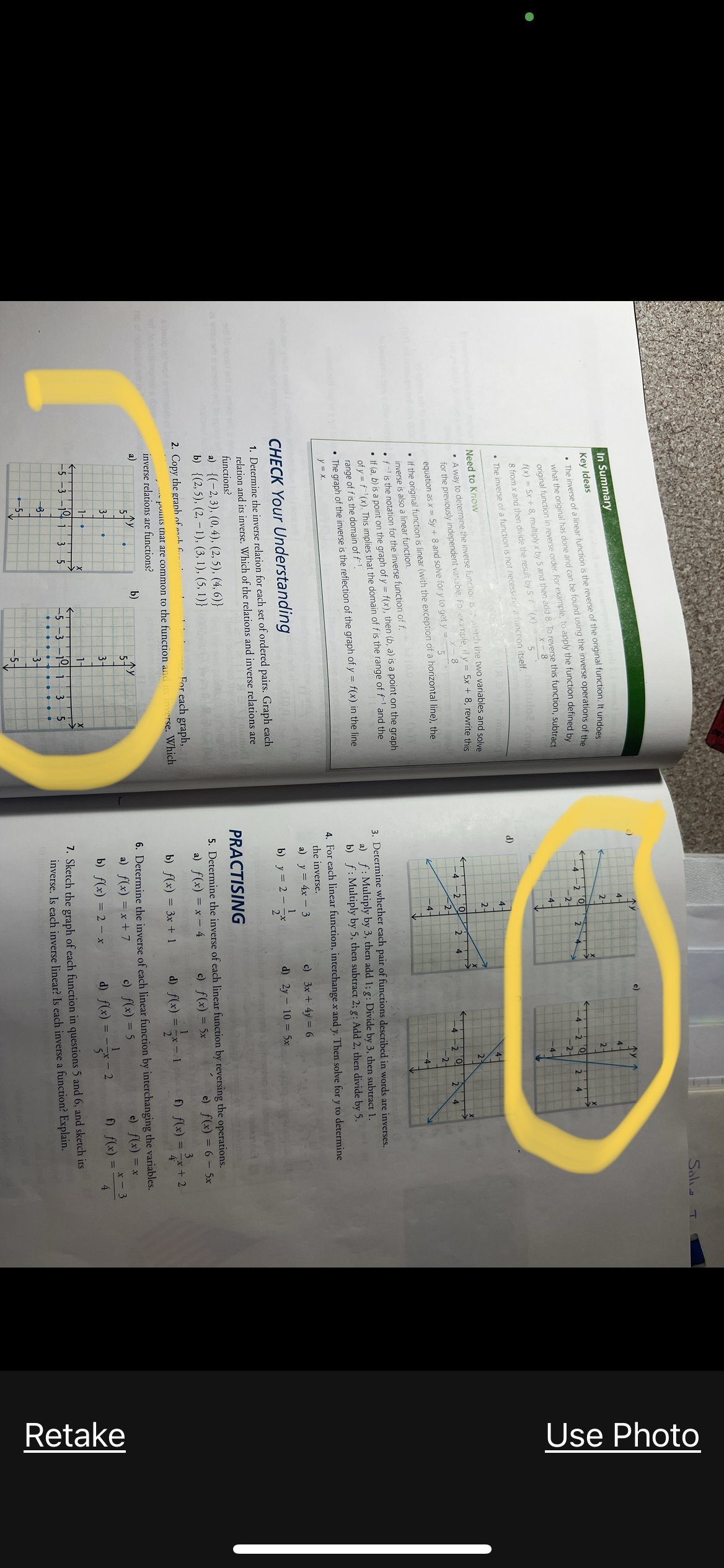
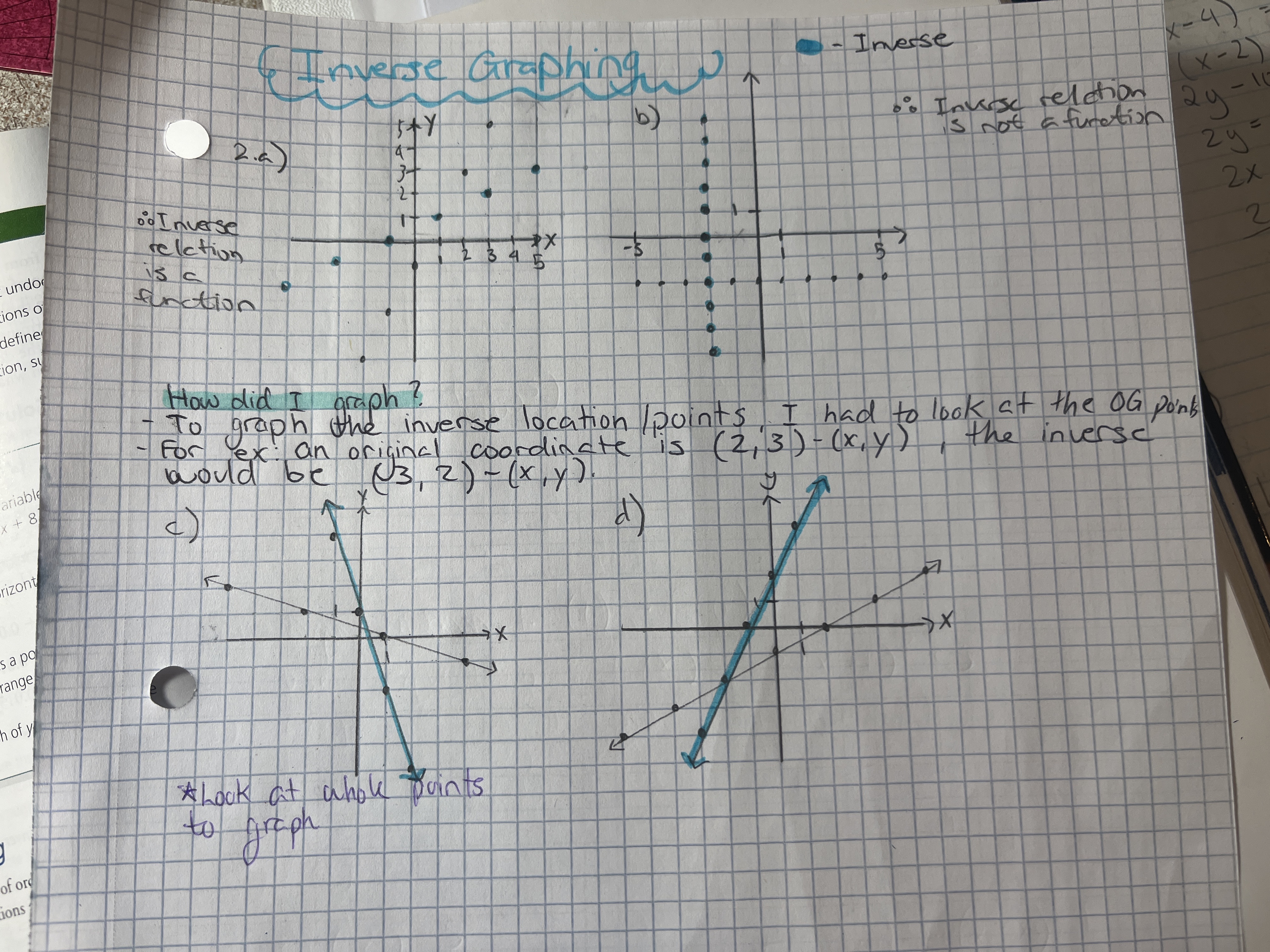
33
New cards
compare these two equations:
y = 4x - 3 vs f(x) = 4x - 3
when finding its inverse, why can we say “therefore f-1(x)=…” for the second equation but for the first equation we just keep the final answer in the form of “y=…”
y = 4x - 3 vs f(x) = 4x - 3
when finding its inverse, why can we say “therefore f-1(x)=…” for the second equation but for the first equation we just keep the final answer in the form of “y=…”
because the second one written in a for sure statement that that equation is a function so our final statement can be written as “therefore f-1(x)=…” when we find the inverse.
34
New cards
what is the transformation graph equation?
f(x) = af(k(x-d))+c
35
New cards
State the transformations
a= vertical compression or stretch
if a is bigger then 1 than it is a vertical stretch
if a is smaller then 1 than it is a vertical compression
k= horizontal compression or stretch
if k is bigger than 1 then it is a horizontal compression by a factor of 1/k
if k is smaller than 1 then it is a horizontal stretch by a factor of 1/k
d= horizontal translation, remember anything inside equation you do opposite. For example: if it d is -3 you move 3 units RIGHT on the new graph
c vertical translation
if a is bigger then 1 than it is a vertical stretch
if a is smaller then 1 than it is a vertical compression
k= horizontal compression or stretch
if k is bigger than 1 then it is a horizontal compression by a factor of 1/k
if k is smaller than 1 then it is a horizontal stretch by a factor of 1/k
d= horizontal translation, remember anything inside equation you do opposite. For example: if it d is -3 you move 3 units RIGHT on the new graph
c vertical translation
36
New cards
what is the point of chapter 1.6-1.8
It is to understand how transformations (numbers in an equation in a certain placement) will transform the parent function to a new function on the graph. (like see a new type of graph) everything is connected back to the parent functions.
37
New cards
how to tell difference between a and k value
k value is always beside x IN BRACKETSSSSSS or in the FUNCTION. a is outside the funtion
af(k(x- d)) + c
af(k(x- d)) + c
38
New cards
imagine y= 3 then square root x
imagine y= square root 3x
what is different with the transformations
imagine y= square root 3x
what is different with the transformations
the first one, it is a vertical stretch by a factor of 3 because the 2 is outside the square root which means function so ti is the “a” value.
the second one, it is a horizontal compression of 1/3 because since the 3 is attached to the x inside the square root it is a horizontal transformation. AND BC IT IS, we have to use the reciprocal of 3 to apply to the new graph which is 1/3
the second one, it is a horizontal compression of 1/3 because since the 3 is attached to the x inside the square root it is a horizontal transformation. AND BC IT IS, we have to use the reciprocal of 3 to apply to the new graph which is 1/3
39
New cards
state the transformation of y = 1/2x state the transformation of y =1/(2x)
for the first one, the transformations are: vertical compression of 1/2
and for the second one, the transformations are, horizontal compression by a factor of 1/2
and for the second one, the transformations are, horizontal compression by a factor of 1/2
40
New cards
when drawing a reciprical graph, what do you have to remember?
to state the asymptotes
41
New cards
how can you tell reciprocal questions apart from the rest with fractions
if the denominator has an x and there’s no square roots,exponents,absolute then its a reciprocal question
42
New cards
Vertical reflection across what axis?
X axis
43
New cards
Horizontal reflection across what axis?
Y-axis
44
New cards
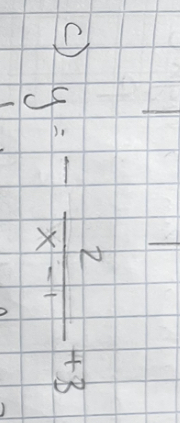
Draw the graph and state the parent function
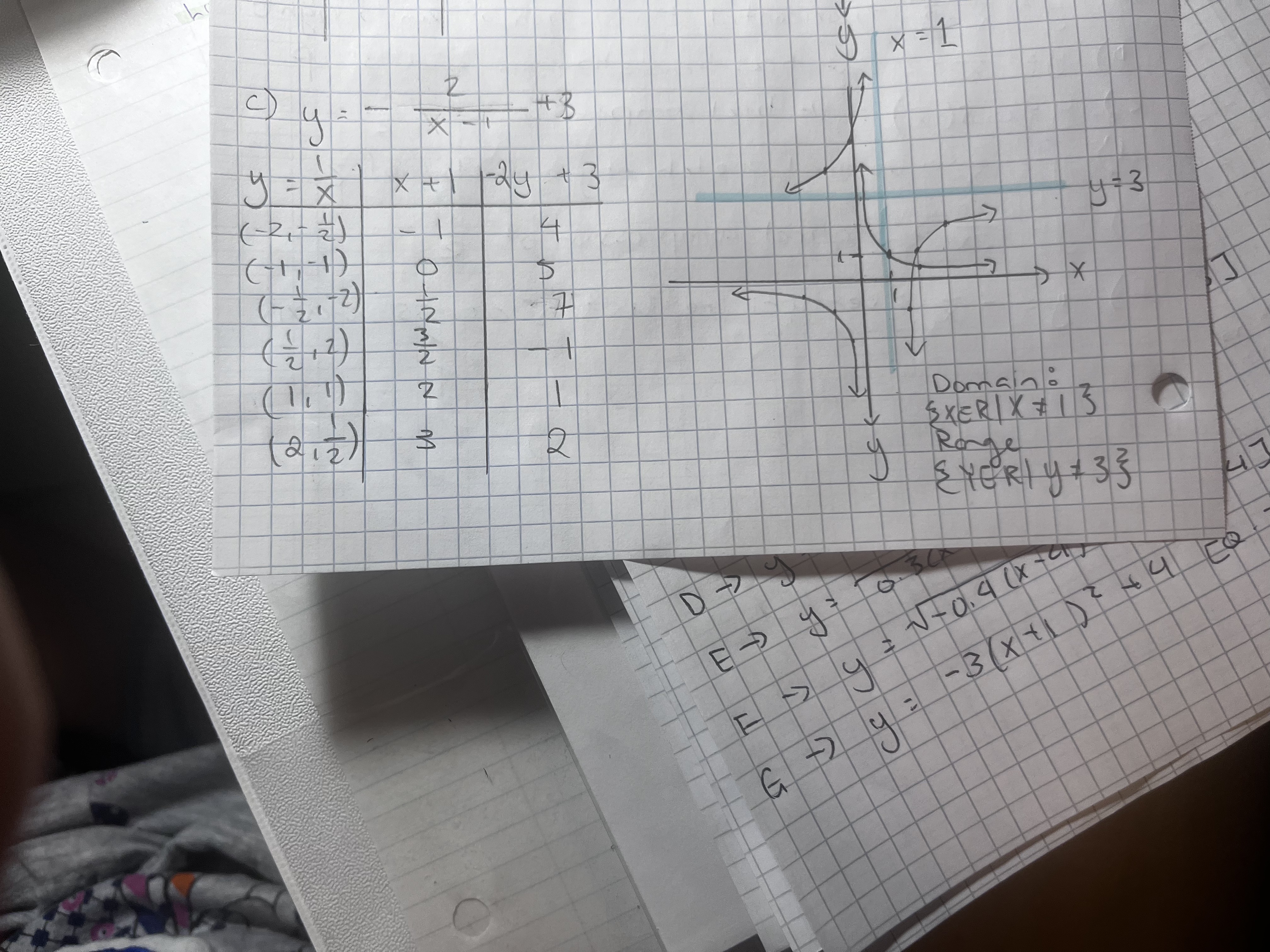
45
New cards
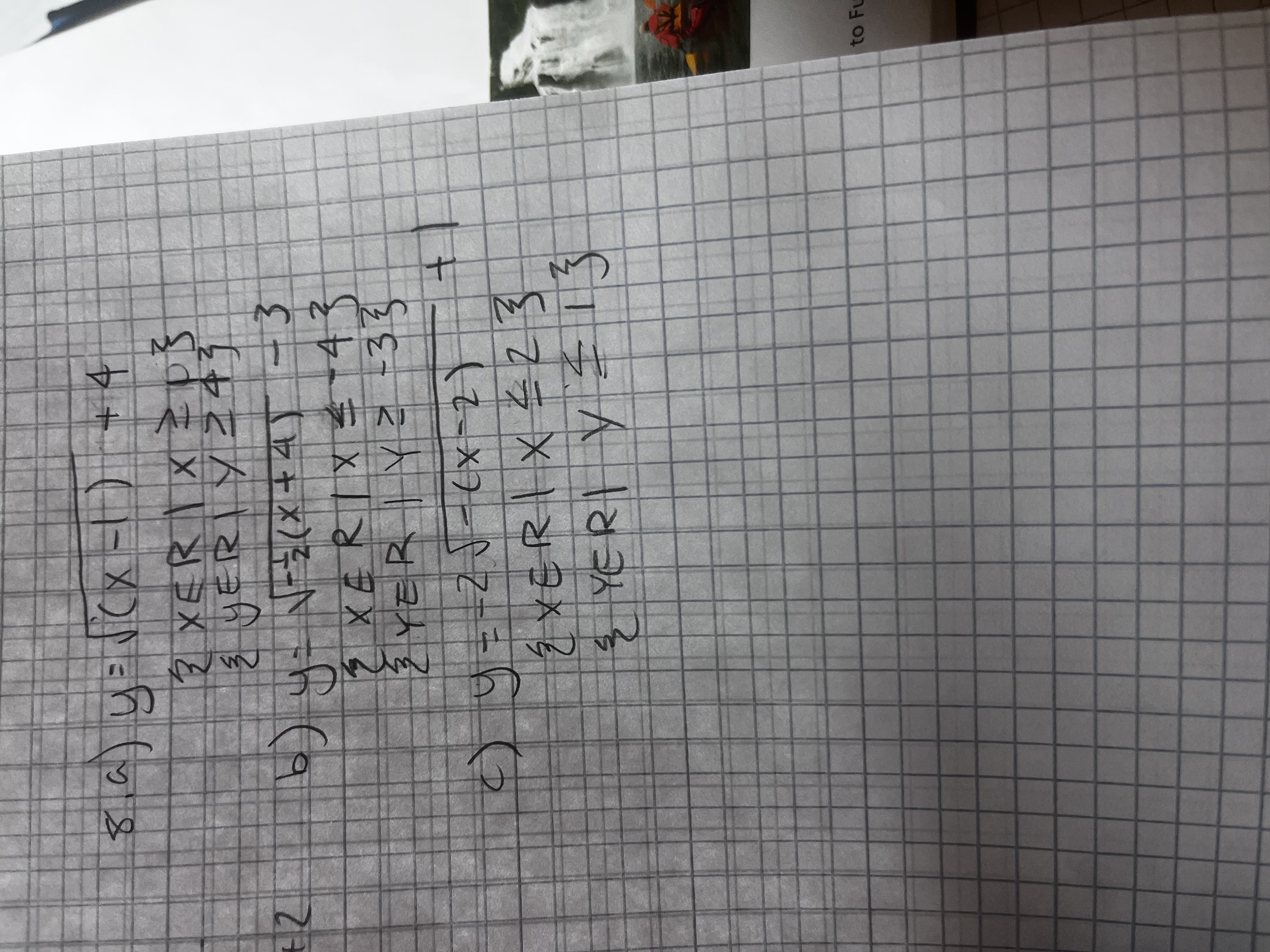
State domain and range of SQUARE ROOT