Membrane Protein transport - Week 8
 Call Kai
 Learn
Learn Practice Test
 Spaced Repetition
 Match
Match Flashcards
 Knowt Play
1/43

Earn XP
Description and Tags
Membrane Proteins and transport across membranes
Name | Mastery | Learn | Test | Matching | Spaced | Call with Kai |
|---|
No analytics yet
Send a link to your students to track their progress
44 Terms
Define facilitated transport
Membrane transport where proteins transfer specific molecules in and out of the cell
What type of molecules NEVER pass through the membrane
Ions (any sort of charged atoms/ molecules)
_________ ___________ Molecules are the easiest molecules to pass though the bilayer
Small non polar
Molecules move form areas of ______ to ____ concentration ______ the concentration gradient.
High, low, down
Which two types of molecules are impermeable
Large uncharged polar molecules
Ions
Larger uncharged polar molecules and ions need _______ _______ to pass through the bilayer
transport proteins
Define Transmembrane transport proteins
Create a protein lined path for transport through the cell
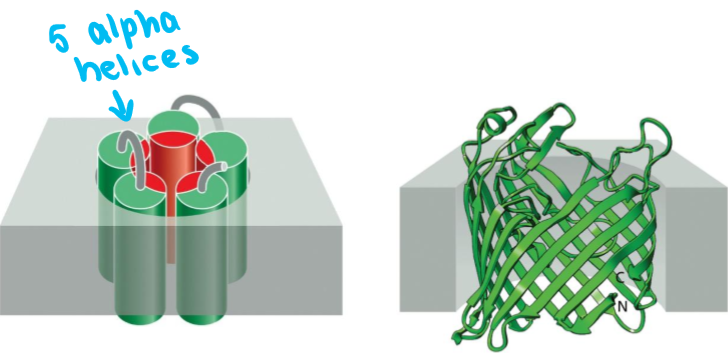
What are the 2 types of membrane transport proteins?
Channel proteins
Transporter proteins
Chanel proteins select molecules based on their _____ and ___________ ______
size and electric charge
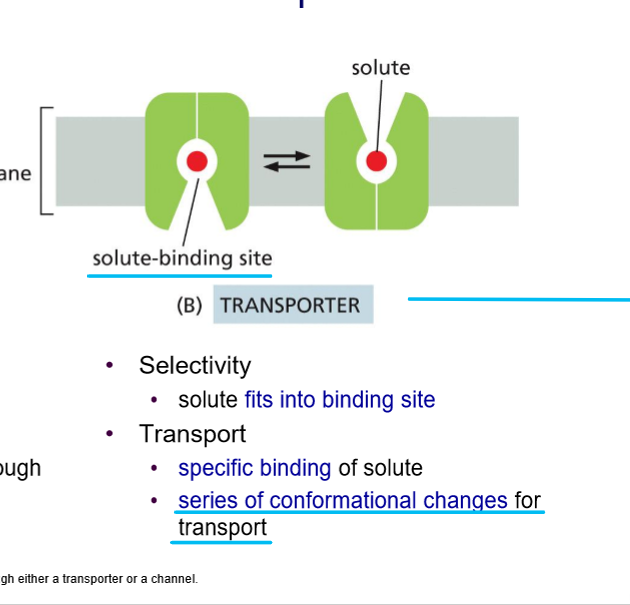
Transporter proteins experience a series of ________ changes for transport
Conformational
True Or False: Solutes fit into the binding site of transporter proteins
True
Define: passive transport
Transport through the membrane using diffusion (NO ENERGY)
3 methods of Passive transport
Diffusion
Channel proteins
Transporter proteins
Define: Active Transport
Transport using ATP to pump molecules through the membrane
True Or False: Active transport pumps molecules along the concentration gradient
False, it pumps them AGAISNT the concentration gradient
Define electrochemical gradient
Concentration gradient + Membrane potential
Explain what is meant by membrane potential
The difference in charges on the outside of the cell compared to the inside
The inside of the cell is more _______ charged while the outside is more ______ charged
Negatively, Positively
Channel proteins have a _______ pore (where the molecules pass through)
hydrophylic
True Or False: Transporter proteins are faster than channel proteins
False, Channel proteins are faster than transporter proteins
Define: Non-gated Ion channels and their role
Always open
K+ (potassium) moves out of the cell
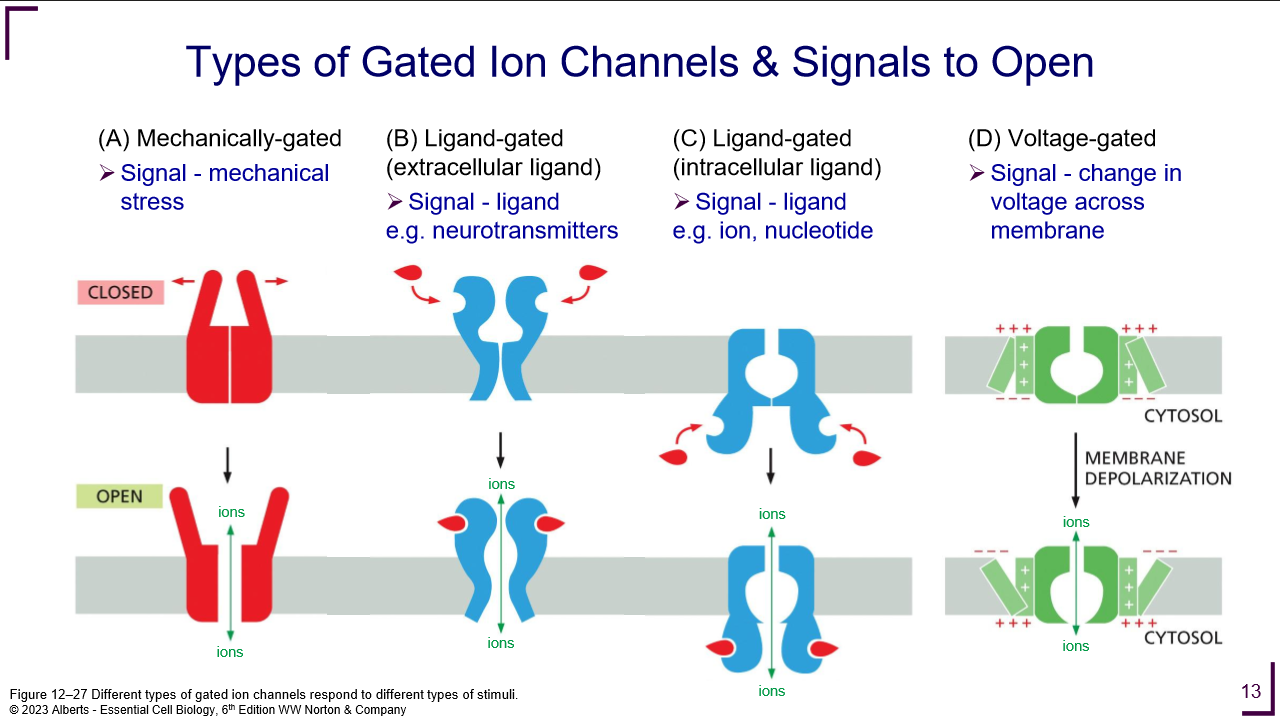
Define Gated ion channels
Selects specific type of ions
Requires a signal for channel opening
What is the effect of signals on non-gated channels
Causes the channel to remain open for long periods of time (think of it as a door wedge)
List the 4 type of gated ion channels
Mechanically gated
extracellular ligand (Ligand-gated)
Intracellular Ligand (Ligand-gated)
Voltage-gated
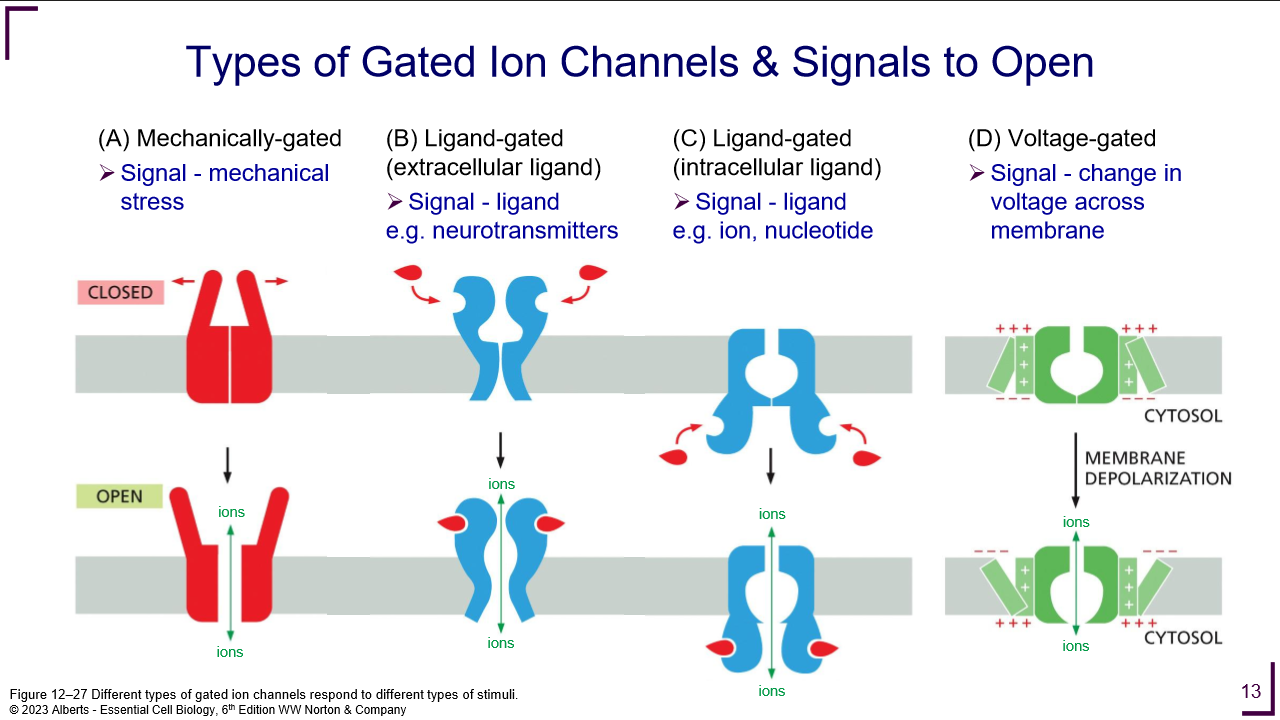
How is a mechanically-gated channel signaled
External stressed placed on it (Mechanical stress)
How is a extracellular ligand channel signaled
Signals attach to the exterior at the top
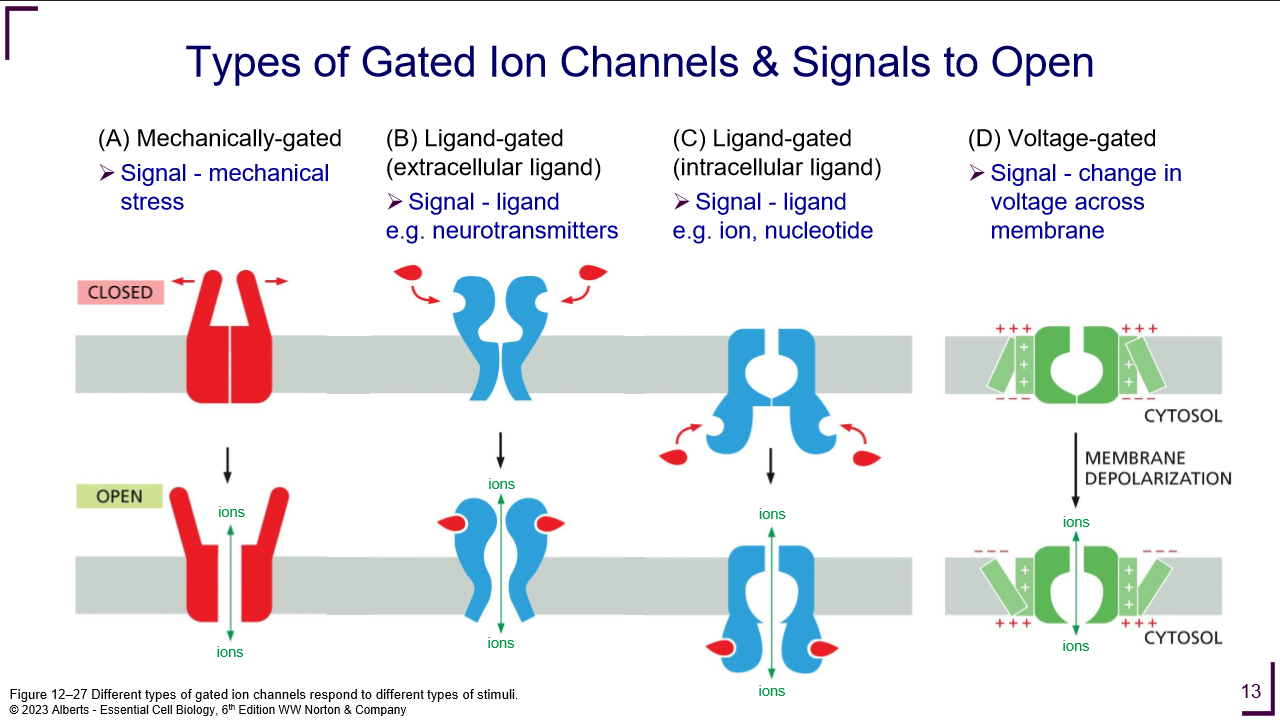
How is a Intracellular ligand channel signaled
Signals attach to the exterior on the bottom
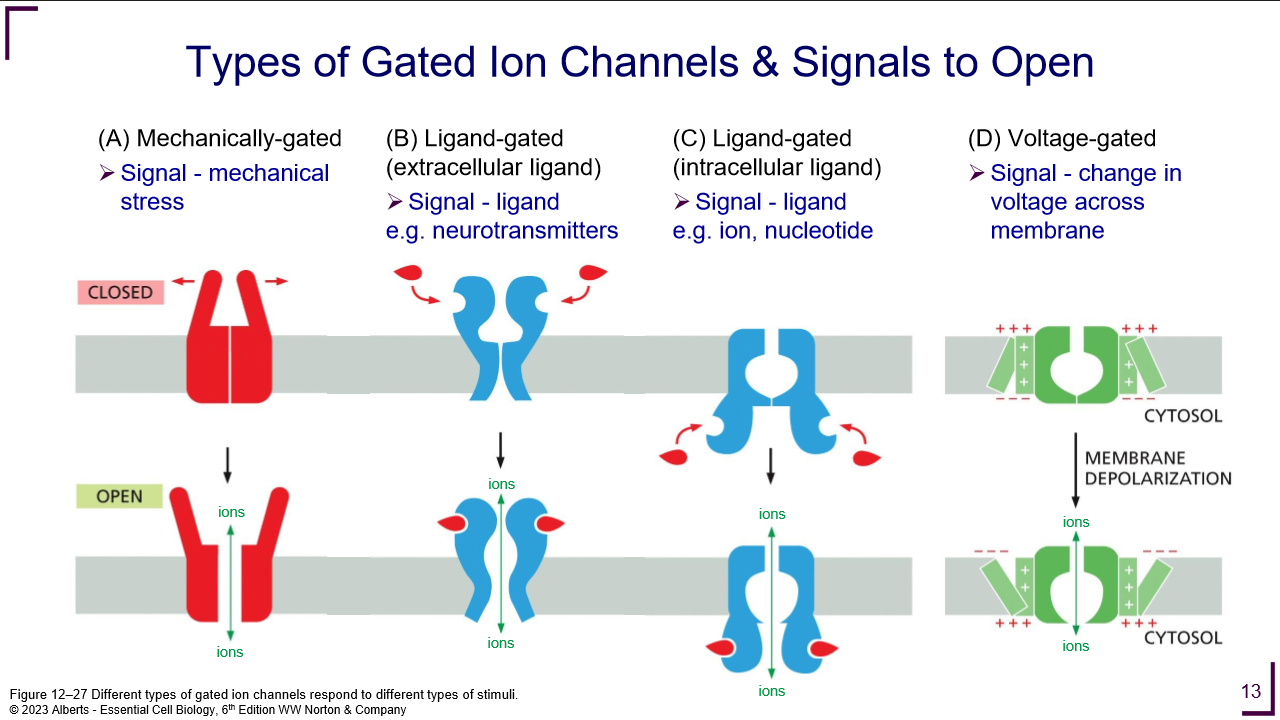
How is a voltage-gated channel signaled
Signaled by a change in voltage across the membrane
True Or False: Transporter proteins are uniport
True
True Or False: The direction of Transporter proteins is not reversible
False, It is
Define: Symport Vs. Antiport
Symport: Two solutes moved in the same direction
Anti: 2 solutes in opposite directions