EMT Exam 4
 Call Kai
 Learn
Learn Practice Test
 Spaced Repetition
 Match
Match Flashcards
 Knowt Play
1/164

There's no tags or description
Looks like no tags are added yet.
Name | Mastery | Learn | Test | Matching | Spaced | Call with Kai |
|---|
No analytics yet
Send a link to your students to track their progress
165 Terms
determine if she was injured when she fainted
inspiration and expiration
at least 2 inches
is focused on the nature of illness, the patient's chief complaint, and his or her symptoms.
follow standard precautions
severe anxiety
blood acidity is reduced by excessive breathing
compressing the sternum between the nipples
ask him what he takes, how much, and when he last took it
plasma
forceful coughing
hypothermia
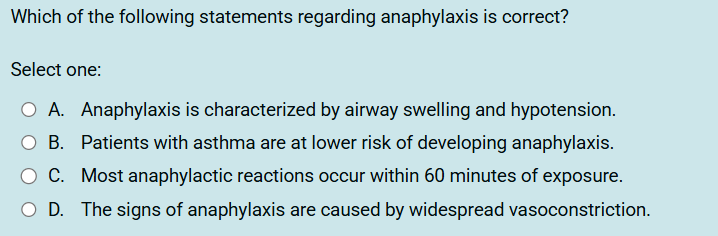
Anaphylaxis is characterized by airway swelling and hypotension.
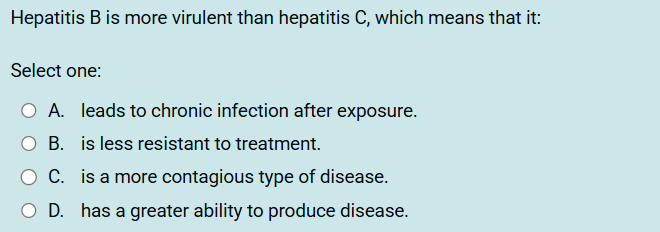
has a greater ability to produce disease
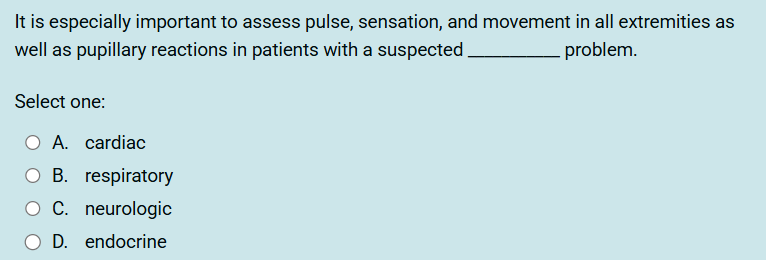
neurologic
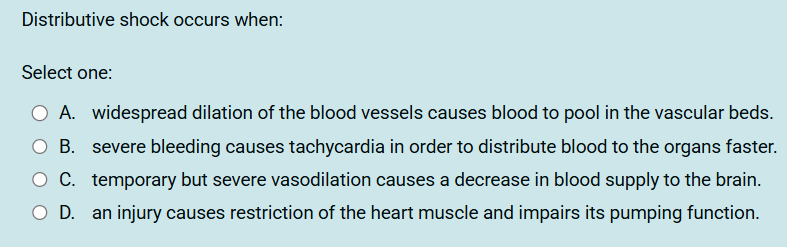
widespread dilation of the blood vessels causes blood to pool in the vascular beds.
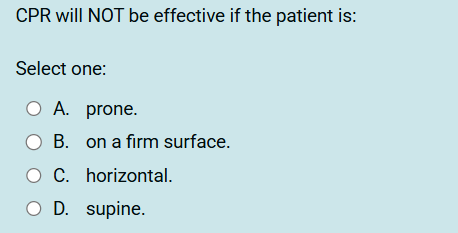
prone
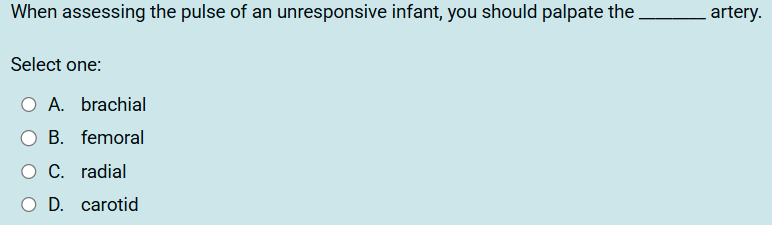
brachial
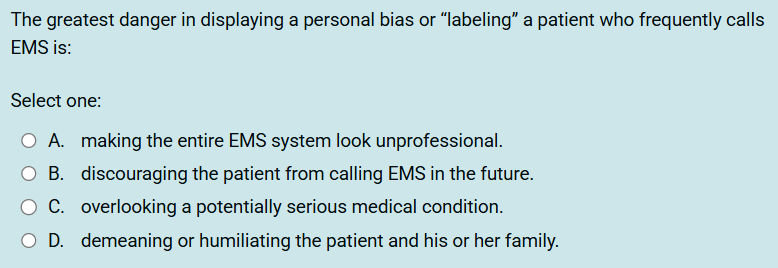
overlooking a potentially serious medical condition
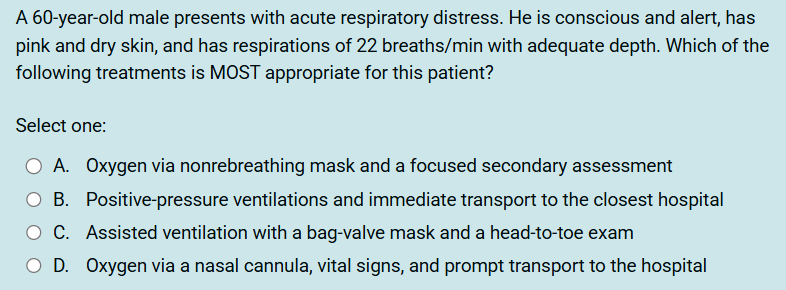
Oxygen via non-rebreathing mask and a focused secondary assessment ?
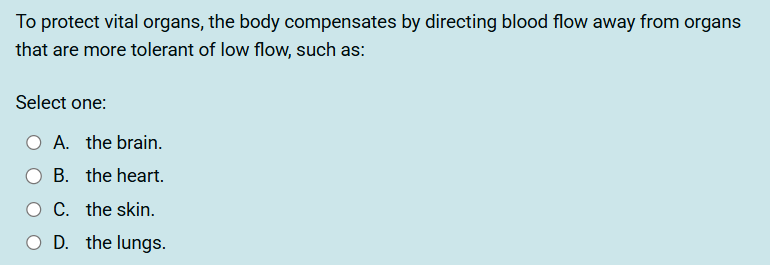
the skin
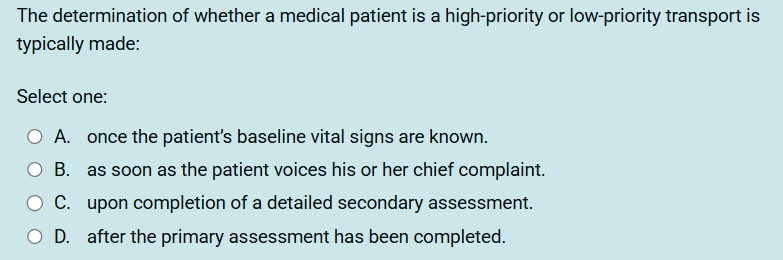
after the primary assessment has been completed
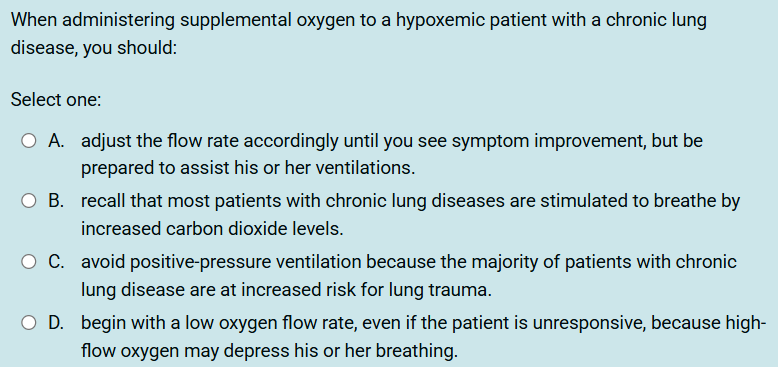
adjust the flow rate accordingly until you see symptom improvement, but be prepared to assist his or her ventilations.
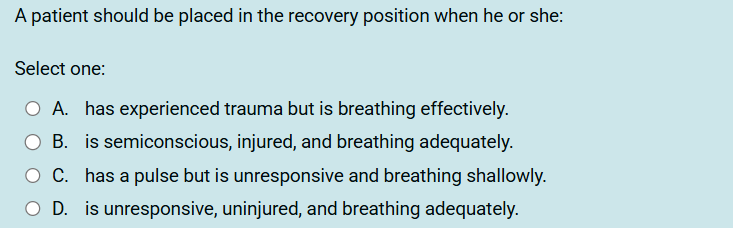
is unresponsive, uninjured, and breathing adequately
aspiration pneumonia
100
carbon dioxide
meningitis
Pressure was relieved from her aorta and vena cava, which improved chest compression effectiveness.
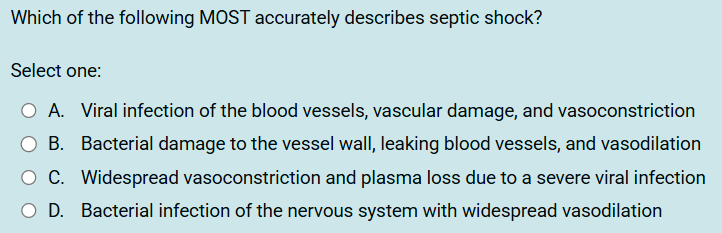
bacterial damage to the vessel wall, leaking blood vessels, and vasodilation
start at the lower lung fields and determine at which level you start hearing clear breath sounds.
your awareness and concern for potentially serious underlying and unseen injuries or illness
ventolin
substance abuse
shortness of breath or difficulty breathing.
reposition the patient's airway
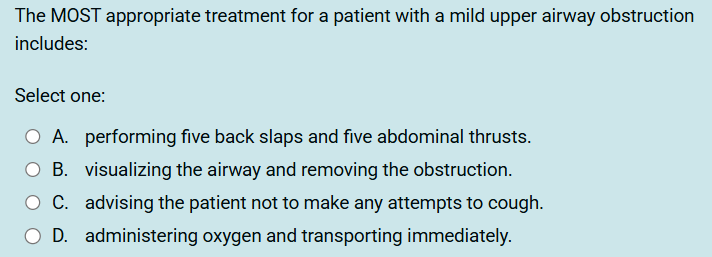
administering oxygen and transporting immediately.
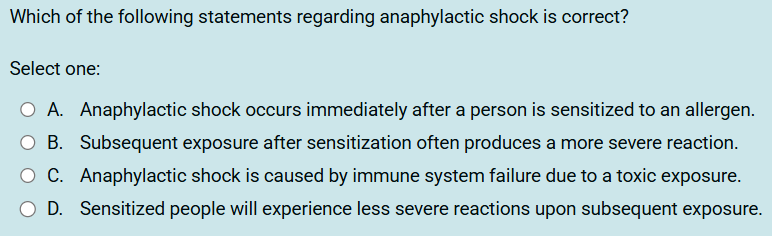
Subsequent exposure after sensitization often produces a more severe reaction.
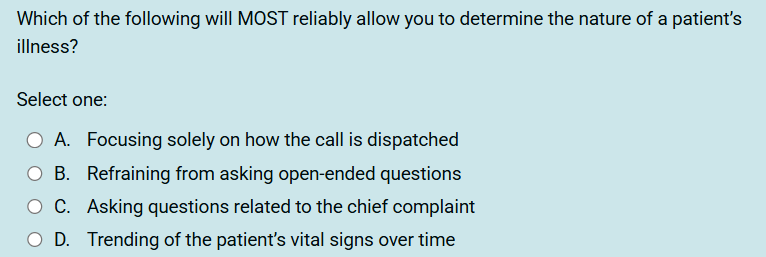
asking questions related to the chief complaint
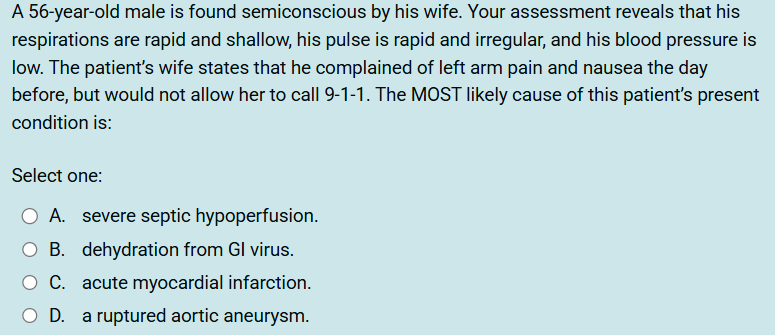
acute myocardial infarction
spontaneous pneumothorax
gastric distention
focus on his or her chief complaint
Decompression of the injured side of the chest
deliver one rescue breath every 6 seconds.
cough
addresses the patient's symptoms more than the actual disease process.
immune system
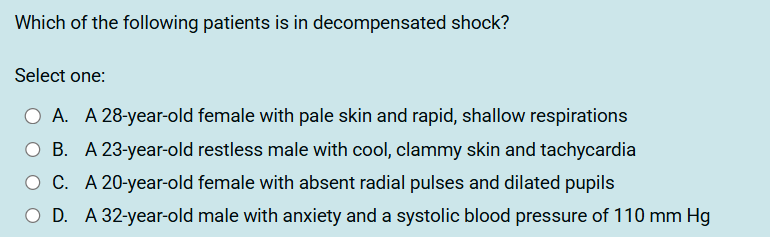
A 20-year-old female with absent radial pulses and dilated pupils
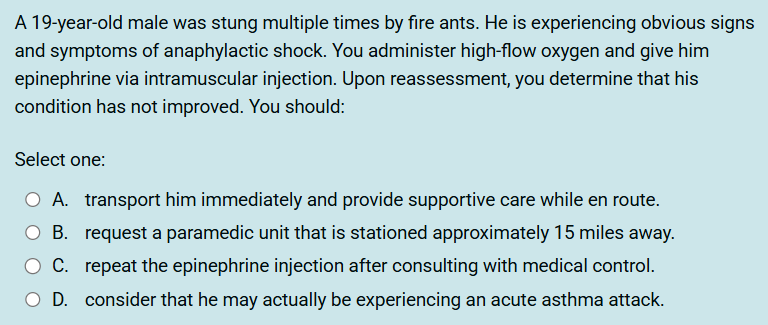
repeat the epinephrine injection after consulting with medical control
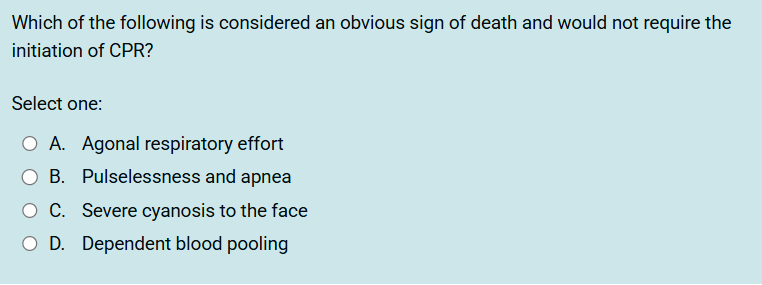
dependent blood pooling
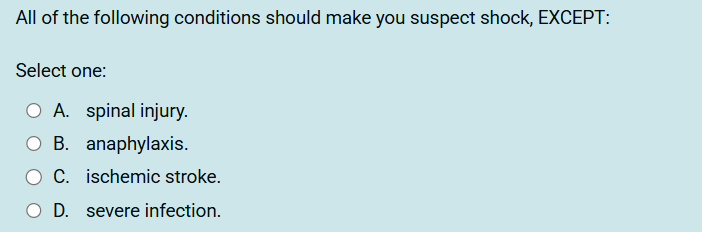
ischemic stroke
involves hands-on practice
poor vessel function and sever volume loss
chest thrusts
deep and rapid
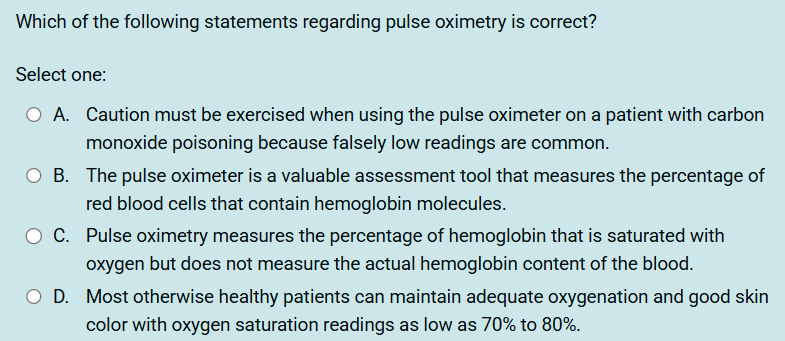
Pulse oximetry measures the percentage of hemoglobin that is saturated with oxygen but does not measure the actual hemoglobin content of the blood.
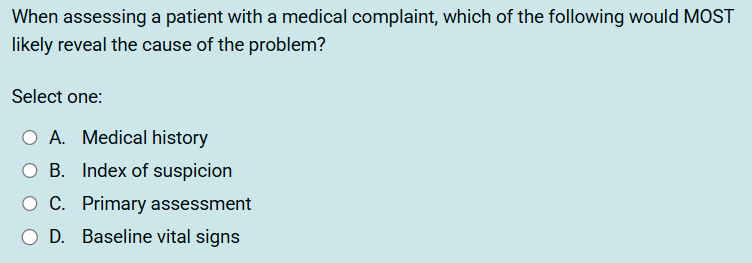
medical history
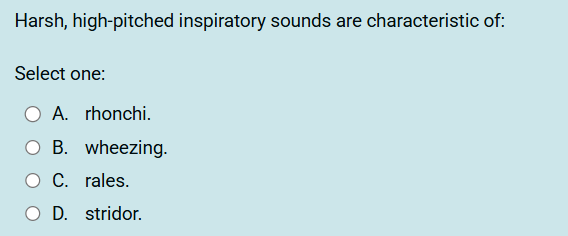
stridor
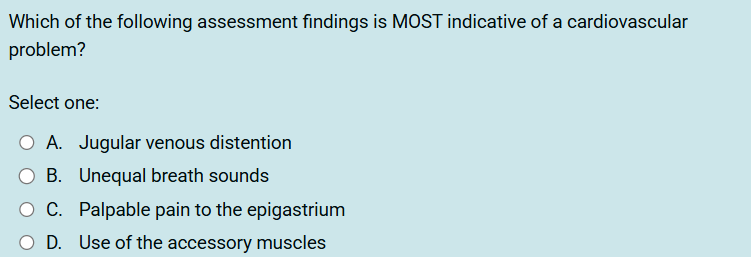
jugular venous distention
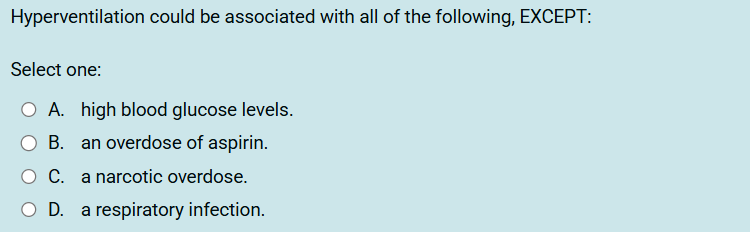
a narcotic overdose
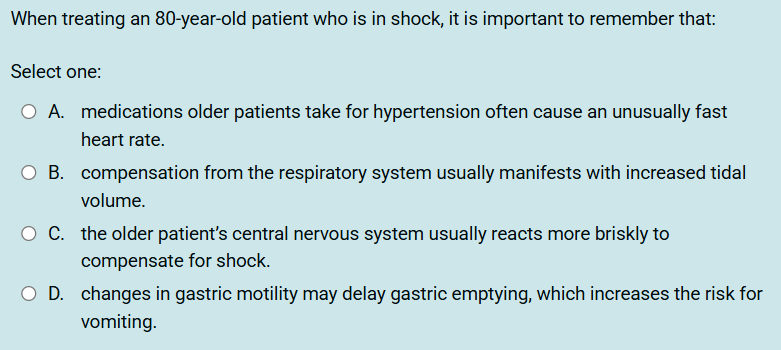
changes in gastric motility may delay gastric emptying, which increases the risk for vomiting
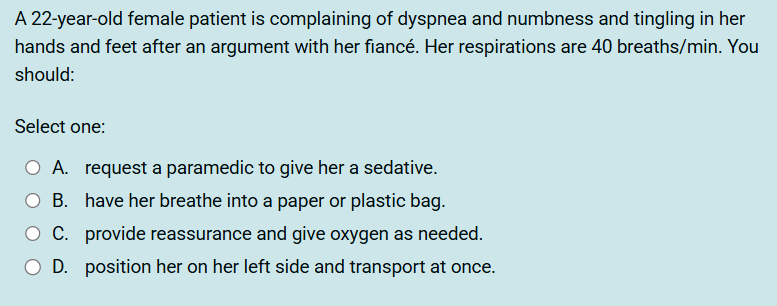
provide reassurance and give oxygen as needed
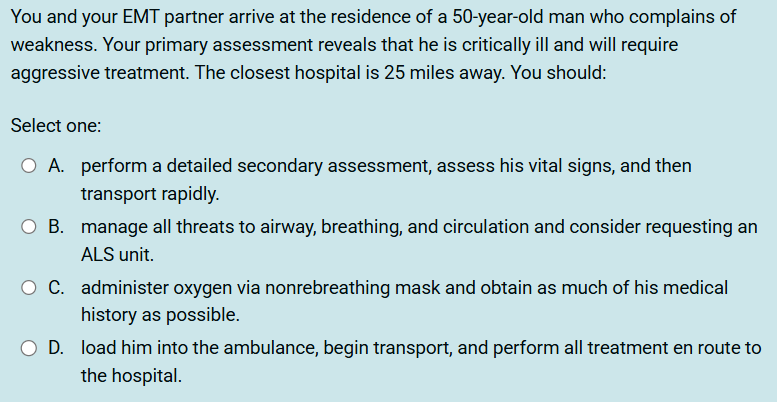
manage all threats to airway, breathing, and circulation and consider requesting an ALS unit
recent travel
with one or two hands
is anyone else in your travel party sick?
attempt to elicit a verbal response by talking to the patient
blood pressure may be the last measurable factor to change in shock
absent peripheral pulses
a cardiac dysrhythmia
hypoperfusion to the cells of the body
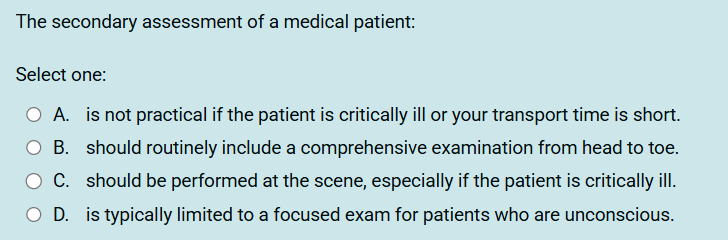
is not practical of the patient is critically ill or your transport time is short
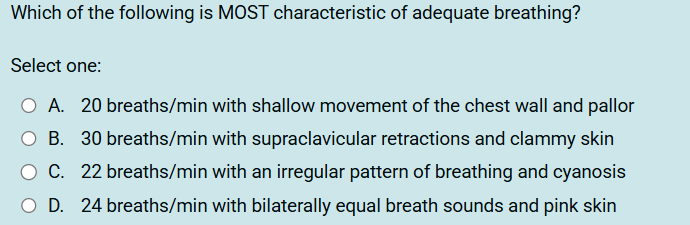
24 breaths/min with bilaterally equal breath sounds and pink skin
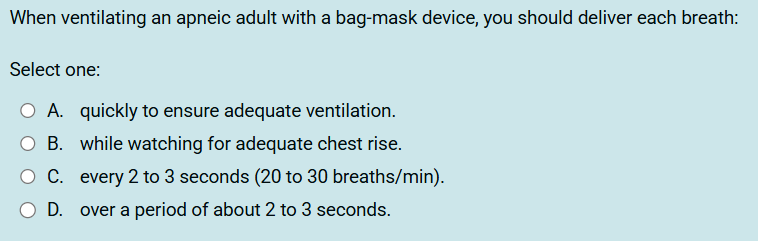
while watching for adequate chest rise
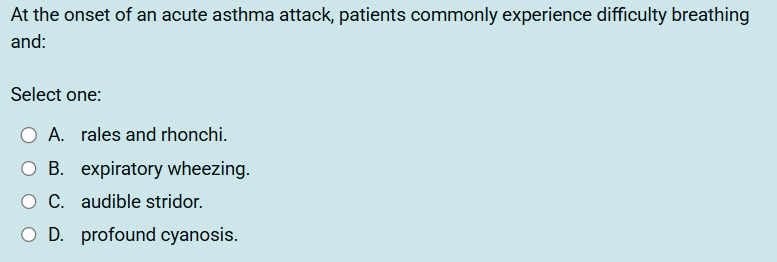
expiratory wheezing
begin CPR and apply the AED as soon as it is available.
acute pulmonary embolism
cardiac tamponade
jaw-thrust
check her airway for obstructions
failure of the nervous system causes widespread vasodilation
septic shock
toxic chemical inhalation
get vaccinated against, diphtheria, tetanus, and pertussis
accessory muscle use
100 to 120 compressions per minute
wheezing
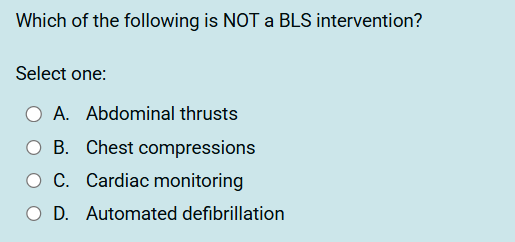
cardiac monitoring
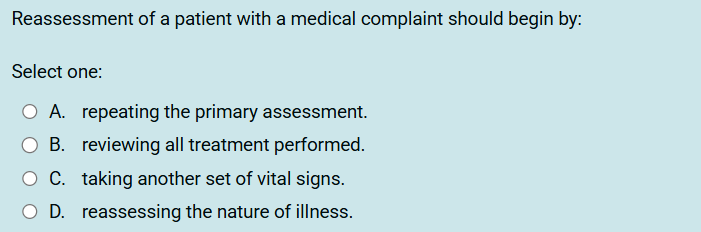
repeating the primary assessment
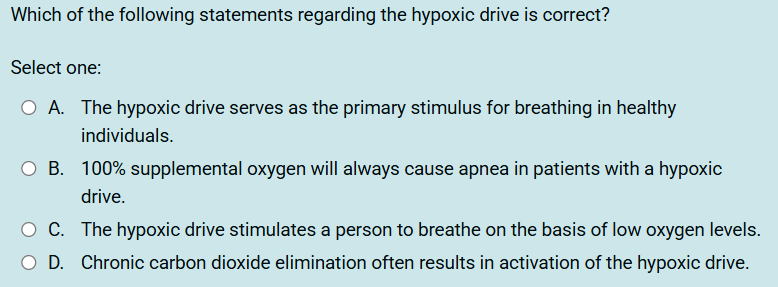
the hypoxic drive stimulates a person to breathe on the basis of low oxygen levels
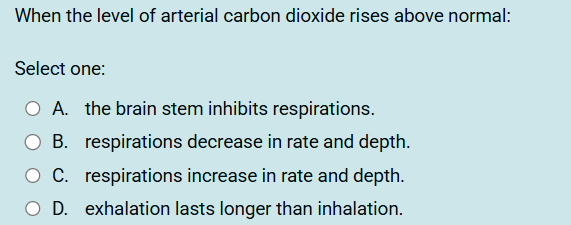
respirations increase in rate and depth
a medical condition caused by the growth and spread of small, harmful organisms within the body
apply direct pressure to the wound
one third the diameter of the chest, or about 1 ½ inches
fluid accumulation outside the lung
adequate air exchange
4 to 6
15:2
the conditions of many medical patients may not appear serious at first