Ectoparasites (Ticks, Mites, Fleas, Lice, Flies/Myiasis)
 Call Kai
 Learn
Learn Practice Test
 Spaced Repetition
 Match
Match Flashcards
 Knowt Play
1/80

There's no tags or description
Looks like no tags are added yet.
Name | Mastery | Learn | Test | Matching | Spaced | Call with Kai | Chat |
|---|
No analytics yet
Send a link to your students to track their progress
81 Terms
differences between hard (ixodidae) and soft ticks (argasidae)
hard ticks: hard outer covering (scutum), can see mouthparts from dorsal view
soft ticks: leathery, soft covering, cannot see mouthparts from dorsal view
describe general tick morphology
large enough to be seen without magnification
8 legs (4 pairs)
general tick life cycle (stages)
egg → larva (seed tick) → nymph → adult
how is a many-host tick different from a three-host tick?
three-host ticks have a different host after each molt
many host ticks have a different host after each molt and > 1 nymph stage
what is the only way a one-host tick could spread disease?
if the tick already had the disease as an egg
term for tick or mite infestation
acariasis
describe clinical signs of tick infestations
bite wounds
annoyance
blood loss → anemia if many ticks
tick paralysis due to toxins in the saliva of certain tick species → neurologic signs like weakness and paralysis
describe the process of tick removal
grasp tick with forceps close to the patient’s skin
steady, firm traction
mouthparts, if possible, but ok to leave in because body will eliminate
gently cleanse patient skin and wash hands
major drug classes to treat tick exposure
pyrethrins and permethrins
isoxazolines
macrocyclic lactones (some)
which major drug class also repels ticks?
pyrethrins and permethrins
which major class of ectoparasiticides is toxic to cats?
permethrins
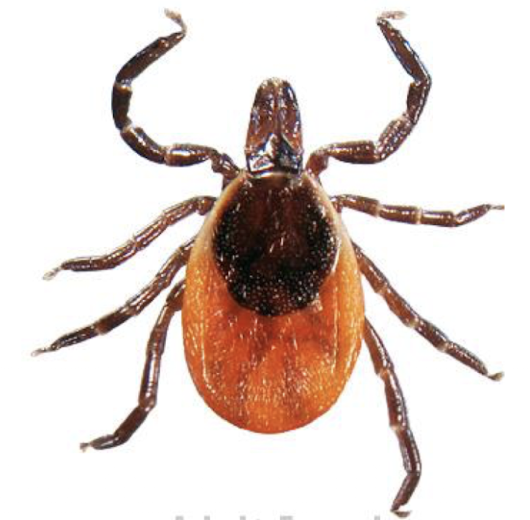
ixodes scapularis (“deer tick”)
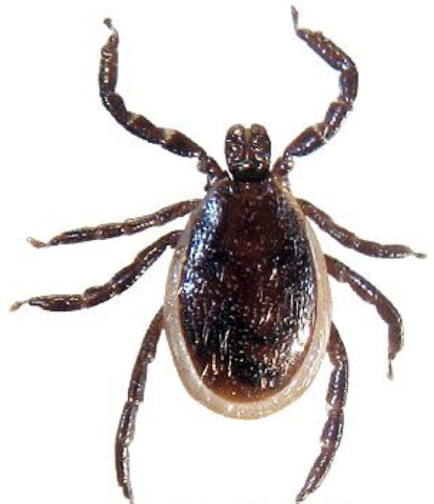
ixodes scapularis (“deer tick”)
in Ixodes scapularis, describe:
# of hosts
identifying characteristics
transmissible diseases
three-host species (most)
anal groove
Anaplasma phagocytophilum, Borrelia burgdorferi (Lyme disease)
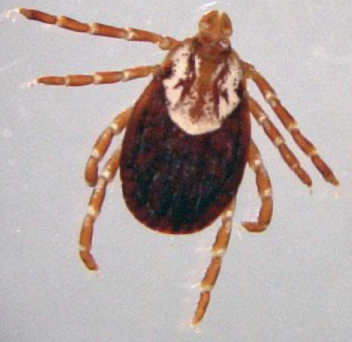
Dermacentor variabilis (“american dog tick”)
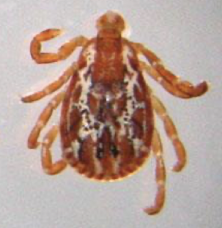
Dermacentor variabilis (“american dog tick”)
in Dermacentor variabilis, describe:
# of hosts
identifying characteristics
transmissible diseases
three-host ticks
festoons, ornate
tick paralysis, Rickettsia rickettsii (Rocky Mt. Spotted Fever, or RMSF)
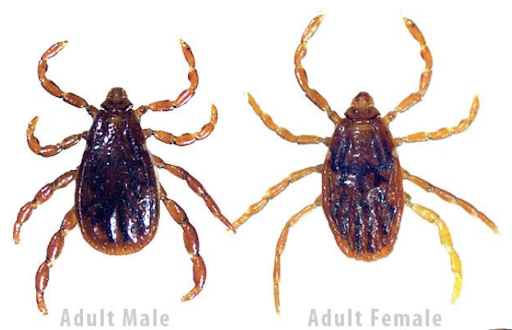
Rhipicephalus sanguineus (“brown dog tick”)
in Rhipicephalus sanguineus, describe:
# of hosts
identifying characteristics
transmissible diseases
three-host tick
hexagonal basis capituli, festoons
Ehrlichia canis, RMSF, babesia canis
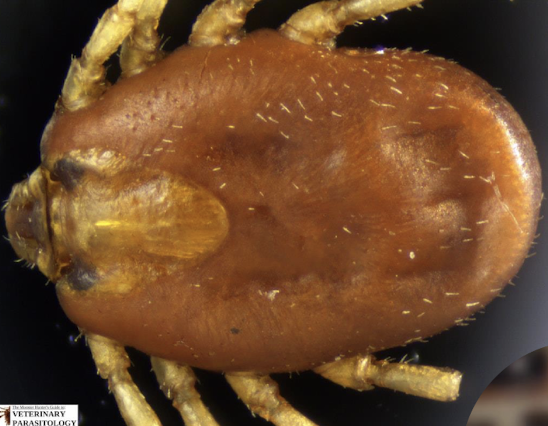
Rhipicephalus annulatus (“cattle tick”)
Rhipicephalus annulatus is a how many host tick?
ONE-host tick, unlike the others
which tick species is eradicated in the US and is reportable?
Rhipicephalus annulatus
what disease does Rhipecephalus annulatus carry?
Babesia bigemina (Texas tick fever)
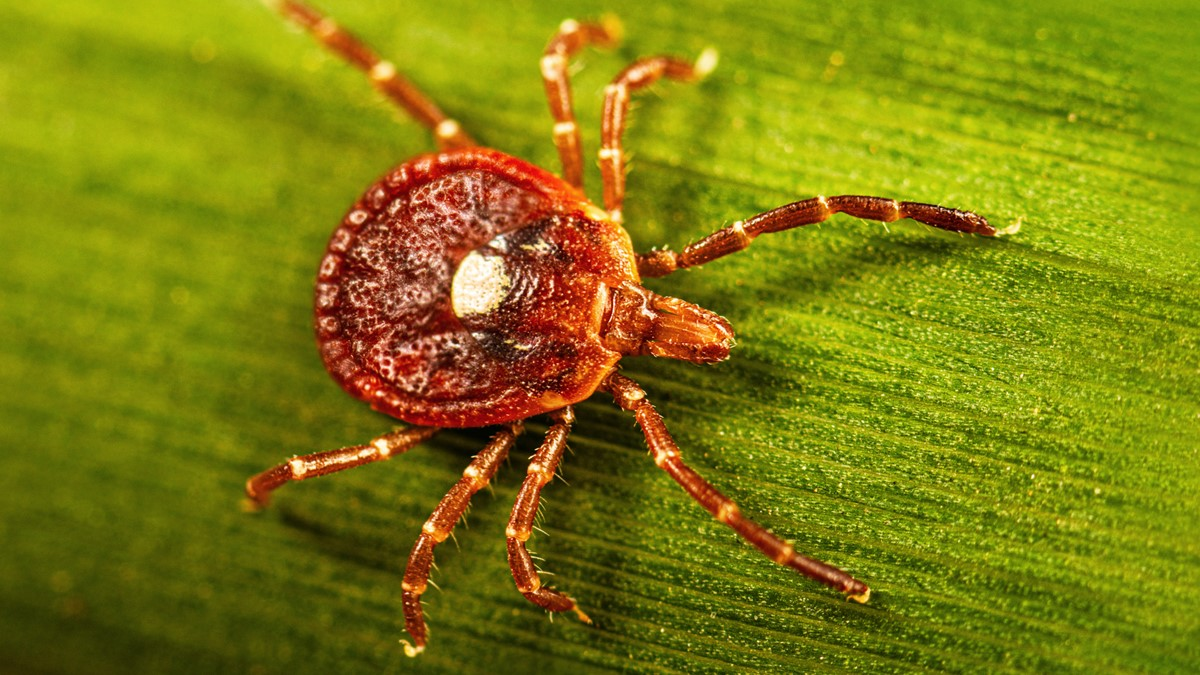
Amblyomma americanum (“lone star tick")
in Amblyomma americanum, describe:
# of hosts
identifying characteristics
transmissible diseases
three-host tick
very long mouthparts, festoons, ornate (female has white spot as well)
tick paralysis and a variety of bacterial diseases
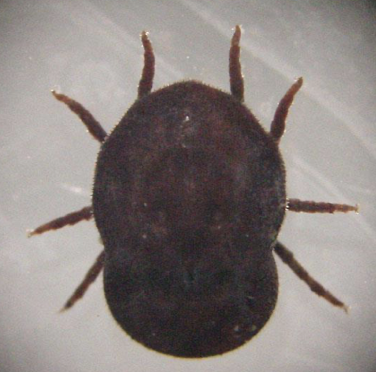
Otobius (“spinose ear tick”)
what species is otobius found on?
cattle
in Otobius, describe:
# of hosts
identifying characteristics
causes what medical conditions?
one-host tick
soft tick, violin shaped, spines
otitis externa (ear infection)
T/F: you can see most mites without magnification
false, most cannot be seen without magnification
general mite life cycle (stages)
egg → larvae → nymph(s) → adult
PPP of mites
2 - 4 or 5 weeks
how are mites transmitted?
animal-animal contact or close skin to skin contact (mites cannot jump like fleas)
which mite species does not always cause itchiness?
demodex mites
“Big Three” for ddx in dermatitis with pruritis (itchiness)
1) parasites (fleas, mites, lice)
2) infection (bacterial, yeast)
3) allergic dermatitis
diagnostic test(s) for demodex mites
deep skin scrape, trichogram (hair pluck)
diagnostic test for sarcoptes mites
superficial skin scrape
diagnostic test for cheyletiella mites
acetate tape prep
diagnostic test for psoroptes or chorioptes mites
skin scraping
how would you diagnose ear mites with an ear swab?
must evaluate chunks of ear debris, not just ear swap smeared/rolled onto a slide
major drug classes of mite parasiticides
macrocyclic lactones
isoxazolines
pyrethrin and synthetic pyrethroids
what should you consider when treating mites?
you will often need > 1 treatment because eggs are often resistant to tx → retreat in 2-4 weeks
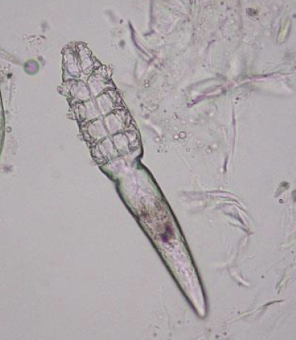
name
host
infection site
diseases transmitted
demodex
many mammals (both SA and LA)
hair follicles, sebaceous glands
localized: often head and limbs (if young animals)
generalized: if immunosuppressed
alopecia, crusts ± erythema → often NOT itchy
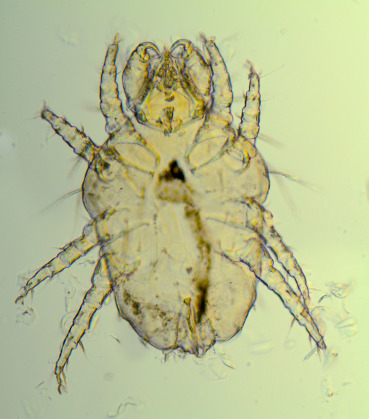
name
host
infection site
diseases transmitted
cheyletiella
cats, rabbits, dogs
skin and haircoat
“walking dandruff”, mild pruritis
⭐️ note large palpal claws
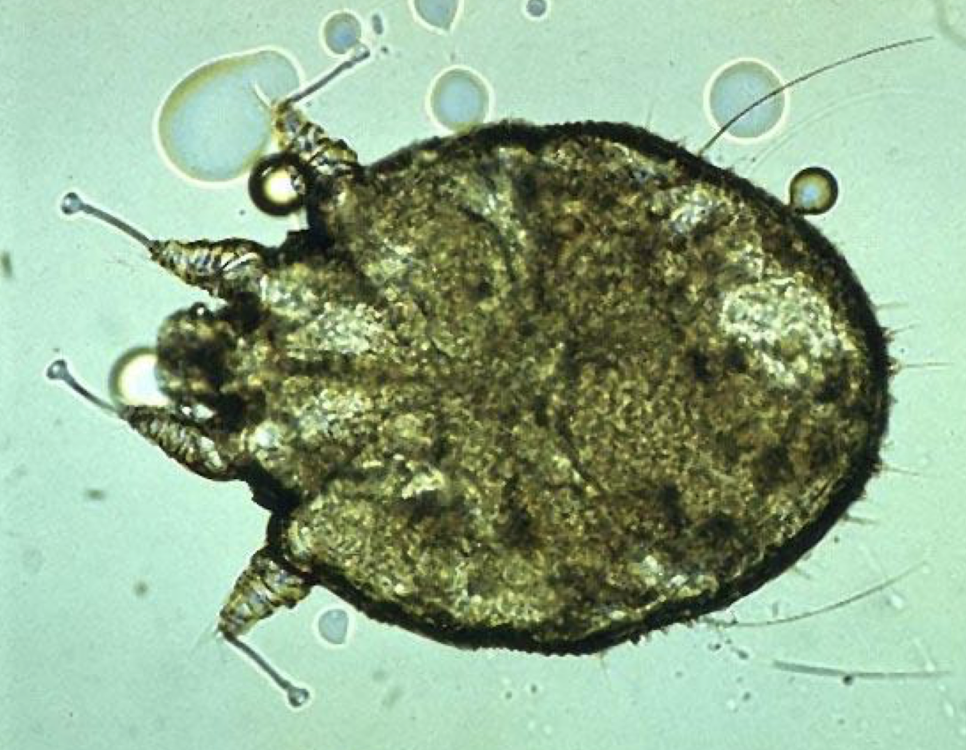
name
host
infection site
diseases transmitted
sarcoptes
SA (dogs, cats, rabbits, ferrets) and LA (horses*, cattle, pigs)
skin of ear margins, lateral tarsi, and elbows
sarcoptic mange or “scabies,” intense pruritis
⭐️ note long, UNsegmented pedicels
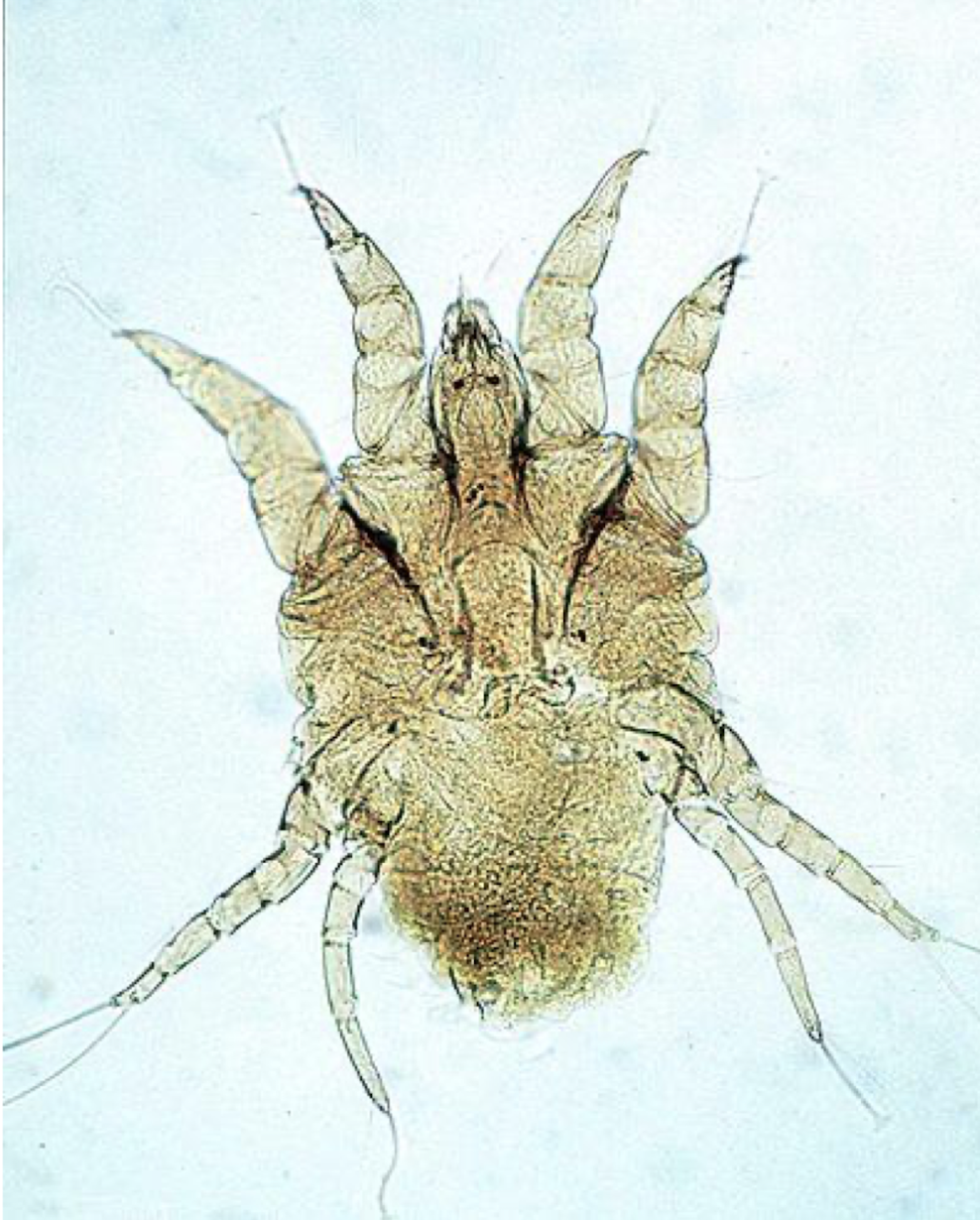
name
host
infection site
diseases transmitted
psoroptes
LA and rabbits
LA → tail region and shoulders, rabbits → ears
pruritis
⭐️ note long, segmented pedicels
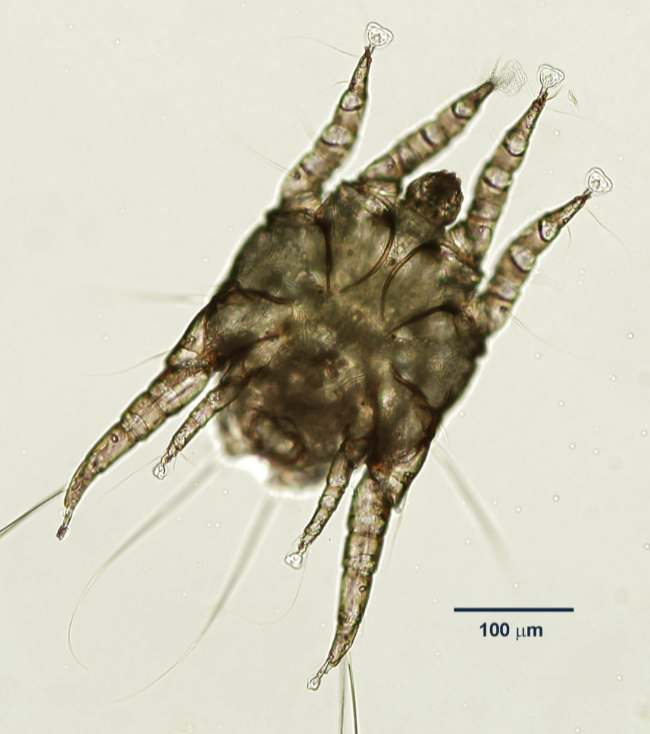
name
host (hint: cats)
infection site
diseases transmitted
otodectes
CATS, dogs, ferrets
ear canals
ear pruritis, otitis externa, “coffee grounds”
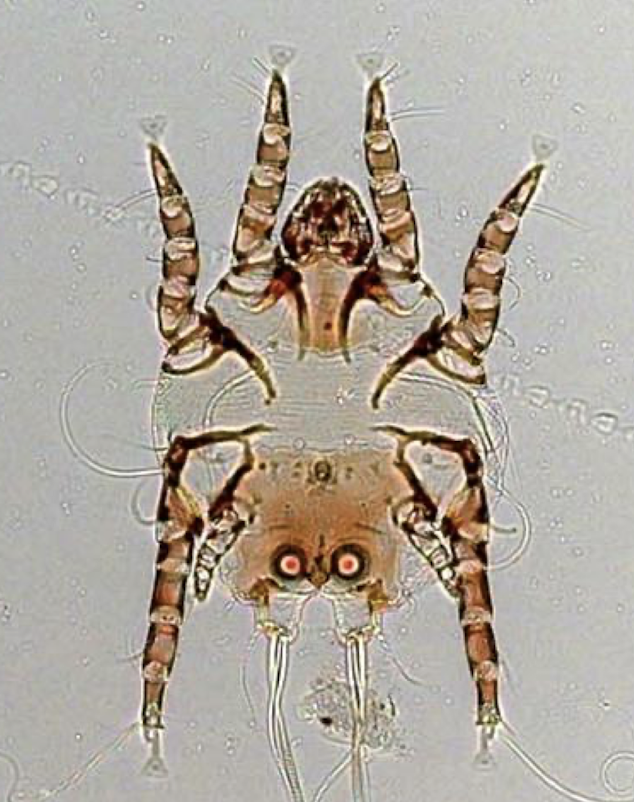
name
host (hint: LA or rabbits)
infection site
diseases transmitted
chorioptes
LA or rabbits
LA → tail and LEGS (unlike psoroptes), rabbits → ear
pruritis
how to differentiate between otodectes and chorioptes?
must know host!
if cats, likely otodectes
if LA or rabbits, likely chorioptes
general flea life cycle (stages)
egg → larvae (L1-3) → pupa → adult
PPP of fleas
3-8 weeks
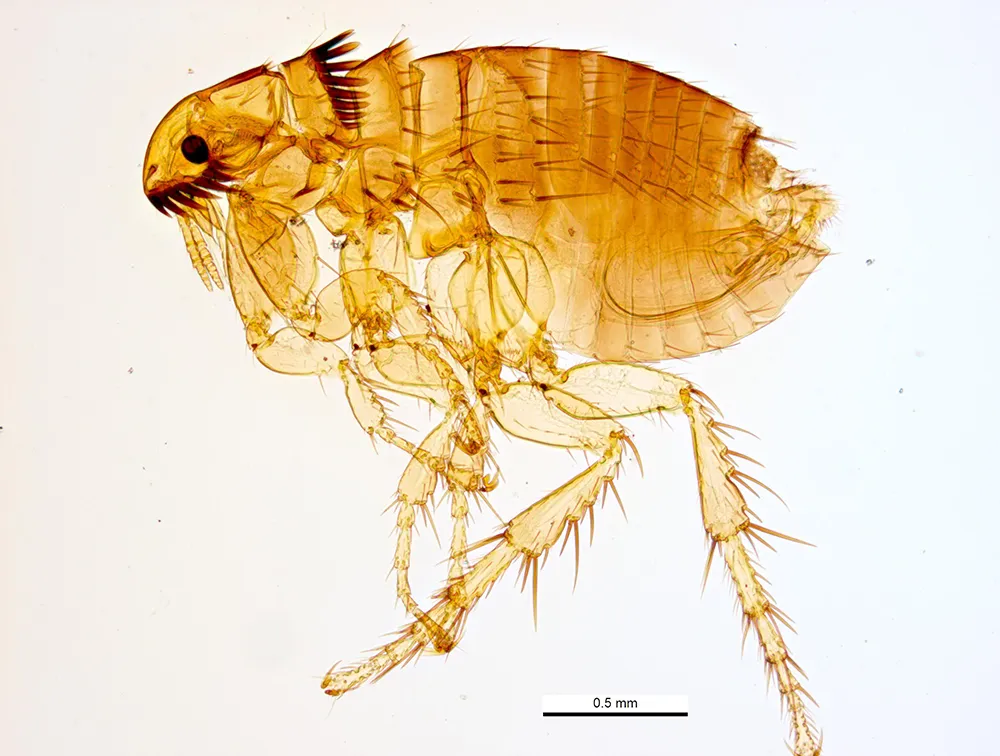
Ctenocephalides felis or “cat flea”
what is something to consider when treating fleas?
95% of the flea population is in the environment, not on the host. You MUST treat the environment as well.
major drug classes used to treat adult fleas
pyrethrins and synthetic pyrethroids
Isoxazolines
drugs used to target flea eggs
insect growth/development regulators like METHOPRENE
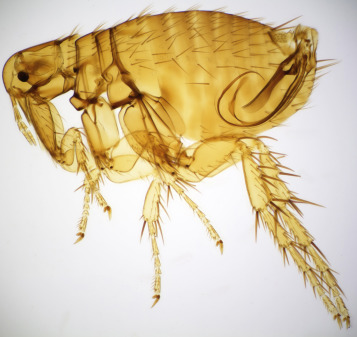
Xenopsylla, the rat flea
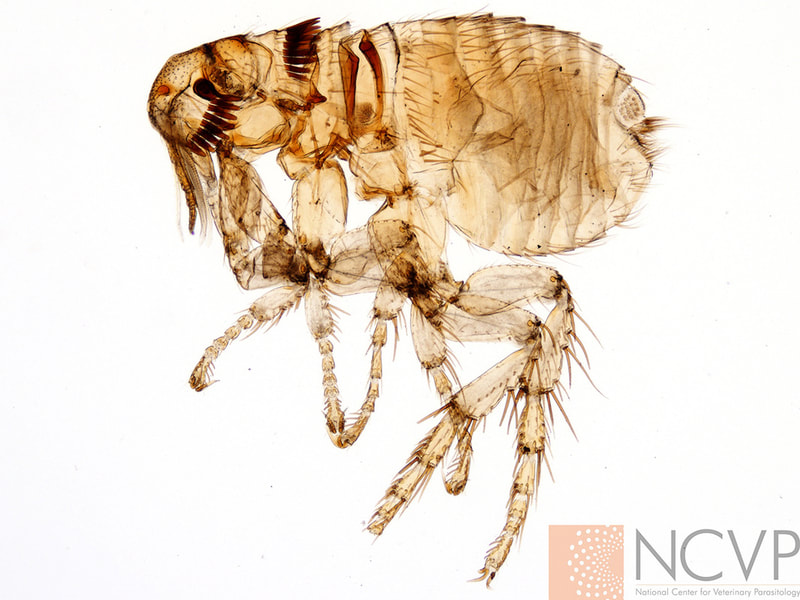
Cediopsylla, the rabbit flea
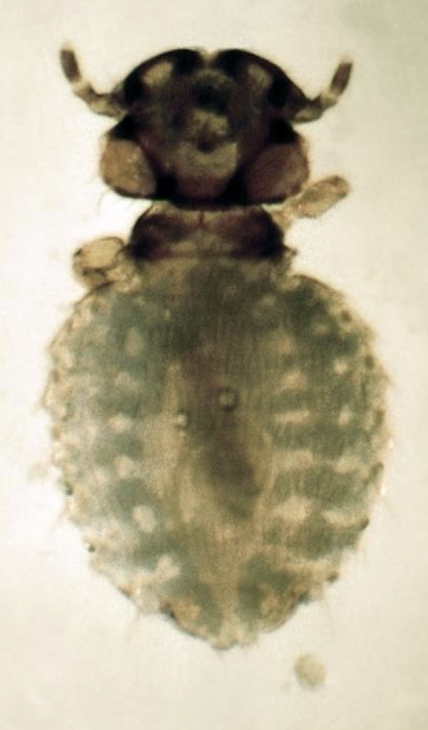
name, host, and chewing or sucking?
Trichodectes, dog, chewing
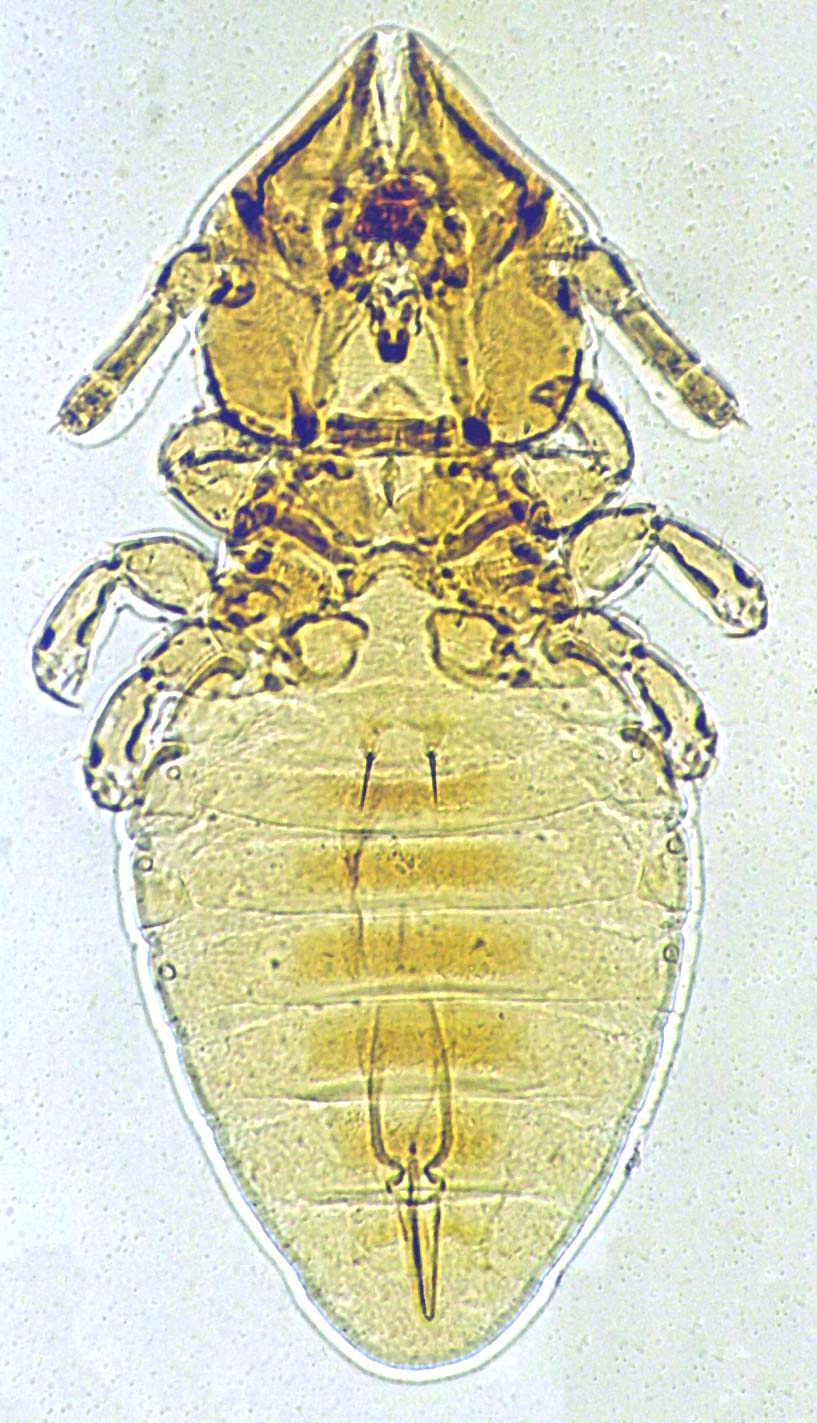
name, host, and chewing or sucking?
Felicola, cat, chewing
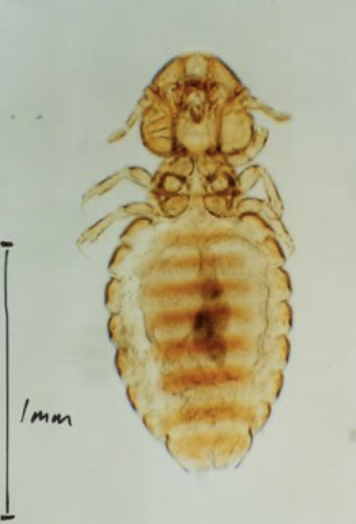
name, host, and chewing or sucking?
Damalinia, cattle/horse, chewing
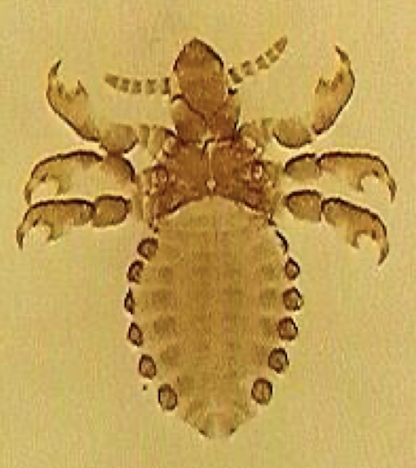
name, host, and chewing or sucking?
Haematopinus, cattle/horses/pigs, sucking
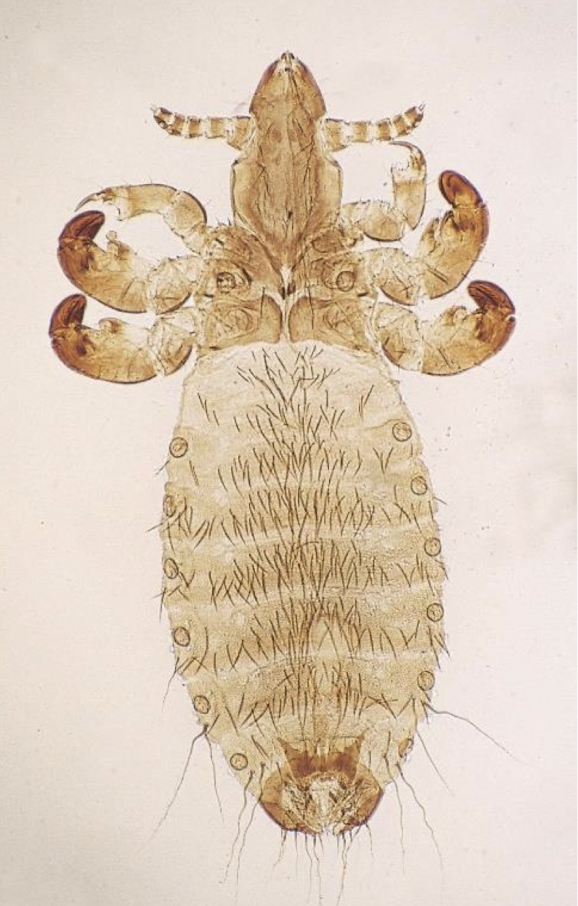
name, host, and chewing or sucking?
Linognathus, dogs and cattle, sucking
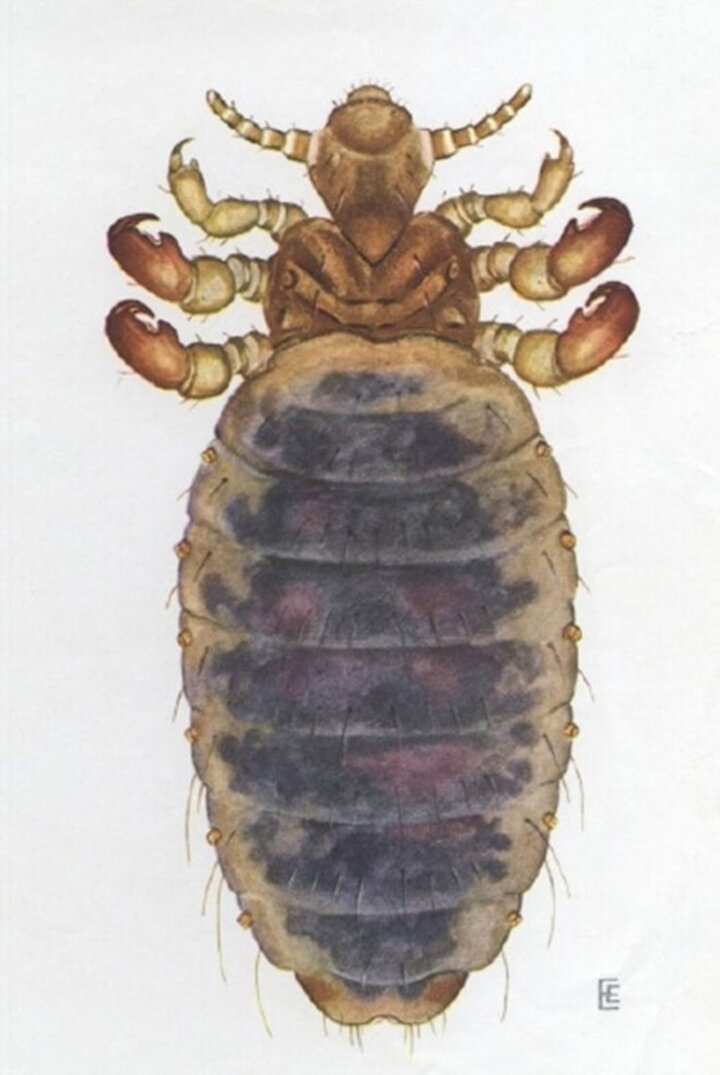
name, host, and chewing or sucking?
Solenopotes, cattle, sucking
major drug classes that treat lice?
permethrin
macrocyclic lactones
isoxazolines
general lice life cycle (stages)
Nit (egg) → nymph (1-3) → adult
life cycle duration of lice
2-3 weeks
term for an infestation of lice
pediculosis
what do chewing lice feed on?
skin secretions and debrit
dried blood
fur/hairs
what do sucking lice feed on?
blood
tissue fluids
a heavy infestation of lice could lead to what medical condition?
anemia
differentiate obligatory vs facultative myiasis
obligatory: animal host is required in fly life cycle
facultative: animal host not required for development of larvae
general fly life cycle (stages) (with details)
egg → larvae (L1-3) → pupa → adult
eggs hatch and larvae migrate to target tissues
larvae grow and molt
drop to ground and pupate
pupa → adult → lay more eggs~!
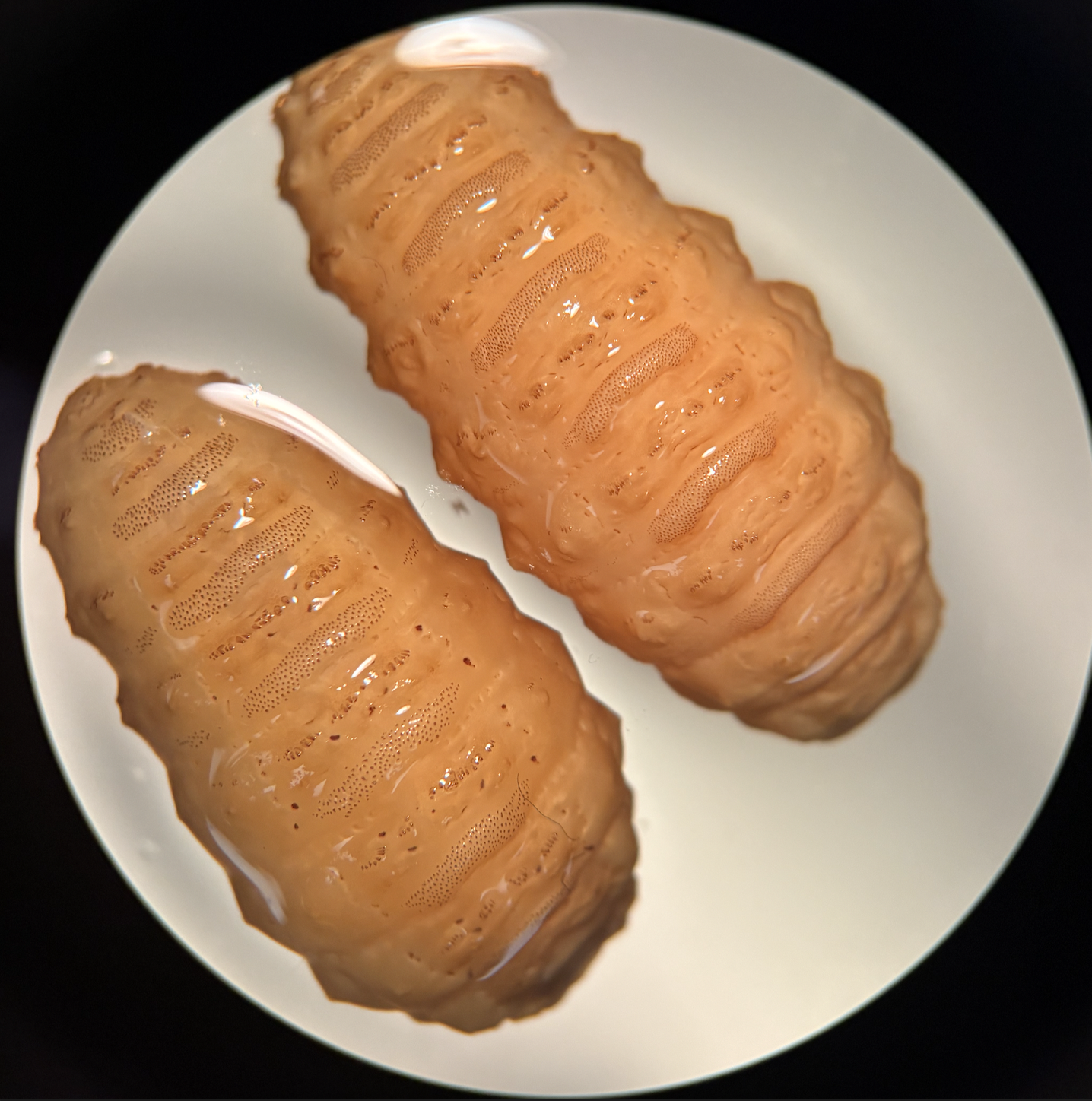
name
host
target tissue
identifying features
hypoderma
cattle
deposit into distal limbs (“heel flies”) and migrates to esophagus/shoulder region
no spines, spiracles
life cycle duration of hypoderma
~ 10 - 12 months (“about a year”)
treatment of hypoderma
manual extraction of grubs with hydrogen peroxide
systemic: macrocyclic lactones to kill developing larvae
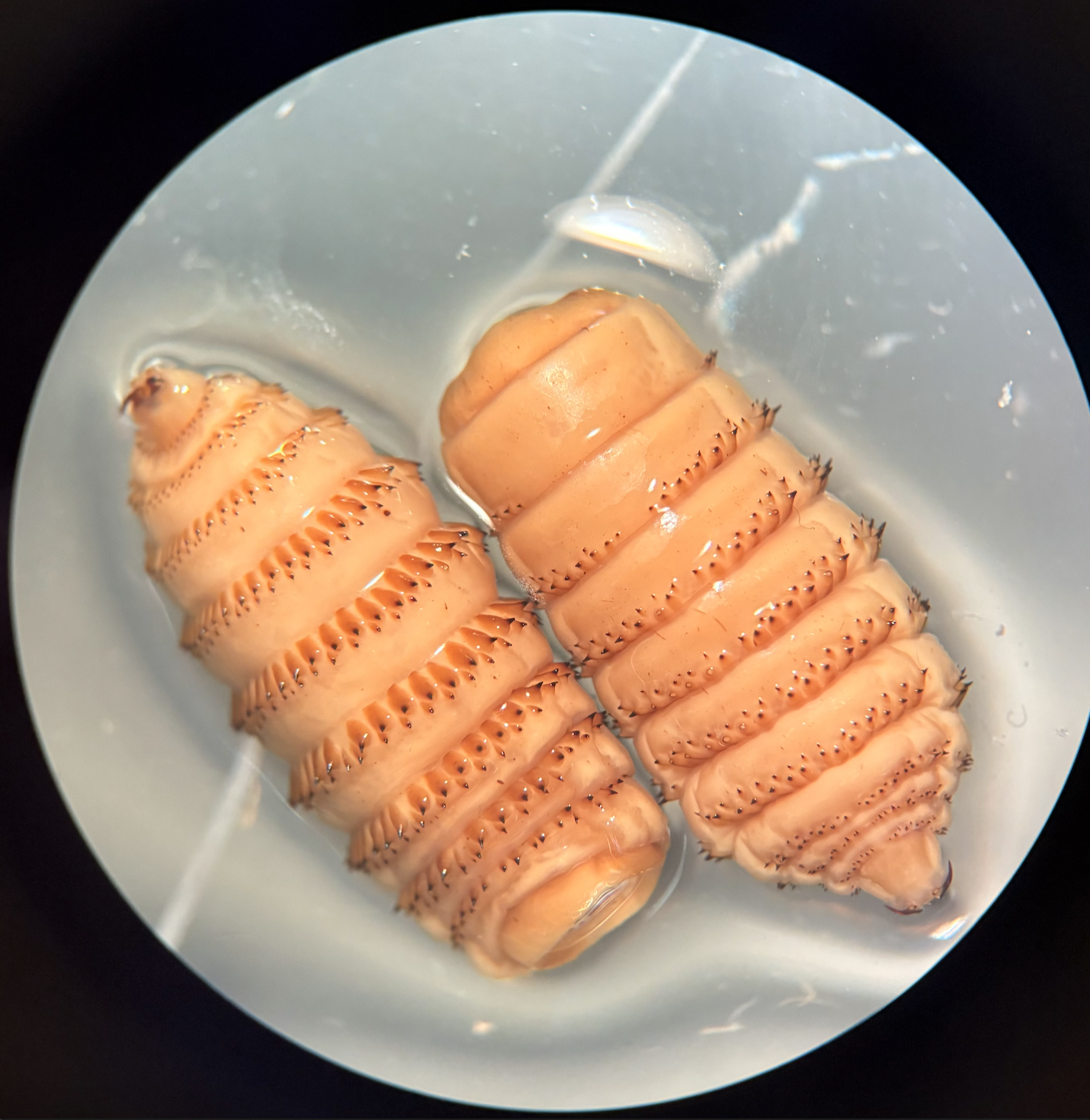
name
host
target tissue
identifying features
Gasterophilus
horses
larvae enter oral cavity and target stomach/GI tissue
ridges with tiny spines in rows, spiracles
treatment of gasterophilus
oral macrocyclic lactones
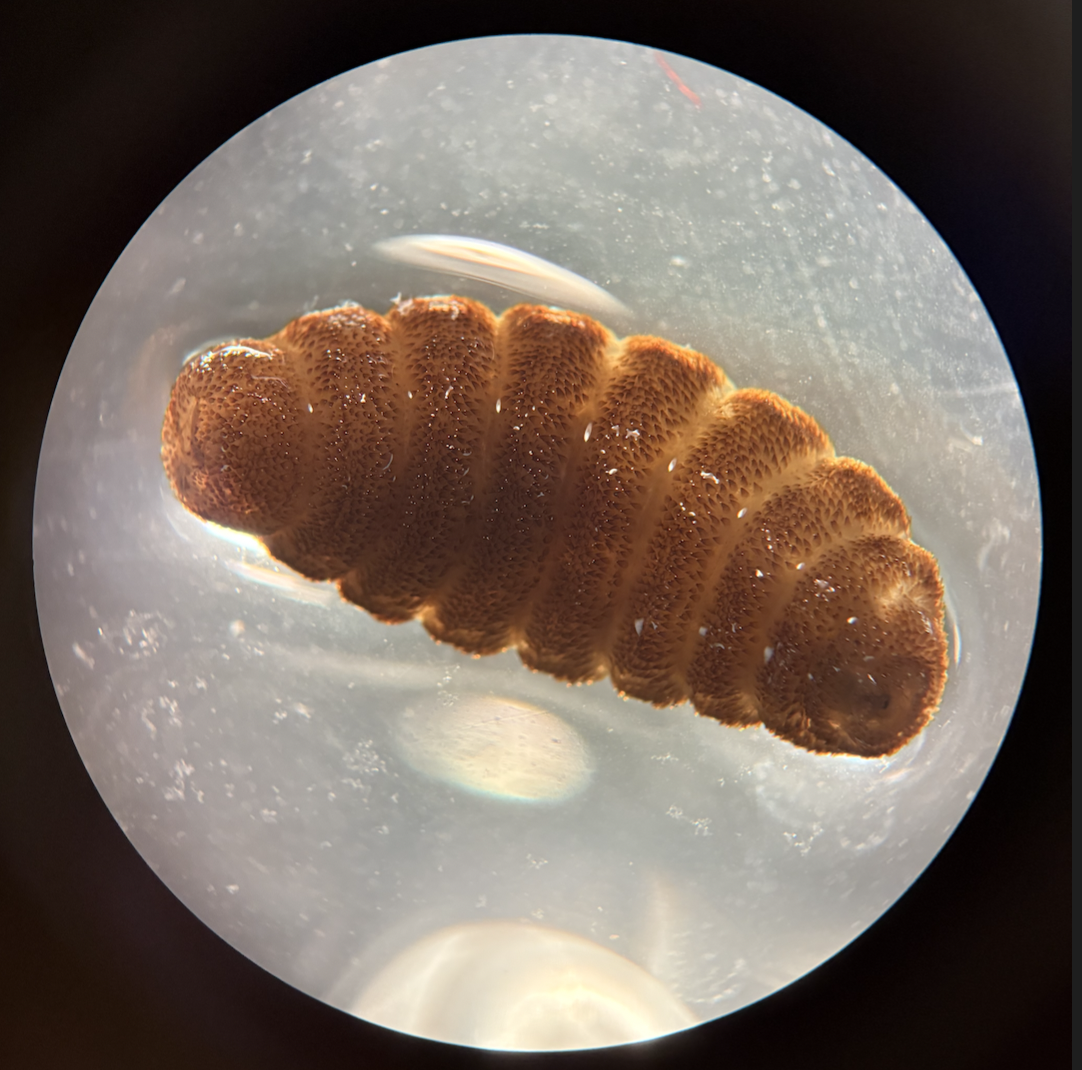
name
host
target tissue
identifying features
Cuterebra
SA → rabbits and rodents, sometimes dogs and cats
enter natural orifices and target SQ (often neck/head)
tan to brown, tiny spiracles
treatment of cuterebra?
carefully extract larvae intact
flush wound cavity and DO NOT SUTURE SHUT
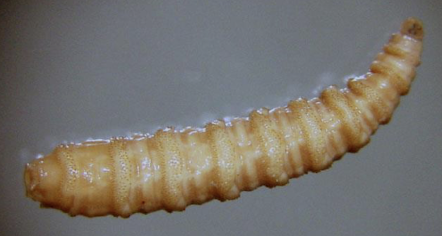
name
host
target tissue
identifying features
screwworm (Cochliomyia)
animals
HEALTHY TISSUE
screwlike spirals
name the two facultative myiasis fly species
flesh flies (Sarcophaga)
blow/bottle flies (Lucilia)
what causes wool/fly strike?
flesh flies and blow flies