ASCI 351 Lab Pratical
 Call Kai
 Learn
Learn Practice Test
 Spaced Repetition
 Match
Match Flashcards
 Knowt Play
1/52

There's no tags or description
Looks like no tags are added yet.
Name | Mastery | Learn | Test | Matching | Spaced | Call with Kai |
|---|
No analytics yet
Send a link to your students to track their progress
53 Terms
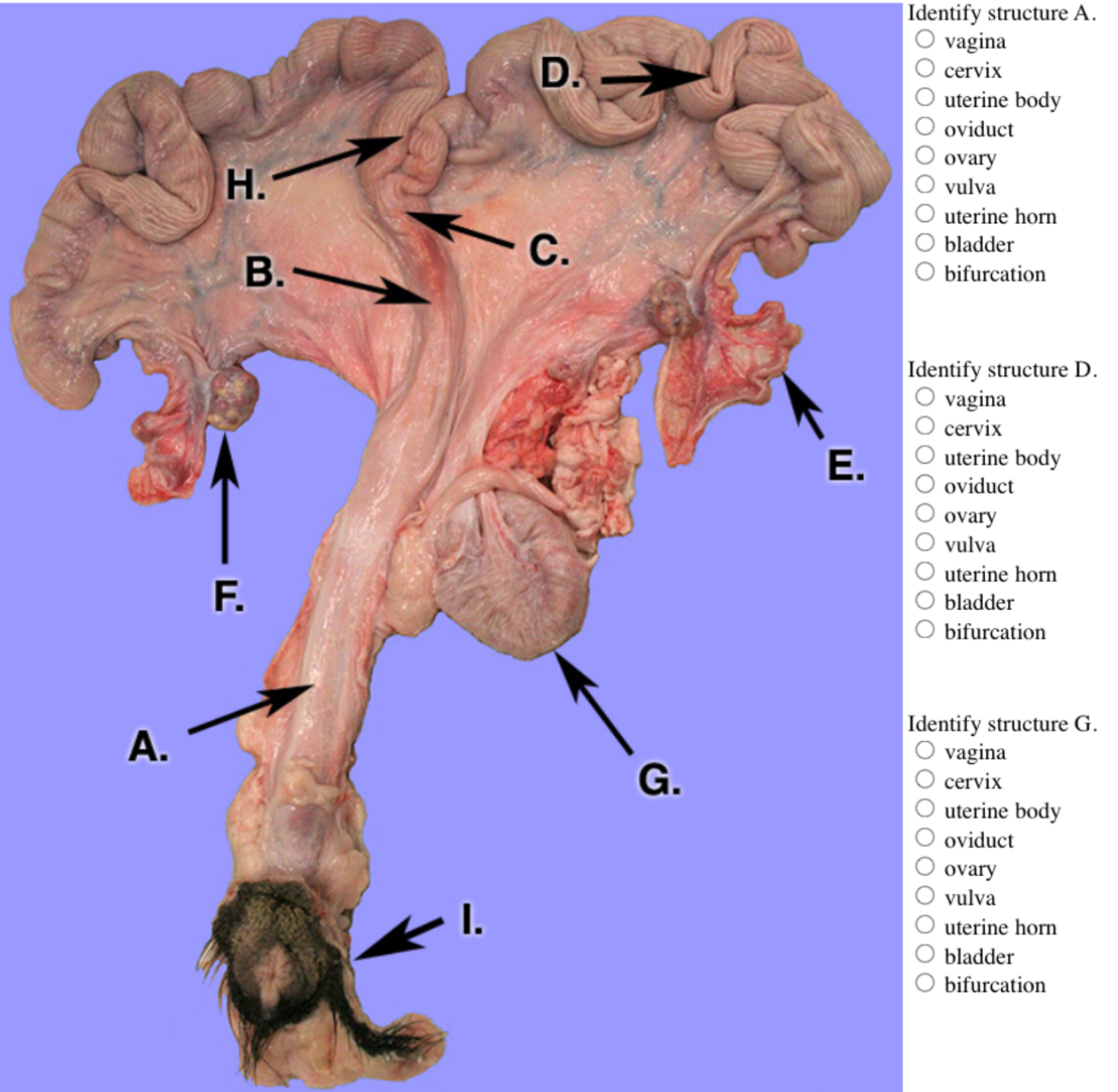
A. Vagina
B. Cervix
C. Uterine Body
D. Uterine horn
E. Ovidcut
F. Ovary
G. Bladder
H. Bifurcation
I. Vulva
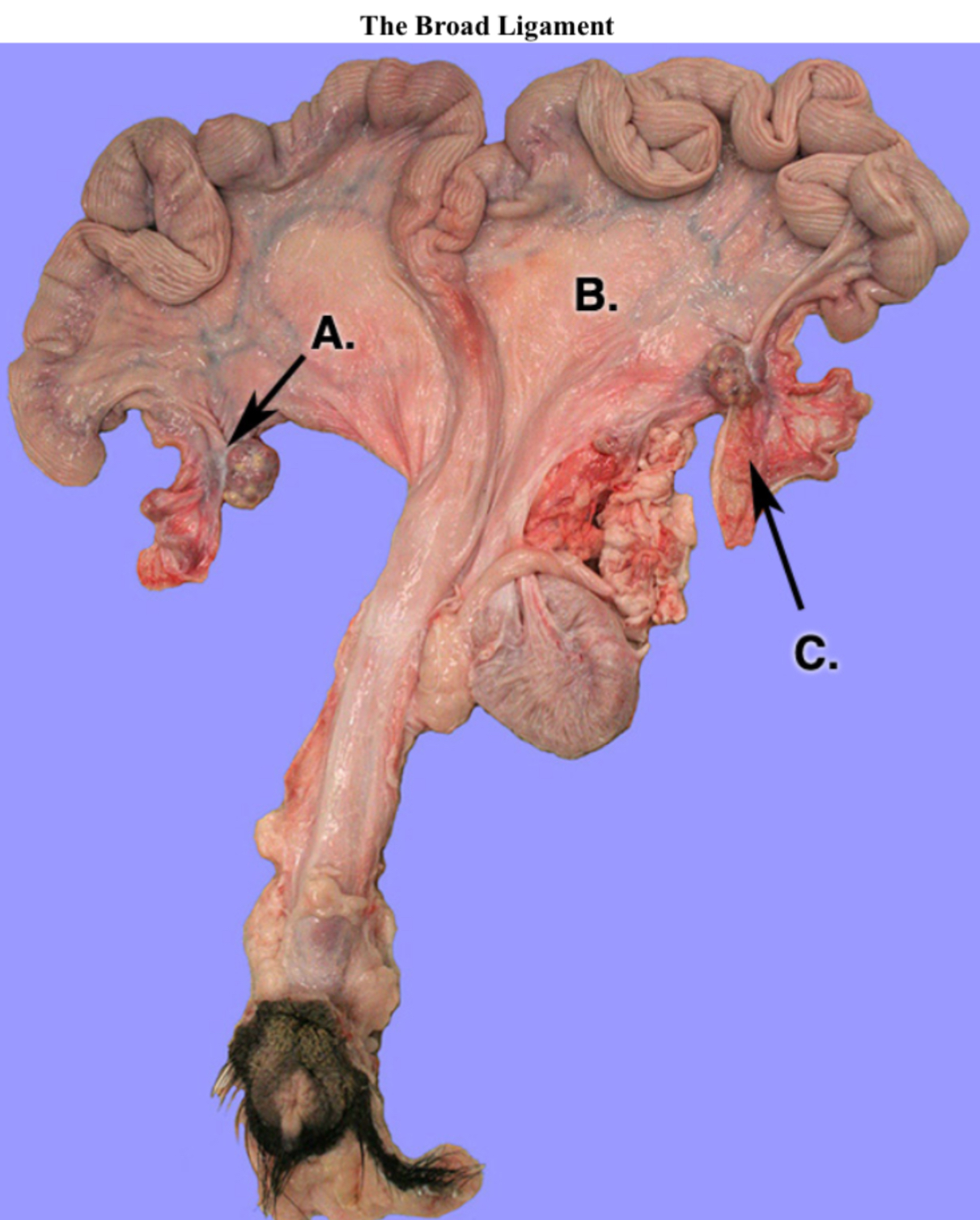
A. Mesovarium
B. Mesometrium
C. Mesosalpinx
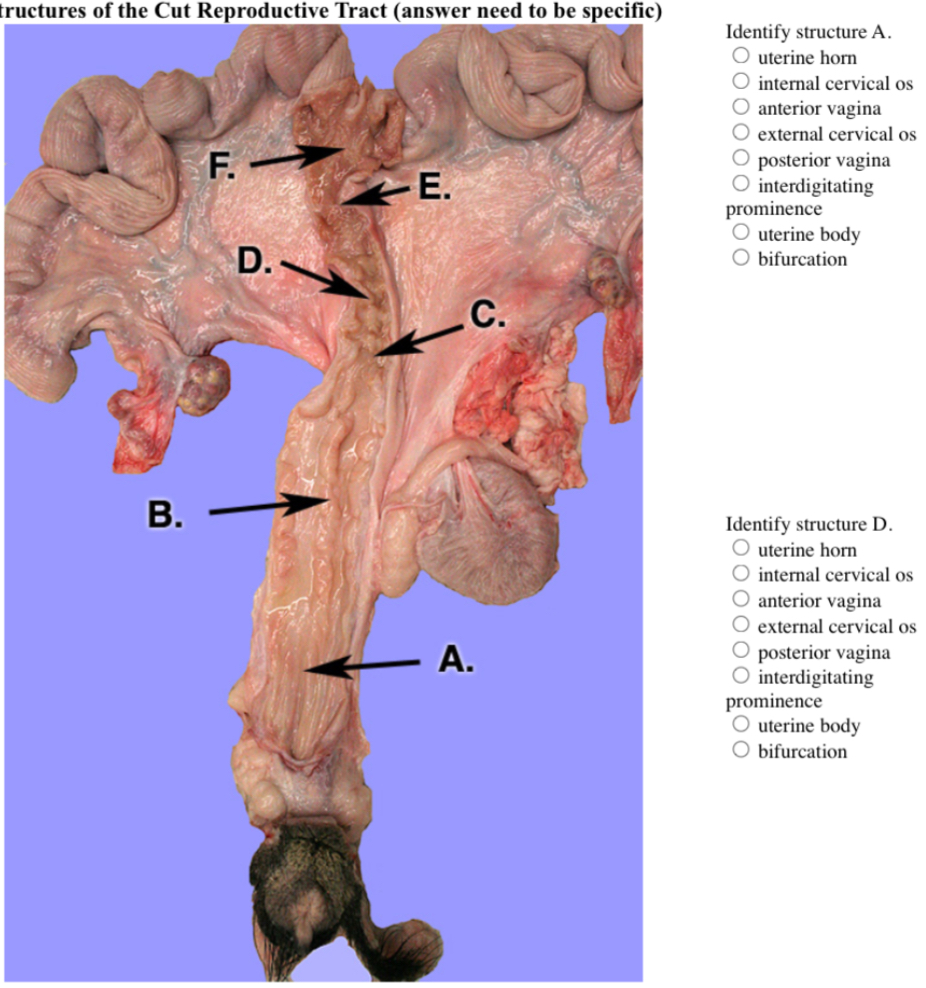
A. Posterior Vagina
B. Anterior Vagina
C. External cervical
D. Interdigitating promience
E. Internal cervical os
F. Uterine body
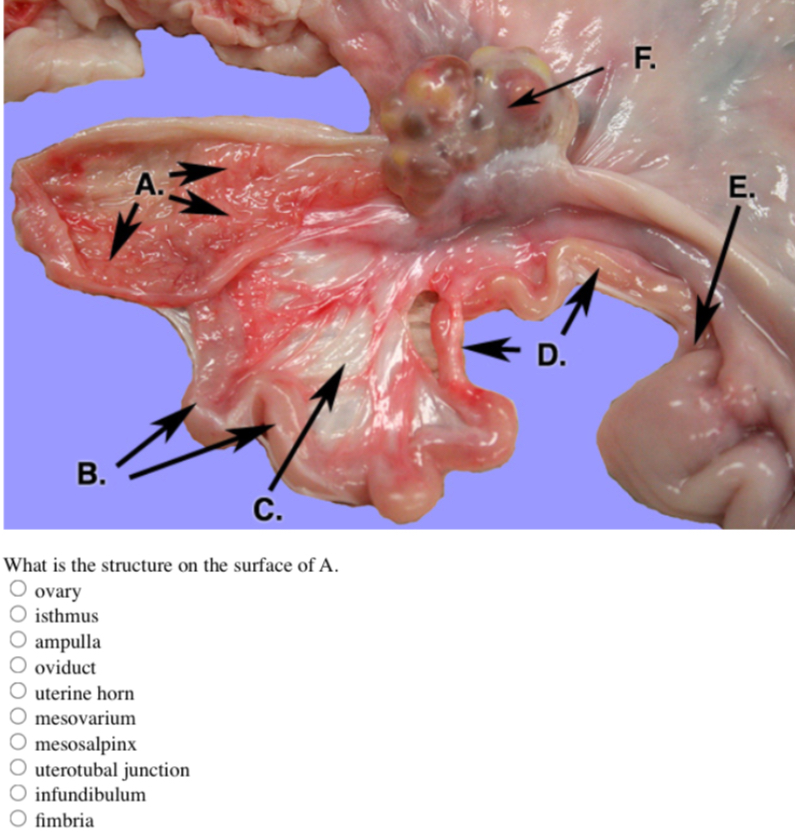
A. Surface: Fimbria, Structure: Infundibulum
B. Ampulla
C. Mesosalpinx
D. Isthmus
E. Uterotubal junction
F. Ovary
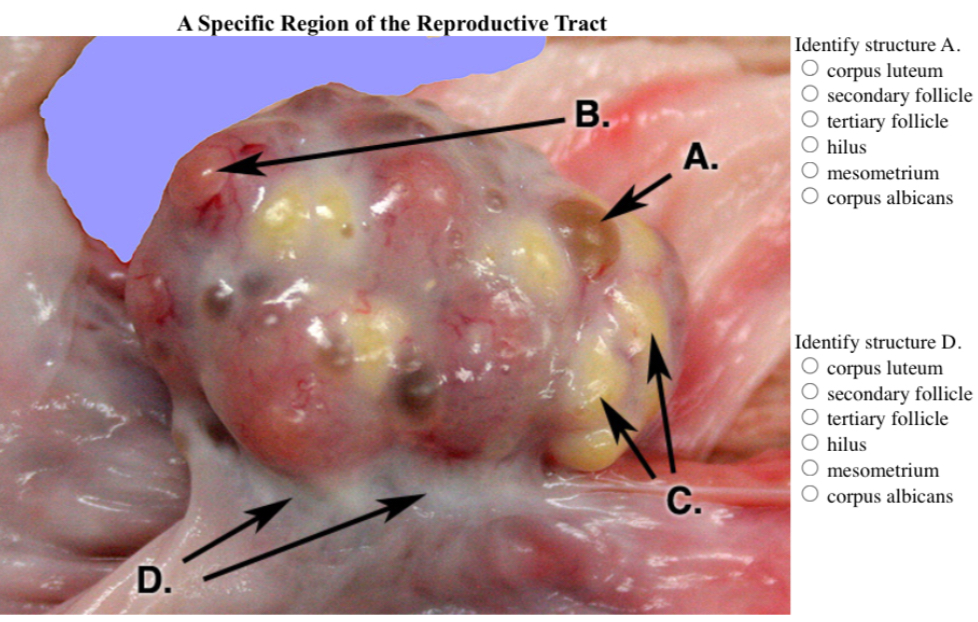
What is the layer of the cells on the surface of the ovary?
A. Tertiary follicle
B. Corpus luteum
C. Corpus albicans
D. Hilus
Germinal epithelium
The repro tract lies below the rectum in the rectogenital pouch which allows for ultrasonic palpation per rectum to do what in mares?
1) diagnose the ovarian status of the female
2) diagnose pregnancy by determining the presence or absence of a fetus or of fetal membranes located within the uterus
3) manipulate the tract for insertion of an artificial insemination syringe
4) recover embryos using nonsurgical techniques
5) identify reproductive tract abnormalities.
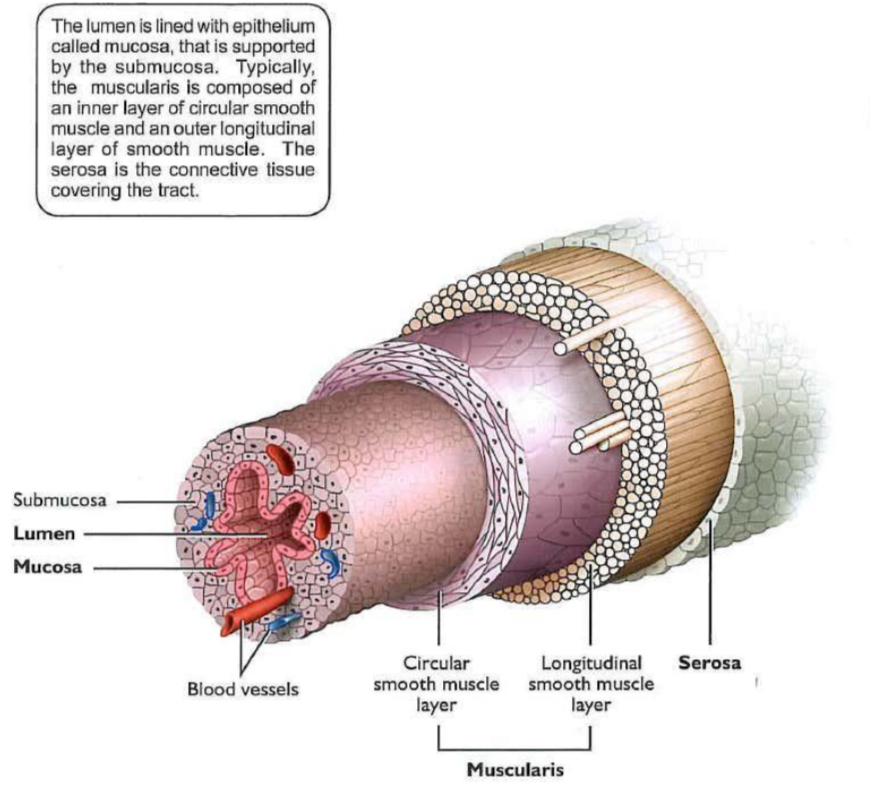
Identify the layers and their functions of the tubular Repro tract
Serosa: outer layer, simple squamous cells
Muscularis: (outer longitudinal and inner circular layer), contractions to transport secretory products, gametes and embryos, fetus expulsion
Submucosa: blood vessels, nerves and lymphatics
Mucosa: lines the lumen made of mucosal epithelium to produce fluid or ciliated to move
identify the structures and which species each repro tract is?
Ovaries function?
produce female gametes (ova) and the hormones
estrogen and progesterone.
Corpus luteum produces?
oxytocin, relaxin, inhibin and activin.
The ovary is composed of an outer connective tissue surface called __ covered by _?
Tunica albuginea is covered by a single layer of cuboidal cells called the germinal epithelium
Beneath the tunica albuginea is the ___ which generally (the mare is the exception), houses ___ and __.
Ovarian cortex
Oocytes
Corpus luteum
The ovarian medulla houses and composed of?
Vasculature, nerves and lymphatics and is composed of dense connective tissue
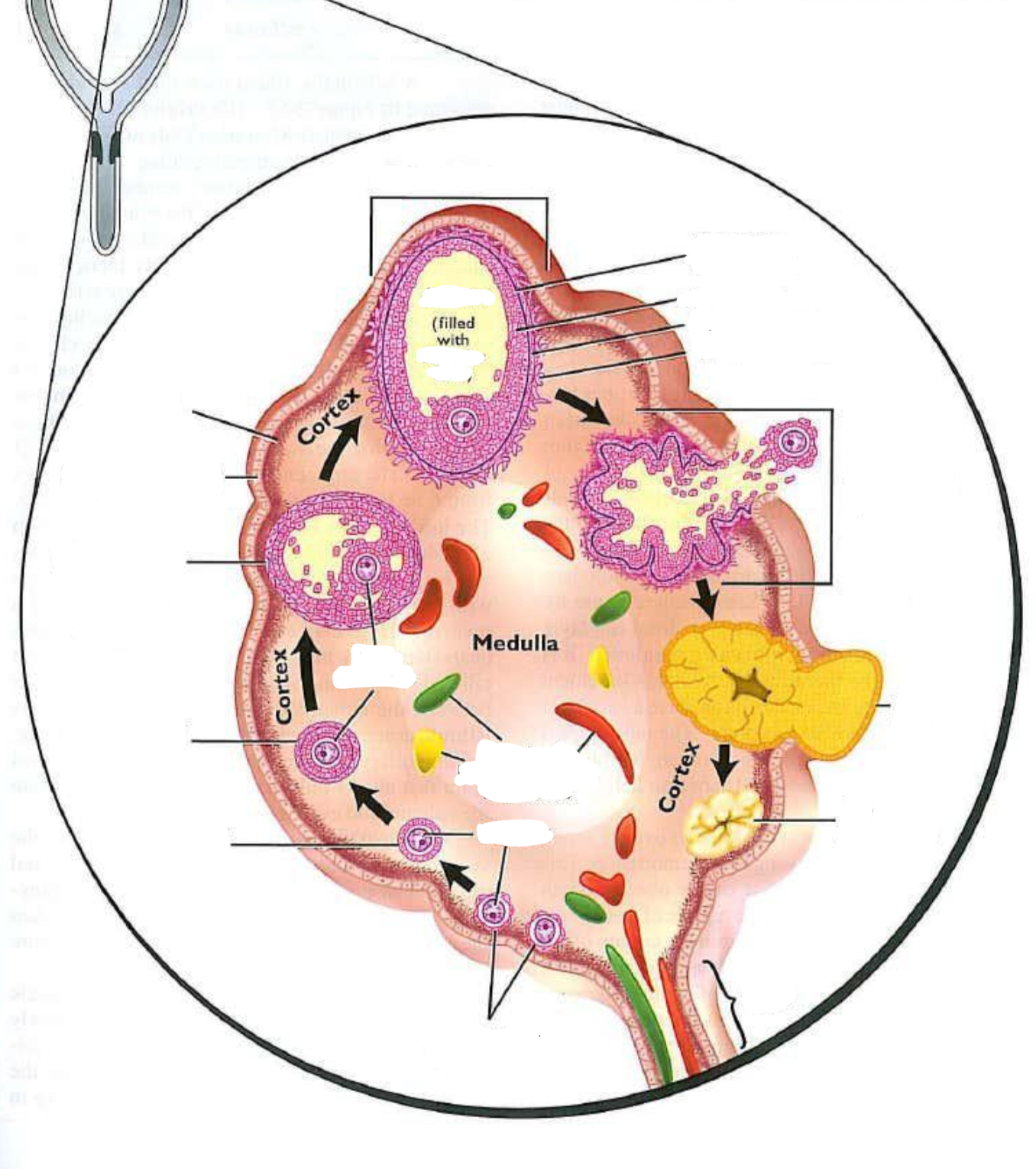
Identify the ovarian structures?
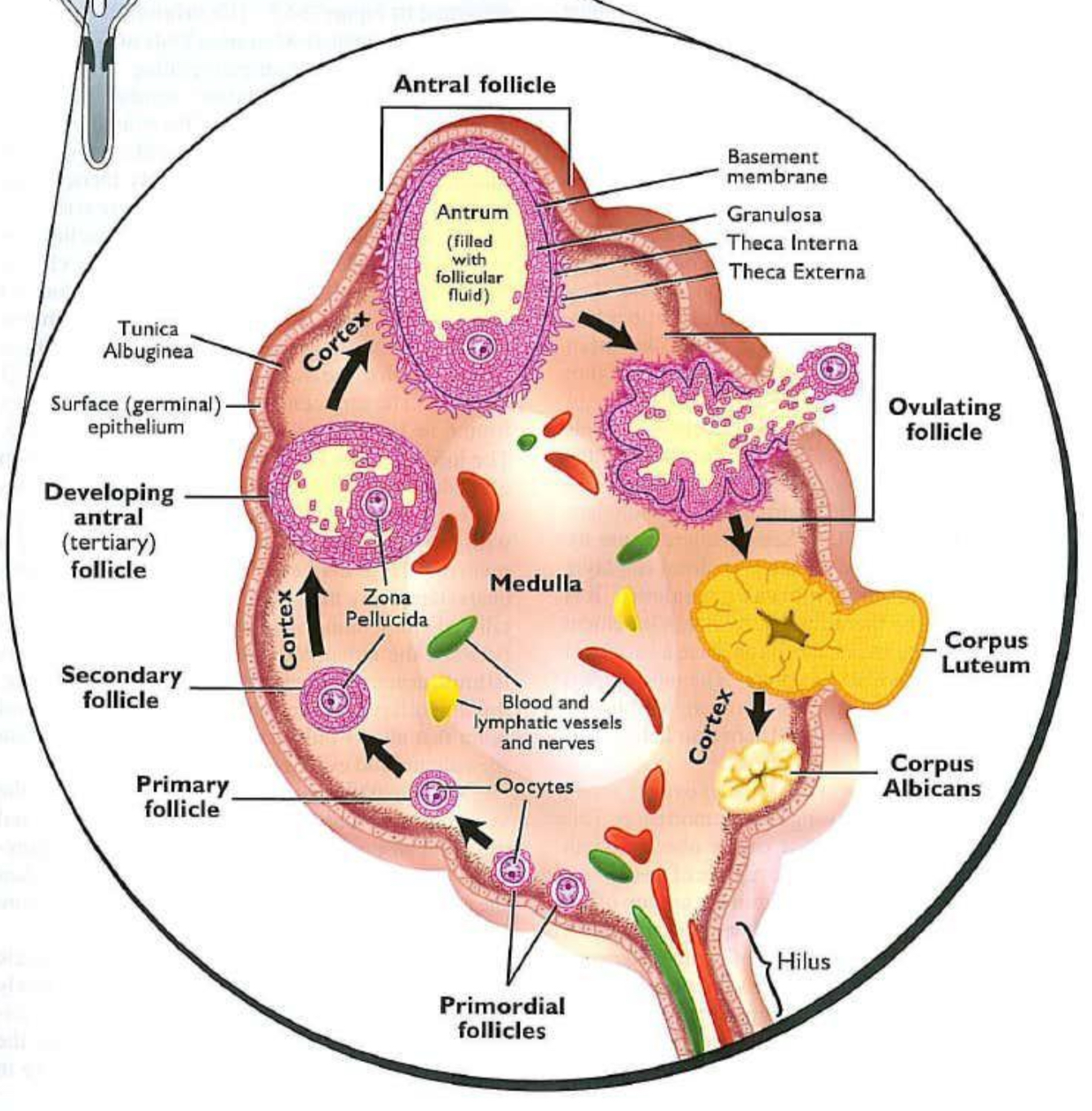
Identify the different follicles and their identifying features?
Primordial follicles: most immature, oocyte surrounded a single layer of squamous cells
Primary follicle: oocyte surrounded by a single layer of bubodial cells
Secondary follicle: 2 more more layers of follicle cells w/ zona pellucida
Amtrak: follicular fluid filled antrum
Three distinct layers of the antral follicles and what they produce
Theca externa: loose connective tissue
Theca interna: produce androgen under LH
Granulosal cell layer: produce estrogen, inhibin and follicular fluid
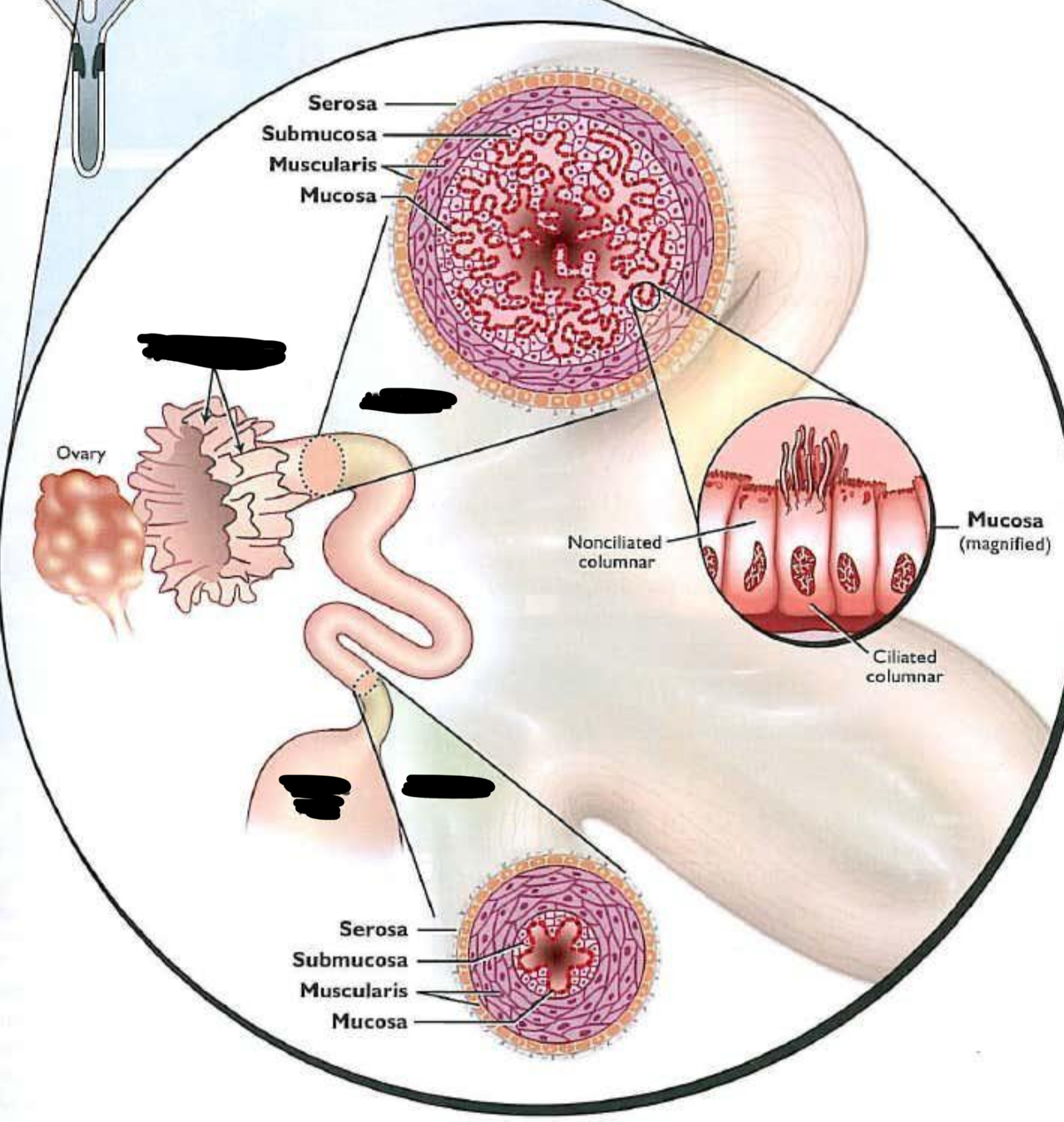
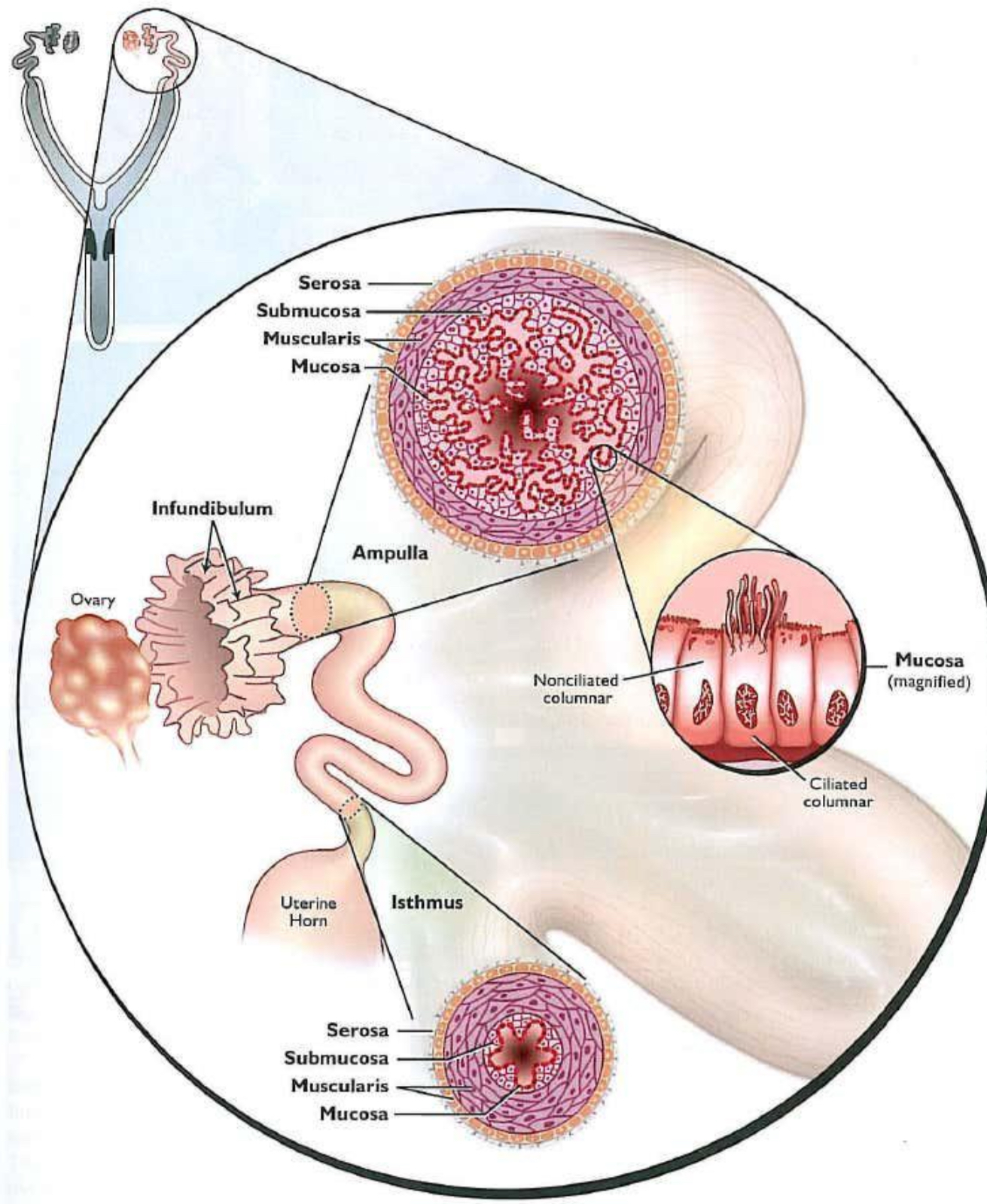
Identify the parts and their functions of the oviduct
Infundibulum: surface covered in fimbriae with funnel shape captures ovulated oocytes and transport to ostium opening
Ampulla: site of fertilization, ½ of oviduct length with mucosal folds, ampullae’s-isthmi’s junction only lets fertilized oocytes pass in the mare
Isthmus:
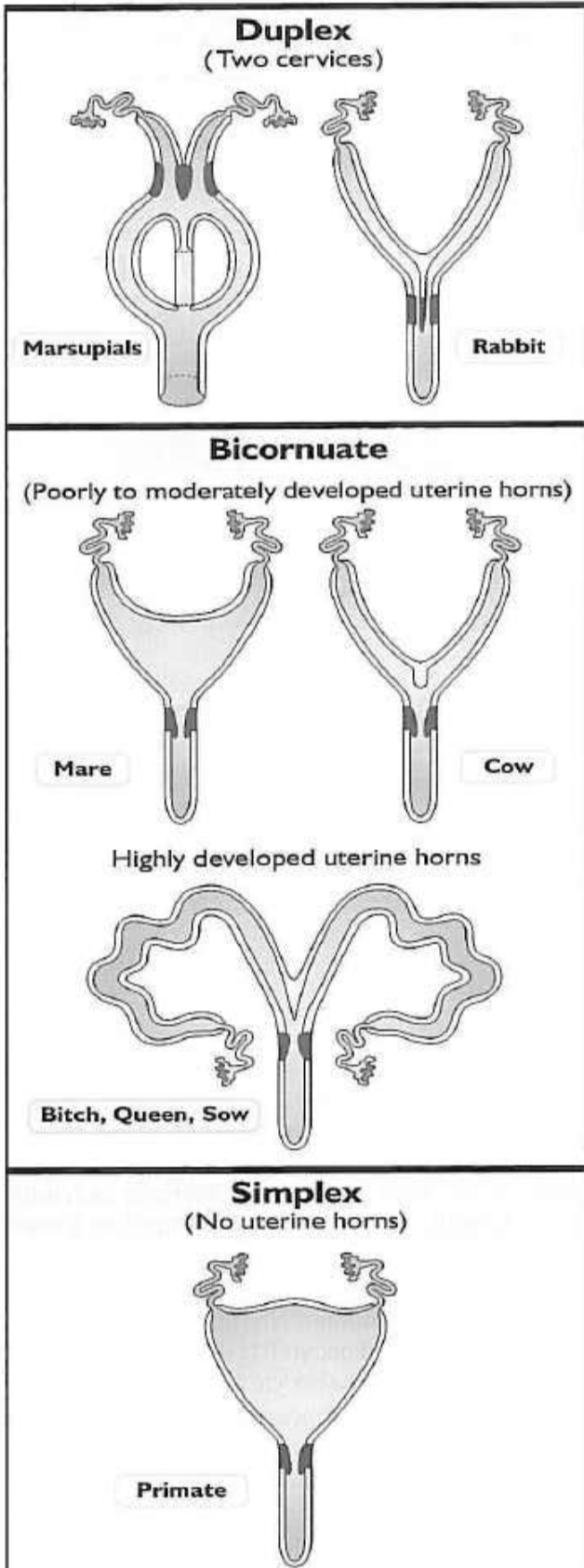
Uterus types and associated species
Duplex: 2 cervical canals that separate each uterine horn (ex: marsupials and rabbits
Bicornuate: 2 uterine horns and small uterine body, single cervical canals (cows, ewe, goat, sow, bitch, queen, mare)
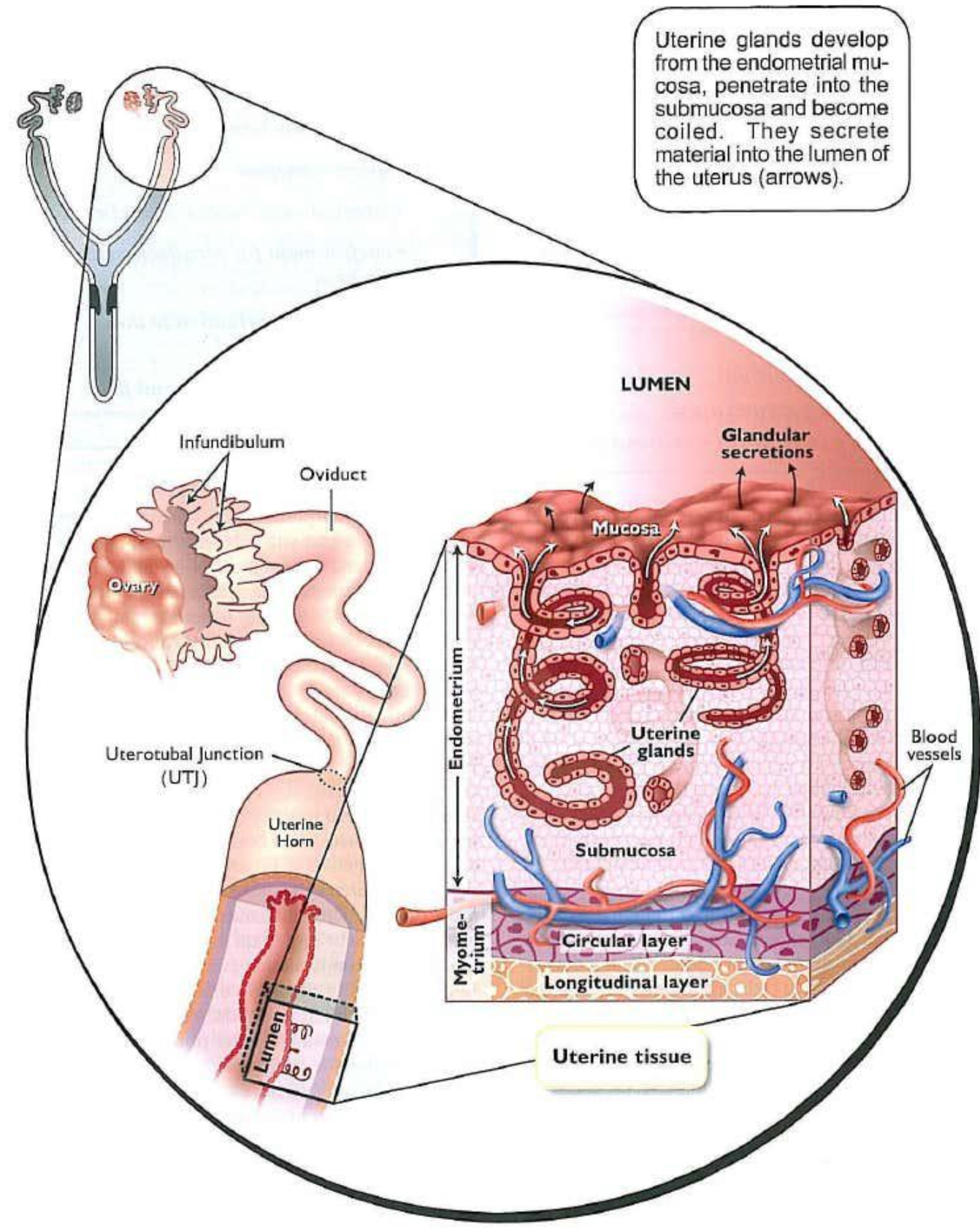
Caruncles: maternal placenta attchemnet site
Cervix function?
barrier to sperm transport in the ewe, cow, bitch and queen but not in
the sow and mare and isolates the uterus from the external environment during pregnancy by forming a barrier consisting of highly viscous mucus.
The mare has no cervical rings but many longitudinal folds
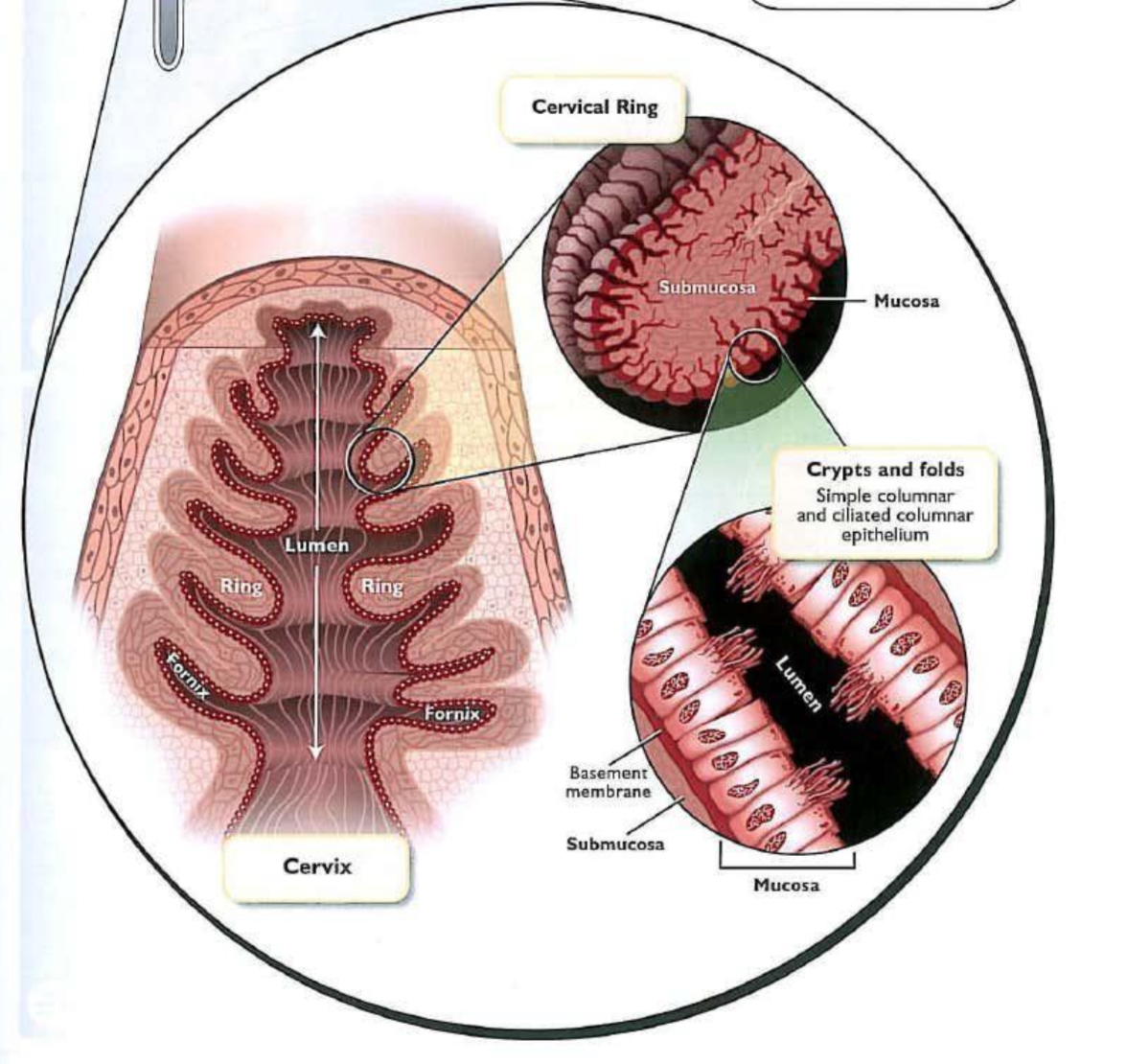
Parts of the vagina
Cranial vagina: secretory (columnar) and stratified quanmous epithelium
Caudal vagina (vestibule): common to urinary and genitals, houses clusters, vestibular glands
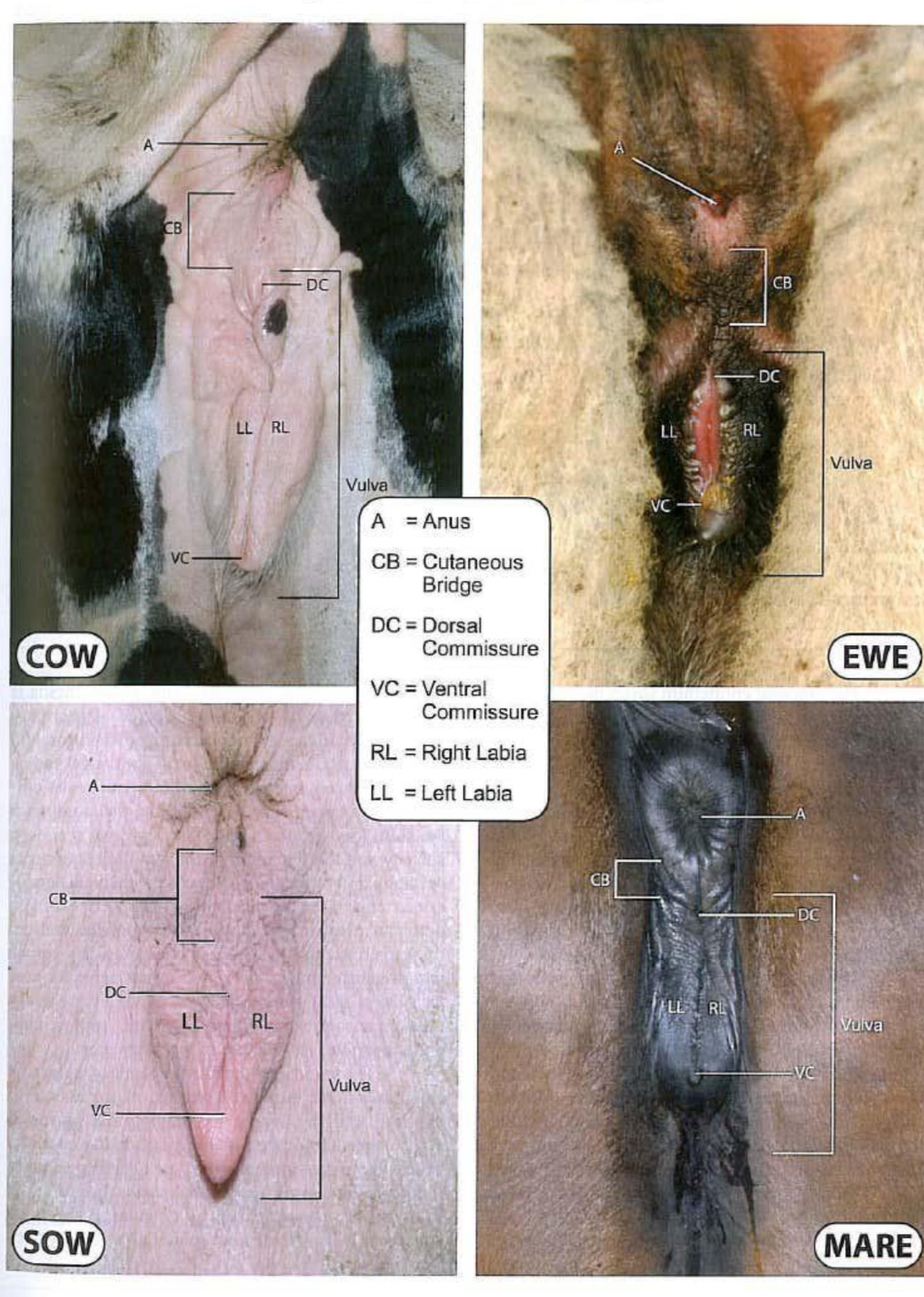
Vulva: 2 labia that form commissaries (close together)
Perineum: regions that surrounds anus and vulva
Travel pathway of sperm
Rete tubules → efferent ducts → epiidyms headm body (changes to be fertile) and tail (stored) → duct is deferred → pelvic urethra → mixed with seminal plasma from accesorry sex glands
The spermatic cord houses and functions?
Houses the ductus deference, cremaster muscle and pampiniform plexus, Ilioinguinal nerve and Genitofemoral nerve
Functions: provide vascular, lymphatic and neural connection to the body, provide heat exchanger and house cremaster
what do the Ilioinguinal nerve and Genitofemoral nerve do?
Ilioinguinal nerve: accompanies the spermatic cord through the superficial inguinal ring contributes towards the sensory innervation of the genitalia • Genitofemoral nerve: supplies the cremaster muscle and anterior scrotal skin in males
4 layers of the scrotum?
Skin
Tunica darts
Scrotal fascia
Parietal vaginal tunic
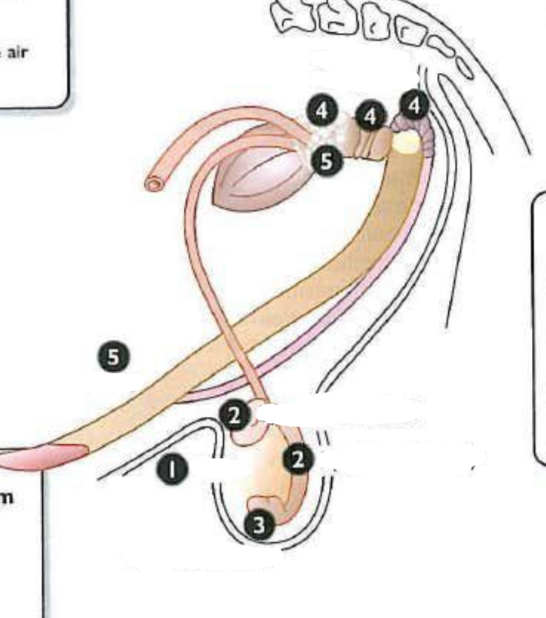
Identify the structure and function
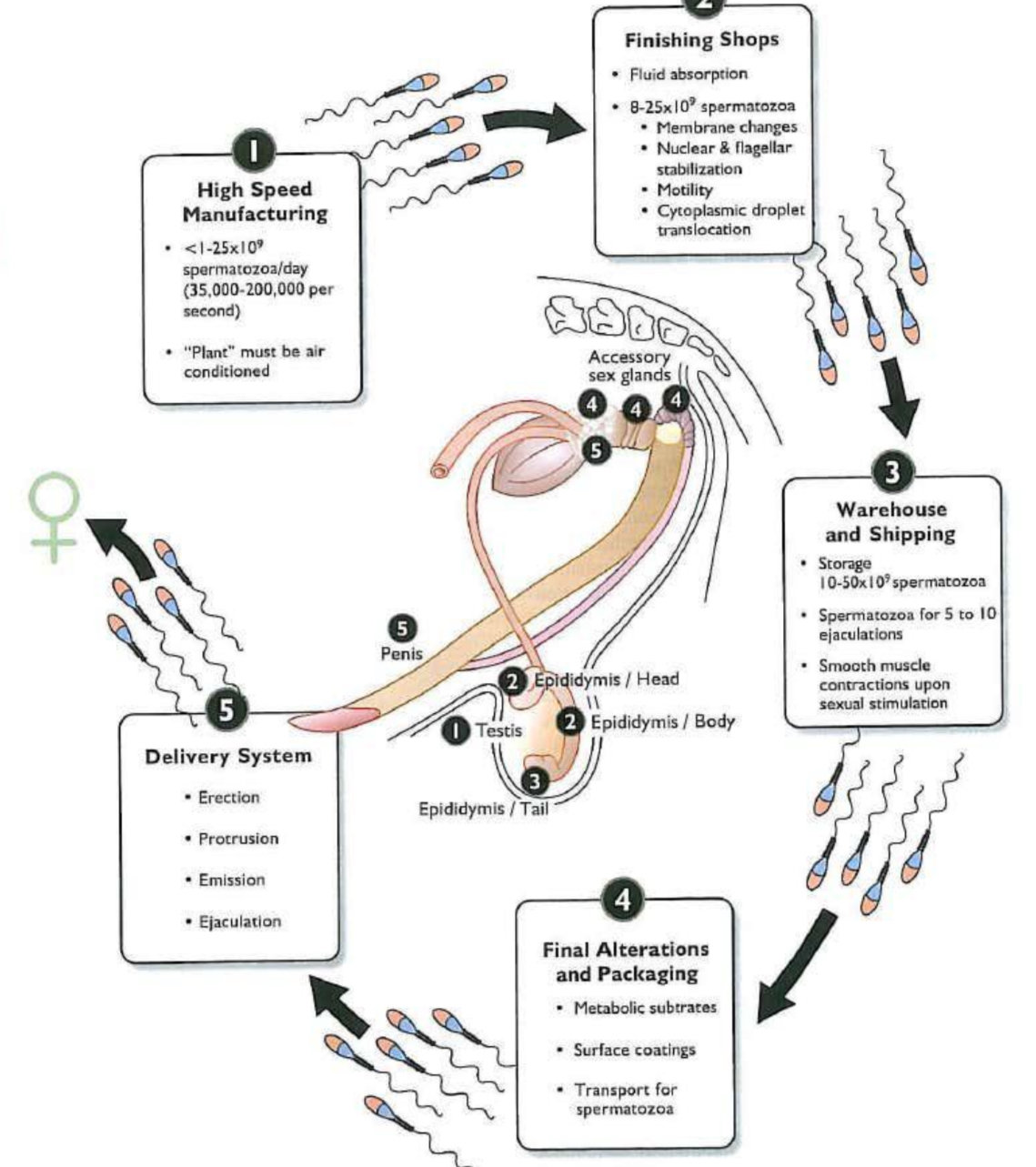
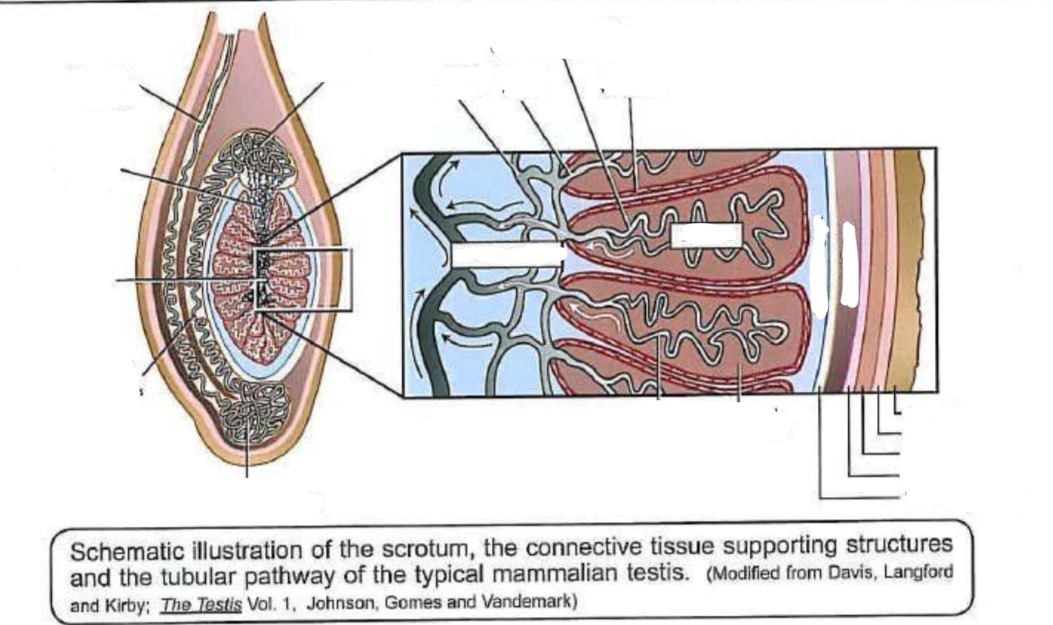
Identify the structures:
What amkes up the testicular capsule, parenchyma and medistainum?
Testicular capsule: Visceral vaginal tunic, Tunica albuginea: sends many fingerlike projections into the parenchyma of the testicle. These septa projections join with the mediastinum and Tunica vasculosa: the interior surfaces of the tunica albuginea and the surfaces of the septa divisions forming the lobules are quite vascular.
Parenchyma (lobules):
1. Tubular compartment (seminiferous tubule)
2. Interstitial compartment
Mediastinum: Rete tubules: tiny channels through which spermatozoa are transported out of the testis
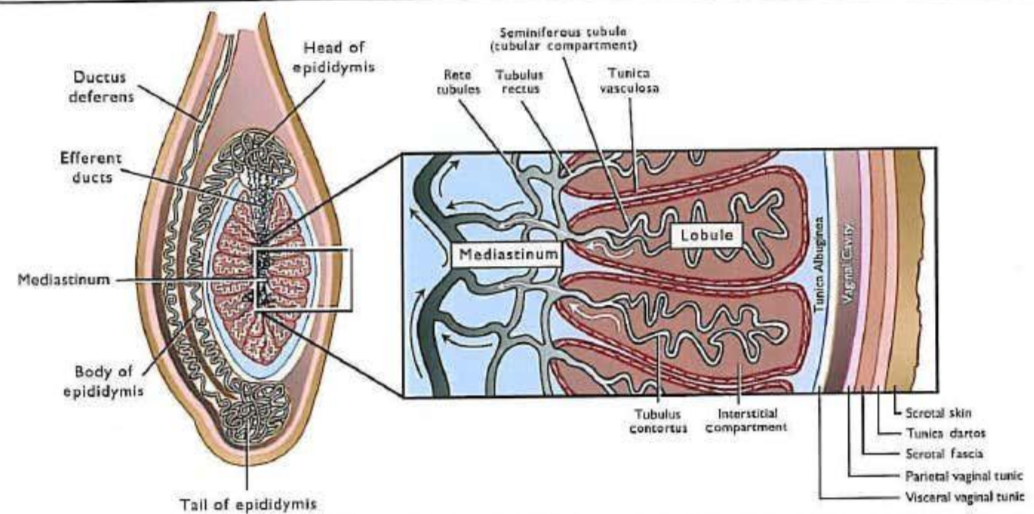
Function of tunica dartos?
Mesh like smooth muscle layer beneath scrotal skin that can maintain sustained contraction holding testes close when temperatures are cold
What structures and function makes up the tubular compartment of the testicular parenchyma, where does Spermatogenesis takes place?
Semineforu epithelium: basal compartment contains Sertoli cells
Sertoli cells: host germ cells, produce substances and toughly attached together via tight junctions and
Developing germ cells
Periutubular cells: contracts to move spermatozoa into rete tubules, form a blood-testis barrier with Sertoli cell junctions protect developing germ cells
Has a convoluted portion (tubulus contortus) and a straight portion (tubulus rectos) that join the rete tubule. Spermatogenesis takes place predominantly in the tubulus contortus
What are the compartments of the seminoferous eputhelium and what kind of maturity sperm do they each contain?
Peripheral Adluminal Compartment: Spermatids
Deep Adluminal Compartment: Primary spermatozoids amd secondary spermatozoids
Basal Compartment: Spermatogonium
What do Sertoli Cells produce and what do they do?
analogous to the granulosa cells of the ovarian follicle. They have the capability of producing a variety of substances.
1) Androgen binding protein (ABP), a testosterone transport protein
2) Sulfated glycoproteins (SGP) 1 and 2, that are believed to be related to fertility acquisition (SGP-1) and providing a detergent effect that allows cells and fluids to move through the tubular network of the testis (SGP-2)
What does the intersitial compartment have?
consists of all cells and materials outside the seminiferous tubules, such as blood vessels, connective tissue, lymphatics, nerves and the interstitial cells of Leydig, that produce testosterone.
Function of effernt ducts, epidiymis and ductus deferns
Efferent ducts: originates from the rete testis and gradually fuse to form the ductus epididymis, reabsorb fluid and propel sperm
Epidymis: store spermatozoe, where they become moblie, asborb fluod, epithlium has mitouc basal cells
Ductus Deferens: thick musuclar tube with inner longitudinal, middle circular, and outer longitudinal layers
Ampulla: enlargements of the ductus deferens mucosa that open directly into the pelvic urethra
Prostate gland: 2 structures and species differences
Prostate gland lies in close proximity to the junction between the bladder and pelvic urethra.
Corpus prostate: the prostate is outside of the urethralis muscle and is visible as a heart-shaped
Disseminate prostate: glandular tissue is distributed along the dorsal and lateral walls of the pelvic urethra. The disseminate prostate is sometimes referred to as the urethral gland
Bull: prostate has two distinct forms and the corpus prostate is located near the neck of the bladder.
Stallion: has no disseminate prostate and the glands are characterized by two lateral lobes.
Boar: the disseminate prostate is the major portion of the gland and the body of the prostate is often partially concealed by the vesicular glands.
Dog: The prostate is the only accessory sex gland in and situated around the pelvic urethra at the neck of the bladder
Tom: the prostate consists of four lobes that are dorsal to the pelvic urethra
Muscles and flexure associated with pelvic urethra and penis:
Urethralis: moves seminal plasma and sperm into penile urethra
Bulbospongiosus muscle: covers bulbourethral glands and empty extra pelvic part of urethra, covers root of penis, maintain erection
Ischiocavernosus: short paired in root of penis, maintain erection
Sigmoid flexure: S shaped in bulls, boars and rams with fibroelastic penis encased in tunica albuginea, s shaped structure allows penis to be retracted
Retractor penis muscles: when contracted hold penis inside sheath
What is the Inguinal canal
canal that connects the testes with the abdominal wall. Used by testes to descend from abdominal cavity to scrotum. Bordered by the layers of the abdominal wall.
Working around Horses on the Ground
1) Make sure horse is aware of you and has one ear on you
2) When walking behind put 1 hand on rump and walk behind hind legs
2) Introduce yourself
Match the emotion to the behavior Signs of Horses:
1) Ears flat against head?
2) Ears slight tilt back or forward?
3) glazed eyes or ears flaccidly to side
4) swishing tail
5) stomping feet
1) angry
2) Listening to you
3) sick or in pain
4) annoyed
5) annoyed
When doing a physical examination of a mare for breeding what abnsomrliaties would not pass?
1) Hoof and leg abnormalities (laminitis or joint disorders)
2) Pelvic injuries
3) teeth (over or under shot jaws)
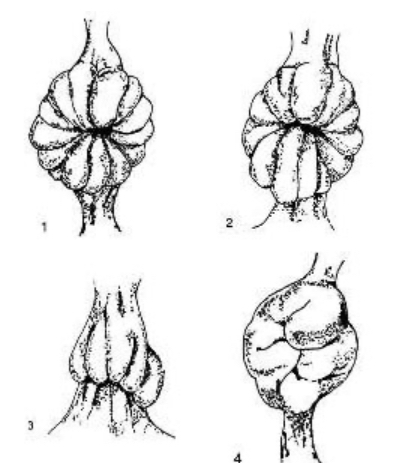
What happens to the mare cervix and vagina during ovulation (estrogen peak)
Match the number to the time in cycle
The cervix is at its lowest point on vaginal floor, numerous folds, soft, red/pink and moist, vagina wall will be purple, vascular and moist
1) Diestrus (10days after ovulation) 2) Estrus 3) End of estrus 4) Pregnat
What are the steps of the mare repro organ examination?
1) Wash and disinfect mares perineal area and wrap tail
2) Examine vulva for conformation, tone, discharge, bad conformation may lead to fecal contamination or pneumovagina
3) Examine clitoris and clitoral fossa
4) Palpate ovary should be examined between thumb and fingers follicles range between 2 - 6 cm
5) Insert vaginal speculum and use flashlight
6) Examine vaginal walls for color, inflammation, tumor, laceration and scars
7) Examine cervix for color and tone asap
What can we palpate/detrmine from a rectal examination in mare?
1) Palpate uterine body for pregnancy and uterine horns for soundness
When does a mare present for fertility evaluation?
1. Mating to a known fertile stallion, over successive cycles, without resultant pregnancy
2. Pregnancy loss
3. A mare with known physical orbehavioral reproductive abnormalities.
What are the following examination methods used to detect?
1) transrectal ultrasound examination
2) Uterine culture and cytology
3) Low volume uterine lavage
4) Endometrial; Biopsy
5) Cervical Evulation
6) Hysteroscopy
1) intraluminal uterine fluid caused by post mating induced endometriosis or uterine infections, reduce pregancy rates
2) look for endometristis, common false positive with vagina contaimnation, bacetria + neutrophils = uterin einfection
3) best during diestrus, dilated folds, saline injected into UH, massaged tne fluid collected look for mucus strains and cloudy contents, good at idnetfying gram (-) endometristis.
4) biposy at base of UH best method send to pathologust & repro specilaits in formalin
5) look for lacerations and dmaage to mucle
6) endoscope in uterus and can collect biopsy
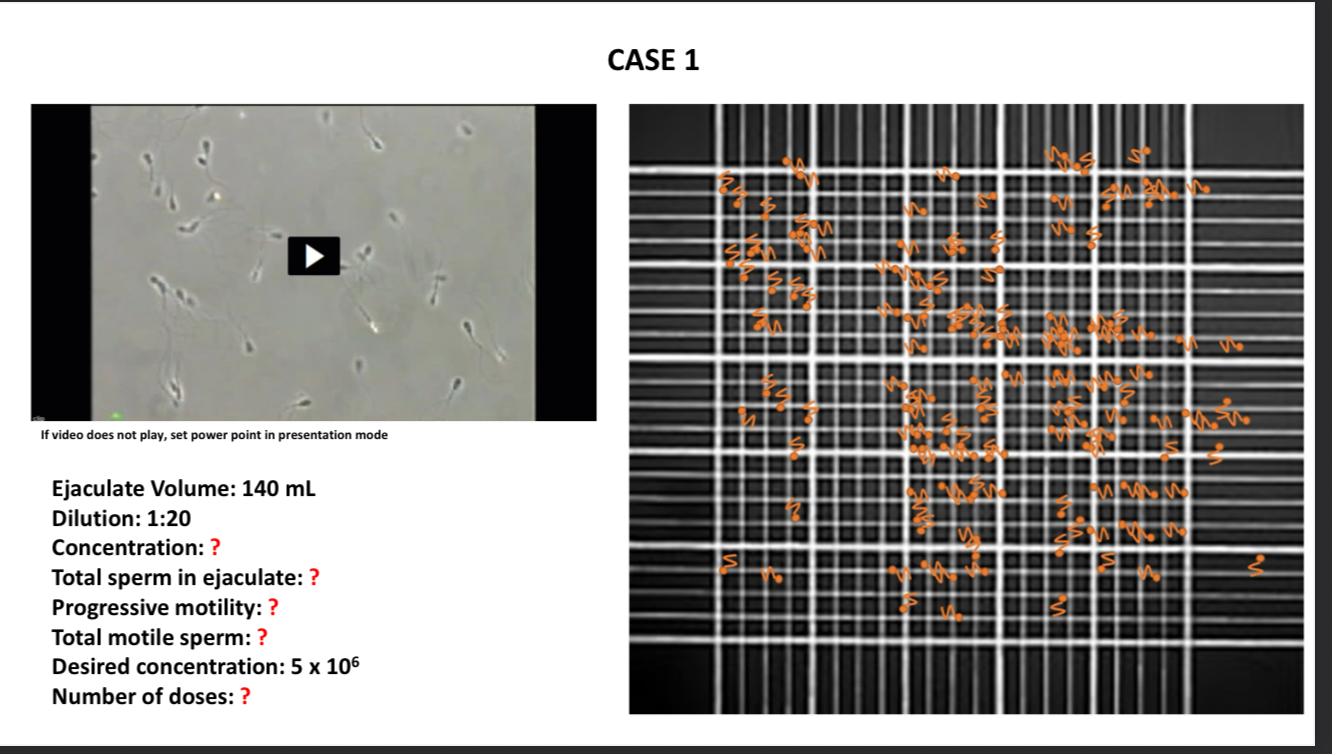
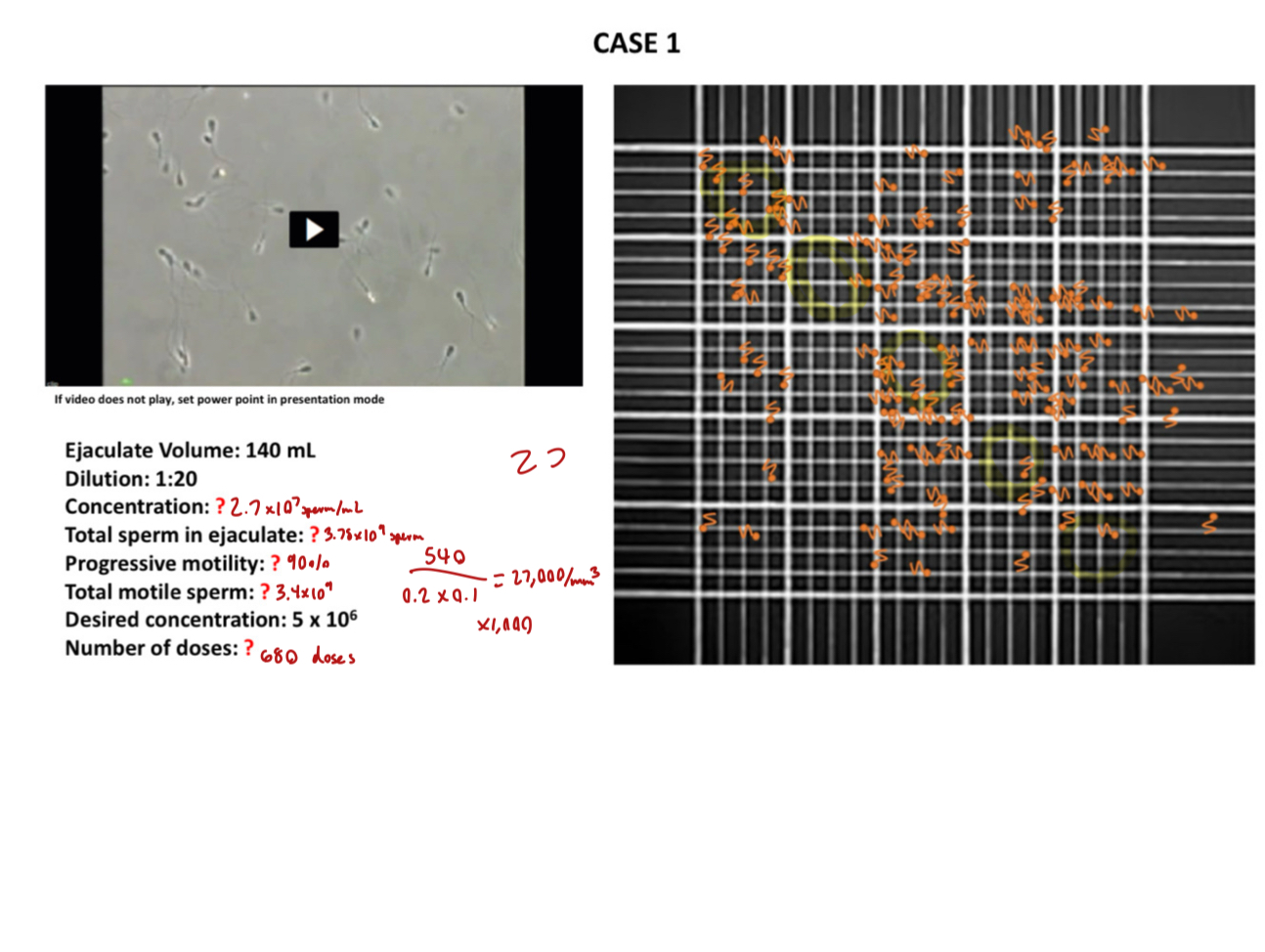
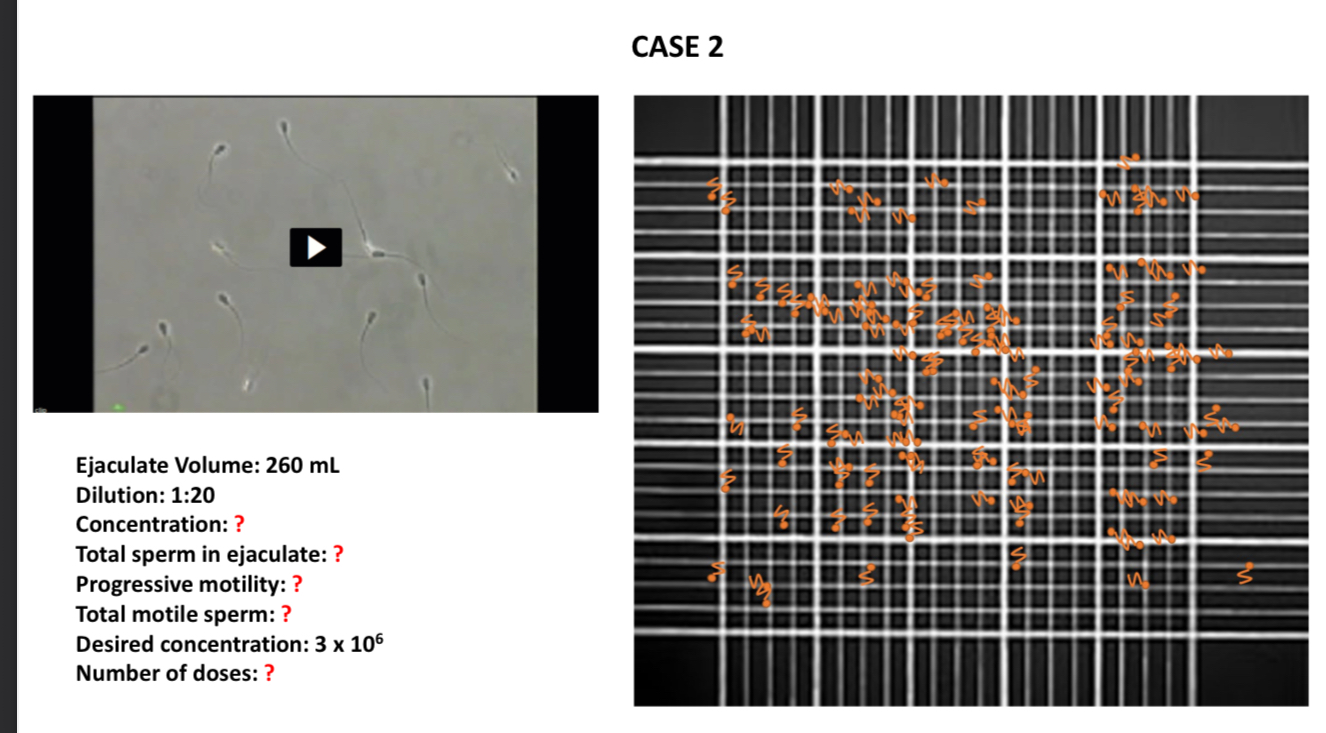
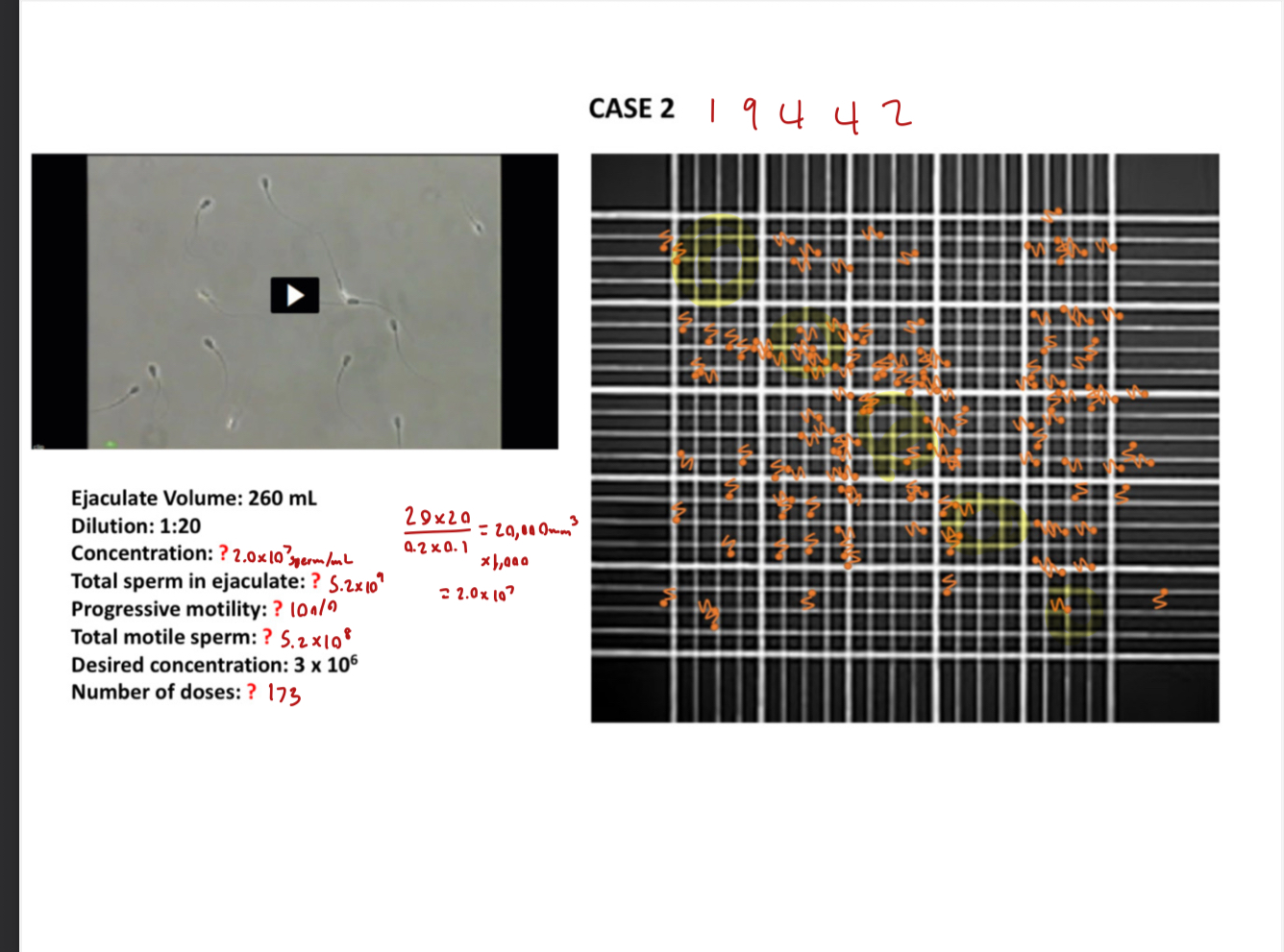
Semen Collection: AI and Electroejaculation
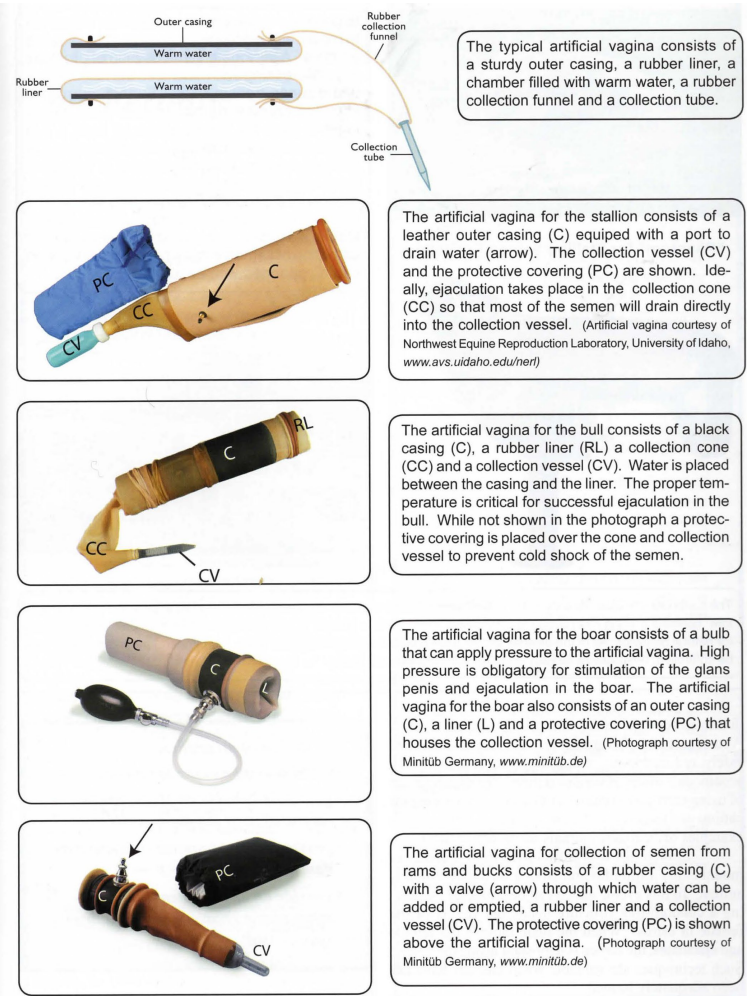
Artificial vagina: device that simulates vaginal conditions of a female in estrus.
• Artificial vaginas consist of an outer casing fashioned of reinforced rubber and a liner that is generally made of rubber that can be lubricated.
• Temperature and pressure are controlled by the water that is placed between the casing and the liner.
• One end of the artificial vagina is attached to a funnellike cone that in tum is attached to a collection vessel, usually a non-breakable graduated test tube.
• Males that are to be collected with an artificial vagina need some form of training. •
Electroejaculation: electrical stimulation of the accessory sex glands and the pelvic urethra. Electroejaculation is generally used in males of high genetic value that cannot physically perform mounting and ejaculation. In the beef industry, electroejaculation is used in range bulls
Semen Presrevation
Extender: isotonic, buffer and nutrients
Fresh best used for horses, dogs and swine, chilled last 2-5 days, slow temp decline, bull and stallion at 5C, boar at 18C due to difference in lipid compstion of sperm membranes, frozen in liquid nitrogen used in cattle and sheep, needs cyroprotecnat for >1wk
Bull Breeding Soundness Evaluation (BSE) Includes
physicla examination: general helat, BCS, look for feet, teeth, legs and eye abnormalties
Reproductive exam: exam scrotum, testicles, peis and prepuce, take scrotal cirumfernce (>30cm = sperm cell output) and extend penis via electroejaculator and exam per rectu to exam internal penis, vas dererns and accessory sex glands
Collection and axmination of semen: sperm morphology (70% normal), soerm motility (30%), volume, color, vigrous swirl suggets mtility,
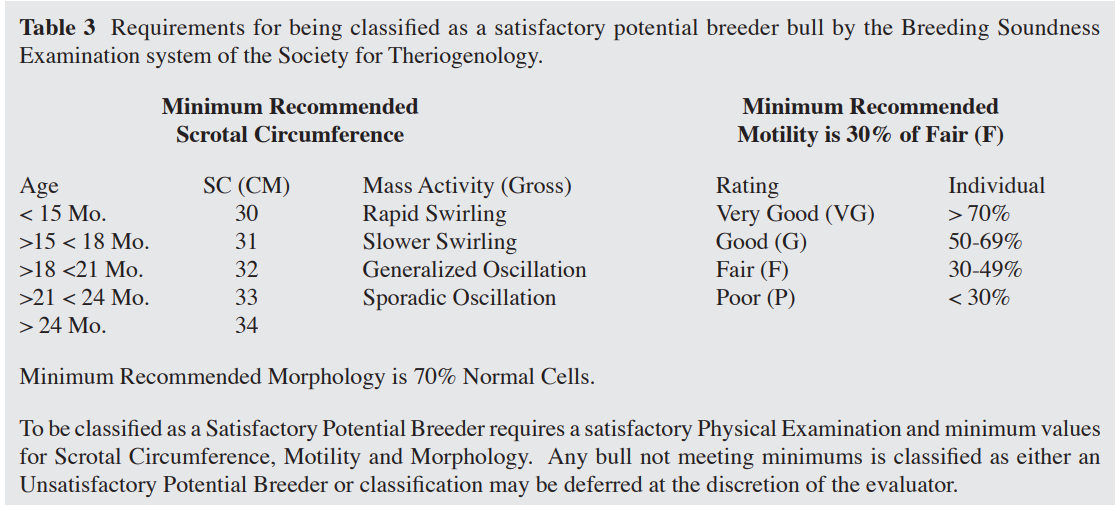
Test to determine sperm fertility:
Computer, Hypoosmotic swelling test, sperm swell if intact, sperm zona binding abilities, chromatin strucutre, P4 receptor exposure and mitochodnrial function
Stallion BSE
General physical exam: BCS, confirmation, neurological function, discomfort mounting, back/joint pain, genetic diseases
Repro Exam: penis and sheath when washed, testicles measured using a set of calipers or ultrasonography, accessory sex glands and inguinal rings can be palpated
Testis V = LxHxW, daily sperm output: V x 0.024 - 0.76 = DSO, should be collected daily for 7-10 days before DSO
Semen evaluation: volume, concentration, motility, morphology, bacterial testing, keep semen at 37 degrees
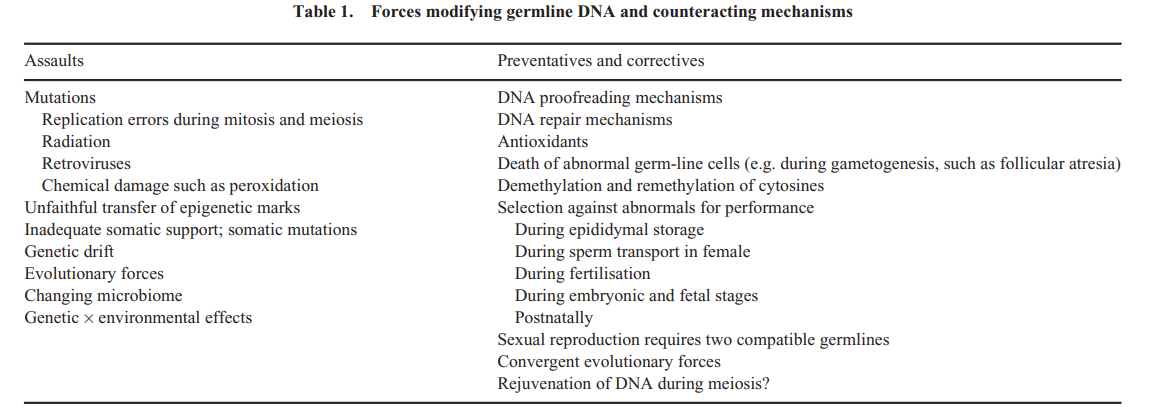
Assults and prevention/correcting germ line DNA
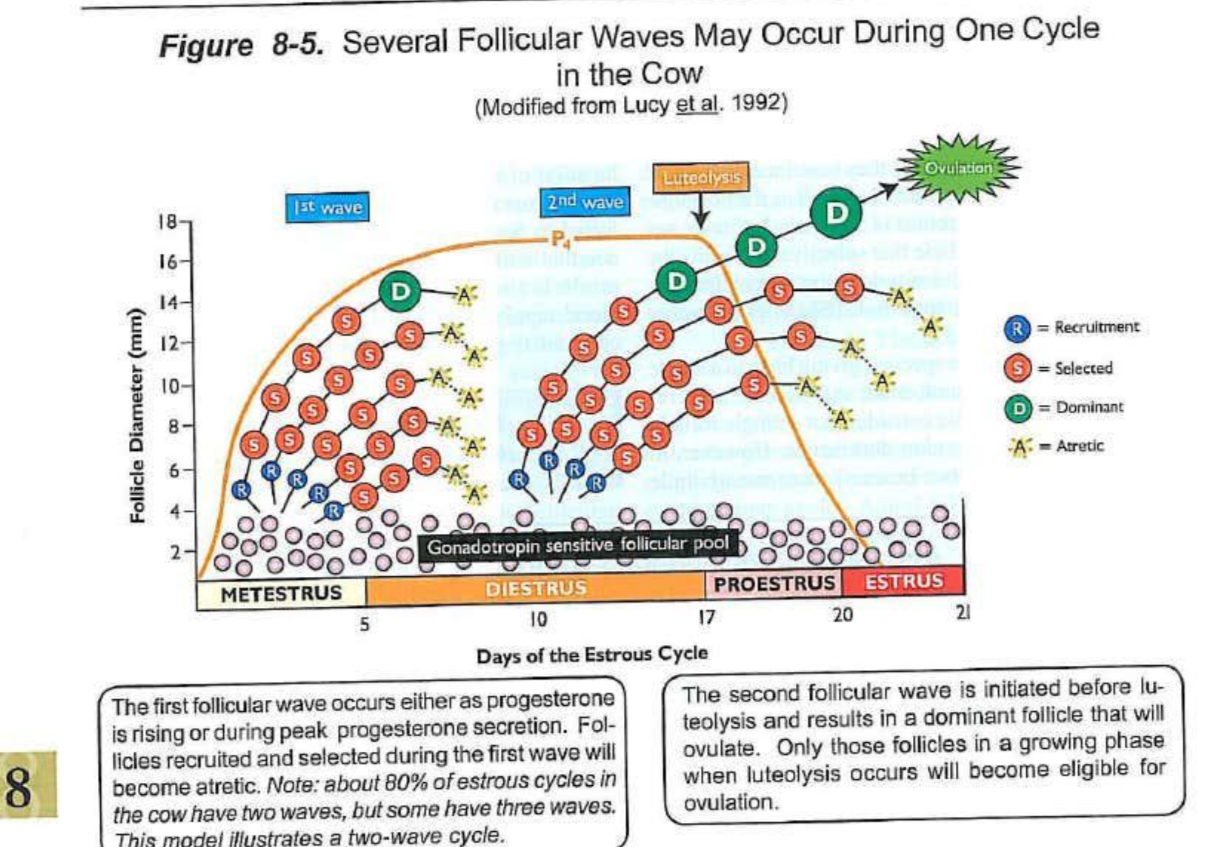
How many days is each stage and what happens
Metestrus 2-5: group of follicle recruited
Diestrus: 10-12: 2nd wave
Proestrus: luetolyiss at beginning
Hormones of each stage