L31 - Neurons: Regular Neurons
 Call Kai
 Learn
Learn Practice Test
 Spaced Repetition
 Match
Match Flashcards
 Knowt Play
1/6

There's no tags or description
Looks like no tags are added yet.
Name | Mastery | Learn | Test | Matching | Spaced | Call with Kai |
|---|
No analytics yet
Send a link to your students to track their progress
7 Terms
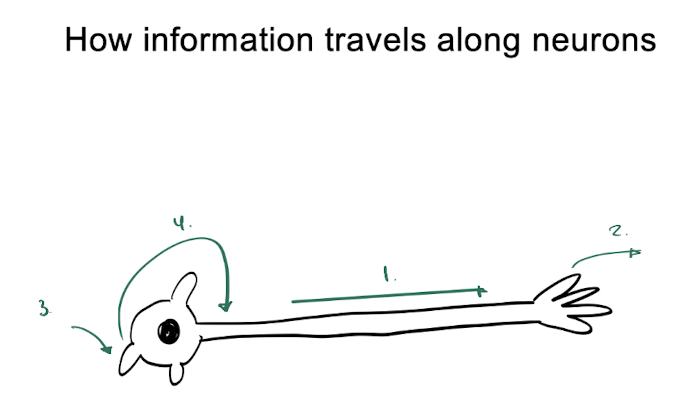
overview
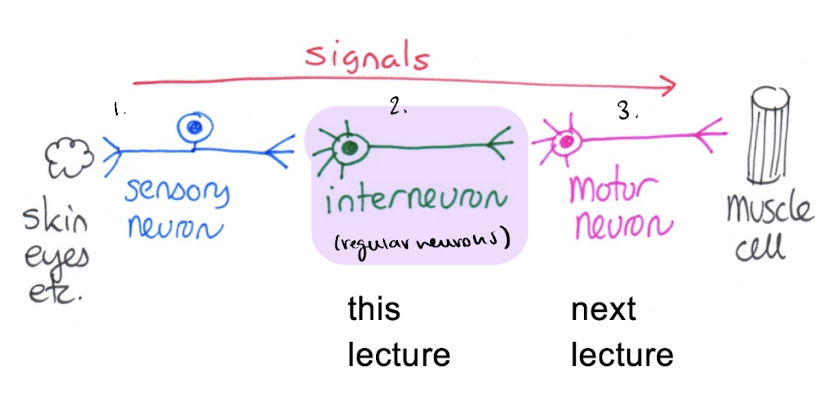
3 types of neurons:
sensory
interneuron (regular neurons)
motor neuron
Synapses
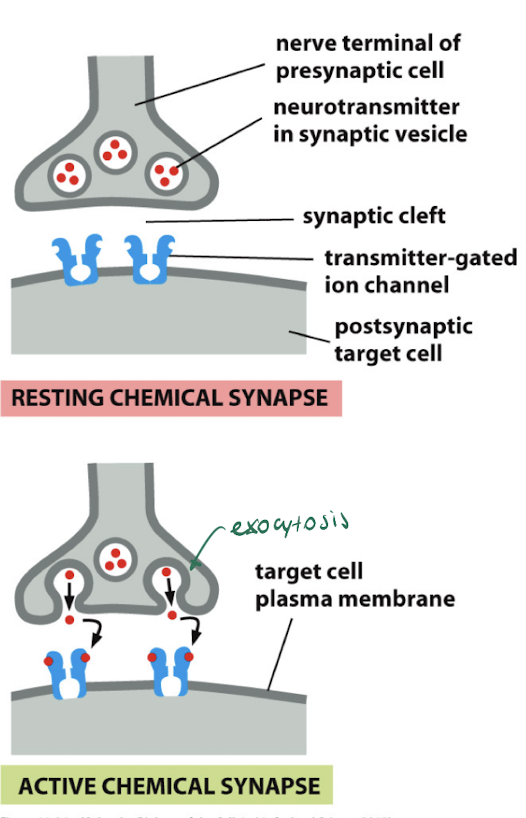
= how neurons send signals to adjacent cells
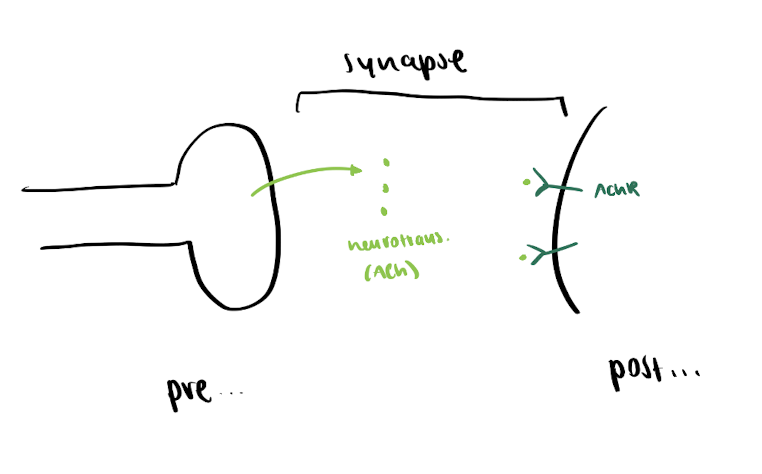
Chemical Synapses = export of a chemical (neurotransmitter)
neuron → neuron or neuron → muscle cell
Components:
neurotransmitters = small organic molecules (signal molecules)
ex. acetylcholine (ACh)
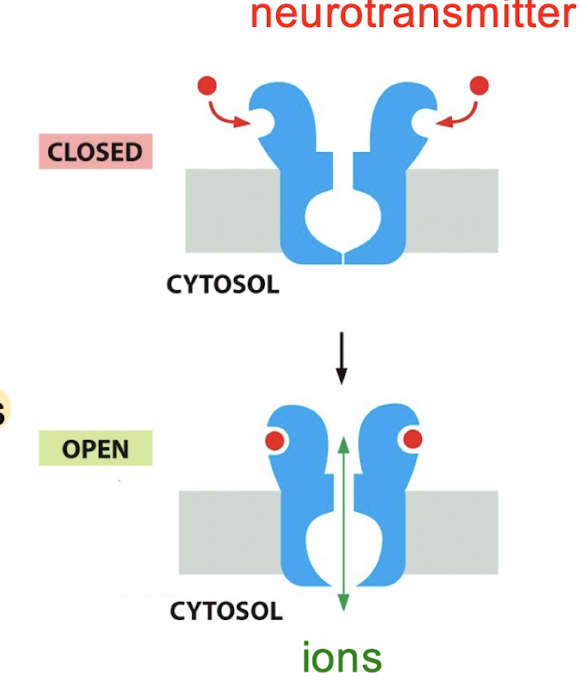
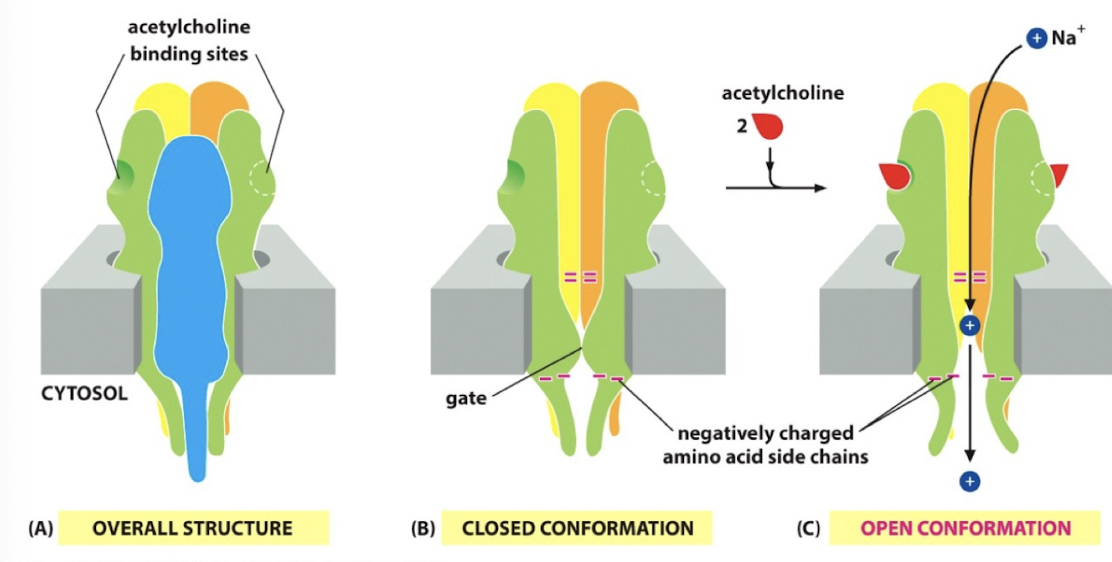
neurotransmitter receptors = most are ion channels
transmembrane w multiple alpha-helices
ex. acetylcholine receptor (AChR) - a sodium channel
Release of neurotransmitters (by Presynaptic neurons)
resting
polarized membrane
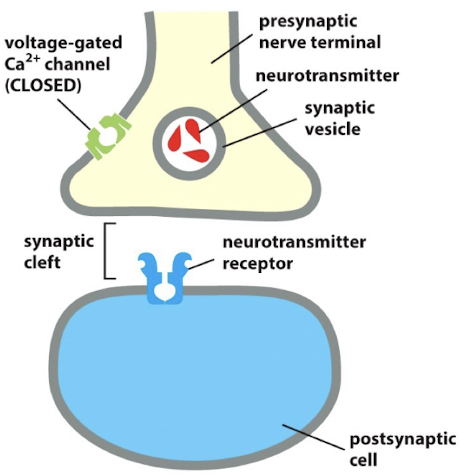
vesicles close to plasma memb
release
membrane depolarizes
Ca2+ channels (voltage-gated) open: Ca2+ enter presynaptic neuron → activates SNAREs (indirectly)
vesicles bind to plasma memb → release neurotransmitters
recovery
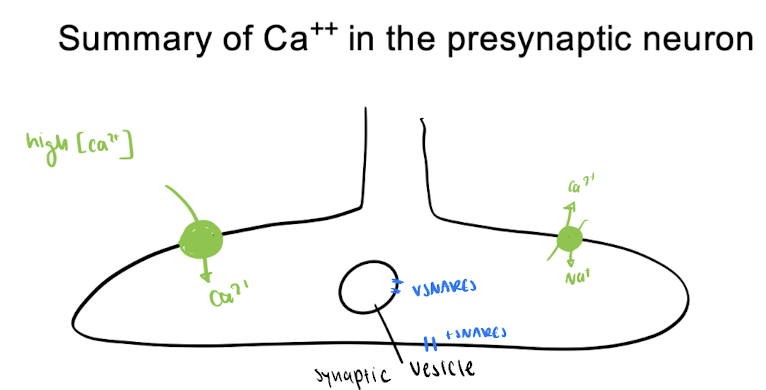
Ca2+ channels (voltage-gated) close when membrane repolarizes
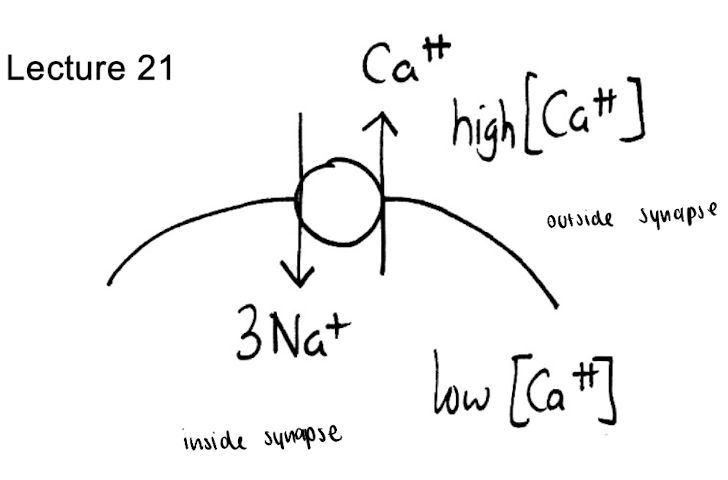
Ca2+ is exported by sodium calcium exchangers (from [low] → [high])
membrane is recovered by:
pinocytosis or kiss-and-run exocytosis
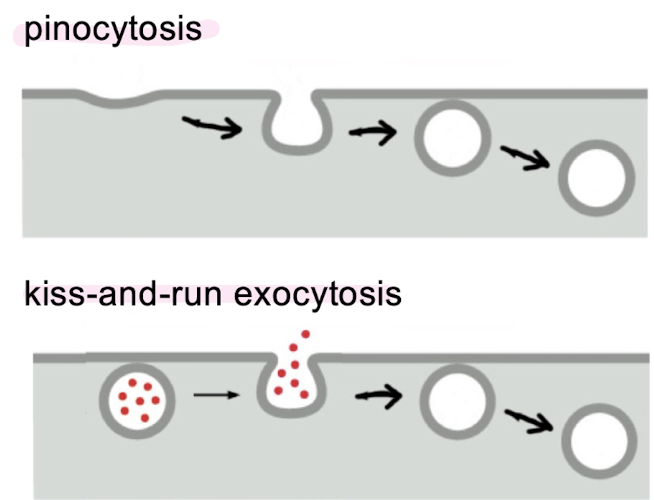
→ empty vesicles are sent back to cell body & refilled locally
Reception of neurotransmitters (by Postsynaptic neurons)
ion gradients are ready: high Na+ & Cl- outside cell & high K+ inside cell
receptors:
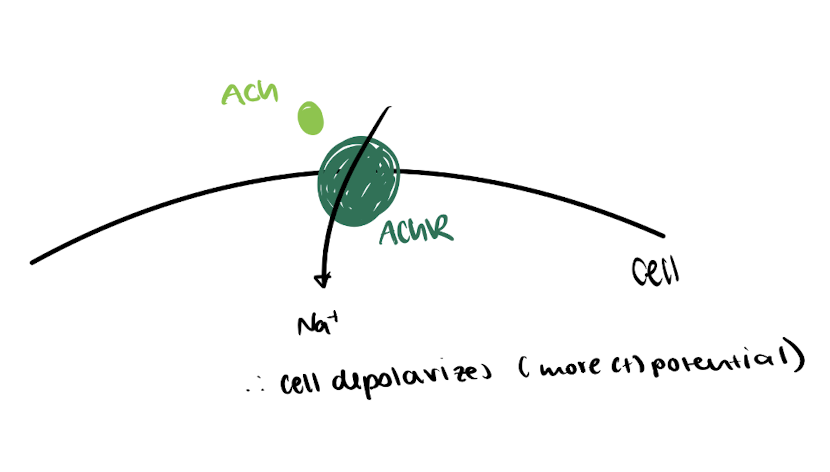
AChR = acetylcholine-gated Na+ chanel (EXCITATORY synapse)
Na+ enters cell → cell depolarizes
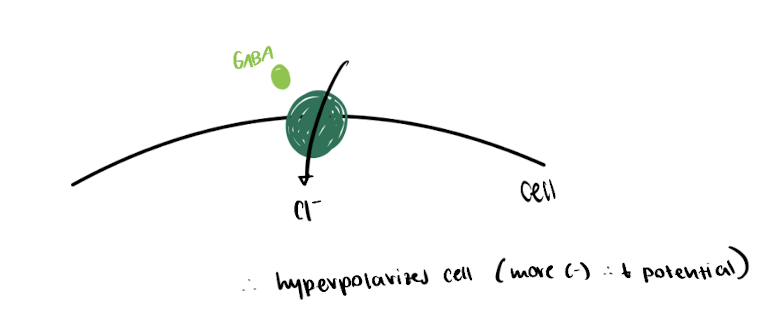
GABA receptors = GABA-gated Cl- channel (INHIBITORY synapse)
Cl- enters cell → membrane hyperpolarizes
recovery
receptors/channels close when neurotransmitters are removed from synaptic cleft by:
diffusion, degradation (by enzymes), or reuptake
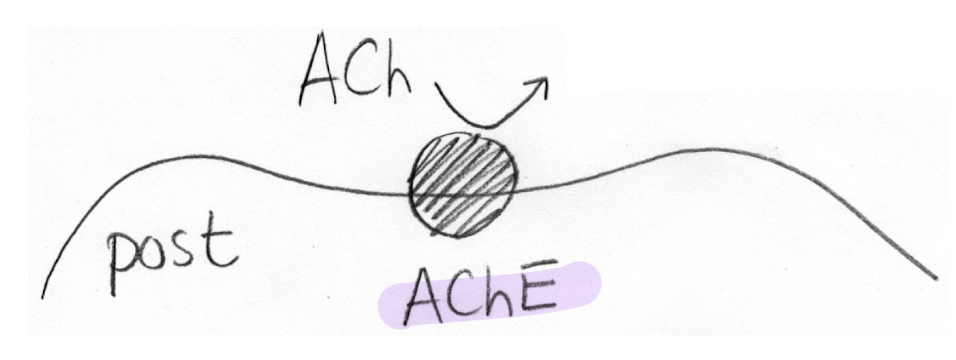
ex. ACh is removed by degradation of ACh by AChE (enzyme) on postsynaptic cell
Integration of Signals (in Postynaptic neurons)
synapses:
contact the dendrites & cell body
are excitatory: cause depolarization
are inhibitory: cause hyperpolarization
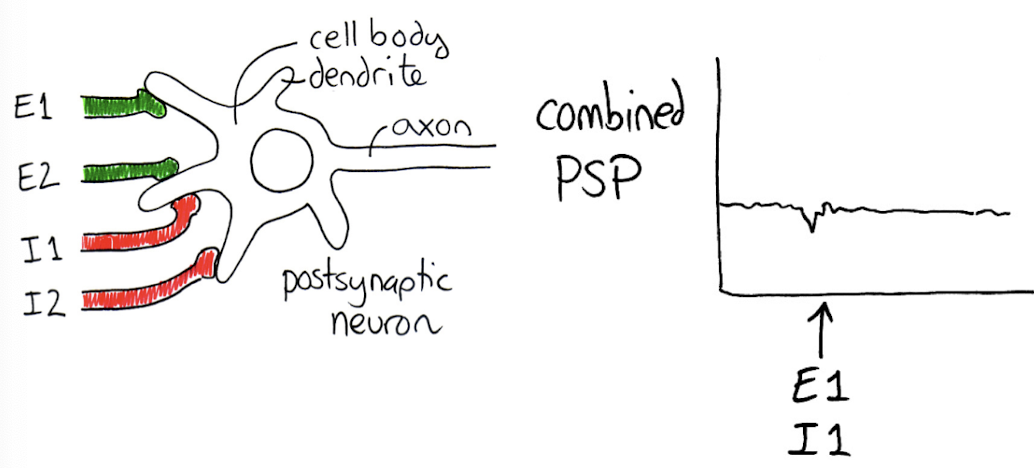
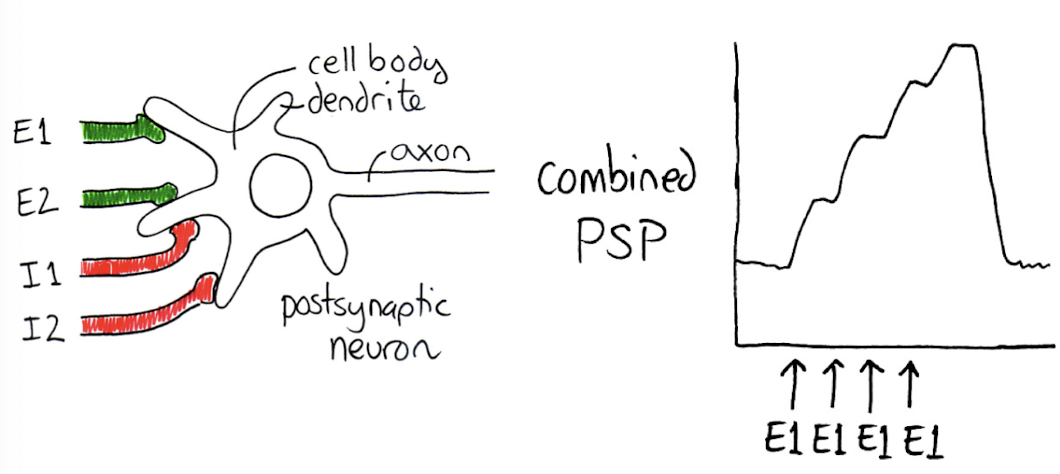
each active synapse generates a postsynaptic potential (PSP)
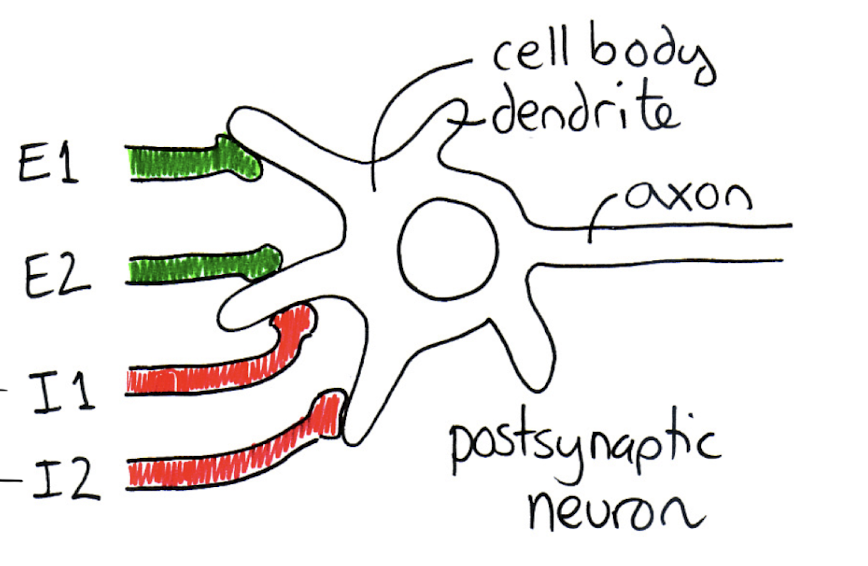
Spatial Summation = combines PSPs from diff presynaptic neurons @ SAME time
Temporal Summation = combine PSPs from one presynaptic neuron @ DIFF times
Generation of Output (by Postsynaptic neurons)
PSPs → AP ] via the axon hillock
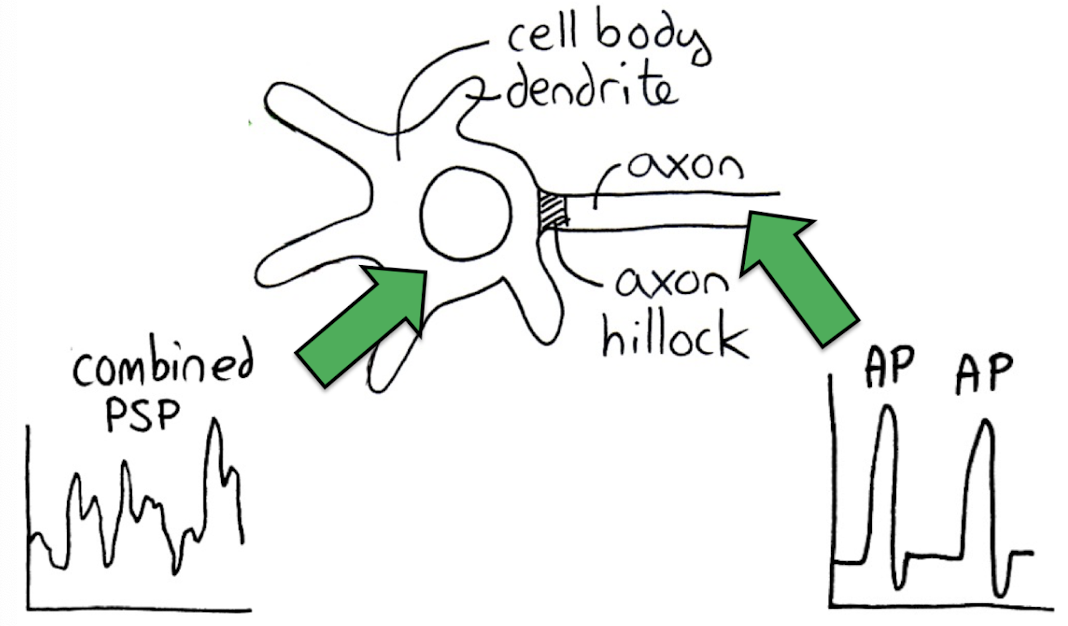
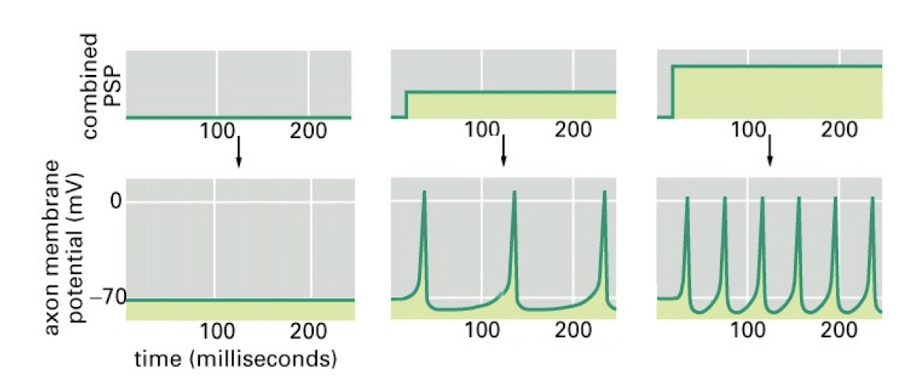
Relationship b/w combined PSP & APs:
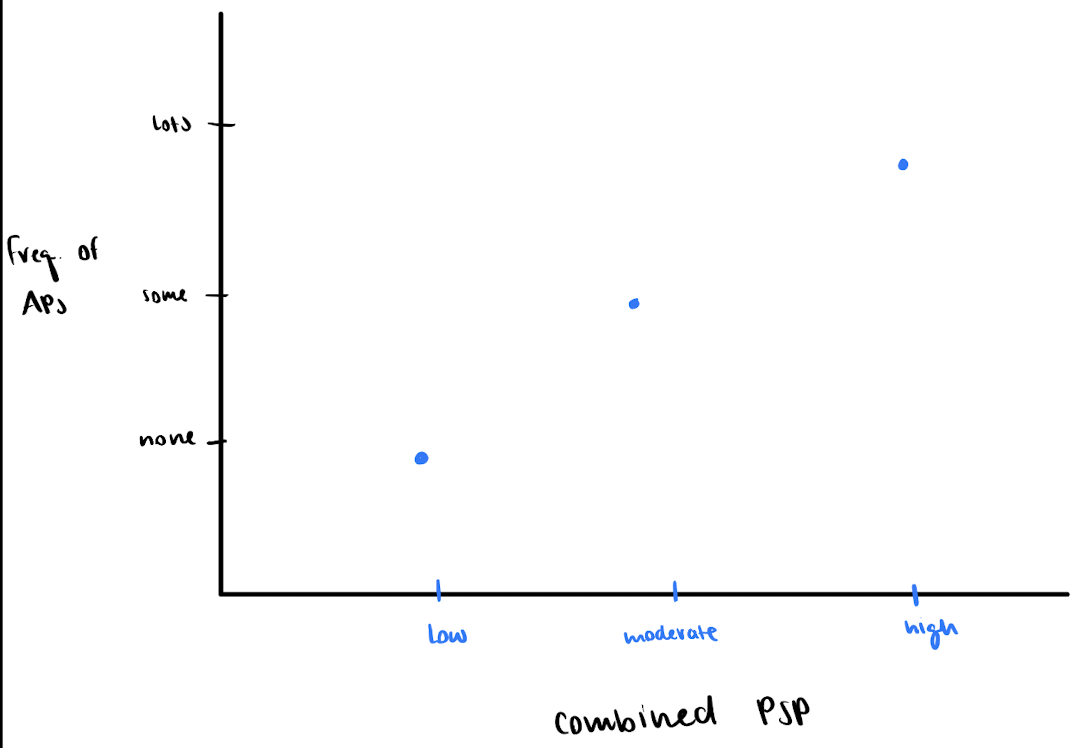
low combined PSP : NO action potentials
moderate combined PSP : infrequent action potentials
high combined PSP : lots of action potentials
→ magnitude of the combined PSP → frequency of action potentials
Examinable Content