The role of Jiang Qing and the imposition of revolutionary art and culture
 Call Kai
 Learn
Learn Practice Test
 Spaced Repetition
 Match
Match Flashcards
 Knowt Play
1/5

Earn XP
Description and Tags
Name | Mastery | Learn | Test | Matching | Spaced | Call with Kai |
|---|
No analytics yet
Send a link to your students to track their progress
6 Terms
What did Jiang Qing establish?
A rigid form of censorship which prevented any work across the entire field of arts from appearing in public until it had satisfied her criteria of cultural purity. Most western influences were banned because of their bourgeois origins.
What did Jiang Qing allow and why?
Piano music and oil paintings were allowed because they suited her own personal taste.
What were the rules for art and culture?
Only works that related to contemporary Chinese themes were permitted, so traditional stories had to be updated and put into a modern context.
How did Jiang Qing take advantage of her power?
She used it to pursue personal vendettas against her many enemies from the past including actresses who had won roles ahead of her in the 1930s and those who knew compromising details of her early career.
What did Jiang commission?
A set of 8 opera ballets, each of which symbolised the triumph of heroic workers over their class oppressors.
They were the only form of theatrical entertainment available and were broadcast across the radio and used in schools
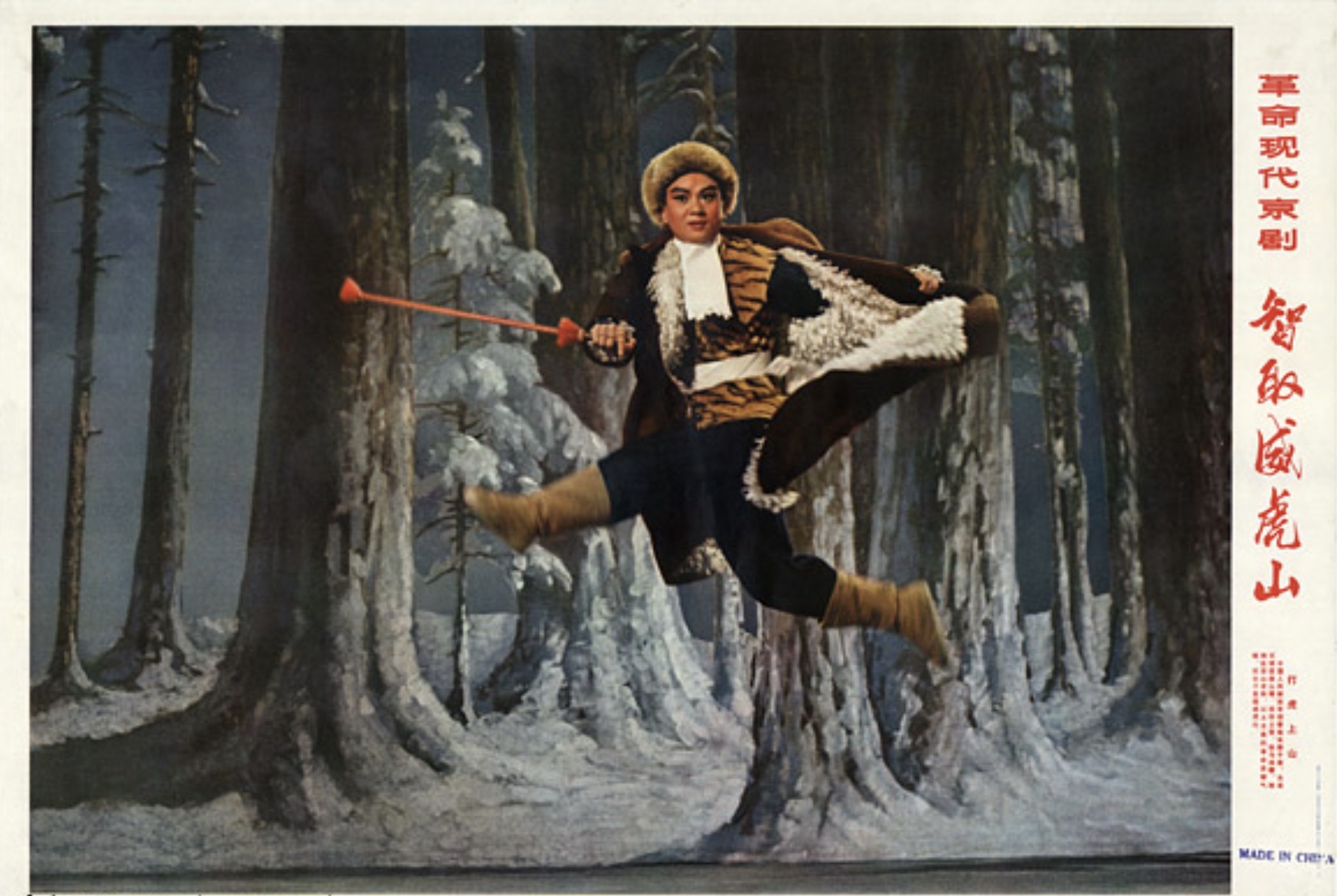
Give an example of an opera made into a film
Taking Tiger mountain by Strategy which had received 7.3 billion viewings