Endocrine system
 Call Kai
 Learn
Learn Practice Test
 Spaced Repetition
 Match
Match Flashcards
 Knowt Play
1/34

There's no tags or description
Looks like no tags are added yet.
Name | Mastery | Learn | Test | Matching | Spaced | Call with Kai |
|---|
No analytics yet
Send a link to your students to track their progress
35 Terms
Endocrine system composed of
Ductless endocrine glands/ cells that synthesize and secrete hormones into the blood stream
Ligrans role in endocrine
Chemical messengers that binds to receptor and signal for respond
Functions of Endocrine Sytem
Regulating development, growth and metabolism
Maintaining blood composition and volume
Controlling digestive processes
Controlling reproductive activities
Endocrine glands
Pituitary glands
Pineal Glands
Thyroid glands
Parathyroid glands
Adrenal glands
Types of stimulation of endocrine glands
Hormonal stimulation
Humoral Stimulation
Nervous System stimulation
Hormonal stimulation definition
Gland cell releases its hormone when some other hormone binds to it
Humoral stimulation
Gland cell releases its hormone when there is a certain change in levels of nutrient or ion in the blood
Nervous System stimulation
Gland cell releases its hormone when neuron stimulates it
Circulating hormone
Transported throughout the blood stream
Local Hormone
Signaling hormones that do not circulate in the blood
Paracrine
Bind to neighboring cells
Autocrine
Bind to themselves
What is steroid hormone
Lipid-soluble molecules synthesized from cholesterol
Type of steroid hormones
Gonadal steroid hormones: Estrogen and Testosterone
Adrenal Cortical hormones: Aldosterone, Cortisol, Androgens
Calcitriol- active form of vitamin D
What is biogenic amines (Monoamines)
Modified amino acids
Water soluble ex) thyroid hormone (non-polar)
Types of monoamines
C atecholamines :Epinephrine, Norepinephrine, dopamine
Pineal Gland: Melatonin
Thyroid Hormones: T3 (active), T4 (inactive)
Types of proteins hormone
Antidiuretic hormone
Insulin
Glucagon
Growth hormone
Erythropoietin
What is Eicosanoids
Local hormones formed from fatty acids (within phospholipid bilayer)
Types of Eicosanoids
Prostaglandins
Thromboxanes
Leukotrienes
Prostaglandins
Stimulate fever, induce stomach acid secretion, trigger inflammatory cascade, stimulating pain pathways.
Thromboxanes
Hemostasis (blood clotting, vascocontriction, inflammation
Leukotrienes
Inflammation and allergic reactions
How to create Eicosanoids
Phospholipase A2 —> removes arachidonic acids from plasma membrane —> other enzymes conver arachidonic acid into the Eicosanoids
What is arachidonic acid
20-carbon fatty acid
Mechanism of transport hydrophilic
Homrones freely travel though blood stream, doesn’t require carried.
Mechanism of transport hydrophobic
Hormones required carried protein to travel the blood stream. Via Albumin
Controling hormones by
Release: Blood and hormones concentration increases
Elimination: Blood and hormones concentration decreases
Enzymatic degradation in liver cells
Removal from blood via kideny excretion
Uptake by target cell
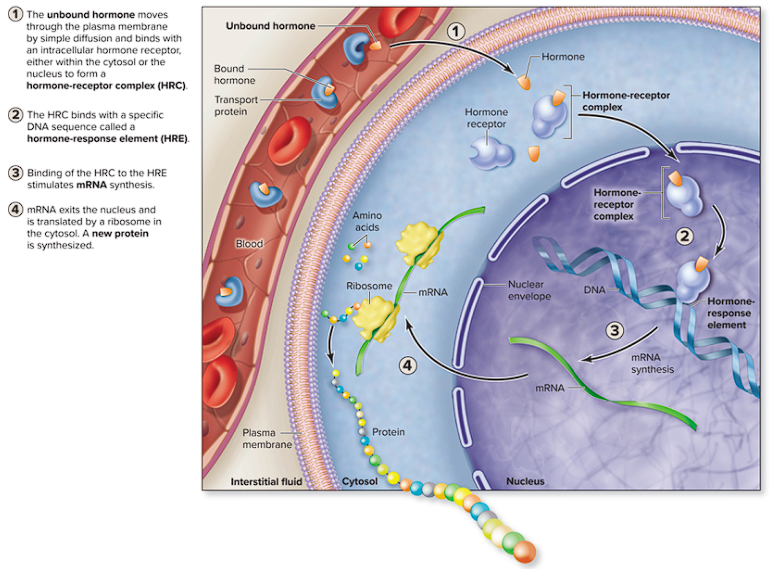
Hydrophoic hormones mechanism of action
Lipid-soluble hormones diffuse through cell membrane, then bind to receptor (cytosolic, nuclear).
Hormone + receptor = hormone receptor complex
Hormone receptor complex bind to hormone response element (HRE)
Will influence gene expression
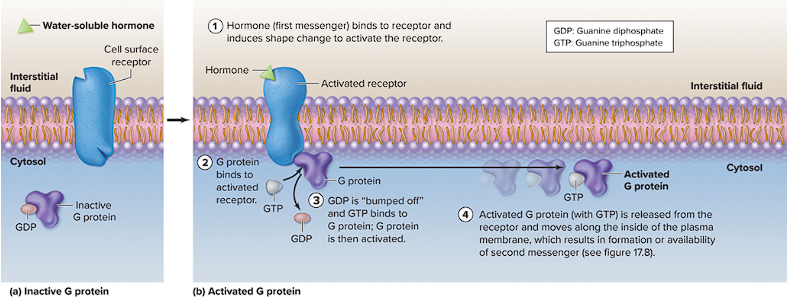
Hydrophilic hormones mechanism of action
Water-soluble hormones binds to plama membrane receptor, start signal and amplified 2nd messenger cascade
GTP replaces GDP, activating intracellular G-Protein
G-Protein activation causes activation of membrane enzyme such as adenylate cyclase or phospholipase C
Activated enzymes catalyzes formation of 2nd messengar - carry out function of hormone
Modify cellular activity
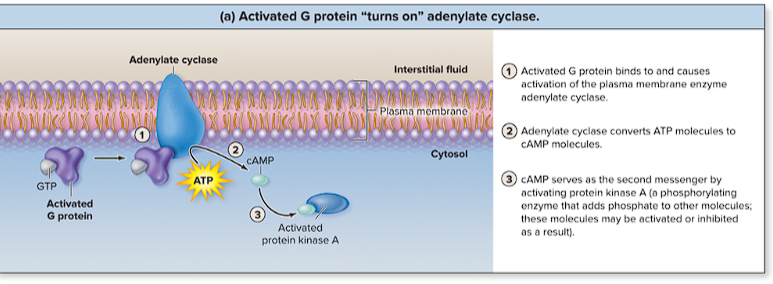
Adenylate Cyclase
Come from activatied G-Protein
Function as increases formation of 2nd messenger “cAMP”
cAMP activated protein kinase A for phosphorylation of intracellular molecules
Phosphorylation come from activation or inhibition of molecules
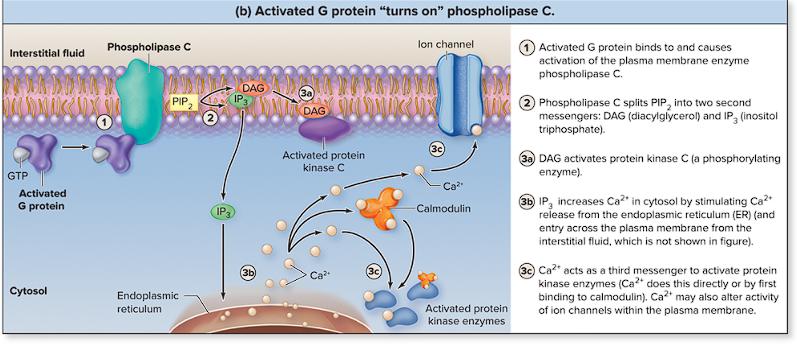
Phospholipase C
From activated G-Protein
Function as split PIP2 into Diacylglycerol (DAG) and inositol triphosphate (IP3)
DAG- remain in plasma membrane and activated protein kinase C for 2nd messenger cascade
IP3- Diffuses into cytosol, increase concentration of Ca2+ “Ca+ is 3rd messenger that affect plasma membrane permeability and activates protein kinase”
Types of receptor on target cell
Up-regulation: increases receptor when blood and hormone concentration is low
Down-regulation: decreases receptor when blood and hormone concentration is high
Synergistic response
1 hormones reinforces activity of another hormone
ex) estrogen + progesterone
Permissive response
1 hormone requires for activity of another hormone
ex ) oxytocin “milk sender” require prolactin “milk maker”
Antagonistic response
1 hormone opposes activity of another hormone
ex) glucagon increases blood sugar while insulin lower