Bio 206 Mini Exam 2 (plant circulation)
 Call Kai
 Learn
Learn Practice Test
 Spaced Repetition
 Match
Match Flashcards
 Knowt Play
1/28

Earn XP
Description and Tags
photo
Name | Mastery | Learn | Test | Matching | Spaced | Call with Kai |
|---|
No analytics yet
Send a link to your students to track their progress
29 Terms
Passive transport
Energetically downhill
Spontaneous process (thermodynamically favorable)
simple or facilitated diffusion (transmembrane channel protein that's specific to ion or molecule)
Active Transport
Energetically “uphill”, against gradient
Requires metabolic energy (often ATP hydrolysis)
Sodium-potassium pump, changes conformation, accepting and releasing
Plants use what to move water. minerals and sugars through specialized tubes?
pressure gradient and pressure potentials
xylem (water and inorganic nutrients) and phloem (sugars like sucrose, can store complex comps.)
Features evolved to increase surface area for gas exchange
spongy mesophyll (photosynthetic parenchyma, higher SA:V ratio, CO2 let in by stomata), roots, gills (water must be brought to them), alveoli (in animal lungs)
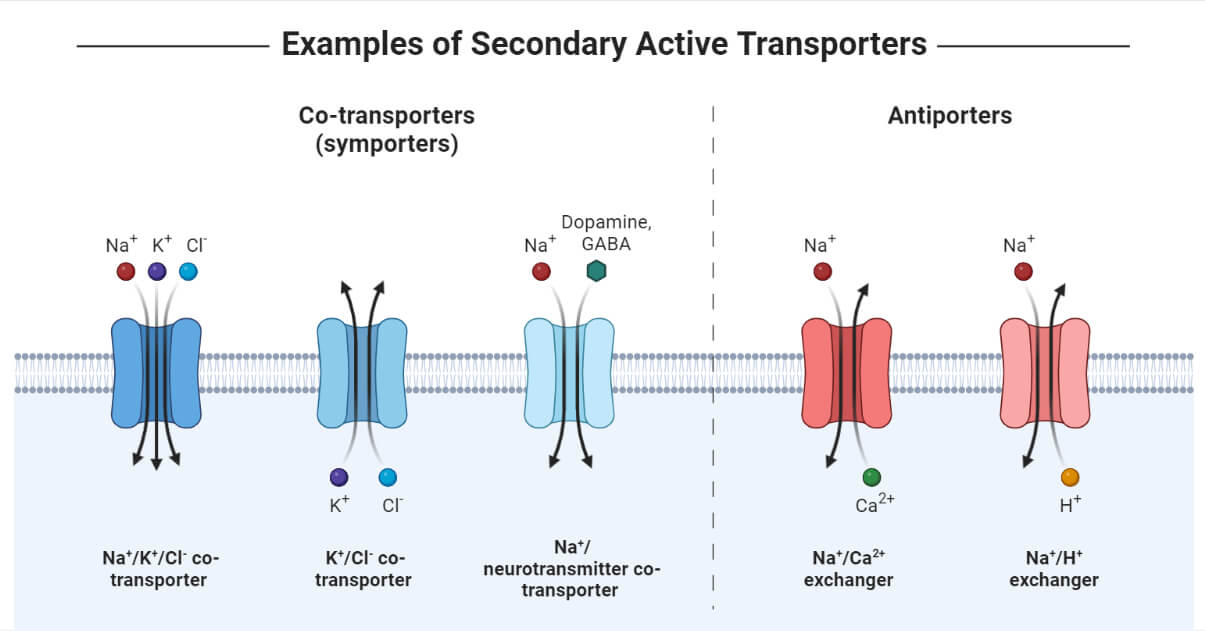
Secondary active transport
Two substances move (one uphill, one down)
Symporter (same direction across cell membrane)
Antiporter (opposite directions)
Fick’s law of diffusion for gases
Rate of diffusion = k x A x ((p2 - p1)/D)
K = diffusion constant, depends on solubility of gas and temperature
A = surface area for gas exchange
P = difference in partial pressures of gas on either side of gas-exchange surface
D = distance (thickness of gas-exchange surface)
ATP driven proton pump three gradients
pH, concentration, and electrical gradients
Solution
homogeneous, liquid mixture containing several substances
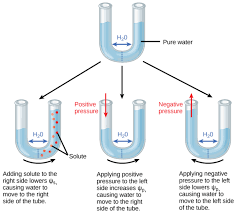
Water potential
potential energy, the ability for water to do work, measure of free energy (megaPascals, Mpa)
Ψ = Ψs + ΨP
Water wants to go to areas of low water potential, where is does less work
Solutes
dissolved substances, minor component
Solute potential
Tendency for water to move in response to differences in solute concentration, always negative cus measured relative to the solute potential of pure water
Solute binds water molecules, removing free water.
Higher solute concentration = lower solute potential
hypertonic
more solutes, less water
hypotonic
less solutes, more water
Isotonic
equal amounts of solute on both sides of the membrane
Turgor pressure
pressure that is exerted by the fluid (eg water) against the cell wall
Water Potential In Soil?
In dry soils, water can’t flow freely and adheres to the soil, lowering water potential
In salt soils, the water binds to solutes, reducing water potential
Water-potential gradient
Water will always flow from high potential to low potential
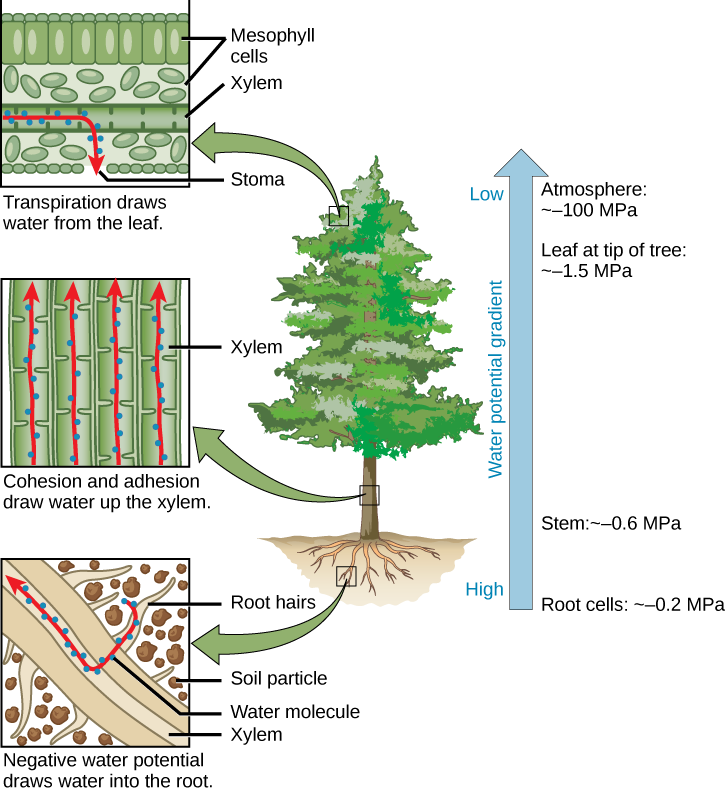
water flows from high potential at roots to low potential atmosphere in the leaves
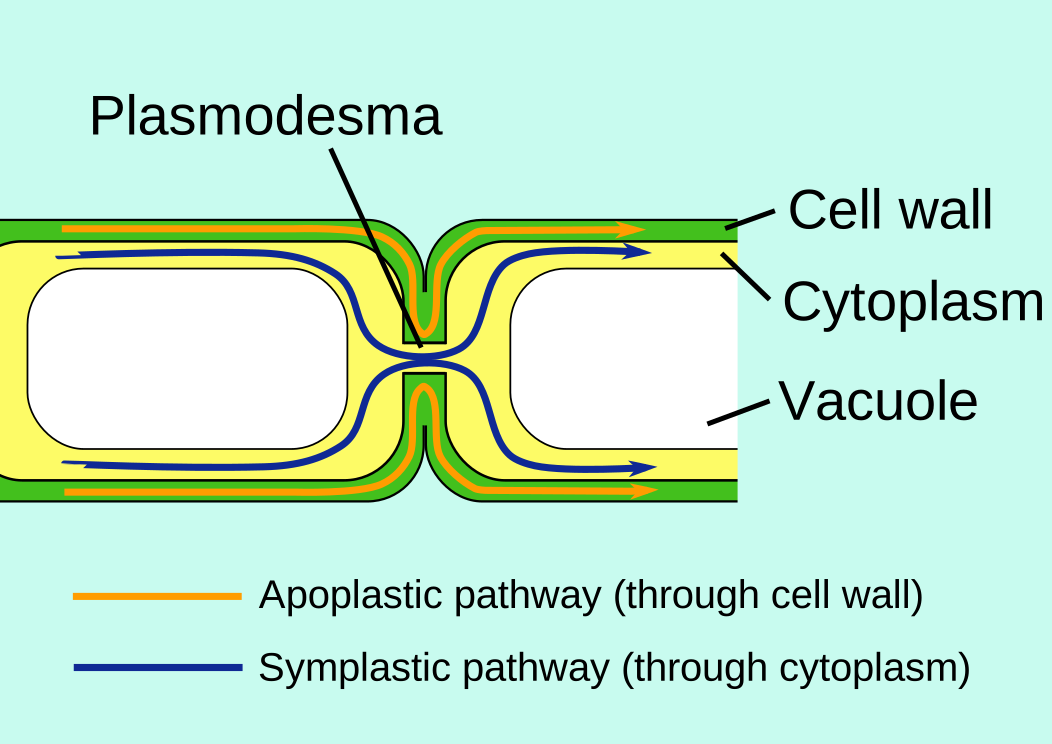
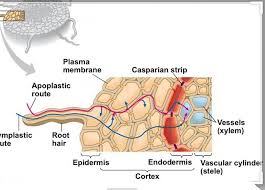
Symplastic route
water goes inside the plasma membrane, passes through symplast via plasmodesmata
Transmembrane route
water moves across membrane, often through aquaporin
Apoplastic route
outside plasma membranes, through apoplast
Casparian Strip
a narrow band of wax secreted by tightly packed Endodermal cells
Blocks apoplastic route, forces water cross at least two cellmembrane (regulates toxins)
Suberin: a waterproof barrier where endodermal cells contact each other.
Surface tension
minimize total surface area of air-water interface because of hydrogen bonds
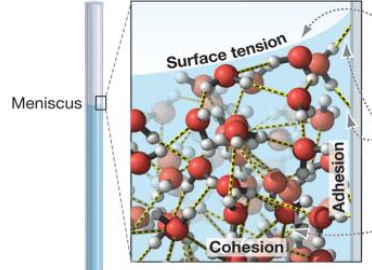
Cohesion
holds water molecules in the water column together, molecular attraction among like molecules
Adhesion
molecular attraction among dissimilar molecules
water attracted to glass is pulled up against the force of gravity
Translocation
movement of sugars by bulk flow in multiple direction through plant
Xylem
has traecheids and vessel elements (angiosperm only)
Moving water and minerals
Phloem
has sieve plates and companion cells
Move photosynthate (a sugar or other substance made by photosynthesis)
Cohesion-tension theory
Transpiration is the main driver of water movement in the xylem. It creates negative pressure (tension) at the leaf surface, drawing water from the leaf through the stomata.
Water from the roots is pulled up by the tension. Negative water potential draws water from the soil into the root hairs, then into the root xylem
Cohesion and adhesion draw water up the xylem.
Stomata
Waxy cuticle on leave can’t exchange gases like CO2, so there us a pore.
guard cells control opening and closing of stomata
Trichome (epidermis hairs) inside stomata reduce the chance of losing water
open when:
Blue light is sensed by protein or pigment which initiates photo receptors, which starts a proton pump moving H out of the cell, creates electrical gradient and solutes enter the cell
As solute concentration increases, solute potential decreases inside, water moves inside