GEOL 110
 Call Kai
 Learn
Learn Practice Test
 Spaced Repetition
 Match
Match Flashcards
 Knowt Play
1/11

There's no tags or description
Looks like no tags are added yet.
Name | Mastery | Learn | Test | Matching | Spaced | Call with Kai |
|---|
No analytics yet
Send a link to your students to track their progress
12 Terms
geologic time
The span of time since the formation of the Earth.
What is uniformitarianism?
that physical processes we observe operating today also operated in the past, at roughly comparable rates.
“the present is the key to the past”
weathering
combination of phenomena that corrode and break up solid rock,
eventually transforming it into loose debris.
physical weathering
breaks intact rock into unconnected grains or chunks known as clasts
what is chemical weathering
chemical reactions that alter or destroy minerals when rock comes in contact with water solutions or air
what are the types of chemical weathering?
Dissolution: Water serves as a solvent, so when it flows over or through rock, it slowly dissolves minerals. This process of dissolution affects primarily salts and carbonate minerals (Fig. B.6), but even silicate minerals can dissolve slightly.
Hydrolysis: During hydrolysis, water reacts chemically with minerals and breaks them down to form other minerals (lysis means loosen in Greek). For example, hydrolysis reactions transform feldspar and many other silicate minerals into clay.
Oxidation: Oxidation reactions in rocks transform iron-bearing minerals, such as biotite and pyrite, into a rusty-brown mixture of various iron-oxide and iron-hydroxide minerals. In effect, oxidation causes iron-bearing rocks to “rust.”
Hydration: Hydration, the absorption of water into the crystal structure of minerals, causes some minerals, such as certain types of clay, to swell. Such expansion weakens rock
viscosity
how resistance something is to flow
honey (more viscous), water (less viscous)
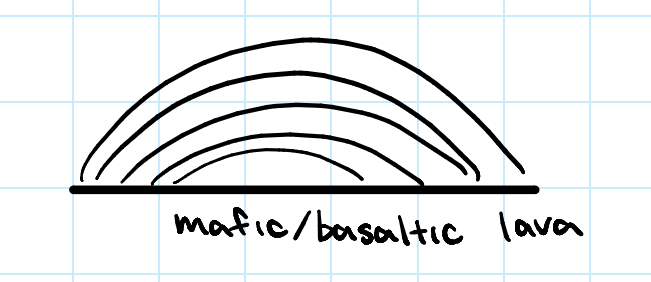
What are Shield Volcanoes?
broad and generally sloping
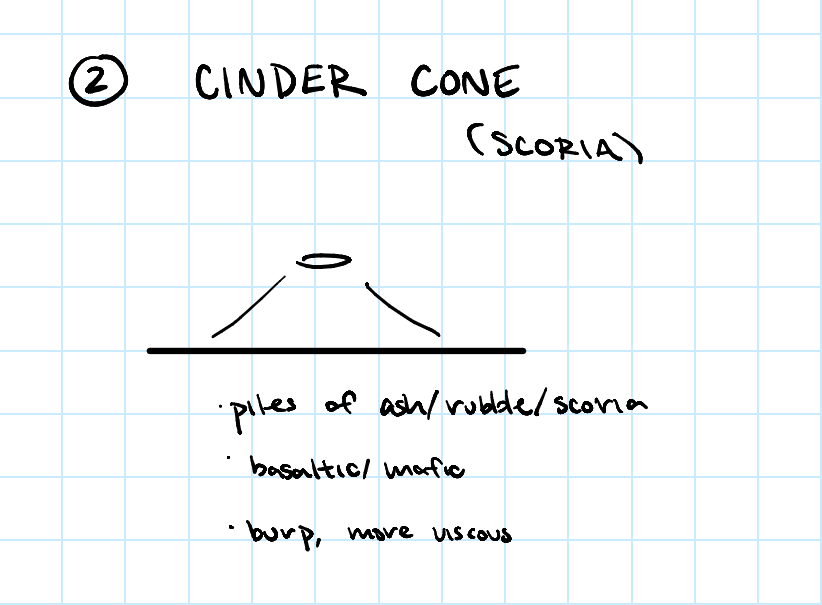
What is a cinder cone?
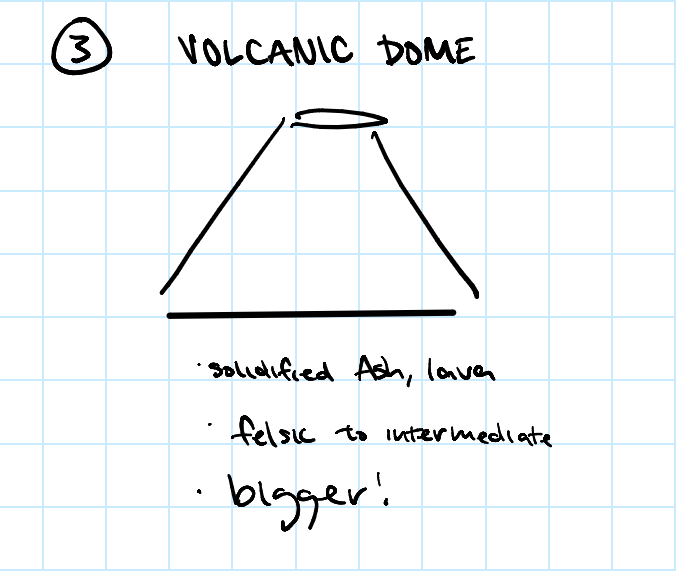
What is a volcanic dome?
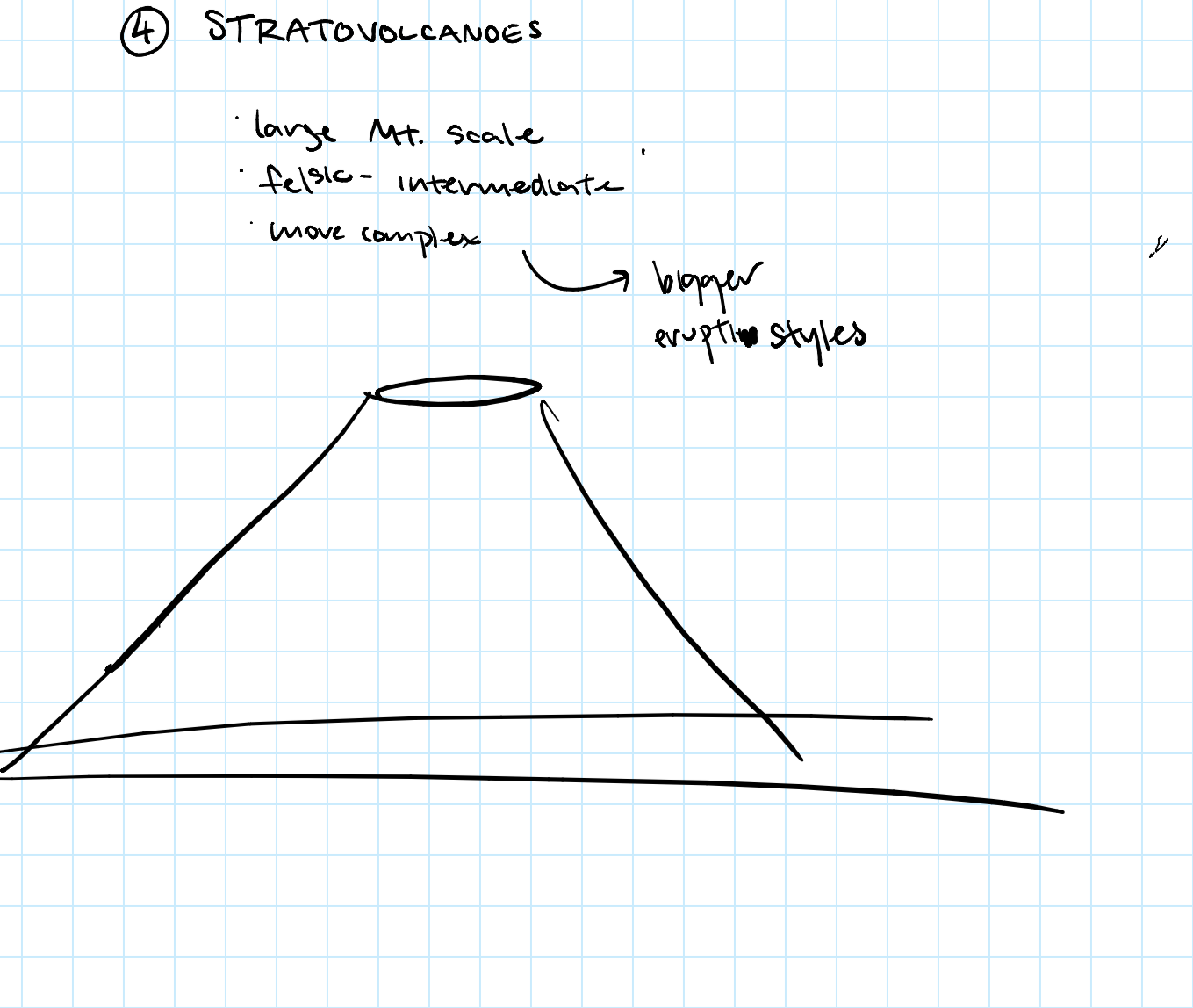
What are stratovolcanoes?
What are earthquakes?
release of seismic activity