Health Exam 4 - Musuloskeletal
 Call Kai
 Learn
Learn Practice Test
 Spaced Repetition
 Match
Match Flashcards
 Knowt Play
1/114

There's no tags or description
Looks like no tags are added yet.
Name | Mastery | Learn | Test | Matching | Spaced | Call with Kai |
|---|
No analytics yet
Send a link to your students to track their progress
115 Terms
Musculoskeletal system consists of?
bones, joints, and muscles
What are ligaments?
Bands connecting one bone to another
What is a bursa?
Enclosed fluid filled sac (viscous synovial fluid) that serves as a cushion
Ex: subacromial bursa of the shoulder
What is a fibrous joint?
Bones united by interjacent fibrous tissue or cartilage and do NOT move!
Where would fibrous joints be located?
In the skull
What is a cartilaginous joint?
Separated by fibrocartilginous discs and are slightly moveable
What would be an example of cartilaginous joints?
Vertebrae
What are synovial joints?
Freely moveable joints separated by one another and enclosed in a synovial membrane that secretes fluid
Are synovial joints vascular or avascular?
Avascular
What is protraction?
Moving body part forward, parallel to ground
What is retraction?
Moving body part backwards, parallel to ground
What is the function of TMJ?
Jaw function of speaking and chewing
What 3 motions are allowed from TMJ?
Open/close mouth
Gliding action for protrusion and retraction
Side to side jaw movement
How many vertebrae are there?
33
Where would you feel for the spinous processes?
Down midline of back
How many cervial vertebrae?
7
How many thoracic vertebrae are there?
12
How many lumbar vertebrae are there?
5
How many sacral vertebrae?
5
How many coccygeal vertebrae are there?
3-4
What final landmarks are located at the base of the neck?
C7 and T1
Where are T7 and T8 located?
Inferior angle of scapula
What is the curvature of cervical and lumbar?
Concave (inwards or anterior)
What is the function of the curvatures and intervertebral discs?
Allows spine to absorb shock
What is the Nucleus pulposus?
Disk center composed of soft, semifluid mucoid material
What are the motions for the vertebral column?
Flexion/ Extension
Abduction and rotation
What does the shoulder girdle consist of?
Humerus
Scapula
Clavicle
Joints and muscle
What is the glenohumeral joint?
articulation of humerus with glenoid fossa of scapula
Describe a ball and socket joint?
Allows for mobility
What kind of joint is the glenohumeral joint?
ball and socket
What does the subacromial bursa assist with ?
Abduction of the arm
What are the palpable landmarks to guide your shoulder examination?
scapula
Clavical
What are the 3 bony articulations of the elbow joint?
Humerus
Radius
Ulna of forearm
What are the palpable landmarks of the elbow joint?
Medial and lateral epicondyles of humerus and large olecranon process of ulna
What does condyloid action permit?
movement in two planes at right angles: flexion and extension, and side-to-side deviation
What is the function of the mid carpal joint?
Flexion
Extension
Some rotation
Where is the hip articulation located?
Between acetabulum and head of femur
What are the landmarks for a hip examination?
Illiac crest
Ischia tuberosity
Greater trochanter of femur
What are the 3 articulations of the knee joint?
Femur
Tibia
Patella
What is the largest joint in the body?
Knee joint (hinge joint)
What are the 2 ligaments that stabilize the knee?
Cruciate
Collateral
What is the function of the cruciate ligament?
Give anterior and posterior stability to help control rotation
What is the function of the collateral ligament?
Allows for medial and lateral stability and prevents dislocation
What are the lankmarks of the knee joint?
Quadriceps - anterior and lateral thigh
Tibial tuberosity - bony prominence in midline
Lateral and medial condyles of tibia
Medial and lateral epicondyle of femoral- on sides of patella
What are the articulations of the ankle joint ?
Tibia
Fibula
Talus
What is the function of the hinge joint?
flexion and extension
What are the landmarks for the ankle?
The medial malleolus and the later malleolus
What does the subtler joint permit?
Permits inversion and eversion of the foot
What is the name of the heel of the foot?
Calcaneus
Describe Kyphosis
Slight flexion of hips and knees too compensate for hump of the back
What are some normal changes in an older adult ?
Bone remodeling
Postural/ decreased height changes are most noticeable
Kyphosis
Fat loss
Muscle atrophy
What does a high Denser bone, bone mineral density (BMD), indicate?
a person's bones are stronger and less likely to fracture.
What are the elderly at risk for?
Osteoporosis
What should be done to reduce the risk of osteoporosis?
All adults should engage in regular physical activity, including strength training, balance training, and fast walking
What are the signs of postural changes and decreased height?
Decreased height of 3 to 5 cm occurs w/ shortening of vertebral column
Loss of water & thinning of intervertebral discs
Loss of bone matrix
Kyphosis
What is recommended for females of the age 65 and older postmenopausal women?
DEXA screening
Women younger than age 65 who are at increased risk for osteoporosis w/ a low-dose x-ray called?
DXA
Tinetti test
Assessing gait score/balance score indicates risk for falls
The tinetti test should be performed on what kind of pts?
>65 yo
sarcopenia
frailty syndrome
dementia
hearing/vision impairments
PD/MS
traumatic brain injury
stroke
urinary incontinence
diabetes
CV pathologies
peripheral vascular disorders
anxiety
sleep disorders
pt receiving hemodialysis
previously identified risk factors for fall
Tinetti test - Performance-oriented mobility assessment (POMA)
Indicates low risk of falls
>24 out of 28 is considered low risk of falls
<19 indicate high risk
What is the orderly approach for a musculoskeletal examination?
Head to toe
Proximal to distal
From midline to outward
What do you inspect for in a musculoskeletal examination?
Size and contour of joint
Swelling/ Masses/ deformities
What do you palpate for a musculoskeletal examination?
Each joint/Skin for temp
Muscles/bony articulations/area of joint capsule
Notice any heat, tenderness, swelling, or masses which signal inflammation
Range of motion for a musculoskeletal examination:
Ask for active voluntary ROM while stabilizing body area proximal to that being moved
If limitation is noticed, gently use passive ROM
What is the grading scale used for muscle testing?
0 - 5 range
What should the pt do when performing a muscle test?
Flex and hold as you apply pressure
How do you palpate the TMJ?
Ask pt to move jaw forward and laterally against your resistance, and open against resistance
What occurs w/ TMJ dysfunction during movement or chewing?
crepitus and pain
What should you palpate for the cervical spine?
Spinous process
Sternomastoid
Trapezius
Paravertebral muscles
What cranial nerve is being testing when performing a cervical spine test?
CN XI (11) - Spinal nerve
What should be noted during palpation of both shoulders?
muscular spasm or atrophy, swelling, heat, or tenderness
What tests integrity of cranial nerve XI, spinal accessory nerve?
shoulder shrug
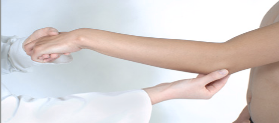
How do you palpate the elbow?
Flex the elbow to 70 degrees and relaxed
Check olecranon bursa for abnormal swelling
Lateral epicondylitis
Also known as tennis elbow
Tendons that extend the wrist becoming swollen and inflamed
What do you test for when examining the wrist/hands?
Presence of Carpal Tunnel syndrome
Carpal tunnel syndrome
Caused by pressure bc of compression on the median nerve in the carpal tunnel of the wrist
Numbness/tingling/weakness in thumb and fingers
Pain/swelling at base of thumb
What test do you use to find Carpal Tunnel syndrome ?
Phalen test
Tinel sign
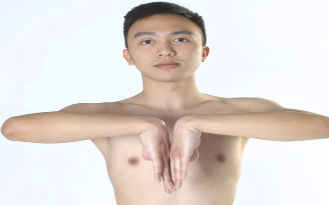
Phalen test
Hold both hands back to back while flexing wrists 90 degrees
Acute flexion of wrist, produces numbness and burning if positive
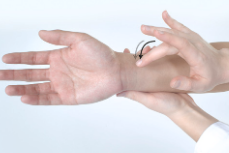
Tinel sign
Percussion of median nerve produces burning and tingling is a positive Tinel sign
Heberden & Bouchard nodules
Hard, nontender
Characterize osteoarthritis
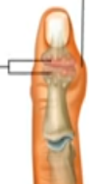
Heberden nodes
Bony outgrowths of distal interphalangeal joints
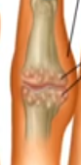
Bouchard nodes
Bony outgrowths of proximal interphalangeal joints
Joint pain of osteoarthritis worsens w/ what?
movement
What should you note in a hip exam?
Symmetry of iliac crests, gluteal folds, and equally sized buttocks
What does limitation of abduction of hip indicate?
Most commonly motion dysfunction found in hip disease
What are you testing for when performing a knee exam?
Bulge sign and Ballottement (fluid) of the patella to distinguish swelling or increased fluid in the joint

Bulge sign
Small amounts of effusion, 4 to 8 mL and identifies pts at high risk for knee pain and progressive osteoarthritis of knee
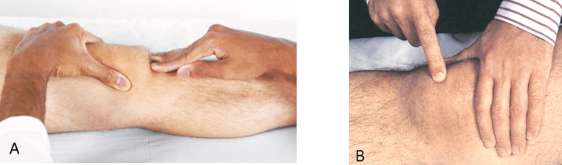
Ballottement of Patella
If fluid has collected, your tap on the patella moves it through the fluid, will hear a tap as patella bumps up on femoral condyles
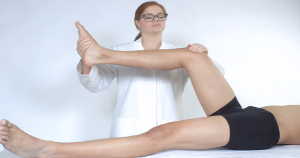
What test is used if a meniscal tear is suspected and how do you know its positive?
McMurrays test
Should hear clicking or pain during examination for a positive test
When do you inspect the ankle/foot?
When sitting, when standing and when walking
What joint do you palpate for the ankle/ foot?
Metatarsalphalangeal joint between thumb on dorsal and fingers on plantar surface
What is Lordosis?
Pronounced lumbar curve seen in obese people
What degree should flexion be for a spine exam?
75-90 degrees (touching toes)
What should you do to perform a Spinal exam?
Mark dots on back when pt is bending down, they should form a straight line when standing straight
What should disappear w/ touching toes motion?
Concave lumbar curve; back should have single convex C-shaped curve
How should a pt be bent for a spinal exam?
Bent sideways - lateral at 35 degrees
Bend backwards - hyperextension at 30 degrees
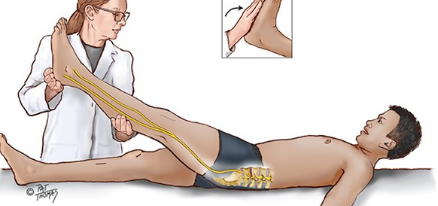
Straight leg raising (Lasegue’s Test) while keeping the knee extended normally produces what?
no pain
During a straight leg raising test, what does pain indicate?
Presence of herniated nucleus pulpous
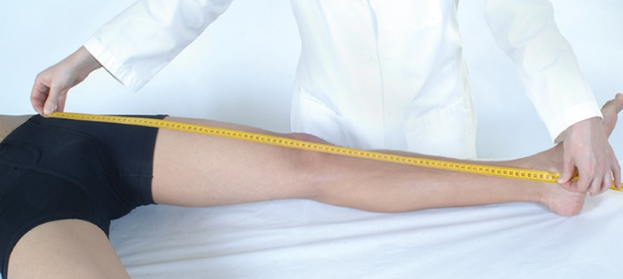
Where do you measure for a leg length discrepancy test?
From anterior iliac spine to medial malleolus, crossing medial side of knee
Abnormalities affecting multiple joints:
Inflammatory conditions:
rheumatoid arthritis
ankylosing spondylitis
Degenerative conditions:
osteoarthritis (degen joint disease)
osteoporosis