[3] exam 3 Sensation and Perception - 11.2 Speech
 Call Kai
 Learn
Learn Practice Test
 Spaced Repetition
 Match
Match Flashcards
 Knowt Play
1/7

There's no tags or description
Looks like no tags are added yet.
Name | Mastery | Learn | Test | Matching | Spaced | Call with Kai |
|---|
No analytics yet
Send a link to your students to track their progress
8 Terms
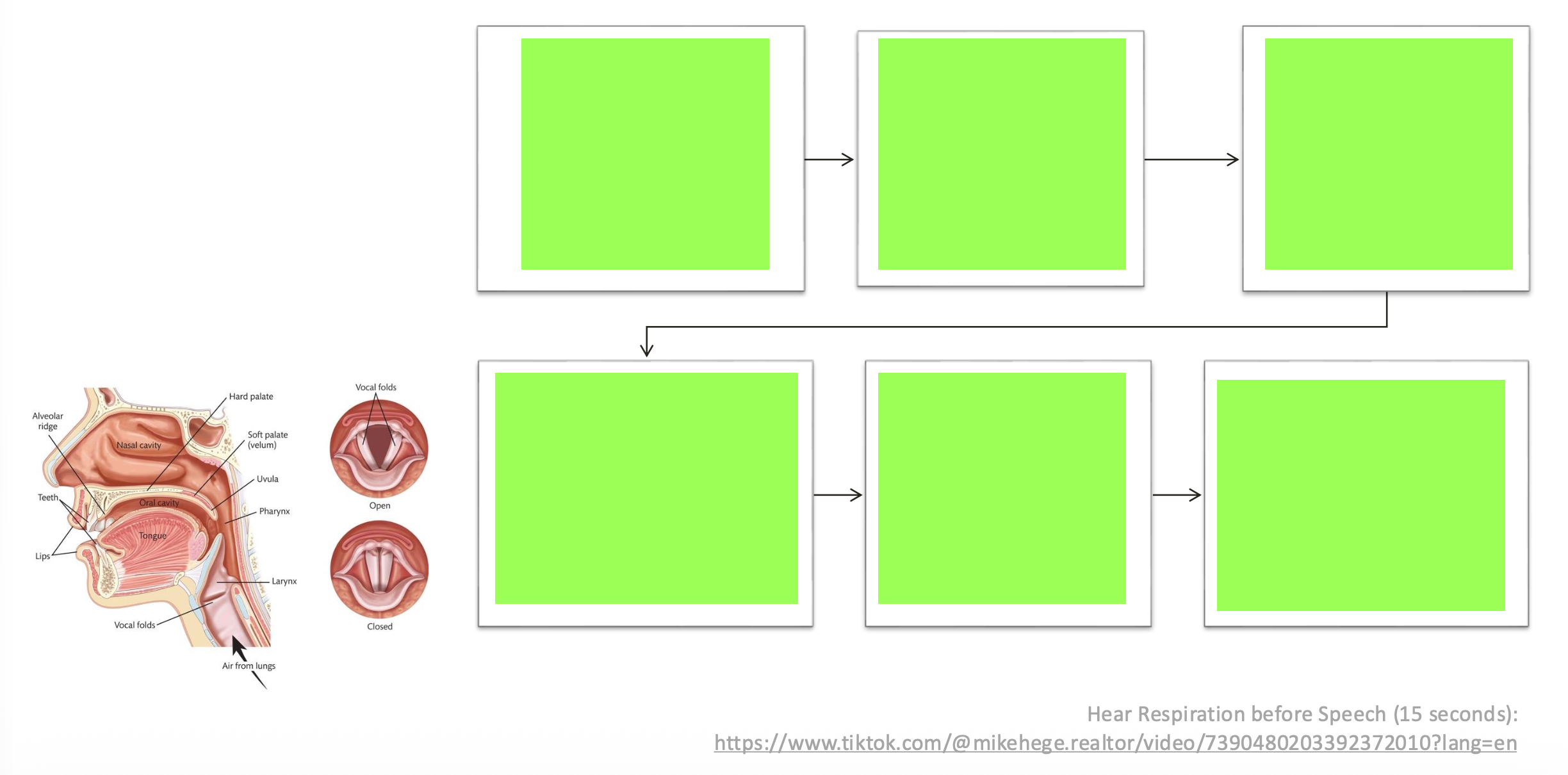
Speech Sounds: Phoneme Production
Across about 5,000 spoken languages, over __ are produced –most using this process.
850 distinct speech sounds.
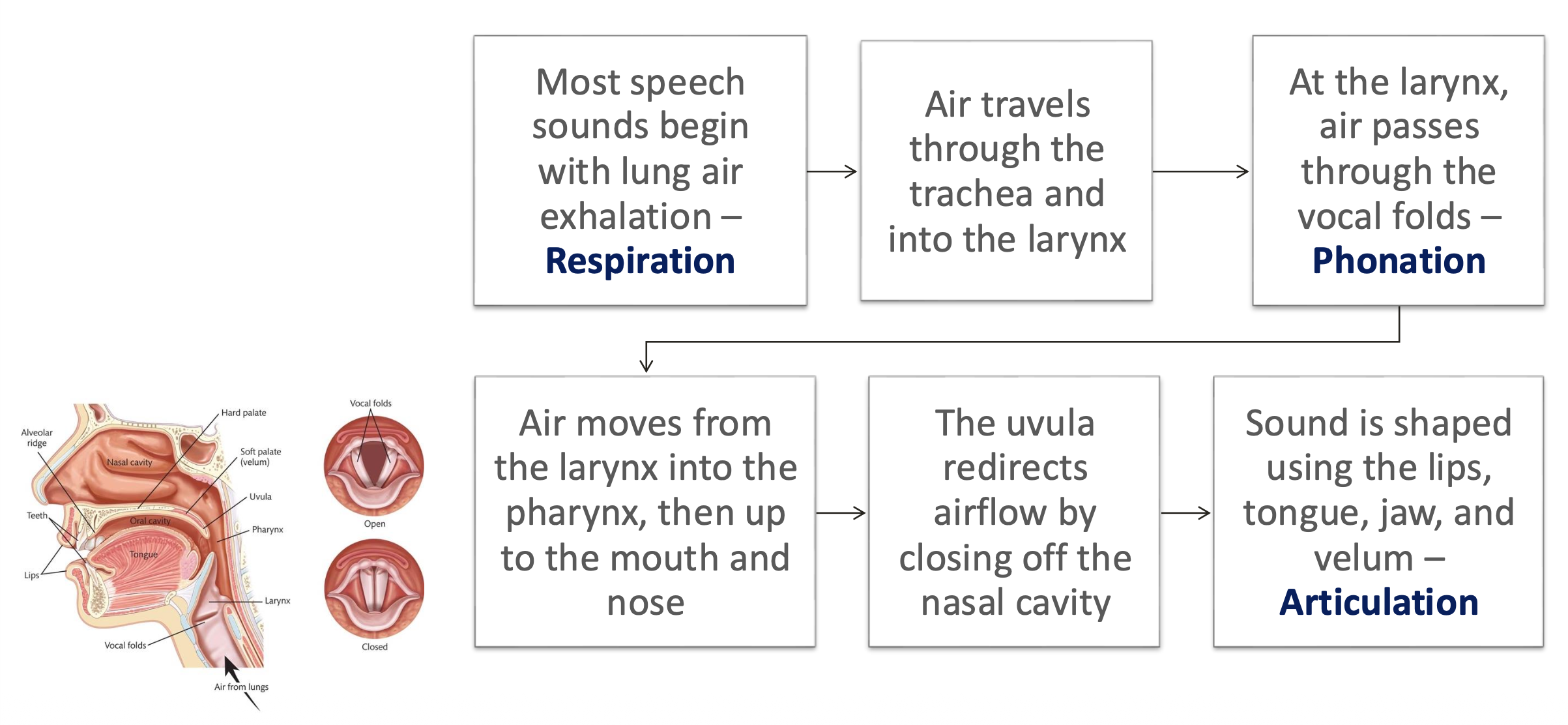
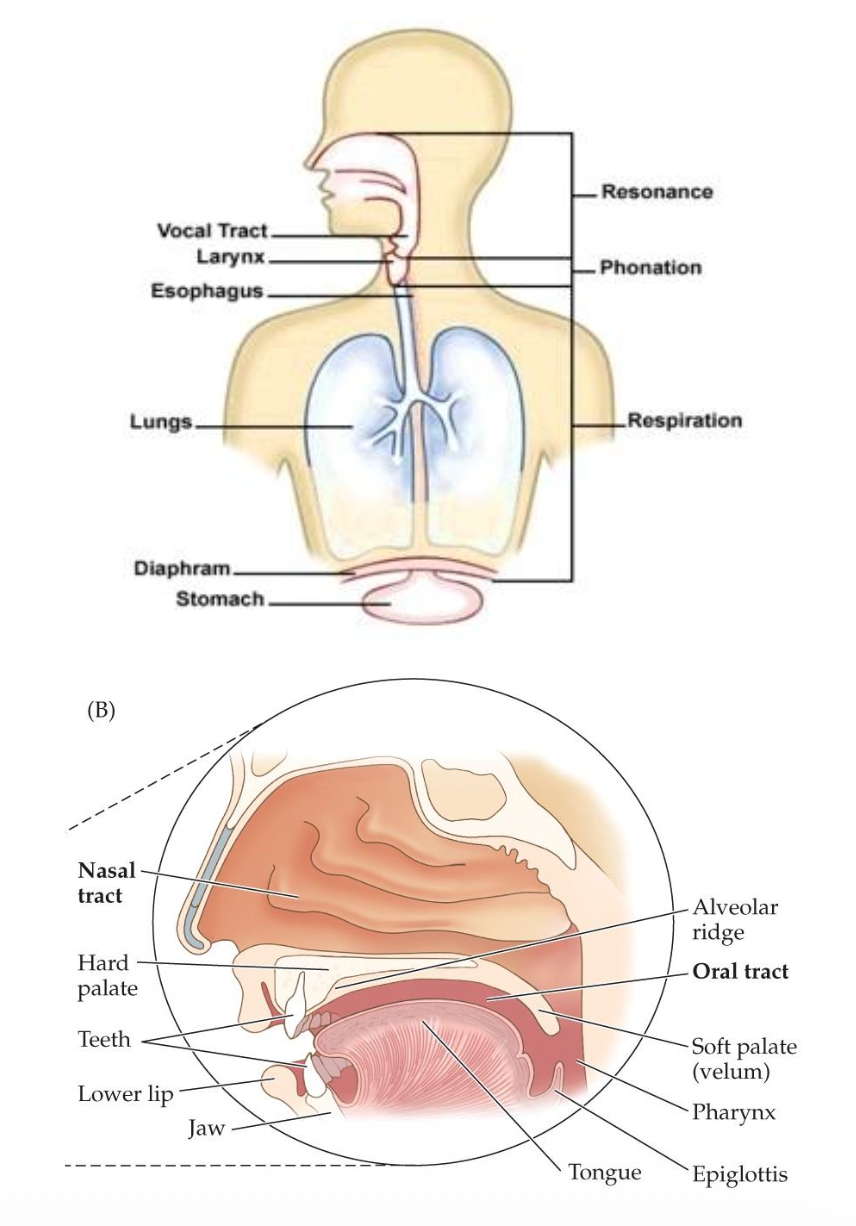
Speech Production: Respiration, Phonation, & Articulation
Resonance occurs when ?.
• Humans modify resonance by shifting the ?,?,?,?
• This shapes the ? for every sound.
• Different shapes = __.
• Especially important for ? and voiced sounds.
• Core to identifying __ across talkers.
vocal tract shape boosts some frequencies and dampens others.
tongue, jaw, lips, and velum [soft palate in back roof of mouth].
filter function.
different frequency emphasis.
vowels.
phonemes [A phoneme is a distinct speech sound that, if changed, can change a word’s meaning. Example in English: /p/ in pat. /b/ in bat. These are different phonemes because: changing one changes the meaning of the word. 2. Phonemes are about sound, not spelling. Phonemes are sounds, not letters. Example: “phone” = /f/ /oʊ/ /n/. The “ph” spelling still represents the /f/ sound. So: letters ≠ phonemes. phonemes = mental sound units].
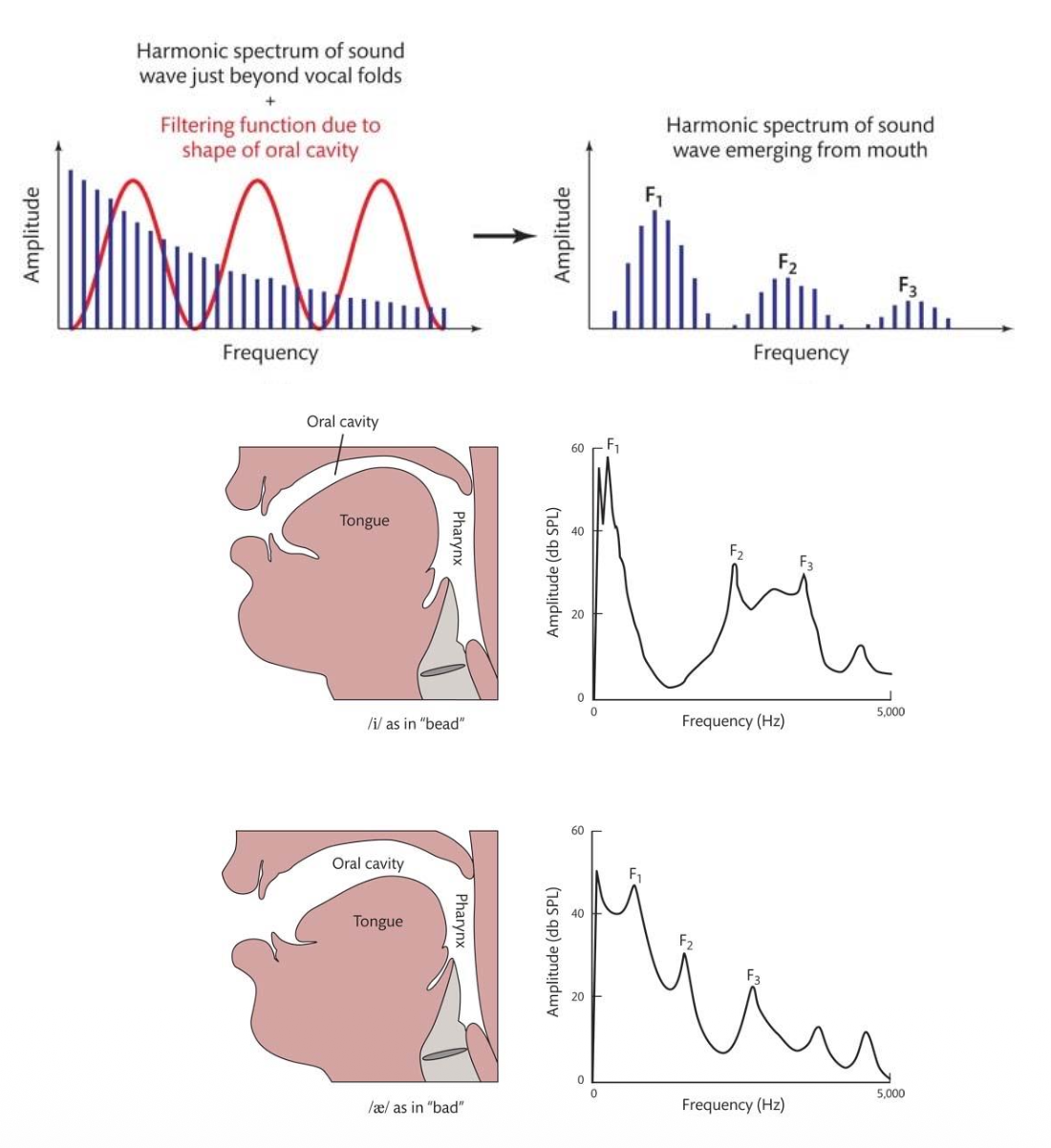
Speech Production: Vowels & Formants
Vowels are produced with relatively open/closed airflow.
• Sound shape depends on ?,?,?,?
Formants are __.
• F1 = ?
• F2 = ?
• F3 = ?
open [no major blockage in the mouth].
tongue, jaw, lips, and velum.
vocal tract resonance peaks that distinguish vowels.
Mouth openness.
Tongue position.
Lip rounding / r-colored vowels.
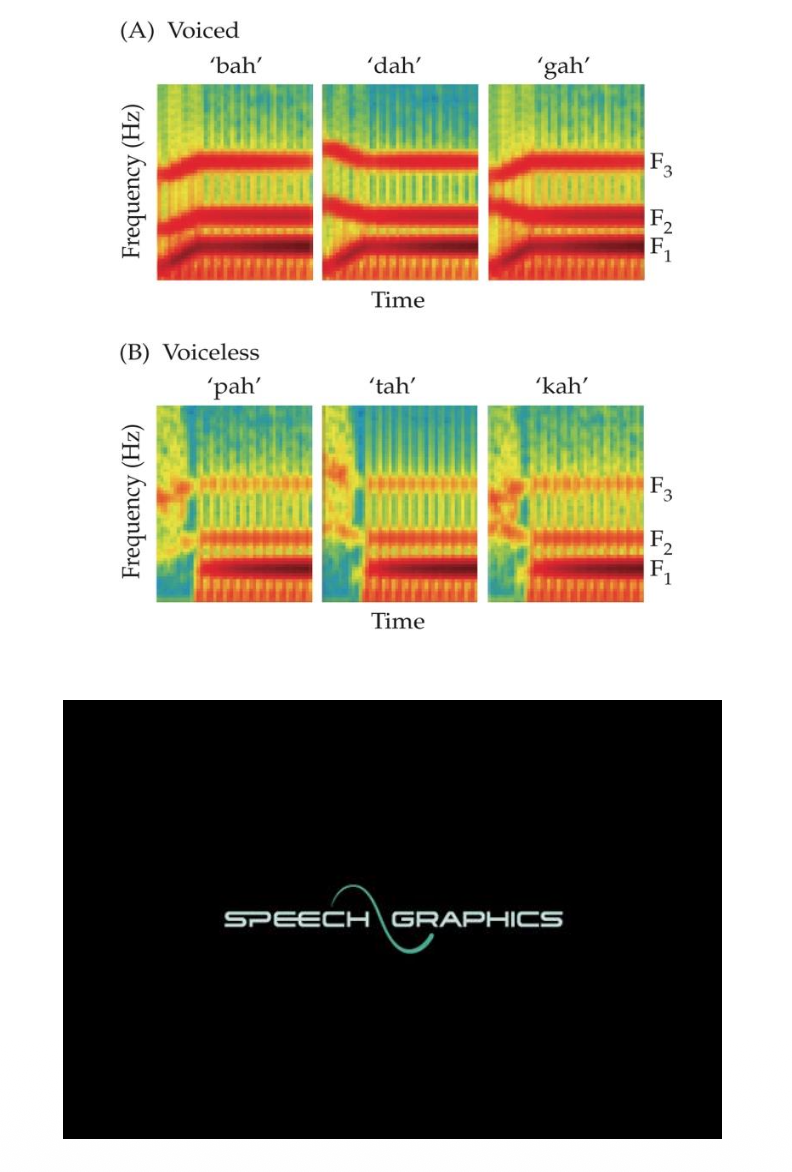
Speech Production: Formants Transitions & Consonants
Formant Transitions are __.
• Crucial for __ (e.g., “b” in bat vs. “d” in dot).
Consonants obstruct ? and are classified by: (list 3)
rapid shifts in resonance as a consonant moves into a vowel.
consonant identity.
airflow.
• Place of Articulation (where - e.g., lips, velum).
• Manner of Articulation (degree of obstruction).
• Voicing (vibration or not: voiced or voiceless).
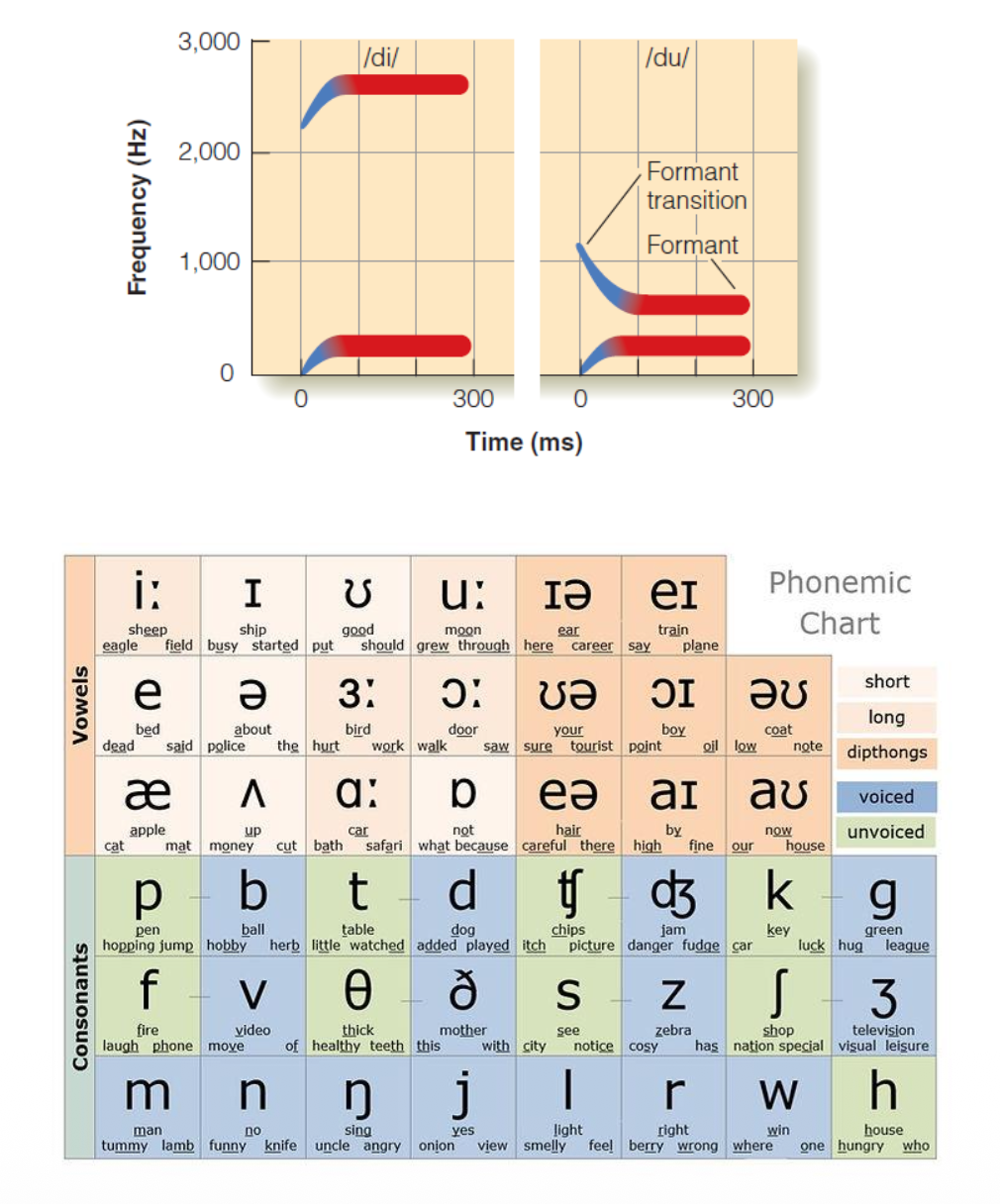
Speech Perception – Phonemes & the Variability Problem
__ are the smallest sound units in speech.
• They vary across languages and can’t be identified by ? alone.
• __ affects their acoustic form– this is the variability problem.
Coarticulation: ?
• __ pitch, accent, and pace create additional variation.
Phonemes.
frequency.
Context.
Overlap between adjacent sounds causes shifts in sound.
Speaker.
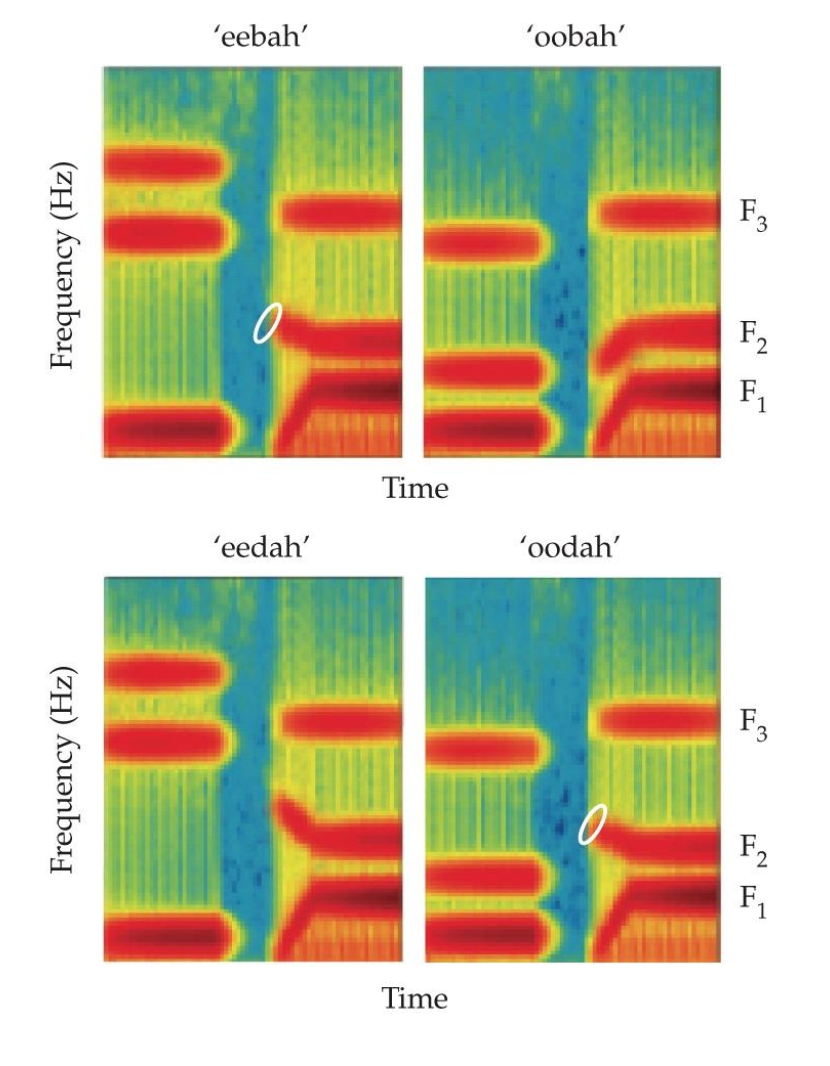
Speech Perception: Coarticulation & Contrast Enhancement
Speech is fast (?-? sounds/sec), creating __ in articulation and acoustics.
__ helps distinguish successive sounds by emphasizing ?, especially in ?.
• Auditory system amplifies __ (e.g., “eebah” vs. “oodah”).
• Supports accurate __–even when formants overlap across phonemes.
10–15. coarticulation–overlap.
Contrast enhancement. differences. Formants.
spectral contrasts [Formants are key cues for vowels (like F1 and F2). The brain: Pays special attention to changes in formants across time. Emphasizes shifts between vowel sounds. Example: “eebah” vs. “oodah”. Even if the raw signals overlap: The brain highlights the differences in resonance patterns. So you clearly hear two different vowel sequences].
recognition.