Cognitive Biases and Improvement Science
 Call Kai
 Learn
Learn Practice Test
 Spaced Repetition
 Match
Match Flashcards
 Knowt Play
1/10

There's no tags or description
Looks like no tags are added yet.
Name | Mastery | Learn | Test | Matching | Spaced | Call with Kai |
|---|
No analytics yet
Send a link to your students to track their progress
11 Terms
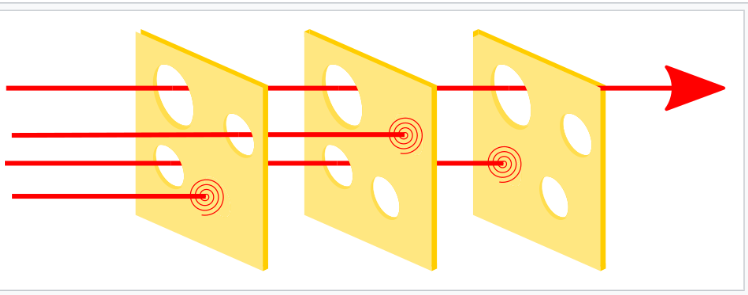
Swiss Cheese Model
A model created by James T Reason used in risk analysis and risk management likening human systems to layers of swiss cheese which have holes (i.e. weaknesses) of different shapes and sizes in each slice. The layers prevent most single points of failure, however the ‘holes’ may very occasionally align, and the risk materialises. Essentially, mistakes in human systems only occur when there are several failings at multiple levels of the system.
How can we improve a human system?
It must support the fixing of mistakes, rather than punishing people when mistakes happen.
Reduce the factors that increase the risk of human errors.
Prevent resistance to change through supporting staff.
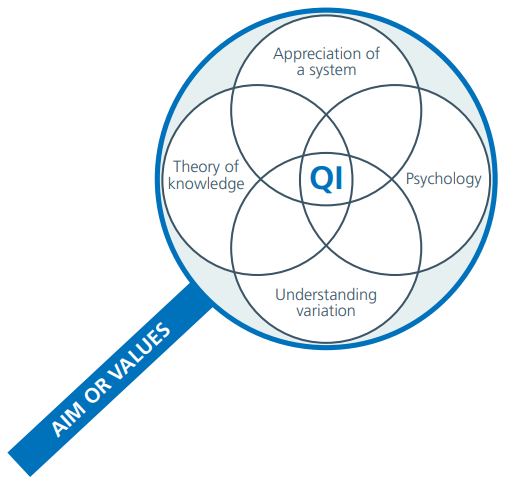
4 lenses of improvement.
Make the system do the work.
Continuous improvement - it can always be better.
What are the 9 factors that increase the risk of human error?
Heavy workload
Fatigue
Stress
Shift work
Reliance on memory
Reliance on vigilance
Noise
Distractions
Unnatural workflow
Why do humans resist change?
Fear of the unknown.
Loss of control.
Distrust in leadership.
Comfort with the status quo.
Poor communication.
Cultural misalignment.
Negative past experiences.
Hazards of resistance to change
Implementation delays
Reduced productivity
Escalated costs
Damage to morale
How can resistance to change be reduced?
Transparency and good communication
Building trust
Collaborative approaches including staff
Providing support and resources to staff
Address concerns
Minimise disruption (e.g. gradual change, adjusting expectations etc.)
Incentivise staff (e.g. footstep stickers to hand wash area in a hospital)
Go to the inconvenienced minority and work with them first.
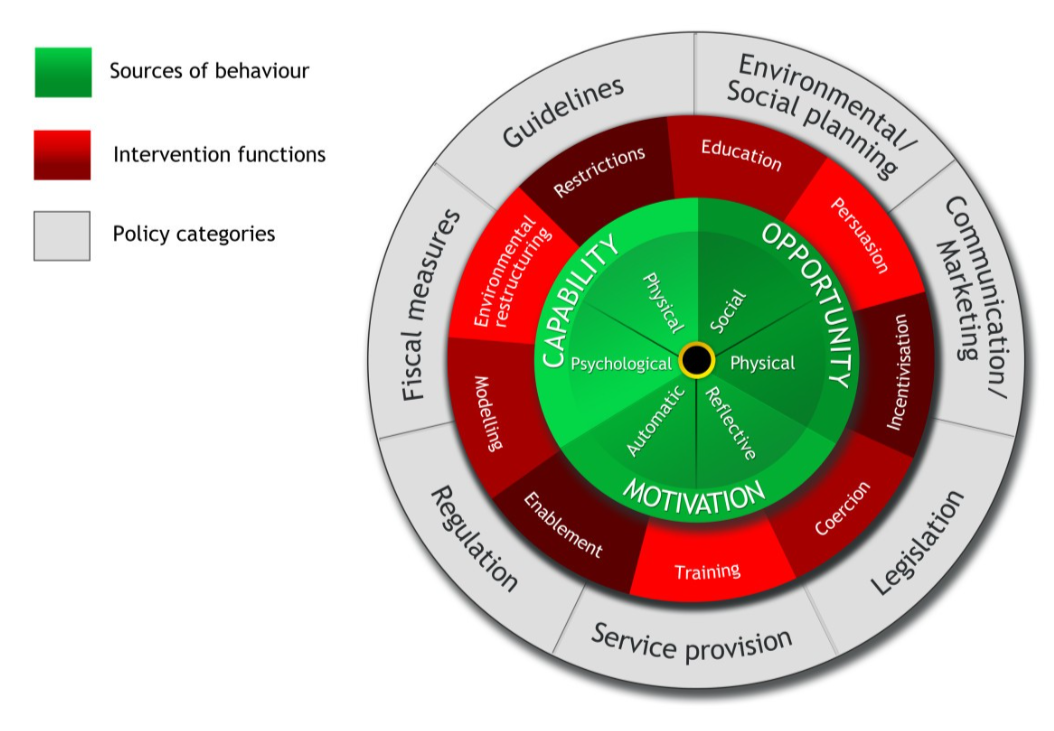
Behavioural change wheel
4 lenses of improvement
Concept created by W Edwards Deming to improve human systems. They are:
Appreciating a system - looking at what a system is currently doing, considering all the interactions with it. This can allow planning of change and ideas while considering the potential unintended consequences of these.
Understanding variation - reducing unnecessary variation that come come from outwith or within a system. This considers both behavioural and statistical variation .
Psychology - looks at what people do within the system, what people think about the system, what motivates people and how people respond to change. This is necessary to facilitate successful change.
The theory of knowledge - relates to the theories around why the system looks like it does, as well as any theories as to why proposed change ideas would work. It is important to understand why these theories are held by people, including those introducing and affected by change.
Why is understanding improvement science and psychology so important to healthcare systems?
They are extremely complicated systems, involving lots of people and processes, and needing lots of co-ordination and management. Mistakes can lead to fatalities, so improving these systems and recognising failings is crucial.
How can a system be made to ‘do the work’?
It recognises that humans make mistakes, and tries to prevent them from happening in the first place through failsafes such as:
Education and awareness
Audits and feedback on performance
Inbuilt decision aids and reminders
Personal memory aides and checklists
Reducing unnecessary variation and complexity within a system
Fostering a collaborative and safe working environment where feedback, positive change, and improvement is encouraged.
How can human error be reduced?
Education.
Reduce and share workload.
Provide adequate rest time.
Reduce noise and distractions in the workplace as much as possible.
Foster trust, collaboration, open communication, and improvement rather than punishing staff who make mistakes.
Make the system do the work (automation and failsafes), especially reducing reliance on memory and vigilance.
Audits and checks.
Clear processes and guidance.
Mental health support for staff.
Behavioral change wheel