chapter 2 chem
 Call Kai
 Learn
Learn Practice Test
 Spaced Repetition
 Match
Match Flashcards
 Knowt Play
1/41

There's no tags or description
Looks like no tags are added yet.
Name | Mastery | Learn | Test | Matching | Spaced | Call with Kai |
|---|
No analytics yet
Send a link to your students to track their progress
42 Terms
element
pure substance that cannot be broken down into simpler substances by a chemical reaction
how many elements known - how many naturally occurring and how many prepared by scientists
118 known, 90 naturally occurring, 28 prepared by scientists in lab
elements in periodic tabel are divided into what
3 categories: metals, nonmetals, metalloids
periodic table always on ALEKS!!!
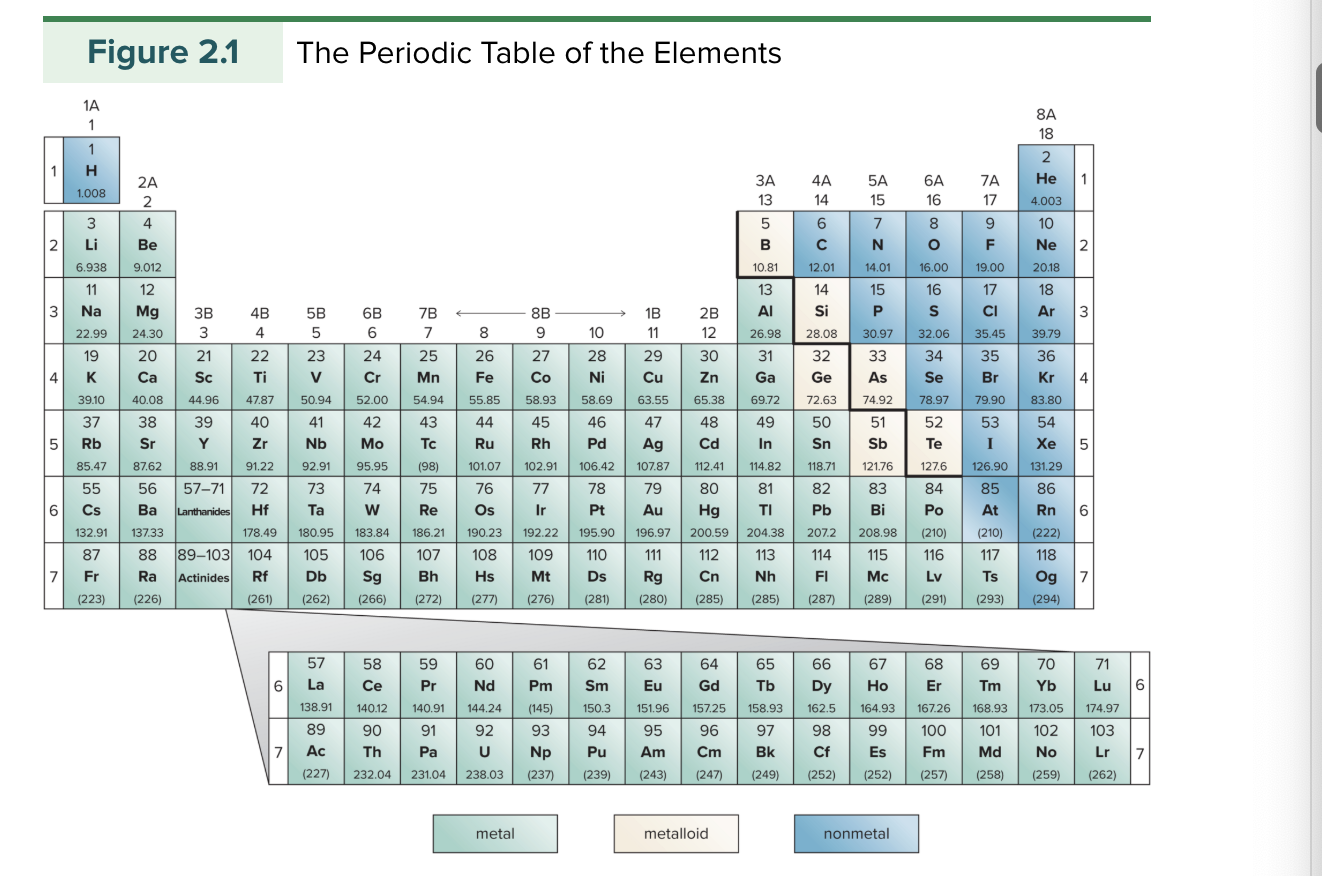
metals
shiny materials that are good conductors of heat and electricity
all metals are solids at room temperatire except for mercury, which is a liquid
nonmetals
do not have a shiny appearance
generally poor heat and electricity conductors
non metals like sulfur and carbon are solids at rom temp; bromine is a liquid, nitrogen, oxygen and nine other elements are gases
metalloids
properties intermediate between metals and nonmetals
building block elements
4 nonmetals - CHON are 96% of human body mass
major elements or macronutrients
present in the body in much smaller amounts (0.1-2% by mass)
other elements in body
sodium, potassium, and chlorine are present in body fluids
Mg + S in proteins
Ca + P in teeth + bones
P in all nucleic acids e.g. DNA that transfers genetic info from 1 gen to another
at least 100mg of each macronutrient needed
trace elements / micronutrients needed in diet in
smalll quantities, usually less than 15 mg
-each one has specialised func important for proper cell func.
compound
pure substance formed by chemically combining 2 or more elements tgt
common element colors for molecular art
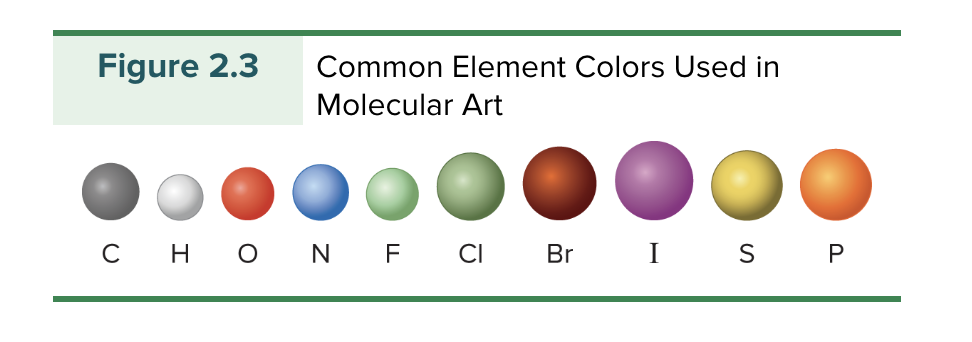
red sphere is
oxygen
white - grayish sphere is
hydrogen
darkish grey sphere is
carbon
blue sphere is
nitrogen
light green sphere is
fluorine
darkish green sphere is
chlorine
brown sphere is
bromine
purple sphere is
iodine
s is
sulfur
p is
phosphorus
all matter is composed of the smae basic building blocks called….
atoms
3 subatomic partices of atom
proton - p - pos charge
electron - e- - neg charge
neutron - n - no charge
nucleus
dense core that contains the protons and neutrons
contains most of the mass of an atom
electron cloud
composed of electrons that move rapidly in the almost empty space surrounding the nucleus
compromises most of the atom’s volume
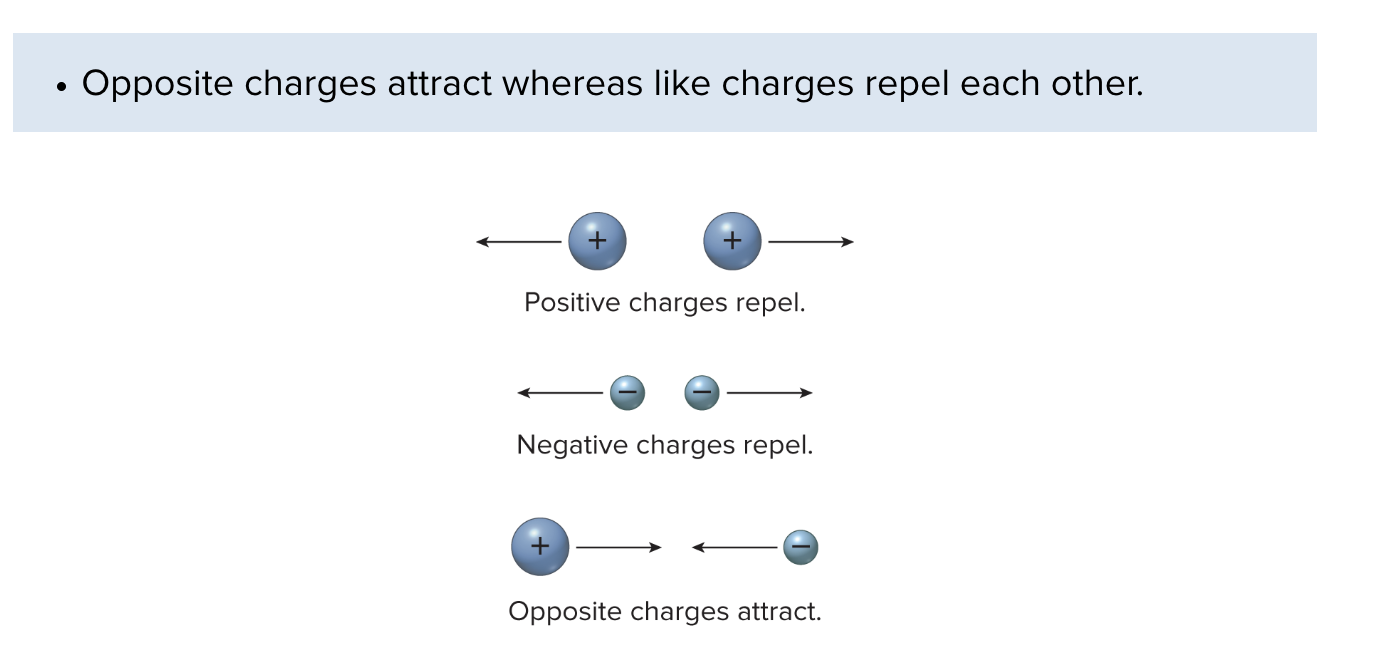
opposite charges —-
attract
like charges
repel each other
diag opp charge and like charge
atomic mass unit
defines the mass of individual atoms relative to standard mass
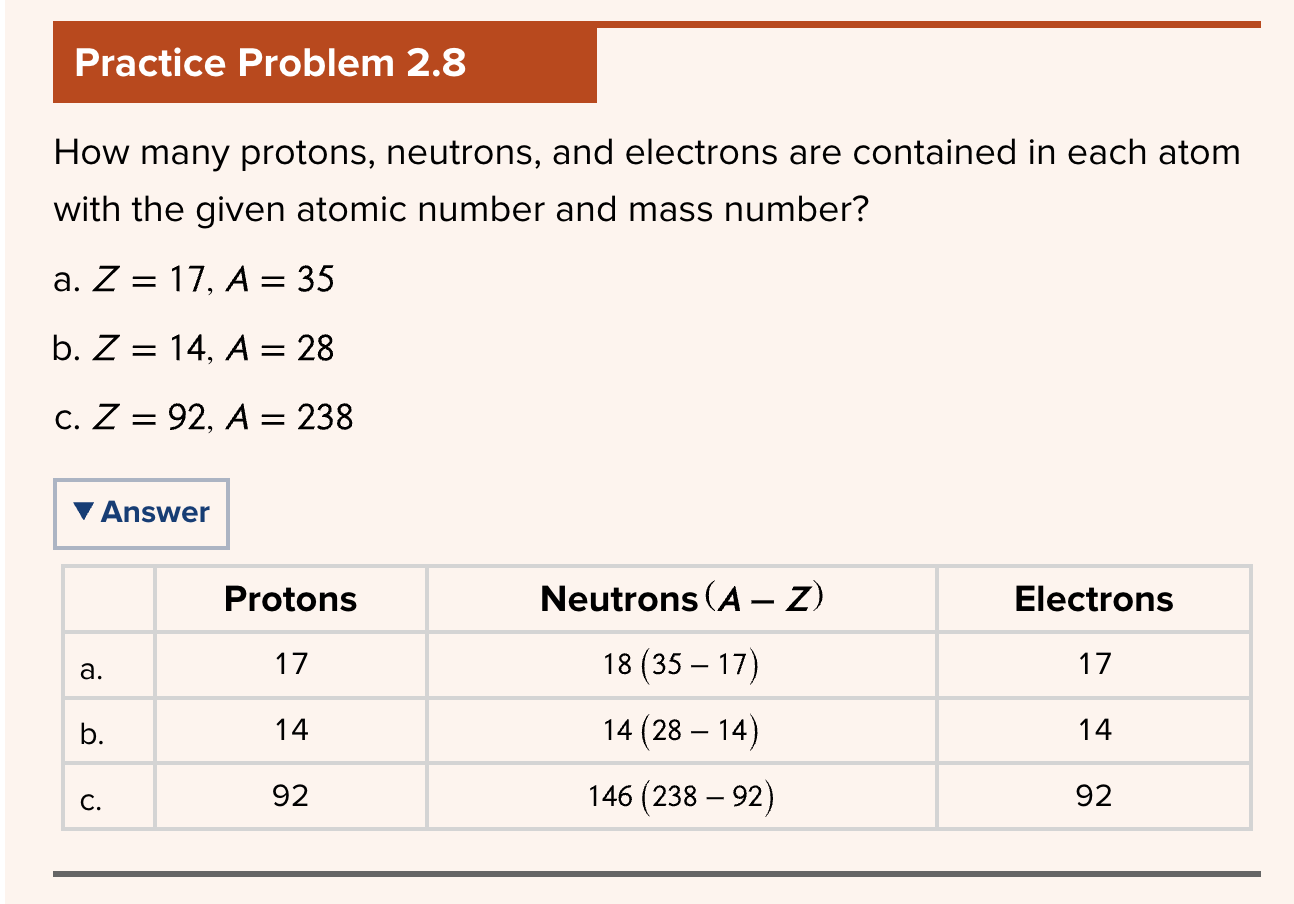
atomic number (Z)
number of protons in the nucleus - every atom of a given type of element always has the same number of protons in the nucleus
in a neutral atom, cuz it has no overall charge, atomic number (Z) = no. of protons or electrons (in the electron cloud) in the (neutral) atom
how is the periodic table arranged
in order of increasing atomic number beginning at the upper left hand corner
mass number
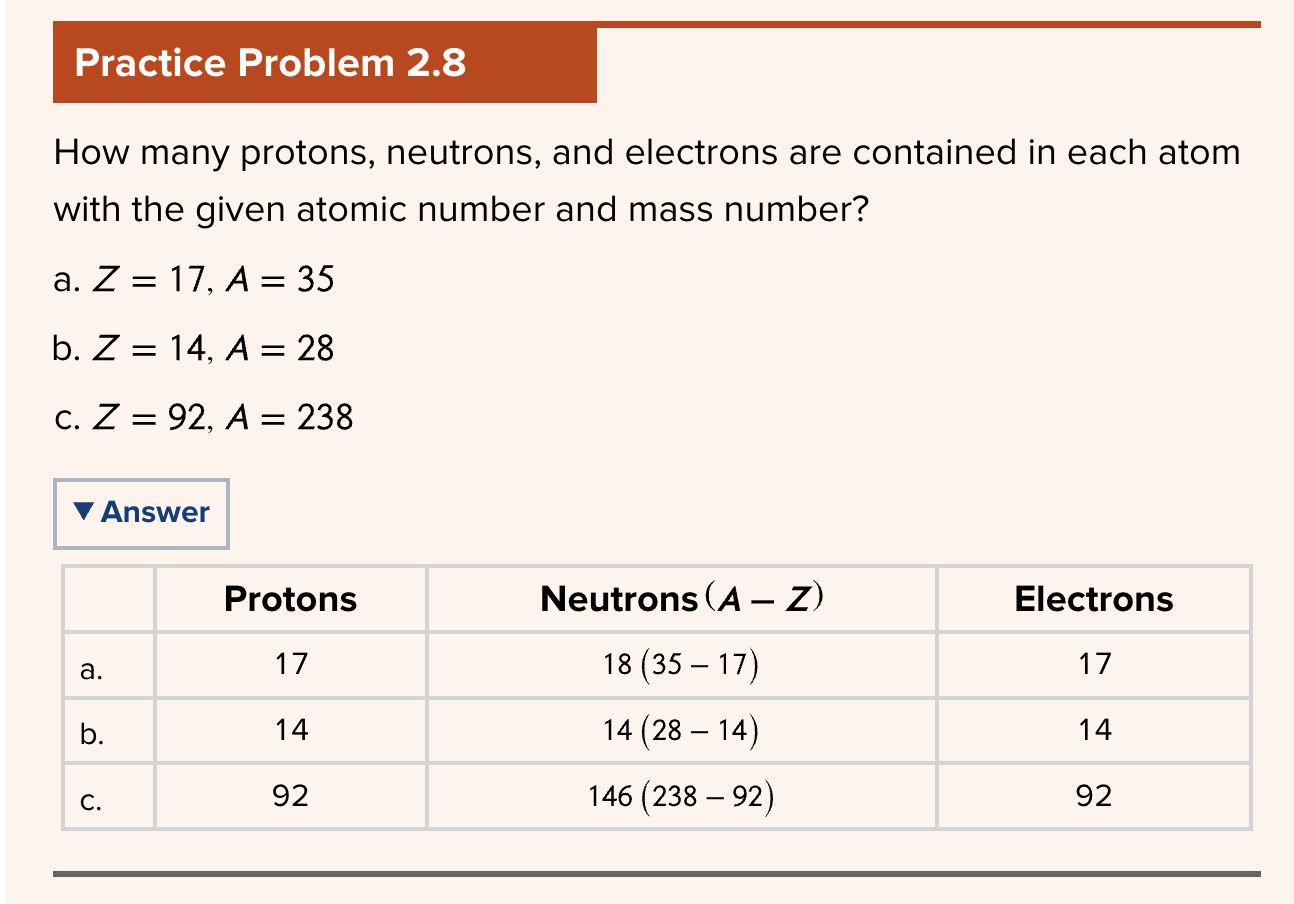
number of protons + number of neutrons
“(A)
how to find number of neutrons
= subtract atomic number from mass number
e.g. 40 - 18 = 22
isotope
atoms of the same element having a different number of neutrons
e.g. of isotope
all atoms of chlorine have 17 protons in nucleus, but some chlorine atoms have 18 neutrons in teh nucleus + some have 20 neutrons in nucleus
isotope symbol
cuz all chlorine ayoms have same atomic number (17), it is sometikes omitted - so chlorine with mass number of 35 can be written as ^(35)Cl and (^37) Cl
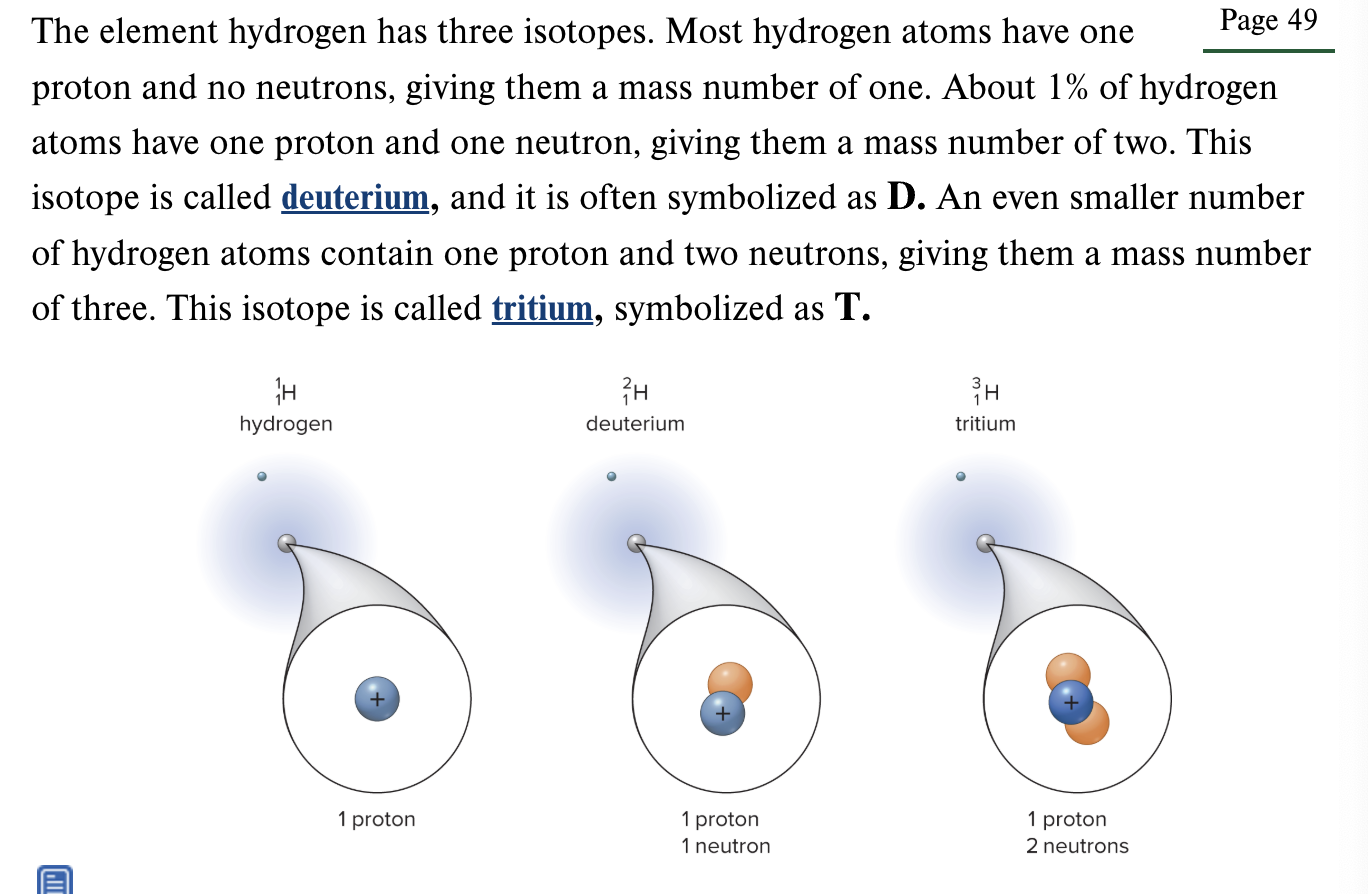
hydrogen isotopes
mass number weighs down atomic number in isotope symbols!!
mass number weighs… (IN ISOTOPE SYMBOL!!)
down the atomic number