A Level Geography Tectonic Hazards
 Call Kai
 Learn
Learn Practice Test
 Spaced Repetition
 Match
Match Flashcards
 Knowt Play
1/63

There's no tags or description
Looks like no tags are added yet.
Name | Mastery | Learn | Test | Matching | Spaced | Call with Kai |
|---|
No analytics yet
Send a link to your students to track their progress
64 Terms
Divergent
Whereby two plates pull apart from each other and cause low magnitude earthquakes eg. Dead Sea
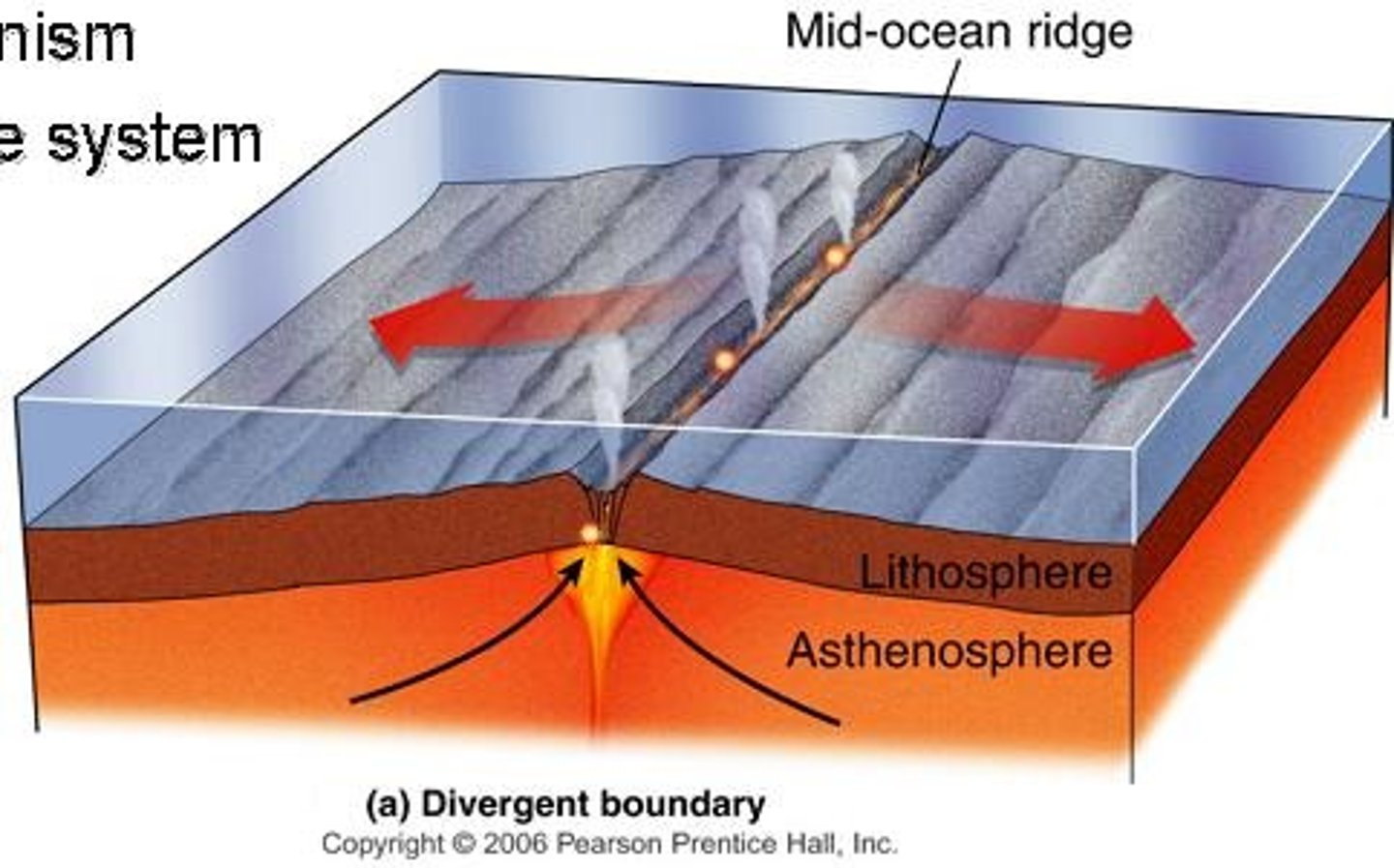
Destruction (ocean +ocean)
Frequent earthquakes. Not as bad as ocean+continetal doe. Violent eruptions from curving chains of volcans. E.G Hawaii 2018
Convergent/Destructive
Whereby two plates are moving towards each other, with one subducting under the other due to the subducted plate being of higher density. Causes frequent eruptions and earthquakes eg. Andes Mountains
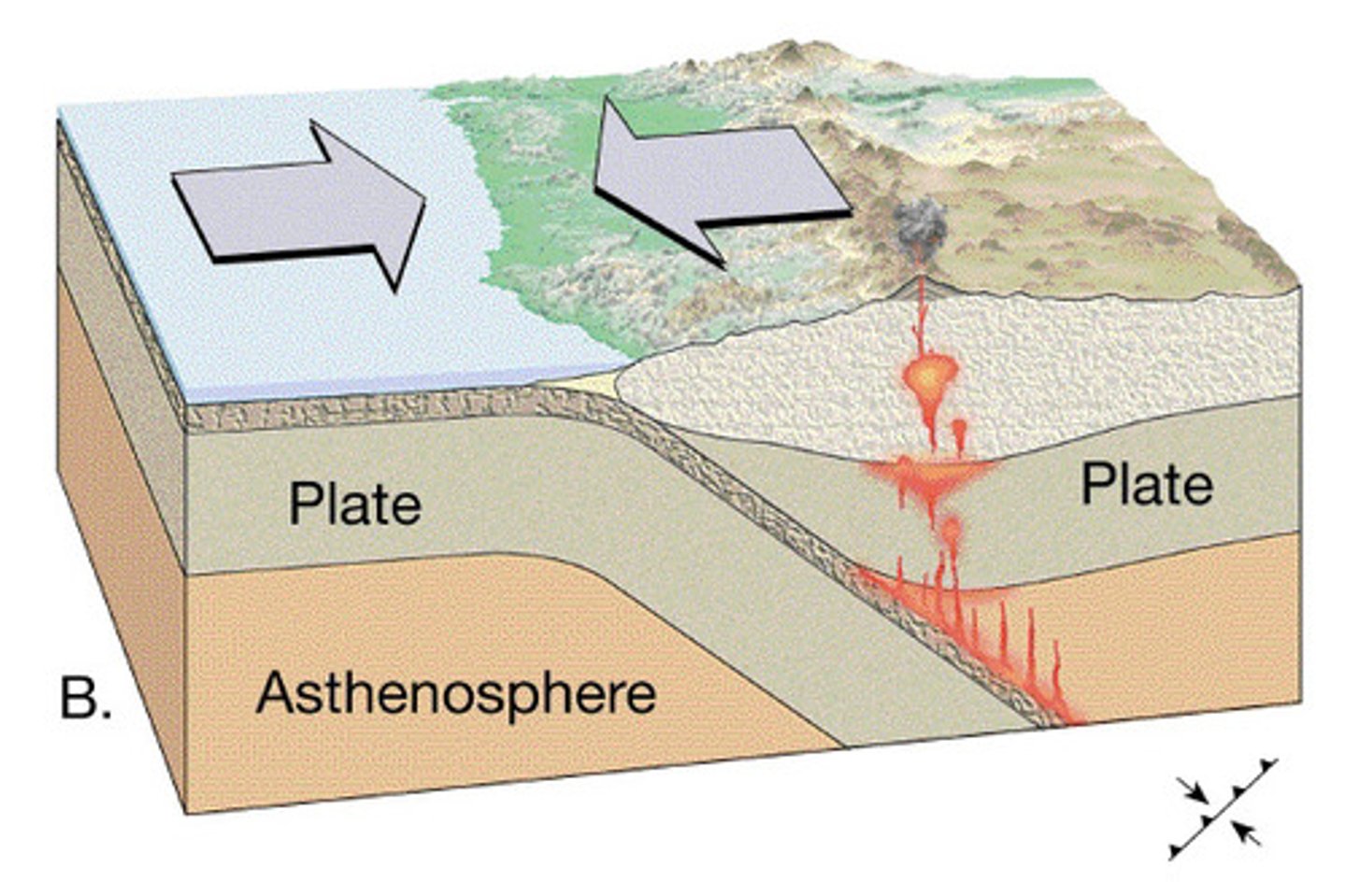
Destructive (Ocean+continental)
High magnitudinal and frequent earthquakes. Due to long friction+pressure along the subduction zone. Frequaent + violent composite volcanoes. Nazca + South atlantic- chile 2010
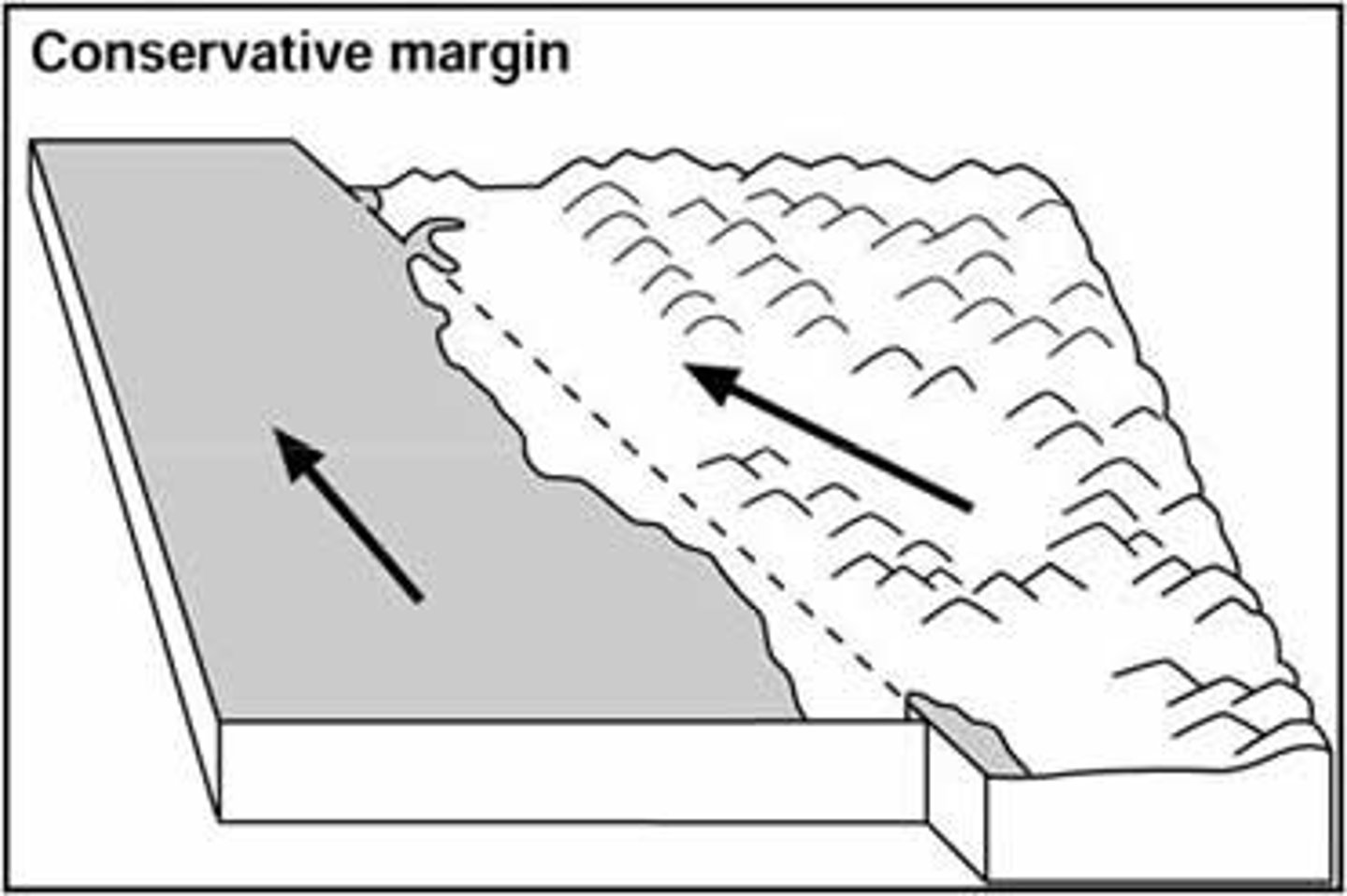
Conservative
High magnitude earthquake, shallow focal depth, Highly destructive.+ no volcanic erruption. Pacific Plate. San Andreas fault. 6.9 magnitide in 1689.
Collision
zones where two (continent+continent) tectonic plates converge, leading to mountain building and seismic activity. No volcanic erruption+ high magnitude earthquakes. South Americam earthquake. 2014. 4.9 magnitude.
Constructive
Generally shallow. Low magnitude 5.0 ish. Small and effusive erosions, Low lava and gas but very high viscosity. E.G. Mid atlantic ridge
Conservative
Whereby two plates slide against each other and can cause large earthquakes due to locked faults and elastic rebound theory. eg. San Andreas Fault
Lithosphere
Crust
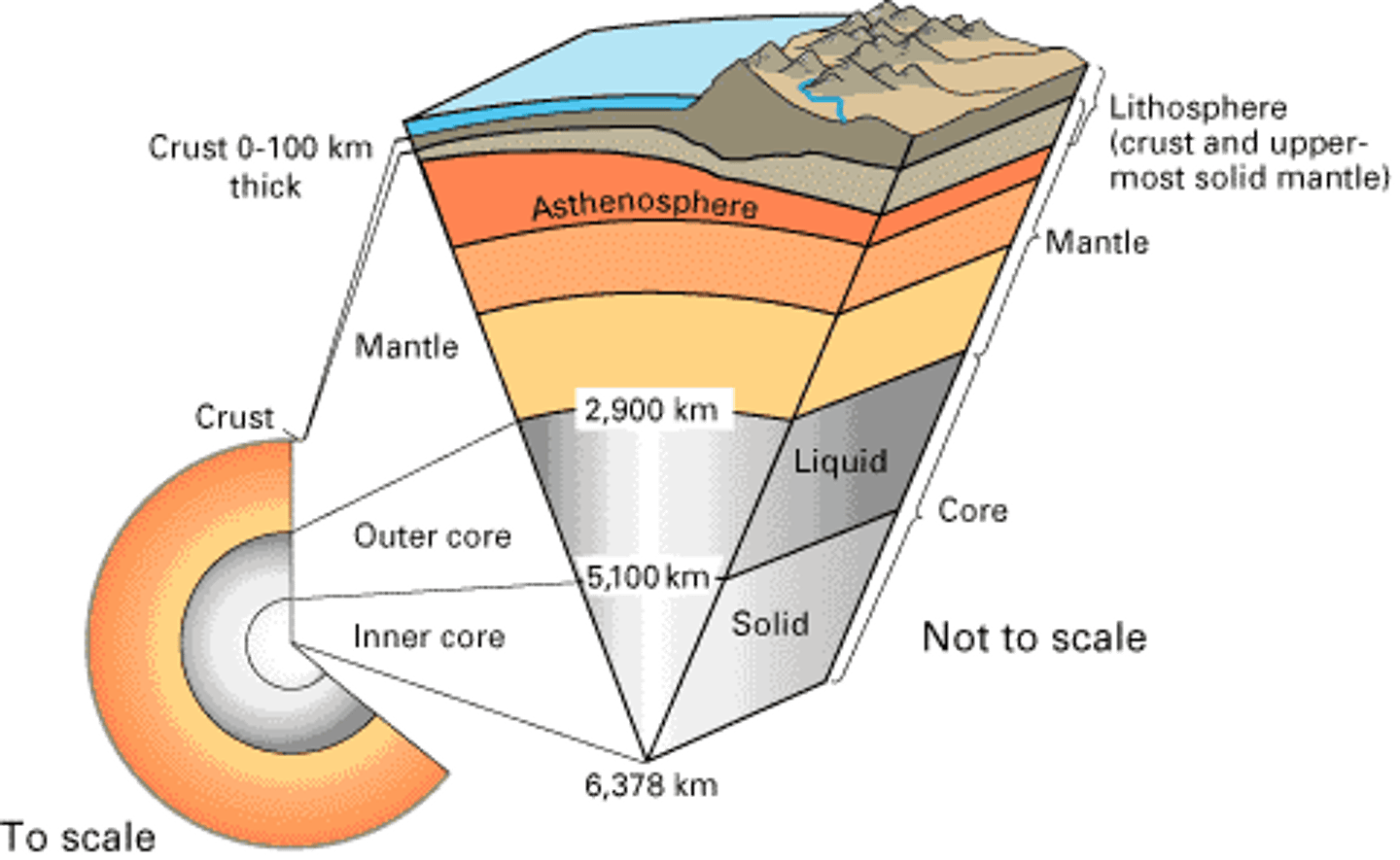
Asenthosphere
Mantle
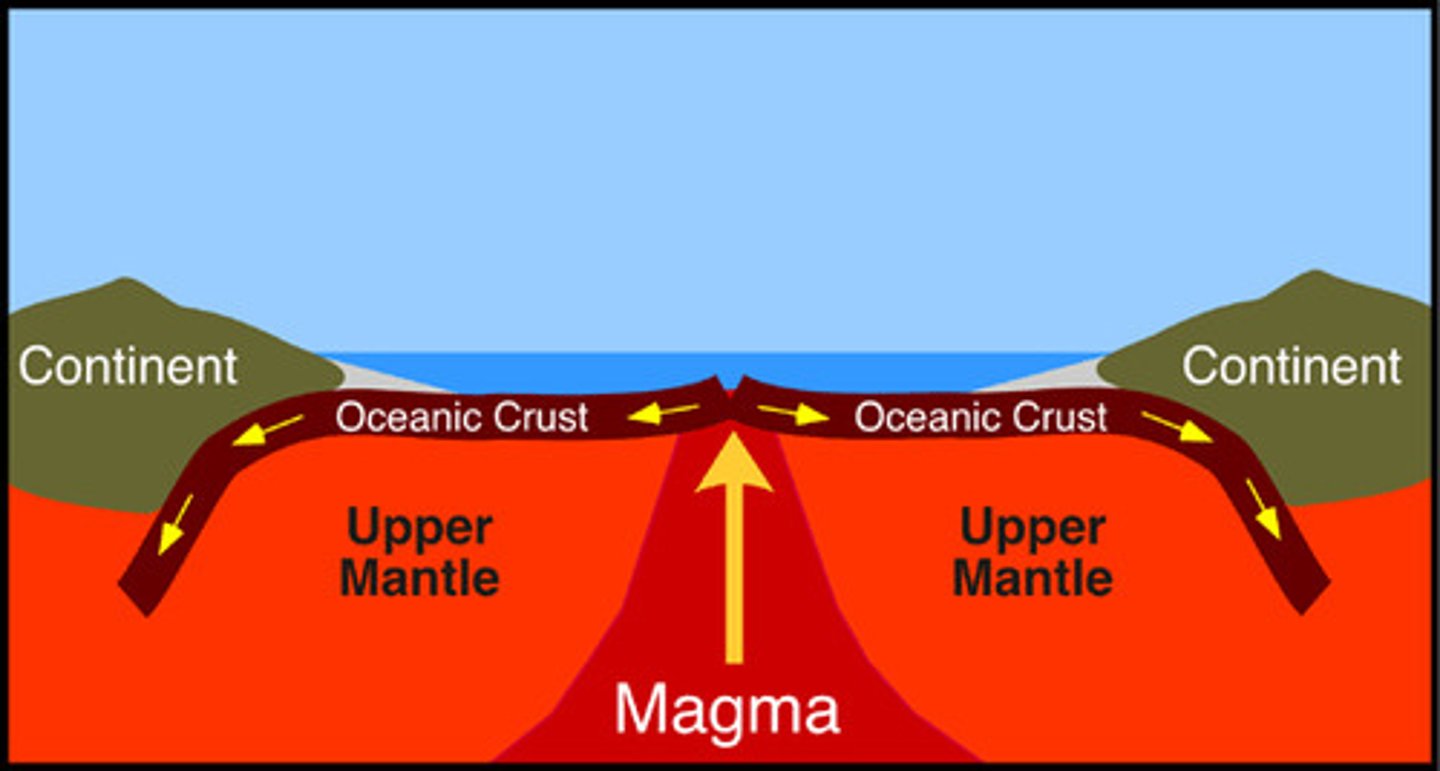
Sea Floor Spreading
Occurs at divergent plate whereby new oceanic crust forms from volcanic activity and moves away from ridge. eg. Mid-Atlantic Ridge
Radioactive decay
Process in earths core which releases heat to drive convection currents and causes tectonic activity
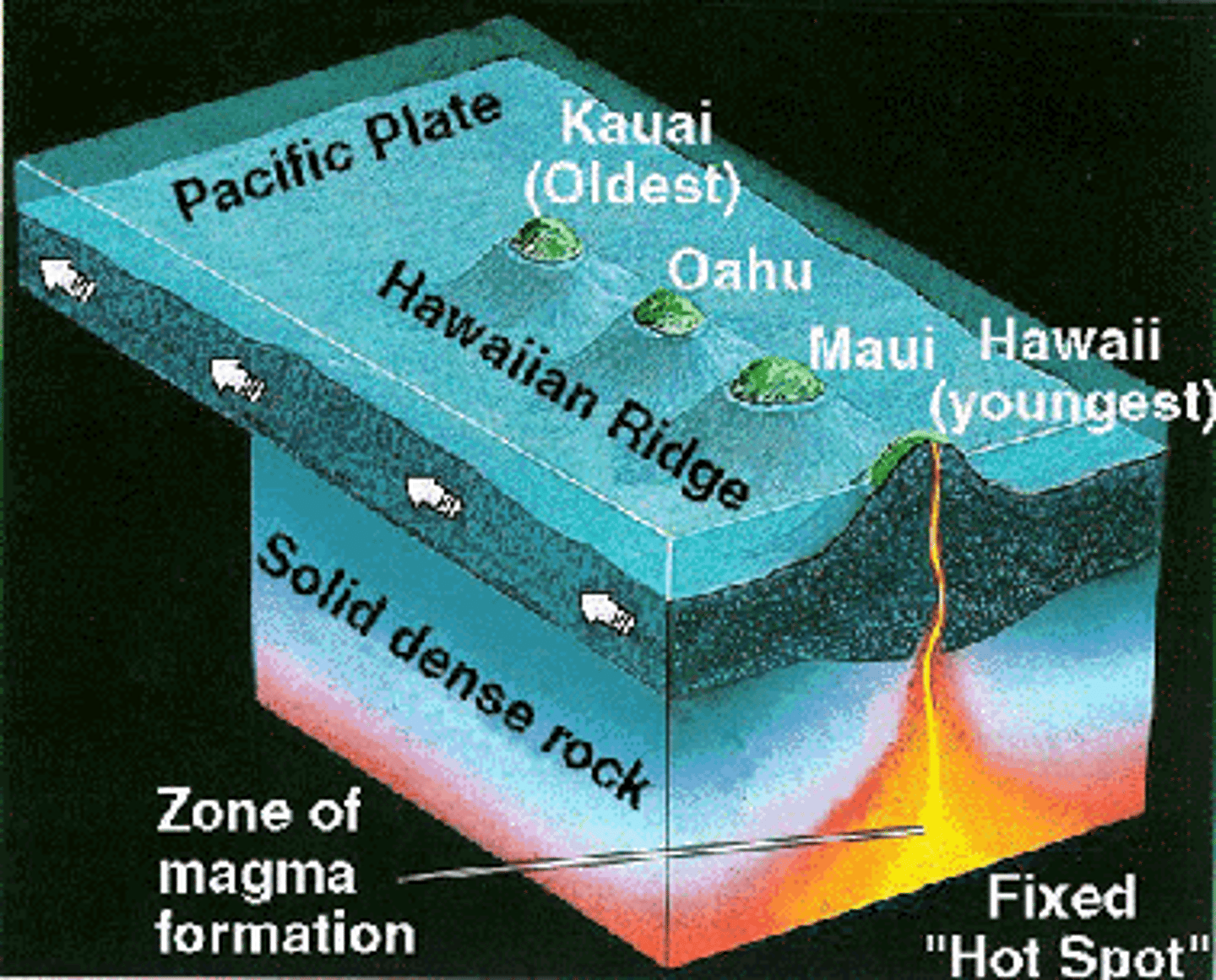
Hotspot volcanoes
Volcanoes that form within a plate caused by the existence of mantle plumes
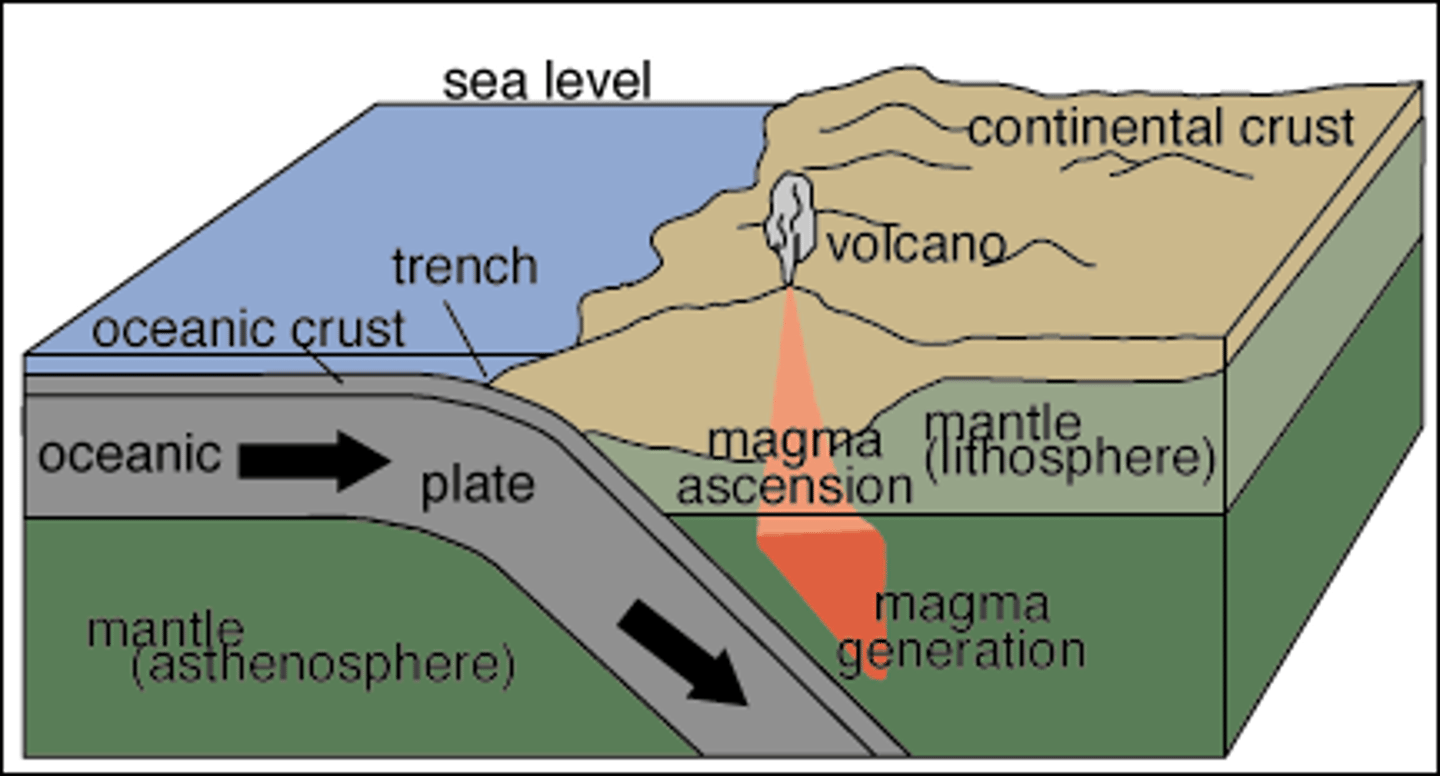
Subduction zone
Whereby two plates are moving together and the denser plate will descend underneath the less dense plate
Locked fault
A fault that is not slipping and can build up pressure that is released in the form of an earthquake and cause cause high magnitude earthquakes due the the elastic rebound theory. eg. Indian Ocean Tsunami
Paleomagnetism
Technique used to track the geological history of plates
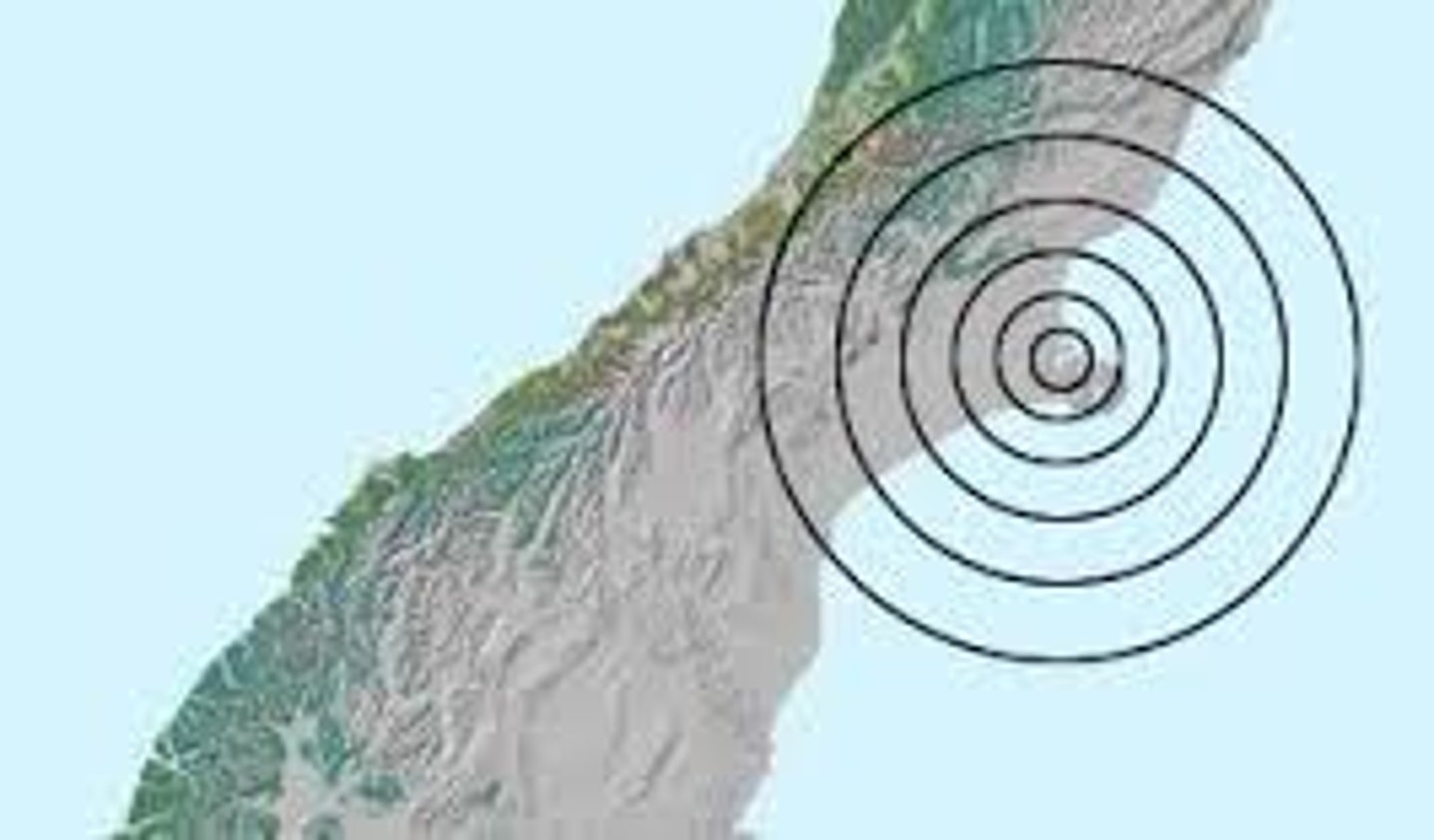
Focus
The point within the lithosphere where energy from an earthquake is released
Epicentre
Point directly above focus on the earths surface
P waves
Vibrations caused by compressions at more than 8km/s. Not as destructive
S waves
Vibrations at right angles at about 4km/s. Relatively destructive
L waves
Vibrations along a horizontal plain. Relatively destructive
Secondary effects of earthquakes
Hazards which can occur as a result of earthquakes
Landslide
Occur when soil covering plate moves and causes 70% of earthquake related deaths in the Philippines
Tsunamis
Occur when ocean floor violently displaces water and caused the Boxing Day Tsunami (2004) killed around 250,000 people
Fire
Caused by electric and gas cables breaking from the force of an earthquake and caused 90% of damage in 1906 San Francisco earthquake
Liquefaction
Buildings on top of soil sink due to saturation of sand particles and caused extensive damage in Niigata, Japan (1964) earthquake.. Roads cracked, water mains burst, and buildings tilted or sank. Emergency services were delayed, and rebuilding costs increased significantly due to ground instability.
Basic volcanic eruption
Low silica, low viscosity, low explosivity and high temperature
Intermediate volcanic eruption
Higher silica, higher viscosity, more explosive, less viscous, spews tephra and lower temperature
Acid volcanic eruption
High silica, highly viscous, highly explosive, spews tephra and pyroclastic flows and lowest temperature
Pyroclastic flows (Primary Hazard)
Large, thick clouds of up to 1000 degrees thfurat cause most volcanic related deaths. eg. Killed 60 at Mt. St Helens eruption (1890)
Tephra (Primary Hazard)
Material ejected from volcanoes that creates dust
Lava flows (Primary Hazard)
Fast moving lava that, if it of low viscosity, can travel further and cause a danger to human life. eg. 22% of Iceland died of famine in 1873 after lava flows destroyed crops
Volcanic gases (Primary Hazard)
Volcanoes release, water vapour, CO2, SO2 and Carbon Monoxide which can be dangerous. eg. CO2 killed 1700 people in Cameroon in 1986
Lahars (Primary Hazard)
Mudflows created by heavy rain covered in volcanic material. eg. Mt. St Helens (1980) destroyed 200 homes
Jokulhaups (Primary Hazard)
Floods caused by eruptions that melt surrounding glaciers eg. Iceland eruption (1996) caused '20-30 years of damage'
Composite volcano
Super-volcano with steep cones and highly acidic. eg. Mt. Fiji
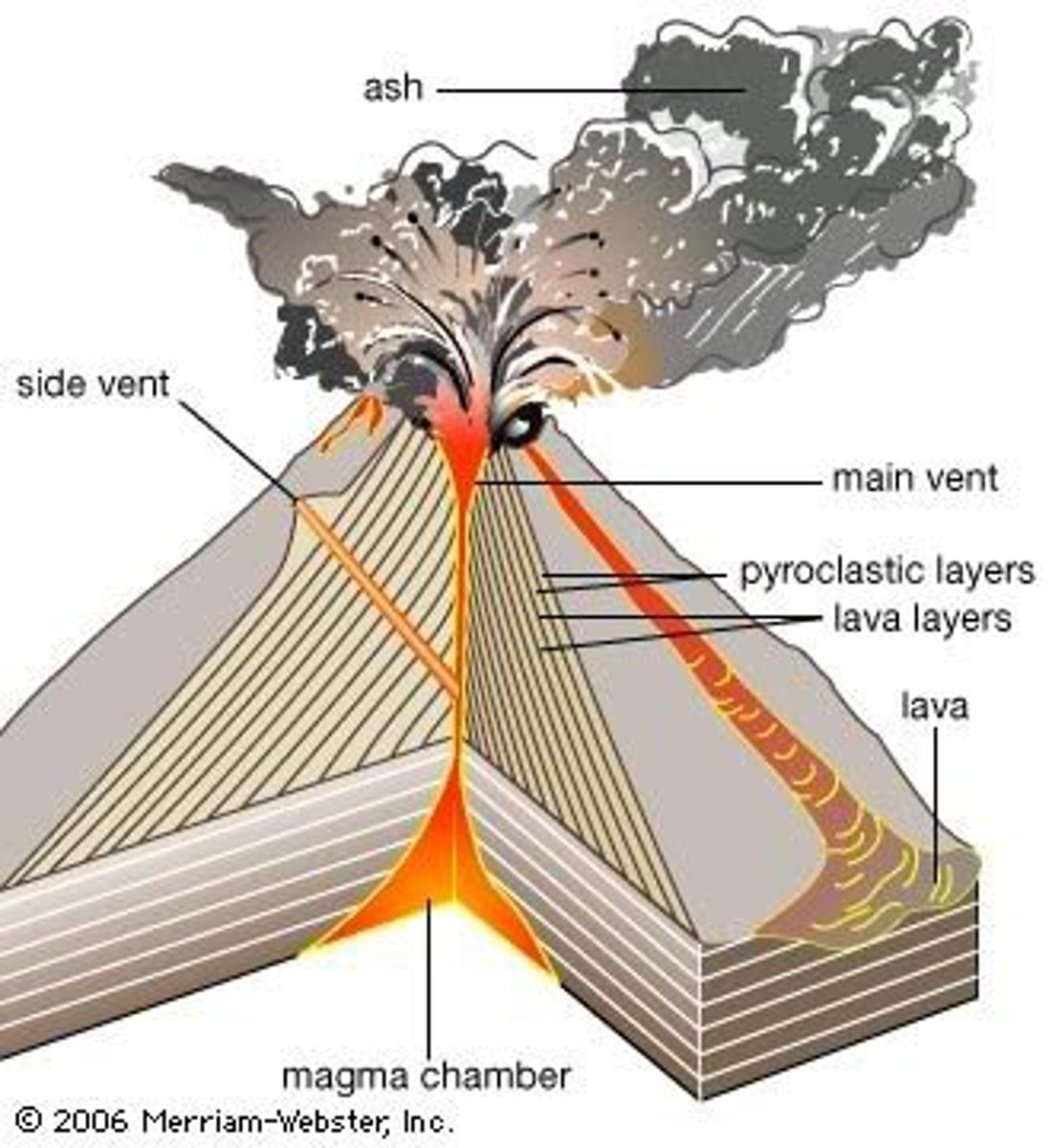
Fissure vent volcano
Large crack extending the radius of volcanoes with basic lava. eg. Hawaii
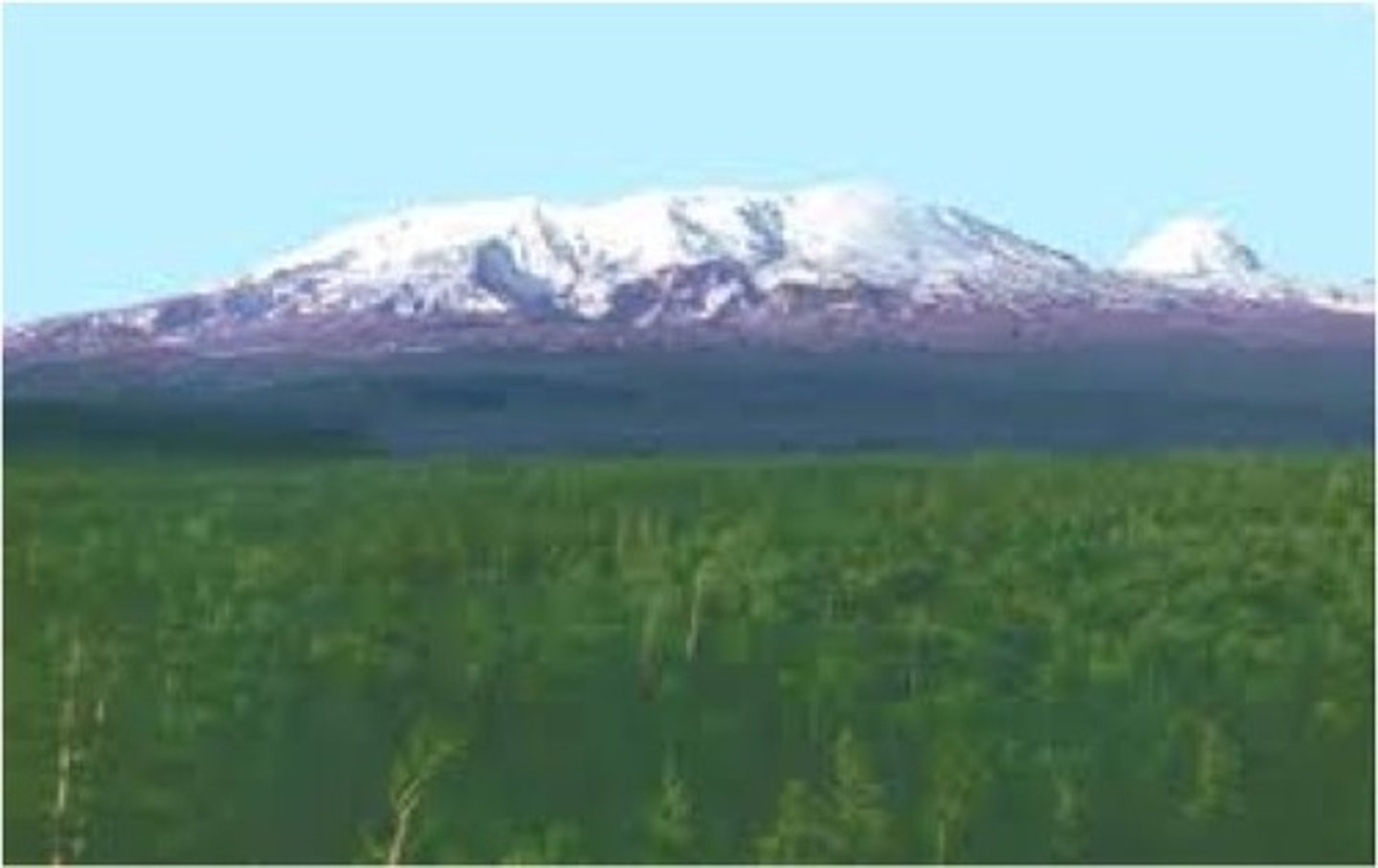
Shield volcano
Low viscosity, slow build up and basic lava. eg. Hawaiian Islands
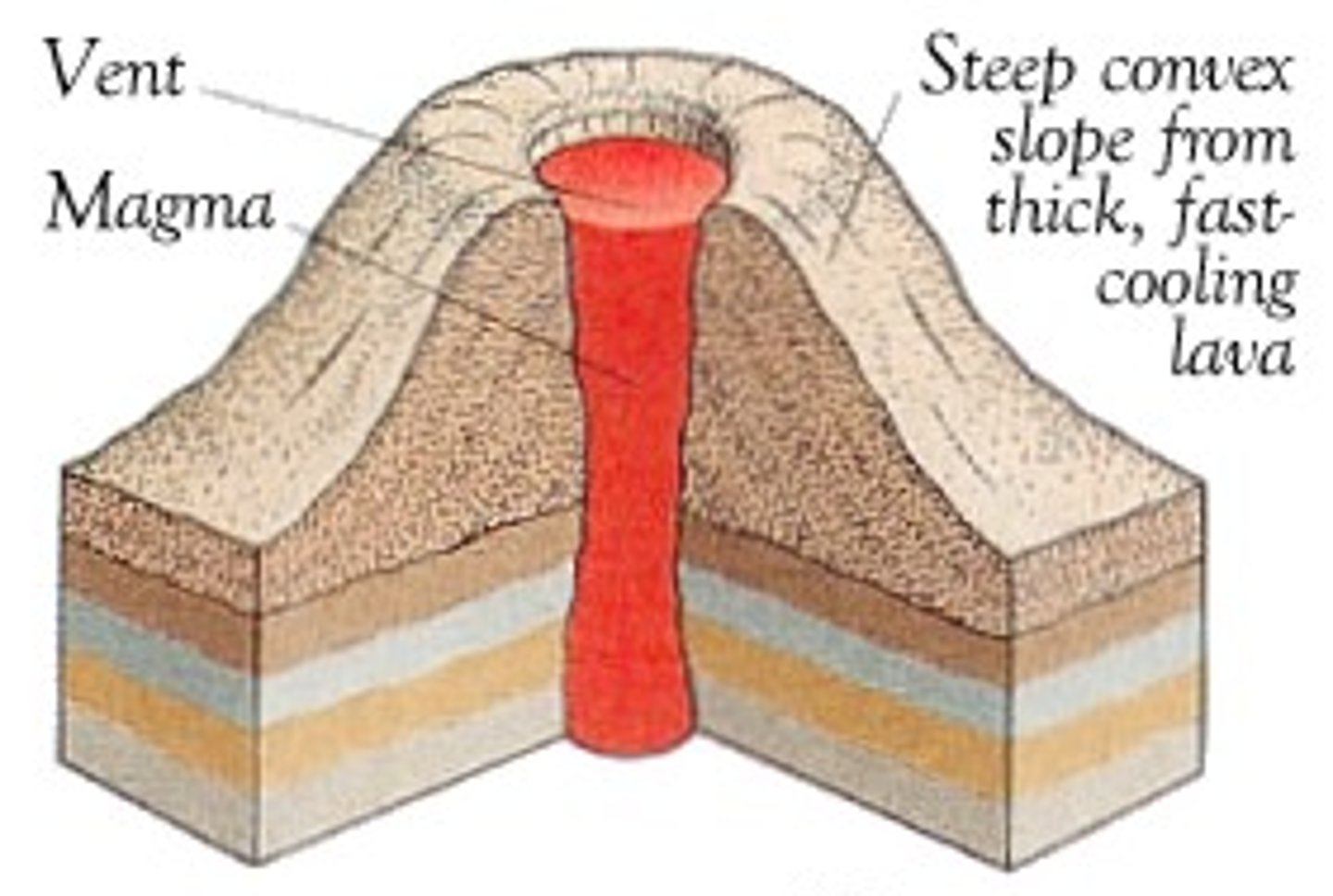
Acid dome volcano
Highly viscous, created from a dome within lava and acidic. eg. Mt Pelee eruption 1902 which killed 30,000
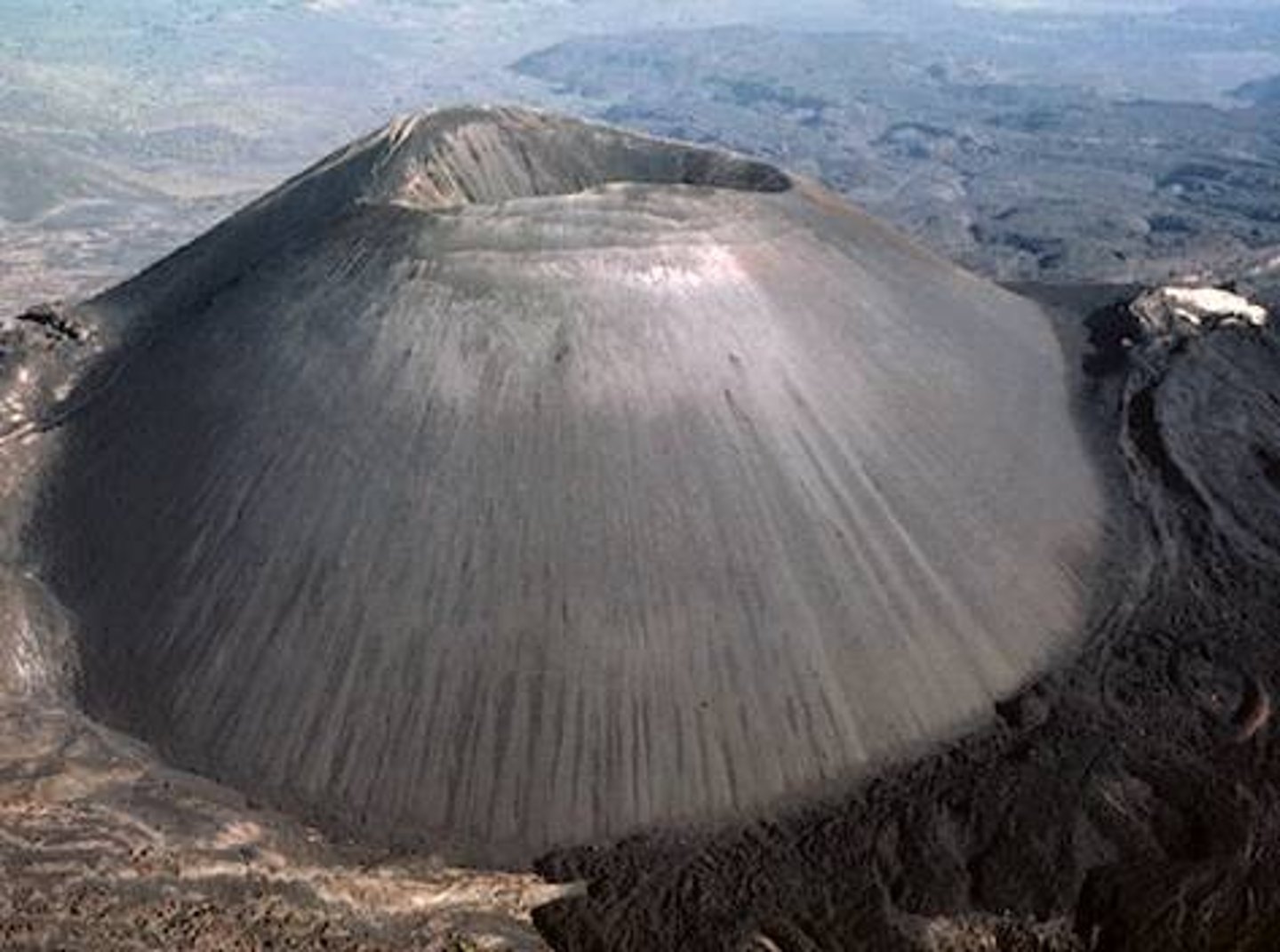
Cinder cone volcano
Formed by rock fragment cooling from gas explosives, intermediate lava eg. North America
Risk formula
(hazard x exposure x vulnerability)/manageability
Risk definition
The exposure of people to a hazardous event
Components of hazard-risk relationship
Unpredictability, lack of alternatives, dynamic hazards, cost-benefit, 'Russian roulette' reaction
Tectonic event definition
A hazard that adversely effects people
Vulnerability definition
The ability of a community to cope with the impacts of a disaster
When do hazards become disasters?
When 100+ people are killed or injured
Resilience definition
A country's ability to resist, absorb and recover from the impacts of a disaster
PAR model
Disasters occur at the intersection of vulnerability and risk
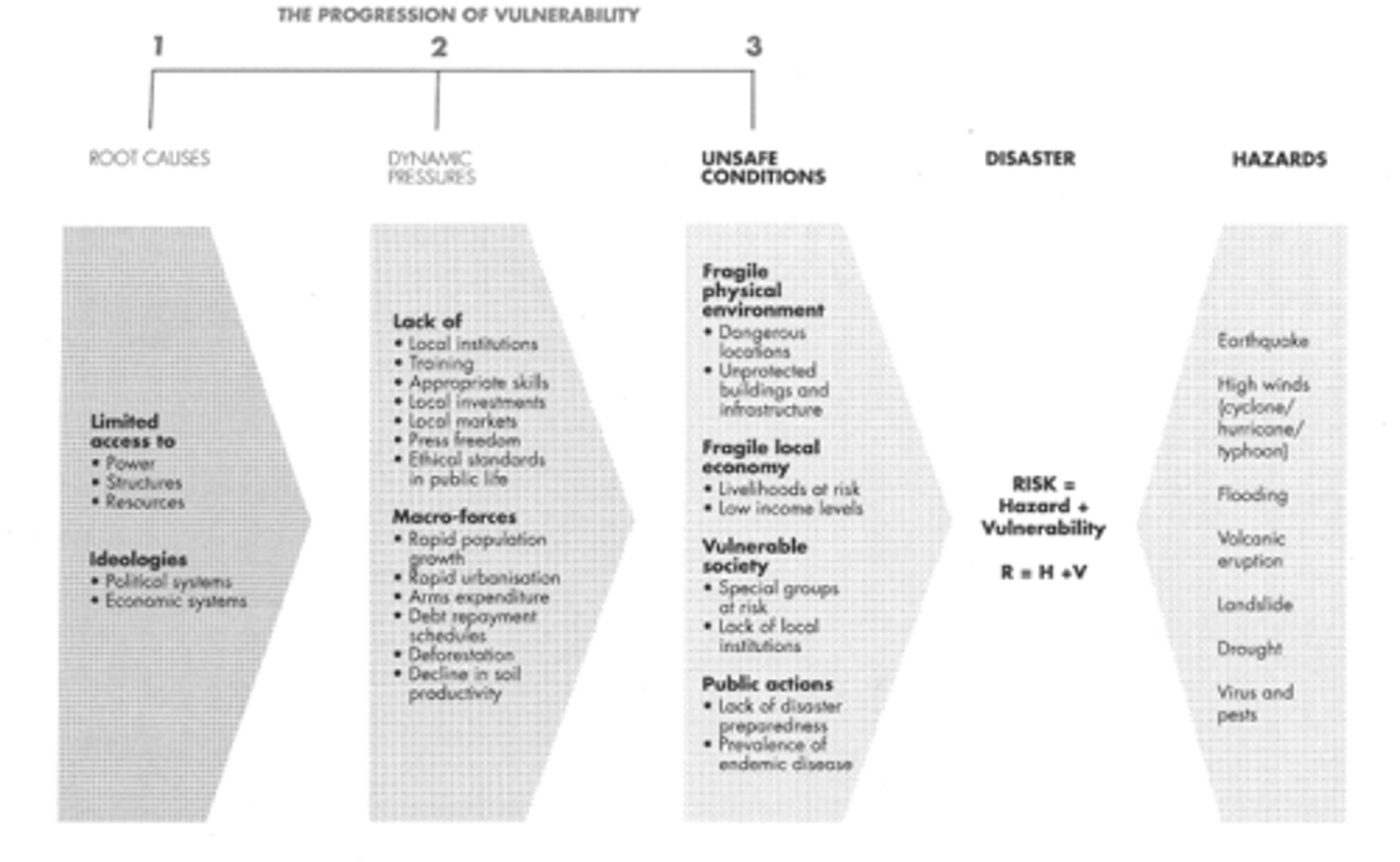
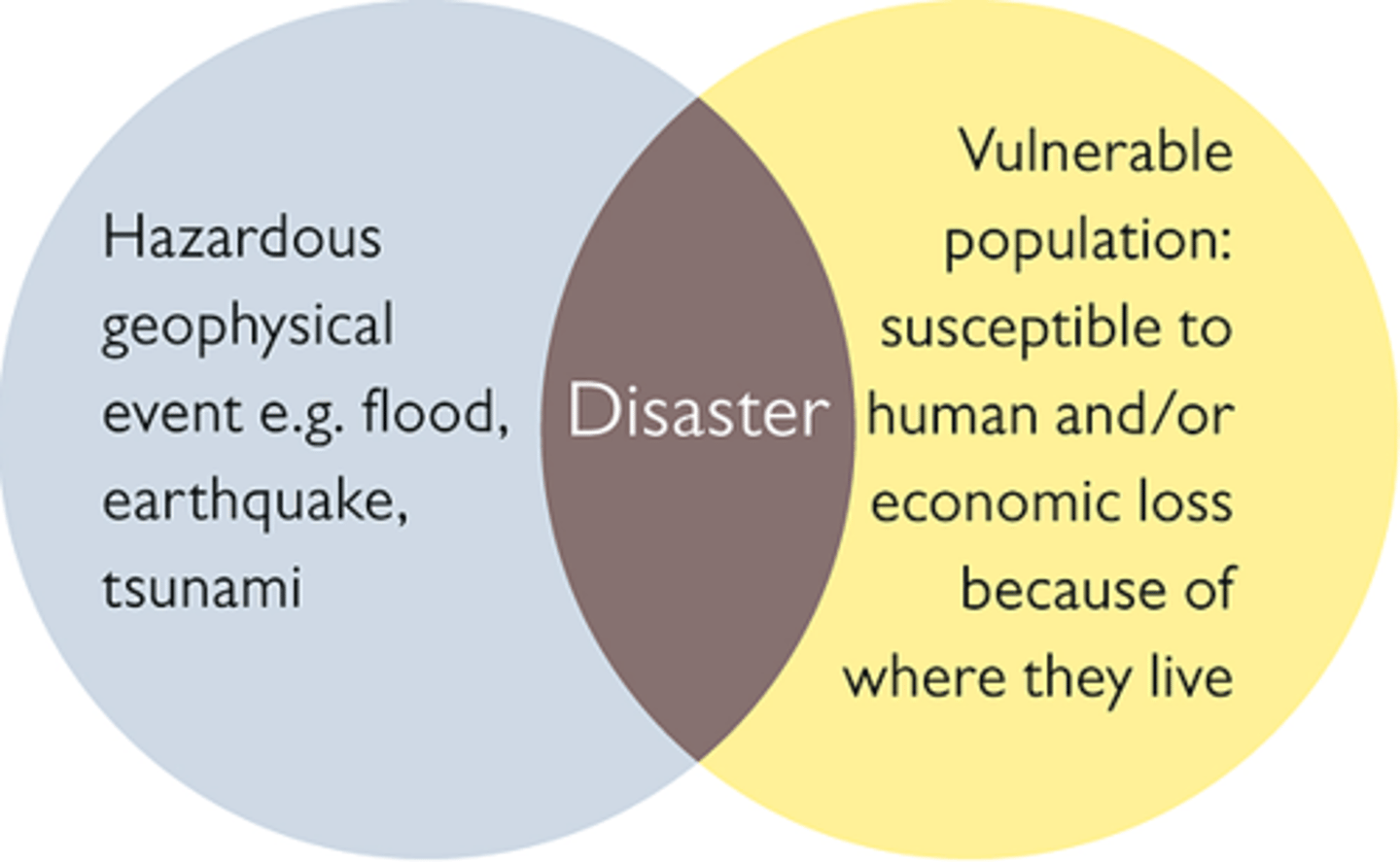
Degg's model
Shows the interaction between hazards, disaster and human vulnerability, although doesn't show magnitude or locational factors affecting hazard
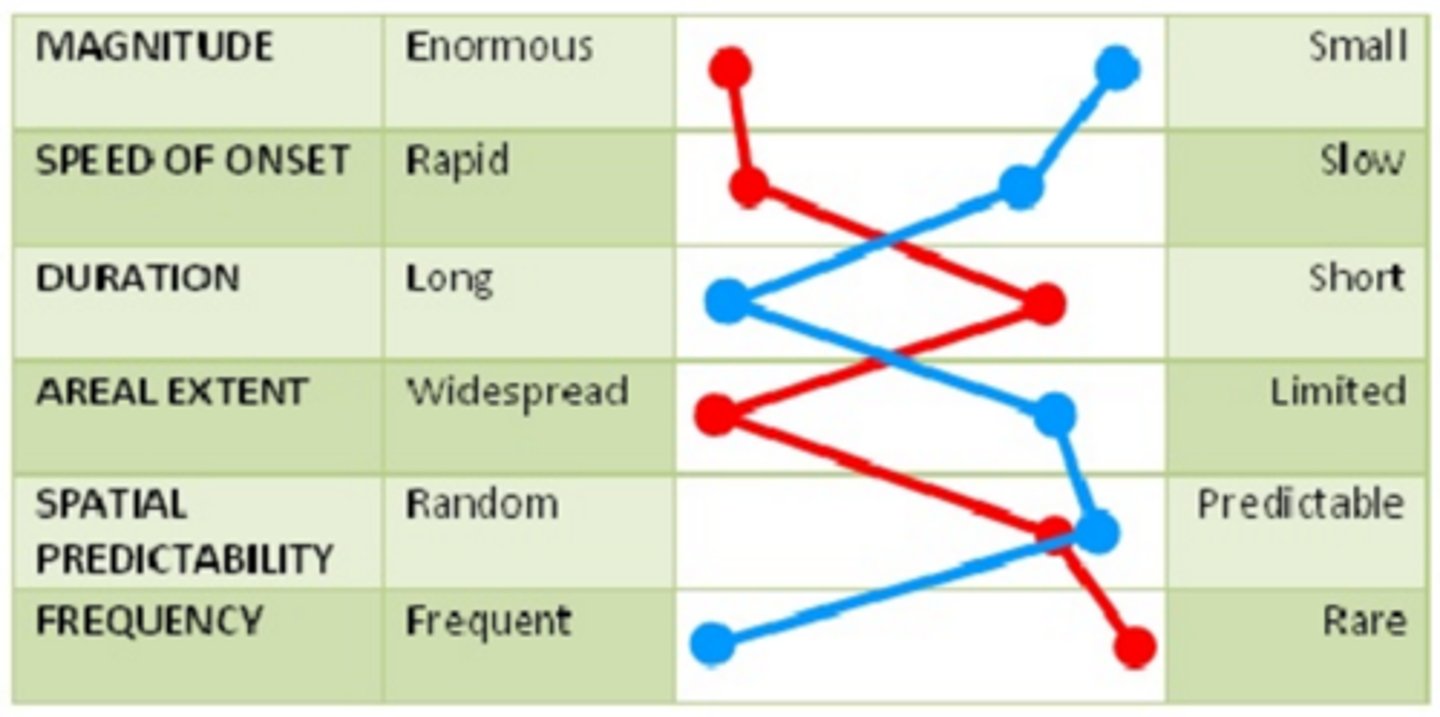
Hazard profiles
Measures magnitude, speed of onset, duration, areal extent, spatial predictability and frequency of disaster in a subjective manner
Factors affecting exposure to tectonic hazards
Development levels, population density, recovery speed, degree of urbanisation and uninsured losses
Factors affecting development (economic)
Institutions, technology, infrastructure, building regulations, income levels
Factors affecting development (non-economic)
Education, healthcare, housing quality
Importance of governance
Governance affects quality of infrastructure and mitigative measures in place (hazard management cycle) as well as preparedness to deal with hazard and aftermath
Importance of geographical factors
Degree of urbanisation, community spirit, population density and isolationism affects ability of aid in immediate aftermath of disaster to be effective as well as the number of people at risk
Importance of magnitude and intensity
Magnitude and intensity scales can attempt to quantify how powerful a disaster is, although some of these such as the Mercalli Scale are highly subjective. Higher intensity disasters may mean even a developed, well-governed country may remain in relief stage of Park's Model for longer
Factors affecting hazard response
Degree of preparedness, infrastructure, economic wealth, governance, accessibility, hazard type, topography
Disaster mitigation strategies
Modify hazard (defences), modify losses (aid, insurance) and modify vulnerability/resilience (building regs, hazard predictions etc)
OFZ
Ocean Fracture Zone. Earthquake activity along mid
CFZ
Continental Fracture Zone. earthquake activity along mountain range zones
Pacific Rings
A major area in the basin of the Pacific Ocean where a large number of earthquakes and volcanic eruptions occur.
Intra Plate
earthquake occurrences that happen within tectonic plates rather than at their boundaries.
Crustal Fractioning
The process where different minerals separate out from cooling magma, causing the Earth's crust to become chemically different over time (e.g. more silica-rich).
Focal Depth
The depth at which an earthquake originates within the Earth, measured from the Earth's surface to the hypocenter of the seismic event.