4a dna, rna and protein synthesis
 Call Kai
 Learn
Learn Practice Test
 Spaced Repetition
 Match
Match Flashcards
 Knowt Play
1/13

There's no tags or description
Looks like no tags are added yet.
Name | Mastery | Learn | Test | Matching | Spaced | Call with Kai |
|---|
No analytics yet
Send a link to your students to track their progress
14 Terms
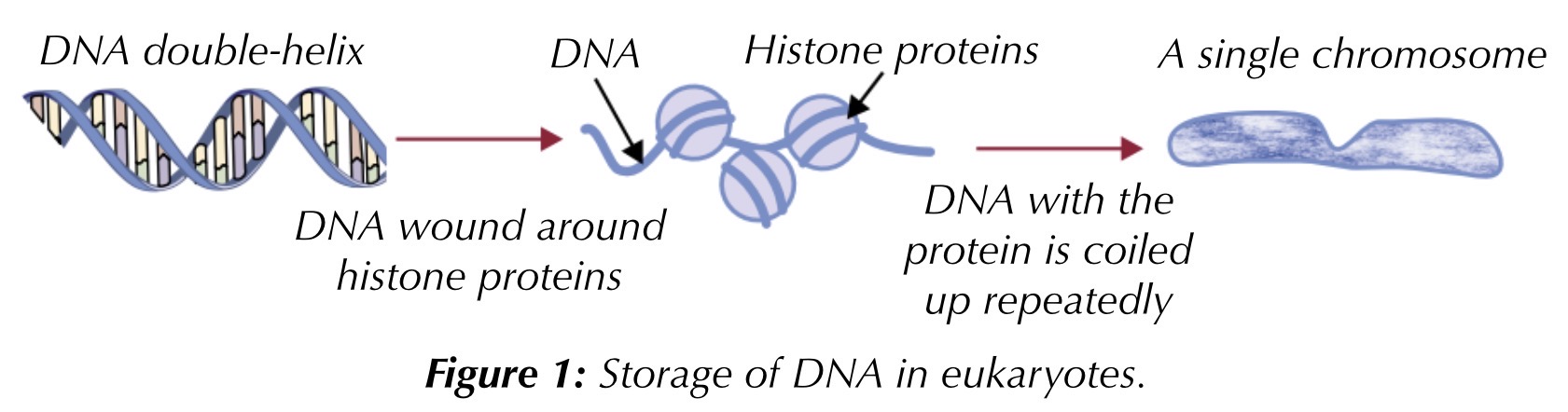
how dna is stored in eukaryotic cells
dna in eukaryotic cells is linear, existing as chromosomes, found in the nucleus. the dna molecule is really long, so it is wound up to fit into the nucleus, around histone proteins
mitochondrial and chloroplastal dna
it is similar to prokaryotic dna, being circular and shorter than dna in the nucleus. it is not associated with histone proteins
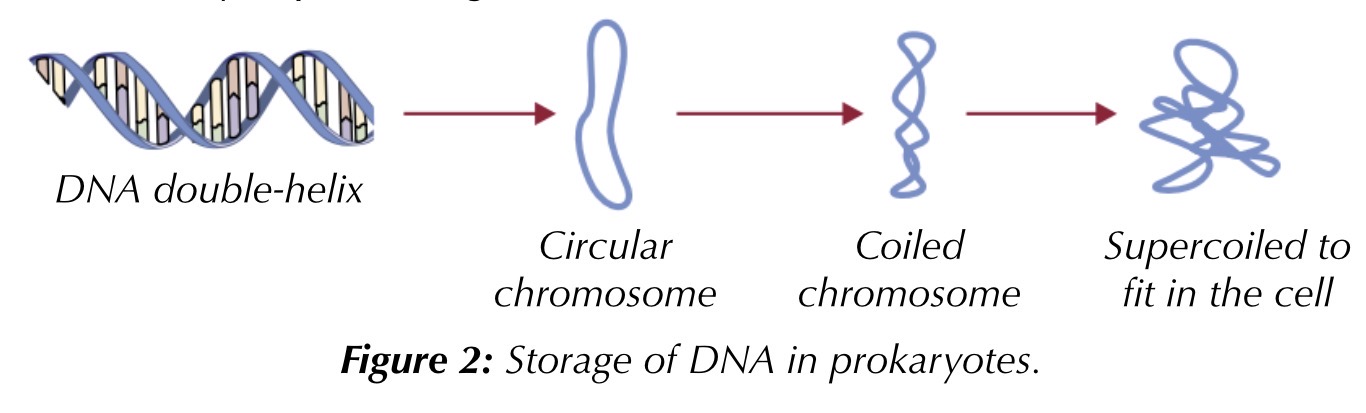
how dna is stored in prokaryotic cells
prokaryotes carry dna as shorter, circular chromosomes. it’s not wound around histones, it condenses to fit in the cell by supercoiling
gene
a gene is a sequence of dna bases that codes for either a polypeptide or functional rna
triplet/codon
a triplet/codon is a sequence of three dna bases in a gene which codes for a particular amino acid
genome & proteome
a genome is the complete set of genes in a cell
a proteome is the full range of proteins that a cell is able to produce
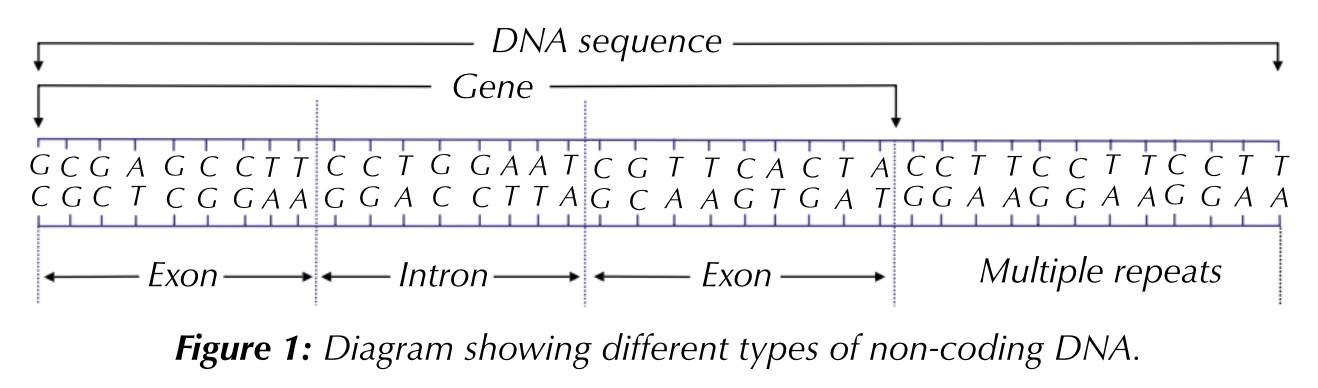
non-coding dna, introns & exons, repeats
non-coding dna is dna that doesn’t code for polypeptides, instead coding for functional rna
some genes that code for polypeptides contain sections that don’t code for amino acids, called introns, and sections that do, called exons
repeats are parts of a gene that repeat. over and over. they are also non-coding
homologous chromosomes and their locus
homologous chromosomes are a pair of chromosomes where they have the same size and genes, with different alleles. alleles are found at the locus, a fixed point on the chromosome. humans have 23 pairs of homologous chromosomes
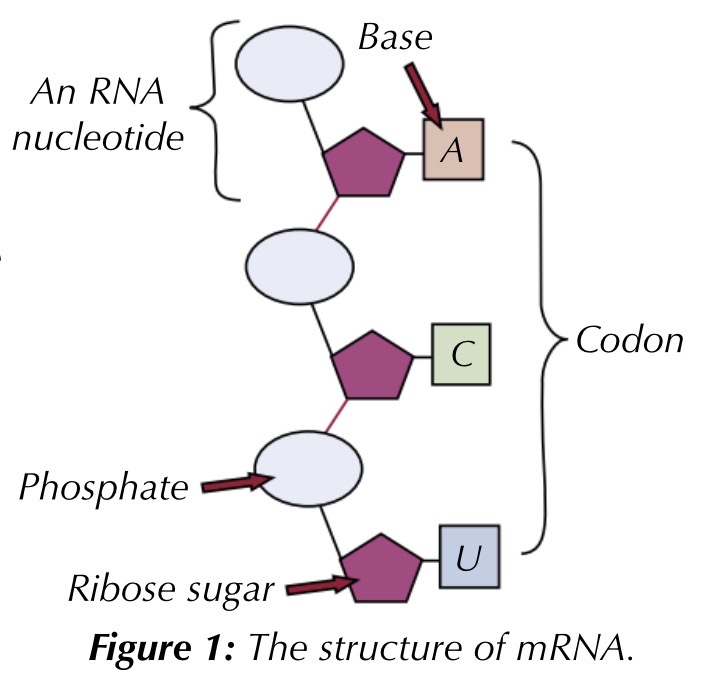
messenger rna (mrna)
made during transcription. carries the genetic code from the dna to the ribosomes, where it is used to make a protein during translation
mrna is a single polynucleotide strand, and groups of three adjacent bases are called codons
transfer rna (trna)
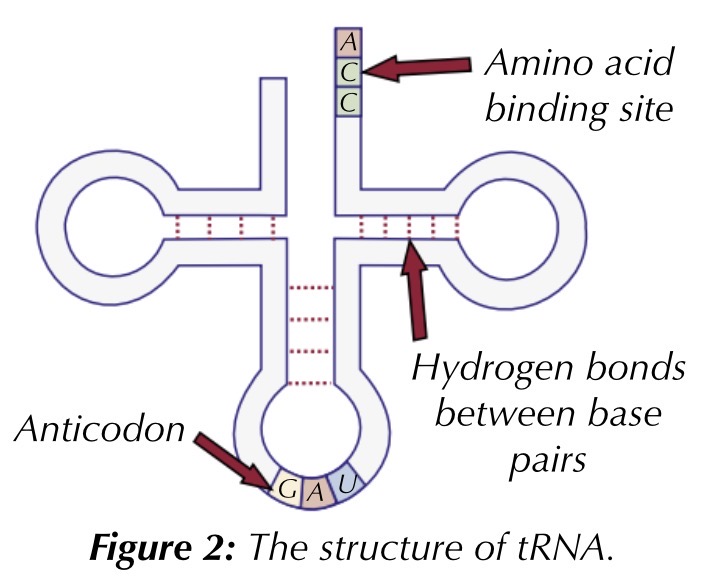
trna is involved in translation, carrying the amino acids used to make proteins to the ribosomes. trna is a single polynucleotide strand folded into a clover shape, held in this shape by hydrogen bonds at the base pairs
each trna molecule has a specific sequence of three bases at one end called an anticodon. at the other end, there is an amino acid binding site
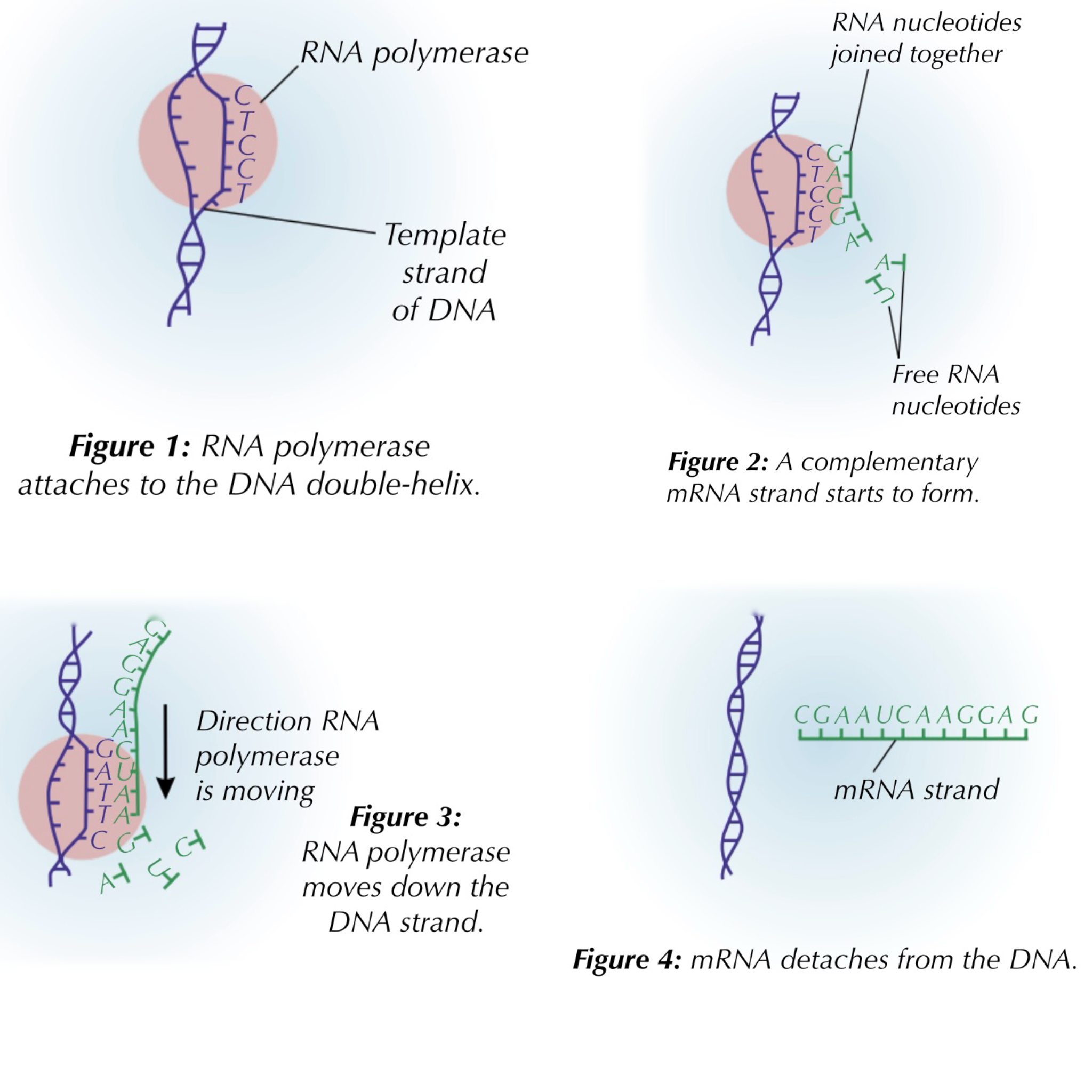
the process of transcription
rna polymerase attaches to the dna at the beginning of a gene. the hydrogen bonds between the two dna strands in the gene are broken down by dna helicase attached to the rna polymerase. a dna strand is used as a template for an rna copy
rna polymerase lines up free rna nucleotides along the dna bases. the rna strand is a complementary copy to the dna strand (except thymine is replaced by uracil). the rna strand is joined by rna polymerase, forming mrna
rna polymerase moves along the dna strand, assembling the mrna strand. hydrogen bonds between the uncoiled dna strands reform once rna polymerase passes by and it coils back into a double helix
rna polymerase reaches a particular sequence of dna, the stop signal, and it detaches from the dna. in eukaryotes, mrna moves out of the nucleus through a nuclear pore, attaching to a ribosome in the cytoplasm
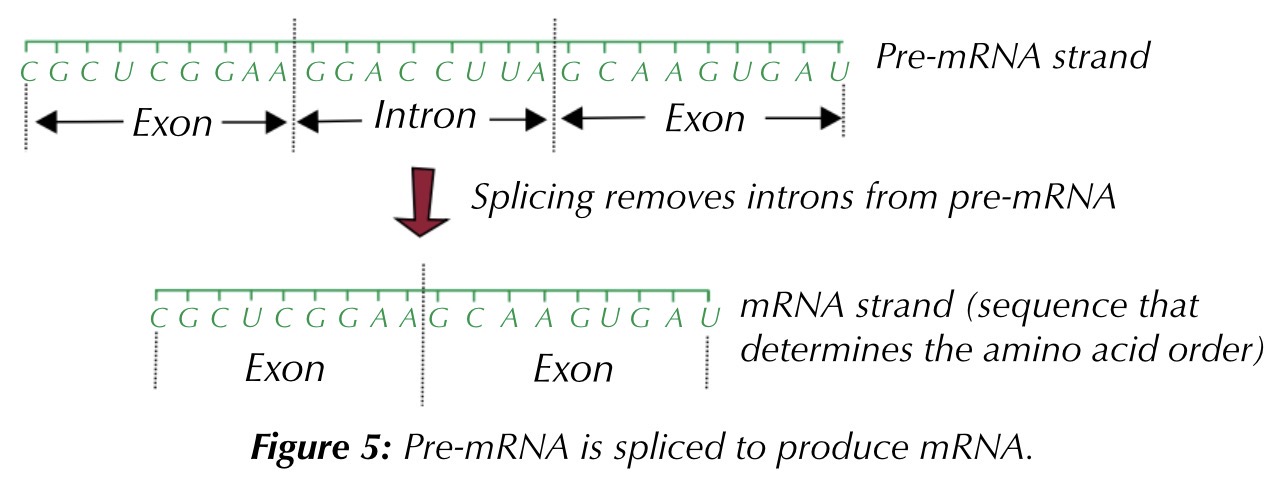
splicing in eukaryotic organisms
in eukayotes, introns and exons are both copied onto mrna during transcription. this is called pre-mrna. splicing then occurs, and introns are removed, while exons are joined together, forming mrna strands. this takes place in the nucleus
there are no introns in prokaryotic dna, so splicing does not need to take place
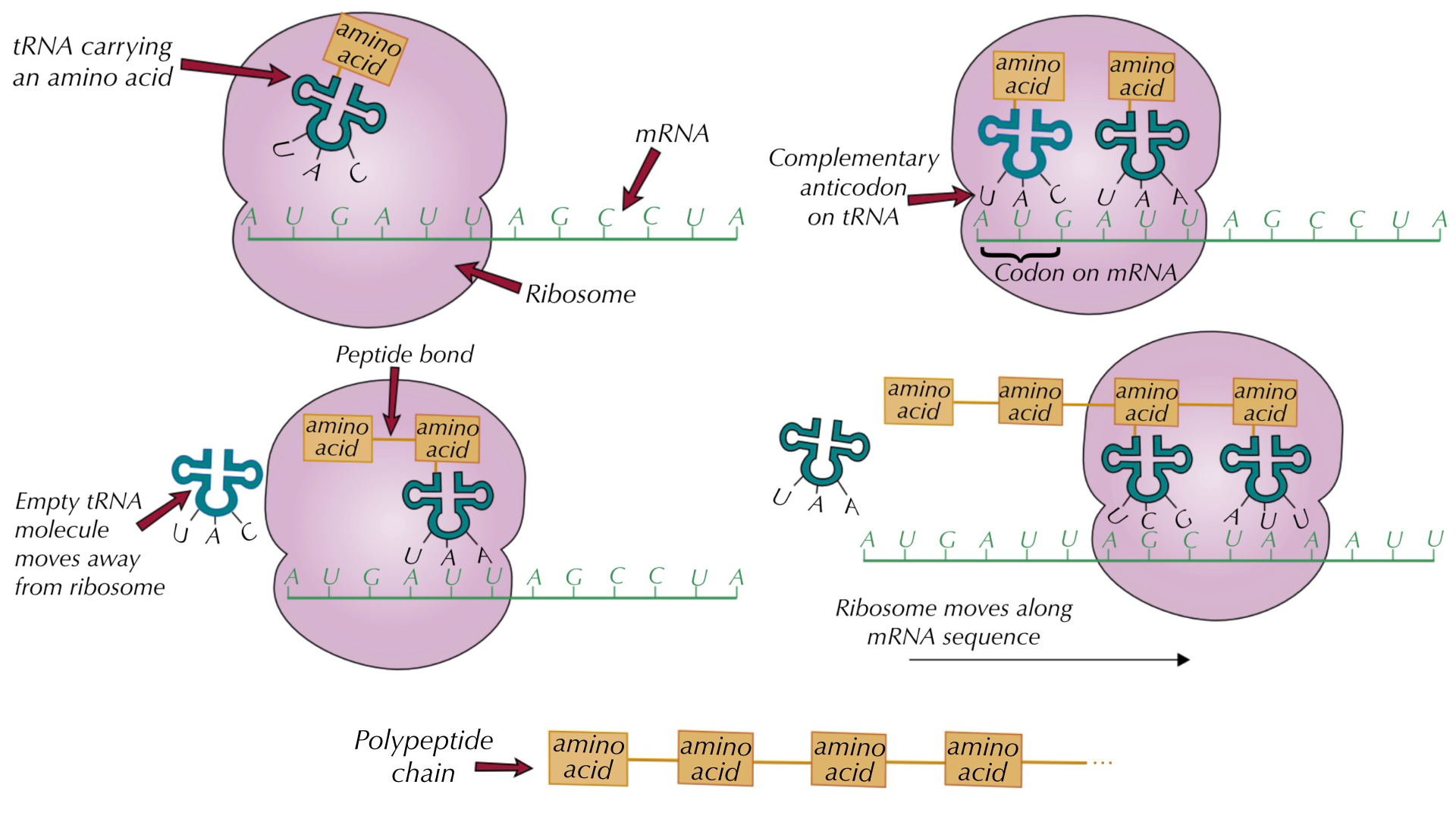
the process of translation
translation occurs at the ribosomes in the cytoplasm in prokaryotes and eukaryotes. the mrna attaches to a ribosome and trna molecules carry animo acids to it. atp provides energy for these bonds
a trna molecule with an anticodon complementary to the first codon on the mrna attaches itself to the mrna by complementary base pairing. the next trna codon follows, and so on
the two amino acids attached to the trna molecules are joined by a peptide bond. the first trna molecule moves away, leaving its amino acid behind
a third trna molecule binds to the next codon. its amino acid binds to the first two and the second trna molecule moves away… etc. a chain of linked amino acids is formed until there is a stop signal on the mrna
the polypeptide chain moves away from the ribosome
the genetic code: non-overlapping, degenerate, and universal
the genetic code is the sequence of base triplets in mrna that codes for specific amino acids
each base triplet is read in sequence, separate from the triplet before it and after it. they don’t share bases, so the code is non-overlapping
the code is also degenerate, so there are more possible combinations of triplets then there are amino acids (20 amino acids vs 64 triplets). some amino acids can be coded for by more than one base. not all triplets code for an amino acid (like stop signals). there is also a start signal
the code is universal across all organisms. the same specific base triplets code for the same amino acids in all living things