Paracrine/ Juxtacrine/ Endocrine
 Call Kai
 Learn
Learn Practice Test
 Spaced Repetition
 Match
Match Flashcards
 Knowt Play
1/29

There's no tags or description
Looks like no tags are added yet.
Name | Mastery | Learn | Test | Matching | Spaced | Call with Kai | Chat |
|---|
No analytics yet
Send a link to your students to track their progress
30 Terms
Paracrine Signaling
A secreted molecules diffuses locally and triggers a response in neighboring cells
Juxtacrine Signaling
A type of cell signaling between two cells that directly contact one another
Endocrine Signaling
A type of long-distance signaling in animals that utilizes hormones.
Synaptic Signaling
a nerve cell releases neurotransmitter molecules into a synapse, stimulating the target cell
allosteric acetylcholine receptor
Reception: binds to its respective receptor located in the membrane of the skeletal muscle. When its respective ligand binds it undergoes a conformational change
Transduction: allows the influx of Na+ to diffuse into the muscle cell
Response:causes the muscle cell to contract
Cytoplasmic Reception
Reception: small, nonpolar ligands diffused directly through the plasma membrane and into the cytoplasm where they bind with an intracellular receptor
Transduction: The receptor converts a molecular signal to a cellular response
Response: Can be a single step of a more complex signal transduction pathway
Steroids, Thyroids, Hormones, NO gas
hydrophobic chemical messengers who bind with a cytoplastmic (intracellular) receptor
gap junctions and plasmodesmata
allows direct communication between cells, the site of juxtacrine signaling
Kinetochore, Centromere, Sister Chromatids
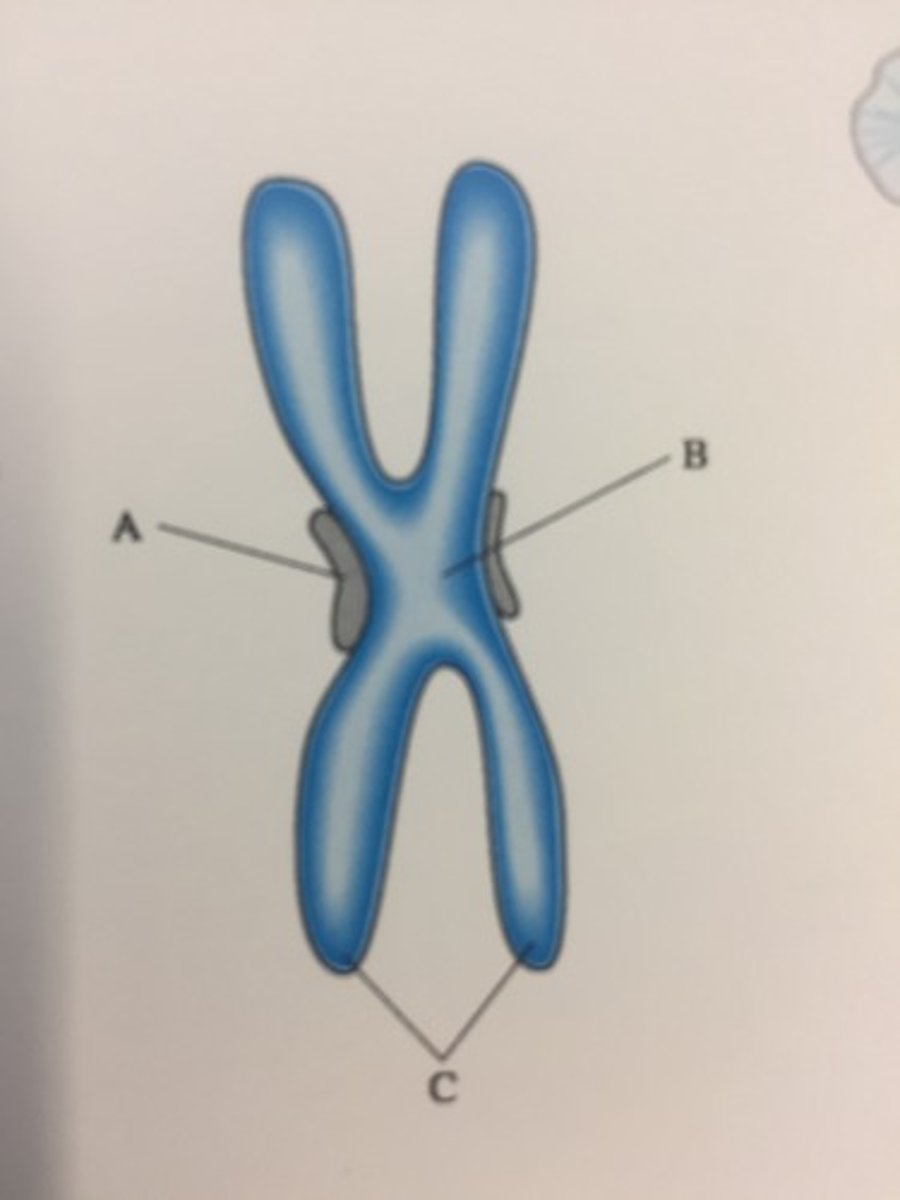
Kinetochore
disk shaped protein that ataches chromatid to the mitotic spindle
Centromere
Specialized region that holds two sister chromatids together
Sister Chromatids
two strands of DNA; one is a replica of the other
Homologous chromosomes
Chromosomes that have the same sequence of genes, that have the same structure, and that pair during meiosis.
Cyclins and CDKs
control the timing of cell division
Cyclins
Synthesized in response to various molecular signals, including growth factors
G1 checkpoint
The restriction point, if not passed the cell goes into G0 phase
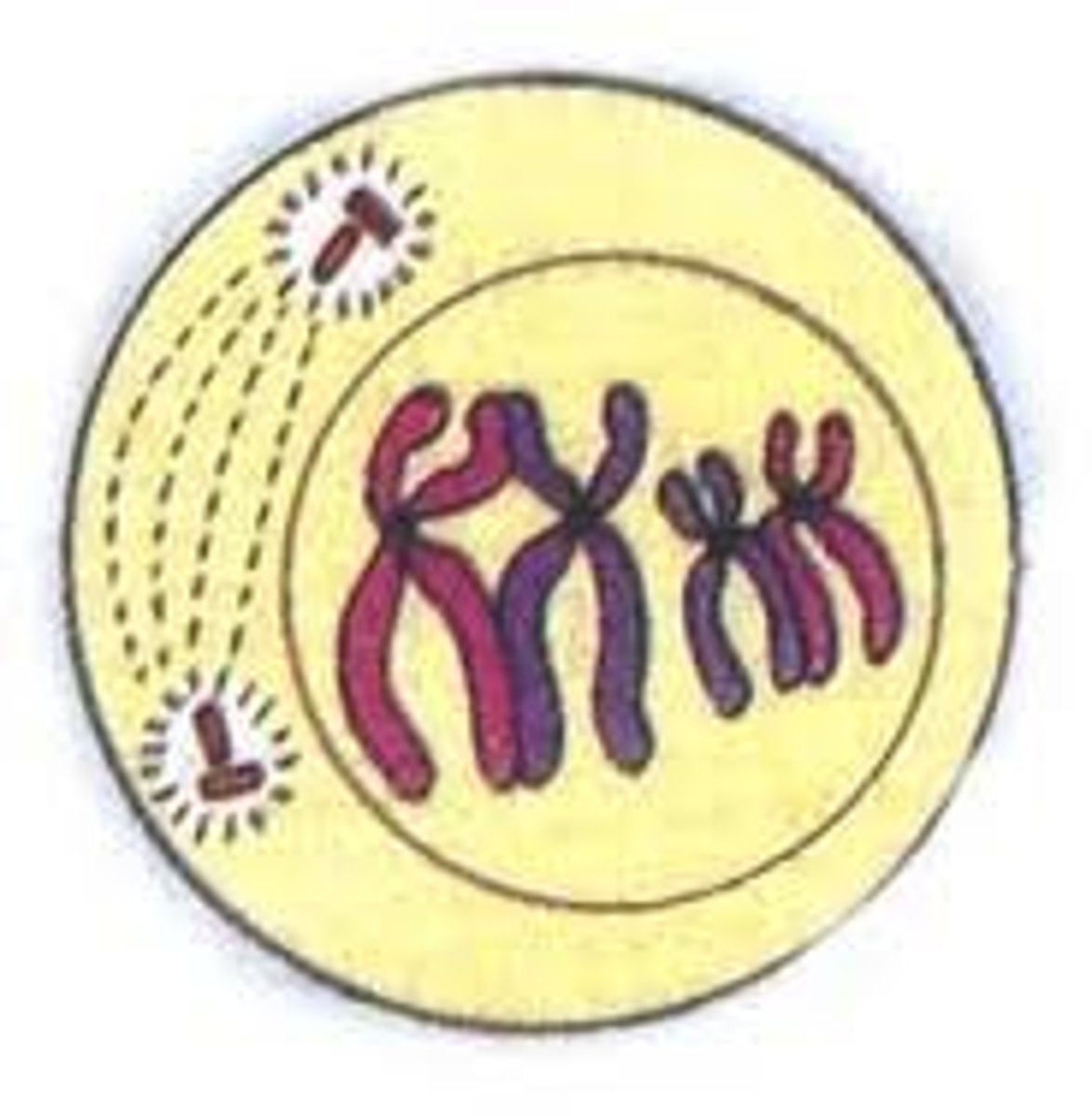
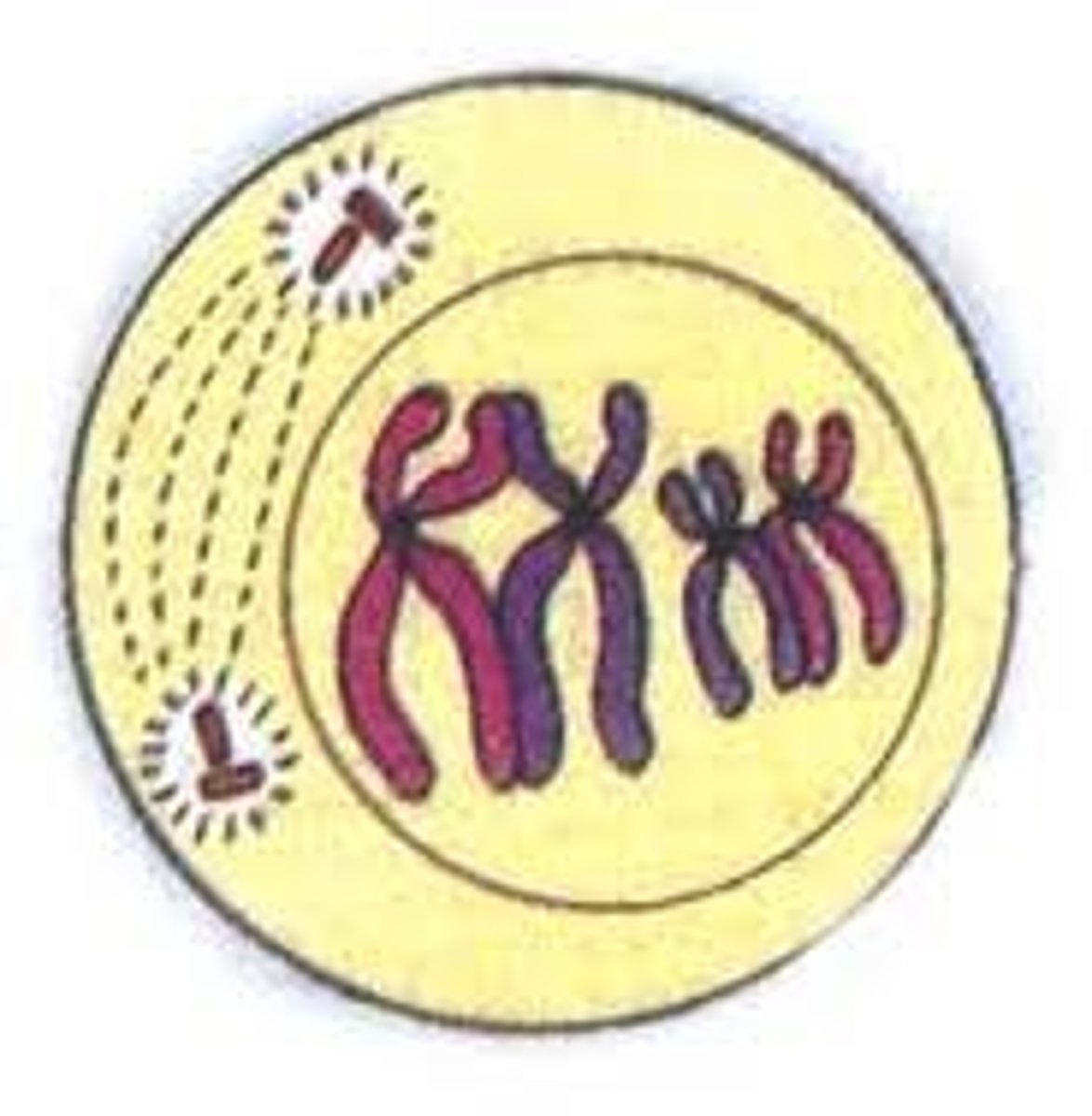
Prophase
The nuclear membrane disintegrates, strands of chromosomes condense and become visible, and the nucleolus disappears (Mitosis)
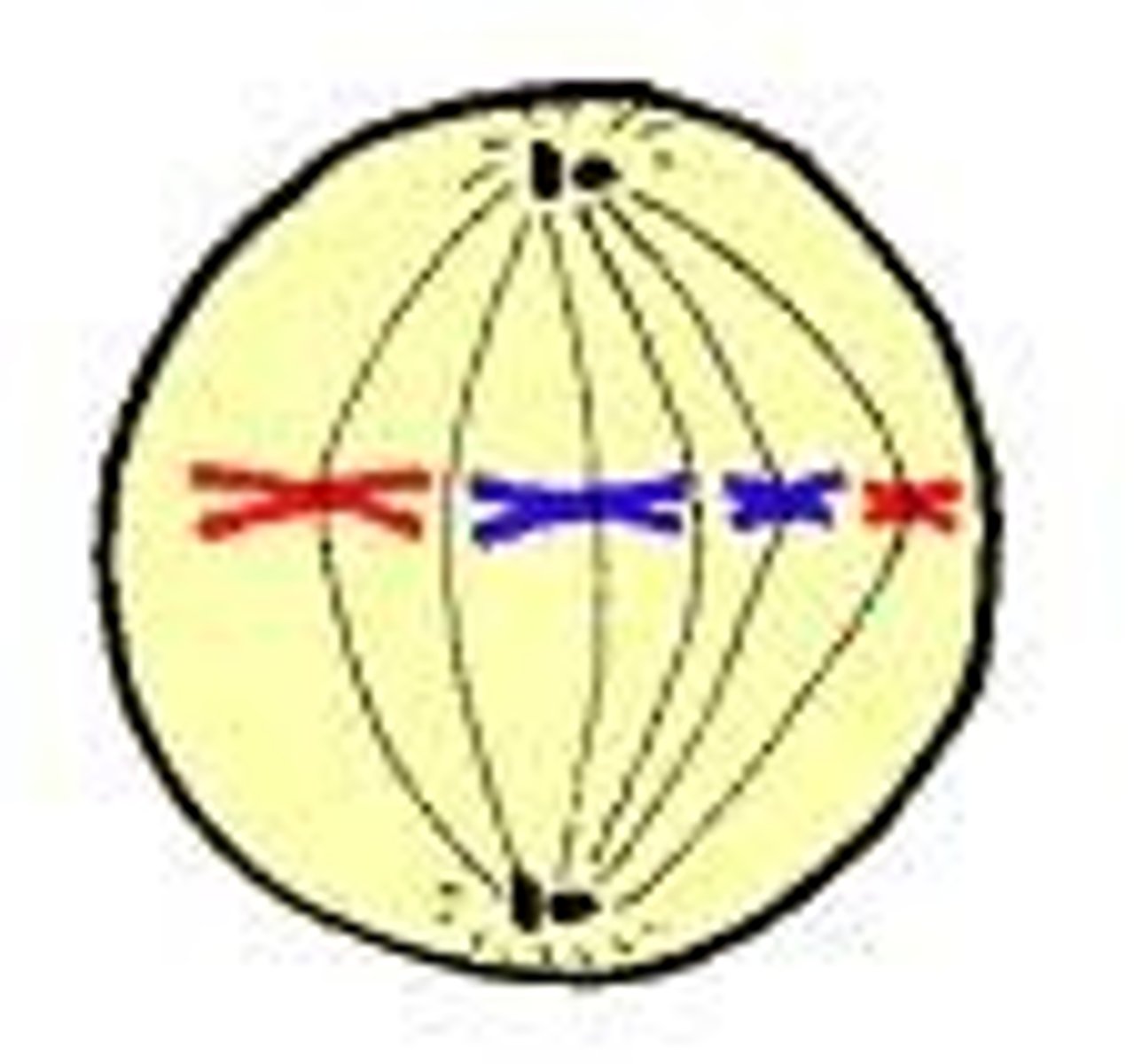
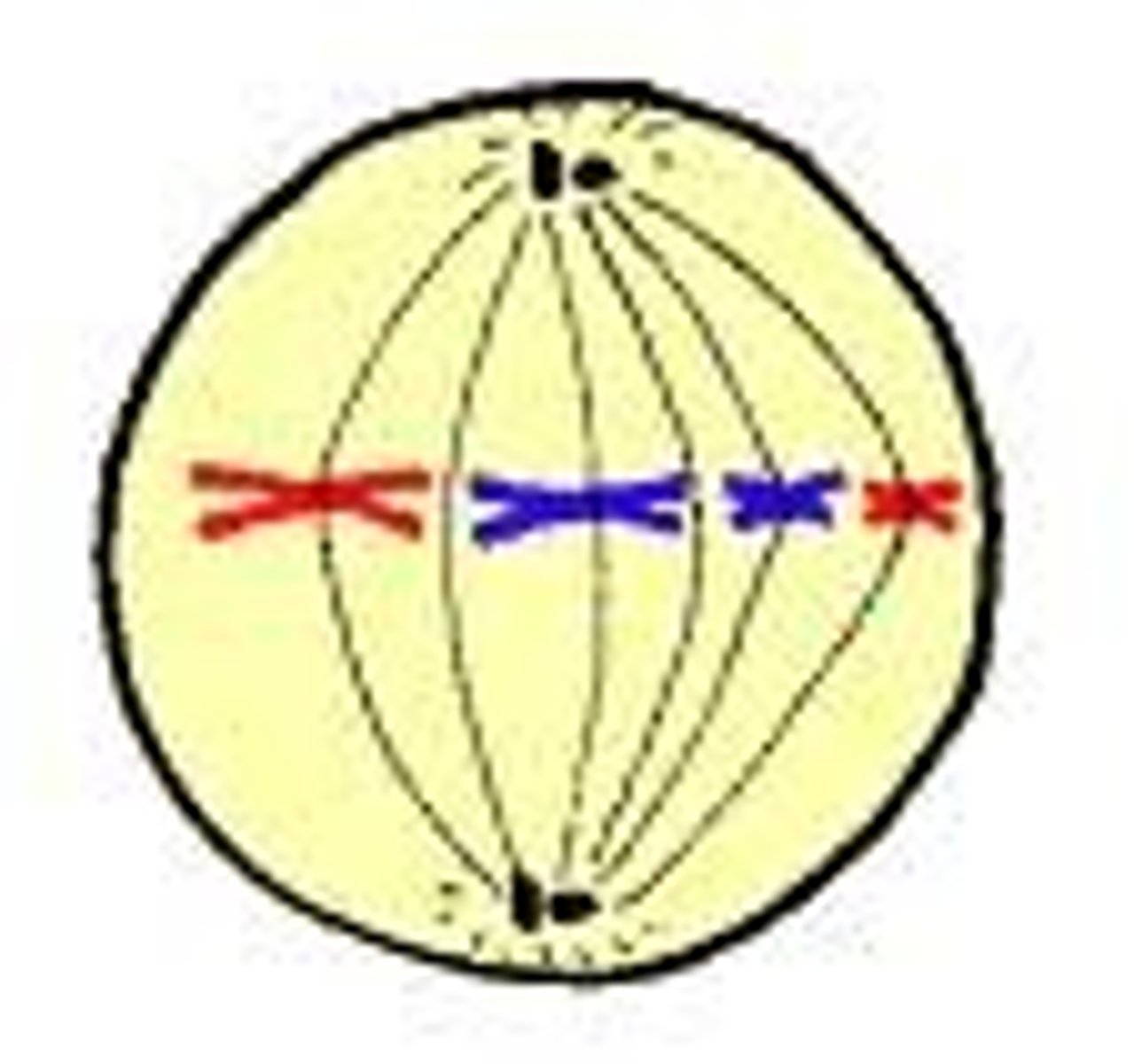
Metaphase
The chromosomes line up single file on a single plane, centrioles are at opposite ends of the cell, and spindle fibers run from centrioles to kinetochores (Mitosis)
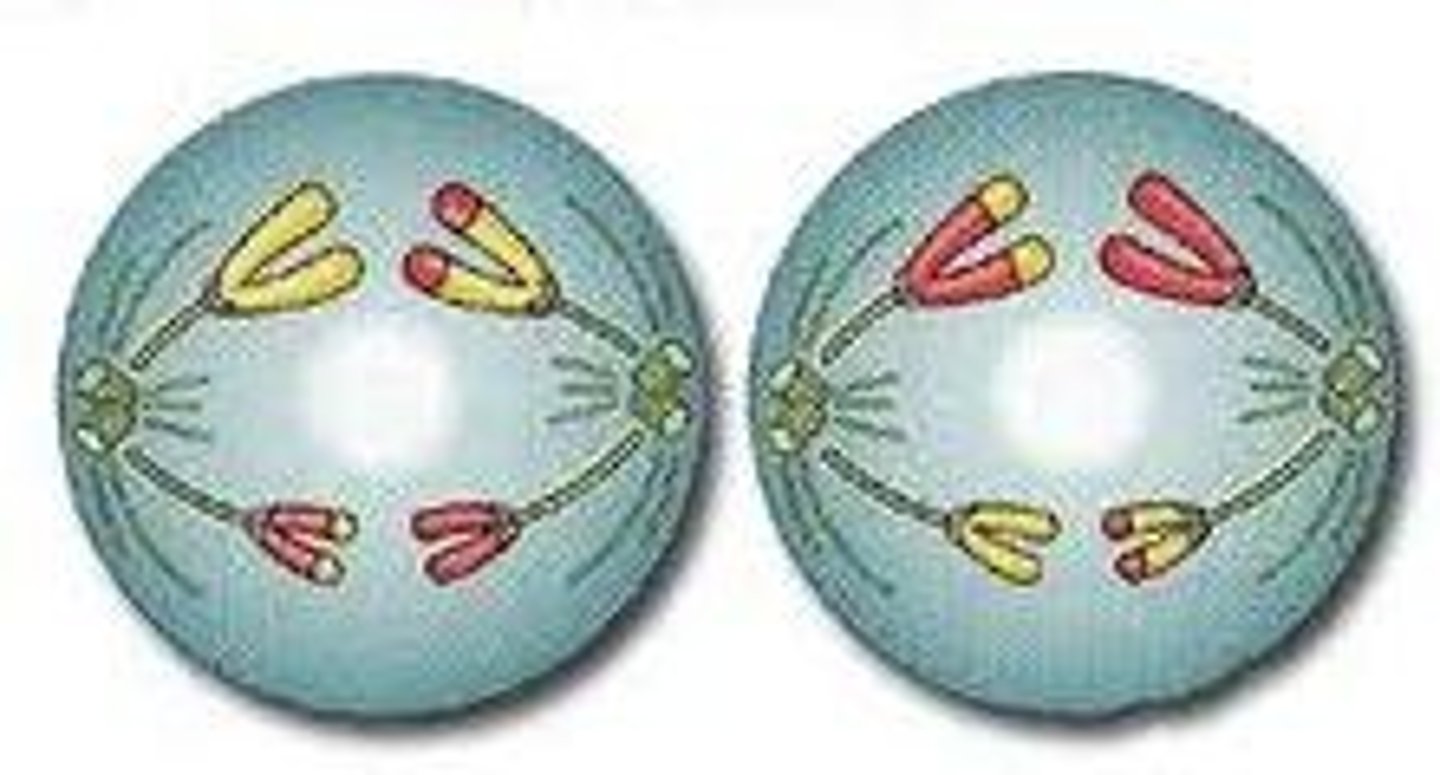
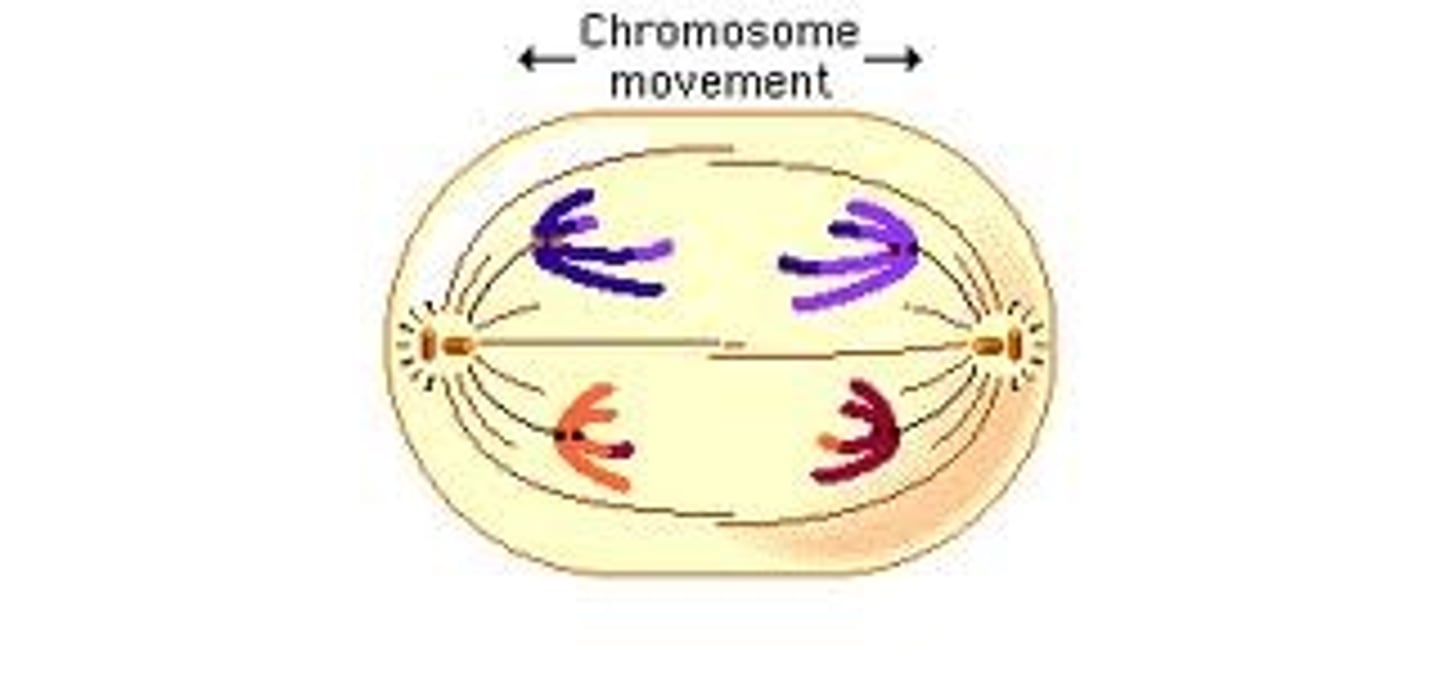
Anaphase
Sister chromatids separate as spindle fibers pull them apart (Mitosis)
Telophase
Chromosomes cluster at opposite ends of the cell, the nuclear membrane reforms, and supercoiled chromosomes unravel and become invisible again (Mitosis)
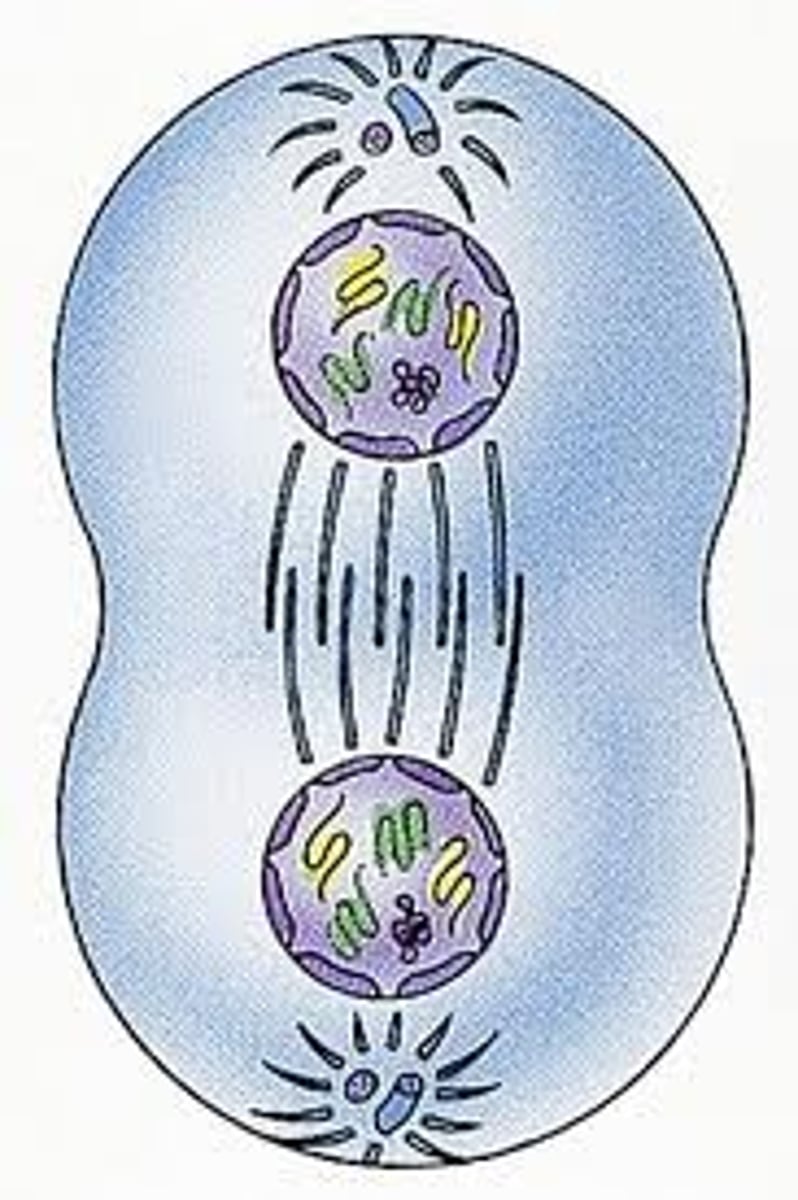
Cytokinesis
The dividing of the cytoplasm
Prophase
Metaphase
Anaphase
Telophase
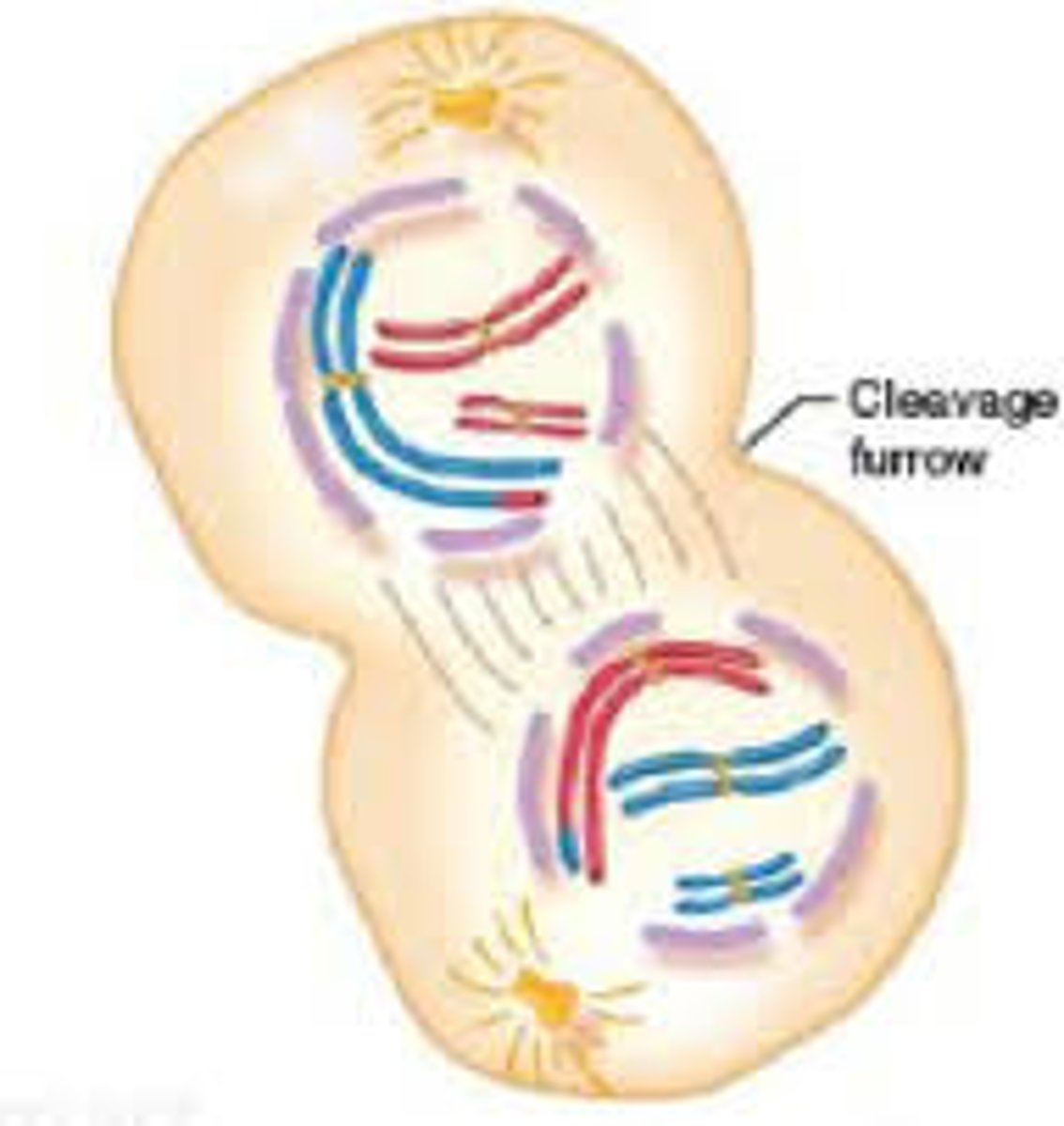
Contact Inhibition
-phenomenon in which cells cease dividing when they become crowded
-also called density-dependent inhibition
-a property of normal cells grown in culture
-cancer cells do not exhibit this characteristic; their growth is uncontrolled
Meiosis I
Synapsis and crossover occur, and homologous chromosomes seperate
Meiosis II
Sister chromatids seperate, uncoupling at the centromere, results in four total haploid cells
Crossing Over
Occurs during prophase I of meiosis, it is an exchange of genetic material between nonsister chromatids that increases variation in offspring, because it produces recombinant chromosomes consisting of combined gemes from two parents. Occurs following synapsis.
In mitosis, sister chromatids saperate; in meiosis I homologous pairs separate
The difference between metaphase of Mitosis and Meiosis