Introduction
 Call Kai
 Learn
Learn Practice Test
 Spaced Repetition
 Match
Match Flashcards
 Knowt Play
1/15

There's no tags or description
Looks like no tags are added yet.
Name | Mastery | Learn | Test | Matching | Spaced | Call with Kai |
|---|
No analytics yet
Send a link to your students to track their progress
16 Terms
Theories of Personality
History of Personality Theory
Major Early Theorists
Sigmund Freud & Carl Jung
Neo-Freudians
Alfred Adler
Erik Erikson
Karen Horney
Trait Theorists
Gordon Allport & Raymond Cattell
Evolutionary/Biological Perspectives
Learning Perspective
Skinner & Miller
Humanistic Theorists
Karl Rogers, Abraham Maslow, & Buddhist Psychology
Personality Disorders
DSM-IV, definitions, examples, and theory
Working Definitions
Personality
Personality Profile
Personality Theory
A Working Definition of Personality
Personality represents the underlying characteristics of a person that account for consistent patterns of behavior and experience
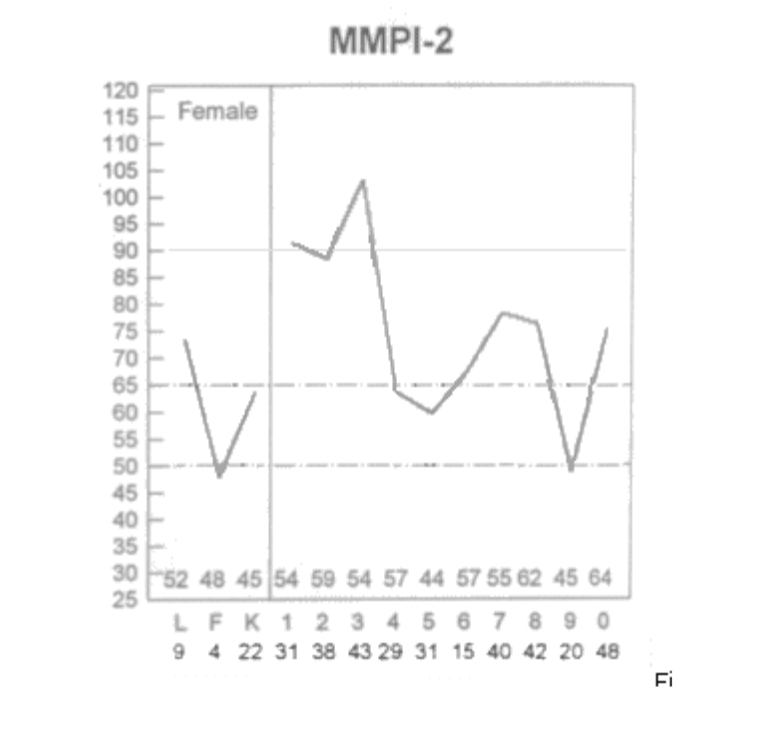
Personality Profile
A graphic representation of a person’s personality
Demonstrates the uniqueness of a personality (a fingerprint)
Personality Theory
A conceptual tool consisting of systematically organized constructs and propositions for understanding certain specific phenomenon
3 Goals of Personality Theory
Description: Describing personality using:
Types
Traits
Factors
Dynamics: How is personality expressed and modified (e.g. environmental influences)?
Development: How does personality develop?
e.g., Is it inherited or learned?
Personality Theory
Usually nomothetic
Groups of individuals are studied in order to derive overarching themes (or theories)
Studying all persons (“universals”)
Not idiographic
Study of a particular individuals (case studies)
Psychobiographies (retrospective)
Universals
Core mental attributes, emotions, or behaviors shared by all or nearly all humans across diverse cultures and societies
Psychobiographies
A specialized form of biography that applies psychological theories and research methods to analyze the lives of notable historical public figures
Its goal is to uncover the unconscious motives, personality traits, and childhood experiences that shapes their significant actions and decisions
Retrospective: looking back at or dealing with past events or situations
“Types”
Categories of people with similar characteristics
E.g., Type A and Type B personalities (proposed as cardiovascular risk groups)
Personality comes from a limited number of distinct categories
Problem: Categorize groups in an “all-or-none” way
Limited in the number of variables that can be assessed
“Traits”
Widely used, common sense descriptors
e.g., outgoing, confident, athletic
Distinguishes one person from another and purportedly causes consistent behavior
Strengths:
Quantitative/Dimensional
Problems:
Too much redundancy; over 18,000 trait words in dictionary!
Therefore, they are perhaps poorly quantified and lead to a lack of consensus (a mish-mash of results)
“Factors”
A statistically derived, quantitative dimension that is broader than a trait
E.g., Raymond Cattell’s 16PF and, ultimately, the “Big Five”
Openness to Experience, Conscientiousness, Extraversion, Agreeableness, Neuroticism
Environmental Factors Contributing to Theory Development
Zeitgeist
Ortgeist
Zeitgeist
Simultaneous discoveries tell that when the raw materials are there and the time is right, someone will propose the idea