chapter 4 community
 Call Kai
 Learn
Learn Practice Test
 Spaced Repetition
 Match
Match Flashcards
 Knowt Play
1/19

There's no tags or description
Looks like no tags are added yet.
Name | Mastery | Learn | Test | Matching | Spaced | Call with Kai |
|---|
No analytics yet
Send a link to your students to track their progress
20 Terms
menyion 4 types of carriers and their definitions
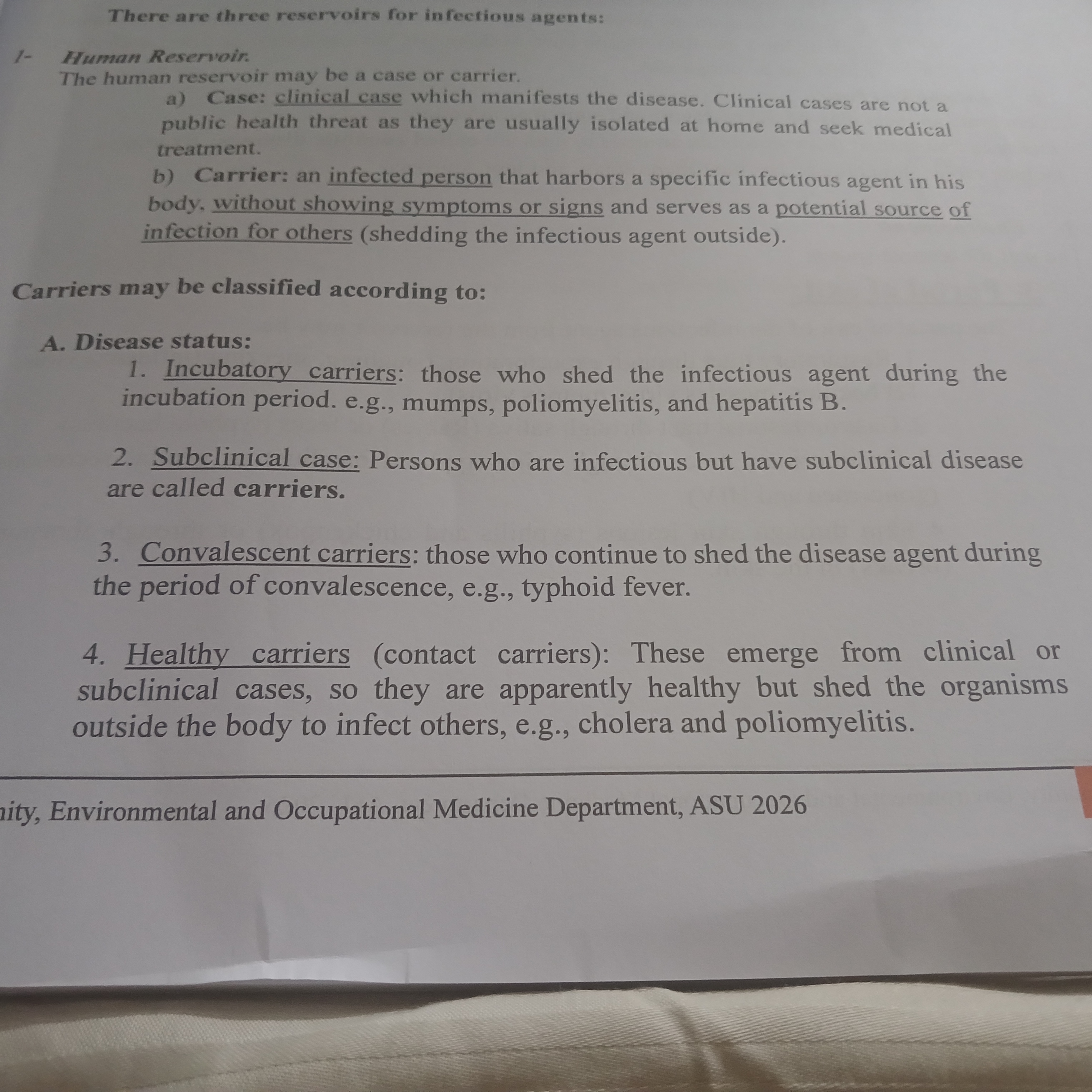
mention importance of incubation period
1.preventive measures may be carried out during it to prevent occurence of disease or decrease severity
surveillance of contacts of a communicable disease
quarantine
tracing source of infection
estimating prognosis
explain epidemiology of measles
person: acquired in first 10 years of life, any social class may be affected
time distribution: seasonal flactuations more prevalent during spring and winter
place distribution: worldwide
measles MOT, reservoir and IP and POC
airborne or droplet
cases
IP:7-21 DAYS(commonly 10 and 14 till rash
POC:4 days before rash and 4 days after rash
general measures for preventing droppet infection
environmental sanitation
health education: hygeine, ventilation, avoid smoking and adequate nutrition
prevention of measles
general measures
specific measures: active immunization (live attenuated vaccine) 95% for 15 years
control:
verify diagnosis
notify local authorities
isolate at home for 4 days after rash
symptomatic treatment
identify susceptible and non-susceptible contacts
surveillance for 10 days of non susceptible group
separate susceptible group from cases and survey for 10 days
health education
measles vaccine CI
primary immune deficiency
severe acute illness
anaphylaxis
pregnant women
measles elimination plan
high immunization levels
strong surveillance
aggressive outbreak control
rubella epidemiology
person: anyone not immune
time: late winter and early spring
place: worldwide
mention reservoir, IP, MOT and POC of rubella
clinical or subclinical cases
2 to 3 weeks
person to person, vertical and contaminated objects
one week before rash and one week after
prevention and control of rubella
General measures,
specific measures:
active immunization: live attenuated vaccines last for 3-7 years
Mumps epidemiology
Person: young and middle aged adults after vaccine, before vaccine: children
time: spring and late autumn
place: worldwide throughout the year
mumps reservoir, MOT, IP and POC
clinical or subclinical
direct or contact
14-25
7 days before and 9 days after onset of parotitis
prevention and control of mumps
general measures
specific: vaccine life long
control: isolate for 9 days after onset
onlu immunize susceptible contacts
varicella(chicken pox) epidemiology
person: children especially under 10 and adults who didn't get chickenpox as kids and not vaccinated, Immunocompromised are at an increased rosk
place: worldwide
time: sporadic during winter and spring
chicken pox(varicella) reservoir, MOT, IP AND POC
human cases only
Direct droplet and indirect fomites
2-3 weeks
one or two days before appearance of rash and 6 days after until all lesions are crusted
prevention of chicken pox
general,
specific:
active immunization live attenuated, two doses, 0.5ml
schedule first at 12-15 months, second 3 months after or at 4-6 years
side effect of vaccine: transmission of virus
mild cases may occur among vaccinated
varicella vaccine for post exposure above 12 months
Passive immunization(VZIG): 72 HOURS for high risk, lasts at least 3 weeks
control of varicella(chickenpox)
isolate at home and prevent secondary infection
disinfect contaminated fomites
survey for 3 weeks
seroprophalyxis for high risk close contacts using VZIG
vaccinate people above 12 months who have no immunity to varicella EXCEPT: PREGNANT WOMEN AND IMMUNOCOMPROMISED
prevention of herpes zoster(shingles(
recombinant zoster(shingles) vaccine called shingrix
given in two dosees for
adults 50 years+ separated by 2-6 months
adults 19+ with weakened immune system 2 doses separated by 1-2 months
VZIG: 72-96 hrs after exposure