Comprehensive History and Civics Exam Revision Guide for Year 2026
 Call Kai
 Learn
Learn Practice Test
 Spaced Repetition
 Match
Match Flashcards
 Knowt Play
1/84

There's no tags or description
Looks like no tags are added yet.
Name | Mastery | Learn | Test | Matching | Spaced | Call with Kai |
|---|
No analytics yet
Send a link to your students to track their progress
85 Terms
What is the Treaty of Versailles?
A peace treaty that ended World War I, imposing restrictions on Germany regarding territory, military, and finance.
Why did the German people oppose the Treaty of Versailles?
Many Germans viewed the treaty as humiliating and unfair, as it blamed Germany for the war and imposed harsh penalties.
Why did German representatives sign the Treaty of Versailles?
They faced pressure to sign to avoid further conflict and believed it was necessary to secure peace despite public opposition.
What is the League of Nations?
An international organization created after World War I to promote peace and cooperation among countries.
What were the positions of the French Prime Minister and the US President at the Paris Peace Conference?
The French Prime Minister sought to impose strict penalties on Germany, while the US President advocated for a more lenient approach to foster peace.
What caused the Great Depression?
The collapse of the New York Stock Exchange in 1929, leading to widespread economic downturn and unemployment.
What was the impact of the Great Depression on Australian society?
It resulted in high unemployment, poverty, and social unrest as jobs were lost and economic conditions worsened.
What was the 'susso'?
A form of government assistance in Australia during the Great Depression, providing financial support to the unemployed.
Who was most affected by the Great Depression in Australia?
The working class and rural communities were hit hardest, facing job losses and economic hardship.
What are propaganda images?
Visual representations designed to influence public opinion, often by promoting negative stereotypes or ideologies.
What are the characteristics of Fascism?
Fascism is characterized by authoritarianism, nationalism, and the suppression of political opposition.
Who was Benito Mussolini?
An Italian political leader who founded the Fascist Party and ruled Italy as a dictator.
How did Hitler adopt Fascism?
Hitler incorporated Fascist principles into his ideology, emphasizing nationalism, militarism, and totalitarian control.
What does 'Blitzkrieg' mean?
A military tactic used in World War II characterized by rapid and overwhelming attacks to achieve quick victories.
What is the 'Phoney War'?
A period at the beginning of World War II marked by a lack of significant military operations on the Western Front.
What does SS stand for?
Schutzstaffel, a major paramilitary organization under Adolf Hitler and the Nazi Party.
What was the role of the SS in Nazi Germany?
The SS was responsible for enforcing Nazi policies, including the implementation of the Holocaust.
What was the Gestapo?
The secret police of Nazi Germany, tasked with suppressing opposition and enforcing Nazi laws.
What is the meaning of the word 'Holocaust'?
The systematic, state-sponsored persecution and murder of six million Jews by the Nazi regime.
What is eugenics?
A social philosophy advocating for the improvement of human populations through selective breeding and sterilization.
What laws were implemented to persecute Jews in Nazi Germany?
The Nuremberg Laws, which stripped Jews of citizenship and prohibited marriage between Jews and non-Jews.
What groups were persecuted by the Nazis during the Holocaust?
Jews, Romani people, disabled individuals, homosexuals, and political dissidents were among those targeted.
What is the difference between labor camps and extermination camps?
Labor camps were used for forced labor, while extermination camps were designed specifically for mass murder.
What was the 'Final Solution'?
The Nazi plan for the systematic extermination of the Jewish population during the Holocaust.
Who were the leaders of the Axis Powers during World War II?
The leaders included Adolf Hitler (Germany), Benito Mussolini (Italy), and Emperor Hirohito (Japan).
What was the main characteristic of the Roaring Twenties?
Economic prosperity and cultural change marked this decade, leading to significant social transformations.
When did the Great Depression occur?
The Great Depression primarily took place during the 1930s, following the stock market crash of 1929.
Which country did not belong to the Axis Powers?
France was not part of the Axis Powers during World War II.
What was the Treaty of Versailles primarily focused on?
It was focused on punishing Germany after World War I and imposing restrictions to prevent future conflicts.
Which of the following is NOT a characteristic of fascism?
Emphasis on individual rights and freedoms is NOT a characteristic of fascism.
What was the main purpose of the League of Nations?
To promote international cooperation and prevent future wars through collective security.
Who was the leader of Germany during World War II?
Adolf Hitler was the leader of Germany during World War II.
What was Blitzkrieg in World War II?
A military tactic involving quick and overwhelming attacks to achieve rapid victories.
What was one reason Germany opposed the Treaty of Versailles?
Germany opposed the treaty because it blamed them for the war and imposed harsh penalties.
What were the penalties imposed on Germany after World War I?
Germany was blamed for the war and faced harsh penalties, including territorial losses and military restrictions.
What was a long-term cause of World War II?
The Treaty of Versailles, which imposed harsh terms on Germany, leading to resentment and instability.
What was the main impact of the Great Depression on Germany?
It increased public support for extremist political parties, including the Nazis.
How did Hitler rise to power in Germany?
He gained public support through promises to rebuild Germany and used propaganda effectively.
What strategy did Hitler use to maintain control in Nazi Germany?
He used propaganda, censorship, and fear to suppress dissent and control the population.
What was the significance of the Treaty of Versailles in causing WWII?
It caused resentment in Germany due to its harsh terms, which contributed to the rise of Hitler.
What is an indictable offence?
A serious crime that is typically tried in a higher court, such as murder or robbery.
What is a summary offence?
A minor crime that is usually tried in a lower court, such as petty theft or traffic violations.
What does the command word 'Analyse' mean in exam questions?
It requires a critical examination identifying essential elements and implications of the argument.
What does the command word 'Assess' mean?
It means to decide the value of, judge, or measure the importance of something.
What does 'Comment on' require in an exam response?
You need to discuss the subject and provide your opinion with reasons.
What is the purpose of the command word 'Compare'?
To explain the points of similarity and difference between two or more subjects.
What does 'Distinguish' mean in exam terms?
To recognize or note differences and distinctive characteristics.
What is the main reason laws are necessary in society?
To maintain order and protect individual rights.
What is an example of a non-legal rule?
A school uniform policy, which is enforced by the school but not by law.
What best defines criminal law?
Law involving offences against the state, such as theft or assault.
What is an example of a summary offence?
Speeding, which is a minor offence typically handled in lower courts.
What would most likely be handled under civil law?
Defamation, which involves disputes between individuals rather than criminal charges.
What are the two main sources of law in Australia?
Parliament and the courts.
What term indicates a criminal matter in a theft case?
Charged, as it signifies that someone has been formally accused of a crime.
What is the purpose of having a court hierarchy?
To allow for appeals and specialisation in handling different types of cases.
Which court hears serious criminal cases like murder in Victoria?
The County Court.
What does the term 'bicameral' refer to in the parliamentary system?
C. A parliament with two houses.
Explain the need for laws in society.
Laws are necessary to maintain order, protect individual rights, and provide a framework for resolving disputes.
Distinguish between 'non-legal rules' and laws. Provide 3 examples of each.
Non-legal rules are guidelines that govern behavior but are not enforced by the state. Examples include school rules, workplace policies, and family rules. Laws are formal rules enforced by the government. Examples include criminal laws, contract laws, and property laws.
Define Criminal Law and provide 4 examples of crimes.
Criminal Law is the body of law that relates to crime. Examples of crimes include theft, assault, murder, and drug trafficking.
Distinguish between the terms 'summary offences' and 'indictable offences'. Provide 2 examples of each.
Summary offences are minor criminal offences that are typically tried in a lower court. Examples include petty theft and minor assault. Indictable offences are serious crimes that require a trial by jury. Examples include murder and robbery.
Define Civil Law and provide 4 examples of matters related to civil law.
Civil Law deals with disputes between individuals or organizations. Examples include contract disputes, property disputes, family law matters, and tort claims.
Outline the two main sources of law.
The two main sources of law are legislation (laws made by parliament) and common law (laws developed through court decisions).
What is the area of law in the case of the trio charged over theft, robbery, and kidnapping?
The area of law is Criminal Law.
Define Court Hierarchy.
Court Hierarchy refers to the system of courts organized in levels, where higher courts have authority over lower courts.
What is Jurisdiction?
Jurisdiction is the authority of a court to hear and decide cases.
What is Appellate Jurisdiction?
Appellate Jurisdiction is the power of a higher court to review and change the decision of a lower court.
What is the main role of parliament?
The main role of parliament is to make, amend, and repeal laws.
Explain what is meant by the supremacy of parliament.
The supremacy of parliament means that the parliament has the ultimate authority to make laws, and no other body can override its decisions.
Define the term 'bill' in regard to making laws.
A bill is a proposal for new legislation or an amendment to existing legislation that is presented for debate and approval in parliament.
Which house are most bills introduced into?
Most bills are introduced into the lower house of parliament, often because it is where the government has the majority and can ensure the bill's passage.
Explain the term 'royal assent'.
Royal assent is the formal approval by the monarch or their representative, which is required for a bill to become law.
What is the term given to a bill after royal assent is granted?
After royal assent is granted, a bill is referred to as an Act of Parliament.
In which house is the government formed?
The government is formed in the lower house of parliament.
Identify and outline 3 principles that ensure fair governance in Australia.
1. Rule of Law: Everyone is subject to the law. 2. Separation of Powers: Dividing government into branches to prevent abuse of power. 3. Responsible Government: The government is accountable to parliament and must maintain its confidence.
List the 3 terms used to refer to the laws made by parliament.
1. Statutes 2. Acts 3. Legislation
Identify the source of the 'Nazi Salute Prohibition' law.
The source of the 'Nazi Salute Prohibition' law is the Victorian Parliament.
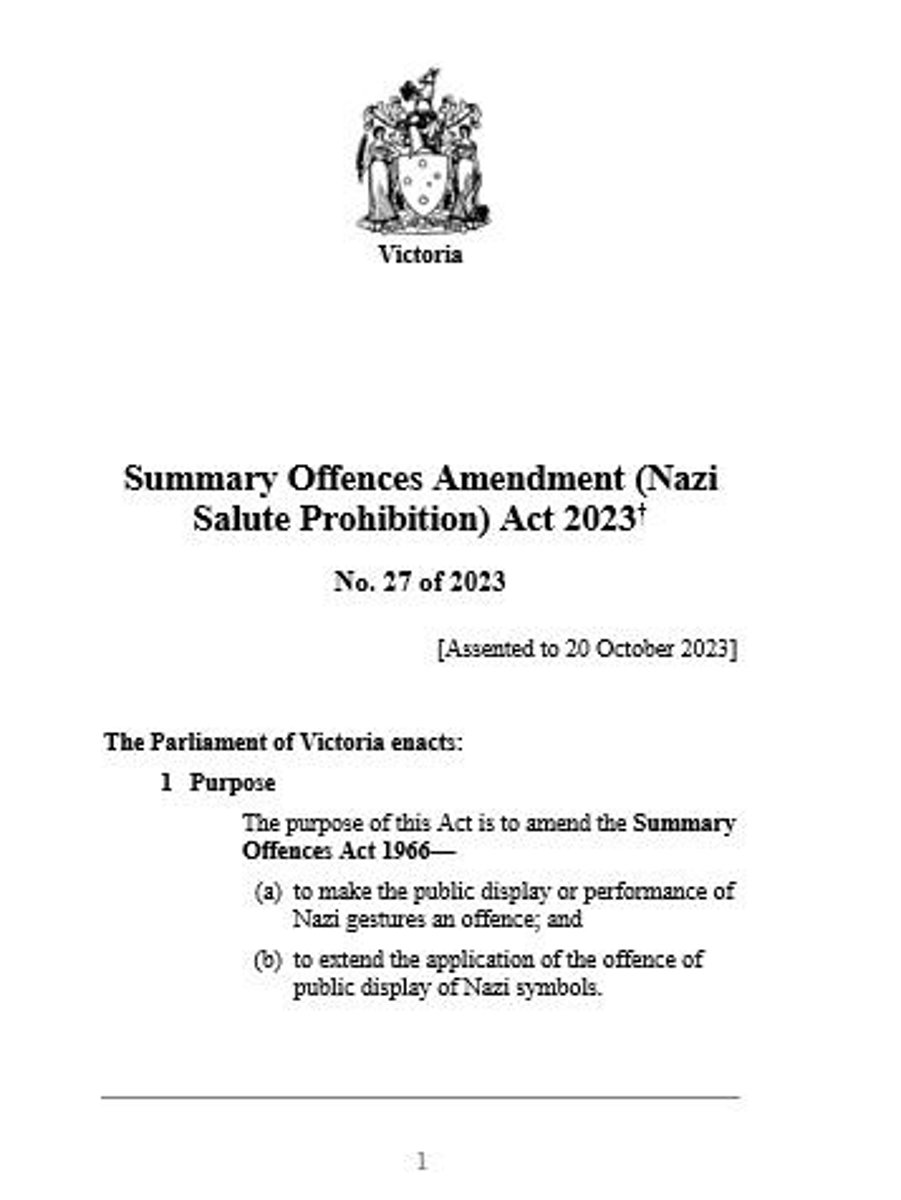
When and by whom did the 'Nazi Salute Prohibition' Act receive Royal Assent?
The Act received Royal Assent in 2023 by the Governor of Victoria.
When was the Act due to commence?
The Act was due to commence in 2024.
Do these laws limit freedom of expression? Explain your view.
Yes, these laws limit freedom of expression as they prohibit specific forms of speech and symbols associated with hate, aiming to protect community safety and values.
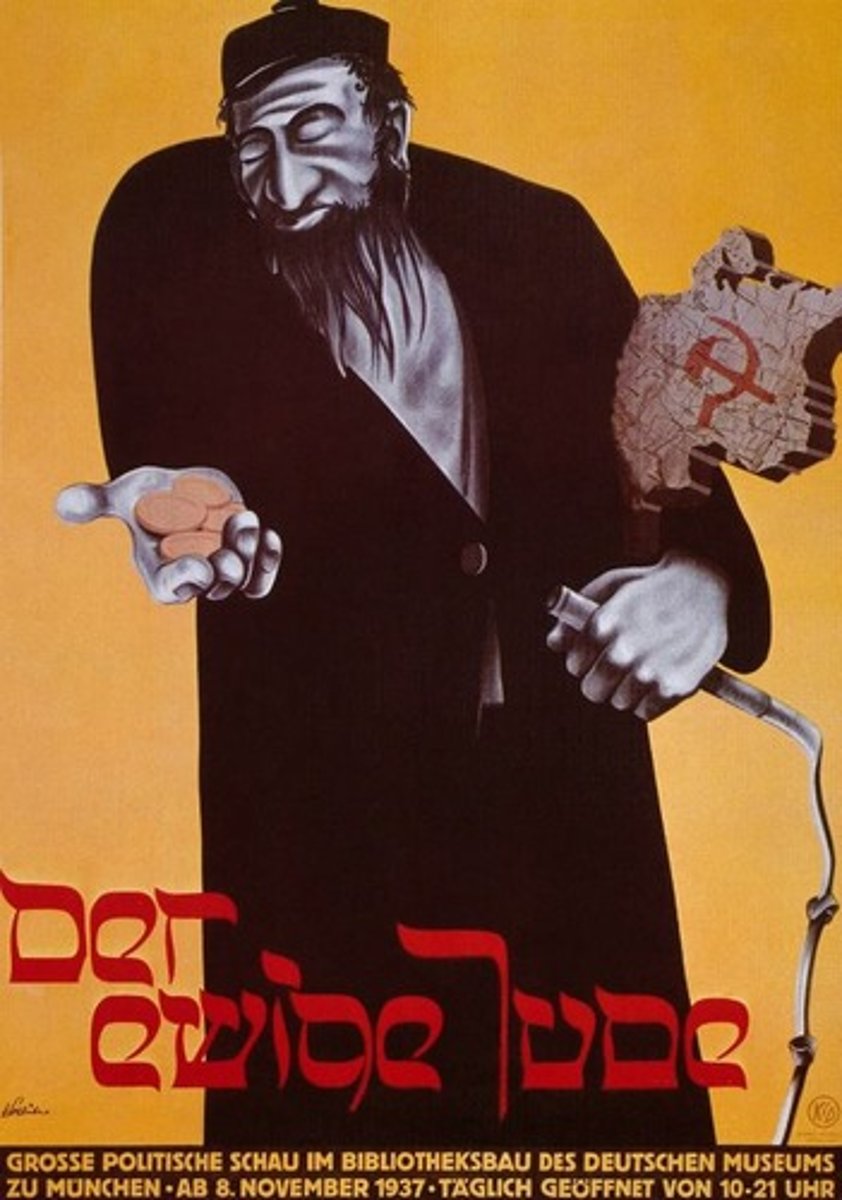
Explain the characteristic of effective laws: Reflect society's values.
Effective laws should align with the moral and ethical standards of the community they serve.
Explain the characteristic of effective laws: Enforceable.
Effective laws must be capable of being enforced by authorities, ensuring compliance among citizens.
Explain the characteristic of effective laws: Known.
Laws should be publicized and accessible so that individuals are aware of their rights and obligations.
Explain the characteristic of effective laws: Clear and understood.
Laws must be written in a clear manner so that individuals can understand their meaning and implications.
Explain the characteristic of effective laws: Stable yet adaptable.
Laws should remain consistent over time but also be flexible enough to adapt to changing societal needs.