Lab 3 Thin Layer Chromatography
 Call Kai
 Learn
Learn Practice Test
 Spaced Repetition
 Match
Match Flashcards
 Knowt Play
1/35

There's no tags or description
Looks like no tags are added yet.
Name | Mastery | Learn | Test | Matching | Spaced | Call with Kai |
|---|
No analytics yet
Send a link to your students to track their progress
36 Terms
Chromotography
the separation of compounds based on physical properties
--------------
REQUIREMENTS:
- need a mobile phase
- need a stationary phase
Thin Layer Chromatography (TLC)
a sensitive, fast, simple, and inexpensive analytical technique used measure the separation of two or more compounds
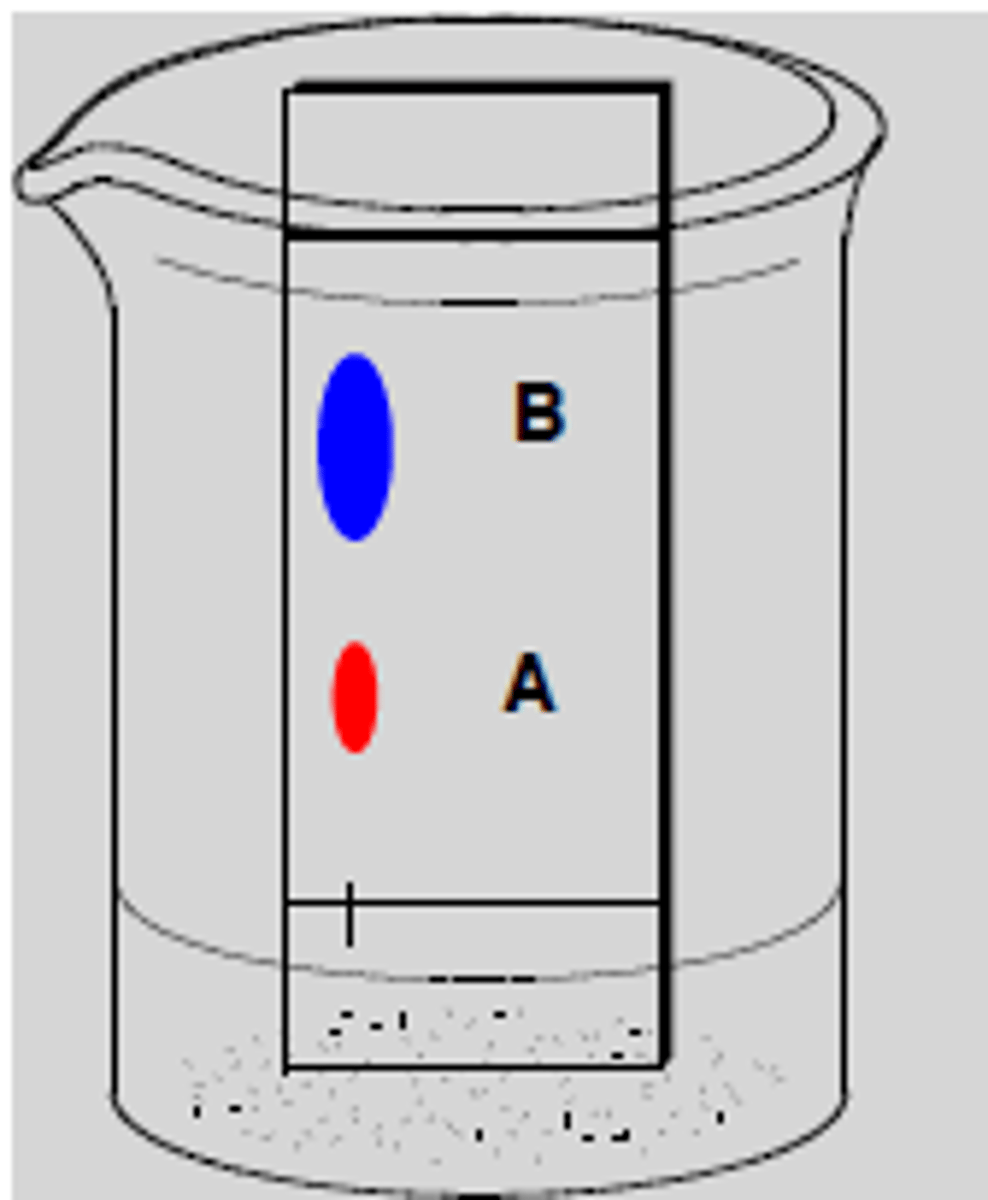
What does TLC determine
- number of components in a mixture
- identity of two or more substances
- monitors the progress of a reaction
- determine the effectiveness of purification
- determine the appropriate conditions for a column chromatographic separation
- monitor the column chromatography
mobile phase of TLC
liquid solvent
--------------
RULES
- can range from nonpolar to increasing in polarity by mixing solvents
stationary phase of TLC
solid solvent
--------------
RULES:
- is always the most polar in the system (plates is usually silica or alumina)
when choosing stationary and mobile phase solutions
determine how molecules would act with the two phases
--------------
DETERMINE IF THEY ARE:
- free state
- absorbed state
- in constant equilibrium
Free state (TLC)
dissolved in the liquid or gaseous mobile phase
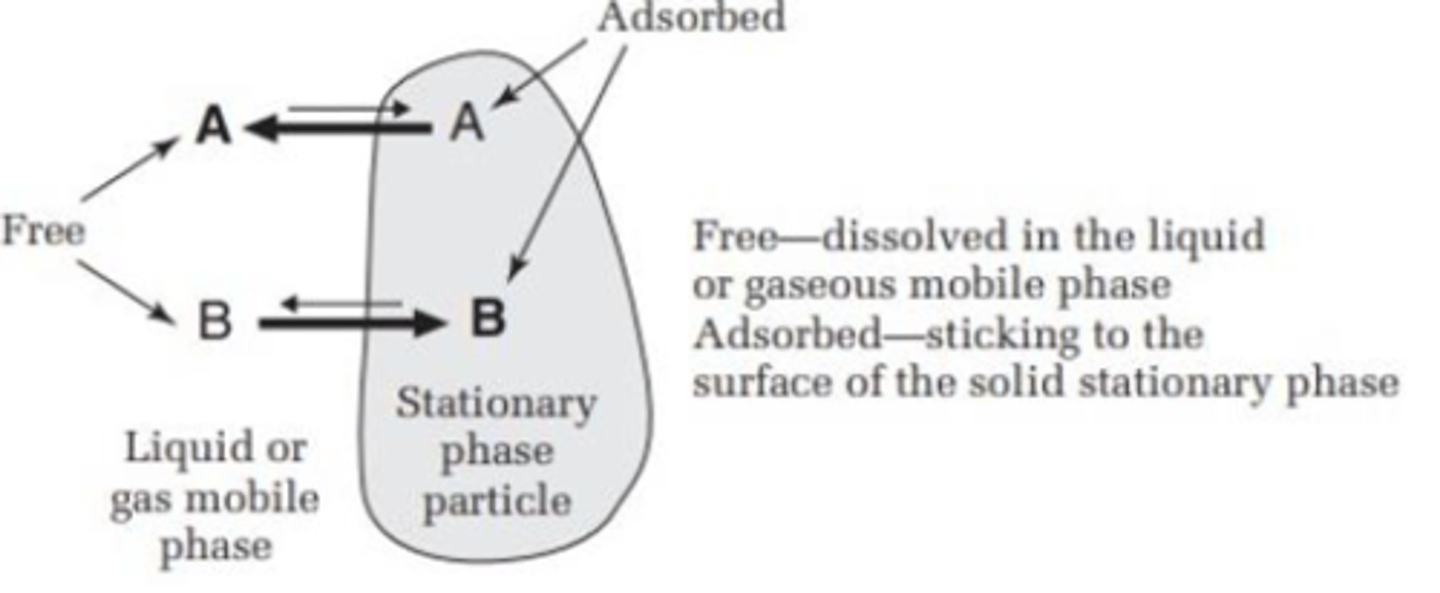
Absorbed state (TLC)
sticking to the surface of the solid stationary phase
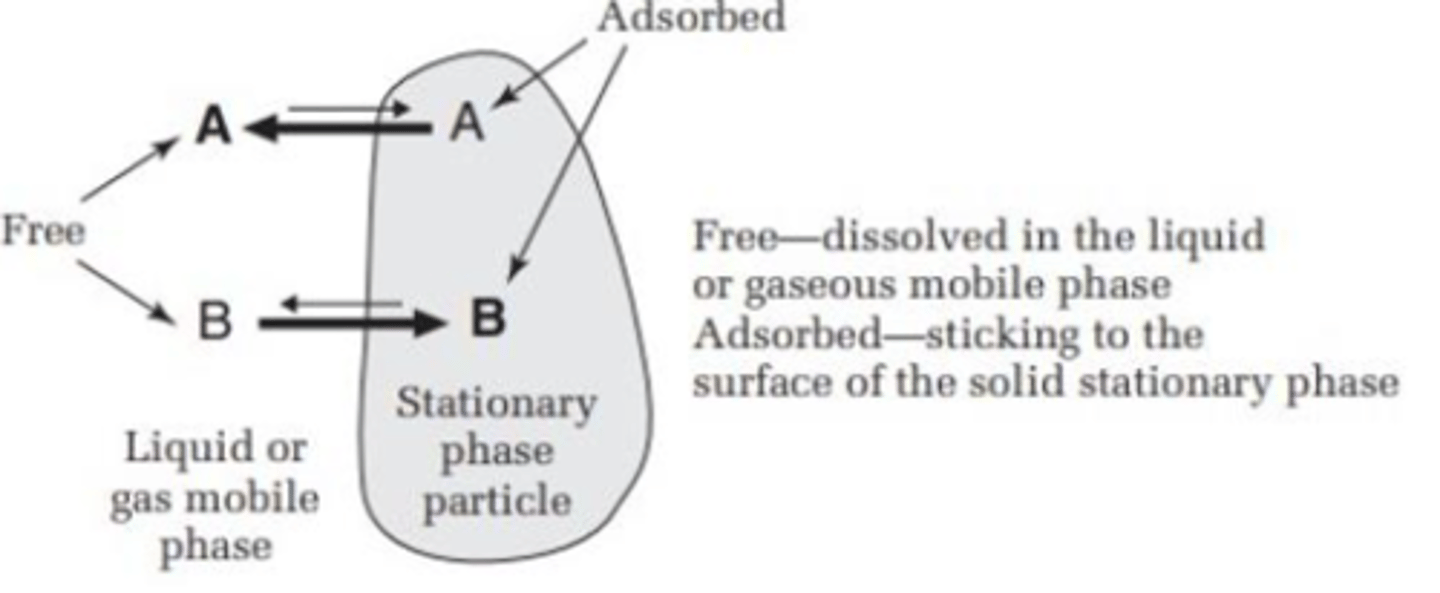
the difference in the strength of attraction (TLC)
strength of attraction between the molecules and the mobile/stationary phase causes the progress at different rates and therefore separation
Factors that effect separation in TLC
- size
- polarity
- hydrogen bonding
what type of TLC plates are used in lab
Silica plates
Trend for polarity and travel distance on TLC
TREND:
- increasing the polarity makes compounds run faster
How can you get the best separation on a TLC experiment?
you need to find the correct mixture of solvents
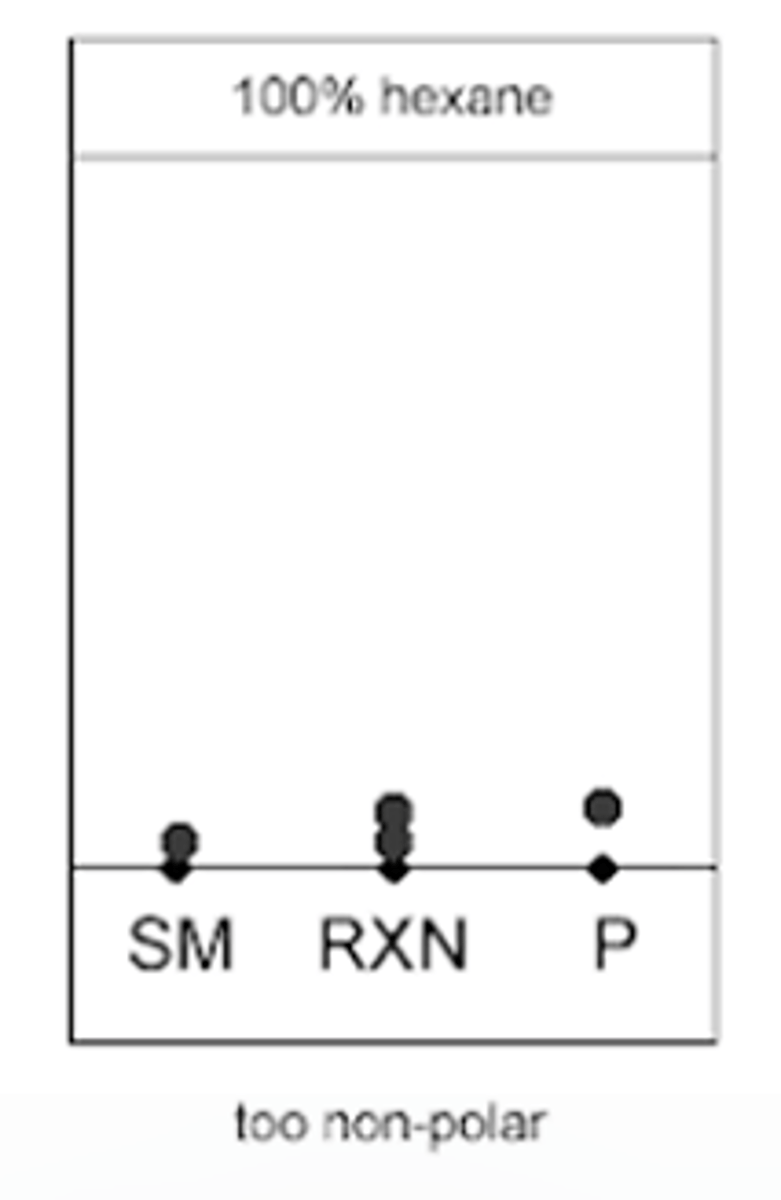
100% hexane (TLC EXAMPLE)
starting material, reaction progress and the product will barley move from the starting point
--------------
WHAT DOES THIS MEAN:
- the mixture of solvents was too non polar
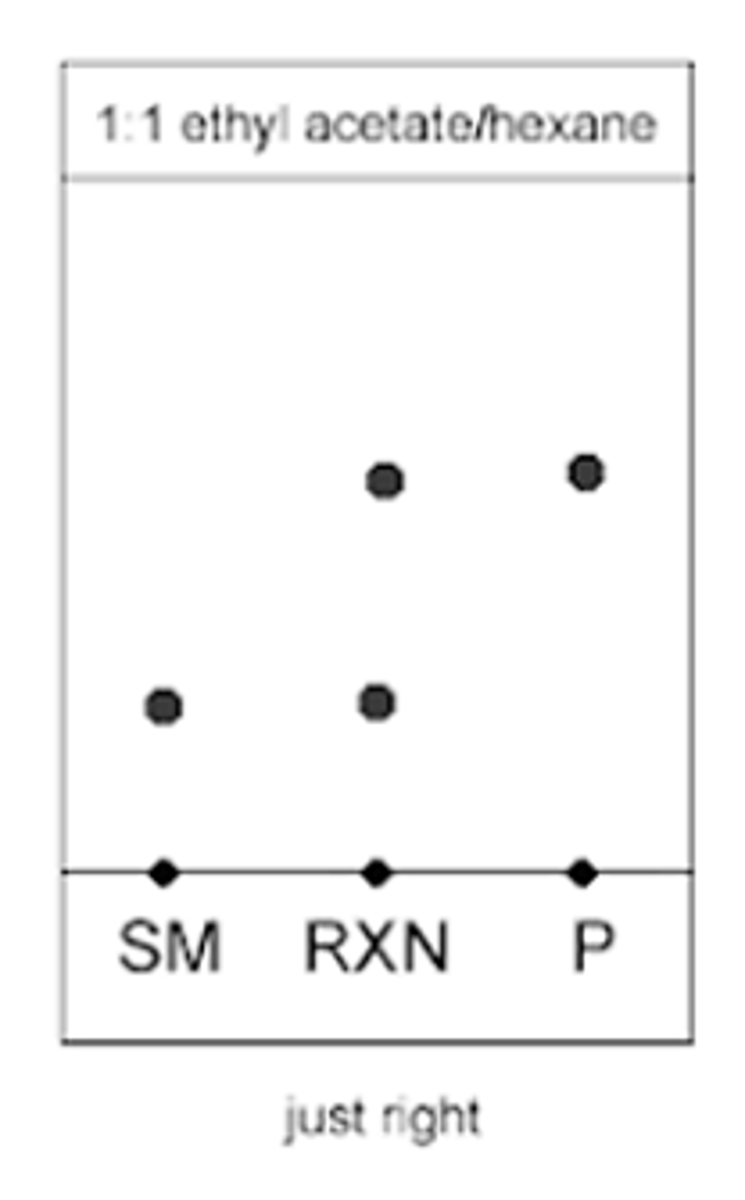
1:1 ethyl acetate/hexane (TLC EXAMPLE)
Starting material, reaction, and product will move towards the middle of the TLC plate
--------------
WHAT DOES THIS MEAN:
- the mixture of solvents was correct, "was just right"
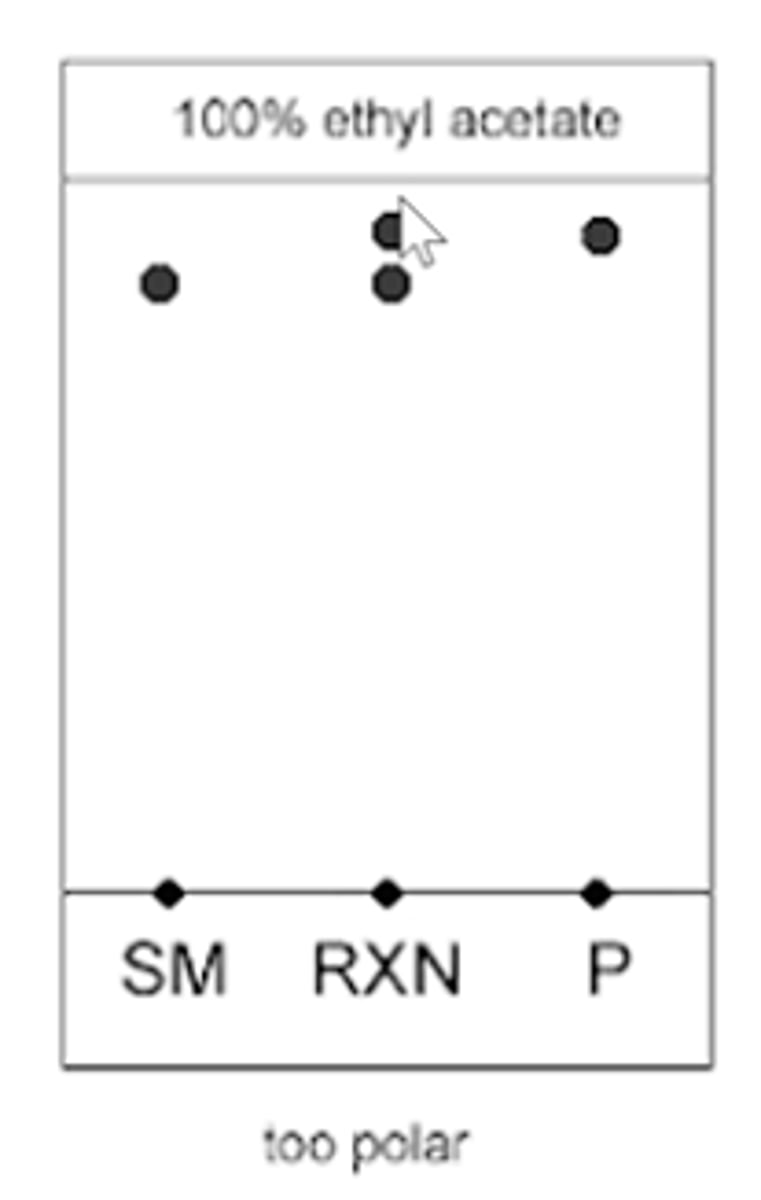
100% ethyl acetate (TLC EXAMPLE)
starting material, reaction, and product will move very fast and will reach near the top of the TLC plate
- risk of reagents running off the plate
--------------
WHAT DOES THIS MEAN:
- the mixture of solvents was too polar
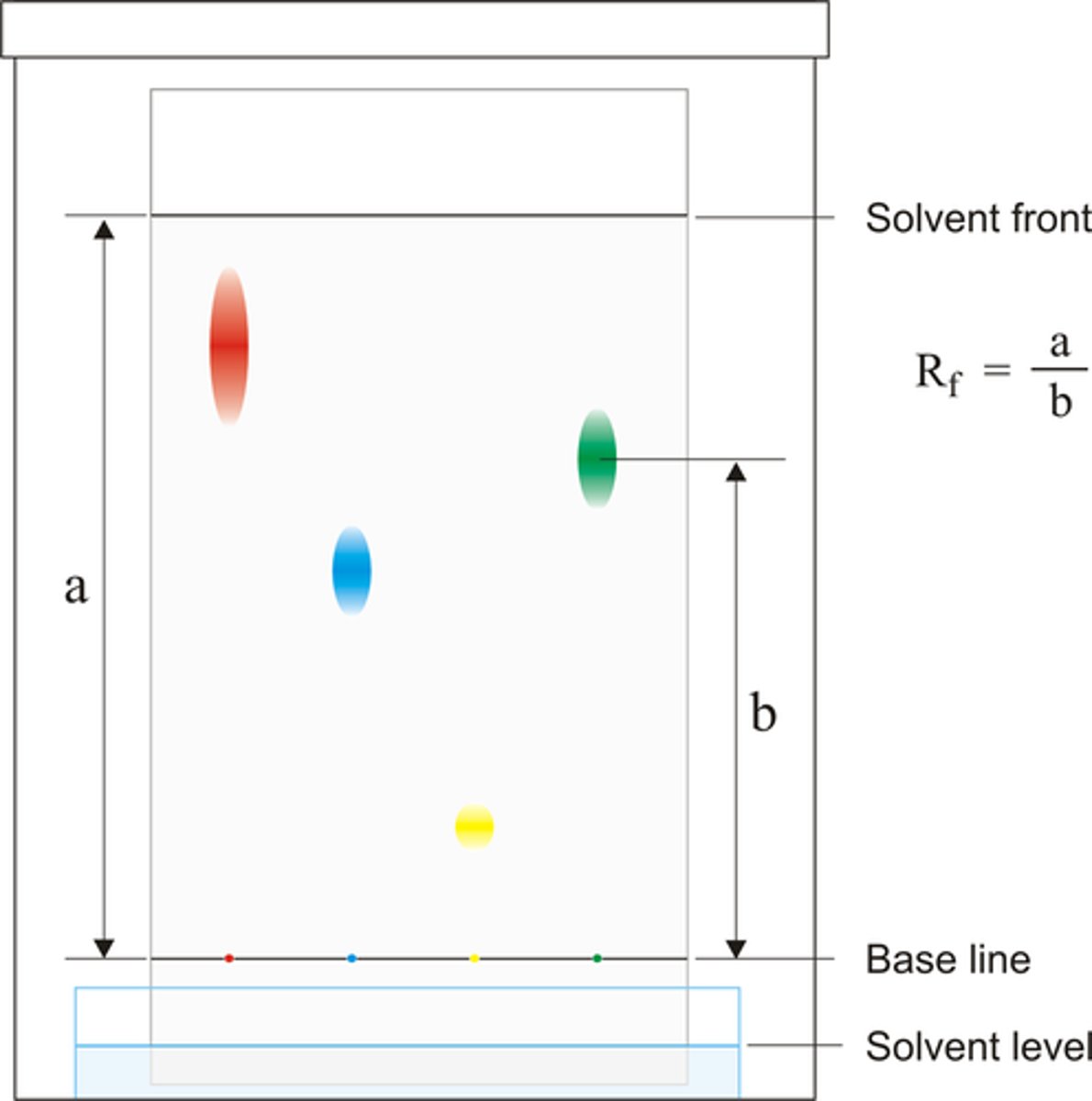
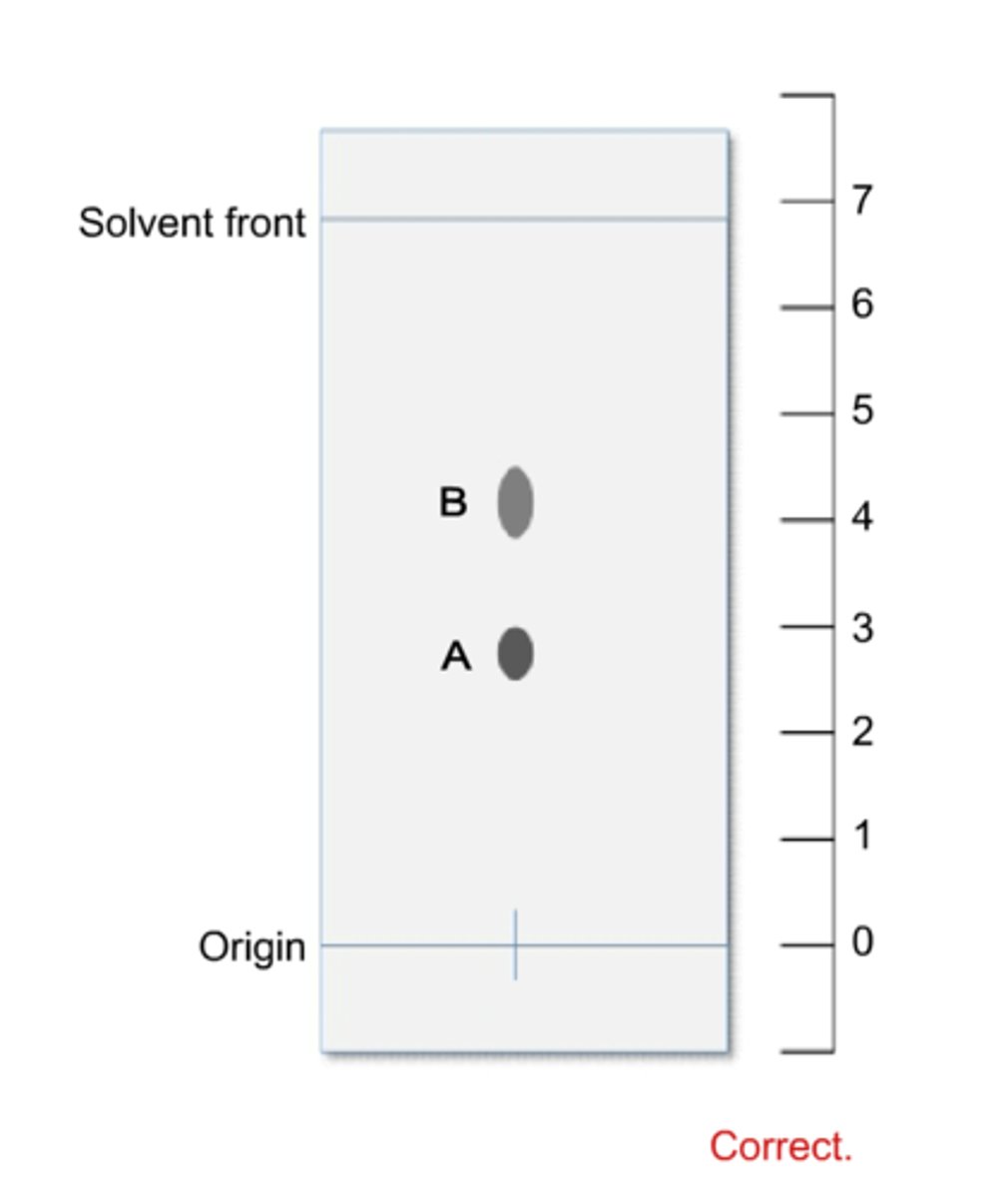
Rf (retention factor) values
Distance traveled by the compound divided by the distance traveled by the solvent
--------------
EQUATION:
- RF= (distance compound / distance solvent)
--------------
WHAT CAN IT BE USED FOR:
- used to compare compounds on the same plate
- used to calculate the reaction progress
(IS NOT USED TO COMPARE DISTANCES ON DIFFERENT PLATES)

why can't you use RF values to compare distances on different plates?
there are differences in each TLC plate
How to run TLC plate
1. obtain a small beaker and watch glass
2. draw a straight line 1 cm from the bottom (WITH A PENCIL)
3) make small/narrow spots on the straight line (let the solvent evaporate on the plate)
4) check the spots under UV
5) create a developing chamber
6) once the solvent is reaching the near top of the TLC plate immediately stop and mark the solvent line (WITH A PENCIL) and let it dry
7. lightly circle spots under UV then calculate Rf
why do we use a pencil when labeling TLC plates
- it prevents smugging (unlike a pen)
- lead is inert meaning it wont react with the compounds or the solvent

why mark the 1 cm line?
when the plate is immersed in a development chamber the spots don't wash off because they are not touching the solvents
Development chamber
WHATS INSIDE THE BEAKER:
- 10 ml of solvent
- saturated filter paper (used to saturate the entire development chamber)
- a standing TLC plate
--------------
WHATS ON TOP OF THE BEAKER:
- The beaker will be covered with foil (used to make sure that solvent doesn't evaporate out)
- watch glass
solvent front
the furthest point reached by the solvent
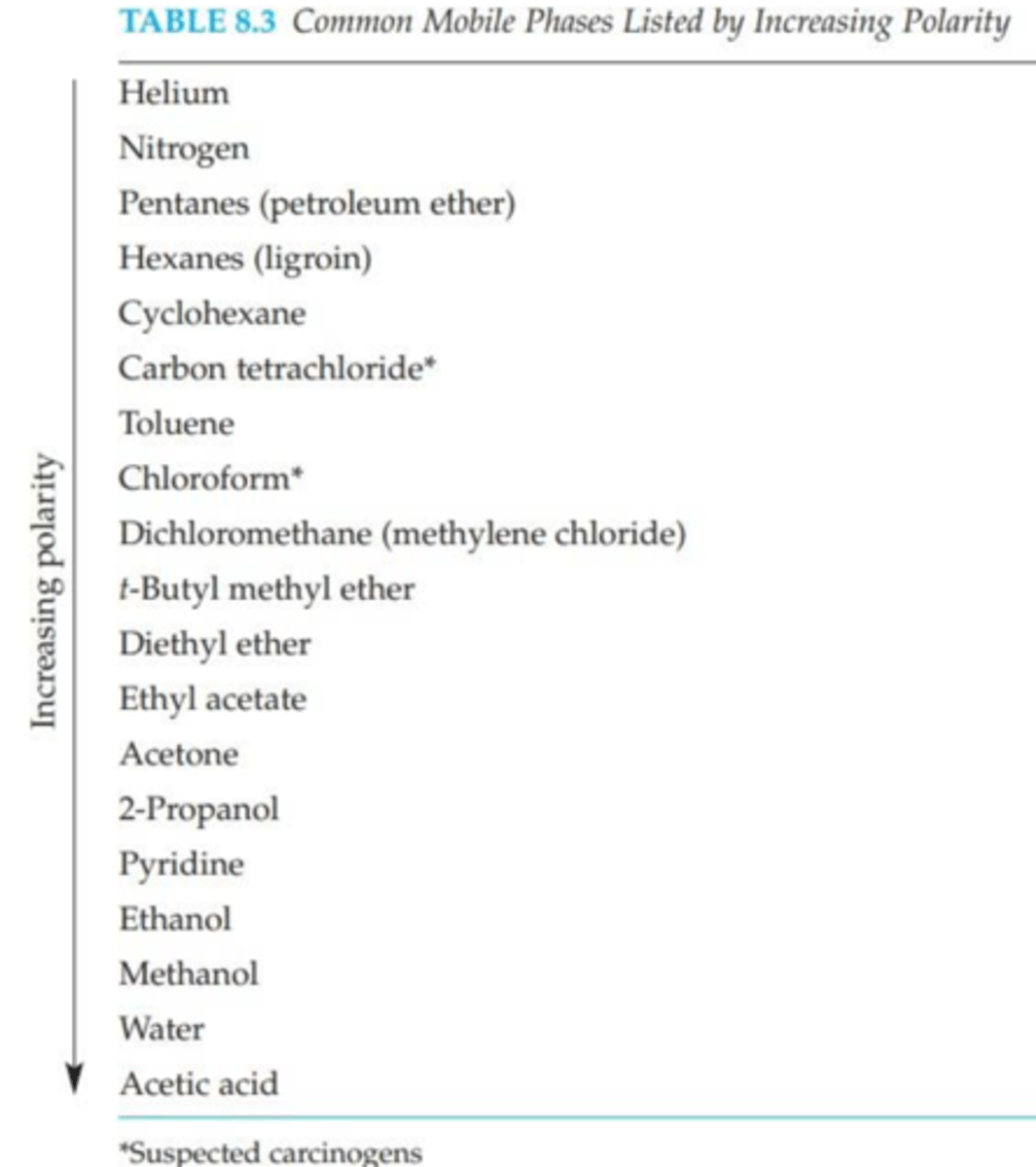
common mobile phase listed by increasing polarity
LOOK AT PICTURE
--------------
KEY SUMMARY
- its from least polar (TOP) to most polar (BOTOOM)
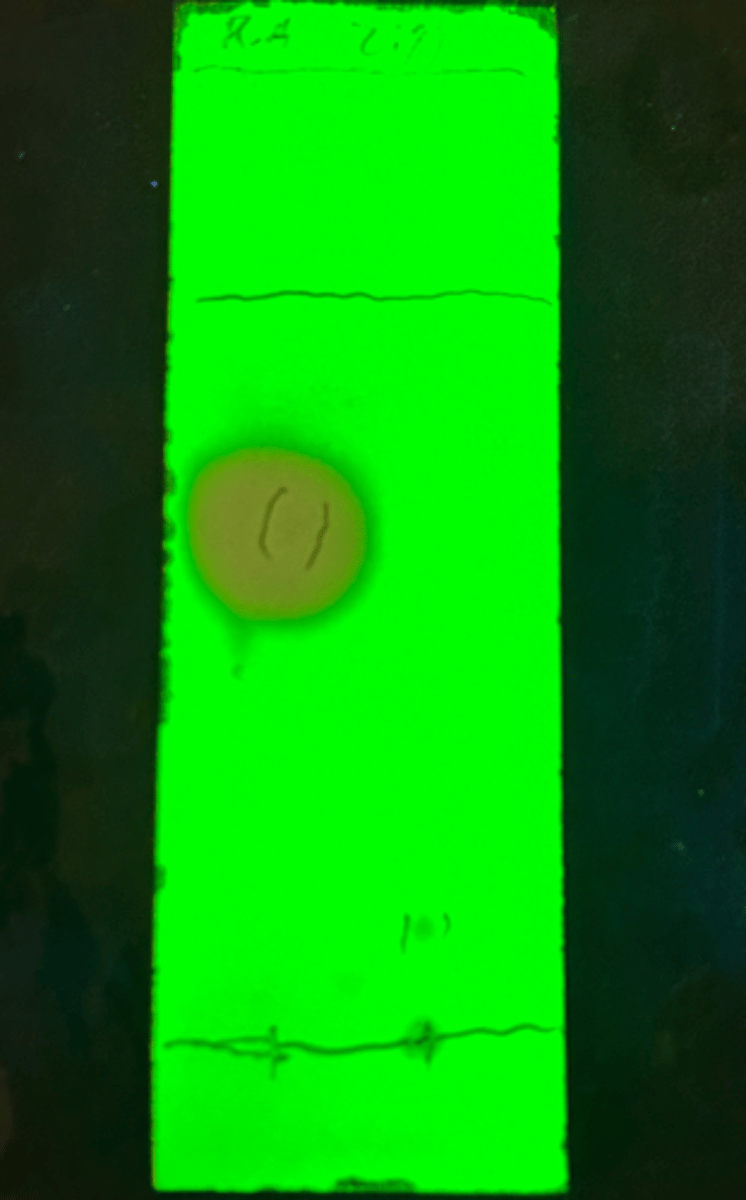
UV light
used to observe the seperation of spots on a TLC plate
--------------
- fluorescent indicator will mark the plate green which will yield a dark purple or bluish spots on plate
--------------
WAVELENGTH OF UV LIGHT:
- 254 nm (nanometers)
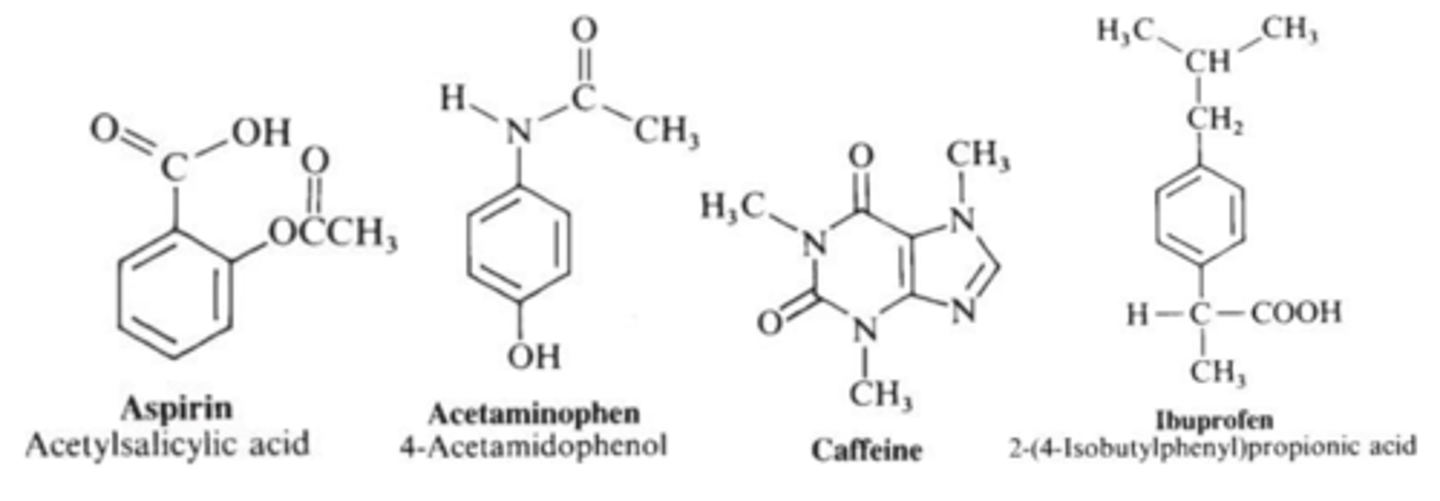
Compounds used in lab 3
- acetylsalicylic acid (aspirin)
- acetaminophen
- caffeine
- ibuprofen
what are the two states that molecules on TLC plates are in equilibrium in between
Free state and absorbed state
sort the following mobile phases by increasing polarity: (hexane, acetic acid, ethyl acetate, and ethanol)
FROM WEAKEST TO STRONGEST
1.) hexane
2.) ethyl acetate
3.) ethanol
4.) acetic acid
If you get a streaking spot on a TLC plate, what was wrong with the sample?
it means the the samples that were spotted were heavily concentrated which will result in streaks
Le Chatelier's Principle
If a dynamic equilibrium is disturbed by changing the conditions, the position of equilibrium moves to counteract the change.
--------------
STATES THAT:
- if a stress is applied to a system at equilibrium, the system shifts in the direction that relieves the stress.
Why is filter paper used in a TLC chamber?
POURPOSE:
- used to ensure that that the air inside the TLC chamber is saturated with solvent vapor
What are two factors that affect how far a compound moves on a TLC plate?
1.) polarity
- if the sample is non-polar it will rise to the top of the plate
- if the sample is polar it will move only a little bit up or not at all
--------------
2.) solvent
- the more polar the solvent the move distance it will travel up the plate
- the less polar the solvent the less distance it will travel up the plate
Three features of a good solvent for extraction
- should dissolve the substance (not flammable or toxic)
- has a low boiling point
- is non reactive with a solvent or a soluble
drop test
test used to determine which layer was what
--------------
WHICH LAYER SHOULD A DROP TRAVEL TO?
- should only travel to the aqueous (water) layer
What is one of the two considerations that must be made when mixing layers in a separatory funnel?
the stopper should be removed and the liquid should be drained through the stopcock allowing for the separation of the different layers
order the compounds based on increasing distance traveled on a TLC plate (aspirin, acetaminophen, caffeine)
FROM NO TRAVEL TO FURTHEST TRAVEL
1.) caffeine
2.) acetaminophen
3.) aspirin