BIOL214 Post Exam 3 - Macroevolution & Coevolution (lec 23+24)
 Call Kai
 Learn
Learn Practice Test
 Spaced Repetition
 Match
Match Flashcards
 Knowt Play
1/91

There's no tags or description
Looks like no tags are added yet.
Name | Mastery | Learn | Test | Matching | Spaced | Call with Kai |
|---|
No analytics yet
Send a link to your students to track their progress
92 Terms
How many species are currently described?
~1.8 million described species
Stork (2018) suggests there are:
1.5 million beetle species
5.5 million insect species
7 million arthropod species
Microevolution
evolution occurring within populations
adaptive and neutral changes in allele frequencies
Macroevolution
evolution above the species level
origination, diversification, and extinction of species over time
Biogeography
the study of the distribution of species across space and time
Latitudinal Species Richness Gradient
the number of species of taxa generally increases from polar to temperate to tropical areas
e.g. species increases tropical>temperate>polar regions
avian species richness in North America follows this pattern
Species-Time Hypothesis
suggests communities diversify (gain species) with time and that temperate regions are less species-rich than tropical regions because they are younger
temperate regions have only more recently recovered from glaciations and severe climate disruption
Species-Area Hypothesis
proposes that large areas contain more species than small areas because they can support larger populations and a greater range of habitats
larger pop. more resistant to extinctions
tropics have the largest land area compared to other biogeographical regions
Species-Energy Hypothesis
proposes available energy determines species-richness
increased solar energy in the tropics (along with water abundance) results in high productivity in plants → increase in plant material
this leads to an increase in herbivores and eventually an increase in predator, parasite, and scavenger species
Biogeographical Region with the Highest Species Diversity
the tropics
includes tropical rain forest, tropical seasonal forest/savannah, etc.
highest bird species richness, coral diversity, etc.
coral diversity may be associated with frequency of storms in the tropics carrying nutrients
Biogeographical patterns and divisions can be explained by…
dispersal of populations
vicariance
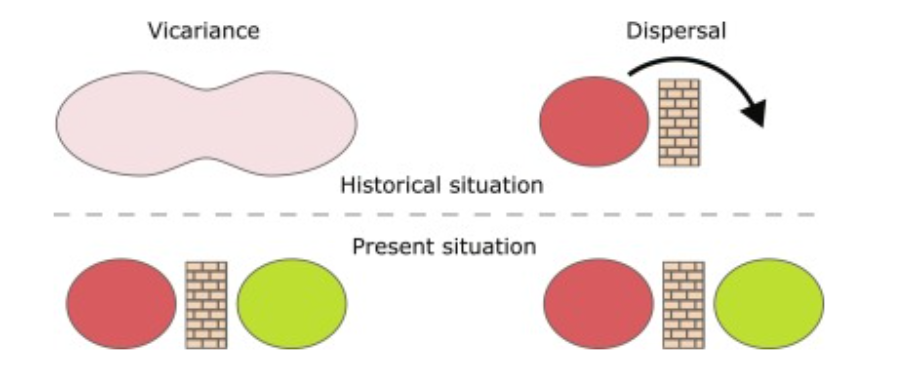
Dispersal
movement of populations from one region to another with limited or no return exchange
used to explain biogeographical divisions
Vicariance
formation of geographic barriers to dispersal that divide a once-continuous population
used to explain biogeographical divisions
leaves a distinct phylogenetic signature
phylogeny reflects geological history (ex. continent splitting)
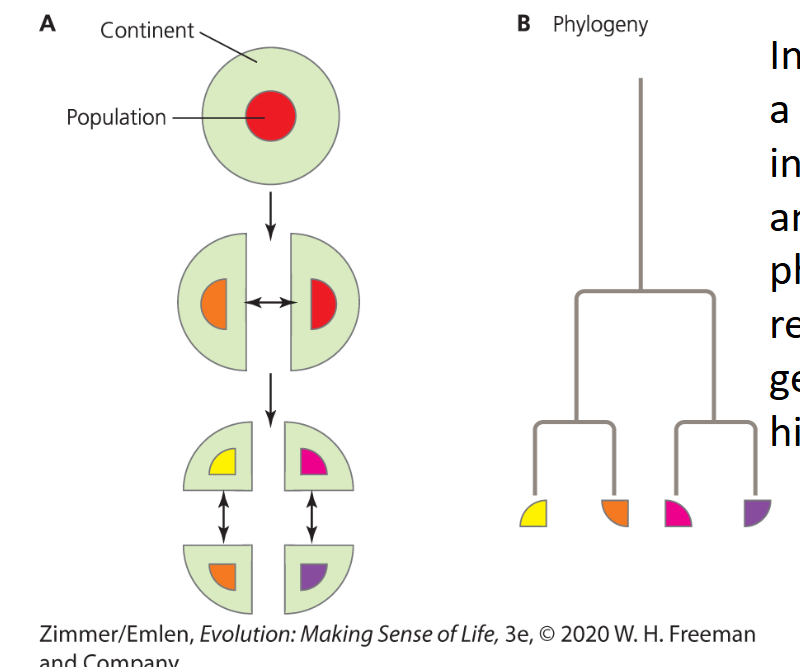
Marsupials Example
marsupials evolved through a mix of vicariance and dispersal
dispersal: migration during the late-jurassic→early-cretaceous across land masses
vicariance: land masses drifted apart → geographical barrier
occurred multiple times
Extinction Rate
estimate of total number of species alive on Earth (present)
the average life span of a species in the fossil record
= average extinctions each year (species)
Extinction Rate (current)
10 million species alive on Earth at the present / 4 million years (average life span of a species in the fossil record)
= 2.5 species (average extinctions per year)
Interplay between Speciation and Extinction Determines…
diversity
D1 (diversity) + originations – extinctions = D2 (new diversity)
Fauna
assemblage of different animal species that live together
may comprise the species in a single ecosystem, region, or across the planet
turnover among faunas and changes in overall diversity can be due to many causes
likely due to intrinsic properties of the species or large-scale climate/environment changes
Flora
assemblage of different plant species that live together
may comprise the species in a single ecosystem, region, or across the planet
Standing Diversity
determined by rate of origination and rate of extinction
represents the number of species (OTU) present in a particular area at a given time
rate of origination (α)
rate of extinction (Ω)
turnover = number of species eliminated and replaced per unit of time
The 3 Evolutionary Faunas
identified by Sepkoski (1981)
1) Cambrian Fauna
evolved at the beginning of the Paleozoic and rapidly disappeared
2) Paleozoic Fauna
rose in the Ordovician and died out in the Permian Extinction
3) Modern Fauna
arose in the Mesozoic Era
Net Imbalance in Earth’s Energy Budget
imbalance between solar radiation entering the atmosphere and thermal radiation leaving the atmosphere
more solar radiation entering than leaving
due to human emissions
Taxonomic Diversity vs. Mean Temperature
positive correlation between temperature and diversity
higher standing diversity with higher temperatures
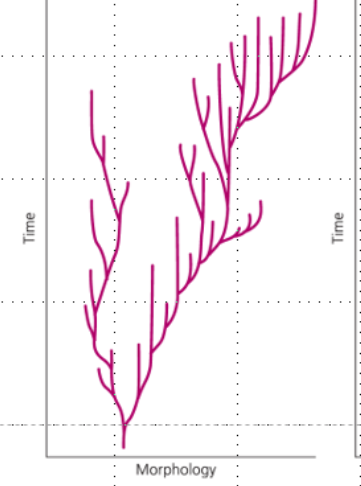
Anagenesis
wholesale transformation of a lineage from one form to another
alternative to splitting lineage or speciation
Punctuated Equilibria
periods of stasis punctuated by brief periods of rapid change
associated with speciation events
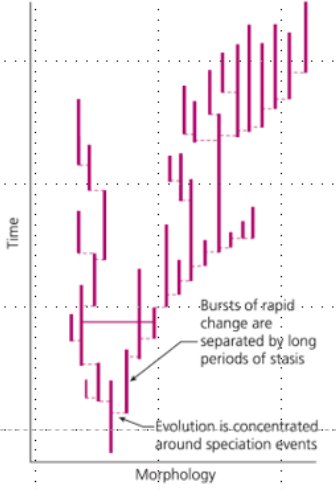
Gradualism
slow, gradual morphological changes over time
can include speciation events; traditional view
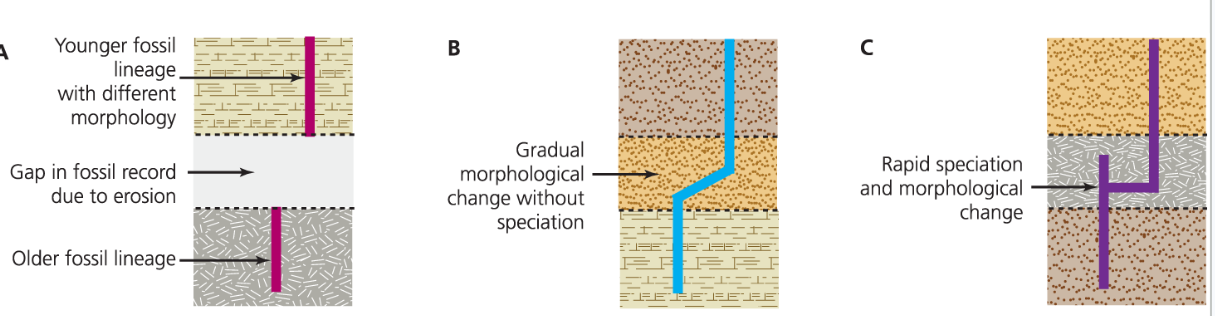
Explanations for Incomplete Fossil Records
old species underwent anagenesis; gradually evolving a new morphology
a new species may have branched off the old one, rapidly evolving morphological differences before entering its own stasis
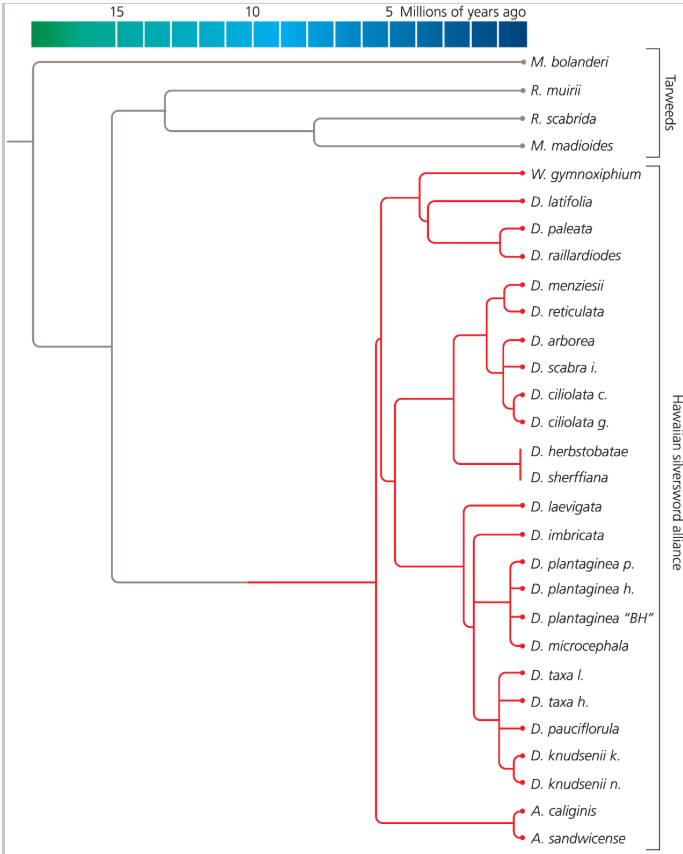
Adaptive Radiation
when rate of origination (α) eclipses rate of extinction (Ω)
ex. Silverswords in the Hawaiian archipelago
Silversword species and Tarweeds are sister groups
common ancestor for Silversword species radiated into several species from node
Key Innovation
novel trait that allows the subsequent radiation and success of a clade
ex. nectar spurs
allowed the columbine clade to rapidly diversify
nectar spur holds nectar and pollinator picks up pollen while feeding on it
Cambrian Radiation of Animals
Mechanism
environmental change, key innovations (Hox genes, body segments, skeletal structures)
Opportunity
increased O2 availability, increased developmental capacity to diversify in form, colonization of new lifestyles (predators, habitats)
Devonian Radiation of Plants
Mechanism
Key Innovations
seeds, vascular tissue
Opportunity
colonization of terrestrial environments
Cretaceous Radiation of Angiosperms
Mechanism
Key Innovation
flowers
Opportunity
initiation of mutualistic coevolution with insects
Cenozoic Radiation of Mammals
Mechanism
extinction of dinosaurs, large reptiles
Opportunity
undercontested resources/niches
Radiation of Darwin’s Finches
Mechanism
colonization of Galapagos archipelago
Opportunity
undercontested resources/niches
Radiation of Silverswords, Fruit Flies, Honeycreepers
Mechanism
colonization of Hawaiian archipelago
Opportunity
undercontested reources/niches
Radiation of Columbines
Mechanism
Key Innovation
nectar spurs
Opportunity
increased reproductive success and reproductive isolation
Explanation for Cambrian Explosion
animals diversified way before the Cambrian Explosion arose
animal kingdom arose ~750mya
Cambrian Explosion arose ~541mya
Change in ecology spurred the Cambrian Explosion
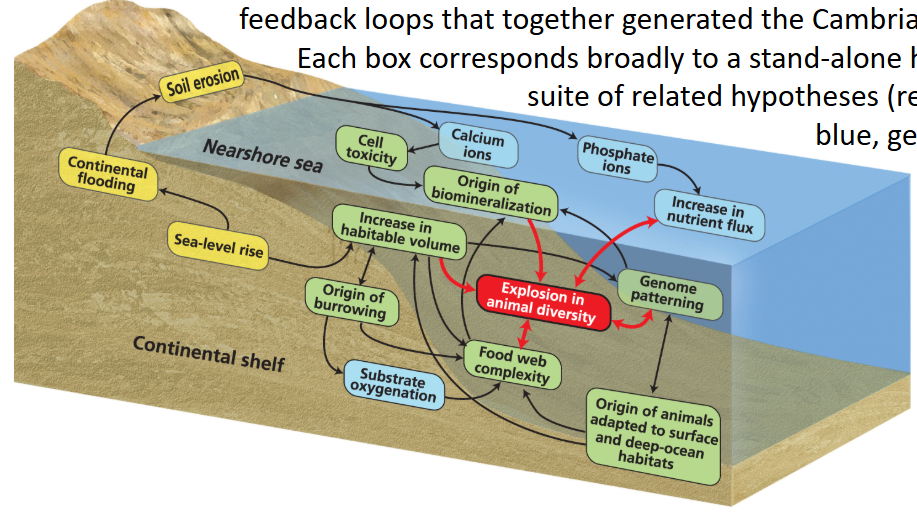
Changes in Ocean Ecology Gave Rise to the Cambrian Explosion
during the Cambrian
series of interlinked geological, geochemical, and biological factors → feedback loops
soil erosion deposits calcium ions into the ocean → biomineralization that leads to shells and hard body parts → explosion in animal diversity
there’s more to it but yeah
Background Extinction
normal rate of extinction for taxa or biota
Mass Extinction
a statistically significant increase above background extinction rates
Permian Extinction is Linked to Large Igneous Provinces
largescale volcanism releases quantities of CO2 and SO2 that are catastrophic to biota
cause excessive warming and marine anoxia
K-T Boundary
layer contains a high level of iridium which suggests an extraterrestrial impact 66 mya
Human-Caused Habitat Loss Drives Species Toward Extinction
dramatic rise in vertebrate extinctions over the past few centuries
highest increase is in mammals and birds
Increasing Carbon Dioxide Levels
leads to warming temperatures
now ~exponentially increasing
lowers pH of the ocean
Ocean Acidification
decrease in ocean’s pH caused by an increase in atmospheric carbon dioxide levels
carbon dioxide from human activities
decreases amount of bicarbonate available in the ocean → loss of species
bicarbonate (basic) is used to make shells and other hard body parts in shellfish species
Species Exist in a Web of Interactions
each interaction can potentially raise or lower an organism’s fitness and therefore be subject to evolution
Coevolution
reciprocal evolutionary change between interacting species
driven by natural selection
arises from the selection imposed by interactions between species, and from the other species’ ability to evolve, thereby necessitating a continual (sometimes rapid) evolutionary change
Coevolution from a Microevolutionary Perspective
coevolution can give rise to rapid evolutionary dynamics which can affect ecological processes
coevolution leads to the evolution of adaptations (and counter-adaptations) in interacting species
may give rise to coadaption of traits between species
can drive divergent microevolutionary trajectories both within and between populations
potentially leads to diversification → speciation
Categories of Coevolution
Facilitation
Mutualism
Commensalism
Facilitation
the enhancement of a population of one species by another
encompasses mutualism and commensalism
Mutualism
positive/positive relationship
both species raise each other’s fitness
typically occurs through positive frequency-dependent selection
ex. pollinator and plant
pollinator receives food, plant pollen is dispersed
types of mutualism
obligate
facultative
dispersive
defensive
resource-based
Commensalism
positive/neutral relationship
benefits one species and has a neutral effect on the other
ex. barbed seeds
barbed seeds get stuck in mammal fur and the mammal (unaffected) disperses the seeds
ex. cattle egrets
cattle egrets feed in pastures among cattle, whose movements stir up insect prey for the birds; cattle unaffected
Obligate Mutualism
neither species can live without the other
ex. lichens
inseparable mix of fungi and algae
Facultative Mutualism
interaction is beneficial to both species, but not essential to survival or reproduction of either species
ex. ants and aphids
Dispersive Mutualism (Plant’s Perspective)
involves dispersal of pollen and seeds
an ideal pollinator (to the plant) would be a specialist (high fidelity to the specific plant species)
fidelity is promoted by:
specific flowering at certain times in the year
synchronized flowering of all individuals within a species
specializations are called pollinator syndromes
Dispersive Mutualism (Pollinator’s Perspective)
it would be best to be a generalist and obtain nectar/pollen from as many flowers as possible
minimizes energy spent on flight
Defensive Mutualism
involve an animal defending a plant or an herbivore
ex. ants and aphids
aphids are defenseless and feed on plant sap (excretions are called honeydew)
ants feed on honeydew and in return, protect aphids from predators
Resource-Based Mutualism
involve the increased acquisition of resources for both species
90% of seed plants have mutualistic associations with fungi that live on or in root tissue
associations are called mycorrhizae
Pollination Syndromes
when pollinators visit the flowers of only one plant species
result of coevolution between pollinator and plant
Bee Pollination Syndrome
Bees
color vision includes UV; no red
good sense of smell
require nectar and pollen
Flower
colorful; not red
fragrant
provide nectar and pollen
Butterfly Pollination Syndrome
Butterflies
good color vision
sense odors with feet
need landing place
feed with tubular tongue
Flower
come in many colors
light floral scent
landing place
nectar in tubes
Bird Pollination Syndrome
Birds
color vision includes red
require perch
poor sense of smell
feed in daytime
high nectar requirement
Flower
often red
strong, damage-resistant structure
no fragrance
open in daytime
copious nectar
Bat Pollination Syndrome
Bats
colorblind
good sense of smell
active at night
high food requirement
perch needed
Flower
white/light colored
strong ordors
open at night
copious nectar
borne out of trunks
Mutualism and Seed Dispersal
fruits provide a valuable source of carbohydrates and vitamins
in return, animals unknowingly disperse enclosed seeds (through waste)
Competition Avoidance Hypothesis
hypothesis as to why seed dispersal is advantageous to plants
competition with the parent plant is avoided
no guarantee the seed will fall into optimal habitat
Predator Escape Hypothesis
hypothesis as to why seed dispersal is advantageous to plants
seed predators congregate under parent trees to feed on fallen seeds
well-dispersed seeds avoid this predation
Colonization Hypothesis
hypothesis as to why seed dispersal is advantageous to plants
constantly shifting environmental conditions for seed germination means that parental location is not always a good predictor of seedling success
Directed Dispersal Hypothesis
hypothesis as to why seed dispersal is advantageous to plants
some dispersers distribute seeds into optimal sites
ex. Mistletoes
obligate stem parasites whose seeds are dispersed by passerine birds
seeds must be deposited directly on tree twigs
bird eats the seeds and wipes waste onto the branches
Mycorrihizae
associations between plant roots and fungi
the fungi require soluble carbohydrates from plant host
fungi supply plant host with mineral resources and water, which they can extract from the soil more efficiently than the host can
Commensalism Relationship Categories
inquilinism
phoresy
metabiosis
associational resistance
Inquilinism
type of commensalism
occurs when one species uses a second species for housing
ex. orchids
grow in forks of tropical trees
Phoresy
type of commensalism
occurs when one organism uses a second organism for transportation
ex. flower-inhabiting mites
travel between flowers in the nostrils of hummingbirds
Metabiosis
type of commensalism
an organism uses something produced by the first, usually after death
ex. hermit crabs
use snail shells for protection
Associational Resistance
type of commensalism
palatable plants can gain protection against herbivores through an association with unpalatable neighbors
Coevolution Requires Genetic Variation
parasitoid wasp Aphidius ervi lays its eggs inside of aphids
when these wasps attack genetically identical aphids, they had different levels of success
Genetic Variation can Fuel Rapid Evolution
Soapberry bugs feed by inserting their beaks into fruits to reach seeds
Soapberry bugs that feed on Balloon Vine have evolved considerably longer beaks than soapberry bugs that don’t
Reciprocal Selection
describes selection that occurs in two species due to their interactions with one another
critical for coevolution
ex. Drosophila melanogaster and wasp Asobara tabida
Pleiotropy and Resistance
variation can be maintained when traits have other costs
pleiotropy
in locations with low amounts of food, control D. melanogaster larvae outperform resistant larvae (from example before)
Geographic Mosaic Theory of Coevolution
proposes that the geographic structure of populations is central to the dynamics of coevolution
direction and intensity of coevolution vary from population to population
coevolved genes from these populations mix due to gene flow
theory argues that coevolution proceeds by natural selection acting on the sources of variation that affect interactions among species
Geographic Selection Mosaics
structure of natural selection on interactions differs among environments
ex. high vs. low temps, high vs. low nutrient conditions, species rich vs. species poor
variation occurs because genes are expressed in different ways in different environments (GxE)
how one species affects the evolutionary fitness of another species depends upon the environment in which interaction occurs
Coevolutionary Hotspots
the intensity of reciprocal selection differs among environments
interactions are subject to reciprocal selection only within some local communities
these hotspots are embedded in a broader matrix of coevolutionary coldspots (where selection is non-reciprocal or only one participant occurs)

Trait Remixing
overall genetic structure of coevolving species continually changes through new mutations, genomic alterations, gene flow, genetic drift, and extinction of local pop. that differ in the combinations of coevolving traits they harbor
new genetic material can result from mutations, chromosomal rearrangements, hybridization between populations, or polyploidy
these processes contribute to the shifting geographic mosaic of coevolution
altering spatial distributions
Attenuated Coevolution
ex. Myxoma virus
introduced to Australia to control the introduced rabbit population
less virulent strains of the myxoma virus were able to spread more effectively than more virulent ones
Mullerian Mimicry
several harmful or distasteful species resemble each other in appearance
facilitates learned avoidance from predators
ex. Heliconius butterflies
produce compounds that are toxic to birds
converge on similar wing patterns
optix expression gives Heliconius species similar wing patterns
Batesian Mimicry
harmless species resemble harmful or distasteful species
harmless species derive protection from predators
ex. coral snakes and scarlet kingsnakes
scarlet kingsnakes look like coral snakes
coral snakes are venomous
scarlet kingsnakes are nonvenomous
Diversifying Coevolution
increase in genetic diversity caused by the heterogeneity of coevolutionary processes across the range of ecological partners
Coevolution Drives Species Diversity
plants evolve innovations to escape predation
leads to radiation
herbivores evolve to overcome defenses
leads to radiation
Introduced Predators can Disrupt Mutualisms
ex. Rhabdothamnus solandri
R. solandri is a flower that depends on the tui and other bird species
bird species ~50% extinct
mainland flowers are able to produce less fruit than island flowers due to extinction of pollinators
Endosymbionts
mutualists that live within another organism
ex. aster leafhoppers
depend on two bacterial endosymbionts
the bacteria live in bacteriomes (organs) and synthesize amino acids they provide to the leafhoppers
Mitochondria are Derived from Free-living Bacteria
mitochondria were originally free-living bacteria that were later engulfed by our single-celled ancestors
Endogenous Retroviruses
make up ~8% of the human genome
a retrovirus is an RNA virus that uses reverse transcriptase to become part of the host cell’s DNA
Mobile Genetic Elements
mobile genetic elements (genetic material that can move around within a genome) are also thought to be a signficant part of the human genome ~50%
Retrotransposons
transposons that move in the genome, being transcribed into RNA and later DNA by reverse transcriptase
a transposon is a mobile genetic element that can insert itself into the genome
in eukaryotes only
two types:
long terminal repeats
non-long terminal repeats
classified into long interspersed nuclear elements or short interspersed nuclear elements