Core, NMC, Balance
 Call Kai
 Learn
Learn Practice Test
 Spaced Repetition
 Match
Match Flashcards
 Knowt Play
1/52

There's no tags or description
Looks like no tags are added yet.
Name | Mastery | Learn | Test | Matching | Spaced | Call with Kai |
|---|
No analytics yet
Send a link to your students to track their progress
53 Terms
Core
lumbo-pelvic-hip complex, 29-35 muscles
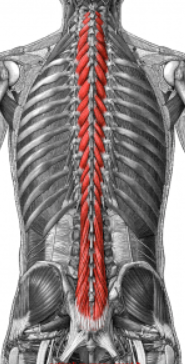
Multifidus
stabilizes lumbar spine, most important of lumbar
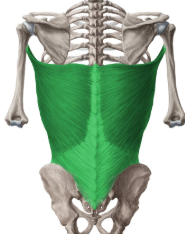
Latissimus Dorsi
LARGEST moment arm of all back
bridges upper extremities and core
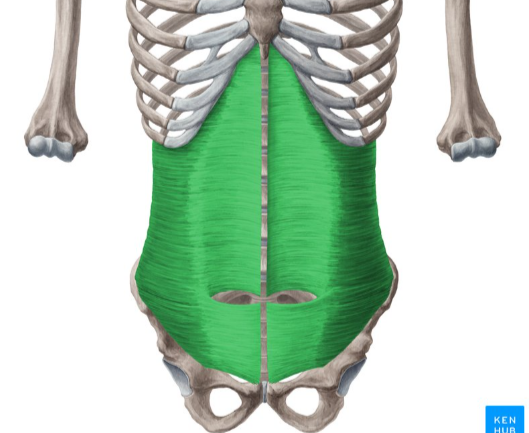
Transverse Abdominis
important of abdominal group, stabilizes, optimal NMC efficiency
Agonist
moving muscle
Antagonist
resisting muscle
Prime Mover
working muscle for action
Synergist
Assisting movement for action
Static
nonmvt, postural, stabilization
Dynamic
movement
Moment Arm
length between joint arm and line of force
Length-Tension Relationships
relationship of length and tension it can generate
Force-Couple Relationship
muscle on opposing sides of jt (agonist and antagonist) work TOGETHER to provide jt stability/mvt
BOTH contracting for static movement
Neuromuscular Efficiency
body’s ability to activate CNS and use muscles
Arthrokinematics
movement of joint surfaces
Core stability tests
straight leg lowering, transverse abdominis, prone multifidus
Progression (7)
Slow → fast
simple → complex
stable → unstable
low force → high force
eyes open → eyes closed
static → dynamic
general → specific
Central Nervous System
conscious thought, brain + spinal cord
Peripheral Nervous System
NERVES, transmits all info
houses somatic and autonomic nervous systems
Somatic Nervous System
EFFERENT
transmits info from CNS to body, conscious movement
Autonomic Nervous System
unconscious movement
houses SYMPATHETIC and PARASYMPATHETIC NS
Sympathetic/Parasympathetic Nervous System
counter one another for unconscious movement
Afferent Nerve Pathway
carries info TO CNS
SENSORY
Efferent nerve pathway
carry info FROM CNS
MOTOR
Interneurons
nerve fibers that intersect midline in spinal cord
Mechanoreceptors
nerve endings that respond to deformation
Articular Mechanoreceptors
SENSORY info about output frequency (amount of deformation)
classified into quick/slow adapting
Quick Adapting Articular Mechanoreceptors
stop discharging signals IMMEDIATELY after stimulus
KINESTHETIC sensations
Slow Adapting Articular Mechanoreceptors
continue discharging while stimulus is present
continuous feedback + proprioceptive info
Tenomuscular Mechanoreceptors
detect changes in muscle length/tension
classified as muscle spindles or golgi tendon organs
Muscle Spindles
detect length and rate of change, REFLEX contraction
Golgi Tendon Organs
regulate muscle activity, override muscle spindles
Cutaneous Receptors
contributes to proprioception, kinesthesia, force sense
receptors reflect pressure, KT-tape
Proprioception
conscious, unconscious appreciation of joint position
body in space
Kinesthesia
sensation of joint motion/acceleration
Force Sense
estimating joint and musculotendinous loads (if smth is heavy when lifting)
Neuromuscular Control
efferent response to sensory info
Feedforward NMC
planning mvts based on real time info and past experiences
Feedback NMC
regulating muscles thru REFLEX, slower than feedforward
Advantages of preparatory muscle activity
engages core
Electromechanical Delay
period between arrival of neural impulse and development of force
quickens by stability, stiffness (core engagement, athletic stance)
Dynamic Restraint
achieved thru prepratory and reflexive NMC, coordinates contractions while maintaining jt stability
Joint Congruency
area where bones make contact w each other in jt
increases when mm contract → jt surfaces compressed
Muscle Stiffness
ratio of change of force to change of length in mm, stuff mm resist stretching → more jt stability
Balance
postural equilibrium, feedBACK
Sensory Organization for balance (3)
Somatosensory - orientation of body parts
Vision - orientation of eyes and head
Vestibular info - gravitational, linear, angular acceleration
Muscular Coordination
temporal and sequential distribution of contractile activity among muscles
COG in females
lower
Static Balance Exercises
COG is maintained over fixed base of support, stable surface
Semi-Dynamic Balance Exercises
either unstable surface with stable support base or COG is moving thru ROM
Dynamic Balance Exercises
COG is moving on stable surface
Functional Balance Exercises
exercises tailored to specific activity