Lecture 3 - Reducing Prejudice and Discrimination
 Call Kai
 Learn
Learn Practice Test
 Spaced Repetition
 Match
Match Flashcards
 Knowt Play
1/40

There's no tags or description
Looks like no tags are added yet.
Name | Mastery | Learn | Test | Matching | Spaced | Call with Kai |
|---|
No analytics yet
Send a link to your students to track their progress
41 Terms
direct intergroup contact
-face-to-face interactions between members of different groups
contact hypothesis (direct intergroup contact)
-under certain conditions, contact between groups will reduce prejudice
-conditions promoting prejudice reduction:
equal status
common goals
intergroup cooperation
institutional support
Pettigrew & Tropp (evidence for direct intergroup contact)
-meta-analysis
-showed direct contact does reduce prejudice
-greater reductions in prejudice are seen under the conditions specified by Allport, but these are not essential for prejudice reduction
issues with direct intergroup contact
-potential mechanisms involved in reducing prejudice in the contact hypothesis not clearly explained
-direct contact isn’t always possible or appropriate
mechanisms underlying direct contact (Pettigrew & Tropp)
-direct contact reduced prejudice by:
reducing intergroup anxiety
increasing empathy and perspective taking
increasing knowledge about the outgroup
examples of inappropriate contact
-peace walls built to separate catholic and protestant communities in northern ireland to reduce severe intergroup conflict and violence
-92% of children in northern ireland attend segregated schools
indirect contact
-indirect intergroup contact interventions were developed:
vicarious contact
extended contact
imagined contact
vicarious contact (indirect intergroup contact)
-observation of an interaction between ingroup and outgroup members
-can reduce prejudice
vittrup (vicarious contact)
-children exposed to racially diverse TV shows showed more positive outgroup attitudes than children not exposed to these shows
vezzali (vicarious contact)
-exposure to passages from harry potter books depicting intergroup friendships predicted improved attitudes towards immigrants in children who identified more with harry potter
extended contact (indirect intergroup contact)
-knowing that ingroup members have contact with outgroup members
-can reduce prejudice
wright (extended contact)
-white, asian and african undergraduates who reporting knowing more ingroup members with at least one outgroup friend reported less prejudice towards outgroups
zhou (extended contact)
-meta analysis
-supports there is a positive relationship between extended contact and intergroup attitudes
mechanisms underlying extended and vicarious contact (indirect intergroup contact)
reducing intergroup anxiety
increasing empathy
creating cognitive overlap between the self and outgroup members → close ingroup members are considered part of the self, so this then extends to their outgroup friends
changing perceptions of social norms
issues with extended and vicarious contact
-can’t easily use extended contact as an intervention, difficult to deliberately manipulate whether someone from ingroup has outgroup friends
-vicarious contact is easier to manipulate
imagined contact (indirect intergroup contact)
-mental simulation of a social interaction with a member or members of an outgroup category
basic experimental method (imagined contact)
imagery task
-imagined contact group
-control group
measures of prejudice
west (imagined contact)
-participants ask to imagine a positive interaction with an individual with schizophrenia
-reported more positive attitudes than participants who imagined a positive interaction with an individual who didn’t have schizophrenia
Miles (imagined contact)
-meta analysis
-supports effectiveness of imagined contact in promoting more positive attitudes, emotions, intentions and behaviour to a range of different groups
mechanisms underlying imagined contact
reduced intergroup anxiety
increased trust in the outgroup
issues with imagined contact (indirect intergroup contact)
-’many labs’ replication project sought to replicate study on effects of imagined contact on reducing religious prejudice
-found a significant but very small average effect of imagined contact in reducing prejudice across the 36 samples
-different from the large effect found in the original study
-other meta analysis found small effect size for imagined contact effects on religious prejudice
colourblind ideologies
-shouldn’t see people in terms of the colour of their skin
-should see people as individuals and look beyond group differences
-approach to managing diversity in which intergroup distinctions and considerations are deemphasised
issues with colourblind approach
-ignoring intergroup distinctions means ignoring actual intergroup disparities and differences in experiences
-so less likely to recognise intergroup disparities and discrimination
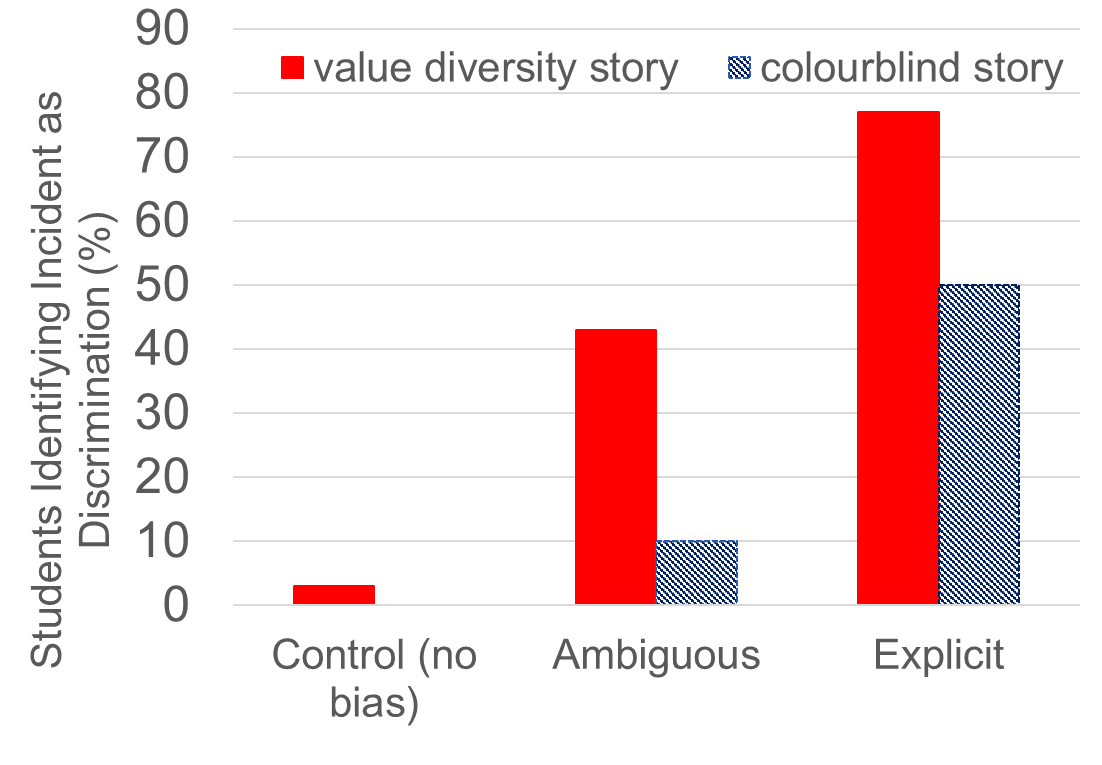
apfelbaum - method (colourblind approach)
-children given a digital storybook on equality where a teacher took one of the following approaches:
colour blind approach → want to show everyone that race is not important and that we’re all the same
value diversity approach → need to recognise how we are different from our neighbours and appreciate those differences
apfelbaum - method continued (colourblind approach)
-children told about some scenarios that varied in the degree to which they described racially biased behaviour:
no bias
ambiguous bias
explicit bias
-children then reported which of the scenarios showed racial discrimination
apfelbaum - results (colourblind approach)
-children were less likely to perceive discrimination in the colourblind story condition relative to the value diversity condition → even when discrimination was explicit
educational strategies
-factual education to increase knowledge about different groups
-consciousness raising → education about the existence of prejudice and discrimination
-perspective taking
blue eyes/brown eyes exercise (education and consciousness raising)
-after MLK’s assassination primary school teacher Jane Elliott held an exercise to teach children about discrimination
-don’t know how it feels to experience discrimination
-had people judge people by colour of their eyes to help them understand → blue eyed people treated as superior then swapped for brown-eyed people the next day
-third graders demonstrated vicious discrimination
-those in the superior groups performed more quickly on tasks
ethics of blue eyes/brown eyes exercise (education and consciousness raising)
-some argued it was cruel for white children because black children accustomed to it, will cause great psychological harm
-elliott argued that being concerned over the fragile egos of white children who experience a couple of hours of made-up racism one day when black people experience real racism everyday of their lives
the school that tried to end racism (education and consciousness raising)
-documentary in south london school undertaking first trial of a programme to educate children about racial bias
hughes - method (education and consciousness raising)
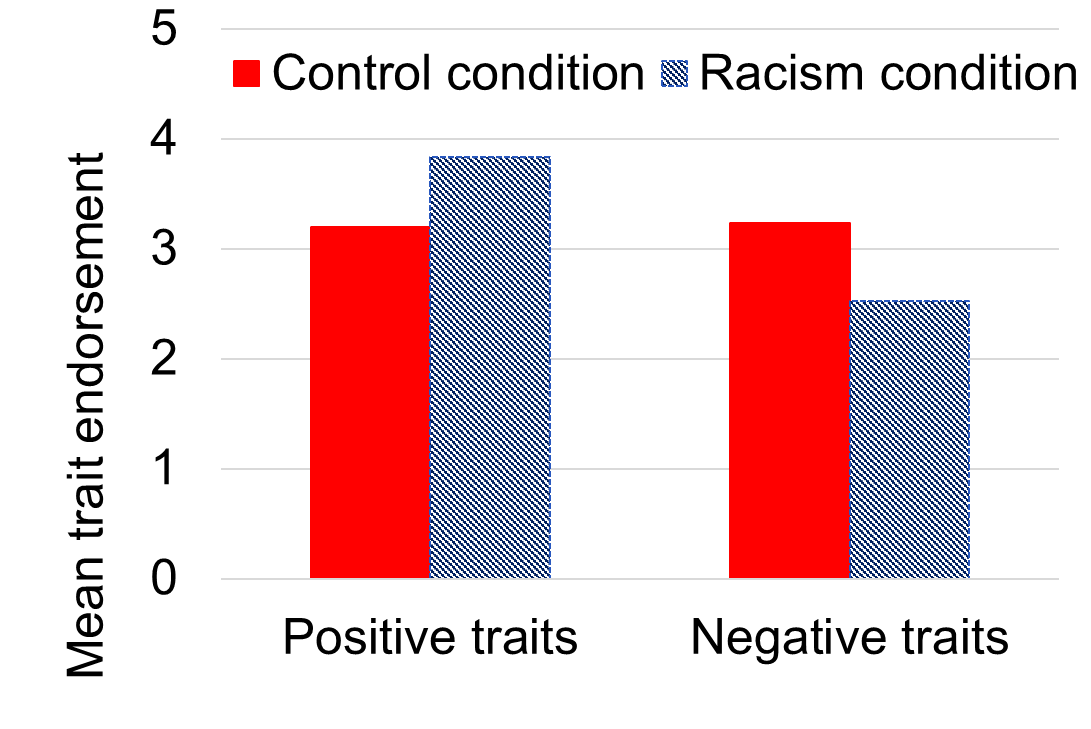
-white american primary school aged children were exposed to history lessons that included either:
racism condition → explicit information about racism experienced by well-known african americans
control condition → identical lessons that omitted the information about racism
-then 1-2 days later completed the black/white evaluative trait scale (BETS)
BETS (hughes - method)
-measure of attitudes towards african americans
-how many african american/white people are…
-5-point scale: 0=hardly any, 4= almost all
-positive traits
-negative traits
-neutral traits
hughes - results (education and consciousness raising)
-participants who received history lessons talking about racism had significantly more positively and less negative attitudes towards african americans than participants who received control lessons
evidence for education and consciousness raising
-meta-analyses show effectiveness:
-found educational interventions were successful at reducing mental-health stigma
-small but significant effects of multi-cultural, anti-bias and moral education interventions on reducing prejudice
prejudice confrontation
-directly confronting prejudice or discriminatory behaviour in others
-confrontation can be enacted by the target of prejudice, someone from the same group or by an ally
wood (prejudice confrontation)
-demonstrates that confronting prejudice significantly reduces intergroup bias
-particularly reducing use of stereotypes and increasing intentions to control intergroup bias in the future
czopp - method (prejudice confrontation)
-white participants completed a task with a white confederate
-required them to take turns making inferences about sentences paired with photos of white and black people
-critical trials paired pictures of black men with sentences that could have both stereotypical or non-stereotypical interpretations
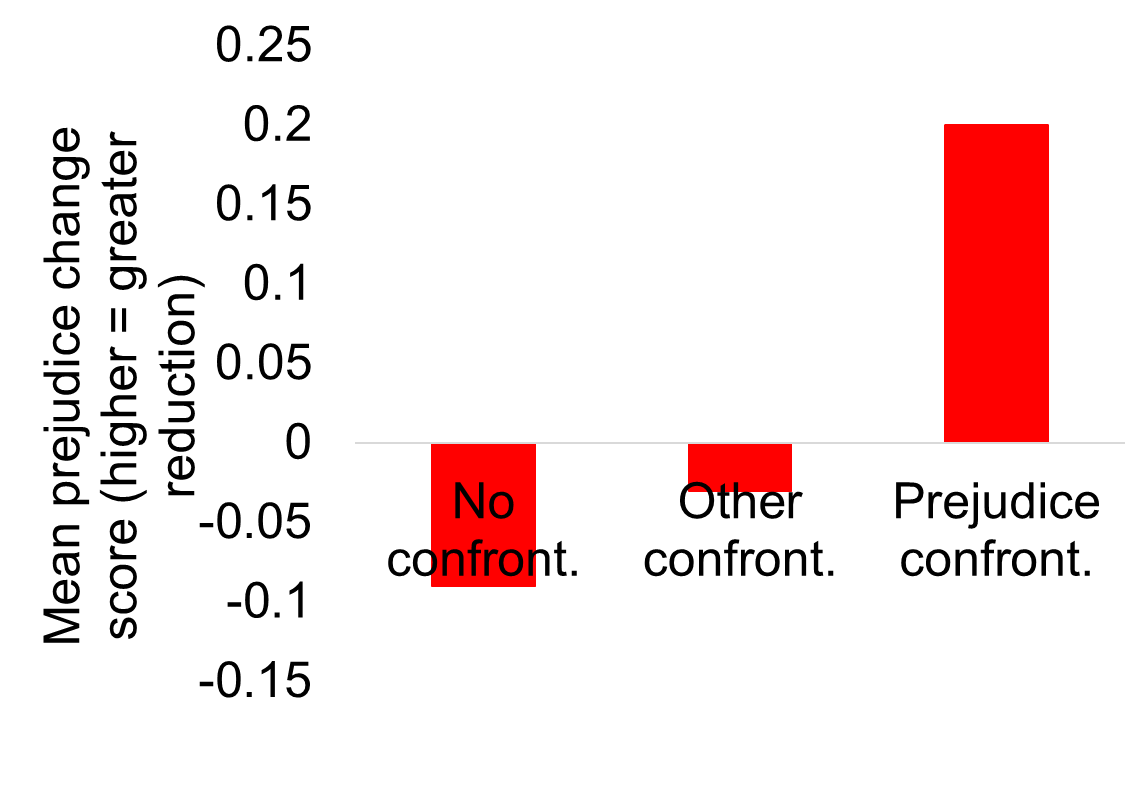
-participants completed the 20-item attitudes towards blacks scale at the beginning of semester and at the end of the study
czopp - method continued (prejudice confrontation)
-in feedback task, participants assigned to receive one of the following types of feedback from the confederate
confrontation of prejudice
other confrontation control - e.g., calling answers goofy
no confrontation control
czopp - results (prejudice confrontation)
-participants confronted about use of stereotypes reported a greater reduction in prejudiced attitudes than participants in the other confrontation and no confrontation control groups
chaney - method (prejudice confrontation)
-white participants interpreted sentences paired with pictures of white or black people
-critical trials paired pictures of black men with sentences that could have been both stereotypical or non-stereotypical interpretations
-half of the participants who responded stereotypically were confronted by the experimenter
-week later completed a similar sentence inference task where sentences were paired with photos of white, black and latino men
chaney - results (prejudice confrontation)
-white participants confronted for using negative black stereotypes used fewer negative black stereotypes and fewer negative latino stereotypes than white participants who weren’t confronted