PSYC 2000 ch. 4
 Call Kai
 Learn
Learn Practice Test
 Spaced Repetition
 Match
Match Flashcards
 Knowt Play
1/55

There's no tags or description
Looks like no tags are added yet.
Name | Mastery | Learn | Test | Matching | Spaced | Call with Kai |
|---|
No analytics yet
Send a link to your students to track their progress
56 Terms
consciousness
awareness of mental processes and everything going on around them
internal stimuli
pain, hunger, thirst, being aware of thoughts and emotions
external stimuli
sight, temperature, hearing
wakefulness
high levels of sensory awareness, thought, and behavior (alert)
sleep
low levels of physical activity, reduced sensory awareness
altered states of consciousness
shift in quality or pattern of mental activity as compares to wakefulness (daydreaming, intoxication, anesthesia, meditation)
biological rhythm
internal cycle of biological activity
circadian rhythm
biological rhythm that occurs over approximately 24, sleep-wake cycle
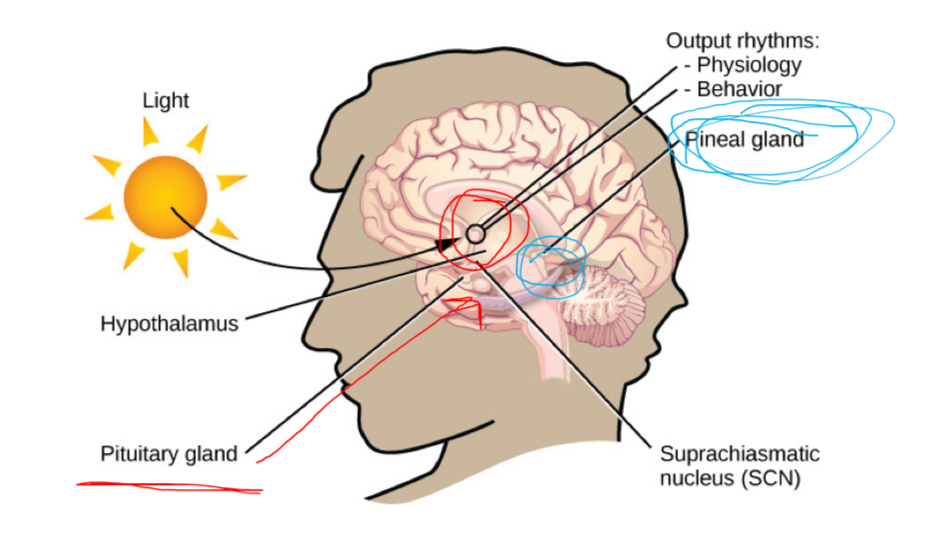
sleep-wake cycle
linked to environments light-dark cycle, main circadian rhythms
hypothalamus
homeostasis center
suprachiasmatic nucleus (SCN)
brains clock mechanism
pineal gland
releases melatonin and maintains biological rhythms
melatonin
hormone, regulates sleep-wake cycle (darkness=sleepy, light=wakeful)
sleep regulation
brains control of switching sleep and wakefulness and coordinating with outside world, can be disrupted
sleep debt/insufficiency
not enough sleep on chronic basis
sleep rebound
fall asleep faster during subsequent opportunities for sleep (sleep debt/deprivation
sleep needed
7-9 hours, quality matters
adaptive theory (evolutionary)
WHEN we sleep, sleep essential to restore resources, avoid predators in darkness
restorative theory (cognitive)
WHY we sleep, physical health restoration, mental health functioning
rapid-eye movement (REM) sleep
stage of sleep when eyes move rapidly, brainwaves appear similar to wakefulness, dreaming
non-REM (NREM) sleep
all other stages of sleep, distinguished by brainwave activity
brainwave activity
measured by EEG, changes across different stages of sleep
NREM stage 1
transitional phase between wakefulness and sleep, light sleep (alpha waves)
NREM stage 2
deep relaxation, theta waves
sleep spindles
rapid burst of high frequency brainwaves, learning and memory
sleep spindles
rapid burst of high frequency brainwaves, learning and memory
NREM stage 3
slow-wave sleep, delta waves. learning and memory
NREM stage 3
slow-wave sleep, delta waves. learning and memory
stages of sleep per night
4-6, 90-110 minutes each
wish fulfillment theory (freud)
dreams preserve our sanity by allowing forddiden or unrealistic wishes, manifest content, latent content
manifest content
dream content
latent content
dreams true meaning
information processing theory (rosalind cartwright)
dreams reflect daily life events that are important to us, help shift through experiences, thoughts, and regulate emotions
activation synthesis hypothesis (alan hobson)
dreams are result of brains imposing narrative explanations to explain random brain activation, synthesize, activation
synthesize
make sense of
activation
neural activity during REM
insomnia
sleep disorder, difficulty falling or staying asleep
sleep apnea
sleep disorder, multiple bursts of not breathing
narcolepsy
sleep disorder, sudden slip into REM sleep
night terrors
sleep disorder, extreme the fear, panic, and screaming
REM behavior disorder
sleep disorder, mechanism that blocks movement of voluntary muscles fails (kicking, punching, yelling)
sleepwalking (somnambulism)
sleep disorder, eyes open but still, asleep, NREM stage 3 (slow- wave)
substance use disorder
compulsive pattern of drug use despise negative consequences (DSM-5), physiological and psychological dependence
physiological dependence
changes in normal bodily functions and withdrawal
psychological dependence
emotional need for drug
tolerance
requires more and more of drug to achieve previous effects at lower doses
withdrawal
adverse symptoms when drug use discontinued
stimulants
i’m tease levels of neural activity, dopamine agonists (caffeine, nicotine, xoxaine, amohetamines, MDMA, cathinones)
most commonly used drug in the world
caffeine
depressants
suppress central nervous system activity (alcohol, barbiturates, benzodiazepines)
opioids
analgesics (decrease pain), highly addictive (heroin, morphine, methadone, codeine)
hallucinogens
changes in sensory and perceptual experiences, hallucinations (mescaline, LSD, PCP, ketamine, cannabis)
hypnosis
extreme focus on self, involves suggested changes of behavior and experience
dissociation theory
theory of hypothesis, divided consciousness (not remembering driving)
social-cognitive theory
hypnosis theory, playing expected role in situation
meditation
state of relaxed awareness and focus, roots in religion