biology term 2
 Call Kai
 Learn
Learn Practice Test
 Spaced Repetition
 Match
Match Flashcards
 Knowt Play
1/43

There's no tags or description
Looks like no tags are added yet.
Name | Mastery | Learn | Test | Matching | Spaced | Call with Kai |
|---|
No analytics yet
Send a link to your students to track their progress
44 Terms
What is DNA and its two functions?
the chemical compound that:
carries genetic information for inheritance
codes for amino acids to produce protein
What are nucleotides, and what three things is it made of?
the basic building blocks of DNA
deoxyribose sugar
phosphate
nitrogenous base
What are the two complementary base pairs?
Adenine (A) + Thymine (T)
Cytosine (C) + Guanine (G)
What is a gene and its function?
a section of DNA that:
codes for a particular trait
What is a chromatin?
a tightly coiled DNA molecule
Describe the structure of a chromosome and what it contains.
consists of tightly-coiled DNA that:
forms a rod-like structure
contains many genes
What is DNA replication, and when/why does it occur?
the process by which:
a DNA molecule forms an exact copy of itself (before cell division)
so cells have identical genetic information
What is a protein, and what does it control?
🧪
an organic compound that is made of amino acids and:
controls chemical reactions
What is the helicase enzyme responsible for?
enzyme responsible for:
separating/unzipping the two sides of the DNA molecule
What is the DNA polymerase enzyme responsible for?
enzyme responsible for:
attaching loose nucleotides to the exposed DNA strand
What is the DNA ligase enzyme responsible for?
enzyme responsible for:
repairing bonds of nucleotides to form DNA
What is an allele?
different versions (variations) of the same gene
How do pairs of alleles produce a person’s individual genetic make up?
each person inherits one allele from each parent
the pair of alleles determines the trait (genotype)
How are dominant and recessive alleles similar?
both are inherited (one from each parent)
both affect traits
What is the difference between dominant and recessive alleles?
dominant alleles → always ignores the recessive allele if at least one is present (uppercase)
recessive alleles → only expressed if both alleles are recessive (lowercase)
What is similar between a genotype and phenotype?
both are influenced by genes
both relate to one’s traits
What is the difference between genotypes and phenotypes?
genotypes → allele combinations for a gene (e.g. RR, Rr, rr)
phenotypes → an individual’s trait determined by its genotype (e.g. red/white flower)
What is similar between homozygous and heterozygous?
both are allele combinations for a gene (genotype)
both involve two alleles (one from each parent)
What is the difference between homozygous and heterozygous?
homozygous (Ho) → two identical alleles for a given gene
heterozygous (He) → two different alleles for a given gene
What is a punnett square and how do you draw one?
a table used to solve genetic problems
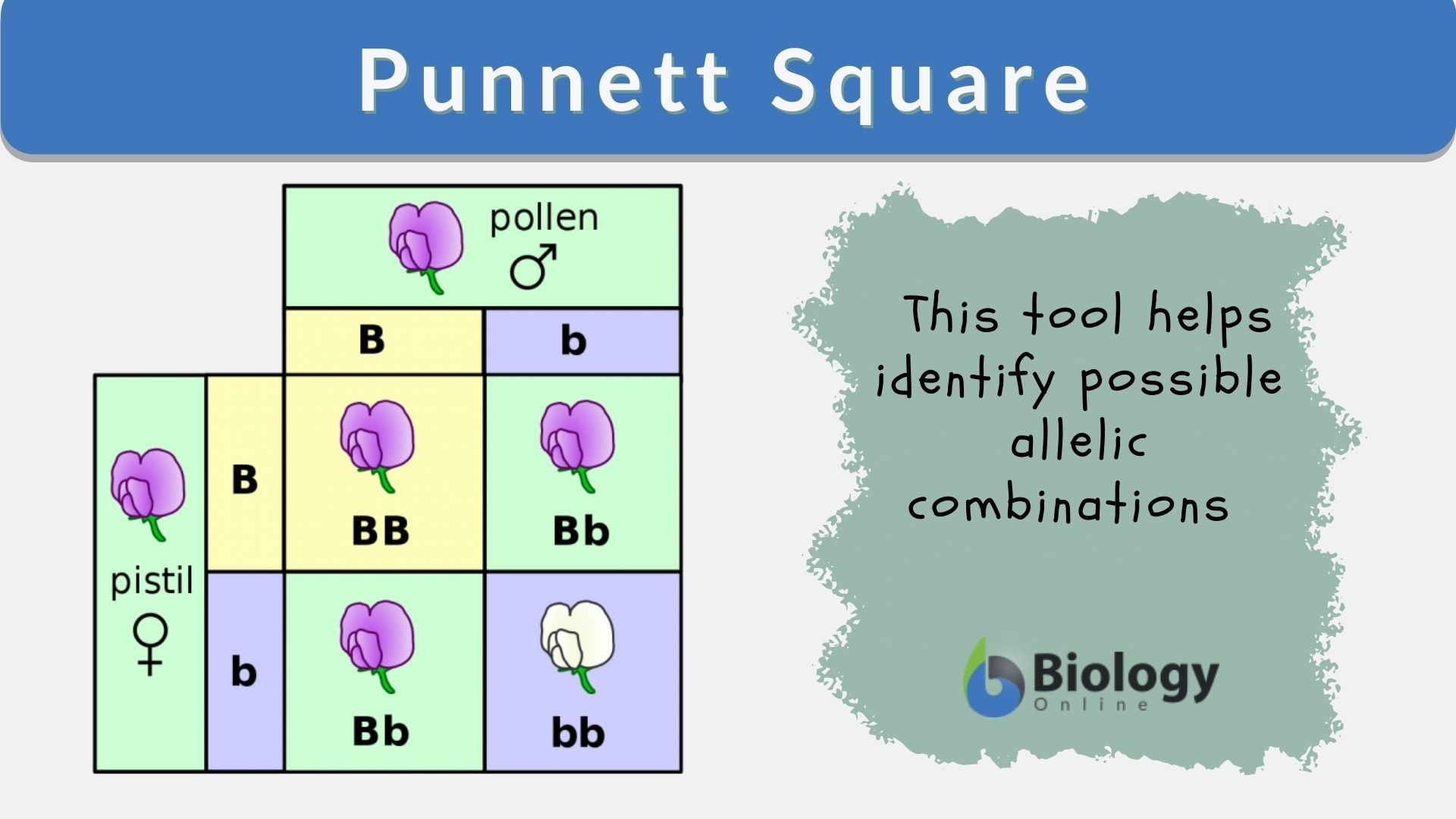
What two ways can traits be inherited?
autosomal
sex-linked
How are autosomal and sex-linked inheritance similar?
What is the difference between autosomal and sex-linked inheritance?
What is a sex-linked trait?
What is an X chromosome?
What is a Y chromosome?
What does “X-linked inheritance” mean?
What is a carrier?
What does “affected” mean?
What is a pedigree?
What is a generation?
What does the term “individual” mean?
What is a “trait”?
What is an “inheritance pattern”?
ADD KEY TERMS FOR MITOSIS/MEIOSIS (ON ONENOTE)!!!
ADD KEY DEFINITIONS FOR MITOSIS/MEIOSIS (ON ONENOTE)!!!
Mitosis
a process that:
produces two identical cells for growth and repair
keeps the chromosome number the same as the parent cell (2n → 2n)
Stages of mitosis (PMAT)
x
Meiosis
x
Role of meiosis in producing gametes
x
Two main stages of meiosis (PMAT[I], PMAT[II])
What does meiosis lead to?
genetic variation in offspring due to:
different combinations of maternal and paternal chromosomes
Theory of Evolution of Natural Selection
Mutations in the DNA code leads to variation in populations
More offspring are produced than survive due to selection pressures
Some variations/traits are more favourable in their environment
Favourable traits are passed onto the next generation
Three key steps of speciation
Variation -
Isolation -
Selection -
Allopatric vs Sympatric speciation