Unit 5: Pre-Classical and Classical Worlds (Etruscans and Romans)
 Call Kai
 Learn
Learn Practice Test
 Spaced Repetition
 Match
Match Flashcards
 Knowt Play
1/14

There's no tags or description
Looks like no tags are added yet.
Name | Mastery | Learn | Test | Matching | Spaced | Call with Kai |
|---|
No analytics yet
Send a link to your students to track their progress
15 Terms
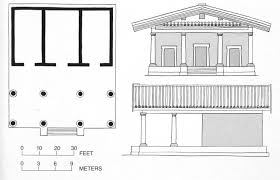
Temple of Minerva. Veii (near Rome, Italy). Master Sculptor Vulca. 510-500BC. Wood, mudbrick, or tufa (volcanic rock). Plan-based on descriptions from Vitruvius. Model-University of Rome.
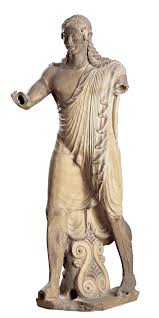
Apollo. Master Scultpor Vulca. From the Temple of Minerva. Portonaccio, Veii. 510-500BC. Painted terra cotta. Museo Nazionale di Villa Guila, Rome.
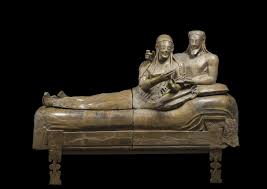
Sarcophagus of the Spouses. Etruscan. 520BC. Terra cotta. Museo Nazionale di Villa Guila, Rome, Italy.
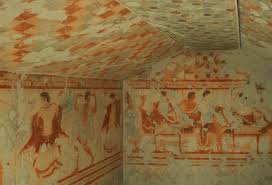
Tomb of the Triclinium. Tarquinia, Italy. Etruscan. 480-470BC. Tufa and fresco.
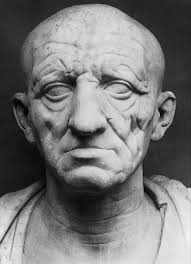
Head of a Roman Patrician. Republican Rome. 75-50BC. Marble.
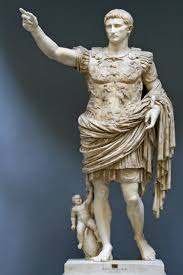
Augustus of Prima Porta. Imperial Rome. Early 1st century CE. Marble.
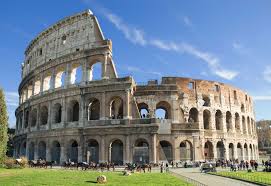
Flavian Ampitheater (Colosseum). Rome, Italy. Imperial Rome. 70-80CE. Stone, concrete, and brick
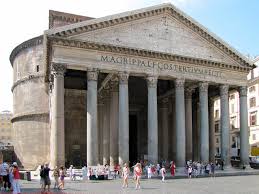
Pantheon. Imperial Rome. 118-125CE. Concrete with stone facing.
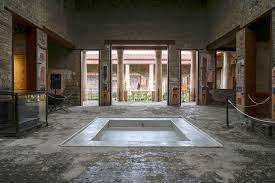
House of the Vettii (brothers). Pompeii, Italy. Imperial Roman. 2nd century BC, rebuilt 62-79CE. Cut stone and fresco.
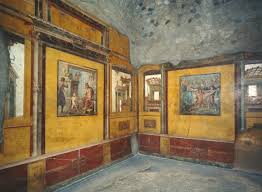
Frescos from the House of the Vettii
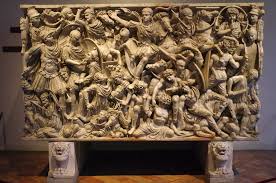
Ludovisi Battle Sarcophagus. Late imperial Rome. 250CE. Marble
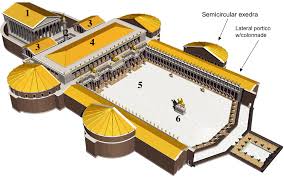
Forum of the Trajan. Rome, Italy. Apollodorus of Damascus. 106-112CE. Brick and concrete.
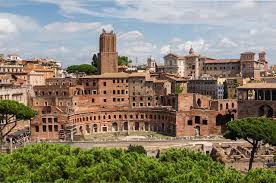
Markets at Trajan’s Forum
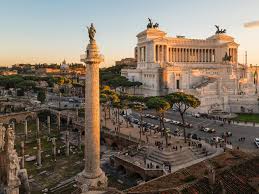
Trajan’s Column. Rome, Italy. 113CE. Marble.
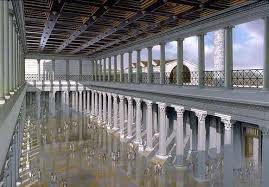
Basilica Ulpia from Trajan’s forum.