4C: apoptosis
 Call Kai
 Learn
Learn Practice Test
 Spaced Repetition
 Match
Match Flashcards
 Knowt Play
1/23

There's no tags or description
Looks like no tags are added yet.
Name | Mastery | Learn | Test | Matching | Spaced | Call with Kai | Chat |
|---|
No analytics yet
Send a link to your students to track their progress
24 Terms
necrosis
unregulated cell death
cause of necrosis
disease, injury, failure of blood supply
process of necrosis
damage to plasma membrane → flow in of fluid = swell and burst
burst material spreads over adjacent tissue, causes inflammation
apoptosis diagram
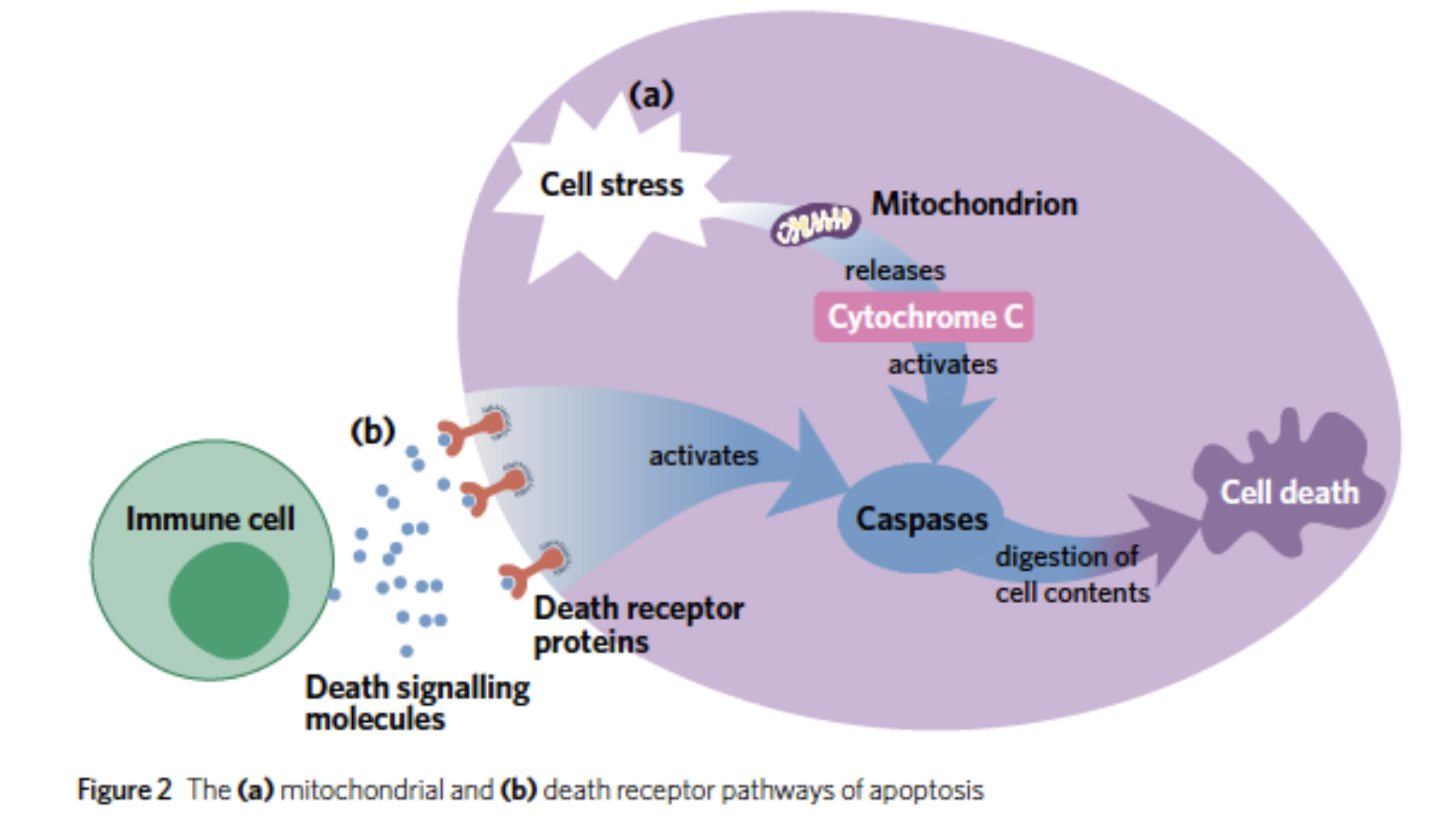
cell balance
normal tissue cells = rate of production + death → balanced
reproduction exceeds
growth / cancer
reproduction less
tissue wasting diseases / autoimmune diseases
balance regulated by…
regulator proteins
why does apoptosis occur?
maintenance
e.g. body continually makes + replaces RBC as they become damaged while squeezing across capillaries
removing damaged + dangerous cells
cells with damaged DNA and mutations
cells that have been infected by viruses
cells that attack self-cells as part of the immune function
normal development
e.g. as foetus develops, apoptosis = part of digit + limb development
apoptotic pathways
internal / intrinsic / mitochondrial activated pathway
external / extrinsic (death receptor protein on cell membrane) activated pathway
extrinsic pathway
death chemicals (often called ligands, released by WBC) that are external to the cell bind to membrane death receptors (proteins) on the cell membrane
triggers of extrinsic pathway
when cells are recognised are:
malformed
infected
in excess
example of extrinsic pathway
Cytotoxic T cell (WBC) can bind to a cancer cell
release death signal
binds to death receptors (protein) → apoptosis
triggers of intrinsic pathway
triggered by internal stressors, such as:
cell damage by virus
DNA damage
may be caused by UV, radiation
chemotherapy / radiation
process of apoptosis (1/2)
pre-apoptotic signal received by the cell
activation of apoptotic enzymes (caspases) within the cell
degradation of the nucleus, shrinkage of the cell, blebbing of the cell into apoptotic bodies
apoptotic bodies engulfed by phagocytes
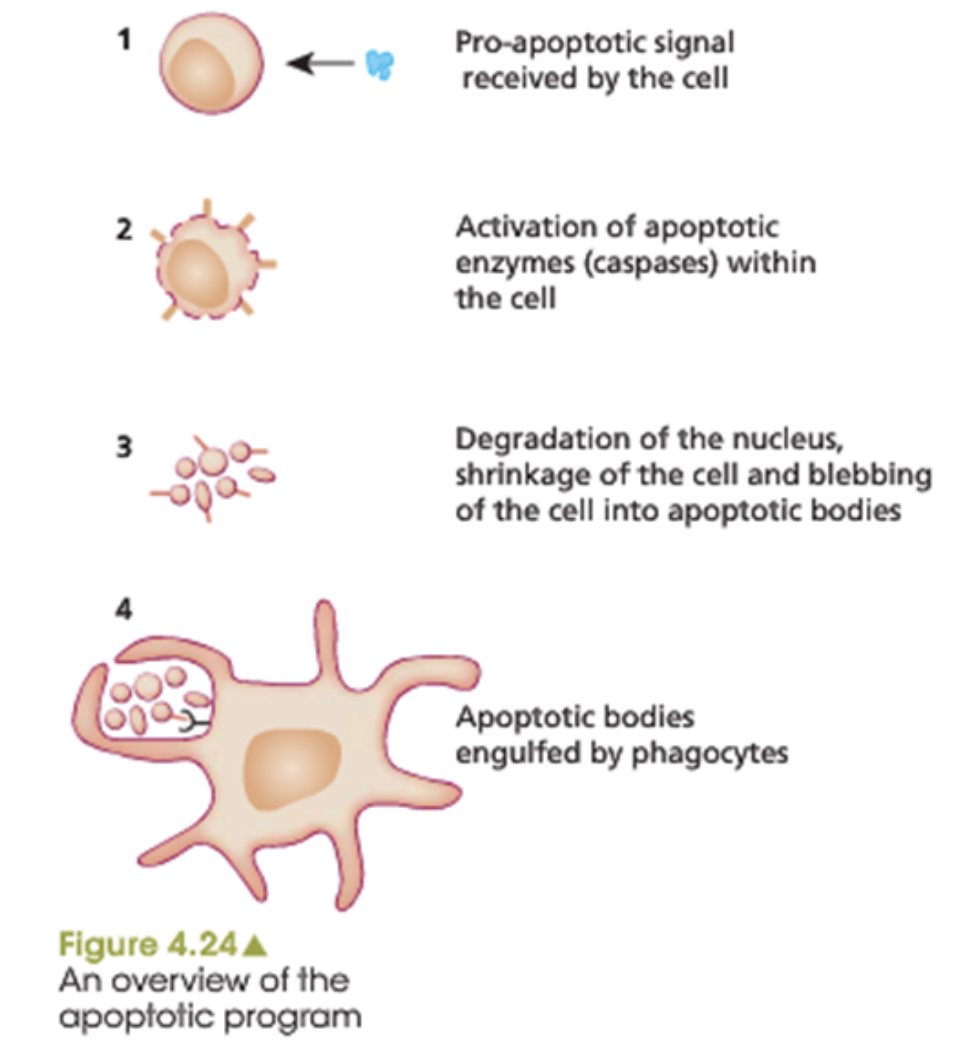
process of apoptosis (2/2)
caspases (enzymes) activated
cell and nucleus shrinks
breaking down of cell contents, including organelles + DNA
cytoskeleton broken and the membrane starts blebbing
cells forms membrane enclosed vesicles called apoptotic bodies
engulfed by phagocytes
blebbing
bulging of plasma membrane to form separate apoptotic bodies
apoptotic bodies
vesicle containing cell contents that are released from a dying cell during apoptosis and eventually engulfed by phagocytes
phagocyte
a group of WBC responsible for the endocytosis and destruction of pathogens and foreign material
caspase
enzymes that cleave / cut specific intracellular proteins in apoptosis
role of caspase enzymes
cleavage / cutting of DNA into fragments
degrading / breaking down nuclear proteins
cleave / cutting of proteins in nuclear membrane
dismantling of the cell’s cytoskeleton - forms blebs
breakdown of proteins in cytosol
breakdown of organelles
tumours
uncontrolled cell division b/c apoptotic failure
benign tumour
relatively slow, trapped in tissue of origin, trapped in capsule = prevents invading other tissues, non-cancerous
malignant tumours
bengign tumour spread / invaded other tissue types, cancerous