Lecture 18: Techno Revolution and War in the Age of Steam
 Call Kai
 Learn
Learn Practice Test
 Spaced Repetition
 Match
Match Flashcards
 Knowt Play
1/29

There's no tags or description
Looks like no tags are added yet.
Name | Mastery | Learn | Test | Matching | Spaced | Call with Kai |
|---|
No analytics yet
Send a link to your students to track their progress
30 Terms
Nap was exiled to
elba…
in march 1815, nap escaped and
began rebuilding his armies
nap tries to make a duel w his enemies -
which they reject, so he his to fight
naps plan:
a. attack weakest enemy armies
prussians
brit
b. to do so, march north, leaving other troops to watch over invasion routes
step one of nap’s plan seems to go well -
he defeats prussians - but has to make sure that they stay for from brit - he detaches 1/3 of his army to prevent this
wellington picked battlefield
a. long ridge - which he could conceal troops behind
b. set up walled forms in front as mini-fort- to slow French attacks
nap always has to worry about the prussians appearing
on his right
but he negins w an attack on his left to try to
focus wellington’s attention there
frontal attacks fail and nap decided to rely on his artillery, then
final infantry assaults - which failed and nap had to flee the battlefield (and the prussians arrived)
so, nap finally gone (died 1821-
will warfare continue to change?
what will happen to
column, line, square?
the area of waterloo - an area so often fought over that it became known as
“the cockpit of europe”
in the early 18th c,
the duke of marlborough, fighting the armies of louis XIV, had to deal w allies - the dutch in particular - the brit govt’s representative = charles viscount townshend (“turnip”)
much of netherlands = land reclaimed from north sea by the “polder system”
barrier
pump out water
then fertilize reclaimed land
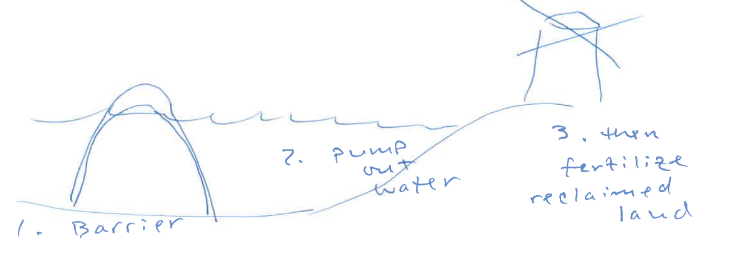
townshend admired and used dutch methods in eastern england townshend made a
reputation for these methods
but the real money came not from agriculture,
but from sheep
since the middle ages a major wealth - producer in england =
wool
producing wool into thread then cloth =
labor intensive (5 spinsters for each weaver)
as demanded increased in the 18th c, the bottleneck =
hand labor
in 1760s, investors = began to tackle the problem
a. james hargreaves invents the “spinning jenny” - speeds up thread making
b. richard arkwright - who hitches spinning to water power
now we begin to see factories
water powered spinning machines
next step - attach water power to
looms to turn thread to cloth
the limits of water power:
a. drought
b. freezing
for centuries eng has been increasingly deforested -
people relied upon coal for heating
coal could produce steam -
the power of the late 18th and 19th c
so, in turn, steam replaced water power
to run factories
coal moved by steam power to factories -
steam engines pulled wagons - and som people - railways appeared
steam ships
another step
as other technologies appear,
will military technology change - and what about formations?
improvements in weapons percussions caps + trifling -
will change in weaponry change warfare? will column/ line/square still be in use?