Biology - The Cellular Basis of Reproduction and Inheritance
0.0(0)
Studied by 5 people Call Kai
 Learn
Learn Practice Test
 Spaced Repetition
 Match
Match Flashcards
 Knowt Play
Card Sorting
1/171

Last updated 4:35 PM on 6/6/26
Name | Mastery | Learn | Test | Matching | Spaced | Call with Kai |
|---|
No analytics yet
Send a link to your students to track their progress
172 Terms
1
New cards
this is the biological process by which new organisms are produced:
reproduction
2
New cards
organisms can reproduce *___ or* __
asexually, sexually
3
New cards
asexual reproduction is:
a cloning process
4
New cards
hereditary material is found:
in the DNA located in a chromosome
5
New cards
the process of _____ allows organisms to reproduce asexually:
mitosis
6
New cards
mitosis involves the division of what into what?
one cell into two identical daughter cells
7
New cards
does mitosis conserve chromosome number?
yes
8
New cards
mitosis occurs when:
multi-cellular organisms grow, damaged cells are replaced, single-celled organisms make new organisms.
9
New cards
bacterial cell division is called:
binary fission
10
New cards
the time the parent cell is formed to the division of the two cells is called the:
cell cycle
11
New cards
the cell cycle is comprised of these phases:
G1, S, G2, M, C
12
New cards
interphase is made up of:
G1, S, G2
13
New cards
Interphase accounts for ___% of the cell cycle.
90
14
New cards
Interphase is a time of _______:
high metabolic activity
15
New cards
In G1, what happens?
the cell grows by producing proteins and organelles.
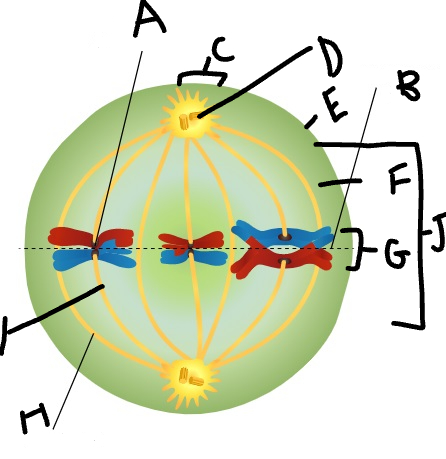
16
New cards
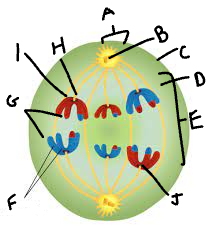
In S, what happens?
DNA replication occurs, forms 2 sister chromatids out of each chromosome
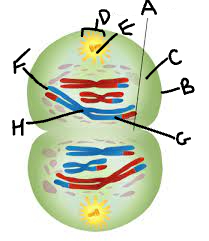
17
New cards
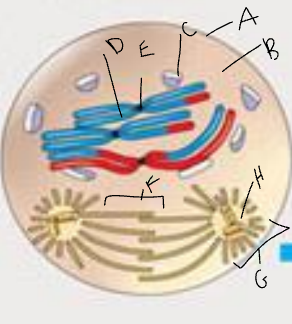
In G2, what happens?
the nuclear envelope forms, 2 centrosomes are formed from replication.
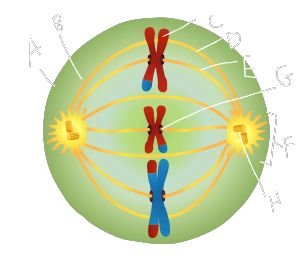
18
New cards
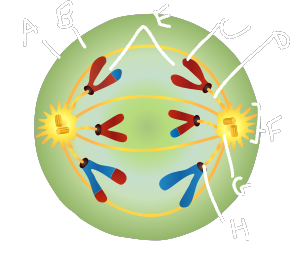
cell division includes 2 processes:
mitosis and cytokinesis
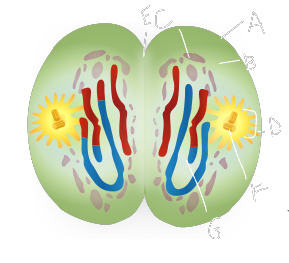
19
New cards
mitosis is division of the ___, but cytokinesis is division of the _____.
nucleus, cytoplasm
20
New cards
what are the five phases of mitosis?
prophase, prometaphase, metaphase, anaphase, telophase
21
New cards
in prophase, what happens?
nucleolus disappears, chromosomes are visible and duplicated chromosomes join together at the centromere (makes 2 sister chromatids), early mitotic spindle begins to form, centrosomes move away from each other.
22
New cards
this is the specialized region where duplicated chromosomes are connected:
centromere
23
New cards
the mitotic spindle is made up of what?
microtubules and the 2 centrosomes
24
New cards
Arrays of short microtubules that extend from the centrosomes are called:
asters
25
New cards
in prometaphase, what happens?
the nuclear envelope fragments, centrosomes move away from each other, kinetochore microtubules connect to the kinetochores of the chromosomes, while nonkinetochore microtubules interact with microtubules from the opposite pole.
26
New cards
a special protein structure in the centromere is called the:
kinetochore
27
New cards
what is the longest stage of mitosis?
metaphase at 20 minutes
28
New cards
what happens in metaphase?
the chromosomes lie along the metaphase plate with their centromeres on the equator, the centrosomes are on opposite sides of the cell
29
New cards
what is the shortest phase of mitosis?
anaphase at a few minutes
30
New cards
what happens in anaphase?
2 sister chromatids seperate to become daughter chromosomes, kinetochore microtubules shorten as the daughter chromosomes move to the ends of the cell, nonkinetochore microtubules elongate
31
New cards
what happens in telophase?
mitosis is completed, 2 daughter nuclei begin to form, 2 nuclear envelopes form around the chromosomes, 2 nucleoli begin to form, chromosomes become less dense
32
New cards
In animal cells, cytokinesis begins with the formation of:
a cleavage furrow
33
New cards
these pinch the animal cell to create 2 daughter cells:
actin microfilaments
34
New cards
describe plant cytokinesis:
vesicles form the cell plate which creates 2 plasma membranes. these 2 membranes fuse with the outer membrane, creating the daughter cells. cellulose is added to the middle lamella to create a new cell wall.
35
New cards
each chromosome has ___ DNA molecule:
1
36
New cards
humans have __ chromosomes in almost all of their cells:
46
37
New cards
a DNA molecule is a:
double helix structure
38
New cards
Each nucleotide is made up of:
a phosphate group, a pentose sugar, and a nitrogen base
39
New cards
The DNA nucleotides differ only in the:
nitrogen bases
40
New cards
These single ringed structures are called:
pyrimidines
41
New cards
pyrimidines include:
thymine and cytosine
42
New cards
six–membered ring fused to a five– membered ring are called:
purines
43
New cards
purines include:
adenine and guanine
44
New cards
what are the DNA nucleotide pairs?
A and T, C and G
45
New cards
Chromosomes are electronically arranged in pairs, starting with the longest. This ordered display is called a:
karyotype
46
New cards
Images of chromosomes are best obtained during:
metaphase
47
New cards
Homologous chromosomes have the same:
length, centromere position, and staining pattern
48
New cards
Human females have what XY chromosomes?
XX
49
New cards
Human males have what XY chromosomes?
XY
50
New cards
XY chromosomes are called:
sex chromosomes
51
New cards
All other chromosomes are called:
autosomes
52
New cards
We inherit what from each parent?
one chromosome pair
53
New cards
Cells with 2 chromosomes sets are called:
diploid cells
54
New cards
haploid number:
n
55
New cards
diploid number:
2n
56
New cards
which human cells are haploid cells?
gametes (eggs and sperm)
57
New cards
another word for eggs is:
ovum
58
New cards
Each chromosome consists of:
2 sister chromatids
59
New cards
any two chromatids in a pair of homologous chromosomes that are not sister chromatids are called:
nonsister chromatids
60
New cards
the union of gametes, culminating in fusion of their nuclei, is called:
fertilization
61
New cards
The resulting fertilized egg:
zygote
62
New cards
is the zygote diploid or haploid?
diploid
63
New cards
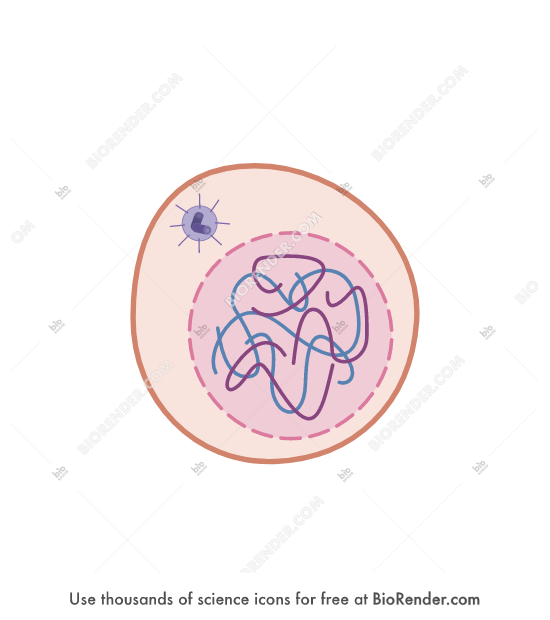
which phase of mitosis is this?
interphase
64
New cards
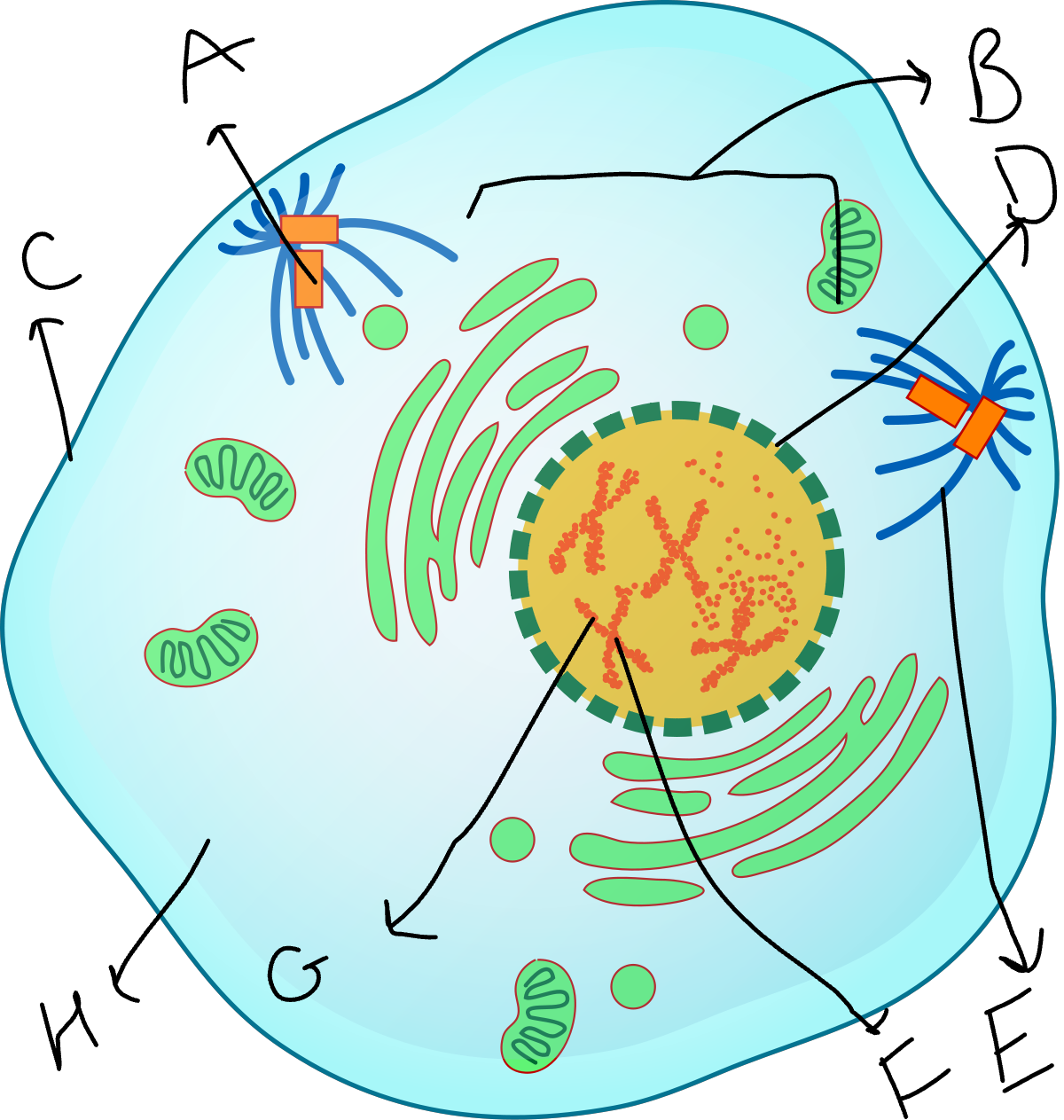
what phase of mitosis is this?
prophase
65
New cards
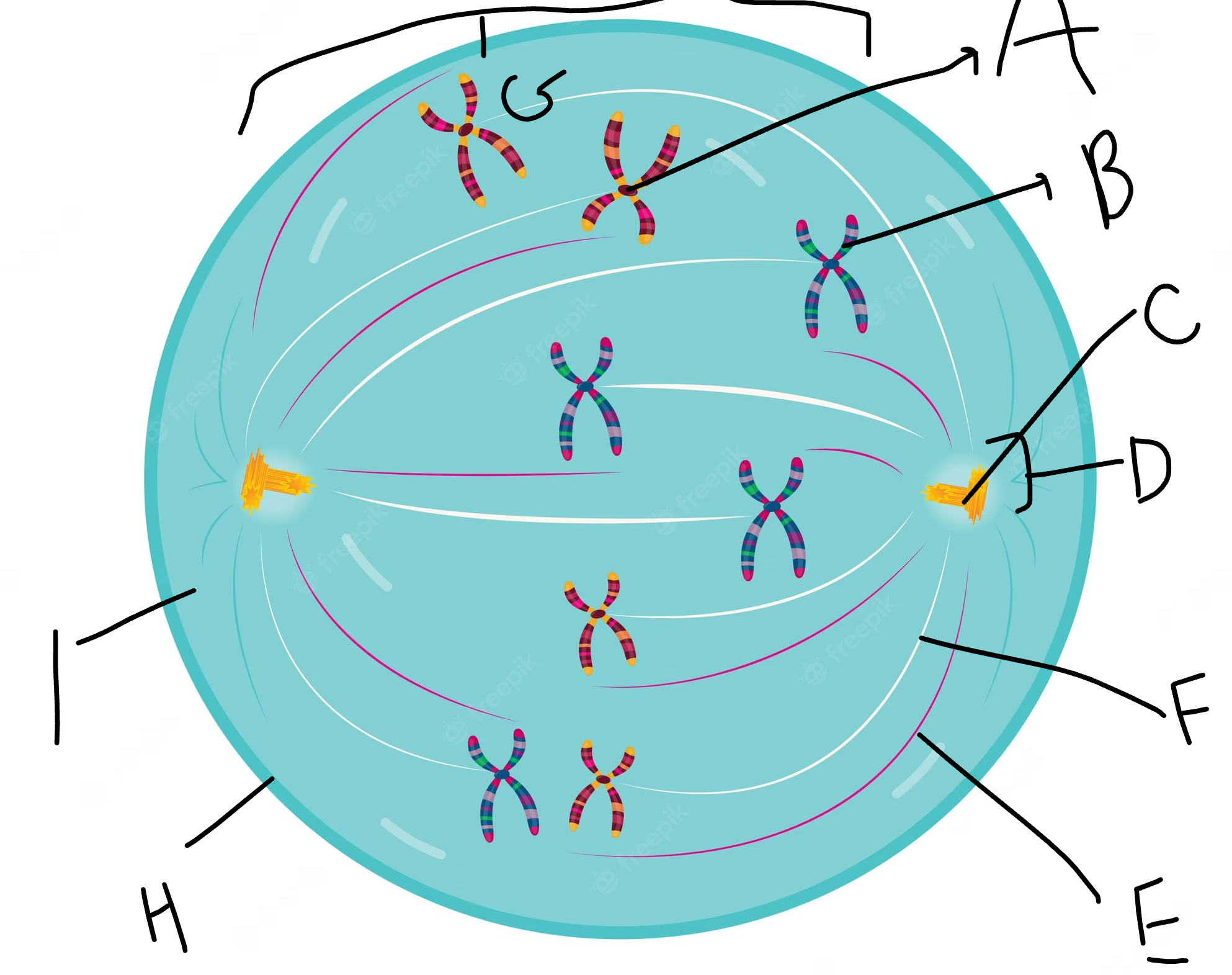
what phase of mitosis is this?
prometaphase
66
New cards
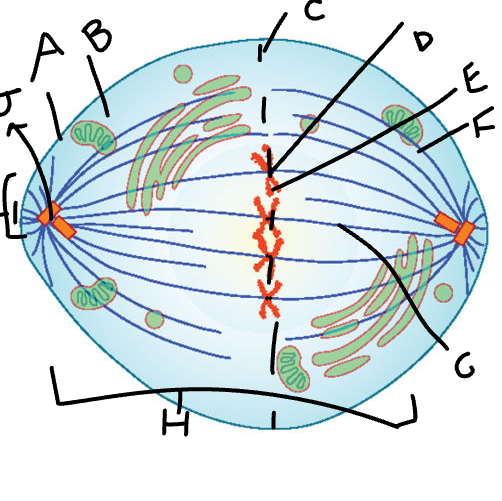
what phase of mitosis is this?
metaphase
67
New cards
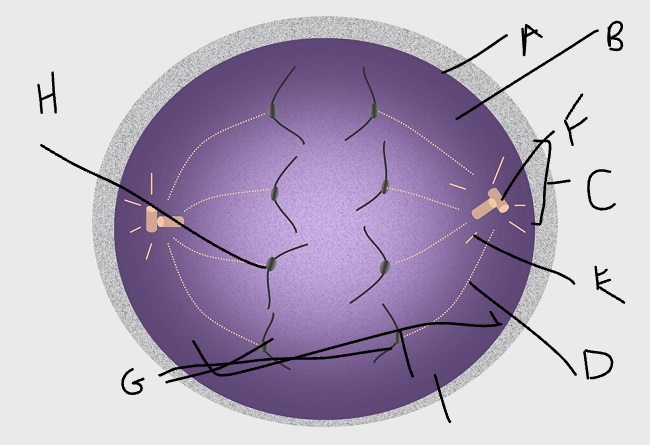
what phase of mitosis is this?
anaphase
68
New cards
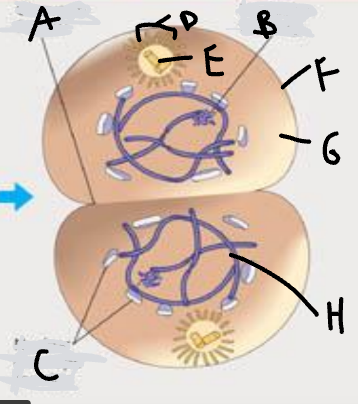
what phase of mitosis is this?
telophase
69
New cards
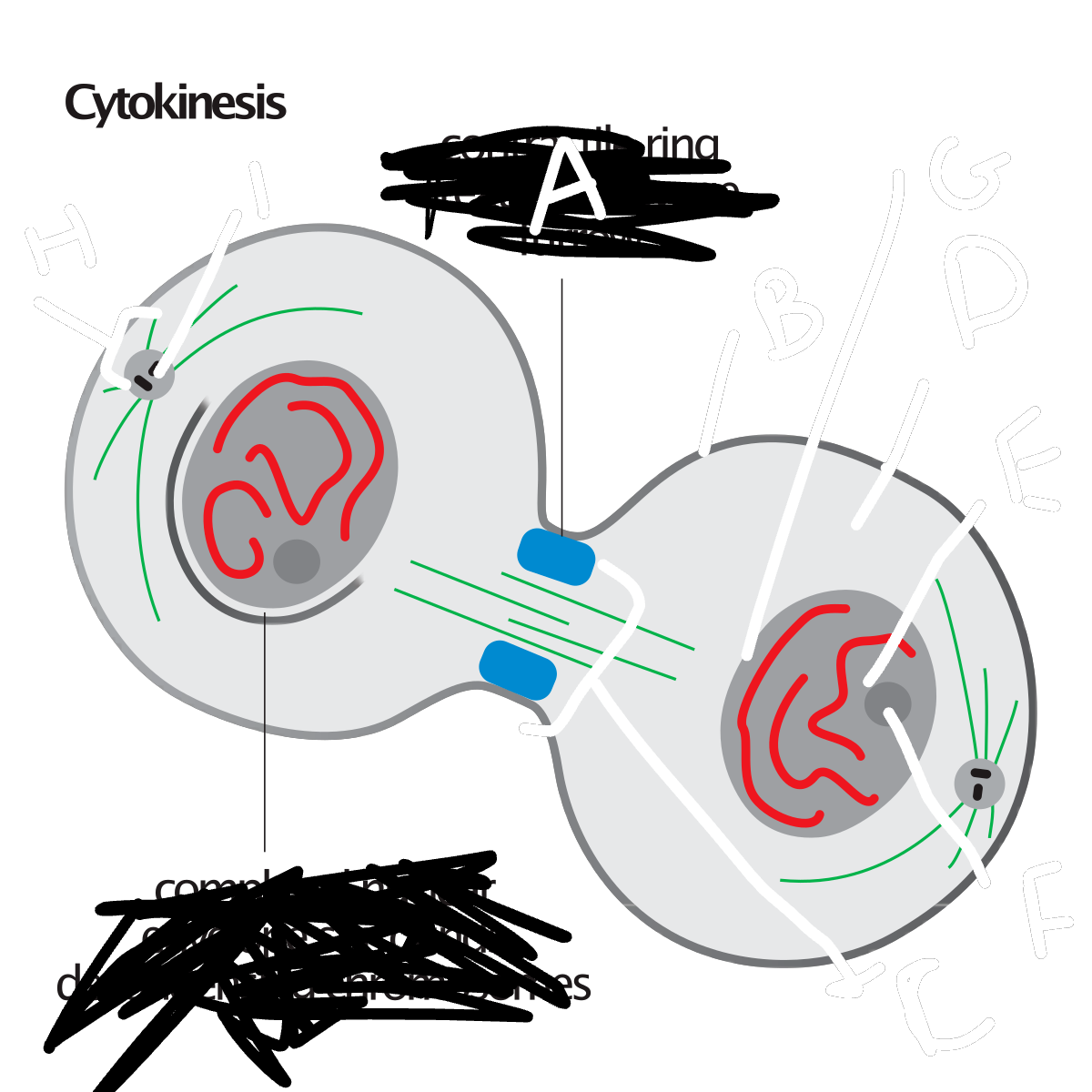
what phase of mitosis is this?
cytokinesis
70
New cards
The only cells of the human body not produced by mitosis are:
gametes
71
New cards
the 2 stages of meiosis are:
meiosis 1 and meiosis 2
72
New cards
in meiosis 1, what is seperated?
the homologous chromosomes
73
New cards
in meiosis 2, what is seperated?
the sister chromatids
74
New cards
this is the longest phase of meiosis:
prophase 1
75
New cards
what happens in prophase 1?
nucleolus disappears, mitotic spindle begins to form, chromosomes condense and become visible, sister chromatids formed, centrosomes move away from each other, homologous chromosomes connect to form the synaptonemal complex. this is called synapsis. when pieces of the chromosomes break, they exchange DNA in regions called the chiasmata, nuclear envelope fragments, synaptonemal complex disassembles in late prophase. kinetochores of chromosomes attach to microtubules.
76
New cards
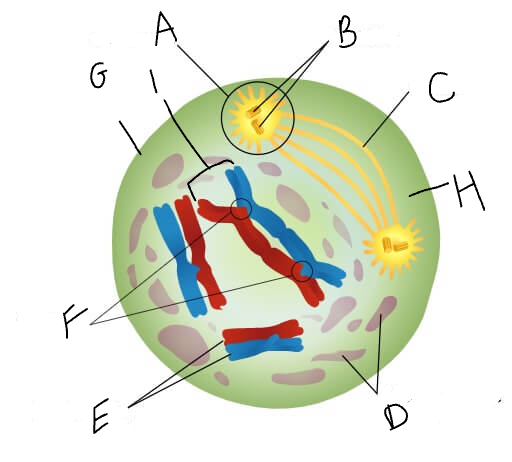
what phase of meiosis is this?
prophase 1
77
New cards
what happens in metaphase 1?
the centrosomes are on either side of the cell, the tetrads lie along the metaphase plate, the homologous chromosomes are attached to kinetochore microtubules.
78
New cards
what phase of meiosis is this?
metaphase 1
79
New cards
what happens in anaphase 1?
the 2 homologous chromosomes begin to seperate, they move to opposite ends of the cell, the kinetochore microtubules shorten while the nonkinetochore microtubules elongate.
80
New cards
what phase of meiosis is this?
anaphase 1
81
New cards
what happens in telophase 1 and cytokinesis?
both daughter cells have a haploid set of chromosomes, each chromosome is made of 2 sister chromatids. division of the cytoplasm takes place, and it starts with the formation of the cleavage furrow, the nuclear envelope forms, and chromosomes become less condensed. this concludes meiosis 1.
82
New cards
what phase of meiosis is this?
telophase 1 and cytokinesis
83
New cards
what happens in prophase 2?
spindle begins to form, the centrosomes begin to move away from each other, chromosomes are made of two sister chromatids that may differ from each other.
84
New cards
what phase of meiosis is this?
prophase 2
85
New cards
what happens in metaphase 2?
the chromosomes lie on the metaphase plate, the kinetochore microtubules attach to the kinetochores of the chromosomes
86
New cards
what phase of meiosis is this?
metaphase 2
87
New cards
what happens in anaphase 2?
sister chromatids seperate and form daughter chromosomes, kinetochore microtubules shorten and nonkinetochore microtubules elongate.
88
New cards
what phase of meiosis is this?
anaphase 2
89
New cards
what happens in telophase 2 and cytokinesis?
nucleus and nucleolus form, chromosomes decondesend, cytokinesis occurs
90
New cards
what phase of meiosis is this?
telophase 2 and cytokinesis
91
New cards
3 mechanisms that result in genetic variation arising from sexual reproduction are:
independent assortment of chromosomes, crossing over, random fertilization
92
New cards
The placement of one paternal/maternal chromosome on the metaphase plate is independent of any other paternal/maternal chromosome. This is called:
independent assortment of chromosomes
93
New cards
Anaphase and independent assortment of chromosomes:
the homologous chromosomes separate and each pole gets some paternal and some maternal chromosomes.
94
New cards
how many possible combinations of chromosomes are there in human cells?
8 millions
95
New cards
crossing over produces what?
recombinant chromosomes that carry genes from both parents
96
New cards
In humans, an average of__ to __ crossover events occur per chromosome pair,
1,3
97
New cards
what are the number of diploid combinations that a human zygote can have?
64 trillion
98
New cards
The frequency of cell division varies with the:
type of cell
99
New cards
Which human cells divide frequently?
skin cells
100
New cards
Which human cells do not divide frequently?
liver cells, nerve cells, muscle cells