Biology IGCSE - Reproduction
 Call Kai
 Learn
Learn Practice Test
 Spaced Repetition
 Match
Match Flashcards
 Knowt Play
1/53

There's no tags or description
Looks like no tags are added yet.
Name | Mastery | Learn | Test | Matching | Spaced | Call with Kai |
|---|
No analytics yet
Send a link to your students to track their progress
54 Terms
Reproduction
production of new members of species, replacing those who died
Asexual reproduction
a process resulting in the production of genetically identical offspring from one parent
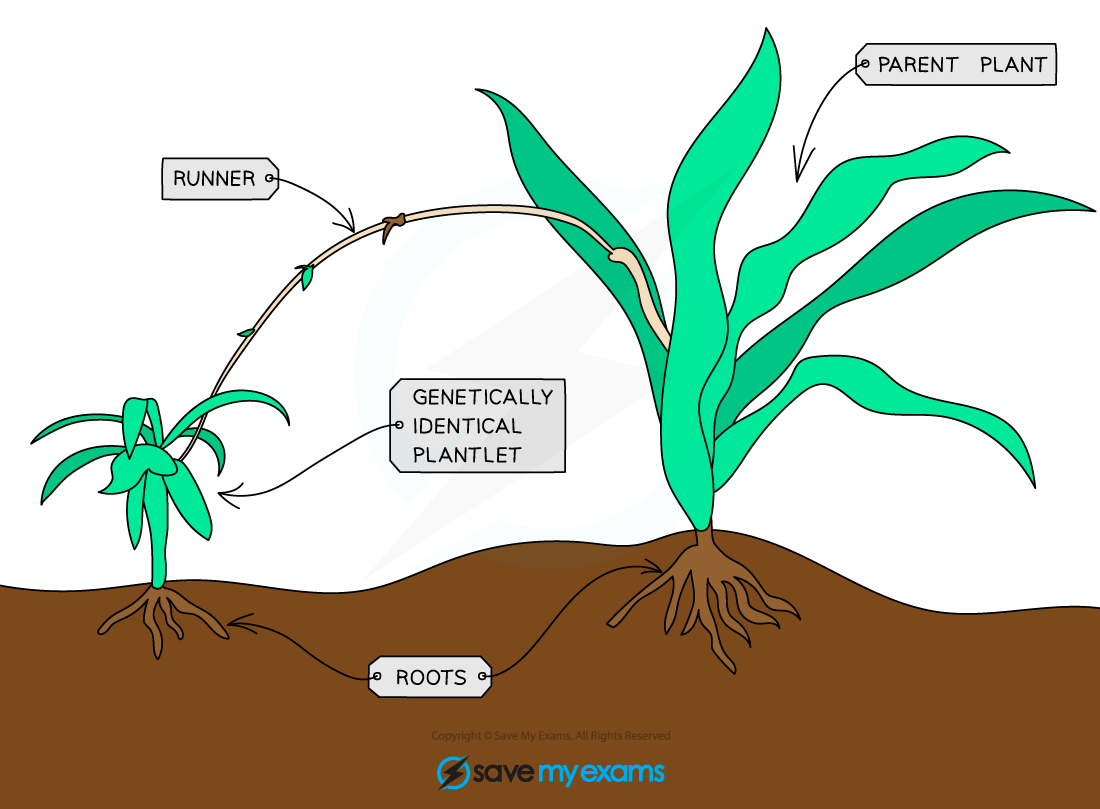
Asexual production involves
1 parent → NO gametes
Asexual reproduction pros and cons
Cons | Pros |
|
|
Gene
A length of DNA that codes for protein
Chromosome
thread - like structure of DNA → carry genetic information in form of genes
Diploid
Having 2 complete sets of chromosomes → humans have 23 sets
Haploid nucleus
having only 1 set of chromosomes
Gamete
a sex cell with half the normal number of chromosomes → HAPLOID
Fertilisation
fusion of 2 nuclei of 2 gametes
Zygote
cell formed by the fusion of 2 gametes → DIPLOID
Sexual reproduction
fusion of nuclei of 2 gametes to form a zygote → production of offspring are genetically different
Species
group of organisms that can reproduce to produce fertile offspring
Sexual reproduction pros and cons
Cons | Pros |
|
|
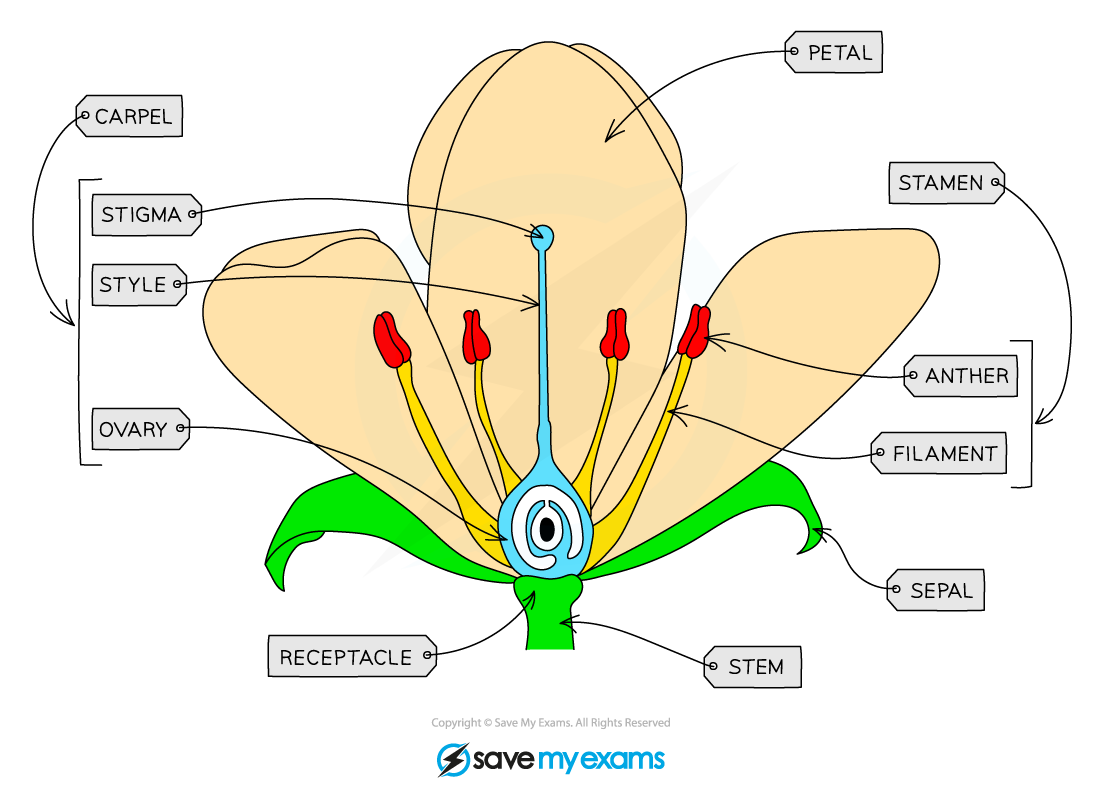
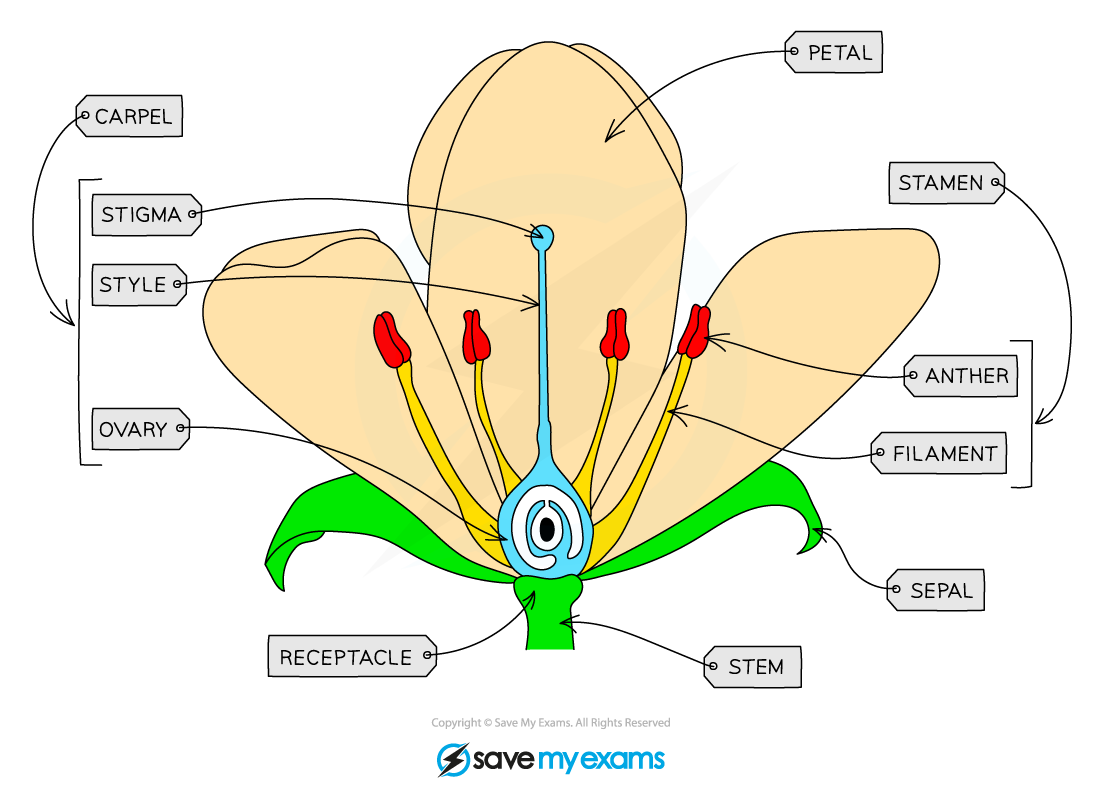
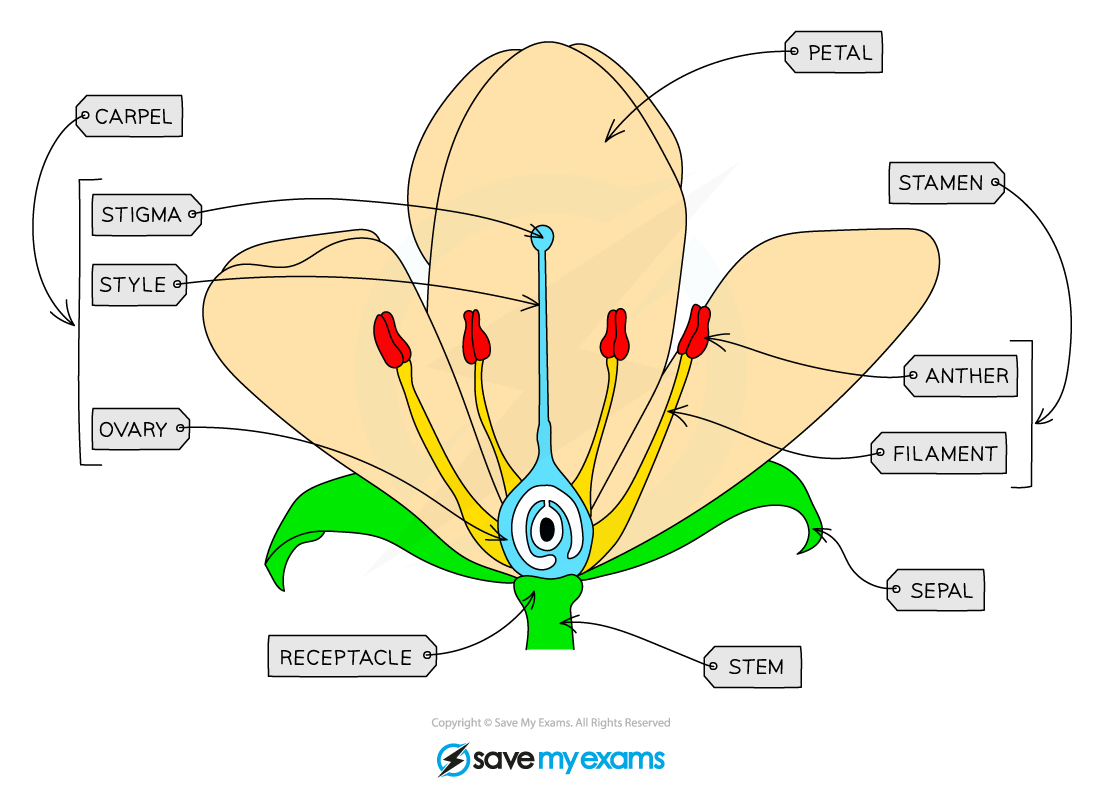
Insect pollinated plant
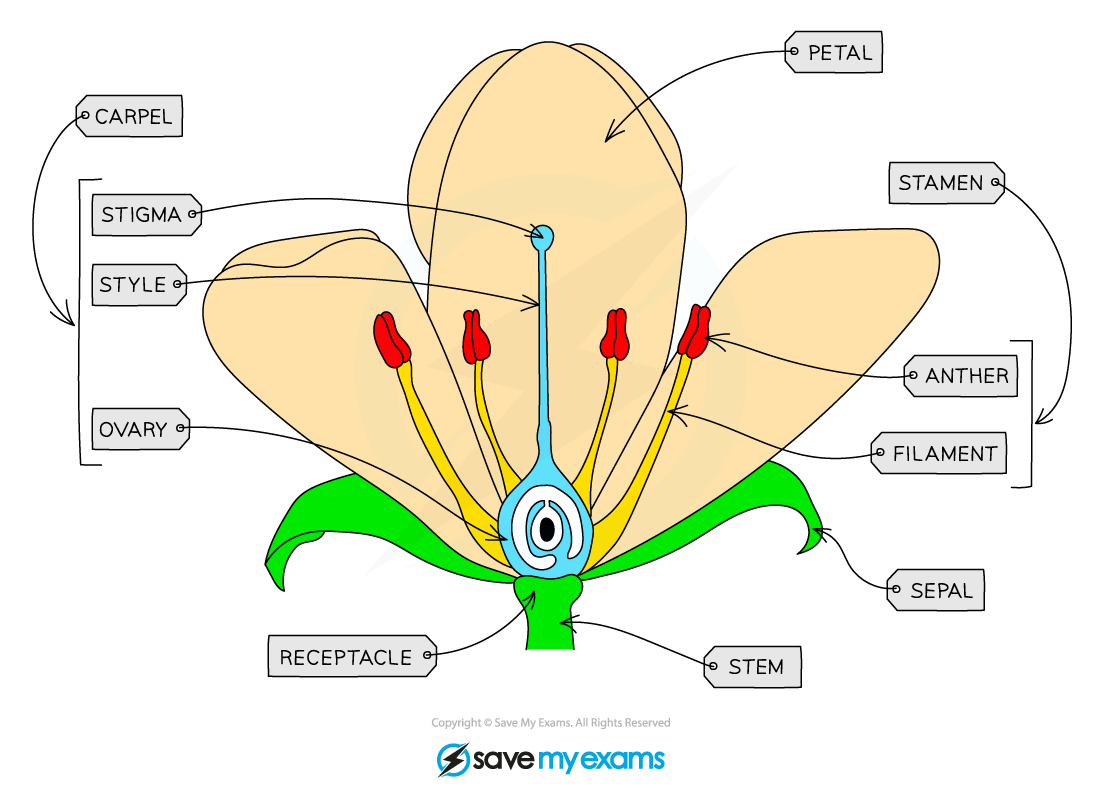
Sepal
leaf - like structure → forms ring outside the petals
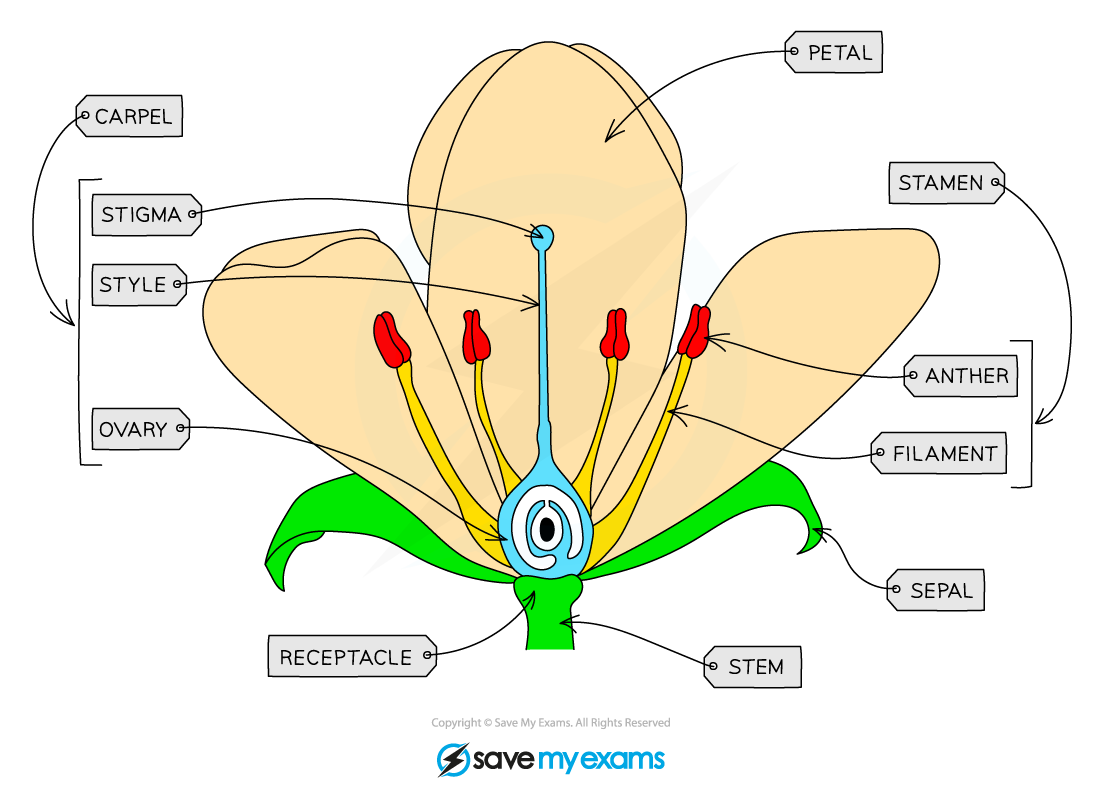
Petals
Coloured structure → attracts insects or birds to flower
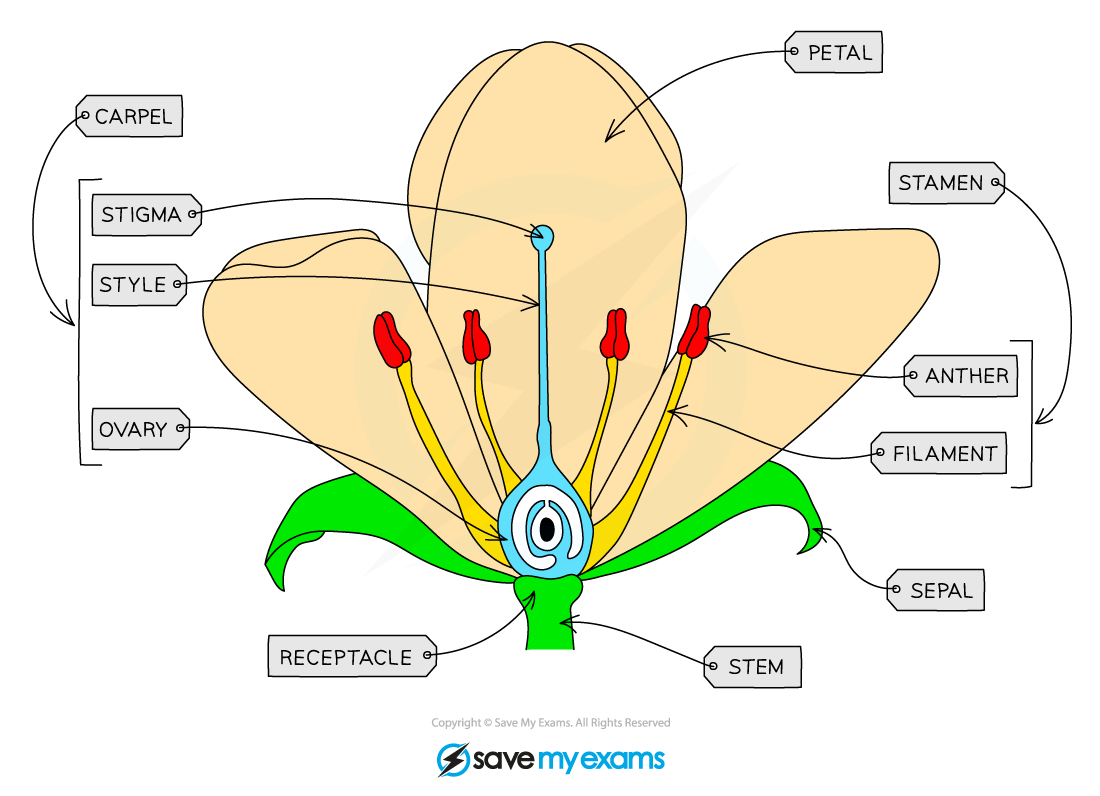
Stamens
Male parts of flower
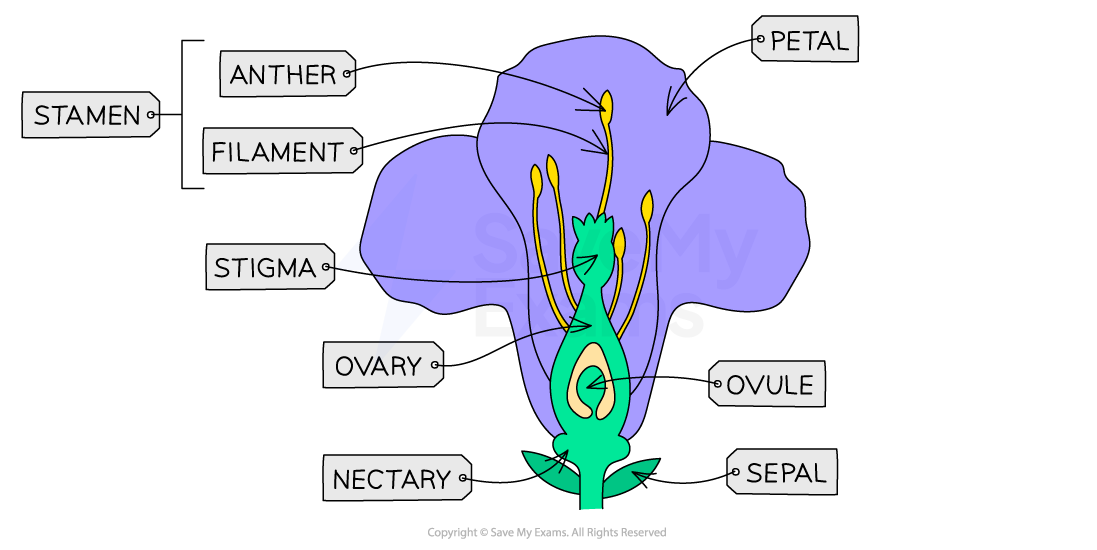
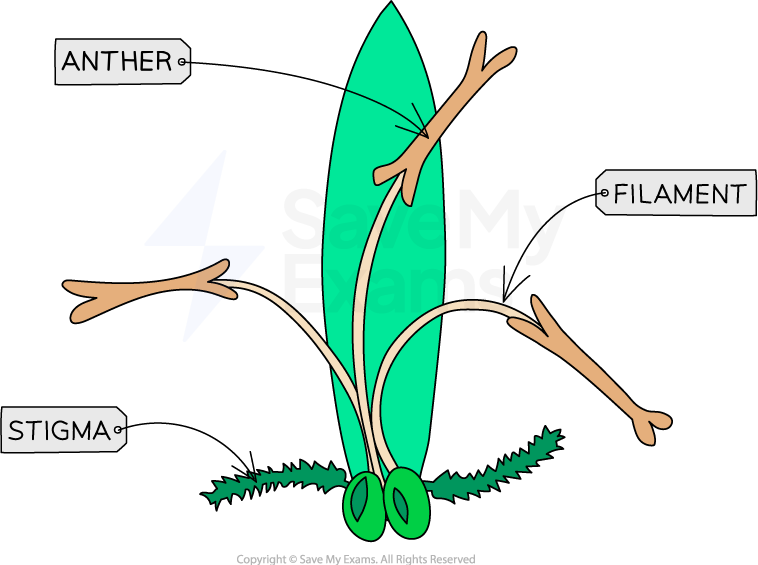
Anther
structure at the top of a stamen → inside which pollen grains are made
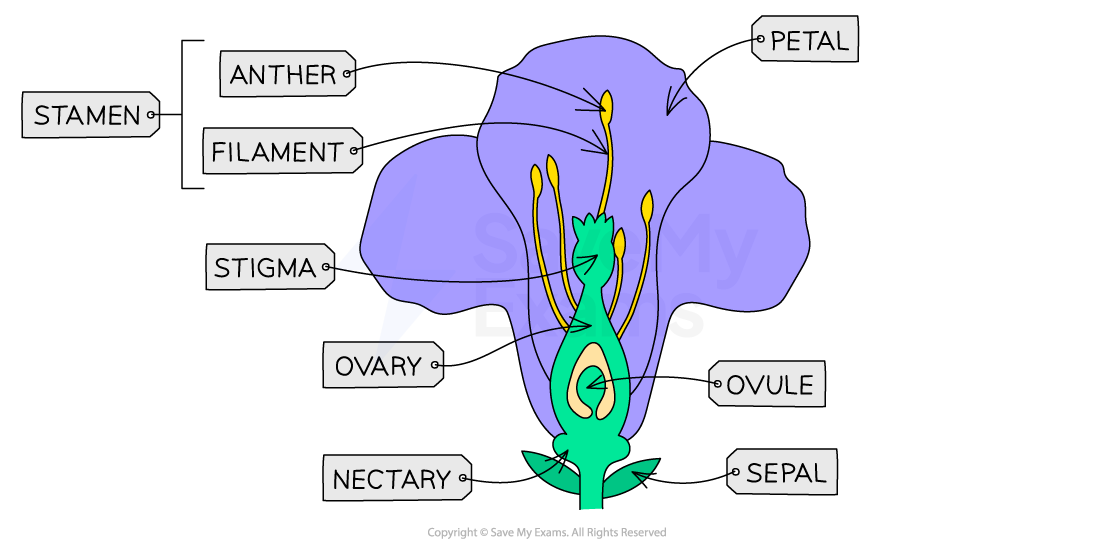
Stigma
part of the flower that receives pollen
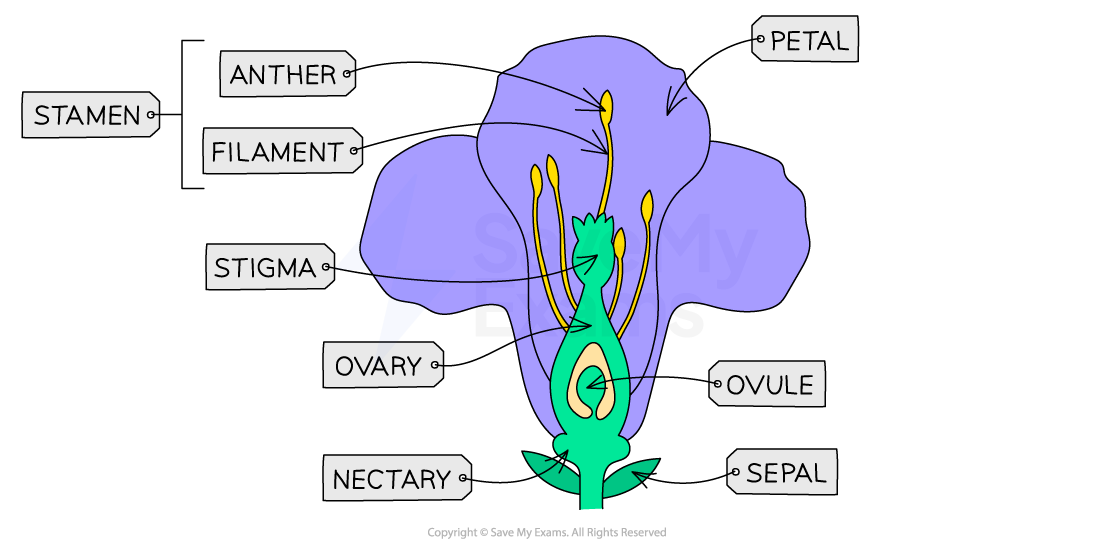
Ovary
part of the flower that hold ovules
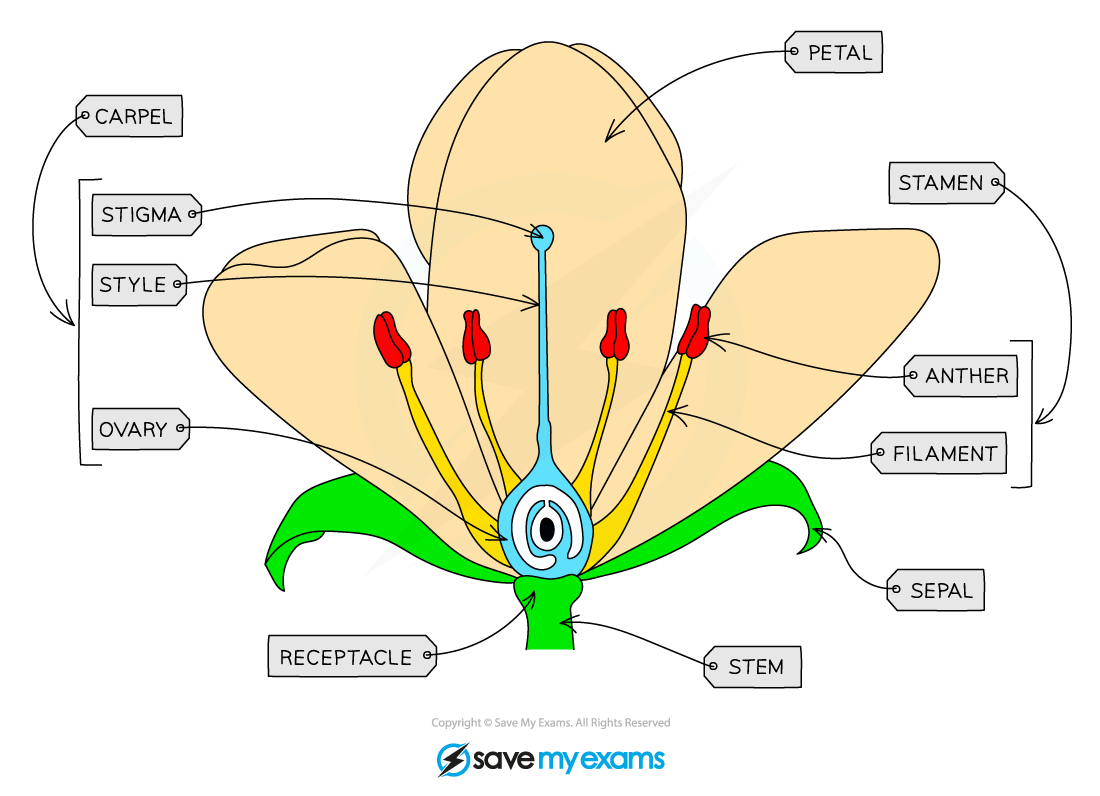
Ovules
Structure that contains female gametes
Carpels
Female reproductive parts of the plant → has stigma, style + ovary
Styles
Tube - like structure between stigma + ovary → pollen tube grows through it
Pollination
transfer of pollen grains from male part (anther of stamen) to the female part (stigma)
Fertilisation in plants
pollen nucleus (male gamete) fuses with a nucleus in the ovule (female gamete) → happens inside the ovary
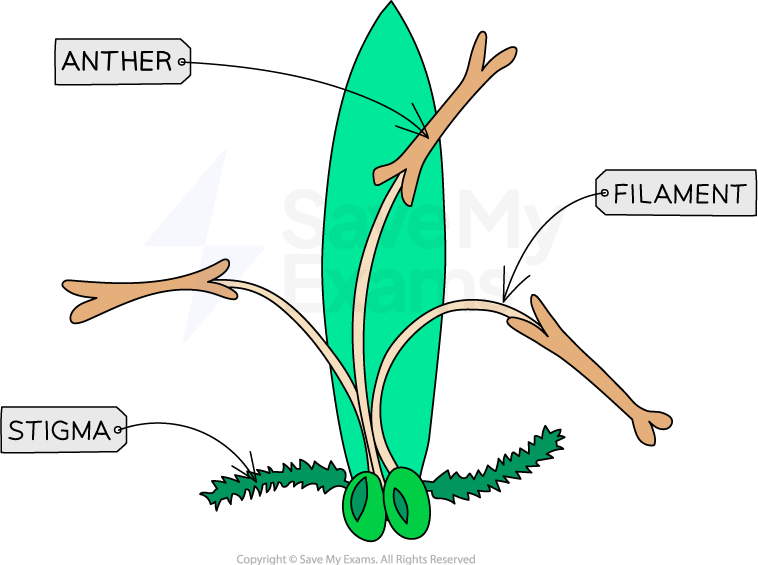
Wind pollinated plants
Structural adaptations
Structure | Insect pollinate | Wind pollinated |
Petals |
|
|
Nectary |
|
|
Scent |
|
|
Stigma |
|
|
Stamen |
|
|
Need for water in germination
Water is absorbed by the seed → activates enzymes → enzymes break down food stores → provides energy for growth
Need for oxygen in germination
Oxygen is required for aerobic respiration → releases energy from food stores → energy used for cell division + growth
Need for suitable temperature in germination
Enzymes controlling growth work best at optimum temperature → too cold = slow activity → too hot = enzymes denature → no germination
Wind pollinated plants
Anther | Stigma |
|
|
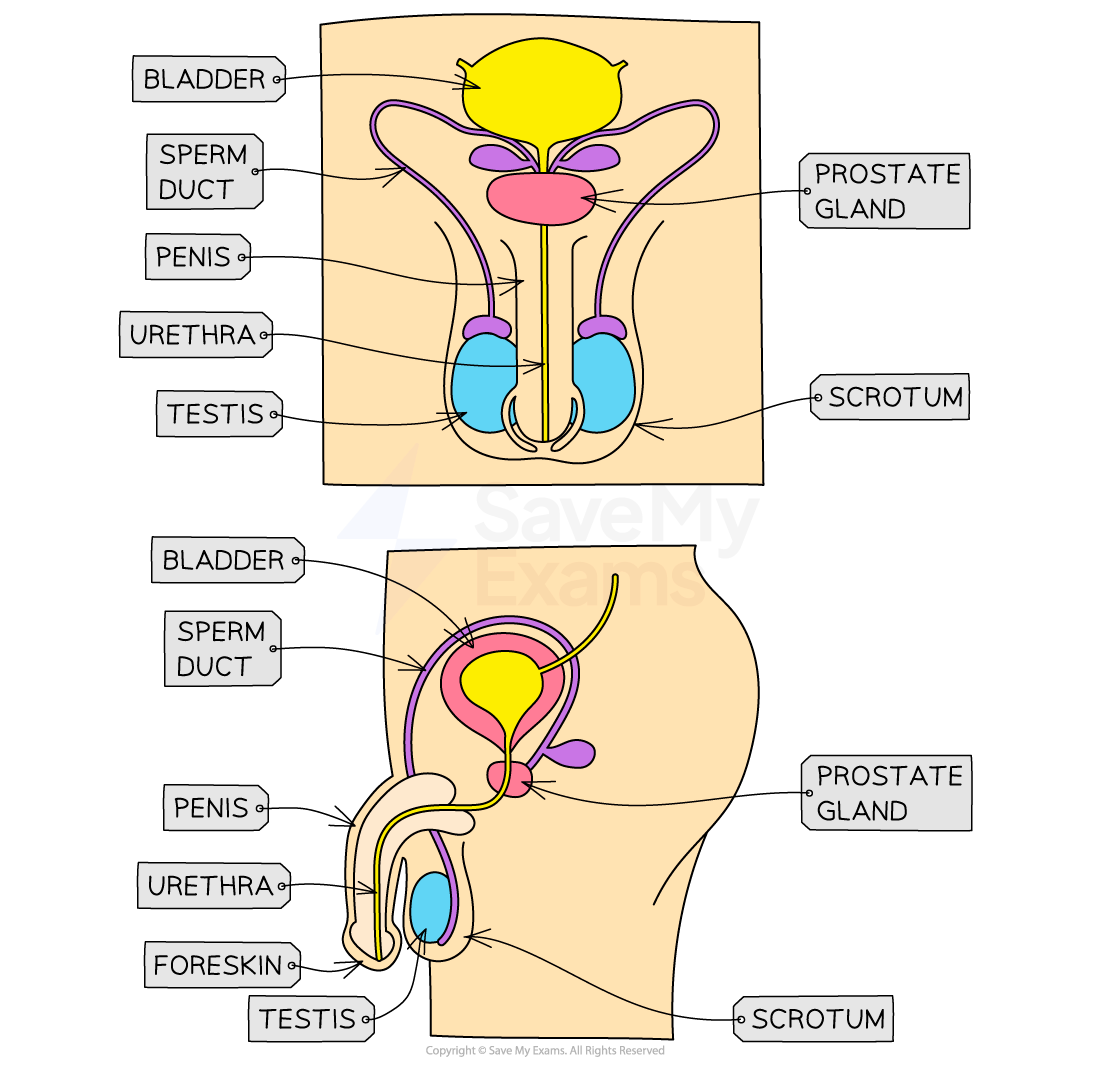
Male reproductive system
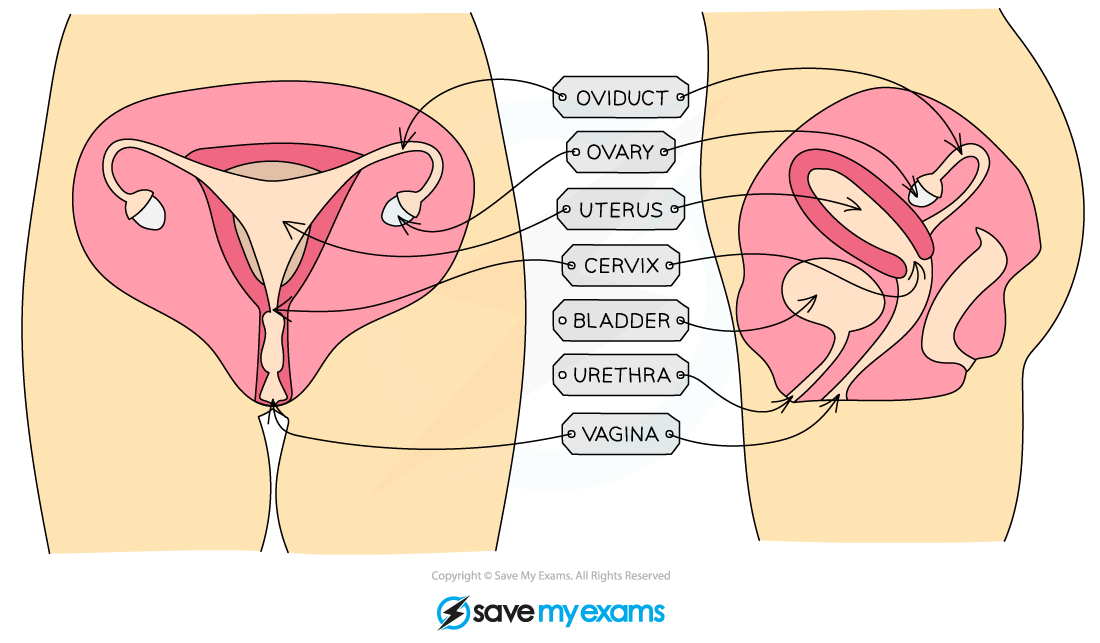
Female reproductive system
Testosterone
Produced by testes → stimulates sperm production
Testosterone secondary sexual characterises
Growth of facial + body hair
Deeper voice
Increase muscle mass
Growth of penis + testes
Oestrogen
Produced by ovaries → regulates menstrual cycle
Oestrogen secondary sexual characteristics
Development of breast
Widening hips
Start of menstrual cycle
Growth of uterus + vagina
Menstrual cycle → Day 1 - 7
Menstruation
Endometrium breaks down → passes out of vagina → triggered by sudden progesterone drop
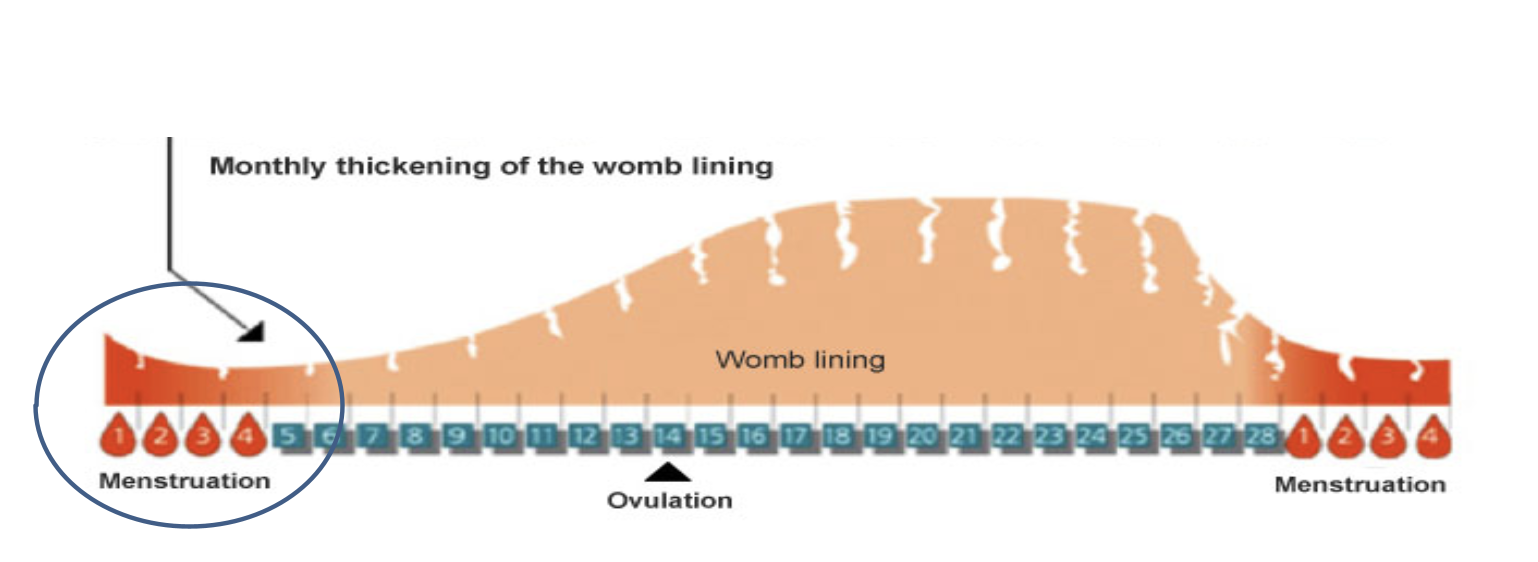
Menstrual cycle → Day 8 - 14
Egg cell starts to mature Menstrual cycle → endometrium grows + thickens again → in case fertilise egg needs to implant itself
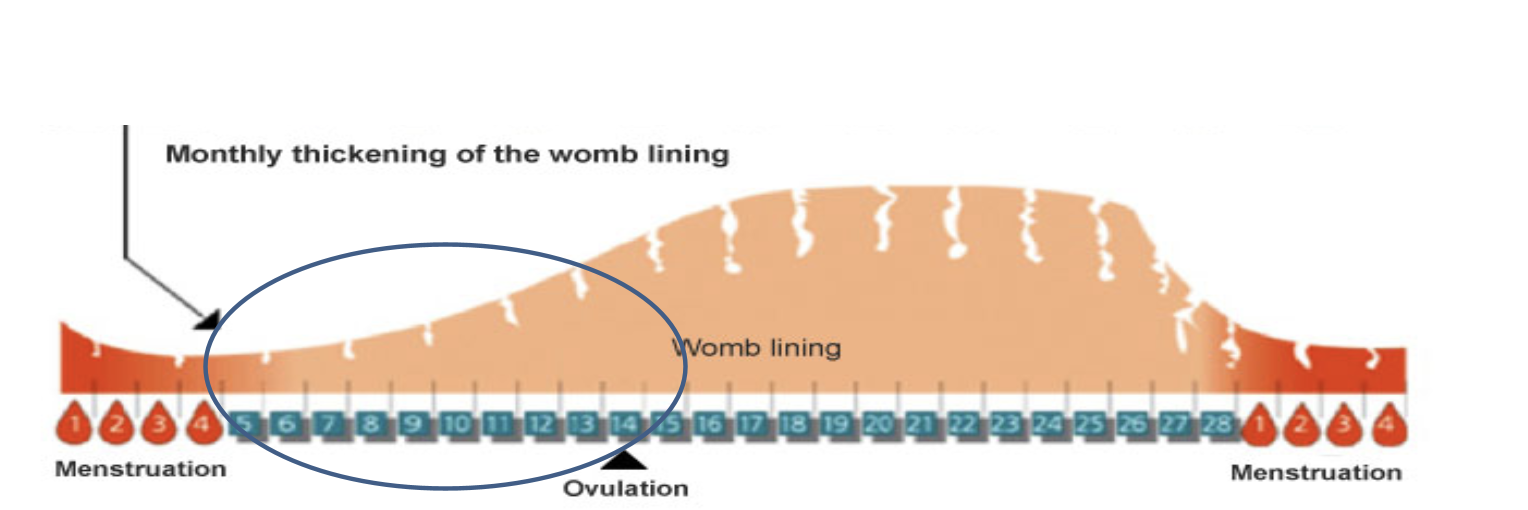
Menstrual cycle → Day 14
Ovulation → egg goes through fallopian tube → released from the ovary
Meet sperm → fertilises in fallopian tube OR no sperm → continues along fallopian tube
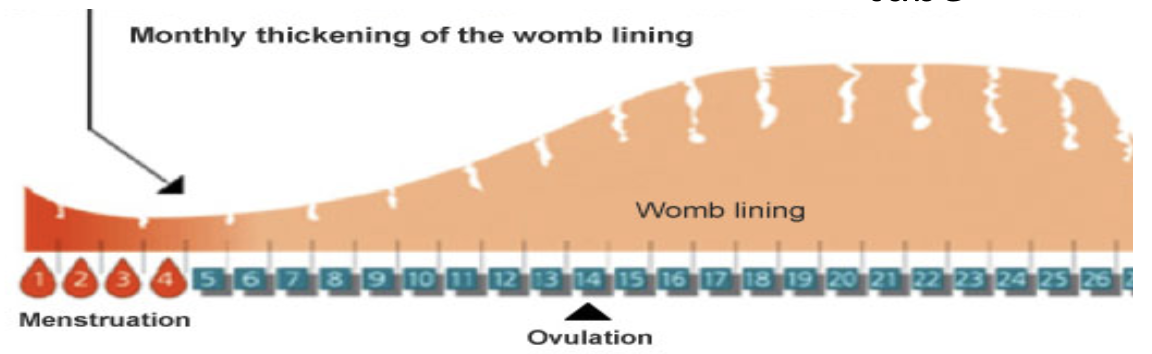
Menstrual cycle → Day 15 - 28
Continues until day 1 → restarts again
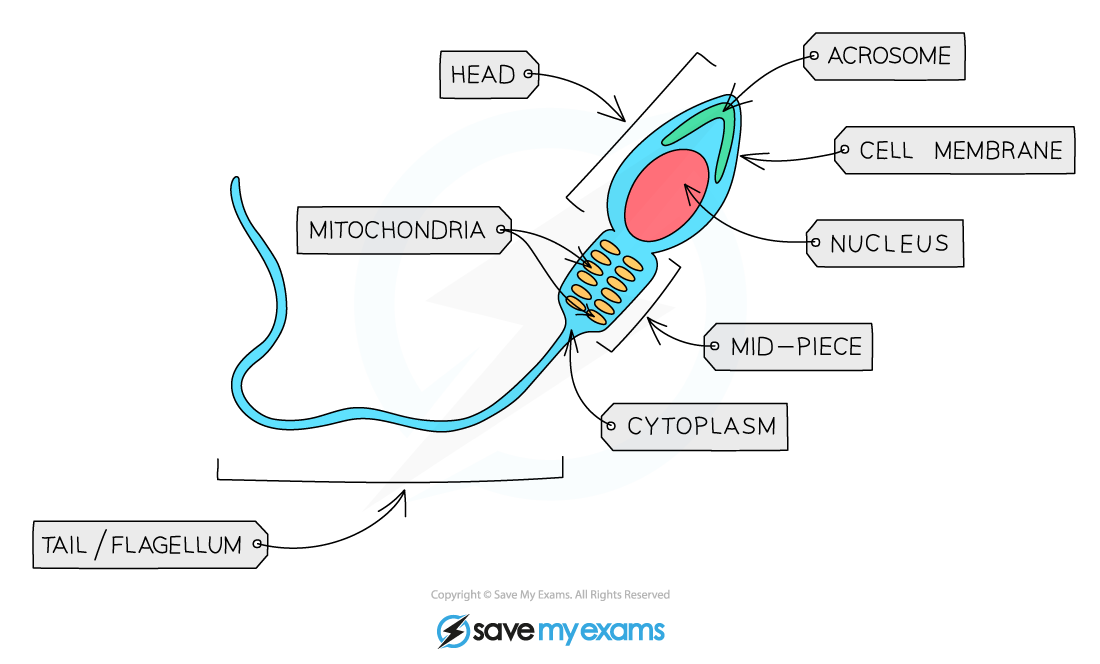
Adaptive features of sperm → flagellum
Tail like structure
Helps swim towards egg → enables movement along female reproductive tract
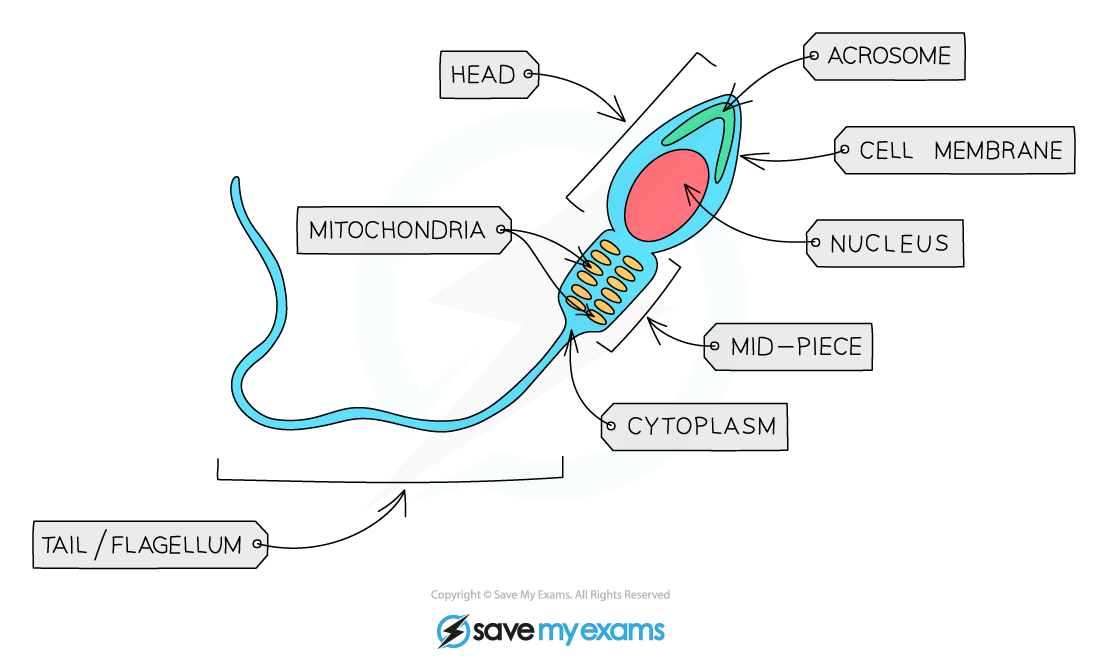
Adaptive features of sperm → mitochondria
Releases energy during respiration
Power flagellum for long distances
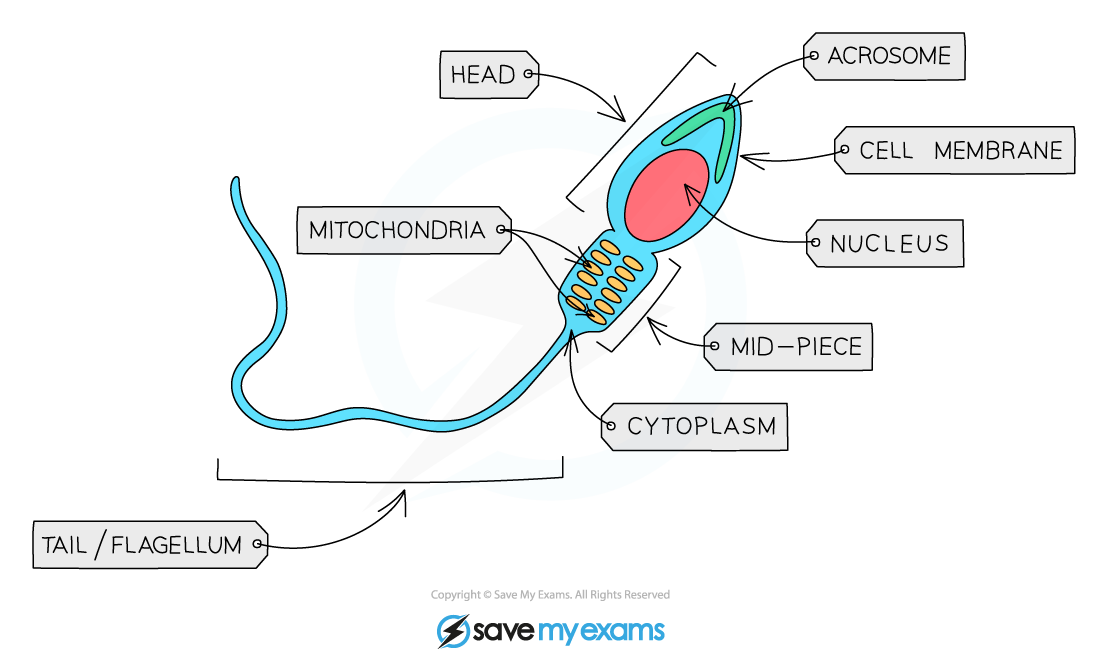
Adaptive features of sperm → acrosome enzymes
Found in head of sperm
Contains enzymes to break down egg’s membrane
Allows sperm to penetrate egg for fertilisation
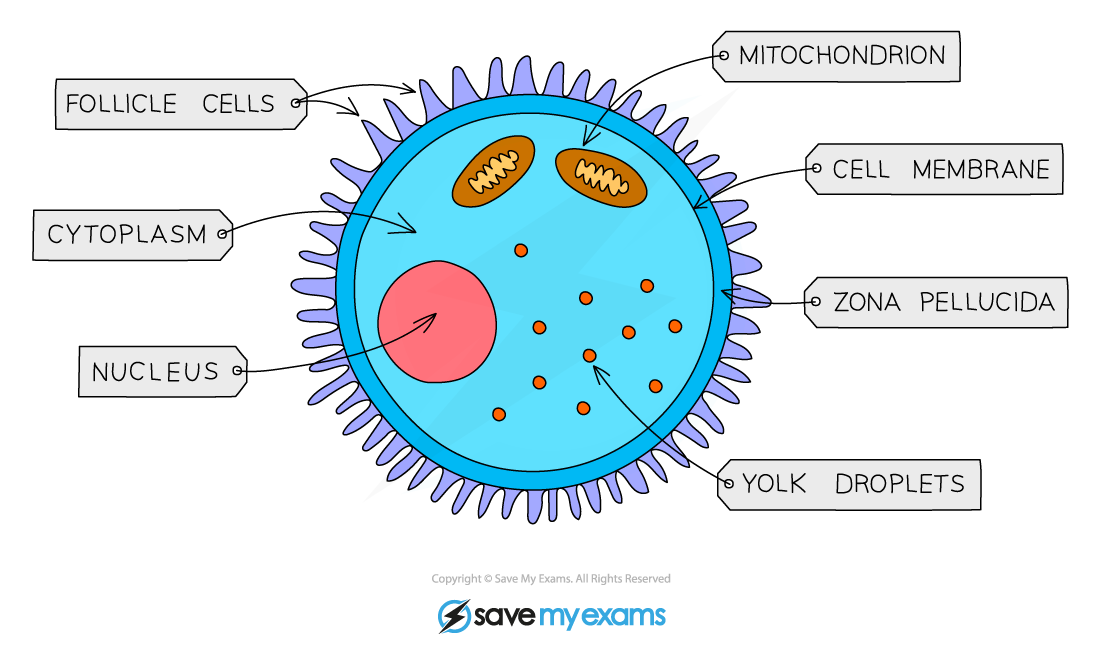
Adaptive features of egg → energy stores
Contains cytoplasm with energy rich nutrients
Provides energy for early cell divison
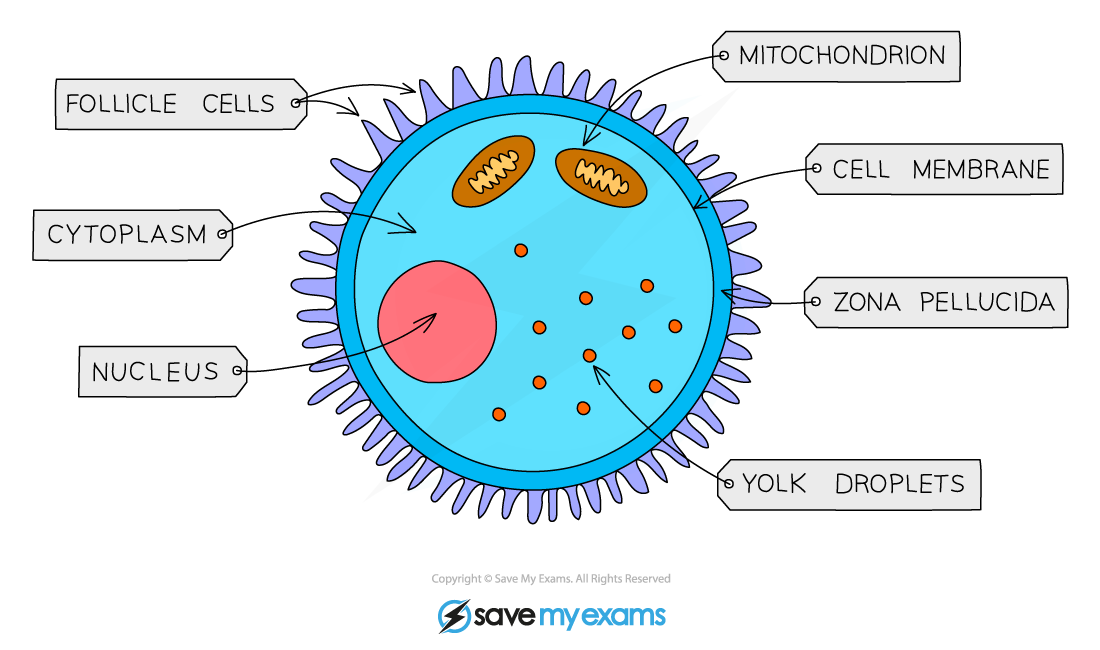
Adaptive features of egg → jelly coat
Surronds egg
After fertilisation → hardens to prevent other sperm from entering
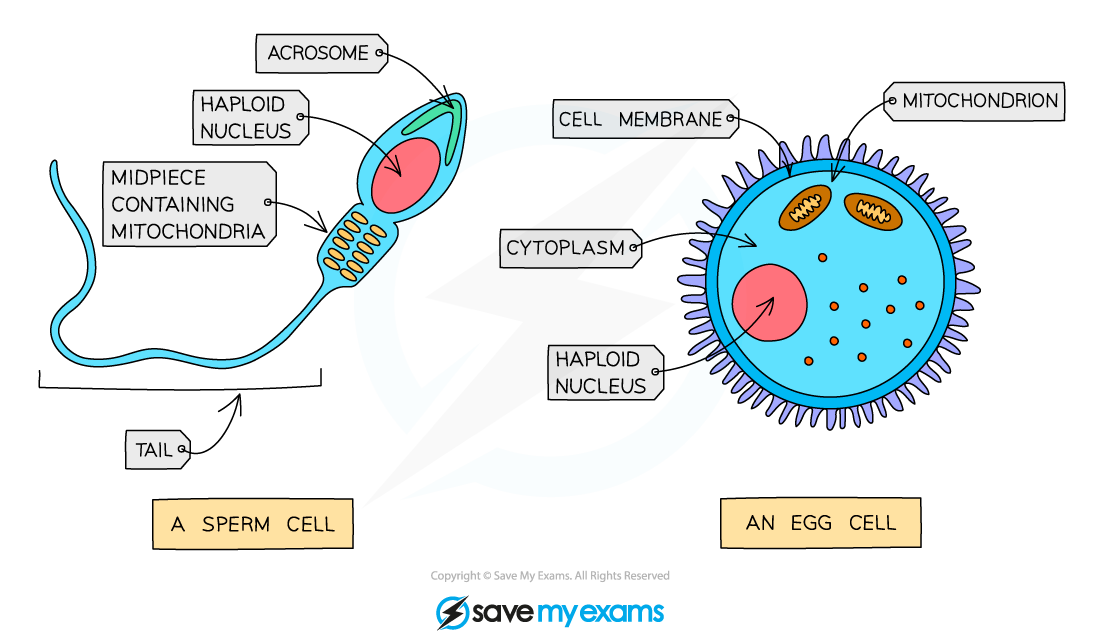
Female VS Male gamete
Feature | Egg | Sperm |
Size |
|
|
Motility |
|
|
Numbers |
|
|
STIs
Disease caused by pathogens that are transmitted during sexual contact
HIV
Virus which destroys white blood cells → reduces ability of immune system to defend other pathogens
HIV pathogen
is a pathogen caused by an STI
HIV infections may lead to AIDS
How HIV is transmitted
Sexual activity → e.g. semen + blood
Blood contact → sharing needles (drug use) → blood transfusions
Mother to baby → during pregnancy, birth + breast feeding
How the spread of STIs are controlled
Barrier methods → condoms → prevent exchange of fluids
Regular testing → early detection + treatment → prevents spreading to others
Education → teach about safe sex