Association Rules
 Call Kai
 Learn
Learn Practice Test
 Spaced Repetition
 Match
Match Flashcards
 Knowt Play
1/9

There's no tags or description
Looks like no tags are added yet.
Name | Mastery | Learn | Test | Matching | Spaced | Call with Kai |
|---|
No analytics yet
Send a link to your students to track their progress
10 Terms
What is the purpose of applying association rules?
seeks to uncover associations and/or correlation relationships in large data sets (market‑basket analysis, recommendation, cross‑selling).
What is Apriori Property?
Any subset of a frequent itemset must also be frequent.
What is a frequent itemset?
An itemset whose support meets or exceeds a user‑defined minimum support threshold.
Why confidence is not a good measure used to select rules?
Understand the association rules implementations
Pros of association rules
Handles purely categorical data; no need for numeric scaling.
Produces human‑readable if‑then statements.
Cons of association rules
Can generate an overwhelming number of rules; requires post‑filtering (lift, leverage, domain knowledge).
Sensitive to minimum support choice
— too high = miss useful patterns
— too low = many spurious rules.
What is support leverage? How to calculate and interpret them?
the percentage (or number) of transactions that include all items both antecedent and consequent.

What is confidence leverage? How to calculate and interpret them?
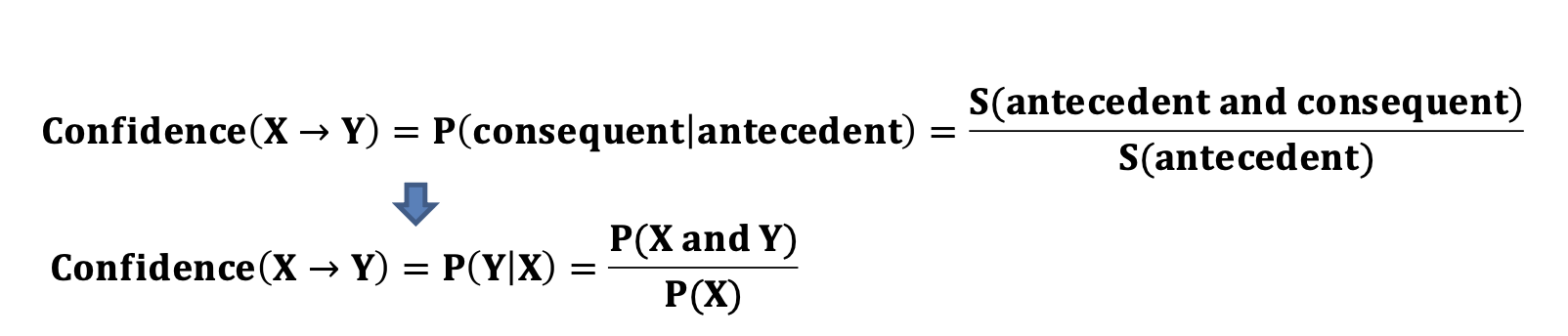
the measure of certainty or trustworthiness associated with each discovered rule
how likely item Y is purchased when item X is purchased
the percent of transactions that contain both X and Y out of all the transactions that contain X
What is lift leverage? How to calculate and interpret them?
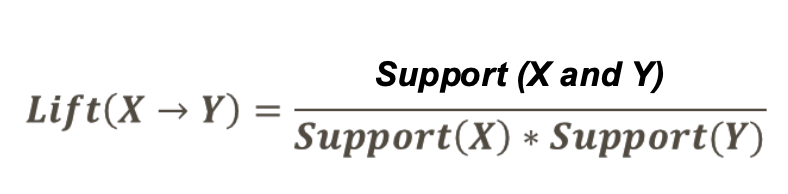
How many times more often X and Y occur together than expected if they are statistically independent of each other
How likely item Y is purchased when item X is purchased, while controlling for how popular item Y is
A larger value of lift suggests a greater strength of the association between X and Y