Chapter 33 Intro to animals
 Call Kai
 Learn
Learn Practice Test
 Spaced Repetition
 Match
Match Flashcards
 Knowt Play
1/22

There's no tags or description
Looks like no tags are added yet.
Name | Mastery | Learn | Test | Matching | Spaced | Call with Kai |
|---|
No analytics yet
Send a link to your students to track their progress
23 Terms
List the characters that define animals
Multicellular and heterotrophs
• Mobility (at least during part of the life cycle)
• Prevalent sexual reproduction
• Unique cell structure:
o No cell wall
o An extensive extracellular matrix provides structural support
o Unique cell junctions hold cells in place and facilitate
communication among them
Invertebrates
invertebrates (evolved first; backbone is
absent)
vertebrates
vertebrates (have a backbone)
Morphological and developmental features traditionally used to classify
animals
Type of body symmetry
• Number of germ layers
• Specific features of embryonic development
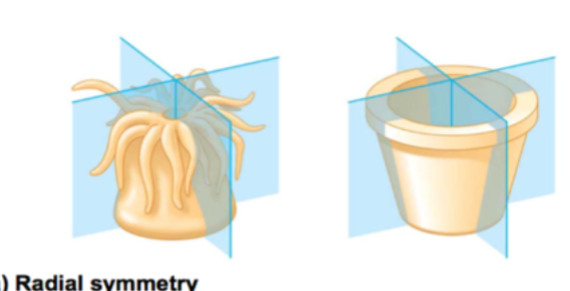
Radial symmetry (Radiata)
Can be divided equally by any
longitudinal plane through the central
axis
• Often circular or tubular in shape,
with a mouth at one end
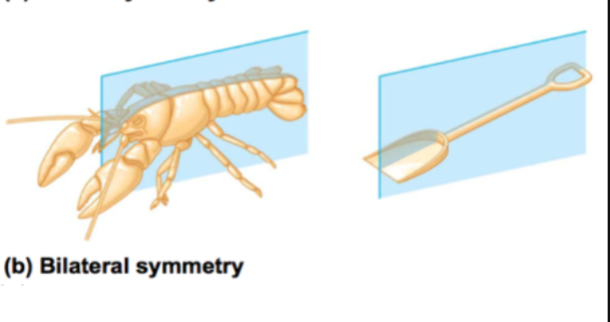
Bilateral symmetry (Bilateria)
Can be divided along a vertical
plane to produce two halves
• Have cephalization and dorsal and
ventral sides
• Have anterior and posterior ends
Do Radiata and Bilateria differ in the number of embryonic cell layers (germ
layers)
YES
Radiata have 2 layers (diploblastic)
o Bilateria have 3 layers (triploblastic)
Cell layers develop during
gastrulation, a stage of embryonic
development
What are the germ layers
nner layer - endoderm
o Outer layer - ectoderm
o Middle layer - mesoderm (3rd layer in bilateral animals)
Forms muscles and most other organs
Embryonic development
Protostome
• Blastopore becomes the mouth
• Cleavage is determinate
o The fate of embryonic cells is determined early
Deuterostome
• Blastopore becomes anus
• Cleavage is indeterminate
o Each cell produced by early cleavage can develop into a complete
embryo
• Humans are Deuterostomes
Why do we think that the Cambrian period fostered animal diversification?
Three possible explanations:
o Favorable environment - warm temperatures, increases in
atmospheric and aquatic oxygen, development of the ozone layer,
and more minerals dissolved in water to make shells
o Evolution of the Hox gene complex
o An evolutionary “arms race”: predators evolved new traits and prey
developed adaptations to escape death
Animals evolved from a
choanoflagellate-like ancestor
the closest living relatives of
animals are choanoflagellates
o Single-celled protists: Have a
single flagellum surrounded by a
collar of cytoplasmic tentacles
o Some are colonial
o Some cells may have taken on
specialized functions
• Choanoflagellates bear a
striking similarity to sponge
choanocytes
What is cephalization
Often associated with bilateral
with cephalization (concentration of sensory organs at the head)
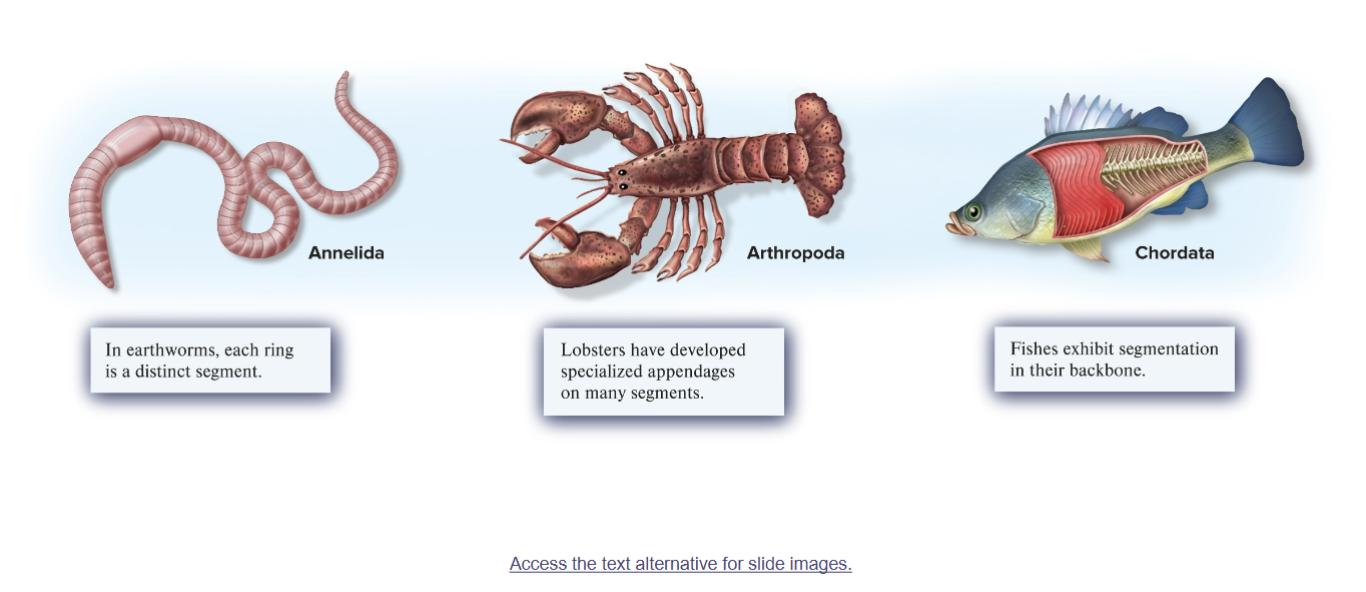
What is segmentation
Body may be divided into regions called segments
• Occurs in annelid worms, arthropods, and chordates
• Allows for specialization of body regions
ecdysis
Ecdysis → molting of an exoskeleton (like insects and arthropods)
Distinguish between radial and bilateral symmetry. Explain how animal symmetry
may match the animal’s way of life.
Radial symmetry
Body arranged around a center (like a circle)
Example: jellyfish
Lifestyle: usually sessile or drifting
Can sense environment from all directions
Bilateral symmetry
One left and one right side
Example: humans
Lifestyle: active movement
Often has cephalization
Distinguish between diploblastic and triploblastic development
Diploblastic
2 germ layers (ectoderm + endoderm)
No true organs
Example: jellyfish
Triploblastic
3 germ layers (ectoderm, mesoderm, endoderm)
Have complex organs and tissues
Example: most animals
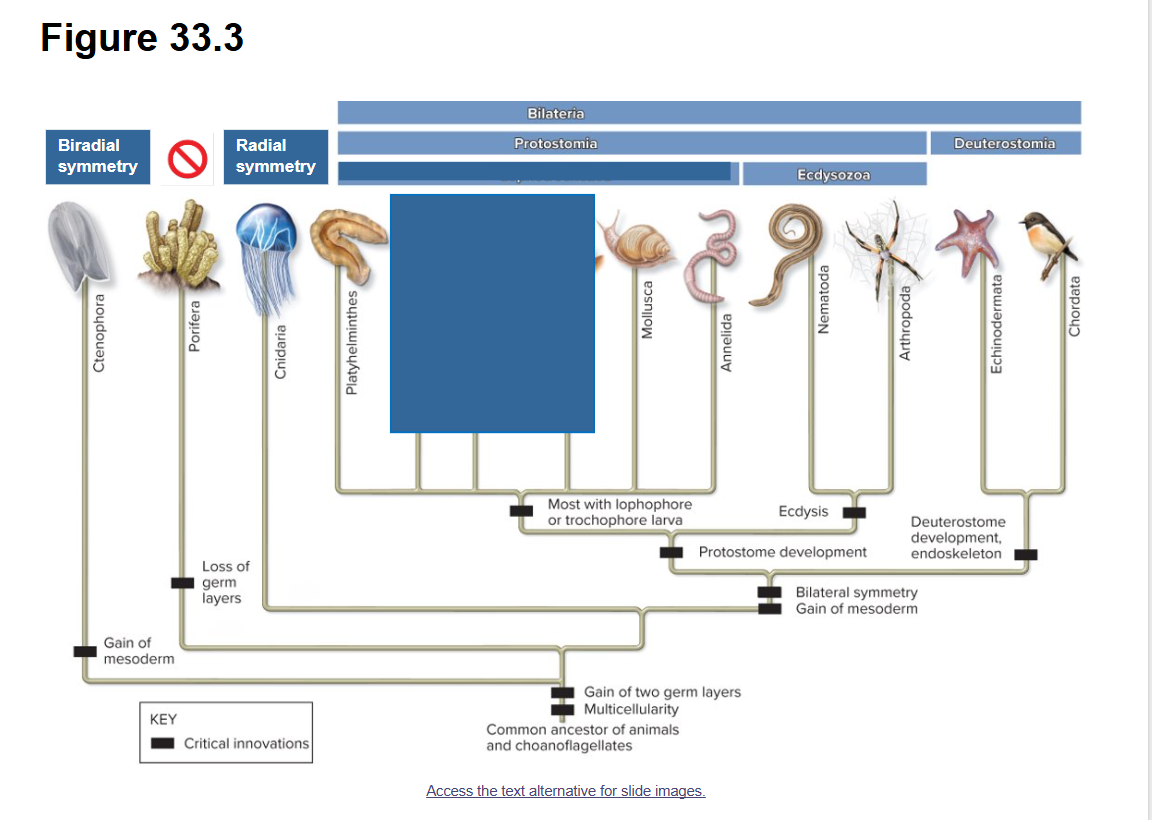
All animals share a
Common Ancestor
Sponges (Porifera) are basal animals with
specialized cells, but NO
TISSUE
Most animal phyla belong to the clade
Bilateria. Bilateral animals
are triploblastic (3 germ layers)
Most animals are
invertebrates, lacking a backbone; Chordata is
the only phylum that includes vertebrates, animals with a backbone
Embryonic development stages
Most animals reproduce sexually, producing a diploid zygote. Embryonic
development typically includes: the blastula stage and the formation of 3 germ
layers (ectoderm, mesoderm, endoderm). Some exceptions are
diploblastic.
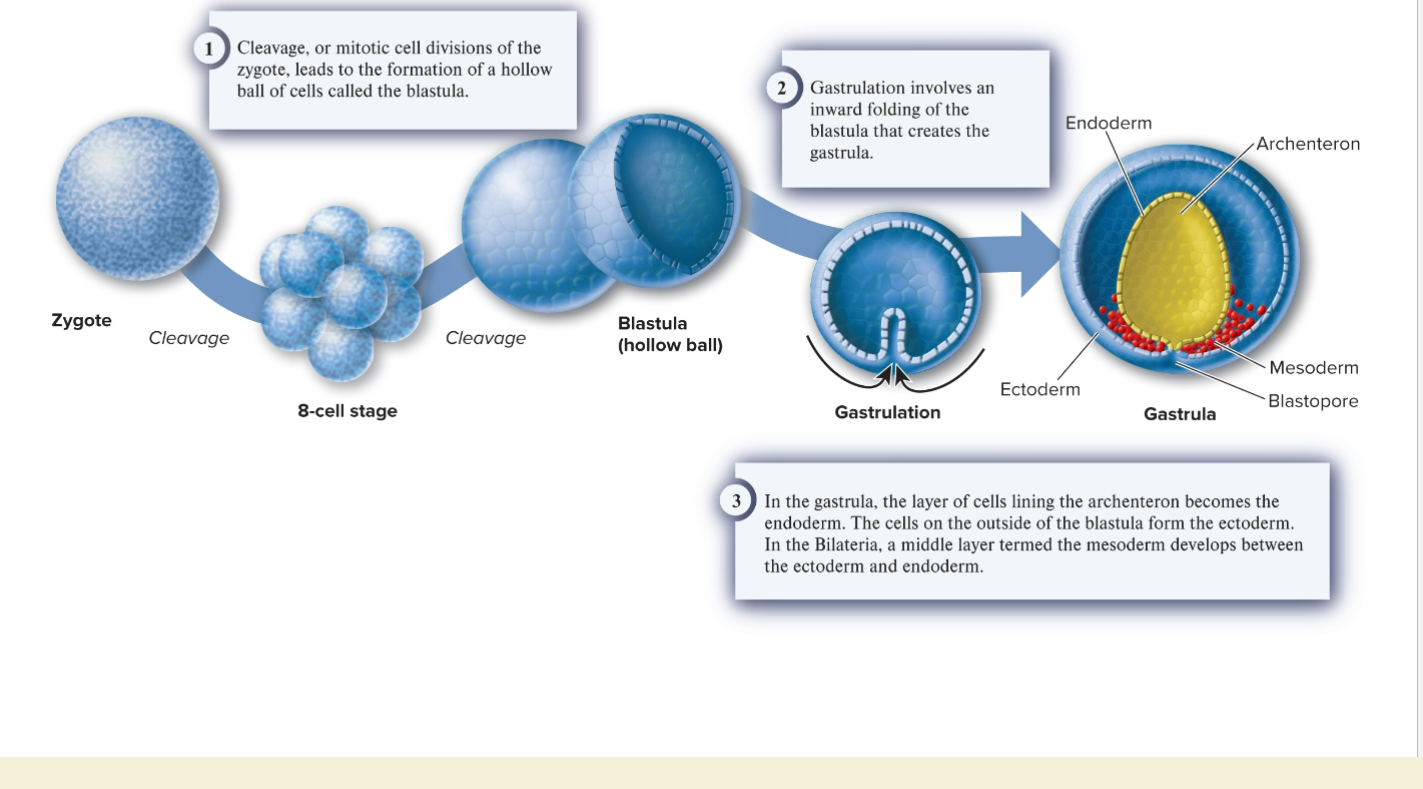
Figure 33.3