Chapter 6: viruses and other acellular infectious agents
 Call Kai
 Learn
Learn Practice Test
 Spaced Repetition
 Match
Match Flashcards
 Knowt Play
1/22

There's no tags or description
Looks like no tags are added yet.
Name | Mastery | Learn | Test | Matching | Spaced | Call with Kai |
|---|
No analytics yet
Send a link to your students to track their progress
23 Terms
viruses
protein and nucleic acid
acellular infectious agents that can’t reproduce outside of living cells
infect all types of cells but specific for certain organisms
ex: bacteriophages (phages) infect bacteria
viroids
only RNA
circular ssRNA molecules that lack a capsid and cause a variety of plant diseases
do not act as mRNAs and appear to be replicated by host RNA polymerases
virusoids
only RNA
circular ssRNA molecules encode proteins and need helper viruses for infectivity
hepatitis D requires the help of the hepatitis B virus
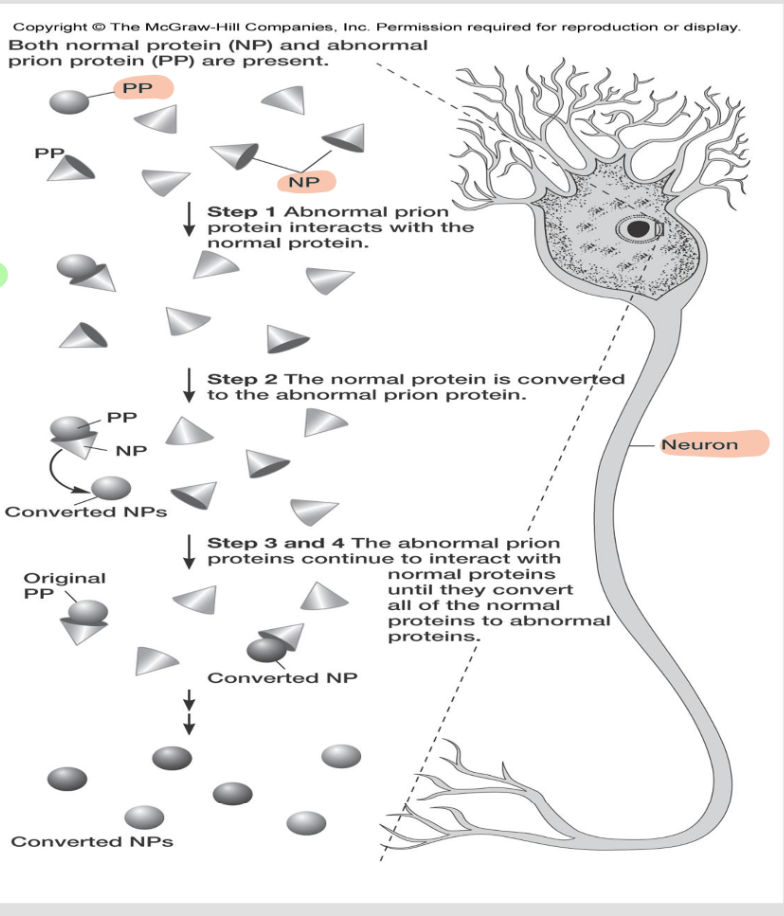
prions
proteins only
proteinaceous infectious praticles (prP) are not associated with nucleic acid genome
PrP has been identified in normal animal tissue
abnormal PrP causes prion diseases by inducing a conformational change of the cellular PrP to the abnormal form
cause progressive, degenerative CNS disorders
ex: scrapie (sheep and goats)
ex: bovine spongiform encephalopathy (mad cow disease)
ex: kuru (cannibalism)
ex: fatal familial insomnia
ex: Gerstmann-Strassler-Scheinker
ex: Creutzfeldt-Jakob disease (CJD)
structure of viruses
size: 10 nm to 300 nm
nucleocapsid
three types of capsid symmetry:
icosahedral (geometric)
helical
complex (mix or icosahedral and helical)
capsids are constructed from many copies of one or a few types of proteins and assembled together with the viral genome
enveloped and nacked viruses
nucleocapsid
nucleic acid plus surrounding capsid (protein coat that surround genome)
this might be the whole virion for some viruses, others may just posses structures
enveloped viruses
have an outer membranous layer
naked viruses
viruses that lack an envelope
viral envelopes and enzymes
envelopes are membrane structures surrounding some viruses
lipids and carbohydrates derived from the host membranes
proteins are virus-specific
many have glycoprotein spikes (peplomers)
ex: enzymes neuraminidase and hemagglutinin
lack true metabolism → carry one or more enzymes that are involved in viral nucleic acid replication
enzyme can be capsid-associated, or it can be located within the capsid
viral genomes are either RNA or DNA → single or double stranded
most common is dsDNA and ssRNA
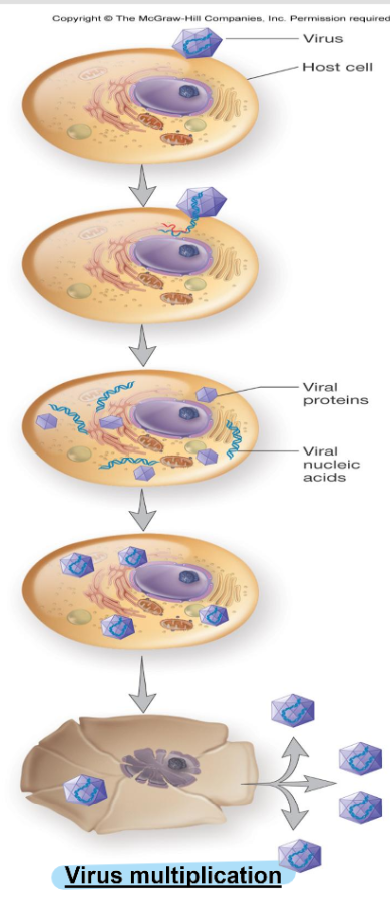
virus multiplication
adsorption: attachment to the host cell
entry of a nucleocapsid or viral genome into the host cell
synthesis stage: expression of viral genes in the host cell
virus takes control of the cell’s machinery and produces viral proteins and genomes
new virions self-assemble into mature virions
virions released by budding or cell lysis
types of viral infections: bacterial and archaeal cells
lysis and lysogeny
virulent phages
temperate phages
virulent phages
only capable of the lytic cycle
where multiplication begins once entering the host and continues until the host lyses
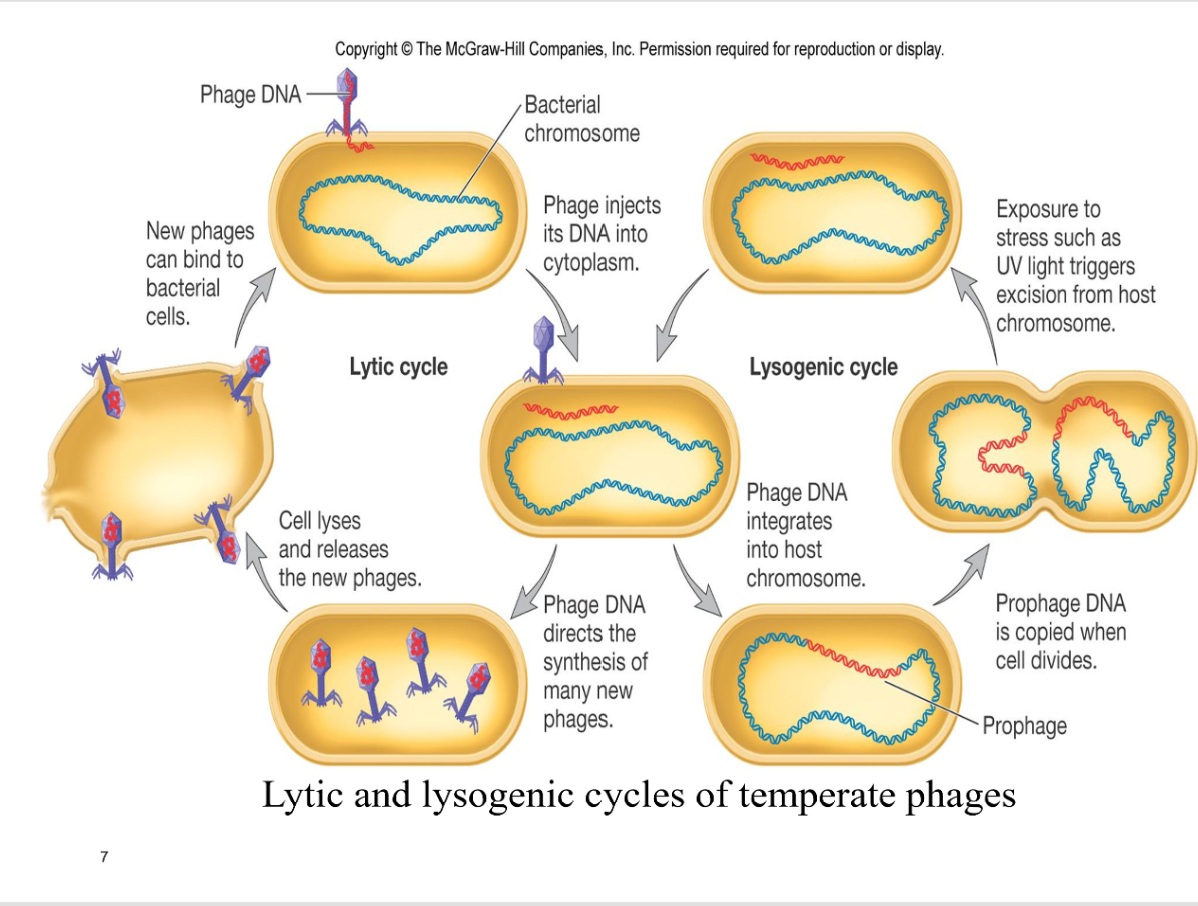
temperate phages
: capable of lysogeny, nonlytic relationship with their hosts
virulent phages lyse their hosts in addition to the lytic cycle
lysogenic viral genome (prophage): remains in the host but does not kill the host cell → lysogenic (lysogens)
switch to the lytic cycle at some later time (induction)
infection of eukaryotic cells
cytocidal infections
cytocidal infections
lead to cell death
some viruses persist in the host for many years
in some cases, degenerative changes occur in cells without causing lysis
epstein-barr virus on eukaryotic cells
burkitt’s lymphoma nasopharyngeal carinoma
hep B virus on eukaryotic cells
hepatocellular carinoma
hep C virus on eukaryotic cells
hepatocellular carinoma
human herpesvirus 8 on eukaryotic cells
kaposi’s sarrcoma
human papillomavirus on eukaryotic cells
cervical cancer
HTLV-1 on eukaryotic cells
leukemia
viruses and cancer
a disease where there is abnormal cell growth → neoplasia
spread of the abnormal cells throughout the body → metastasis
pathogenicity of viroids
results from RNA slicing, where viroid RNA forms dsRNA by pairing with host mRNA’s
dsRNA are destroyed by host cell defenses and hence certain host gense are not translated → disease