arch history exam 4 flashcards
 Call Kai
 Learn
Learn Practice Test
 Spaced Repetition
 Match
Match Flashcards
 Knowt Play
1/39

There's no tags or description
Looks like no tags are added yet.
Name | Mastery | Learn | Test | Matching | Spaced | Call with Kai |
|---|
No analytics yet
Send a link to your students to track their progress
40 Terms
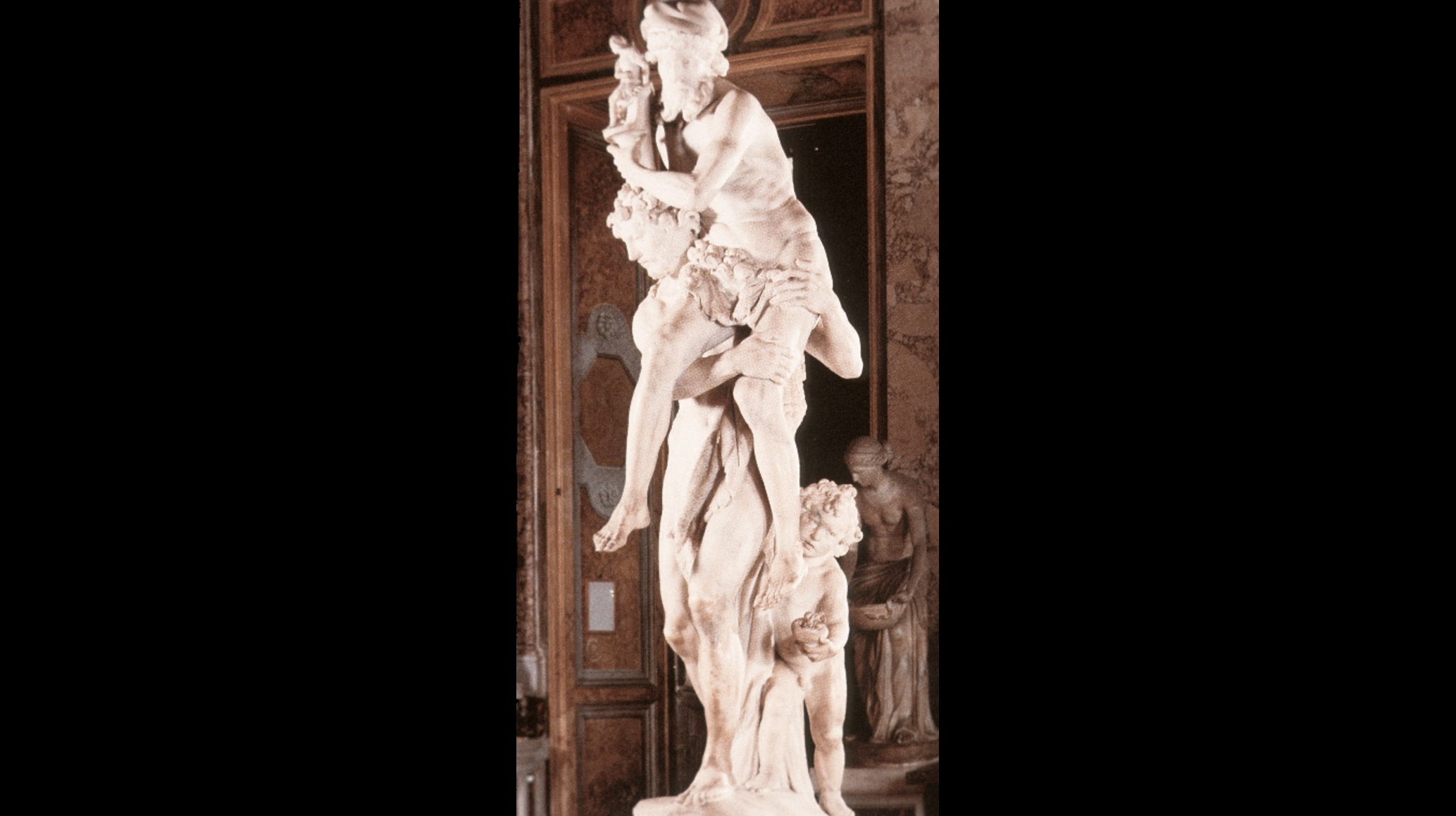
Aeneas, Anchises, and Ascanius
Gianlorenzo Bernini
Villa Borghese, Rome
1618
This sculpture is made out of Carrara marble.
The sculpture shows Aeneas carrying his father Anchises while his son Ascanius walks below them during the escape from Troy.
The war of Troy was started because Helen, the wife of a Greek king, was taken to Troy by Paris, the prince of Troy, which caused a war between the Greeks and the Trojans.
Anchises is carrying the sacred fire of Troy, and this symbolizes that even though the city was destroyed, the culture and traditions of Troy would continue into the future.
The sculpture is Baroque in style because it is meant to be viewed from many different points of view instead of only one front angle.
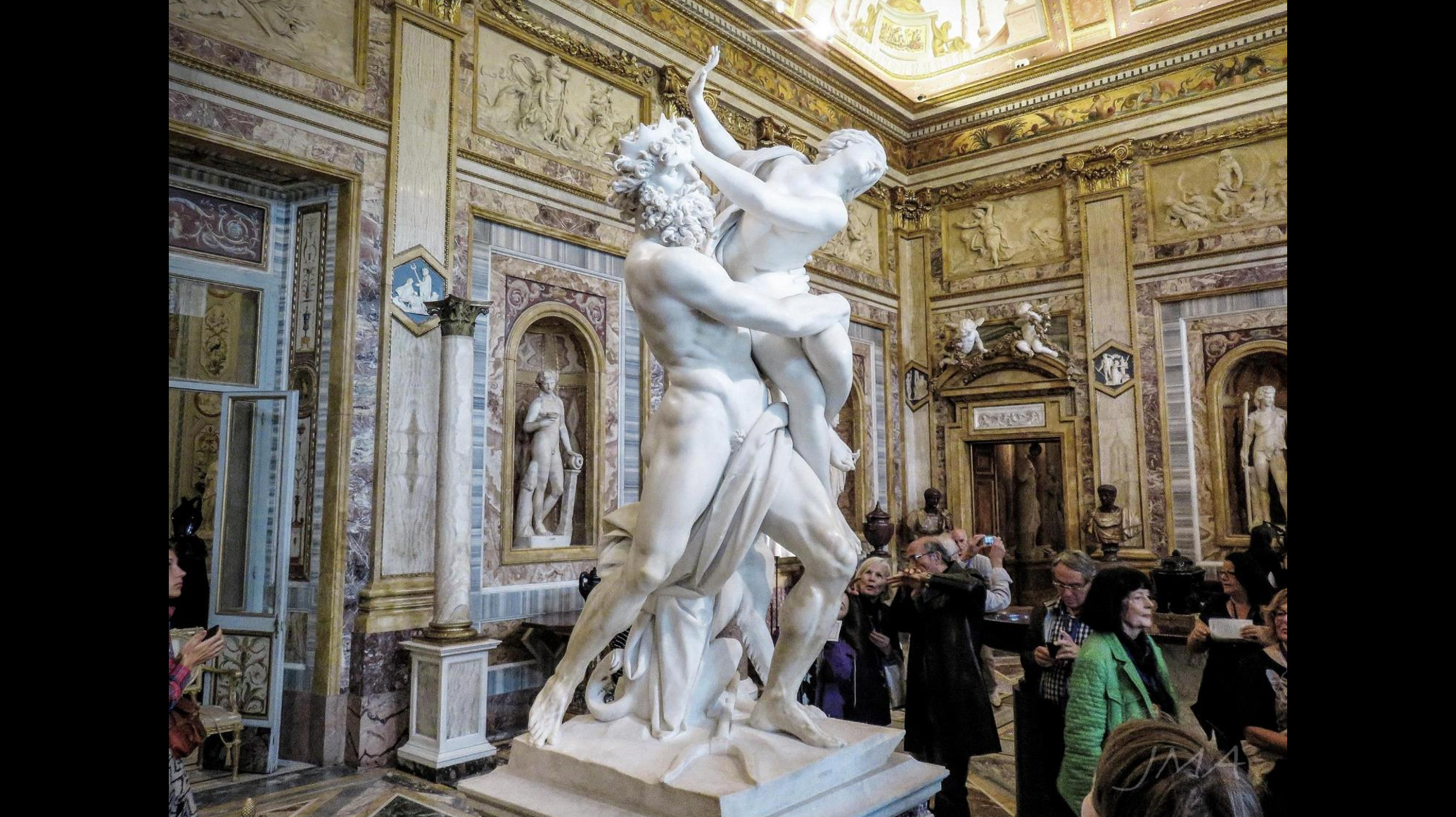
The Rape of Proserpina
Gianlorenzo Bernini
Villa Borghese, Rome
1621
This sculpture is made out of Carrara marble.
The sculpture shows Pluto abducting Proserpina and taking her to the underworld because he wanted her to become his wife.
Pluto is the Roman god of the underworld and is also known as Hades in Greek mythology.
Proserpina is the goddess of spring.
During this time, the word “rape” meant abduction or kidnapping instead of its modern meaning.
The sculpture is Baroque in style because it is meant to be viewed from many different points of view instead of only one front angle.
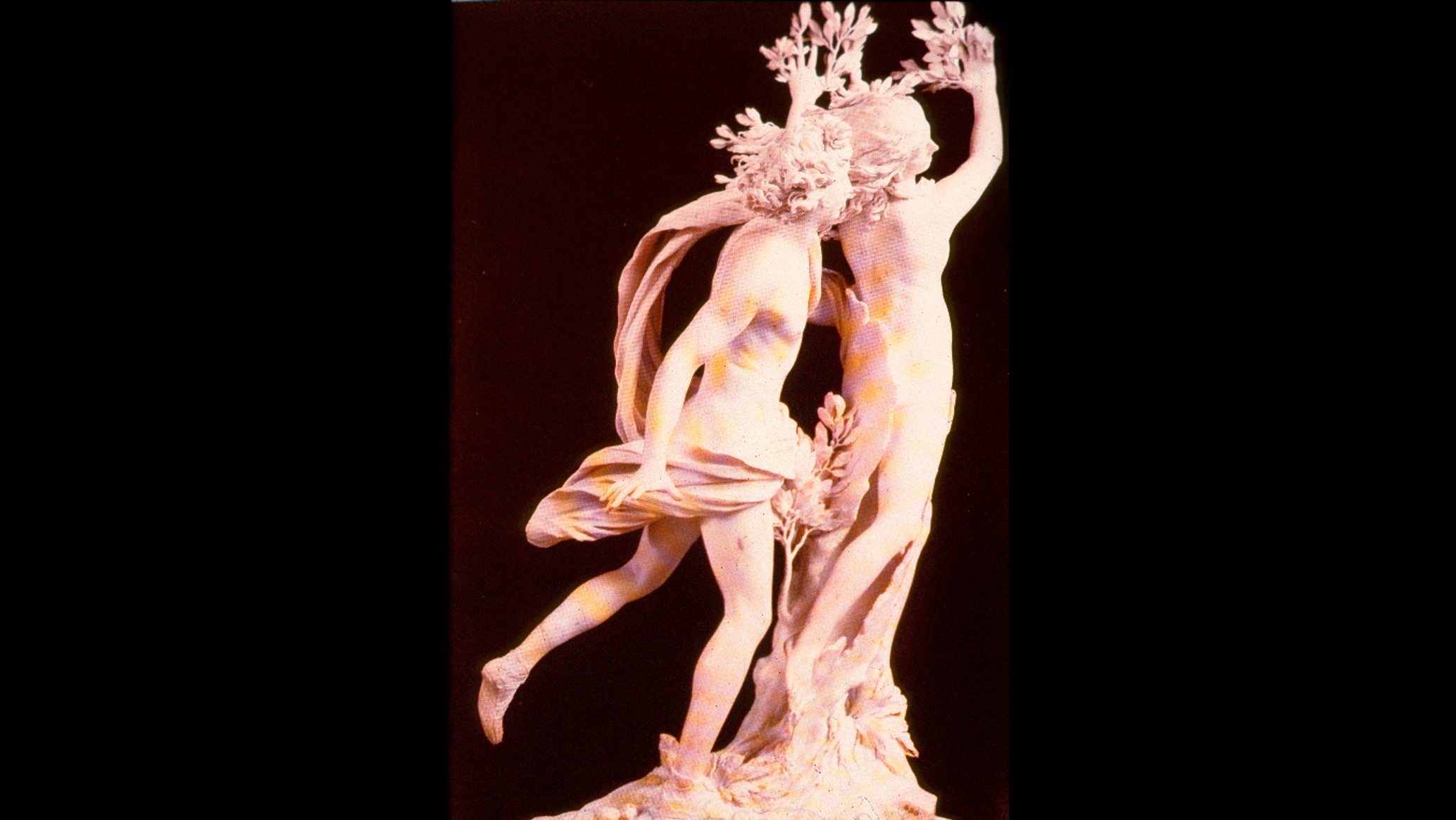
Apollo and Daphne
Gianlorenzo Bernini
Villa Borghese, Rome
1622
This sculpture is made out of Carrara marble.
The sculpture shows Apollo chasing Daphne after falling in love with her.
Apollo is the Greek god of music, light, and prophecy.
Daphne was the daughter of a river god and did not want Apollo to catch her because she wanted to protect her virginity.
Daphne asked her father to save her by turning her into a laurel tree before Apollo could grab her.
Bernini sculpted the exact moment Daphne begins transforming into a tree.
The sculpture is Baroque in style because it is meant to be viewed from many different points of view instead of only one front angle.
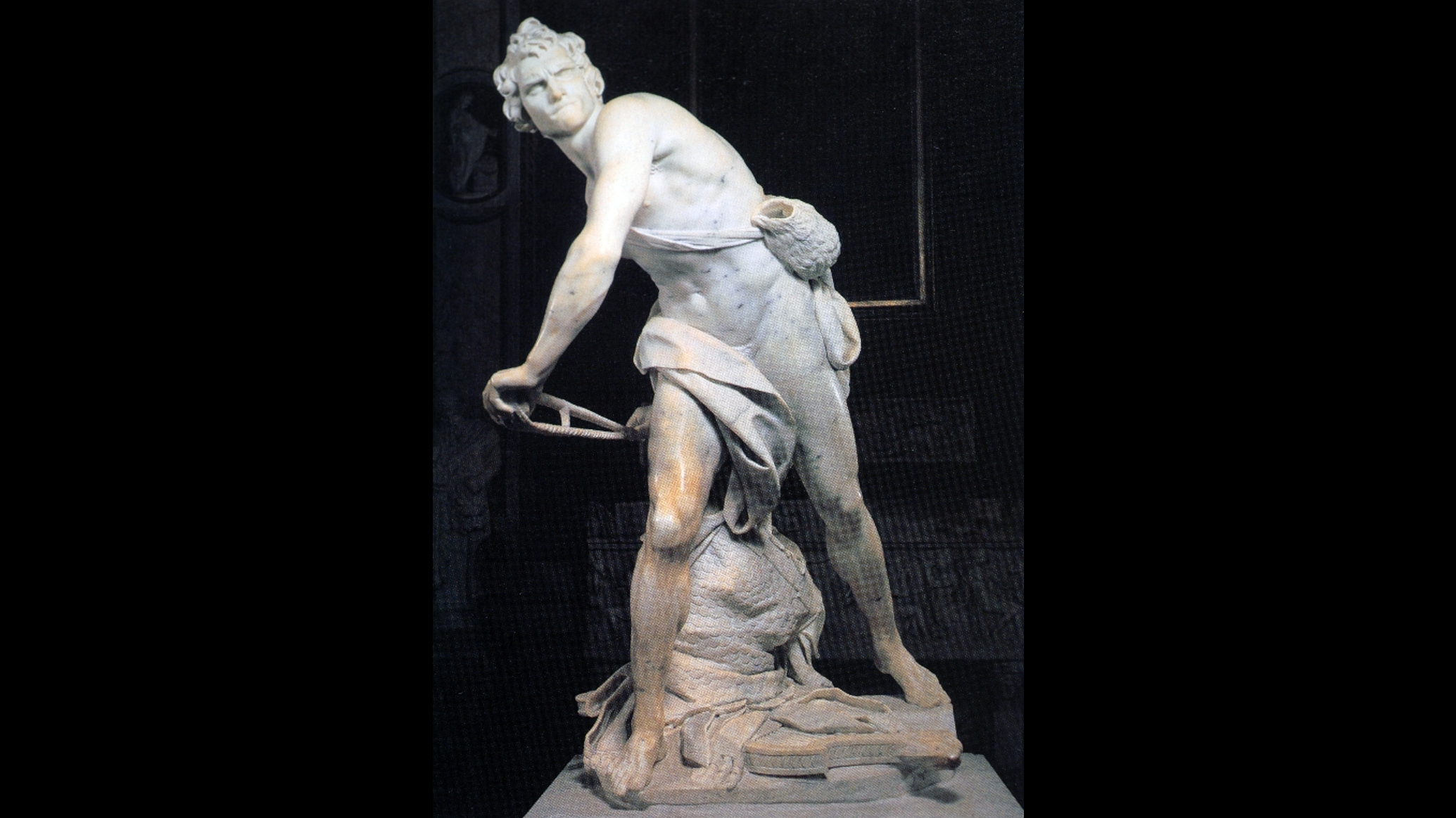
David
Gianlorenzo Bernini
Galleria Borghese, Rome
1623
This sculpture is made out of Carrara marble.
The sculpture shows David during the exact moment he is about to sling the stone at Goliath. Goliath was a trained warrior, and David was a young shepherd boy from the Bible.
The sculpture captures the height of the action, which is a characteristic of the Baroque.
The sculpture is meant to be viewed from many different points of view instead of only one front angle.
David represents the triumph of the underdog because he defeats the much larger and stronger Goliath.
It is believed Bernini may have used his own face as the model for David.
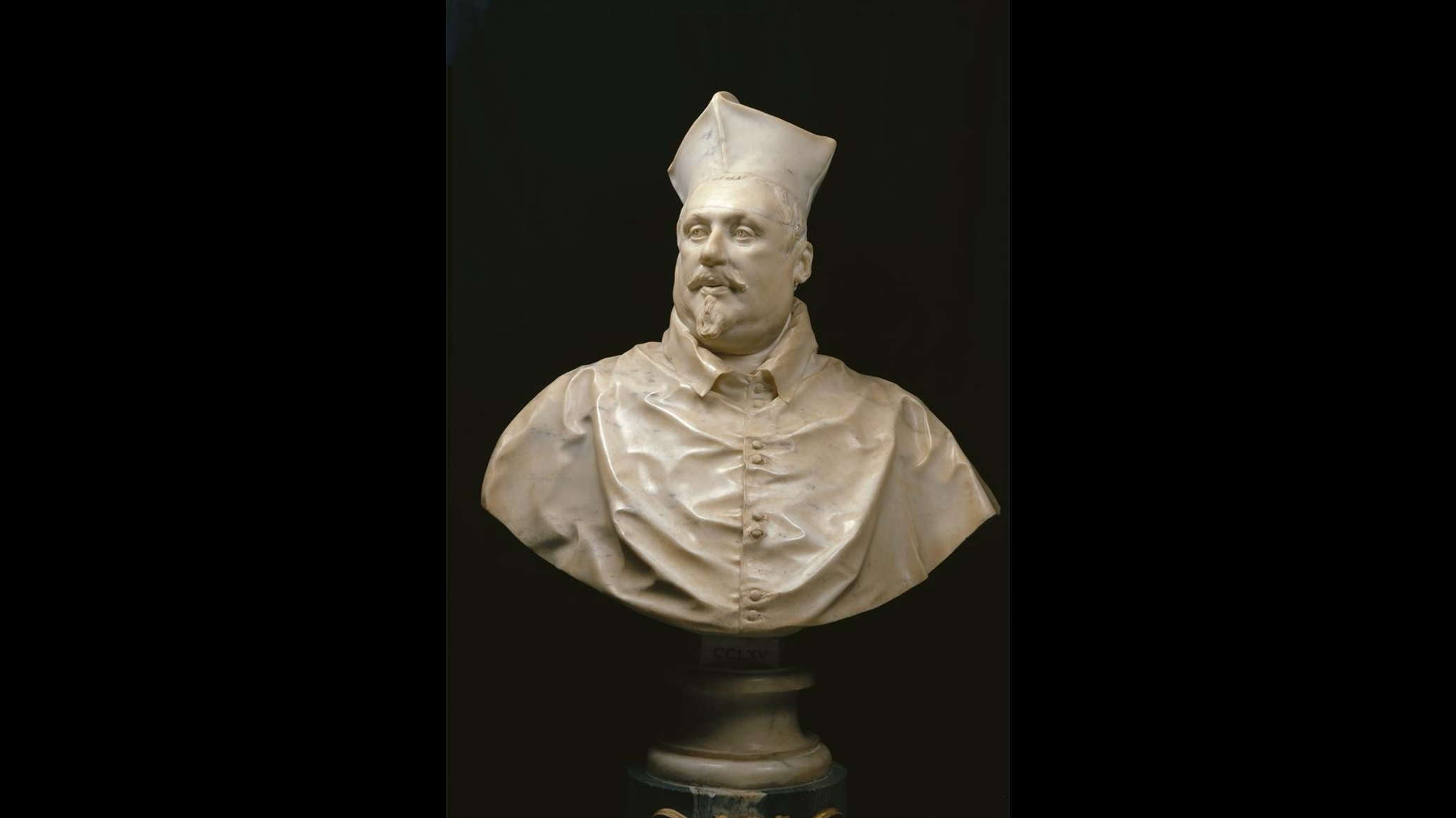
Scipione Borghese
Gianlorenzo Bernini
Galleria Borghese, Rome
1632
This sculpture is made out of Carrara marble.
The sculpture is a portrait bust of Cardinal Scipione Borghese, who was one of the most powerful men in Rome. Cardinal means he was a high rank in the Catholic Church that gave advice to the Pope.
Scipione Borghese was the nephew of Pope Paul V (fifth).
Scipione Borghese also collected many famous artworks, including works by Caravaggio.
Bernini sculpted the bust with the mouth slightly open, making it look like Scipione is about to speak.
The sculpture is Baroque in style because it focuses on realism and making the figure appear alive instead of stiff or emotionless.
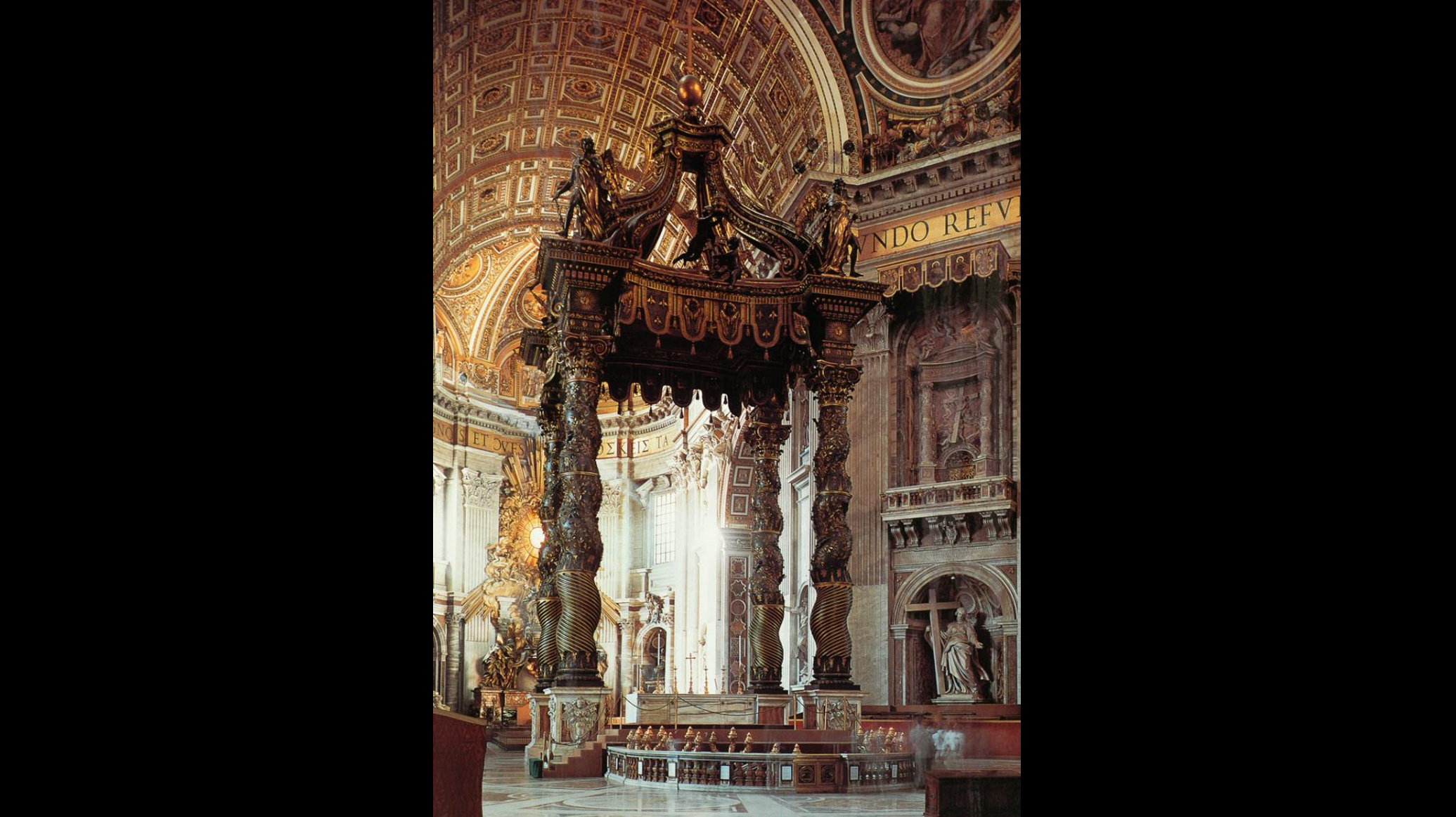
Baldacchino
Gianlorenzo Bernini
San Pietro, Rome
1623-1634
This sculpture is made out of bronze and is located inside Saint Peter’s Basilica.
The Baldacchino was built over the tomb of Saint Peter, who was one of the twelve apostles and the first Pope.
The structure is about the height of a seven-story building and stands at the center of the largest church in the world.
The spiral columns reference the original columns believed to have come from the early Christian church of Old Saint Peter’s.
The Barberini family bees decorate the Baldacchino because Pope Urban VIII (eighth) commissioned the project.
The vines and natural decoration symbolize the life and sacrifice of Christ.