Procedure 3: Unit 1 Pelvis
 Call Kai
 Learn
Learn Practice Test
 Spaced Repetition
 Match
Match Flashcards
 Knowt Play
1/334

There's no tags or description
Looks like no tags are added yet.
Name | Mastery | Learn | Test | Matching | Spaced | Call with Kai |
|---|
No analytics yet
Send a link to your students to track their progress
335 Terms
How many degrees is the medial condyle off of the lateral condyle?
5-7
What is the structure on the femoral head that ligaments attach to the acetabulum?
Fovea capitis
The intertrochanteric crest is on which side of the proximal femur?
Posterior
The intertrochanteric line is on which side of the femur?
Anterior
Which proximal structure is located at the same level of the PS?
Greater trochanter
The pelvis is made up of which bones?
2 hip bones, sacrum, coccyx
The pelvic girdle is made up of which bones?
2 hip bones (Ilium, ischium, pubis)
Identify the type of joint and tissue type: Hip joint
Synovial diarthrotic ball and socket (freely movable)
Identify the type of joint and tissue type: PS
Cartilaginous amphiarthrotic symphysis (slightly movable)
Identify the type of joint and tissue type: SI joint
Synovial diarthrotic gliding (slightly movable)
Which bone is the ASIS and AIIS located?
Ilium
Which bone is the PSIS and the PIIS located?
Ilium
Which bone is the greater sciatic notch located?
Ilium
Which bone is the lesser sciatic notch located?
Ischium
Which bones make up the acetabulum?
Ilium, ischium, and pubis
Which bones make up the obturator foramen?
Ischium and pubis
Which bone do we sit on?
Ischial tuberosity
The superior and inferior ramus is located on which bone?
Pubis
Write Out How to Locate the femoral neck
(1.) Draw a line from the ASIS to PS (2.) Make a perpendicular line on the midway point (3.) 1.5" = femoral head (4.) 2.5" = femoral neck
Identify the following characteristics of a female verses a male pelvis: Round inlet
Male
Identify the following characteristics of a female verses a male pelvis: Oval inlet
Female
Identify the following characteristics of a female verses a male pelvis: Heavier
Male
Identify the following characteristics of a female verses a male pelvis: Lighter
Female
Identify the following characteristics of a female verses a male pelvis: Wider outlet
Female
Identify the following characteristics of a female verses a male pelvis: Narrow outlet
Male
Identify the following characteristics of a female verses a male pelvis: Shallow
Female
Identify the following characteristics of a female verses a male pelvis: Deep
Male
Inlet: measuring anterior to posterior
sacral promontory to the superior margin of the PS
Inlet: measuring medial to lateral
brim to brim
Outlet: measuring anterior to posterior
Tip of coccyx to the inferior margin of the PS
Outlet: measuring medial to lateral
ischial tuberosity to ischial tuberosity
The greater pelvis is AKA as the ______ pelvis
false
The lesser pelvis is AKA as the ______ pelvis
true
List the palpable landmarks of the pelvis
IC, ASIS, PS, greater trochanter, ischial tuberosity, and tip of the coccyx
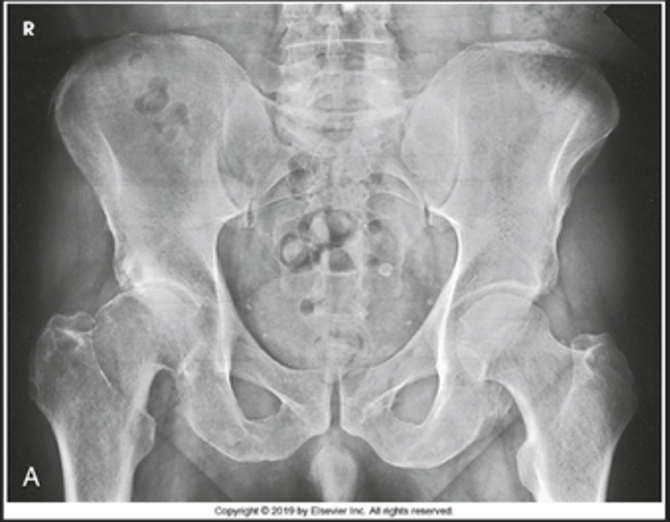
Name the projection
AP pelvis
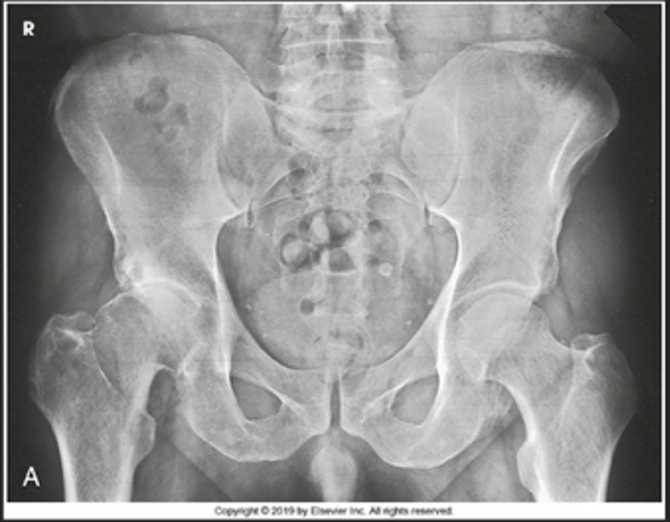
Name the position
Supine
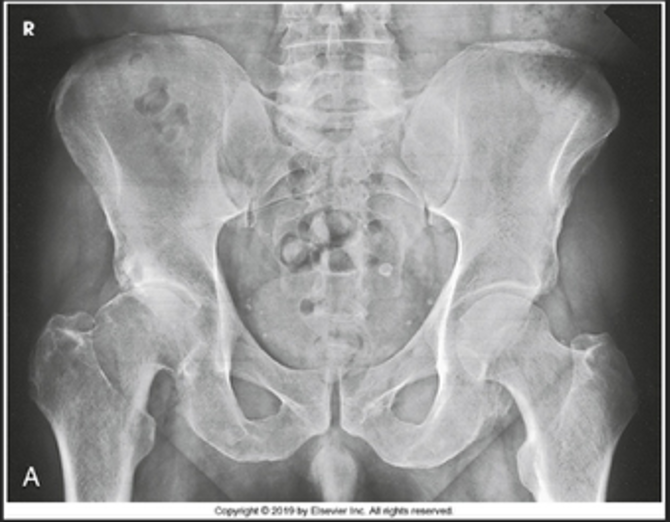
Where is the top of the IR placed
1-1.5" above IC
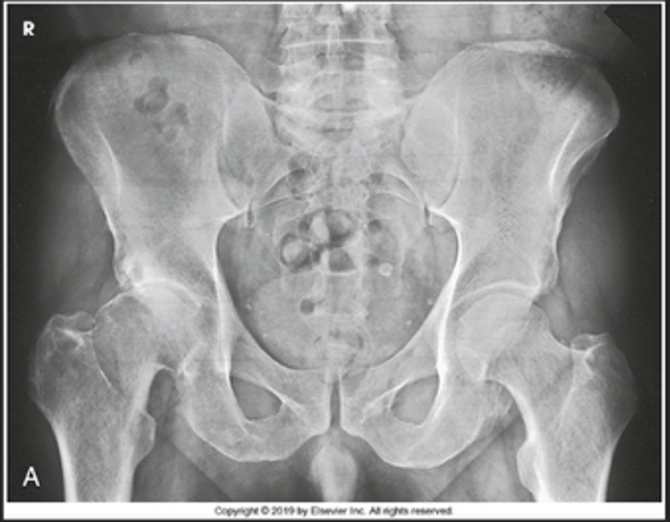
Where does the CR enter
MSP and 2" below ASIS or 2" above PS
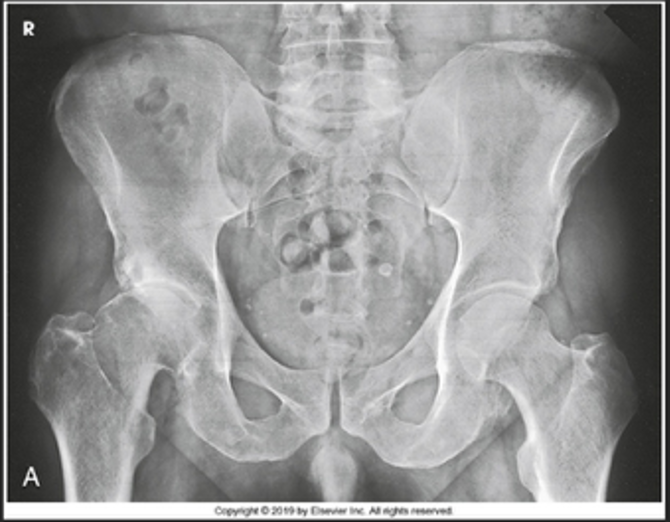
How many degrees are the femurs rotated internally
15-20 degrees
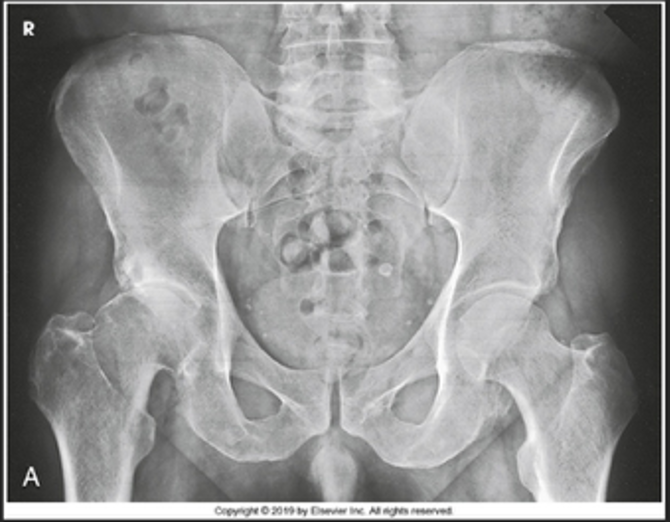
Which structure should not be seen
Lesser trochanter
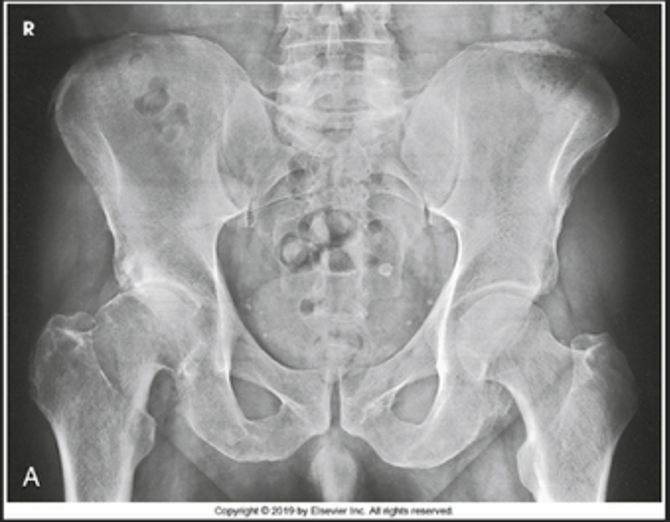
Which structure determines rotation
Obturator foramen
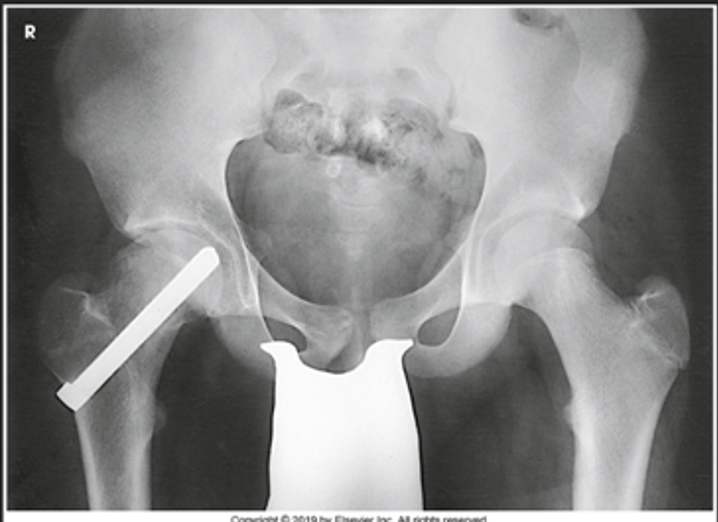
Name this special type of pelvis X-ray
Orthopedic device // low pelvis
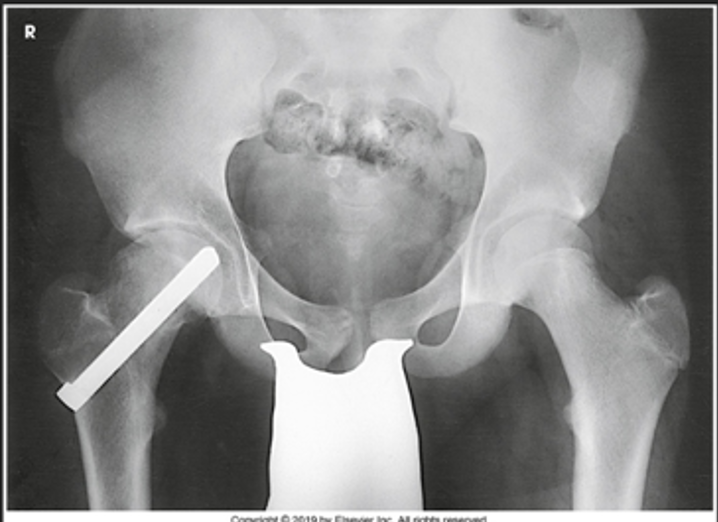
Where is the top of the IR located
ASIS or even lower depending on the length of the patient's scar
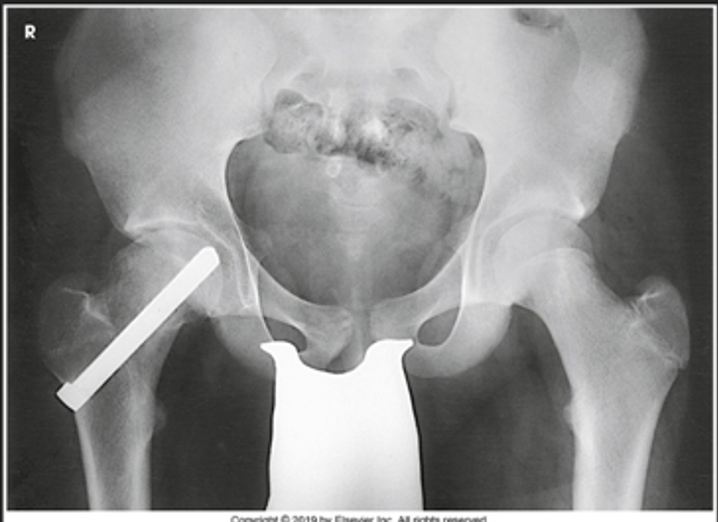
Why is this type of projection performed
to see orthopedic device
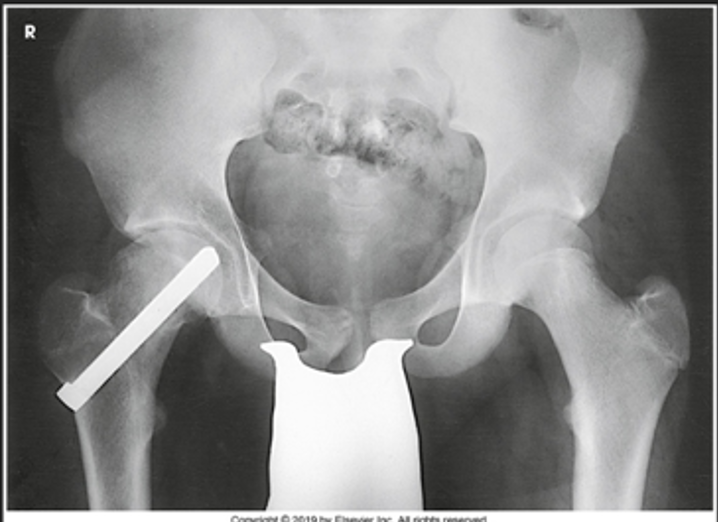
Where is the marker placed
up in ic
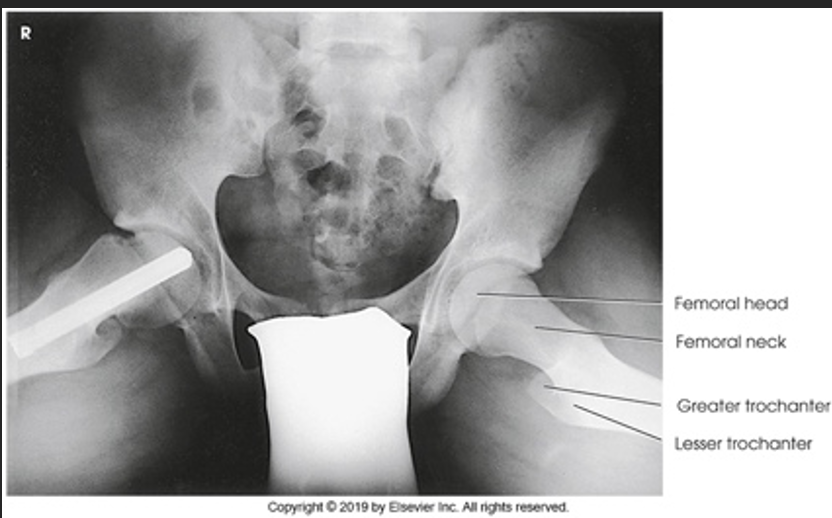
Name the projection
AP oblique
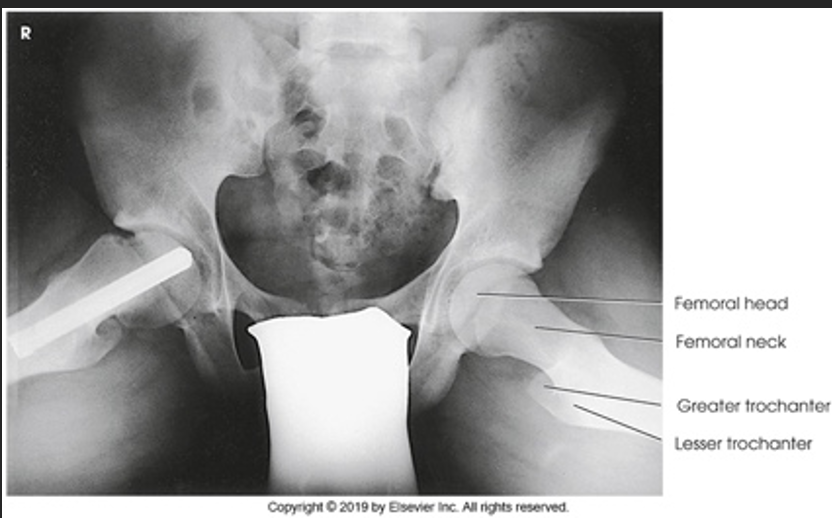
Name the position
Supine with Bilateral frog leg position (feet touching)
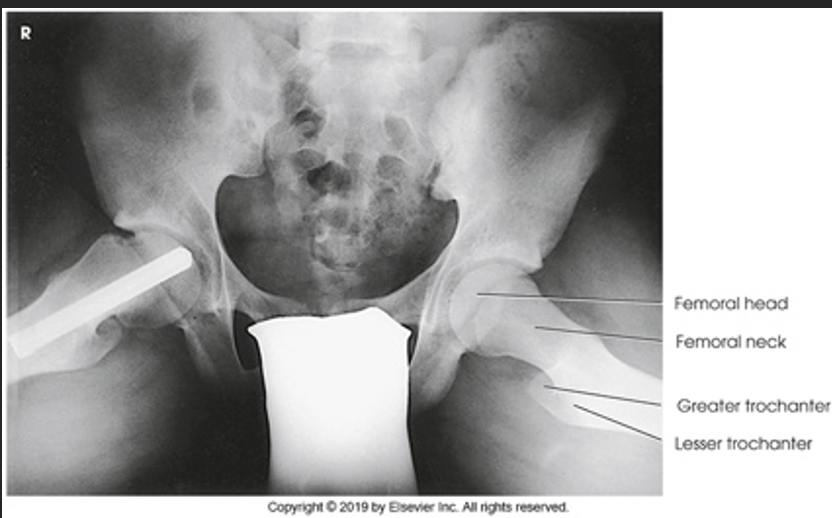
How many degrees are the femurs abducted for this image
25-45 degrees
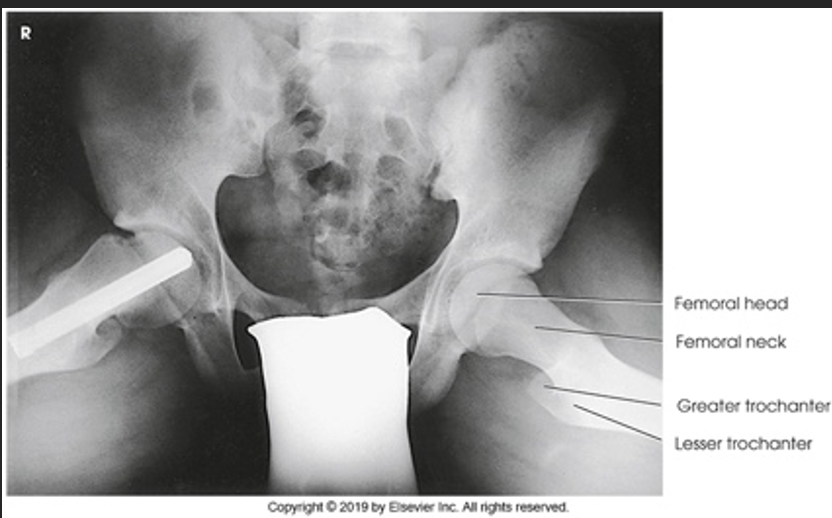
Where does the CR enter for this projection
1" superior to SP and MSP
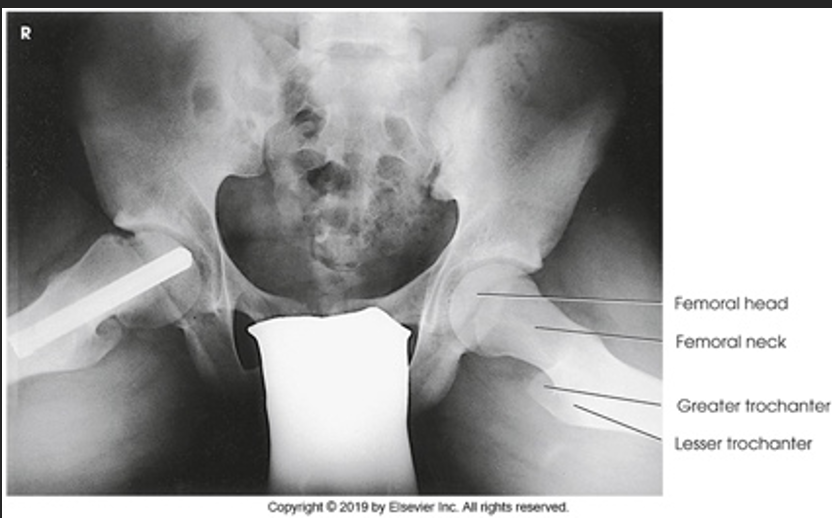
Why is this projection performed
Performed for hip dysplasia (kids) and mobility (adults)
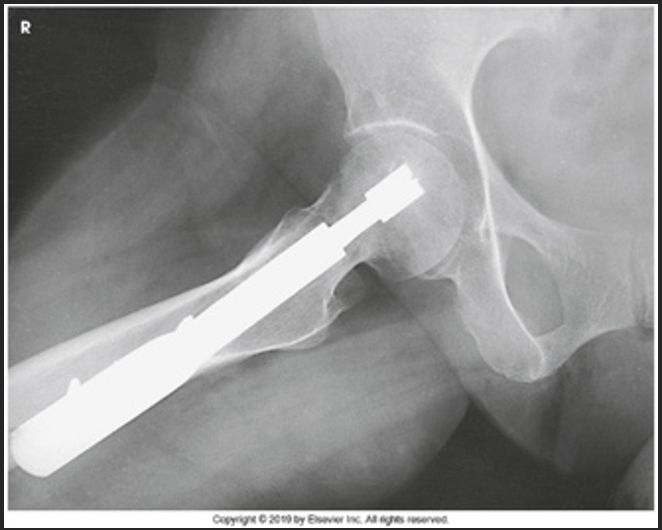
If this is a unilateral oblique of the hip, how many degrees is the leg abducted
45
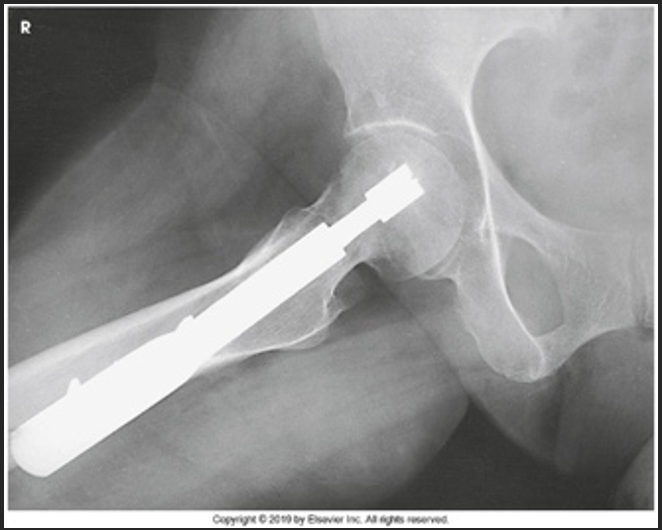
If this is a lateral projection of the hip, how many degrees is the leg abducted
45
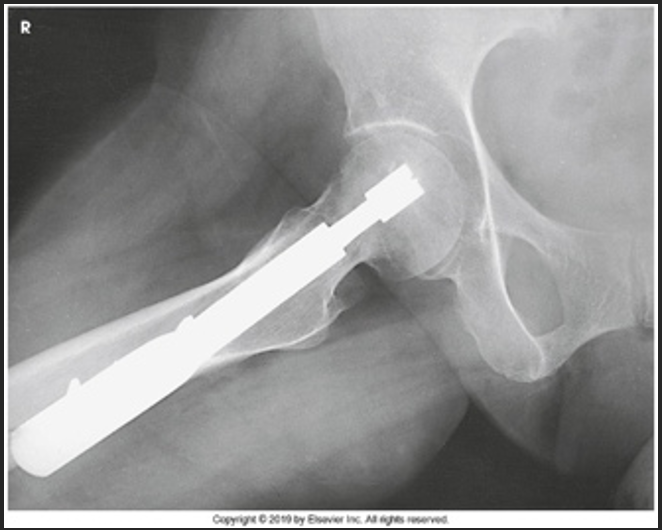
What is the range of abduction for a lateral projection of the hip?
45-90
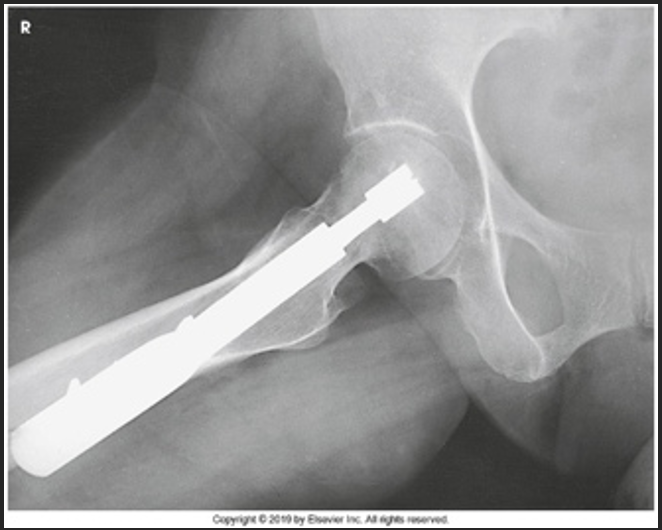
Where does the CR enter for this projection
Perpendicular to femoral neck
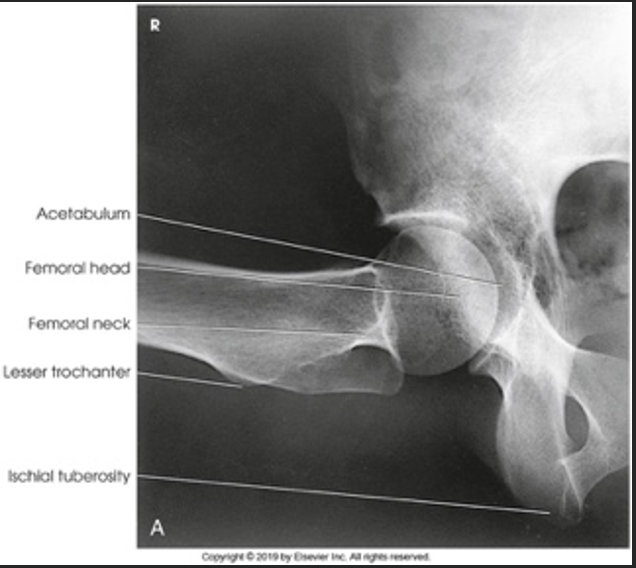
Name the projection (lateral hip)
Lauenstein
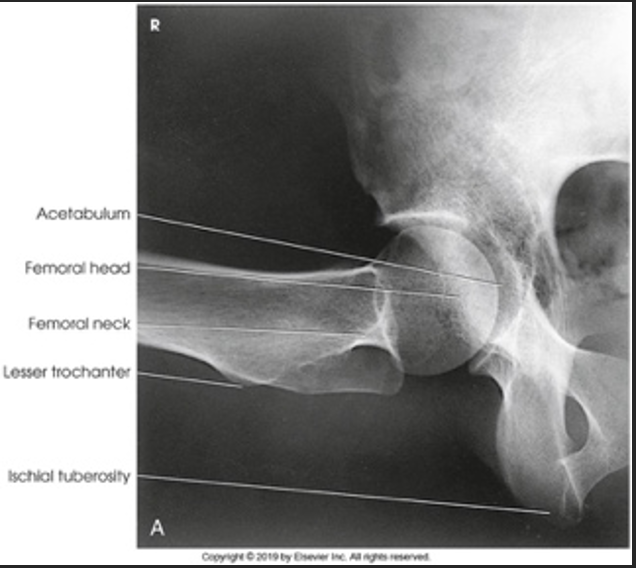
How do you know this is a lateral Lauenstein
90 degrees
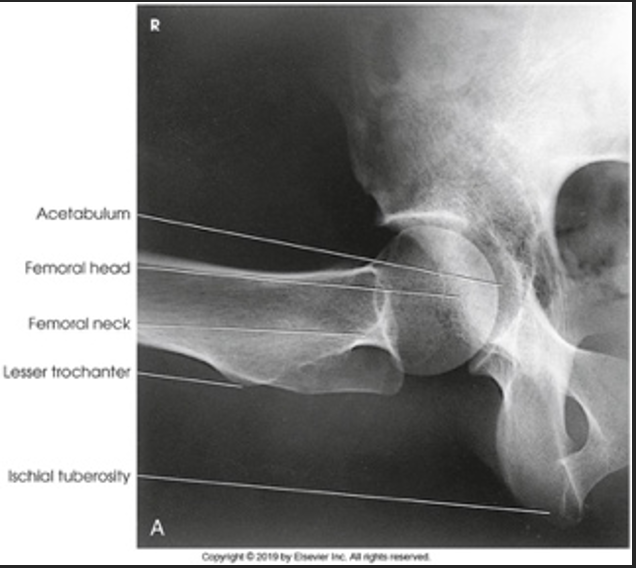
When is this projection performed
When pt. can abduct 90 degrees (no fracture)
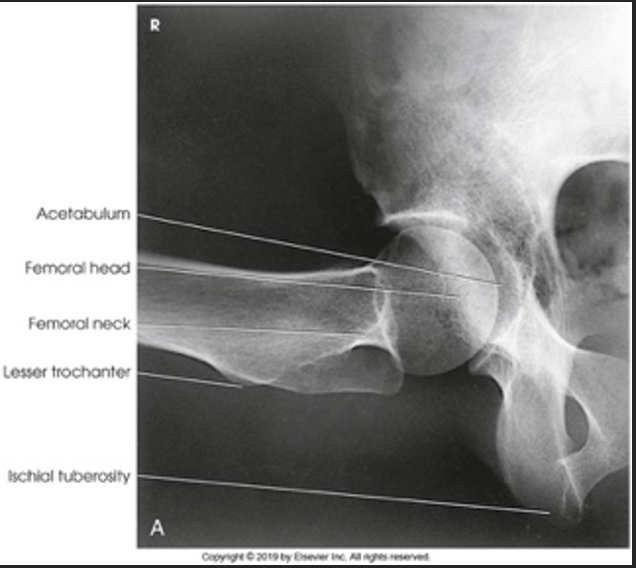
What structure is seen in profile
acetabulum and prox. Femur; lesser trochanter
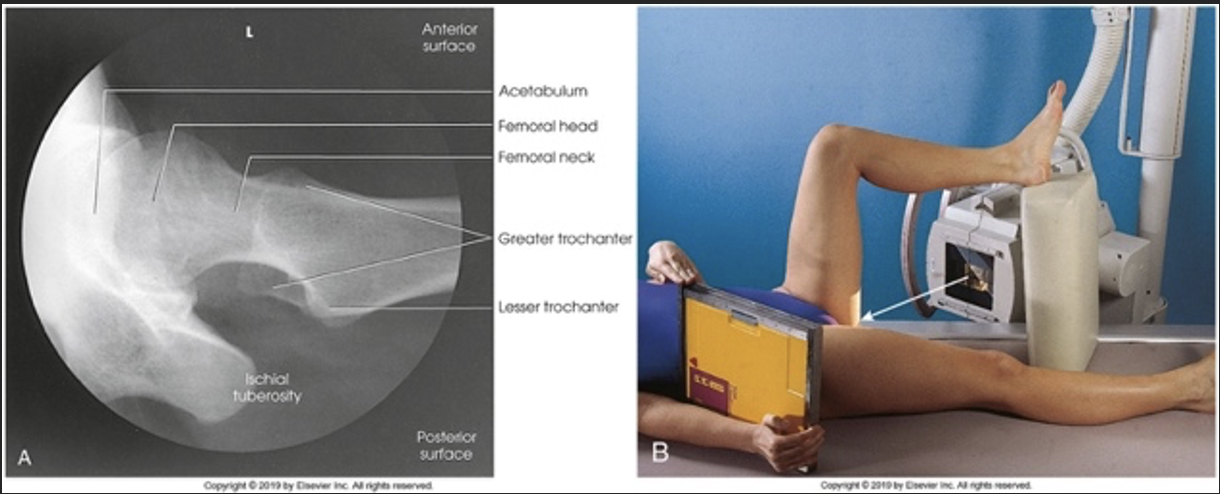
Name the projection
Danny miller (axiolateral)
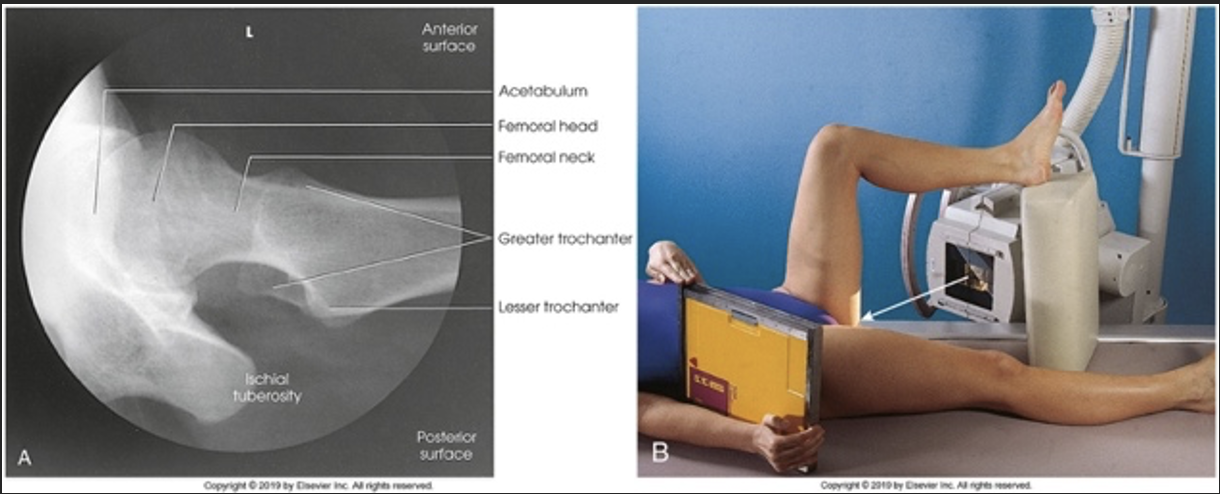
Why is this projection performed
Fractured hip
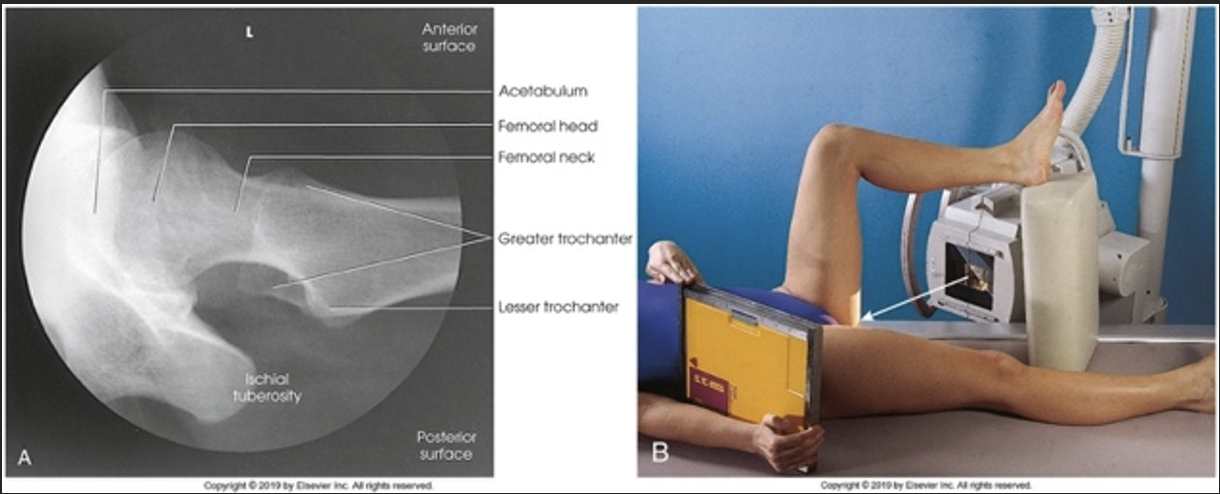
Where is the top of the IR placed for this projection
Placed along the affected leg near Iliac crest
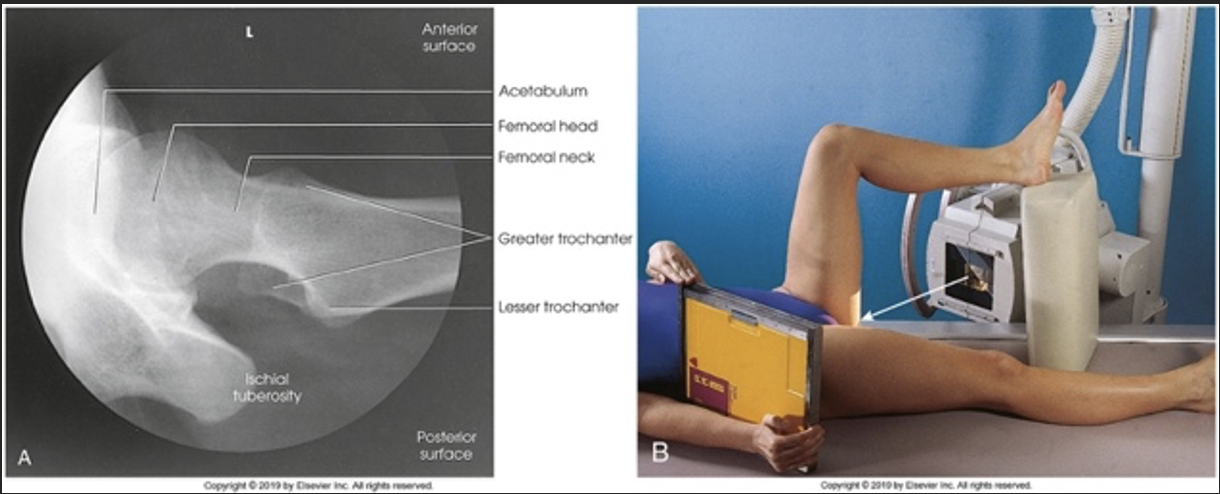
What structure is seen in profile
lesser trochanter/ischial tuberosity
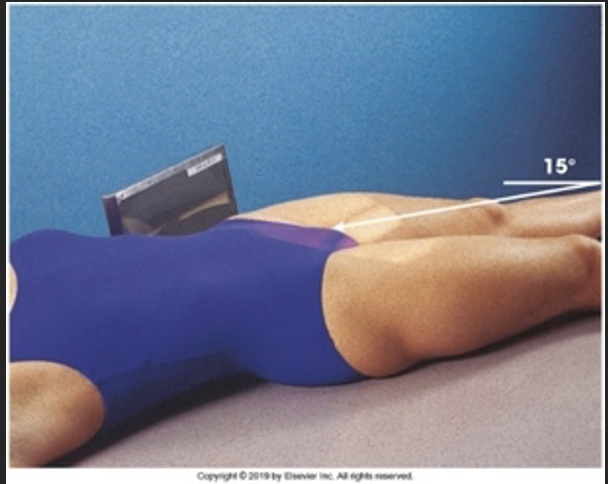
Name this projection
Clements Nakayama
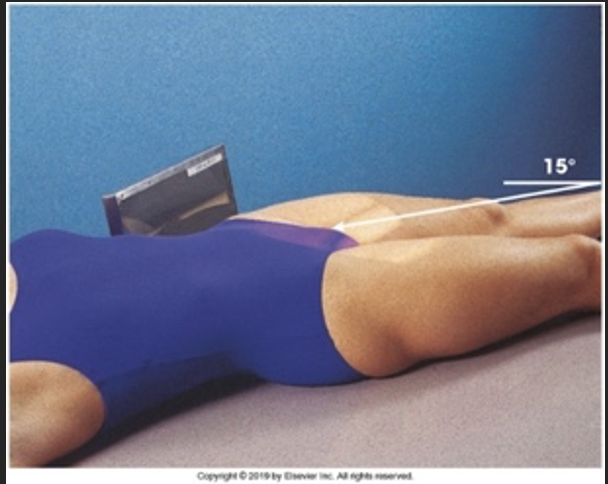
When is this projection performed
Both hips fractured
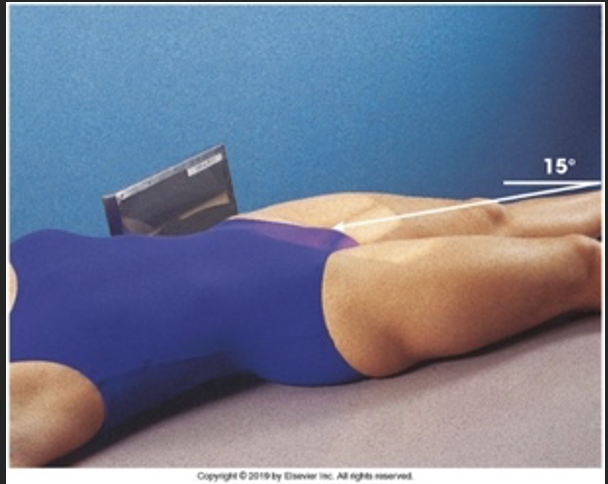
How many degrees is top of the IR tilted posteriorly?
15 degrees
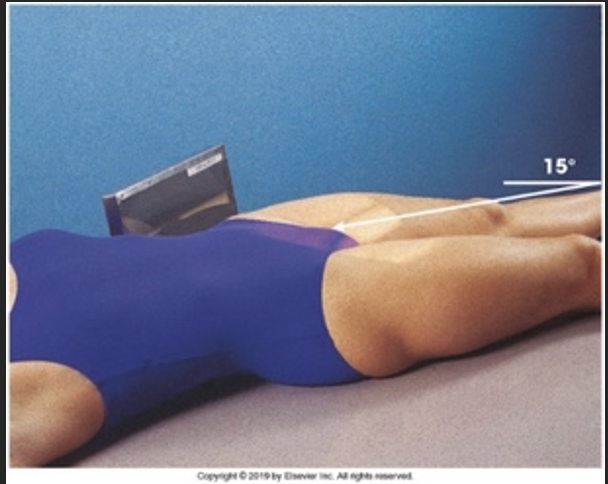
How many degrees is the tube angled and toward which direction?
15 degrees posterior
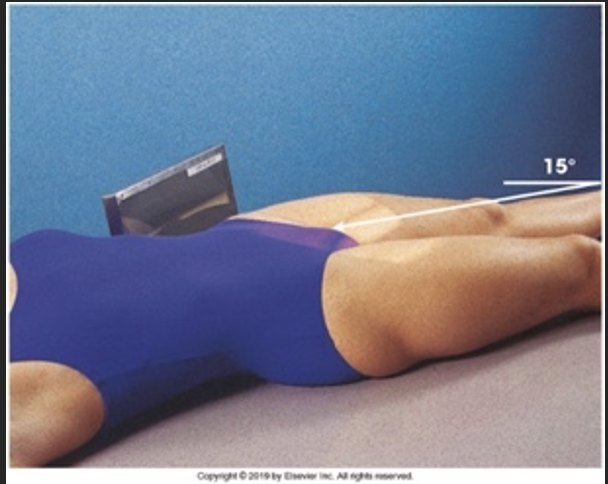
CR enters
Directed 15 degrees posteriorly and aligned perpendicular to the femoral neck and the grid IR
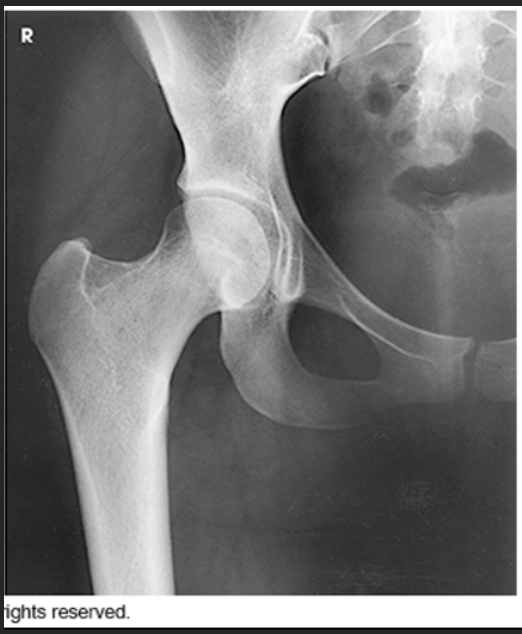
Name the projection
AP hip (proximal femur)
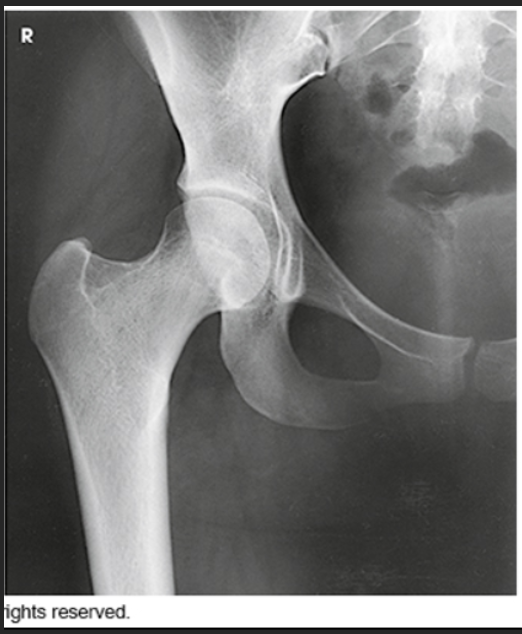
How many degrees is the hip internally rotated (take this as an AP hip, not proximal femur)?
15-20
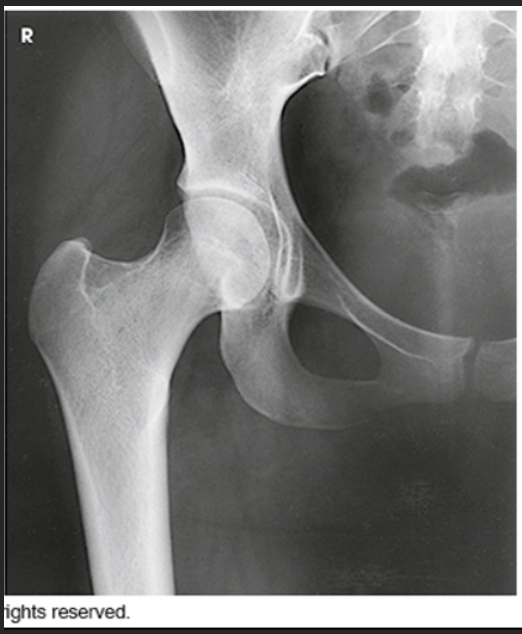
Which structures are seen in profile?
Greater trochanter and femoral neck
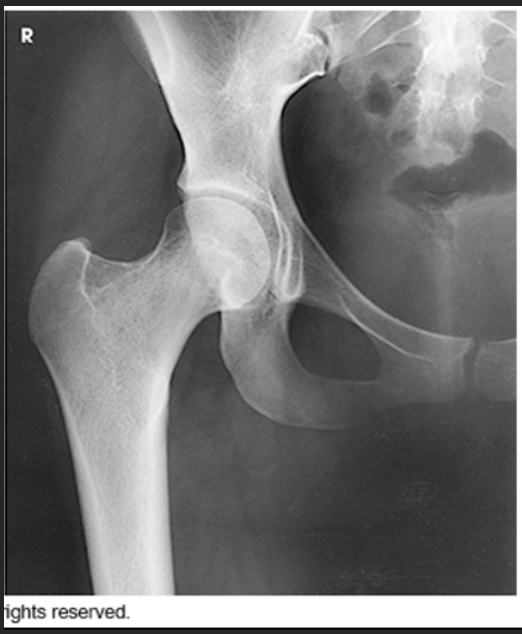
Which structure should not be seen?
Lesser trochanter
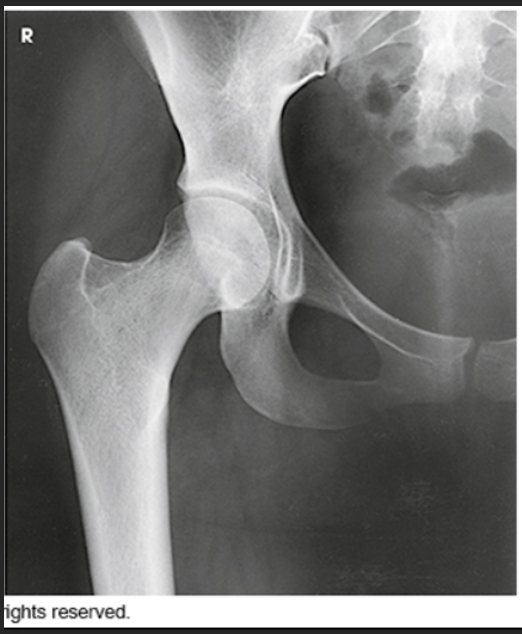
CR enters
femoral neck
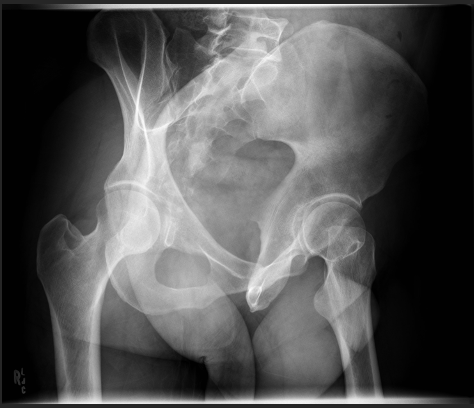
Name the projection
AP oblique pelvis (Judet Method)
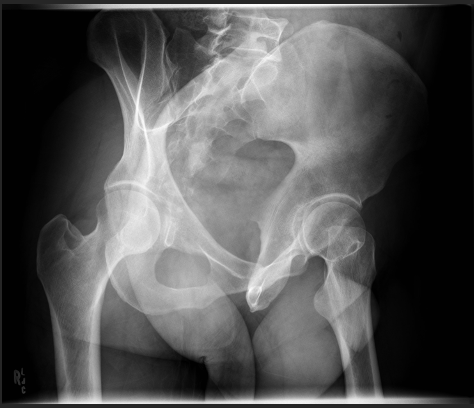
Name the position
LPO
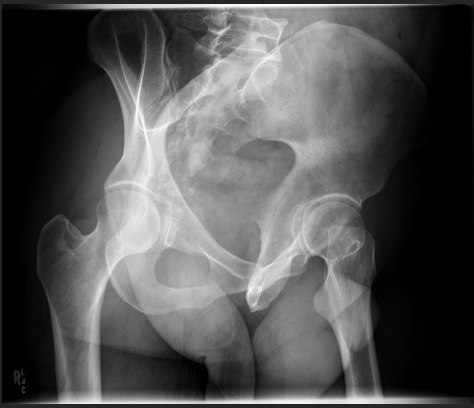
How many degrees is the hip/pt. rotated?
45
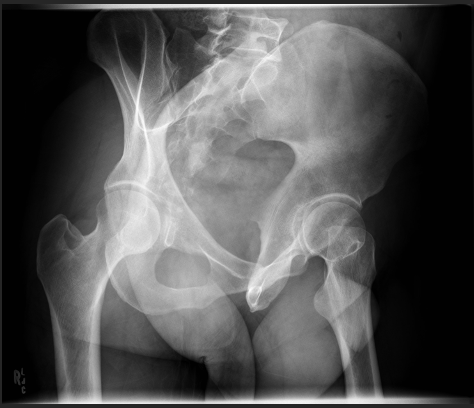
Which hip is demonstrating the posterior rim?
Right
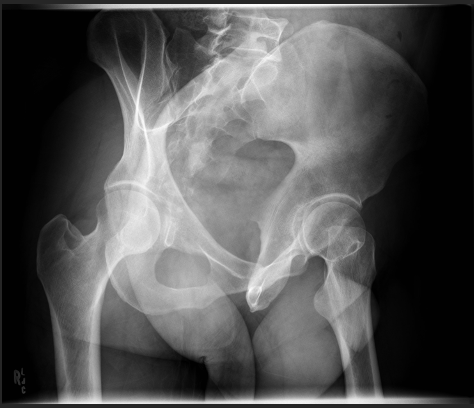
CR enters?
2" inferior to ASIS to both sides; at PS of one hip
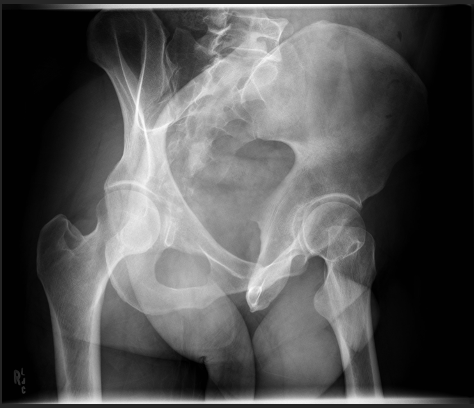
Which hip is demonstrating the anterior rim?
Left
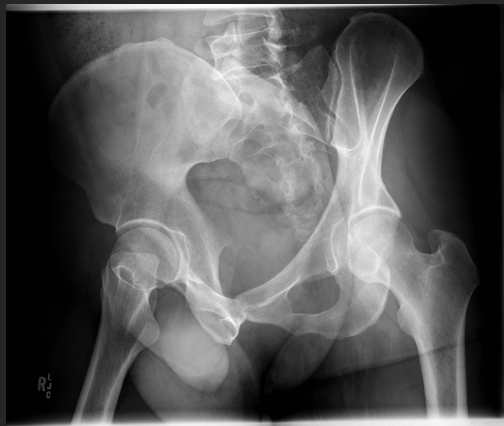
Name the projection
AP oblique pelvis (Judet Method)
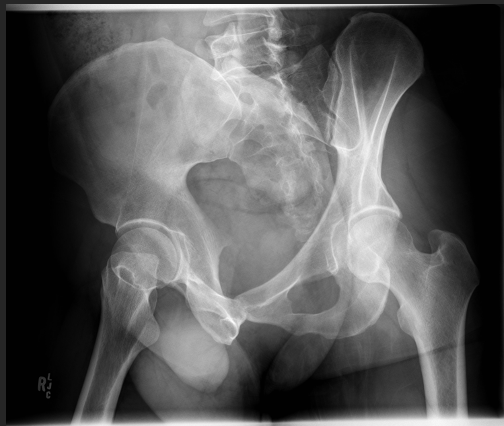
Name the position
RPO
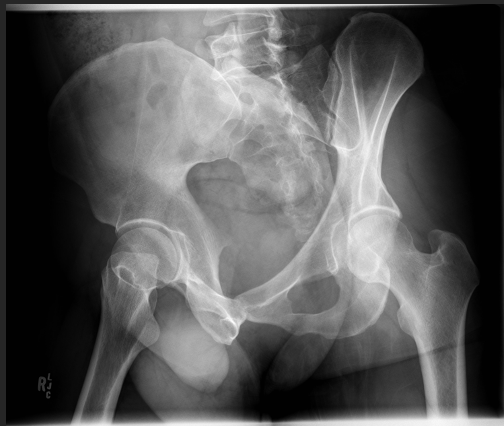
How many degrees is it rotated?
45 degrees
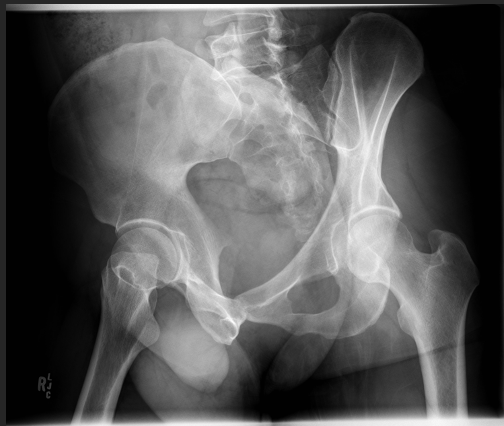
Which hip is demonstrating the posterior rim?
Left
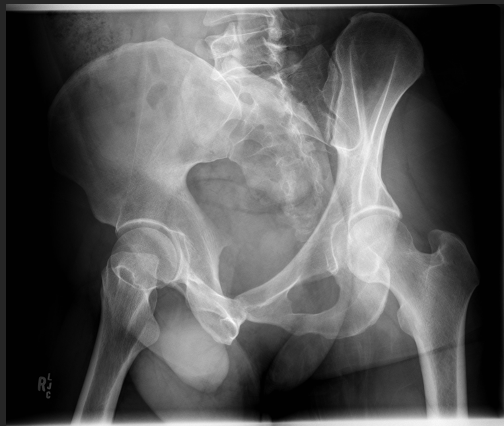
Which hip is demonstrating the anterior rim?
Anterior
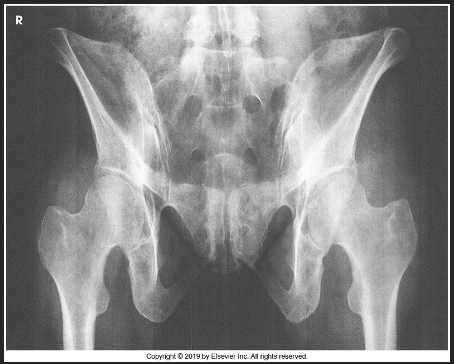
Name the projection
AP axial projection (Taylor Method)
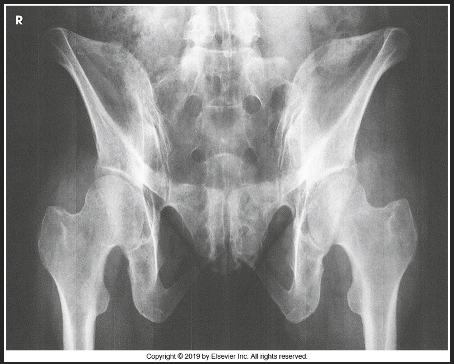
What is the tube angle and towards which direction for males?
20-35 cephalic (outlet)
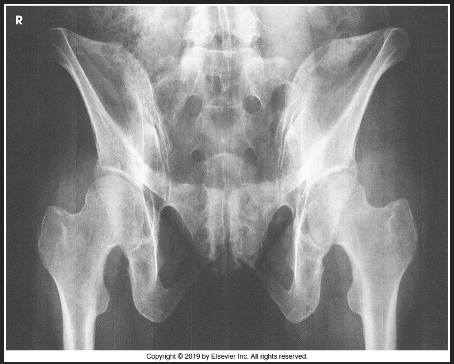
What is the tube angle and towards which direction for females?
30-45 cephalic
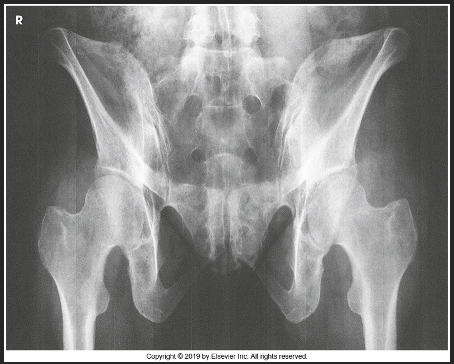
Where does the CR enter?
2" inferior to the top of the PS and MSP
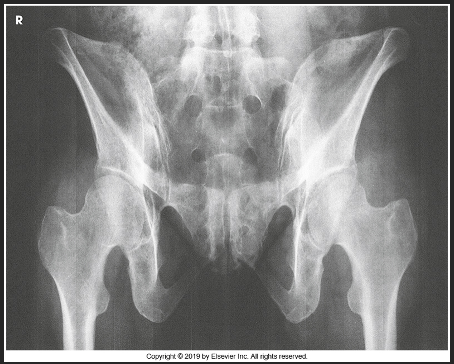
What is this image demonstrating?
Outlet
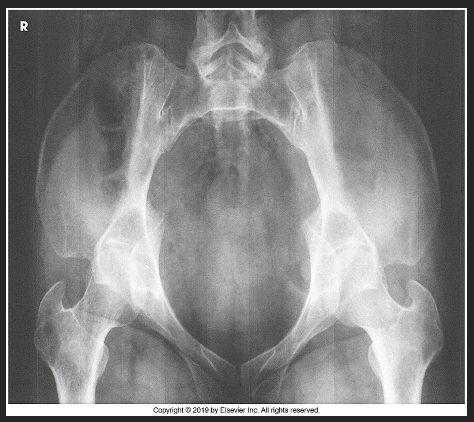
Name the projection
AP axial (bridgeman method)
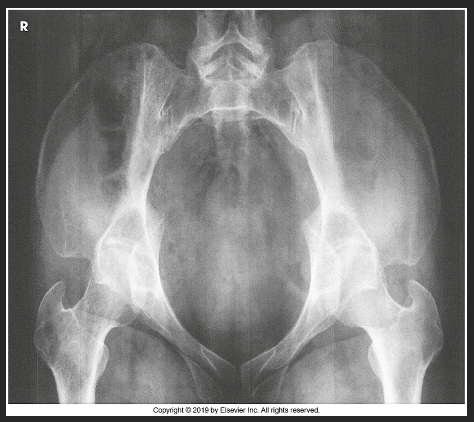
What is the tube angle and towards which direction?
40 caudad at ASIS (down and in)
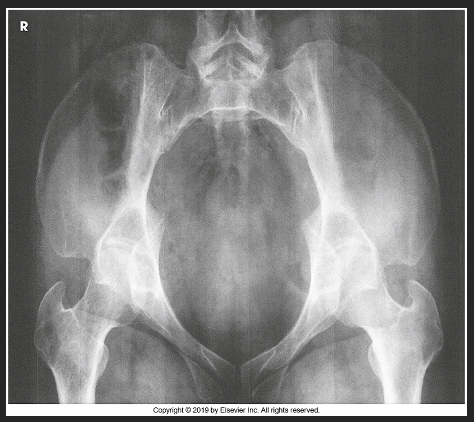
Where does the CR enter?
At ASIS and MSP
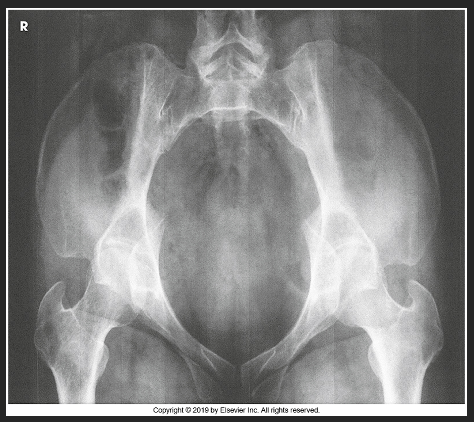
What is this image demonstrating?
Brim to brim // Inlet
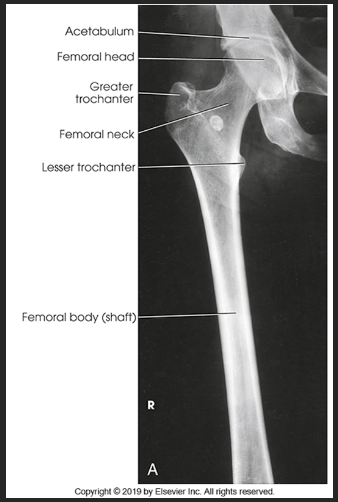
Name the projection
AP proximal femur
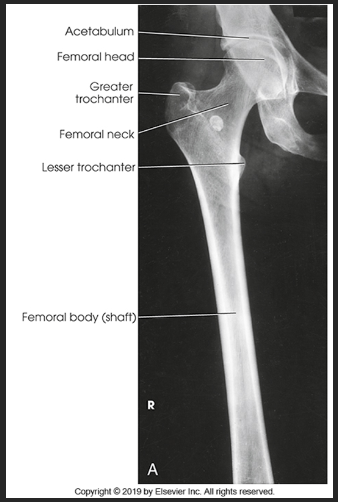
Where is the top of the IR placed?
ASIS (S1/S2)
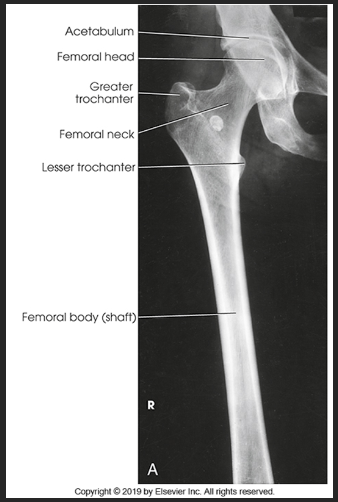
How many degrees is the structure rotated?
10-15 internally
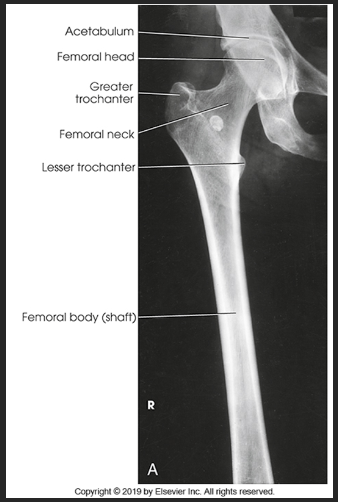
Which structures are in profile?
Greater trochanter
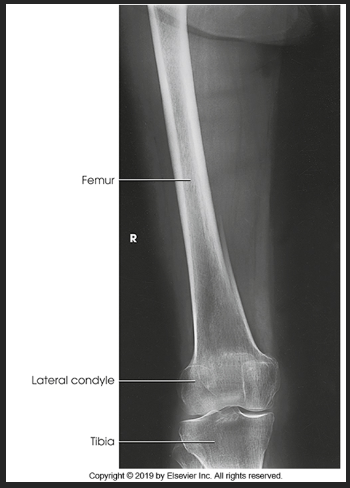
Name the projection
AP distal femur
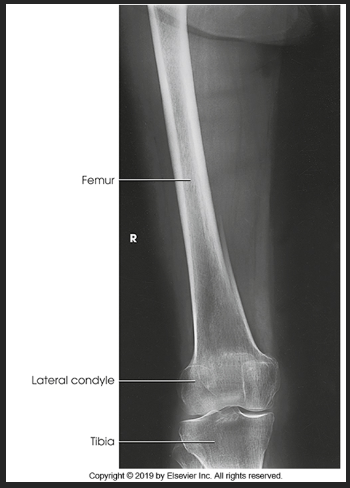
Where is the bottom of the IR placed?
2" below knee joint
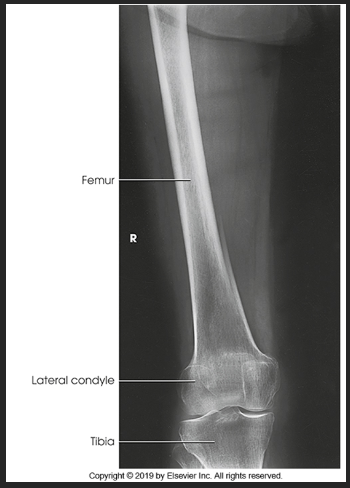
Which structures are placed parallel to the IR?
Epicondyles and patella
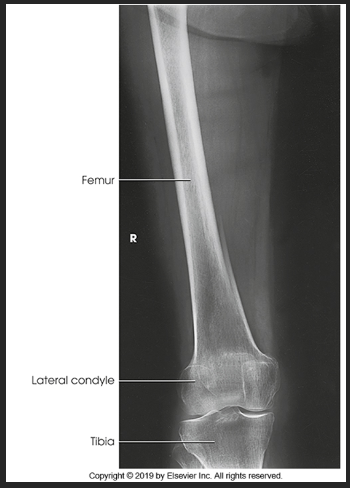
Where does the CR enter?
Mid femur