Primates, Human Evolution, and Climate Change: Key Concepts and Fossil Record
 Call Kai
 Learn
Learn Practice Test
 Spaced Repetition
 Match
Match Flashcards
 Knowt Play
1/25

There's no tags or description
Looks like no tags are added yet.
Name | Mastery | Learn | Test | Matching | Spaced | Call with Kai |
|---|
No analytics yet
Send a link to your students to track their progress
26 Terms
What body features of early primates suggest they were tree-dwellers?
Fingers, which indicate adaptation to the 'fine branch niche.'
What does the fossil of 'Ardi' suggest about its habitat?
It suggests that Ardipithecus could live in trees and on the ground 4.4 million years ago.
Which part of the human body has the most problems?
The lower back.
What are the three major parts of the brain found in nearly every vertebrate?
Forebrain, midbrain, and hindbrain.
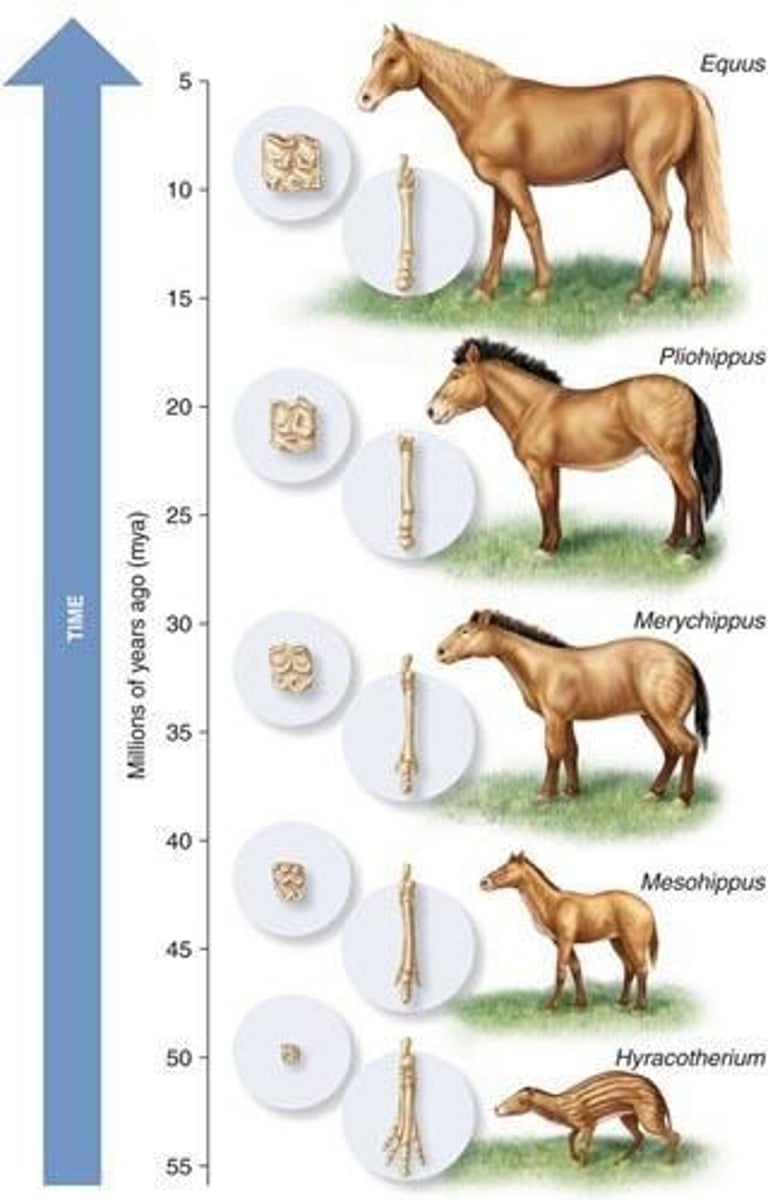
What evolutionary changes occurred in horses over time?
Larger, longer legs, and molars evolved from browsers to grazers.
What is the significance of the fossil record in sedimentary rocks?
It shows that life has changed over time and species existed for distinct periods.
What did Darwin conclude about fossils?
Fossils show that life has changed and species go extinct over time.
What is overproduction in the context of Darwin's theory?
More offspring are born than the environment can support, leading to competition.
What is natural selection?
The process by which the environment selects individuals best adapted to survive and reproduce.
What role do mutations play in evolution?
Mutations create new variations in species, which can lead to evolution.
What is artificial selection?
Humans breed animals and plants to enhance specific traits.
Who co-discovered the mechanism of natural selection?
Charles Darwin and Alfred Wallace.
What did Darwin publish in 1859?
On the Origin of Species, which outlined his ideas on natural selection.
What is the importance of genetic variation in a species?
Genetic variation leads to survival inequalities among individuals.
What did Darwin not know about genetics?
He did not understand the role of DNA and inheritance in evolution.
What is a germline mutation?
A mutation that can be passed on to descendants.
What is the connection between climate change and horse evolution?
Climate change influenced the evolution of new horse species in North America.
What did Darwin mean by 'variety happens'?
There is variation among individuals in a species, which can aid survival.
What evidence supports the theory of plate tectonics?
The movement of continents was suspected long before it was proven in the 1960s.
What is the significance of the Hallucigenia fossil?
It provides insight into the diversity of life during the Cambrian period.
How do species adapt to changing environments?
Through natural selection, where the best-adapted individuals survive and reproduce.
What is the role of paleontology in understanding evolution?
Paleontology provides fossil evidence that supports the theory of evolution.
What is the relationship between species and their environments?
Species must adapt to their environments to survive as conditions change.
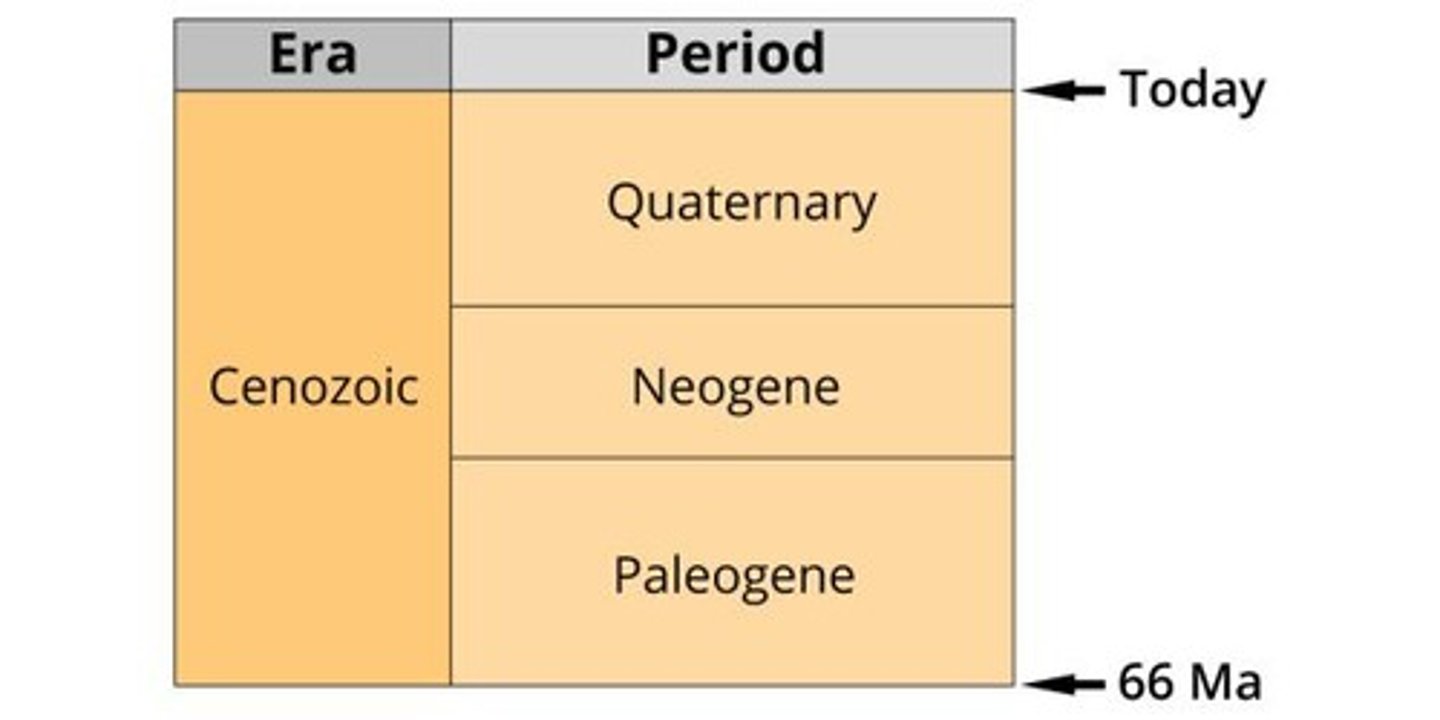
What is the significance of the Cenozoic Era in horse evolution?
It marks the period of significant evolutionary changes in horse species.
What did Alfred Wallace contribute to the theory of evolution?
He independently developed the concept of natural selection alongside Darwin.
How does natural selection explain the evolution of new species?
It suggests that as environments change, species must adapt and evolve into new forms.