Hearing & Audition
 Call Kai
 Learn
Learn Practice Test
 Spaced Repetition
 Match
Match Flashcards
 Knowt Play
1/26

There's no tags or description
Looks like no tags are added yet.
Name | Mastery | Learn | Test | Matching | Spaced | Call with Kai |
|---|
No analytics yet
Send a link to your students to track their progress
27 Terms
Fundamental Computations
Detection
Identification
Localization
Sound Waves
Air pressure variation over time
Air Pressure
Air molecule density
Frequency
Pitch
Cycles per second (Hz)
Higher Hz → higher pitch
Amplitude
Loudness
Size of the pressure swing
Larger → louder sound
Timbre
quality of the sound; how sounds are different even at the same frequency
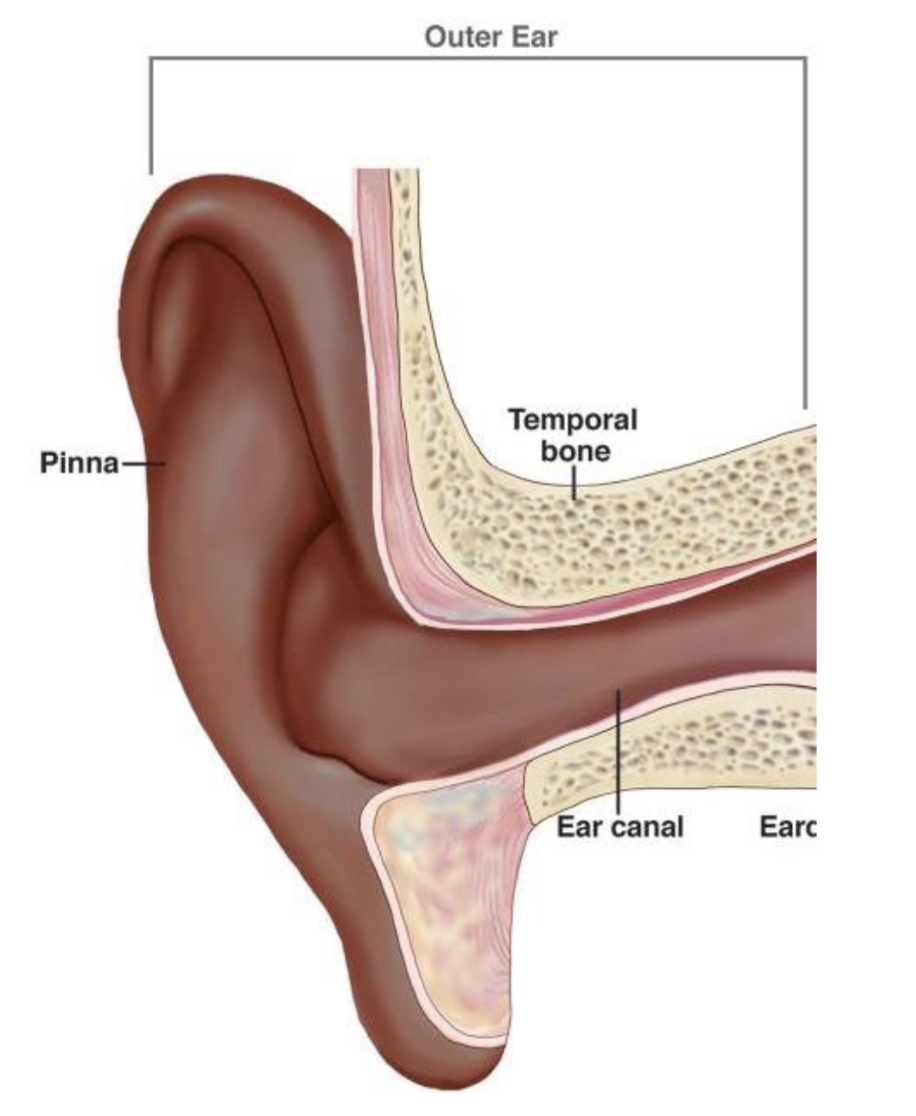
Pinna & Canal
The visible outer part of the ear; collects sound waves from the environment and directs them down the auditory canal.
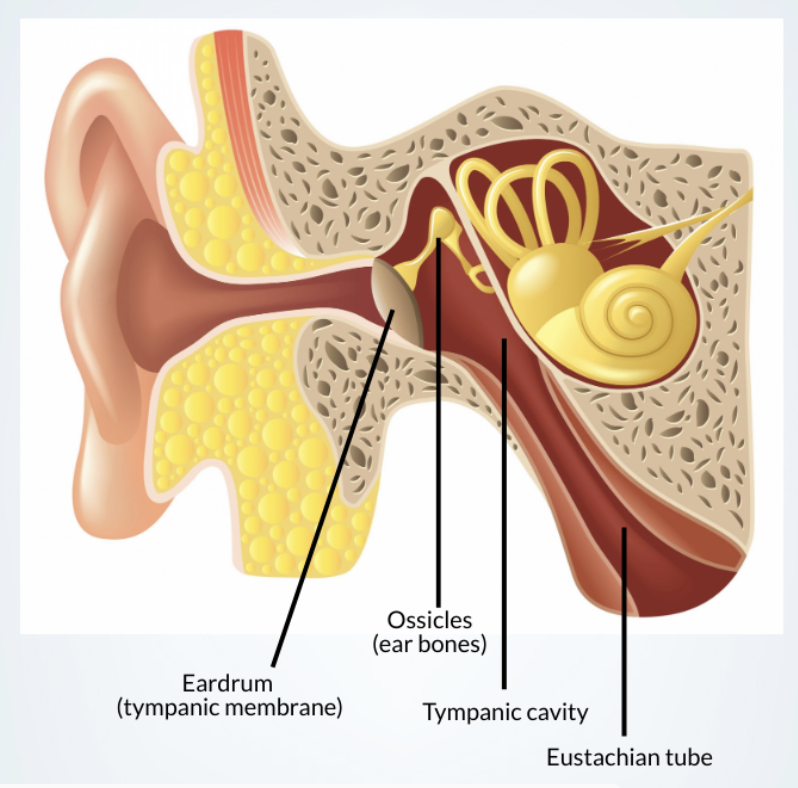
Eardrum (tympanic membrane)
Sound waves strike, causing it to vibrate;
membrane separating outer ear from middle ear
Ossicles
vibrations from the eardrum travel to malleus, incus, and stapes
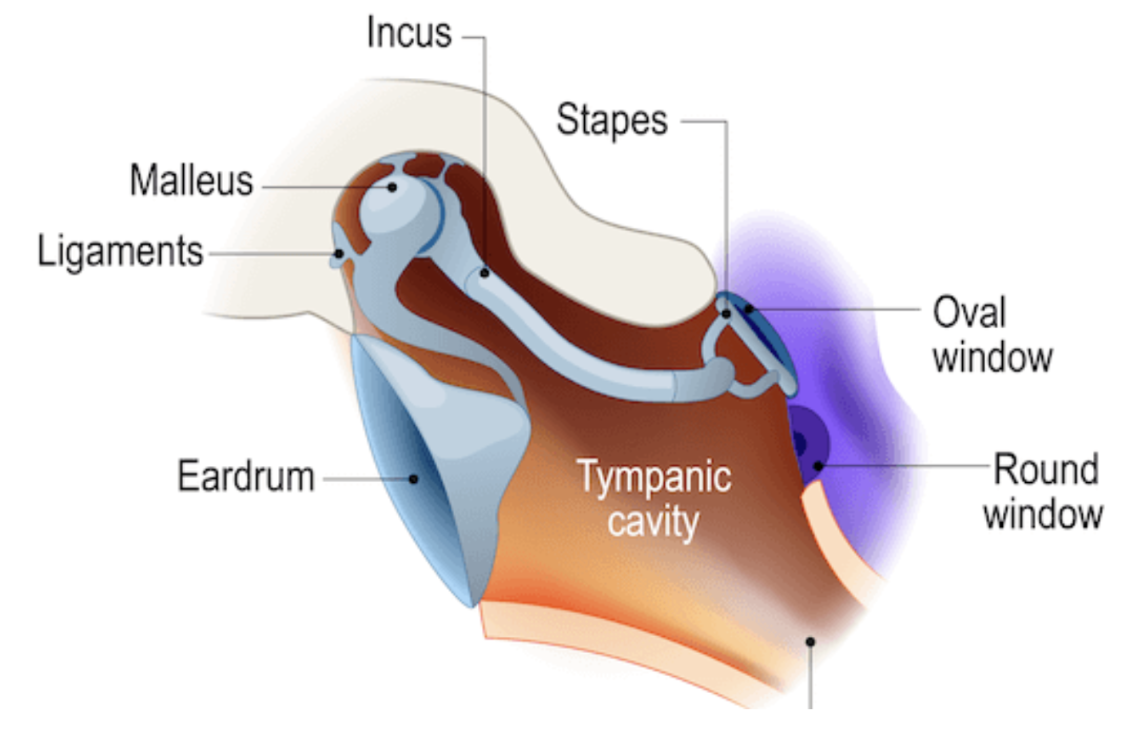
Amplification
amplify sound waves and send them to the inner ear, through a membrane called the oval window
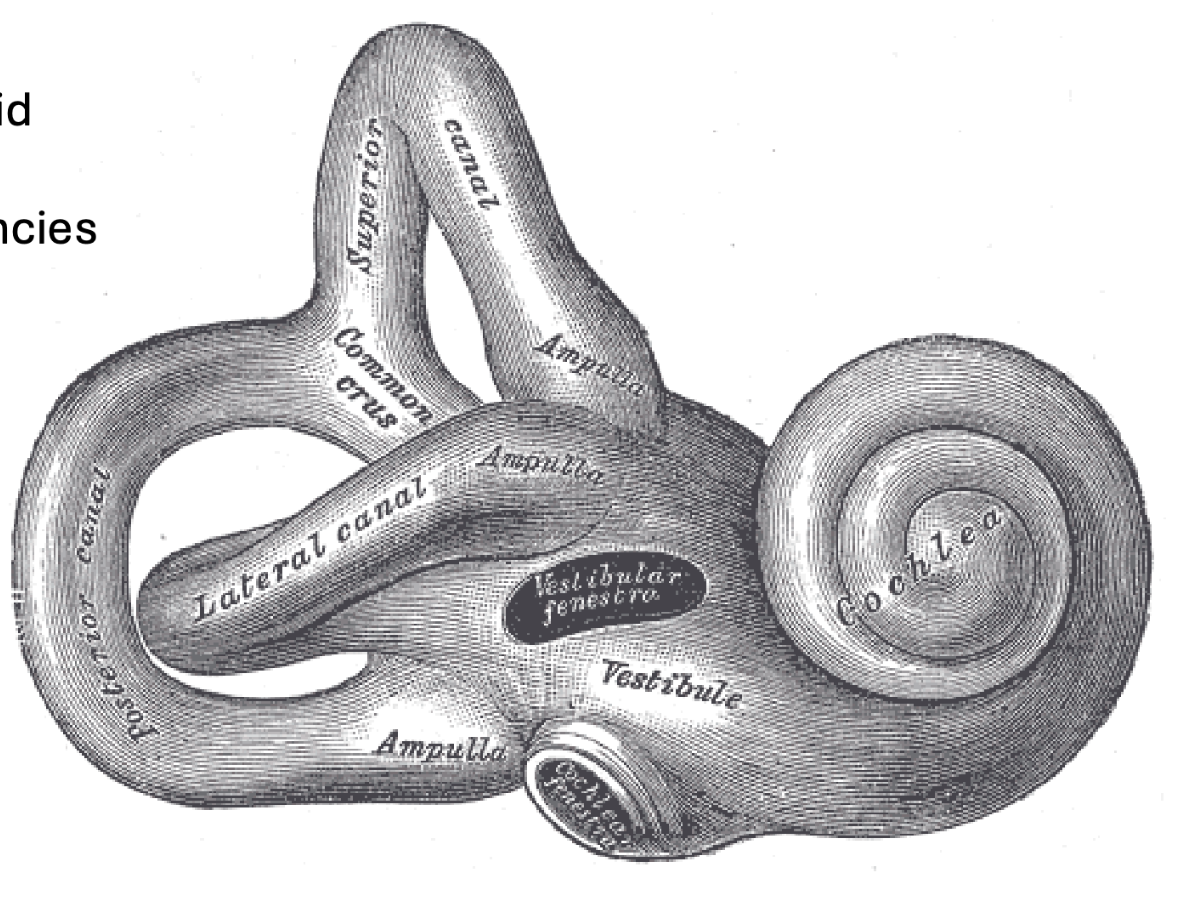
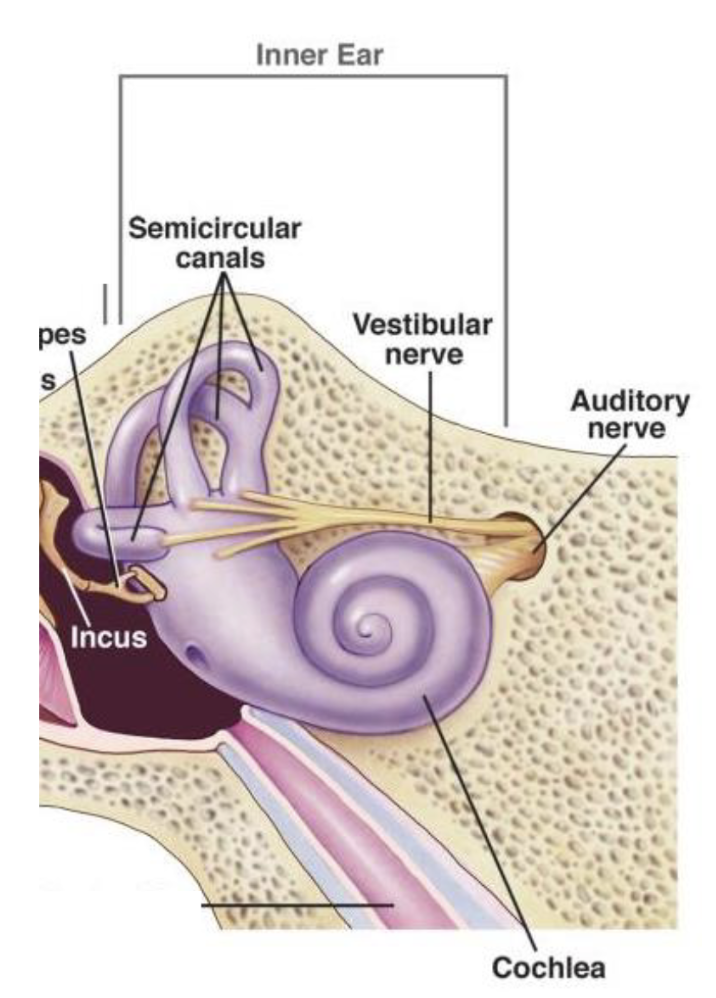
Cochlea
Snail-shaped, fluid-filled structure where sound is converted to action potentials
Separates distinct sound frequencies
Vibrations from middle ear cause fluid inside to move
Hair Cells
Within the cochlea, thousands of tiny cells detect fluid movement and bend
Bending of cells converts physical vibrations into electrical impulses
Inner Ear
Sound Transmission and Conversion
Basilar Membrane
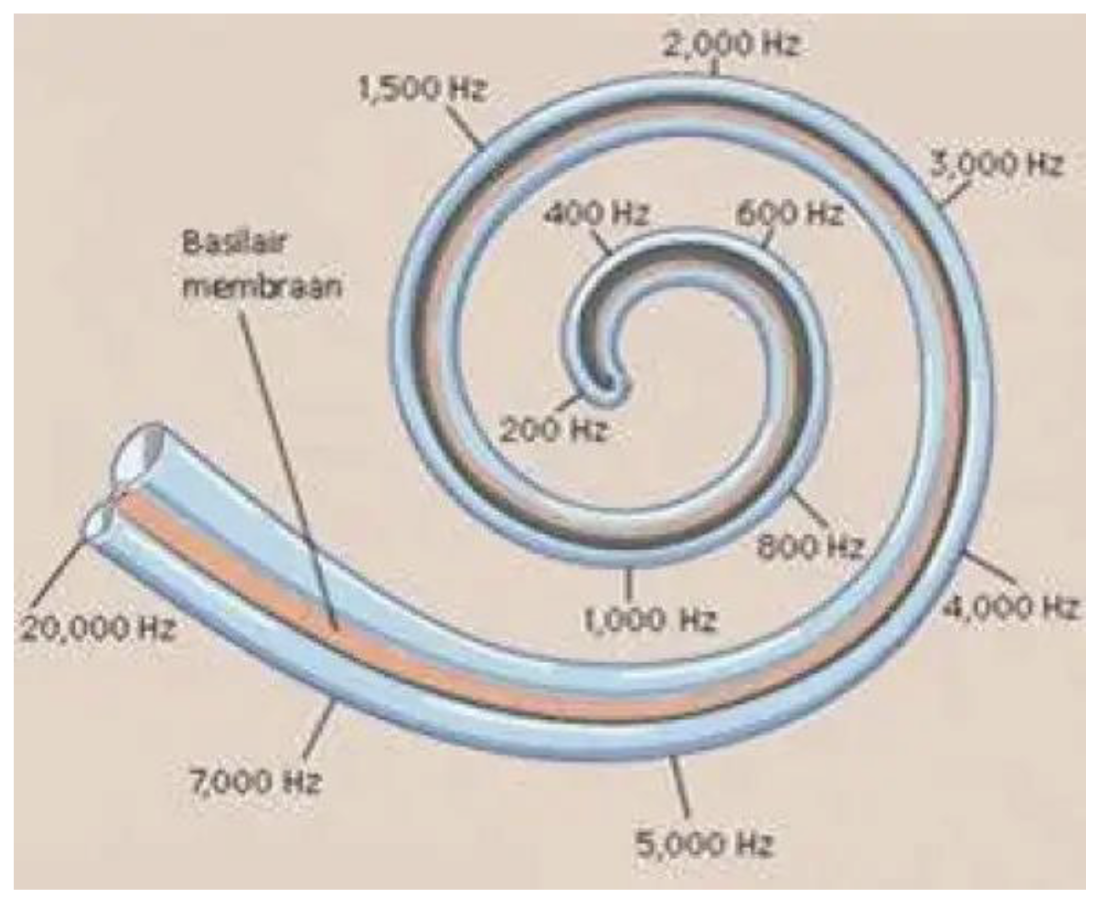
Witihin the cochlea; acts as a frequency analyzer
vibrates at specific locations depending on the sound’s frequency
stiff at the base (responds to high-frequency sounds)
wide and flexible at the apex (responds to low-frequency sounds)
Tonotopic Map
Spatial representation of frequencies along the length of the cochlea
Inner Hair Cells
primary sensory transducers, responsible for converting vibrations into neural signals
Release glutamate onto neurons (spiral ganglion neurons) which transmit information to the nervous system
Not neurons, but have electrical properties
Outer Hair Cells
act as amplifiers, enhancing low-level sound to improve hearing sensitivity
Generation of Action Potential
K+ ions enter hair cell → depolarization → calcium channels open → further depolarization → releases neurotransmitter
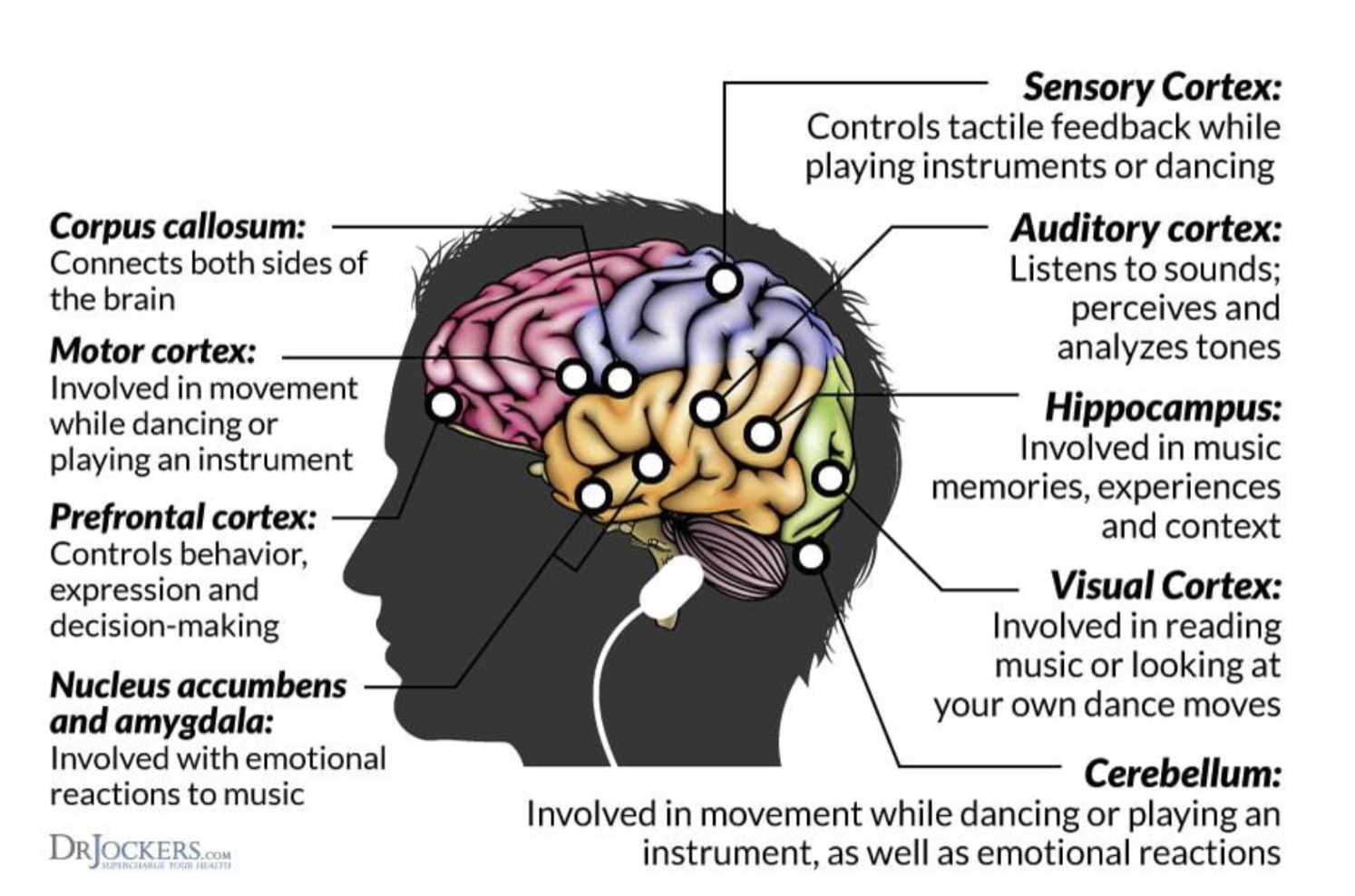
Music and the Brain
Binaural Hearing
using both ears to perceive sound
Information available to you with just one ear:
Frequency
Intensity (loudness)
Timing
Information available to you with both ears:
Location
Locating a Sound
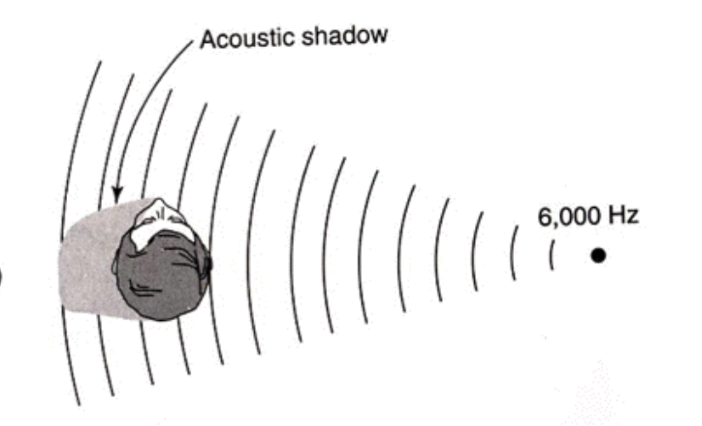
Sound must travel a slightly further distance to reach the ear farther away from the source
This distance is enough for brain to determine where a sound is coming from
Binaural Cues
Location cues based on comparison of signals received by left and right ears
Interaural Time Difference (ITD)
Difference between the times that the sound reaches each ear
no differences when same distance to each ear
Types of Hearing Loss
• Genetic impairment of the cochlea
• Infection-induced damage to cochlea
• Noise-induced hearing loss
Vestibular System
Personal inertial guidance system: maintain postural balance, stabilize vision, and provide awareness of spatial position
signals to control balance of body
Dysfunction often causes vertigo, lightheadedness, dizziness, nausea, imbalance,