Microm 445 Exam 1
 Call Kai
 Learn
Learn Practice Test
 Spaced Repetition
 Match
Match Flashcards
 Knowt Play
1/52

There's no tags or description
Looks like no tags are added yet.
Name | Mastery | Learn | Test | Matching | Spaced | Call with Kai |
|---|
No analytics yet
Send a link to your students to track their progress
53 Terms
Discovery of virus - tobacco mosaic disease
Virus propagate in host cells but not sap
Animal cell culture
breakthrough for virology
Physical characteristics of viruses
Genome either RNA or DNA
Nucleic acid enclosed in protein coat
Viruses are not living organisms but still evolve:
Obligate intracellular parasites
No independent energy metabolism
Require host cell protein synthesis to make progeny
Do not grow or divide - rather are assembled
Emerging infectious disease (EID)
Disease caused by pathogen that has not before been observed within a population or geographic location
Re-emerging infectious disease
caused by an established pathogen that was once controlled by begins appearing at a higher incidence
Components of Naked Virus
Capsid - surround nucleic acid
Nucleic Acid - RNA/DNA genome
Capsomeres
subunits that make up capsid
Protomers
individual protein subunits of a capsomer
Nucleocapsid
capsid and genome together
Components of Envelope Viruses
Capsid - surround nucleic acid
Nucleic Acid - RNA/DNA genome
Envelope - lipid bilayer surrounding capsid
Matrix - proteins that attach capsid to envelope
Surface proteins: proteins inserted in lipid envelope
Baltimore Classification
how viruses produce mRNA from their genome
mRNA is (+)RNA
ssDNA in same polarity - (+)
Complements are (-) strands
Ambisense means both (+) ORFs and (-) ORFs on same ss genome segment
X-ray Crystallography
used for small or large molecules
getting crystal can be difficult
diffraction pattern used to make map in which peptide sequence is fit
high resolution provide atomic detail
CryoEM Reconstruction
cryoplunge samples
collection electron micrographs
digitally select particle images
3D image processing
Analyze and model structure
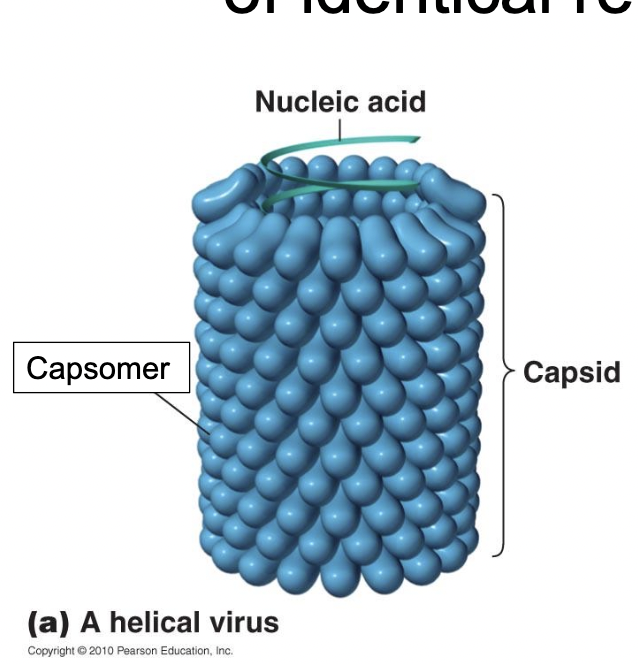
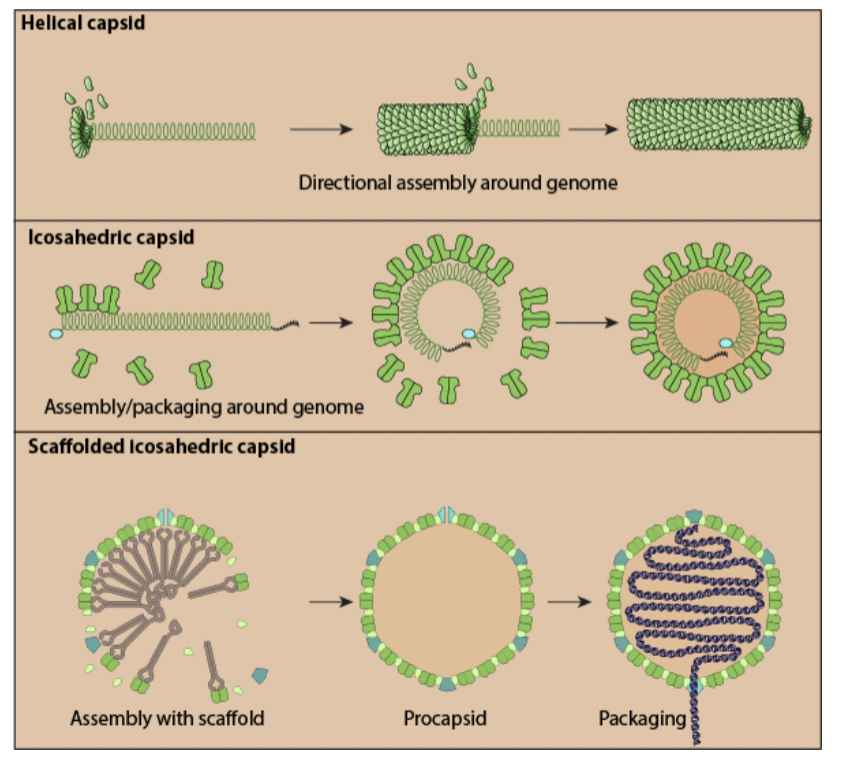
Helical capsids
Repeating identical units
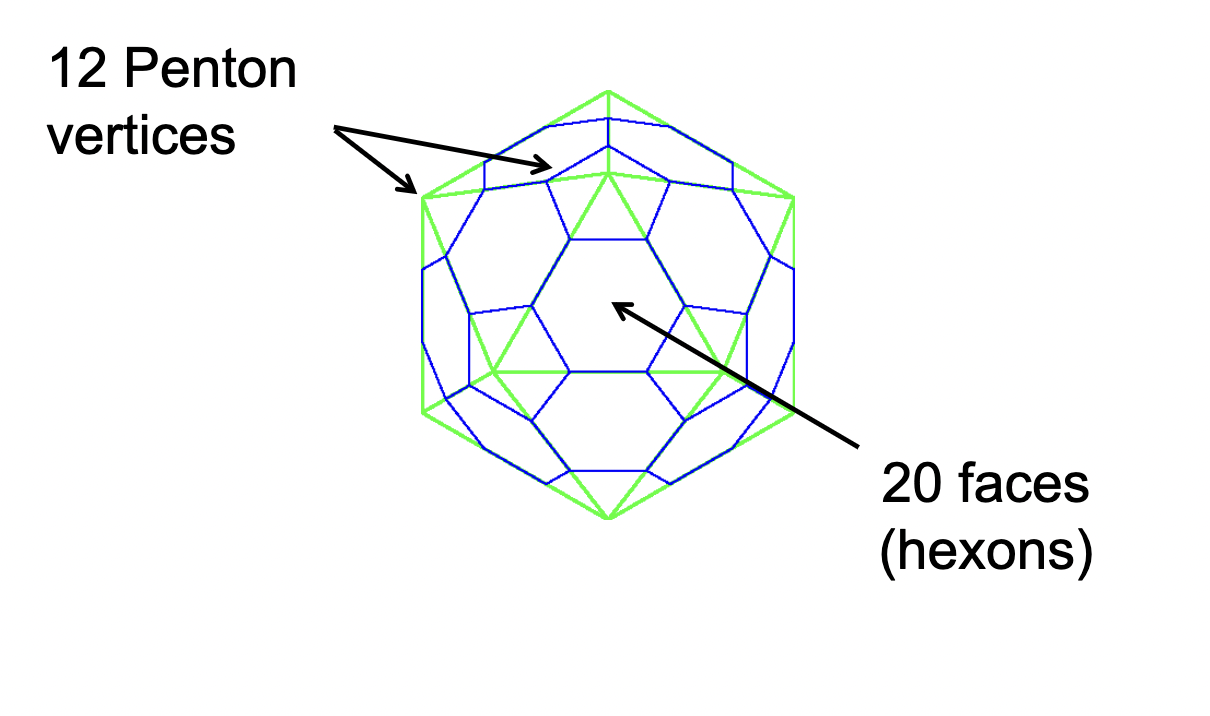
Icosahedral capsids
Most efficient way to get a symmetrical shell with maximum internal volume from non-symmetrical building blocks
20 hexons, 12 pentons
Poxviral structure

Viral culture
Primary cell culture: from organ tissue
Cell lines: cells from tumors
Organoids: more complicated mixture of cells
Embryonated chicken eggs
Not all viruses can be cultured!
Cytopathic effect (CPE)
changes in cell morphology due to viral infection
detected by light microscopy
focal area of CPE is a plaque
Multiplicity of infection (MOI)
Number of some viral measure per cell
Direct Contact - Horizontal
Saliva/mucus, blood, genital secretions, mucosal surfaces, skin
Direct contact - vertical
Pregnancy - virus must cross placenta to infect fetus
Delivery - virus in birth canal or blood
Breastfeeding - virus present in milk
Airborne/fomite transmission
airborne particles remain suspended in air
fomites: inanimate objects that can spread virus by touch
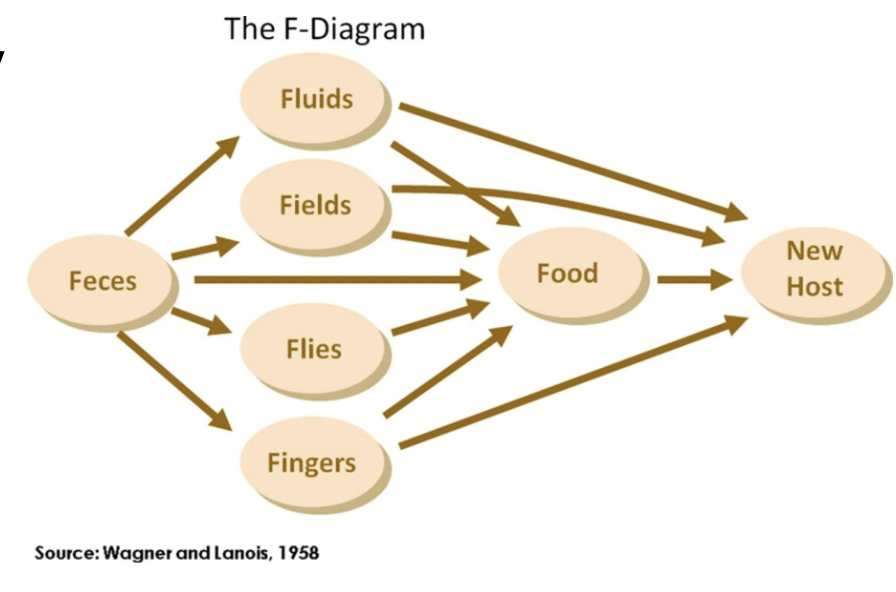
Fecal/oral transmission
Portals of exit and entry (rarely direct)
Water and soil may be vehicles
Vector Transmission
Vector: living organism that can transmit infectious disease between humans from animals or humans
Mosquitos/ticks
Zoonoses
any disease or infection that is naturally transmissible from vertebrate animals to humans
R0 (R naught)
basic reproduction number
number of people each infected person will infect in a susceptible population
product of transmissibility, duration, and average rate of contact
greater than 1: spread throughout population
less than 1: virus will die out
Viral properties - Enveloped viruses
Generally more fragile
Do not persist very long outside of host cell
inactivated by heat, drying, detergents, low pH
Viral properties - Non-enveloped viruses
Generally more stable
Portals of Entry
Skin - highly effective barrier (dead cells), require bypass of skin
Mucous membranes: most common route, single layer epithelium and damp environment
Tropism
capacity of a virus to infect specific cells, tissues, or species
Primary Infection
Virus infections initial susceptible cell
overcome host defenses and environment
localized spread by cell to cell spread of limited diffusion
some viruses remain localized to site of entry
Systemic Spread
amplification at the primary site of infection to body
Route 1: bloodstream and lymphatic system (either in cells or liquid blood/lymph)
Route 2: nervous system (brain via blood-brain barrier, CNS via peripheral nerves)
Viremia
virus in the blood
Steps of Viral Replication
Attachment
Penetration
Uncoating of nucleic acid
Viral protein expression
Replication of viral genome
Assembly
Release
Maturation
Attachment
Virus attachment protein (VAP) binds to receptor on surface of cell
Envelope viruses have glycoprotein spikes in membrance that act as VAP
Naked viruses use proteins on the capsid
Cellular receptors
Normal cellular molecules that the virus evolves to bind to
major determinant of tropism
Co-Receptors
two-step process of binding and penetration
Step 1: cell attachment through binding primary receptor
Step 2: Co-receptor binding triggers cell entry
Penetration
Two possible sites: plasma membrane or intracellular vesicle
Virus in vesicle is still outside and must escape from vesicle
Naked viruses may poke hole in host membrane and release genome into cytoplasm or lytic protein that disrupts host membrane (triggered by low pH in endosome!)
Fusion (penetration)
Necessary for enveloped viruses
can occur at cytoplasmic membrane or endocytic membrane
Requires fusion proteins to join cellular membranes (may be VAP)
Uncoating
when capsid starts to come apart after interaction with the cell
Releases the genome
Overcomes most proximal barrier between genome and replicative niche imposed by the capsid
both naked and enveloped viruses uncoat
(+)ssRNA viruses
genome functions as an mRNA
often encode a single protein that is cut into smaller proteins
cleavage by a protease is good target for antivirals
(-)ssRNA viruses
Genome cannot function as an mRNA
Must encapsidate a viral RNA-dependent RNA polymerase to convert (-) RNA to mRNA
Retroviruses
Have (+)ssRNA genome that is converted to DNA before transcription and translation
Enzyme reverse transcriptase
Protein Expression
Viruses overcome “one gene one protein”
temporal patterns to gene expression - early vs late
Assembly
May be in nucleus or cytoplasm or other compartments
Maturation
stage of replication cycle where virus becomes infectious
often involves structural changes in viral particle (proteases/enzymes)
maturation can occur inside cell or after release
Release
Lytic viruses (non-enveloped): infected cell breaks open and releases the virus
Enveloped viruses: acquire their lipid membrane as the virus buds out of the cell (usually cytoplasmic membrane, can be nuclear or golgi membrane)
Viral Pathogenesis
the process by which viruses produce disease in the host
advantages and disadvantages, may cause no disease
mechanisms: directly killing cells, altering cellular functions, stimulating an immune response
Stages of Infection
Incubation period - interval between infection and onset of illness
Prodromal phase - start of nonspecific symptoms
Illness - symptoms of particular disease, may have unique pathognomonic symptoms
Decline - symptoms improve due to immune function
Convalescence - symptoms resolve
Asymptomatic
an infection that does not cause any symptoms of disease
dictated by immune response
still able to transmit virus
Sequelae
a chronic complication of an acute infection
symptoms that linger after the viral infection is cleared
Virulence
the relative capacity of virus to cause disease
only applicable to closely related viruses
mutations can make a virus more or less virulent
host factors can affect virulence