IS 411 FINAL
 Call Kai
 Learn
Learn Practice Test
 Spaced Repetition
 Match
Match Flashcards
 Knowt Play
1/42

There's no tags or description
Looks like no tags are added yet.
Name | Mastery | Learn | Test | Matching | Spaced | Call with Kai |
|---|
No analytics yet
Send a link to your students to track their progress
43 Terms
Human Resource Planning
Involves identifying and documentation project roles, responsibilities, and reporting relationships
Outputs include
Project Org Charts
Staffing Management Plan
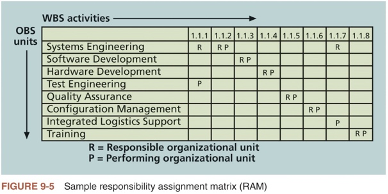
Responsibility assignment matrixes
Resource histogras
Acquiring the Project Team
Getting the needed personnel assigned to and working on the project
Developing the Project Team
building individual and group skills to enhance project performance
Managing the Project Team
Tracking team member performance, motivating team members, providing timely feedback, resolving issues and conflicts, and coordinating changes to help enhance project performance
Intrinsic motivation
Causes people to participate in an activity for their own enjoyment
Extrinsic Motivation
Causes people to do something for a reward or to avoid a penalty
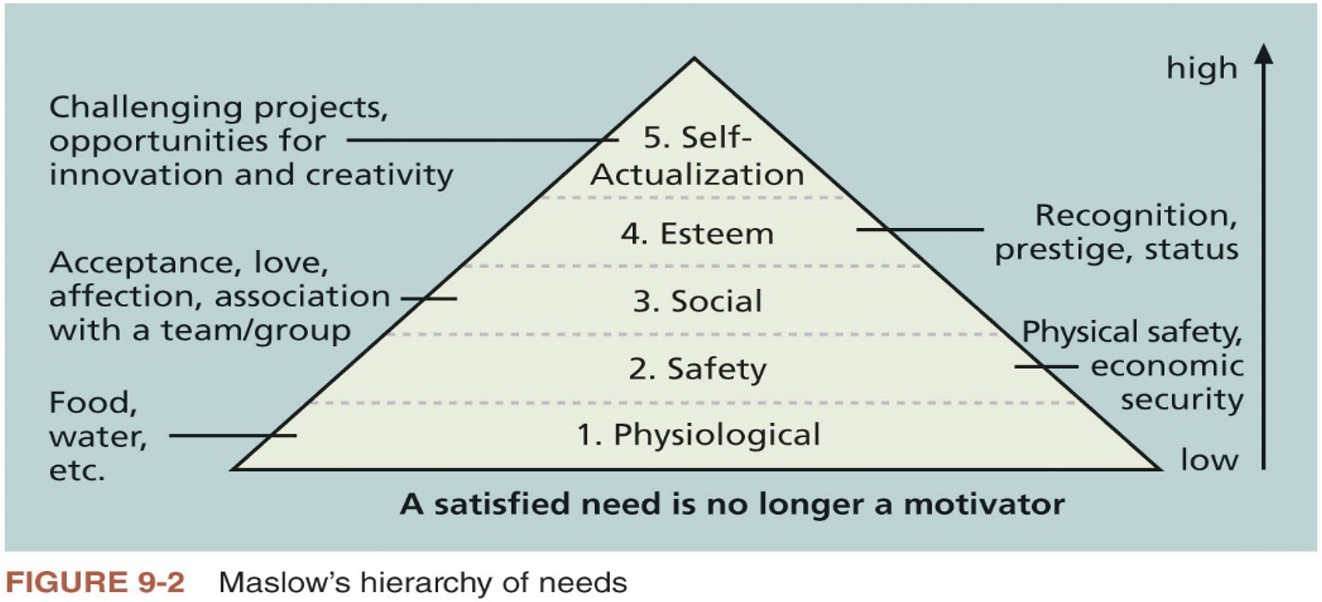
Maslow Hierarchy of Needs
States that peoples behaviors are guided or motivated by a sequence of needs
Herzberg’s Motivational and Hygiene Factors
Cause job satisfaction = motivational factors
Cause job satisfaction = hygiene factors
Motivational Factors
achievement, recognition, the work itself, responsibility, advancement, and growth, which produce job satisfaction
Hygiene Factors
Causes dissatisfaction if not present, but don’t motivate workers to do more
McClelland’s Acquired-Needs Theory
Specific needs are acquired or learned over time and shaped by life experiences
Normally one or two more dominant in individuals
Achievement
Achievers like challenging projects with achieveable goals and lots of feedback
Affiliation
desire harmonious relationships and need to feel accepted by others, so managers should try to create a cooperative work environment for them
Power
People with a need for power desire either
personal power (not good) or
institutional power (good for the organization); provide institutional power seekers with management opportunities
McGregors Theory X and Y
Theory X:
Assumes workers dislike and avoid work, avoid responsibility, little ambition,want to be directed so managers must use coercion, threats, and various control schemes to get workers to meet objectives
Theory Y:
Assumes individuals don’t inherently dislike work, they consider work as natural as play or rest and enjoy the satisfaction of esteem and self actualization needs
Theory Z:
Emphasizing trust, quality, collective decision making, and cultural values
Thamhain and Wilemon’s Ways to Have Influence on Projects
Authority
The legit hierarchical right to issue orders
Assignment
The PM’s perceived ability to influence a workers later work assignments
Budget
The PM’s perceived ability to authorize others use of discretionary funds
Promotion
The ability to improve a workers position
Money
The ability to increase a workers pay and benefits
Penalty
The PM ability to cause punishment
Work Challenge
The ability to assign work that capitalizes on a workers enjoyment of doing a particular task
Expertise
The PM’s perceived special knowledge that others deem important
Friendship
The ability to establish friendly personal relationships between the PM and others
Resource Loading
Refers to the amount of individual resources an existing schedule require during specific time periods
Helps PM’s better understand the demands a project will make on the orgs resources and individual peoples schedules
Resource Leveling
A technique for resolving resource conflicts by delaying tasks
Main purpose is to create a smoother distribution of resource usage and reduce overallocation
Tuckman Model of Team Development
Forming
Members join and begin the process of defining the groups purpose, structure, and leadership
Storming
Intragroup conflict occurs as individuals resist control by the group and disagree over leadership
Norming
Close relationships develop as the group becomes cohesive and establishes its norms for acceptable behavior
Performing
A fully functional group structure allows the group to focus on performing the task at hand
Adjourning
The group prepares to disband and is no longer concerned with high elvels of performance
Conflict Handling Modes
Confrontation: Directly face a conflict using problem solving approach
Compromise: Use a give-and-take approach
Smoothing: De-emphasize areas of difference and emphasize areas of agreement
Forcing: the win lose approach
Withdrawal: Retreat or withdraw from an actual or potential disagreement
Collaborating: decision makers incorporate different viewpoints and insights to develop consensus and commitment
Planning Communications Management
Determining the info and communications needs of the stakeholders
Every project should include some type of communications management plan, a document that guides project comms
The communications management plan varies with the needs of the project, but some type of written plan should always be prepared
Communications Management Plan`
Stakeholder communications requirements
Information to be communicated, including format, content, and level of detail
Who will receive the info and who will produce it
Suggested methods of technologies for conveying info
Frequency of communications
Escalation procedures for resolving issues
Revision procedures for updating the communications management plan
A glossary of common terms
Managing Stakeholders
the process of identifying and meeting the unique information and communication needs of every person or group involved in the project.
A simple way to think about it is ensuring the right information reaches the right people at the right time and in the best format to keep them informed and engaged. This involves understanding that people have different preferences—such as some preferring informal face-to-face talks while others prefer formal reports
Information Distribution
Don’t bury crucial information
Don’t be afraid to report bad info
Oral communication vis meetings and informal talks helps bring important info out into the open
Technology can facilitate the process of creating and distributing info
Media Selection
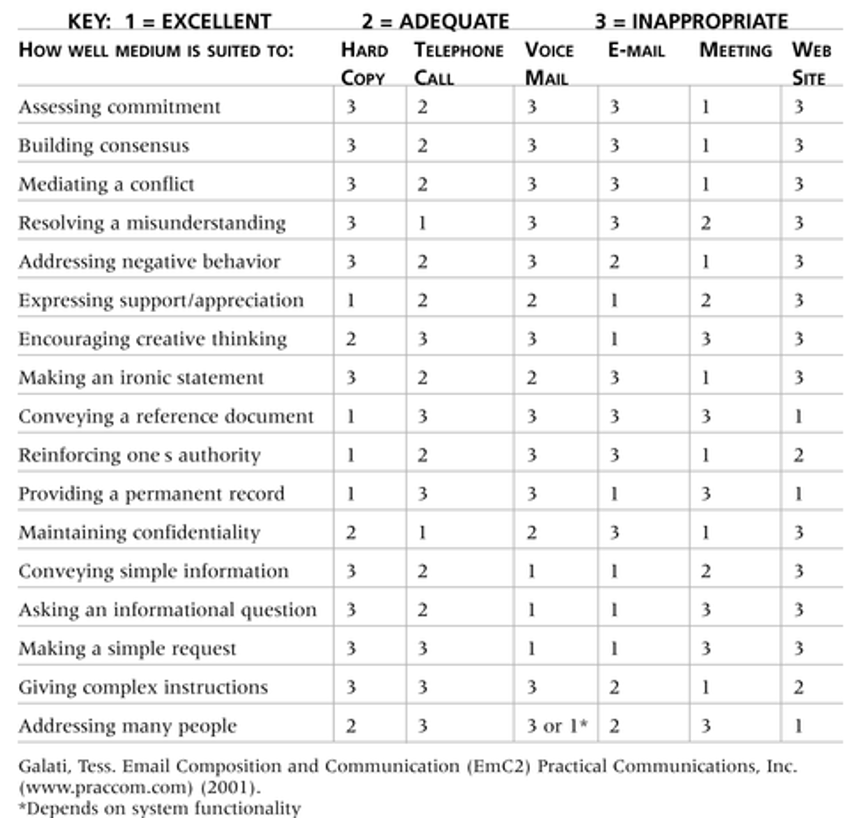
Can use a media choice table to find the best suitable choice for each scenario
It is important to select the appropriate communication method and media
Status Reports
Describe where the project stands at a specific point in time
Status Reports
Describe what the project team has accomplished during a certain period of time
Running Effective Meetings
Determine if a meeting can be avoided
Define the purpose and intended outcome of the meeting
Determine who should attend the meeting
Provide an agenda to participants before the meeting
Prepare handouts and visual aids, and make logistical arrangements ahead of time
Run the meeting professionally
Build relationships
Project Procurement Management
Acquiring the goods and services for a project from outside the performing org
Project Procurement Management Processes
Planning Procurement Management
Determining what to produce and when and how to do it
Conducting Procurements
Obtaining seller responses, selecting sellers, and awarding contracts
Controlling Procurements
Managing relationships with sellers, monitoring contract performance, and making changes as needed
Outsourcing
Why?
To reduce both fixed and recurrent costs
To allow the client org to focus on its core business
To access skills and tech
To provide flexibility
To increase accountability
A shortage of qualifies personnel, not cost savings, is the top reason for IT outsourcing
Types of Contracts
Fixed Price/Lump Sum
Involves a fixed total price for a well defined product or service
Cost Reimbursable
Involve a payment to the seller for direct and indirect costs
Time and Material
Hybrid of both fixed and reimbursable contracts often used by consultants
Unit Price
Require the buyer to pay the seller a predetermined amount per unit of service
Fixed Price Contract
Involves a fixed total price for a well defined product or service
Buyer incurs little risk, price is predetermined LOWEST RISK
Purchase & Install 100 laser printers
Vendor pads estimate a little
Vendor wants to avoid - PTA
The Point of Total Assumption (PTA) is the cost at which the contractor assumes total responsibility for each additional dollar of contract cost
Cost Reimbursable Contracts
Involve a payment to the seller for direct and indirect costs
Direct & indirect costs traced to a project
Direct → salaries
Indirect → office space, electricity
Usually a % of Direct costs
Cost plus incentive fee (CPIF):
The buyer pays the supplier for allowable performance costs plus a predetermined fee and an incentive bonus
Example: Expected cost of $100,000
Cost paid to supplier is $10,000, share formula 85/15
Final Price is $80,000, Supplier gets 15% of 20,000 savings
10,000 + 80,000 + 3,000 = $93,000
Cost plus fixed fee (CPFF):
The buyer pays the supplier for allowable performance costs plus a fixed fee payment usually based on a percentage of estimated costs
Expected cost = $100,000
Fixed fee = $10,000
Actual cost = $120,000
Contractor gets $120,000 + $10,000
Cost plus award fee (CPAF)
Buyer pays supplier for allowable performance costs plus an award fee based on results
Think of a tip
Cost plus percentage of costs (CPPC): HIGHEST RISK
The buyer pays the supplier for allowable performance costs plus a predetermined percentage based on total costs
Not a good deal for the buyer
No incentive to lower costs
Get paid more if costs are high
Unit Pricing Contract
Require the buyer to pay the seller a predetermined amount per unit of service
Time and Material Contract
Hybrid of both fixed and reimbursable contracts often used by consultants
Fee per hour + fixed price for materials
$80 per hour + $10,000 for other expenses
Request For Proposals (RFP)
Used to solicit proposals(a document prepared by a seller when there are different approaches for meeting buyer requirements) from prospective sellers
Statement of Work (SOW)
A description of the work required or the procurement
a type of scope statement
A good one gives bidders a better understanding of the buyers expectations
Request For Quote (RFQ)
Used to solicit quotes or bids (is a document prepared by sellers providing pricing for standard items that have been clearly defined by the buyer) from prospective suppliers
Lease vs. Buy
Lease = $800/day
Buy = $12,000 + $400/day
Break-even point?
Best option for 40 days?
12,000 + 400d = 800d
d = 30
Break-even = 30 days
Over 30 days → Buy
40 days → Buy
Make or Buy Analysis
determine whether an organization should make or perform a particular product or service inside the organization or buy from someone else
It is a well-established standard that project managers spend as much as __ percent of their time communicating
90
As the number of people on a project increases the number of ________ grows
communications channels
making it less likely that a message will be interpreted correctly due to increased complexity
Which influence methods are linked to project manager success and failure?
Successful project managers use:
Expertise
Work Challenge
Less successful project managers rely too much on:
Authority
Money
Penalty
RACI Chart
R = responsibility
A = accountability, only one A per task
C = consultation
I = informed
for each task, only one person should be marked as Accountable

Responsibility Assignment Matrices
a matrix that maps the work of the project as described in the WBS to the people responsible for performing the work as described in the WBS