Biology of Marine Invertebrates Lecture Notes
 Call Kai
 Learn
Learn Practice Test
 Spaced Repetition
 Match
Match Flashcards
 Knowt Play
1/135

Earn XP
Description and Tags
Set of flashcards derived from lecture notes covering key concepts, terms, and definitions related to marine invertebrates.
Name | Mastery | Learn | Test | Matching | Spaced | Call with Kai |
|---|
No analytics yet
Send a link to your students to track their progress
136 Terms
Prostomium
The very first segment of a marine worm, which includes the head and multiple sensory organs along with eyes and tentacles.
Describe the first two pairs of head appendages and the first pair of appendages in Subphylum Chelicerata
-lack antennae
-use their first pair of head appendages as fangs or pincers for feeding
-usually have six pairs of legs
Describe the first two pairs of head appendages and first pair of appendages in Subphylum Crustacea
Crustaceans possess two pairs of antennae for sensing and locomotion
have five or more pairs of legs
What is ecdysis? Describe the general pattern of ecdysis, and how an animal such as a crab can be called a "soft-shell crab" during part of this process. How long does it take for a crab to molt and then harden it's outer exoskeleton, and how is it hardened?
-molting an exoskeleton which allows invertebrates like crabs to grow, as their outer shell does not expand. -The crab sheds its old carapace, emerging with a soft body and inflates it with water taking a new larger form.
-During the initial, vulnerable stage of this process the crab is known as a soft shell crab because its carapace has not yet calcified.
-The shell generally takes a few days to a week to harden but to fully harden especially in larger species like Dungeness it can take up to two months
-hardened by using a chemical process involving the modification of chitin and the precipitation of calcium carbonate from the surrounding water into the new chitin matrix, making it rigid.
Describe the costs and benefits of feeding in velvet worms and how these factors determine what the optimal size/species of prey is.
Costs: search for prey, shoot glue to subdue prey, inject saliva into prey, recharge time, ingestion time,
Benefits: efficient immobilization, reduced handling risk, nutrient cycling, social satiation,
-larger prey take more glue to subdue and require more time to eat -small soft bodied invertebrates allow rapid digestion
What is the best way to determine if Annelidia or arthropoda phyla are most closely related to velvet worms? What does data for that method now tell us (about which IS currently thought to be most closely related)?
Currently DNA sequenced data suggests that they are more closely related to arthropods.
Describe "cryptobiosis" and what it does for "water bears" (P. Tardigrada). What is a "tun" and what factors can these animals tolerate when in this stage?Use the terms cryobiosis, anhydrobiosis, Osmobiosis, anoxybiosis in your answer.
-a reversible suspended animation or “near-death” like state that allows them to survive extreme environmental stress by reducing metabolism to near zero
-In this state they can survive long periods of dehydration, temperatures from +140 to -272 Centigrade,, oxygen deficiency, extreme pressures, and vacuum.
-Cryobiosis (tun) happens when they react to freezing temperatures, anhydrobiosis (tun) is the reaction to loss of water, osmobiosis (tun) is the reaction to increased salinity, anoxybiosis (asphyxia) is the reaction to reduction in oxygen, and Encystment (cyst) is the reaction to slow change in environment.
Give 4 traits that velvet worms share in common with Annelids.
No jointed appendages
circular or longitudinal muscles
one pair of nephridia per segment
one pair of feeding appendages
Give 4 traits that velvet worms share in common with arthropods.
hemocoel
heart with ostium (holes)
no septae
defensive secretions
What is "metamerism" and what are the benefits of this for both Annelid worms AND arthropods?
-body plan characterized by the division of an animal's body into a linear series of repeated similar segments separated by septae.
-allows better ability to burrow using hydrostatic skeleton and compartmentalization of each segment
What are tagma or tagmata and why are they important for particular arthropods?
-is the fusion and modification of segments to produce specialized body regions
-are crucial because they represent a division of labor in the body that allows arthropods to become highly specialized and adaptable, which is a major factor in their evolutionary success.
What are homeobox genes, and what do they control in arthropods?
-are master regulatory genes and directs embryonic development and cell differentiation across eukaryotes
-control segment identification along the head to tail axis, determining which structures develop on specific body segments.
How do crabs "switch skeletons" and why do they do this? What type of skeleton do they use after molting? How effective is this type of skeleton for their movement? Please reflect your understanding from reading the short 2-pg article from the journal "Science" on this topic.
Crabs molt because their hard shell cannot grow making it necessary to shed to increase in size.
During this process they switch to a hydrostatic skeleton, inflating ther soft newly shed bodies with water to create pressure for support.
This allows them to move effectively and keep limbs functional while their new shell hardens.
Briefly describe the phases of ecdysis, and which phase includes actual "shedding" of the older exoskeleton, as well as how the new exoskeleton is hardened in a crab or lobster.
Ecdysis process
Intermolt
Pre-molt/pre-ecdysis
-pro-cuticule separates
-new cuticle begins to form
Ecdysis
-old cuticle is discarded
-climbs out of “molt” of cuticle
-new cuticle begins hardening
Post-ecdysis
-new cuticle finishes hardening
-in a crab or lobster, calcium carbonate is added into the new cuticle for hardening
How do the larval types of the invasive zebra mussel (Dreissena polymorpha) differ from the larval types of the native freshwater clams in the Great Lakes, and how does this difference help the zebra mussel out-compete native species?
Native species have glochidium larvae, which look like little bivalves with teeth on them essentially. They are mushed into the water out of the siphon of the clam and use their teeth to essentially “hitch a ride” on fish. They are ectoparasitic with fish, and have a shorter dispersal distance.
Zebra mussels have platonic, veliger larvae, they have cilia on their foot/vellum, and the cilia beat, allowing the larvae to “swim” with plankton and feed in the plankton, and can travel with the water, they are a “long-distance larva.”
The invasive zebra mussels can go wherever the water flows to. They breed a lot and travel a lot, so they can distribute much more and further than the native species, essentially taking over.
respiratory structures found in Class Arachnida
Arachnids have a trachea or a book lung, some have both.
respiratory structures found in Class Insecta.
Insects primarily have tubes that are a trachea, they can close to prevent drying out.
Describe the 2 debated explanations for the unchanged morphology of horseshoe crabs.
Some sort of genetic architectural constraint preventing evolution.
They aren’t constrained, they are continuing evolving, but evolution is essentially balanced, balancing selection keeps the organisms morphology essentially the same.
After Crustaceans shed their molt, how are they still capable of forceful movement?
by switching from a rigid exoskeleton to a hydrostatic skeleton,
where they inflate their soft bodies with water to create pressure.
Muscles pull against this stiff, fluid filled pressurized, soft skin rather than a hard shell, allowing them to remain mobile until their new shell hardens
What are the two ways in which stomatopods attack prey?
take their second thoracic leg and either spear it into prey or smash it into prey.
Molting is essential for arthropod growth. What are the advantages and risks associated with this process, and how might it influence their behavior and survival?
One big advantage is protection
Risks include: vulnerability post molting, when the animal has a “soft” shell
they have to have to increase hyperstatic pressure in their body to essentially hold their soft shell up, and their claws aren’t as strong in this time, affecting feeding.
Which body segment are the claws on a crab?
The claws are located on the first pair of thoracic legs known as chelipeds
Longitudinal and circular muscles role in locomotion in annelids.
-being able to extend (pushing the head forward), anchor (grip to the soil), contract and pull (anchored segments short and thick to pull the rest of the body), and repetition (alternating waves of contraction proceed from the anterior to the posterior end).
Describe in detail how a metanephridia works and the specific molecules taken in, filtered out, and ultimately excreted out of the body.
-excretory gland found in many invertebrates
- acts as a kidney like structure to filter body fluids, reabsorbs useful molecules, and excrete waste
-The involves three main stages: filtration, reabsorption, and excretion.
-process begins with the cilia on the nephrostome that beats constantly to draw coelomic fluid from the body cavity of the previous segment into the metanephridium tubule
-In reabsorption the tubule is surrounded by a network of capillaries, as the filtrate moves along the folded, ciliated tube, cell within the tubule actively reabsorb essential nutrients back into the blood/ surrounding tissues
-During excretion the remaining fluid is now concentrated with metabolic water, passes into a bladder and is finally expelled from the body through an external pore called the nephridopore
longitudinal muscles in annelids
-extend along the length of the worm from the front to the back and when they contract the segments become shorter and thicker
circular muscles in annelids
-are wrapped around the circumference of each segment and when they contract the segments become thinner and longer
Which classes of the taxa are suspension feeding & Provide examples
-capture food particles like phytoplankton, zooplankton, or organic detritus that are suspended within the water column
-are typically found in high energy environments where water flow ensures a constant supply of food particles
-bivals, and anthazoans
Which classes of the taxa are surface-deposit feeding & Provide examples
-consume food found directly on top of the sedimentary surface, generally ingestion is a mix of sediment and organic detritus
-are more prevalent in lower energy, softer, and muddier substrates where fine nutrient-rich detritus accumulates
-polychaeta and gastropods
Deutrostome development
-the blastopore becomes the anus first and the mouth forms secondarily
-radial cleavage
-have the coelom form by outpocketing (enterocoeleous)
-have regulative embryos.
Protosome development
-the blastopore becomes the mouth and the anus forms secondarily
-spiral cleavage
-have the coelom formed by splitting (schizocoelous)
-In the last part of cell potency protostomes have mosaic embryos
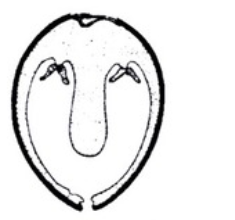
Explain or diagram the anatomical difference of protobranch mantle cavities in bivalves. Include the prey or food types.
Small
Respiration only
Deposit feeder
(eats something else)
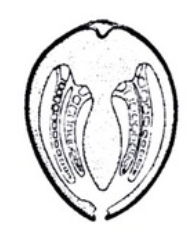
Explain or diagram the anatomical difference of lamellibranch mantle cavitie in bivalves. Include the prey or food types
1. Largest
2. Resp. and feeding
3. Suspension feeder
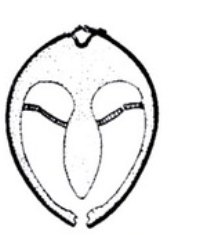
Explain the anatomical difference of septibranch mantle cavitiy in bivalves. Include the prey or food types
1. Medium sized
2. Respiration and feeding
3. Small crustaceans
Annelids live in what types of habitats?
moist habitats, including marine environments, freshwater systems, and damp soil.
cerata in H. opalescens
lacks the longitudinal white stripe, instead its cerata has white or golden-orange tips
cerata in species Hermissenda crassicornis
has a distinct long white line running up the anterior edge of each ceras
How do cephalopods manipulate cells to change color? What are these cells called? What groups of cephalopods have or probably had these?
chromatophores in their skin, which expand and contract pigment sacs through muscle contractions.
These organs, along with reflective iridophores and leucophores, allow rapid, complex color changes for camouflage and communication.
are octopuses, cuttlefish, squids, and sepioloidea.
Explain how ocean acidification can affect many shell-building animals, such as pteropod sea snails.
due to the increase in acidity which weakens and or dissolves existing structures, forcing species like pteropods to use more energy for repair, which hinders growth and reproduction.
The increased hydrogen ions bind up carbonate, making it difficult for organisms to build new structures and causing existing shells of snails, clams, and corals to dissolve.
In the pteropod sea snails are the most vulnerable because their shells are then and highly sensitive to acidic water, as their shell dissolves their ability to grow is severely affected.
Explain the structure of a nephridium in polychaete worms and how it differs from the excretion system of a flatworm.
-are paired, segmentally arranged, ciliated tubules that filter fluid from the coelom through a funnel and exit via pore
-are advanced structures featuring complex tubule systems for reabsorbing solutes via blood capillaries
-A pair of nephridium exists in most segments to filter body fluid, they consist of a funnel shaped nephrotostome often ciliated to draw in coelomic fluid
-differ from the excretion system of a flatworm because polychaetes have mentanephridia (open to the body cavity), where flatworms use protonephridia (closed system, no direct opening to the coelom)
What is the name of the specialized feeding structure that is unique to the phylum Mollusca? And how does this structure function in the feeding of Molluscs?
-radula
-Usually described as a rasping tounge
-functions by scraping, cutting, or shredding food such as algae or prey before it enters the esophagus.
What two characters are used to define (name) the group of protostomes without an exoskeleton?
Lophotrochozoa which is the presence of a lophophore
trochophore (free-swimming larva)
They are mainly in phyla Annelida and Mollusca
What is the purpose of the glochidium larval stage in freshwater clams?
acts as a temporary parasite that attaches to the gills or fins of a host fish.
important for dispersal and providing nutrients for development into juveniles.
Explain in a few sentences why we now use the Class Sedentaria and the Class Errantia, whereas the Classes Polychaeta and Oligochaeta are no longer used.
Using molecular evidence it was revealed that traditional groups like polychaeta are paraphyletic, which makes them unnatural classifications,
We now use Class Sedenatria and Class Errantia because these groups better reflect evolutionary relationships, with Sedentaria including tube-dwellers and separates, from Clitellata.
What is an epitoke?
is the specialized pelagic posterior sexual part of certain marine polychaete worms that detaches from the sedentary, asexual anterior section to swarm and reproduce
In sexual reproduction epitoke is the segments packed with gametes that detach from the surface, usually having extensive chaete for swimming.
In asexual reproduction it's the complete worms that are budded off the posterior end of atoke.
How do cephalopods vary in terms of the prey that they consume? Do they all eat the same type of food? If not, how have they adapted to different foods? (Give an example from the class Cephalopoda.)
Not all cephalopods eat the same food, although many are carnivorous predators.
They have adapted through specialized hunting techniques like venom injection, drilling into shells, and tentacle-based stalking to target specific prey.
An example in cephalopods would be the deep sea squid that has razor sharp hooks on their tentacles instead of simple suckers to catch slippery large prey like the Antarctic toothfish
What is a Chromatophore and how does it function?
specialized pigments containing cells or organs in the skin that allows them to rapidly change colors. There is 4 different types of chromatophores
function by expanding or contracting via muscular or neural control that will then reveal different pigments or reflecting light for camouflage, communication, and thermoregulation.
What is a Photophore, and how does it function?
specialized, light producing organs that appear as luminous spots.
function via photocytes and are often equipped with lenses, reflectors, and filters to modulate light intensity
work by either housing bioluminescent bacteria or producing light themselves through chemical reactions in cells called photocytes.
What do cephalopods use their ink sac for?
defense mechanism to evade predators
Why are the internal "shells" found in some cephalopods generally smaller and/or thinner?
they evolved away from defensive, armor-like roles toward a lighter, structural, and buoyancy-focused role.
This transition allowed them to prioritize speed, agility, and the ability to navigate complex, tight spaces over passive protection.
How do cephalopods (such as squid) mate? Please describe in detail how males, in particular, mate and transfer sperm. **Note: You looked at some of the details here when dissecting a squid in lab
have a modified arm called the hectocotylus to deliver sperm.
In some species a specialized terminal organ (penis) can directly deposit sperm.
Using the hectocotylus it will scoop up spermatophores from his own mantle cavity and insert them into the female
What is a metanephridia? Who has this structure (which phyla)? How does this structure differ from a protonephridium?
-ceolomate, found in annelids, molluscs, arthropods
-excretory system in higher vertebraes , excretory products are filtered and selectively reabsorbed
-are advanced, open ended tubular excretory organs in invertebrates that filter fluid from the coelom to remove nitrogenous waste and maintain water balance
Briefly describe what the function of the green gland is in decapod crustaceans.
acts as a primary excretory organ, responsible for filtering nitrogenous metabolic waste from the hemolymph and releasing it through a pore at the base of water and ions
Instead of the class Polycheata, what two classes do we use instead? List the general features and a specific example (Genus or Family) of each.
-Subgroup erantia and Subgroup sedentaria
Subgroup Errantia contains motile polychaete worms,parapodia (paired appendages) on each segment, many setae arranged in bundles on parapodia, no clitellum, usually predators or scavengers.
Subgroup Sedentaria are tubeworms, live in parchment tube or burrows, lack complexed head appendages, parapodia are reduced or modified for respiration and tube cleaning, often filter or deposit feeders
bipectinate gills
structured with the gill axis having two rows of gill filaments on either side, trembling, a double sided feather.
monopectinate and bipectinate gills evolution in gastropods
tied to the overall restructuring of the pallial cavity, often driven by the adaptation to different lifestyles and the adoption of torsion
monopectinate gills
gill axis in a single row of filaments attached to only one side
How does the structure of the radula vary across different molluscs to adapt them for feeding on different prey? Give an example (from the phylum Mollusca)
-designed to scrape the surface of an eel-grass blade, and the teeth are flat
-Some have sharp teeth on their radula
-Genus Conus has a harpoon-shaped radula that they fire into their prey and inject a toxin.
What is a Belemnite? What portion of the animal is fossilized?
Bullet-like shaped fossil. It is the shell of the animal that gets fossilized.
define sexual dimorphism and give an example in cephlapods
is when the male and female look distinctly different
in the blanket octopuses
Females can grow up to almost 2 meters
males only grow to a few centimeters and do not have a large, transparent web like membrane
Why are the suture lines in between chambers of the shell of an Ammonite highly folded/complex? What does that "improvement" (over the chambered nautilus) help the shell to do?
Elaborate suture lines make the shell stronger to help with ocean pressure, as the pressure gets stronger as the animal goes deeper into the ocean.
elaborately folded suture lines add a lot more strength, and are less likely to break along the lines, helping prevent predation
Which of the following animals are crustaceans that are unusual because they are monoecious?
barnacles
Which pair of appendages unites the Crustacea and the Uniramians into a single subphylum?
mandibles
Which of the following crustaceans have incredible 2nd thoracopods which they can use like a hammer to crack the carapace of a crab right open?
mantid shrimp
Which of the following animals are Chelicerates?
A) Sea spiders (pycnogonids)
B) Horseshoe crabs (Merostomata)
C) Spiders (Arachnids)
D) Beach hoppers (Amphipods)
E) All of the above
F) All of the above except for (D)
F) all the above except for D
What name is used to describe the first pair of appendages possessed by members of the Subphylum Chelicerata?
chelicerae
Which group is the only one with two antenna?
crustacea
Which of the following features best distinguishes isopods from other crustaceans?
Dorso-ventrally flattened bodies with similar thoracic appendages
What crustacean's body is fully enclosed in a bivalve carapace with no sign of external segmentation?
ostracod
Which of these characteristics of Onycophorans do they have in common with Annelids?
Nephridia in most segments
Which of the above organs are used (for long periods of time) underwater?
gills & book gills
Select all of the following organs through which members of the phylum Arthropoda can perform respiratory exchange:
gills
book gills
book lungs
Trachea
Which squid is estimated to be the largest in the world?
collossal squid
An annelid worm that spends its entire life buried belongs to what clade?
sedentaria
Members of Order Nudibranchia are within the 2 major groups and two minor groups within the suborders of Doridacea and Aeolidacea. The differences between these two suborders are visually distinguishable and are….?
Doridacea all have secondary gills around their dorsal posterior anus,
Aeolidacea have no gills but use tufts of Cerata from their forum
Which structure in Cephalopods is responsible for jet propulsion?
siphon (funnel)
What is the best defining feature that distinguishes Nudibranchs from other gastropods?
external gills
Parapodia
Appendages on marine worms that help them walk or swim; can also assist in respiration.
All active, swimming marine worms are today united in the class_________, which is supported by DNA evidence in recent phylogenies.
Errantia
Many marine worms are predatory and can rapidly extend ___________out to capture prey and eat them.
Proboscis
Epitoke
The specialized pelagic posterior sexual part of certain marine polychaete worms that detaches to reproduce.
Which of the following traits did a Giant Pacific Octopus evolve to have?
Siphon, chromatophores, Myopsid eye
Which of the following best explains why lamellibranch bivalves are efficient suspension feeders?
Water is actively pumped across enlarged ctenidia, where particles are trapped in mucus and transported to the mouth.
Which of the following is a characteristic of all gastropods?
torsion
Using phylogenomic evidence, which class in Phylum Mollusca is suggested to have evolved first?
chiton
Glochidium
A larval stage of freshwater clams that acts as a temporary parasitic stage attaching to host fish.
Cryptobiosis
A reversible suspended animation state allowing organisms to survive extreme environmental stresses by reducing metabolism.
Convergent evolution & example
process where distantly related or unrelated organisms independently evolve similar traits, body forms, or behaviors to adapt to similar environmental challenges
shown in the eye of the cuttle fish, its eye is very similar to many of vertebrates eyes
Annelids
Segmented worms that live in various habitats
employing a hydrostatic skeleton for movement.
Torsion
twisting of the shell 180 degrees counter-clockwise
Oligochaeta
A class of annelids characterized by a reduced head and lack of parapodia; examples include earthworms.
Polychaeta
A class of annelids that are mainly marine, often with well-developed parapodia for locomotion.
Photophores
Light-producing organs found in deep sea animals, allowing them to communicate or camouflage.
A copper-based blood pigment used for oxygen transport in some invertebrates, including horseshoe crabs.
Hemocyanin
Gastropods have evolved to live in the sea on the bottom of the ocean (the benthos), up in the water column, constantly swimming (pelagic species), on land, and in freshwater thanks to adaptations such as different organs for obtaining oxygen (e.g., gills, lungs, skin via diffusion, etc.) and different means of dispersing.
true
Bivalves are every bit as "brainy" or smart as snails and squid are.
false
Torsion is the twisting of the shell 180 degrees counter-clockwise seen in all gastropods.
False, some do not, underwent detorsion
The best way to make clam chowder quickly is to collect clams that are gaping open at low tide.
False, collecting clams that are gaping open indicates that the clam is dead and is decomposing and can cause food poisoning if eaten.
What Would have a spaghetti worm out, what is its tube made of?
Mud. Some worms glue sediment grains together to create a tube.
There are some that secrete things that solidify and create a tube.
A "errant" marine worm spends its whole life swimming (up in the water column), and is therefore also "pelagic" but not "holoplanktonic."
False
Many marine worms spent most of their life at the bottom
they have a short period of their life when they are in the plankton, and are not holoplanktonic
A shared, derived character is shared by the descendants of a common ancestor as well as with nearby, related taxa on a phylogenetic tree.
False, it usually is not shared with nearby related taxa that fall outside that specific clade